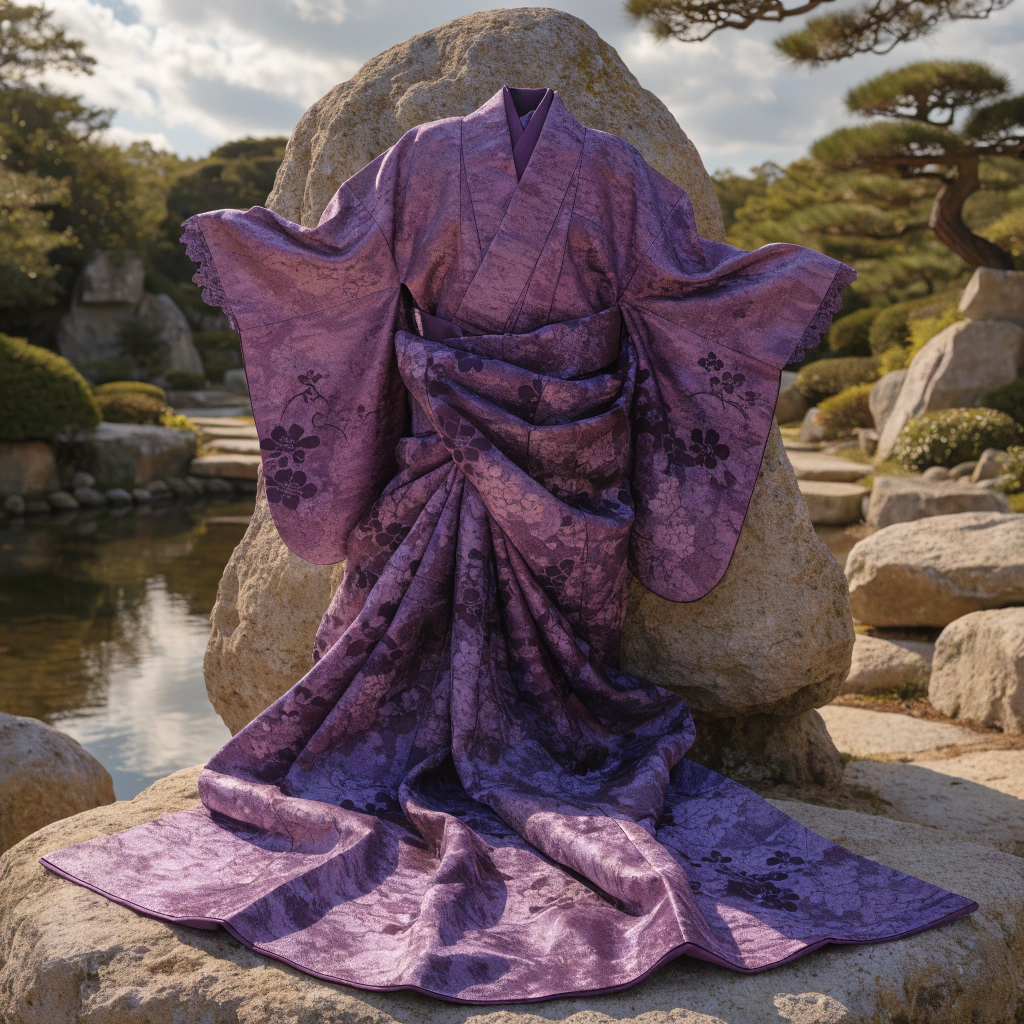
The Japanese Kimono
The kimono is a traditional dress from Japan. It is very beautiful. The word "kimono" means "thing to wear." People in Japan wear kimonos for special days. They wear them for weddings and festivals.
Kimonos are long and have wide sleeves. They are often made of silk. Some kimonos have bright colors. Other kimonos are simple. Men, women, and children can wear them.
Today, many people wear modern clothes every day. But the kimono is still a very important symbol of Japanese culture.
Grammar Spotlight
Pattern: Present Simple (to be)
"The kimono is a traditional dress from Japan."
We use 'is' for one person or thing. It describes a fact or a state that is always true.
Pattern: Present Simple (action verbs)
"People in Japan wear kimonos for special days."
We use the base form of the verb (wear) for plural subjects (People). It describes a habit or regular activity.
Test Your Understanding
10 questions · A1 Beginner · 1 free preview
Test what you learned from this article. Answer all questions to earn XP!
What does the word 'kimono' mean?
Want to finish the quiz?
9 more questions are waiting for you. Sign up free to unlock the full quiz and earn XP!
Sign Up FreeAlready have an account? Sign In
Question Breakdown
What does the word 'kimono' mean?
Your answer:
Correct answer: A thing to wear
Only children wear kimonos in Japan.
Your answer:
Correct answer: False
What does 'beautiful' mean?
Your answer:
Correct answer: Very nice to look at
The kimono is a _____ of Japanese culture.
Your answer:
Correct answer: symbol
The Kimono: Japan’s Famous Tradition
The kimono is a very famous symbol of Japan. The word "kimono" means "something to wear." It is a long robe with wide sleeves. In the past, Japanese people wore kimonos every day because they were comfortable and beautiful.
The history of the kimono is very long. It started more than one thousand years ago. Over time, the designs became more colorful. Today, kimonos are more special than regular clothes. Most people do not wear them every day. Instead, they wear them for important events like weddings, tea ceremonies, or summer festivals.
Kimonos are usually made of silk. They often have beautiful patterns of flowers, birds, or trees. Because they are handmade, they can be very expensive. However, many people in Japan still love the kimono because it connects them to their history. It is a timeless part of Japanese culture that people all over the world recognize.
Grammar Spotlight
Pattern: Past Simple
"In the past, Japanese people wore kimonos every day because they were comfortable and beautiful."
We use the past simple to talk about things that happened and finished in the past. 'Wore' is the past tense of 'wear' and 'were' is the past tense of 'are'.
Pattern: Comparatives (more + adjective)
"Today, kimonos are more special than regular clothes."
We use 'more' before long adjectives to compare two things. We also use the word 'than' after the adjective to show the comparison.
Test Your Understanding
11 questions · A2 Elementary · 1 free preview
Test what you learned from this article. Answer all questions to earn XP!
What does the word 'kimono' mean in English?
Want to finish the quiz?
10 more questions are waiting for you. Sign up free to unlock the full quiz and earn XP!
Sign Up FreeAlready have an account? Sign In
Question Breakdown
What does the word 'kimono' mean in English?
Your answer:
Correct answer: Something to wear
Most Japanese people wear kimonos to work every day now.
Your answer:
Correct answer: False
What does 'expensive' mean?
Your answer:
Correct answer: Costing a lot of money
Kimonos are usually made of _____, which is a soft fabric.
Your answer:
Correct answer: silk
When do people usually wear kimonos today?
Your answer:
Correct answer: For special events like weddings
The Kimono: A Beautiful Symbol of Japanese History
The kimono is perhaps the most famous symbol of Japanese culture around the world. The word literally means "thing to wear," but this traditional garment is much more than just a piece of clothing. It is a complex system of dress that has evolved over more than a thousand years.
The history of the kimono began during the Nara period. At that time, Japanese fashion was heavily influenced by Chinese styles. However, by the Heian period, the garment had developed its own distinct Japanese identity. Since then, the kimono has been modified many times to reflect different social statuses and artistic trends. Today, it is mostly worn for special occasions, such as weddings, tea ceremonies, and graduation festivals.
The kimono is a T-shaped robe which is held together by a wide belt called an "obi." The way a kimono is worn can tell you a lot about the person. For example, the length of the sleeves or the patterns on the fabric can indicate someone’s age or marital status. Although modern clothes are more common in daily life, the kimono has remained a symbol of grace and respect for tradition.
Creating a high-quality kimono is considered a true art form. These garments are often made from expensive silk and are decorated with beautiful hand-painted designs. Because they are so valuable, they are frequently passed down through families as precious heirlooms. In recent years, young designers have started to combine traditional patterns with modern styles, ensuring that the kimono continues to be a living part of Japanese culture.
Grammar Spotlight
Pattern: Passive Voice
"At that time, Japanese fashion was heavily influenced by Chinese styles."
The passive voice (was + past participle) is used here because the focus is on the fashion itself, not the people who influenced it. It is common in historical descriptions.
Pattern: Relative Clauses
"The kimono is a T-shaped robe which is held together by a wide belt called an "obi.""
The word 'which' starts a relative clause that gives more information about the robe. It helps connect two ideas into one complex sentence.
Test Your Understanding
11 questions · B1 Intermediate · 1 free preview
Test what you learned from this article. Answer all questions to earn XP!
What does the word 'kimono' literally mean?
Want to finish the quiz?
10 more questions are waiting for you. Sign up free to unlock the full quiz and earn XP!
Sign Up FreeAlready have an account? Sign In
Question Breakdown
What does the word 'kimono' literally mean?
Your answer:
Correct answer: Thing to wear
The kimono has remained exactly the same for over a thousand years.
Your answer:
Correct answer: False
What is a 'garment'?
Your answer:
Correct answer: A piece of clothing
The kimono is held together by a wide belt called an _____.
Your answer:
Correct answer: obi
When did the kimono develop its own unique Japanese identity?
Your answer:
Correct answer: The Heian period
The Kimono: Japan’s Timeless Thread of Tradition
The kimono, which literally translates to 'thing to wear,' is arguably the most recognizable symbol of Japanese culture worldwide. Although it is often perceived as a singular, unchanging garment, the kimono is actually a sophisticated system of dress that has evolved over a millennium. Its origins can be traced back to the Nara period (710–794), when Japan was heavily influenced by Chinese Han clothing. However, by the Heian period (794–1185), the garment had developed a distinct Japanese identity, characterized by the use of straight-line cutting and a focus on layering.
Historically, the kimono served as everyday attire for all social classes. However, its role shifted significantly during the Meiji Restoration in the late 19th century, as Japan began to embrace Western-style clothing for official and professional roles. Today, the kimono is primarily reserved for ceremonial occasions such as weddings, tea ceremonies, and graduation festivals. Despite this shift, the craftsmanship involved in creating a high-quality kimono remains unparalleled. Each piece is often hand-dyed using the 'Yuzen' technique, where intricate patterns are painted directly onto the silk. These patterns often feature seasonal motifs, such as cherry blossoms for spring or maple leaves for autumn, which signify the wearer's deep connection to nature.
Beyond its aesthetic appeal, the kimono functions as a visual language that communicates the wearer’s social status. For instance, the 'Furisode,' characterized by its exceptionally long sleeves, is traditionally worn by unmarried women. Conversely, the 'Tomesode' is a more formal garment for married women, typically featuring patterns only below the waistline. This complexity ensures that the kimono remains a vital part of Japan’s social fabric, reflecting age, marital status, and the level of formality of an event.
In the contemporary era, the kimono faces challenges regarding its preservation. The high cost of authentic silk and the intensive labor required for production have led to a decline in daily usage. Nevertheless, there is a growing movement toward adaptation. Modern designers are increasingly incorporating kimono elements into high fashion, blending traditional silhouettes with contemporary fabrics. This ensures the longevity of the tradition while making it accessible to a global audience. Ultimately, the kimono is not merely a relic of the past; it is a living art form that continues to weave the threads of Japan’s history into the present day.
Grammar Spotlight
Pattern: Relative Clauses (Non-defining)
"The kimono, which literally translates to 'thing to wear,' is arguably the most recognizable symbol of Japanese culture worldwide."
Non-defining relative clauses provide extra information about a noun. They are separated by commas and use 'which' for objects or 'who' for people.
Pattern: Passive Voice (Present Simple)
"Although it is often perceived as a singular, unchanging garment..."
The passive voice is used here to focus on the object (the kimono) rather than the people perceiving it. It is formed with 'to be' + past participle.
Pattern: Past Perfect
"...the garment had developed a distinct Japanese identity..."
The past perfect (had + past participle) is used to describe an action that was completed before another point in the past (the end of the Heian period).
Test Your Understanding
11 questions · B2 Upper Intermediate · 1 free preview
Test what you learned from this article. Answer all questions to earn XP!
What caused the shift from kimono to Western-style clothing in Japan?
Want to finish the quiz?
10 more questions are waiting for you. Sign up free to unlock the full quiz and earn XP!
Sign Up FreeAlready have an account? Sign In
Question Breakdown
What caused the shift from kimono to Western-style clothing in Japan?
Your answer:
Correct answer: The Meiji Restoration in the 19th century
The 'Furisode' is traditionally worn by married women.
Your answer:
Correct answer: False
What does the word 'intricate' mean in the context of the article?
Your answer:
Correct answer: Very detailed and complex
The _____ of the kimono tradition is maintained by modern designers blending traditional and contemporary styles.
Your answer:
Correct answer: longevity
What do the motifs on a kimono usually signify?
Your answer:
Correct answer: A deep connection to nature and seasons
The Kimono: Japan’s Timeless Thread of Tradition
Rarely has a single garment encapsulated the soul of a nation as poignantly as the kimono. While often perceived by the uninitiated Western eye as a static relic of antiquity, the kimono is, in reality, a dynamic canvas of historical shifts and socio-political nuances. Its genesis traces back to the Nara period, yet it was not until the Heian era that the garment shed its continental influences to emerge as a distinctly Japanese entity. What defined this era was the pursuit of refined elegance, where the layering of silk became a sophisticated language of status and seasonal awareness. This transition from functional attire to a medium of artistic expression marked the beginning of its enduring legacy.
The Edo period witnessed the zenith of the kimono’s sartorial complexity. As the merchant class burgeoned, the kimono transitioned into a profound display of wealth and taste. It was during this era that intricate dyeing techniques, such as Yūzen, flourished, allowing for the depiction of landscapes and literary themes upon silk. However, the Meiji Restoration heralded a seismic shift in Japanese society. The state-mandated adoption of Western clothing for civil servants marked the beginning of the kimono’s slow retreat into the realm of ceremonial use. This shift was not merely stylistic; it was a deliberate move toward modernization and international alignment.
In the contemporary landscape, the kimono faces a multifaceted existence. On one hand, there is a palpable resurgence of interest among the younger generation, who view the garment through a lens of modern sensibilities. On the other hand, the global commodification of the kimono raises poignant questions regarding cultural appropriation. Rarely do critics overlook the tension between the appreciation of its aesthetic beauty and the potential dilution of its deep-seated symbolic meanings. The juxtaposition of a thousand-year tradition against the fast-paced nature of modern fashion creates a unique cultural friction.
Furthermore, the meticulous craftsmanship required for a hand-painted kimono is increasingly threatened by the ubiquity of mass production. The decline of traditional weaving centers in Kyoto underscores a broader societal challenge: the preservation of intangible heritage in an era of rapid technological advancement. Nevertheless, the kimono remains a testament to Japan’s enduring commitment to craftsmanship. Whether draped in the formal folds of a wedding ensemble or the casual simplicity of a summer yukata, the wearer participates in a narrative that spans over a millennium. Ultimately, the kimono is not merely a 'thing to wear'; it is a thread of continuity in an ever-changing world, reflecting the resilience of Japanese identity.
Grammar Spotlight
Pattern: Negative Inversion
"Rarely has a single garment encapsulated the soul of a nation as poignantly as the kimono."
When an adverb with a negative or restrictive meaning (like 'rarely') starts a sentence, the auxiliary verb comes before the subject. This is used for emphasis and stylistic variety in formal writing.
Pattern: Cleft Sentence
"It was during this era that intricate dyeing techniques, such as Yūzen, flourished..."
Cleft sentences use 'It + be + [subject/phrase] + that/who' to focus on specific information. Here, it emphasizes the specific time period (the Edo era).
Pattern: Nominalisation
"The state-mandated adoption of Western clothing for civil servants marked the beginning..."
Nominalisation turns verbs or adjectives into nouns (e.g., 'adopt' to 'adoption'). This allows for more concise, academic, and complex sentence structures typical of C1 level texts.
Test Your Understanding
12 questions · C1 Advanced · 1 free preview
Test what you learned from this article. Answer all questions to earn XP!
According to the article, how did the kimono change during the Heian era?
Want to finish the quiz?
11 more questions are waiting for you. Sign up free to unlock the full quiz and earn XP!
Sign Up FreeAlready have an account? Sign In
Question Breakdown
According to the article, how did the kimono change during the Heian era?
Your answer:
Correct answer: It evolved into a distinct Japanese entity focused on refined elegance.
The Edo period is described as the peak of the kimono's complexity and artistic expression.
Your answer:
Correct answer: True
What does the word 'ubiquity' refer to in the text?
Your answer:
Correct answer: The widespread presence of mass-produced items.
The state-mandated _____ of Western clothing occurred during the Meiji Restoration.
Your answer:
Correct answer: adoption
What is the primary concern regarding 'commodification' mentioned in the article?
Your answer:
Correct answer: The tension between aesthetic appreciation and cultural appropriation.
The article suggests that the kimono is now purely a static relic of the past.
Your answer:
Correct answer: False
The Kimono: An Ontological Inquiry into Japan’s Sartorial Semiotics
To perceive the kimono merely as a relic of an archaic past is to fundamentally misinterpret the semiotic density of Japanese material culture. The kimono, etymologically derived from 'kiru' (to wear) and 'mono' (thing), transcends its literal nomenclature to function as a profound vessel of historical continuity. Its evolution, spanning over a millennium, offers a prism through which one might examine the shifting paradigms of Japanese social stratification and aesthetic sensibilities. The garment is not merely clothing; it is a complex social signifier that has navigated the tumultuous waters of political upheaval and modernization.
The genesis of the kimono is inextricably linked to the Nara period, during which Japan was a receptive vessel for Tang Dynasty influences. However, it was during the Heian era that the garment underwent a radical metamorphosis, shedding its continental precursors in favor of a distinctively Japanese aestheticism. The 'kosode', originally an undergarment, gradually ascended the sartorial hierarchy. Were one to examine the courtly life of this era, one would find that the layering of silk—the 'junihitoe'—served not merely as protection against the elements but as a sophisticated language of color and season, where a single misplaced hue might signal a profound social faux pas. This period established the kimono as a medium for artistic expression, where the textile itself became the primary focus of the wearer’s identity.
As Japan transitioned into the Edo period, the kimono became a site of intense socio-political negotiation. The Tokugawa shogunate, wary of the rising merchant class's wealth, enacted stringent sumptuary laws to curb ostentatious displays of luxury. Consequently, the aesthetic of 'iki'—a refined, understated chic—emerged. It was during this epoch that the kimono’s silhouette crystallized into the T-shaped form we recognize today. Unlike Western tailoring, which seeks to accentuate the three-dimensional contours of the human physique, the kimono operates on a flat-plane paradigm. It treats the body as a canvas, emphasizing the textile's narrative over the wearer’s anatomy, thereby creating a unique relationship between the fabric and the human form.
The Meiji Restoration of 1868 heralded a period of existential crisis for traditional Japanese dress. As the nation pivoted toward Western modernization, 'yofuku' (Western clothing) became the de facto uniform of the bureaucracy and the military. It was conjectured by many contemporary observers that the kimono would face inevitable obsolescence. Yet, the garment proved remarkably resilient. Rather than vanishing, it was relegated to the sphere of formal ceremony and the domestic 'private' space, thereby acquiring a new layer of symbolic weight as a bastion of national identity against the encroaching tide of globalization. This shift transformed the kimono from everyday attire into a ceremonial icon.
In the contemporary era, the kimono is undergoing yet another transformation. No longer is it shackled by the rigid protocols of the past. Modern designers are deconstructing its form, experimenting with unconventional textiles such as denim and polyester, and challenging the traditional methods of 'kitsuke' (the art of donning the kimono). This revitalization suggests that the kimono is not a static artifact but a living lexicon. Seldom has a garment managed to maintain such ontological relevance while navigating the treacherous waters of cultural commodification. The modern kimono represents a synthesis of historical reverence and avant-garde innovation.
Ultimately, the kimono remains a testament to the Japanese concept of 'ma'—the intentional space between things. In the drape of the silk and the tension of the 'obi' (sash), there exists a dialogue between the wearer, the garment, and the environment. To study the kimono is to engage with a lineage of craftsmanship that prioritizes the ephemeral beauty of the seasons and the enduring strength of tradition. It is, quite literally, the thread that weaves the past into the present, ensuring that Japan’s cultural heritage remains not just preserved, but profoundly practiced.
Grammar Spotlight
Pattern: Inversion with Negative Adverbials
"Seldom has a garment managed to maintain such ontological relevance while navigating the treacherous waters of cultural commodification."
This structure places a negative adverbial like 'seldom' at the start for emphasis, requiring the auxiliary verb to come before the subject. It is a hallmark of formal, high-level English prose.
Pattern: Inverted Second Conditional (Subjunctive)
"Were one to examine the courtly life of this era, one would find that the layering of silk served not merely as protection..."
The inversion of 'if one were' to 'were one' is used to express a hypothetical situation in a highly formal and scholarly tone. It removes the 'if' and moves the auxiliary to the front.
Pattern: Passive Voice with Academic Hedging
"It was conjectured by many contemporary observers that the kimono would face inevitable obsolescence."
The use of the passive 'It was conjectured' combined with 'conjectured' (a form of hedging) allows the author to report historical opinions without asserting them as absolute facts, maintaining academic objectivity.
Test Your Understanding
12 questions · C2 Mastery · 1 free preview
Test what you learned from this article. Answer all questions to earn XP!
According to the text, how does the kimono's design philosophy differ from Western tailoring?
Want to finish the quiz?
11 more questions are waiting for you. Sign up free to unlock the full quiz and earn XP!
Sign Up FreeAlready have an account? Sign In
Question Breakdown
According to the text, how does the kimono's design philosophy differ from Western tailoring?
Your answer:
Correct answer: The kimono treats the body as a canvas within a flat-plane paradigm.
The Meiji Restoration led to the complete disappearance of the kimono from Japanese society.
Your answer:
Correct answer: False
What does the word 'sumptuary' refer to in the context of the Edo period?
Your answer:
Correct answer: Laws regulating and curbing ostentatious displays of luxury.
Many observers during the Meiji period wrongly predicted the kimono's ____.
Your answer:
Correct answer: obsolescence
What did a 'misplaced hue' in the Heian period 'junihitoe' signify?
Your answer:
Correct answer: A significant social error or faux pas.
The etymology of the word 'kimono' literally translates to 'thing to wear'.
Your answer:
Correct answer: True
