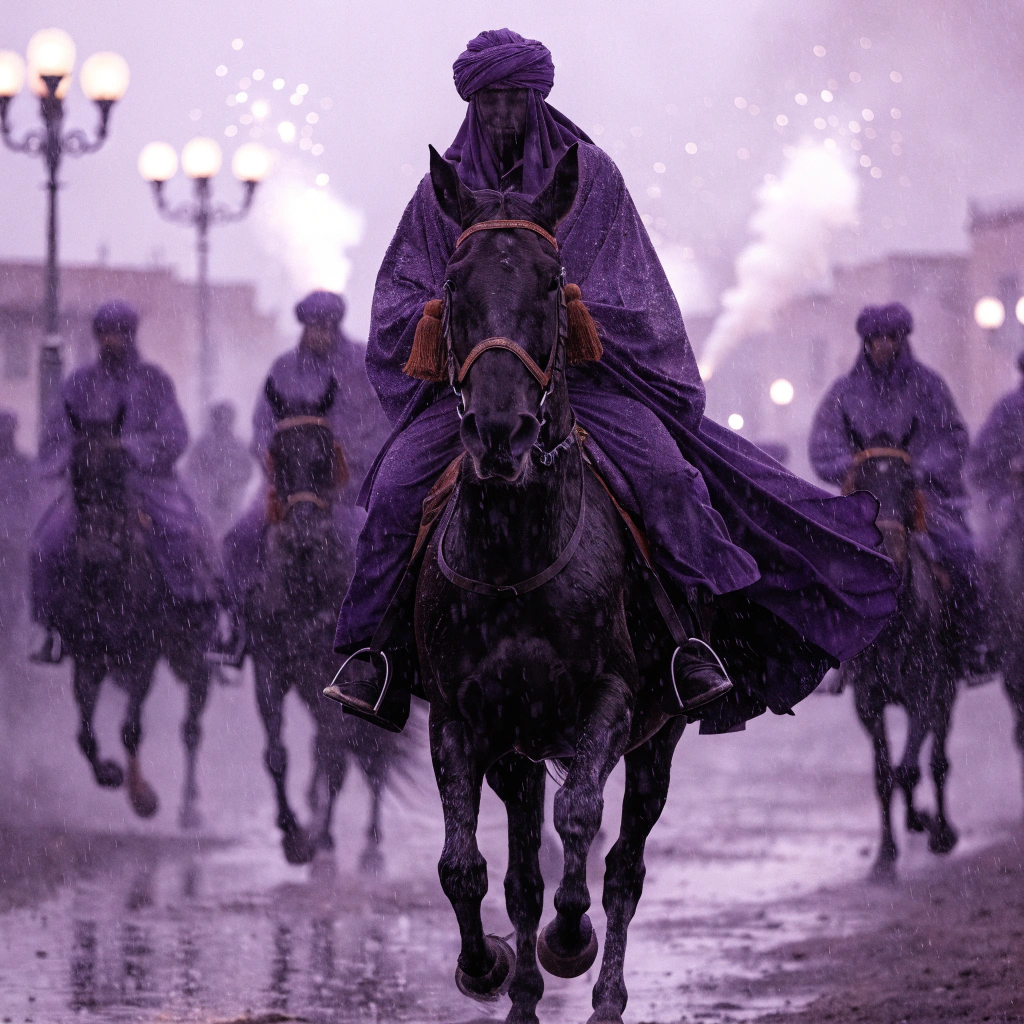
Tbourida: A Famous Tradition in Morocco
Tbourida is a traditional show in Morocco. It is very old and exciting. Many people also call it "Fantasia."
In Tbourida, men ride beautiful horses. The riders wear traditional white clothes. They carry long guns.
The riders run together in a line. They move very fast. At the end, they fire their guns at the same time. This makes a loud sound like thunder.
People love to watch Tbourida at festivals. It is a symbol of history and bravery. It is a special part of Moroccan culture.
Grammar Spotlight
Pattern: Present Simple (Be)
"Tbourida is a traditional show in Morocco."
We use the verb 'to be' (is/are) to describe facts or permanent states. For a single thing like Tbourida, we use 'is'.
Pattern: Present Simple (Action Verbs)
"The riders wear traditional white clothes."
We use the base form of the verb for plural subjects like 'riders'. This describes a general truth or a habit.
Test Your Understanding
10 questions · A1 Beginner · 1 free preview
Test what you learned from this article. Answer all questions to earn XP!
What is another name for Tbourida?
Want to finish the quiz?
9 more questions are waiting for you. Sign up free to unlock the full quiz and earn XP!
Sign Up FreeAlready have an account? Sign In
Question Breakdown
What is another name for Tbourida?
Your answer:
Correct answer: Fantasia
The riders wear black clothes.
Your answer:
Correct answer: False
What does 'fast' mean?
Your answer:
Correct answer: Moving with speed
The riders carry long _____.
Your answer:
Correct answer: guns
Tbourida: The Beautiful Tradition of Moroccan Horses
Tbourida is a very old and famous tradition in Morocco. Some people call it 'Fantasia.' This tradition started many years ago to show the history of Moroccan soldiers. It is a special show with horses and riders.
In the show, a group of riders sits on beautiful horses. They wear traditional clothes and carry long guns. The riders start slowly, but then they gallop very fast across a field. They must stay in a straight line. This is difficult because the horses are faster than they look.
At the end of the race, all the riders fire their guns at the same time. This makes a very loud sound like thunder. This part is called 'baroud.' It is more exciting than a normal race because the riders are very brave.
Today, many people visit festivals to see Tbourida. It is an important part of Moroccan culture. It is a beautiful display of skill and history. Everyone feels happy and proud when they watch the horses.
Grammar Spotlight
Pattern: Past Simple
"This tradition started many years ago to show the history of Moroccan soldiers."
We use the past simple to talk about finished actions in the past. For regular verbs like 'start', we add '-ed' to the end.
Pattern: Comparatives
"It is more exciting than a normal race because the riders are very brave."
We use 'more' plus a long adjective and 'than' to compare two things. For short adjectives like 'fast', we add '-er' instead.
Test Your Understanding
11 questions · A2 Elementary · 1 free preview
Test what you learned from this article. Answer all questions to earn XP!
What is another name for Tbourida?
Want to finish the quiz?
10 more questions are waiting for you. Sign up free to unlock the full quiz and earn XP!
Sign Up FreeAlready have an account? Sign In
Question Breakdown
What is another name for Tbourida?
Your answer:
Correct answer: Fantasia
The riders in Tbourida move in a straight line.
Your answer:
Correct answer: True
What does 'gallop' mean?
Your answer:
Correct answer: To run very fast like a horse
The riders carry long _____ during the show.
Your answer:
Correct answer: guns
Where can people see Tbourida today?
Your answer:
Correct answer: At festivals
Tbourida: The Thunder of Moroccan Tradition
Tbourida is a magnificent traditional horse show that represents the rich history of Morocco. It is often called 'Fantasia' by tourists, but local people know it as Tbourida, a name which comes from the word for gunpowder. This spectacular performance has been celebrated for hundreds of years to honor the warrior heritage of the Berber and Arab tribes.
In a typical performance, a group of riders, known as a 'sorba,' lines up at one end of a field. These riders are led by a chief who is called a 'Moqaddem.' The horses, which are usually strong Arab-Berber breeds, are decorated with beautiful handmade saddles and colorful blankets. The riders wear traditional white clothes and carry long, antique guns.
When the Moqaddem gives the signal, the group starts to gallop across the field in perfect unison. It is a display of incredible discipline and bravery. As they reach the end of the field, the riders fire their guns into the air at exactly the same moment. The sound is like a single, thunderous explosion. If the timing is perfect, the performance is considered a great success.
Today, Tbourida is not just a show; it is a symbol of national identity. It is performed at festivals and weddings across the country. Many competitions have been organized recently to preserve this tradition for future generations. Although the world is changing quickly, the thunder of the Tbourida still reminds Moroccans of their brave ancestors and their shared history.
Grammar Spotlight
Pattern: Passive Voice
"Many competitions have been organized recently to preserve this tradition."
The passive voice is used when the action is more important than the person doing it. It is formed using 'be' + the past participle.
Pattern: Relative Clauses
"The horses, which are usually strong Arab-Berber breeds, are decorated with beautiful handmade saddles."
Relative clauses give more information about a noun. 'Which' is used for things and 'who' is used for people.
Test Your Understanding
11 questions · B1 Intermediate · 1 free preview
Test what you learned from this article. Answer all questions to earn XP!
What does the word 'Tbourida' relate to in its original language?
Want to finish the quiz?
10 more questions are waiting for you. Sign up free to unlock the full quiz and earn XP!
Sign Up FreeAlready have an account? Sign In
Question Breakdown
What does the word 'Tbourida' relate to in its original language?
Your answer:
Correct answer: Gunpowder
Tbourida is only performed by modern soldiers in the army.
Your answer:
Correct answer: False
What does 'antique' mean in the context of the article?
Your answer:
Correct answer: Old and valuable
The riders gallop across the field in perfect _____, moving as one.
Your answer:
Correct answer: unison
Who is the leader of the group of riders?
Your answer:
Correct answer: The Moqaddem
Tbourida: A Symphony of History and Equestrian Precision
Tbourida, a captivating equestrian display, is deeply embedded in Moroccan culture. Often referred to as 'Fantasia' by international observers, this tradition represents much more than just a performance; it is a manifestation of tribal history and collective bravery. The term itself originates from the Arabic word 'baroud', which translates to gunpowder, highlighting the explosive climax that defines the event. Historically, these maneuvers were utilized in warfare to demonstrate the strength and readiness of cavalry units during desert conflicts.
The performance involves a group of riders, known as a 'sorba', who are led by a 'moqaddem'. These riders must exhibit exceptional coordination as they gallop across a dusty field, dressed in traditional white jellabas and turbans. Their movements must be perfectly synchronized, reflecting the discipline required in historical cavalry charges. The anticipation builds as the horses accelerate, their hooves creating a rhythmic beat that resonates with the cheering crowd. This intense focus is not merely for show; it demonstrates the deep bond between the rider and their horse, a relationship cultivated over many years of rigorous training.
As the sorba reaches the end of the field, the riders simultaneously fire their muskets into the air. This moment, known as the 'talqa', requires immense skill and timing; if even one rider fires a fraction of a second late, the harmony of the performance is considered broken. Consequently, years of practice are necessary to achieve the level of precision expected at national festivals. The smell of sulfur and the cloud of smoke that follows the blast create an atmosphere that transports the audience back to an era of desert battles and tribal alliances.
Beyond the physical spectacle, Tbourida serves as a vital link to Morocco’s past. It was recently inscribed on UNESCO’s Representative List of the Intangible Cultural Heritage of Humanity, ensuring that future generations continue to honor this legacy. While modern life has changed much of the Moroccan landscape, the thunderous sound of the baroud remains a powerful symbol of national pride and historical continuity. It is an art form where history is not just remembered but actively performed with every thundering gallop.
Grammar Spotlight
Pattern: Passive Voice
"Tbourida, a captivating equestrian display, is deeply embedded in Moroccan culture."
The passive voice is used here to focus on the tradition itself rather than who embedded it. It is formed using the verb 'to be' followed by the past participle.
Pattern: Non-defining Relative Clauses
"The performance involves a group of riders, known as a 'sorba', who are led by a 'moqaddem'."
This clause provides extra information about the riders. It is separated by commas and uses 'who' because it refers to people.
Pattern: First Conditional with Modal Nuance
"If even one rider fires a fraction of a second late, the harmony of the performance is considered broken."
This structure describes a real possibility and its consequence. The use of 'is considered' adds a formal, evaluative tone to the result.
Test Your Understanding
11 questions · B2 Upper Intermediate · 1 free preview
Test what you learned from this article. Answer all questions to earn XP!
What is the role of the 'moqaddem' in a Tbourida performance?
Want to finish the quiz?
10 more questions are waiting for you. Sign up free to unlock the full quiz and earn XP!
Sign Up FreeAlready have an account? Sign In
Question Breakdown
What is the role of the 'moqaddem' in a Tbourida performance?
Your answer:
Correct answer: To lead the group of riders
The term 'Tbourida' is derived from a word meaning 'horse'.
Your answer:
Correct answer: False
What does the word 'spectacle' mean in the context of the article?
Your answer:
Correct answer: A visually striking display
The climax of the performance where riders fire their muskets is called the _____.
Your answer:
Correct answer: talqa
What does the 'baroud' symbolize in the tradition?
Your answer:
Correct answer: Gunpowder and warfare history
The Thunderous Resonance of Tbourida: A Socio-Cultural Analysis of Moroccan Equestrianism
The preservation of Morocco’s martial history finds its most visceral expression in Tbourida. Often mislabeled as 'Fantasia' by external observers, this equestrian tradition is far more than a mere display of dexterity; it is a profound embodiment of tribal cohesion and historical continuity. At its heart, Tbourida is a choreographed reenactment of the historical military charges utilized by the Arab-Berber cavalry during the 16th and 17th centuries. The performance is a quintessential example of how heritage can be maintained through ritualized athleticism.
Rarely does a cultural practice manage to encapsulate the duality of violence and grace as effectively as Tbourida. The performance involves a sorba—a group of riders and their horses—who charge across a field in perfect alignment. The spectacle begins with a slow trot, building into a frenetic gallop that demands absolute unison. What defines the success of a performance is not merely the speed of the horses, but the absolute synchronization of the final muzzle-loader blast. This meticulous coordination of the cavalry reflects the collective discipline required in historical warfare, where a fractured line could mean the difference between victory and defeat.
It is the baroud, or gunpowder, that serves as the sensory climax of the event. The deafening cacophony produced by the simultaneous discharge of rifles represents the culmination of weeks of rigorous training. This climax is not merely for show; it is a test of the riders' prowess. To fire a heavy, ornate rifle while steering a spirited Barb or Arabian stallion at full speed requires a level of skill that borders on the supernatural. The riders must ensure their shots ring out as a single thunderclap, a feat that requires an almost telepathic connection between the sorba members.
Beyond the aesthetic appeal, Tbourida acts as a vessel for ancestral values. The riders’ attire—emblematic of 16th-century North African military dress—serves as a reminder of the vestiges of a bygone era. Each element, from the silk caftans to the leather boots, is steeped in symbolism. In an increasingly globalized world, the persistence of such traditions highlights the resilience of Moroccan identity against cultural homogenization. The performance is a critical site of identity formation, where the youth learn the virtues of bravery and camaraderie from their elders.
Ultimately, Tbourida is a testament to the enduring bond between man and horse. The camaraderie within the sorba reflects a collective commitment to excellence that transcends individual recognition. Only through the lens of historical reverence can one truly appreciate the thunderous resonance of this Moroccan tradition. It remains a living archive, breathing life into the history of the Maghreb with every gallop and every grain of gunpowder.
Grammar Spotlight
Pattern: Negative Inversion
"Rarely does a cultural practice manage to encapsulate the duality of violence and grace as effectively as Tbourida."
Inversion is used after negative or restrictive adverbs like 'rarely' or 'seldom' to add emphasis. The auxiliary verb 'does' is placed before the subject 'a cultural practice'.
Pattern: Cleft Sentences
"It is the baroud, or gunpowder, that serves as the sensory climax of the event."
Cleft sentences use 'It is/was... that...' to focus on a specific part of the information. Here, it emphasizes that gunpowder is the most important element of the climax.
Pattern: Nominalisation
"The meticulous coordination of the cavalry reflects the collective discipline required in historical warfare."
Nominalisation involves turning verbs (coordinate) into nouns (coordination). This is a hallmark of C1 writing as it allows for more abstract and dense information delivery.
Test Your Understanding
12 questions · C1 Advanced · 1 free preview
Test what you learned from this article. Answer all questions to earn XP!
What is the primary factor that determines the success of a Tbourida performance?
Want to finish the quiz?
11 more questions are waiting for you. Sign up free to unlock the full quiz and earn XP!
Sign Up FreeAlready have an account? Sign In
Question Breakdown
What is the primary factor that determines the success of a Tbourida performance?
Your answer:
Correct answer: The simultaneous timing of the rifle discharge
The term 'Tbourida' is derived from the Arabic word for 'horse'.
Your answer:
Correct answer: False
Which word best describes a 'harsh, discordant mixture of sounds'?
Your answer:
Correct answer: Cacophony
The performance acts as a _____ for ancestral values in a globalized world.
Your answer:
Correct answer: vessel
According to the text, what does the attire of the riders represent?
Your answer:
Correct answer: Symbols of 16th-century military dress
The text suggests that Tbourida helps maintain Moroccan identity against cultural homogenization.
Your answer:
Correct answer: True
The Semiotics of the Sorba: Tbourida as a Living Lexicon of Moroccan Identity
To witness a Tbourida performance is to observe a sophisticated convergence of historical memory, martial discipline, and cultural semiotics. Often reductive in its Western nomenclature as 'Fantasia,' Tbourida—derived from the Arabic 'baroud' for gunpowder—represents an intricate tapestry of Moroccan heritage that transcends mere spectacle. It is an equestrian art form where the horse and rider are subsumed into a singular, rhythmic entity, performing a ritualized charge that echoes the cavalry maneuvers of the Maghreb’s ancestral warriors.
The technical execution of the performance is predicated upon the 'sorba,' a troop of riders led by a 'moqaddem' or captain. It is imperative that the rider maintain an unwavering focus, for the efficacy of the display rests upon absolute synchronicity. As the sorba gallops across the 'mahourak' (the performance field), the riders must coordinate their speed and alignment with surgical precision. This is not merely an exhibition of equestrianism; it is a manifestation of tribal cohesion and collective prowess. The culmination of the charge—the simultaneous discharge of muzzle-loading muskets—must occur at the exact moment the moqaddem signals, creating a singular, deafening blast that reverberates through the spectators.
One might posit that the performance serves as a vestigial bridge to a pre-colonial past, where the horse was central to both survival and social hierarchy. The aesthetic elements of Tbourida are equally significant; the horses are adorned with ornate, embroidered saddles, and the riders wear traditional 'djellabas' and 'selhams,' signaling a refusal to let these artisanal traditions fade into obsolescence. The sensory experience is a deliberate cacophony of thundering hooves, chanting, and the acrid scent of sulfur, which serves to transport the observer into a liminal space between the modern era and the historical imaginary.
Scarcely has the thunderous crack of the muskets subsided before the dust settles, yet the impact of the performance remains. While some critics might suggest that the ritual has been commodified for the sake of cultural tourism, such a view fails to account for the internal communal significance of the event. Tbourida is not a static relic; it is a dynamic assertion of identity. The meticulous care afforded to the horses and the rigorous training of the youths suggest that the tradition is far from evanescent. It is, rather, a resilient expression of Moroccan 'asala' (authenticity).
Ultimately, Tbourida functions as a scholarly text written in motion. It demands that we analyze the relationship between man, beast, and the state, while acknowledging the profound emotional resonance it holds for the Moroccan populace. Whether viewed through the lens of sociology or art history, the Tbourida remains a formidable testament to the enduring power of ritual in the construction of national narrative.
Grammar Spotlight
Pattern: The Subjunctive Mood
"It is imperative that the rider maintain an unwavering focus..."
The subjunctive is used here after an adjective of necessity ('imperative'). Note that 'maintain' lacks the third-person 's' because it is in the base form.
Pattern: Negative Inversion
"Scarcely has the thunderous crack of the muskets subsided before the dust settles..."
This structure places a negative or limiting adverb at the start for dramatic effect, requiring the auxiliary verb 'has' to come before the subject.
Pattern: Academic Hedging
"One might posit that the performance serves as a vestigial bridge..."
The use of 'might posit' is a classic C2 hedging device, allowing the writer to suggest a theory without making an absolute, unproven claim.
Test Your Understanding
12 questions · C2 Mastery · 1 free preview
Test what you learned from this article. Answer all questions to earn XP!
What is the primary requirement for a successful Tbourida charge according to the text?
Want to finish the quiz?
11 more questions are waiting for you. Sign up free to unlock the full quiz and earn XP!
Sign Up FreeAlready have an account? Sign In
Question Breakdown
What is the primary requirement for a successful Tbourida charge according to the text?
Your answer:
Correct answer: Perfectly synchronized movement and firing
The author believes that Tbourida has become a static relic due to modern tourism.
Your answer:
Correct answer: False
Which word describes something that is quickly fading or disappearing?
Your answer:
Correct answer: Evanescent
The collective group of riders is referred to as the _____, led by a captain.
Your answer:
Correct answer: sorba
What does the term 'baroud' literally refer to?
Your answer:
Correct answer: Gunpowder
The text suggests that the aesthetic elements of Tbourida, like the saddles, are a form of cultural resistance.
Your answer:
Correct answer: True
