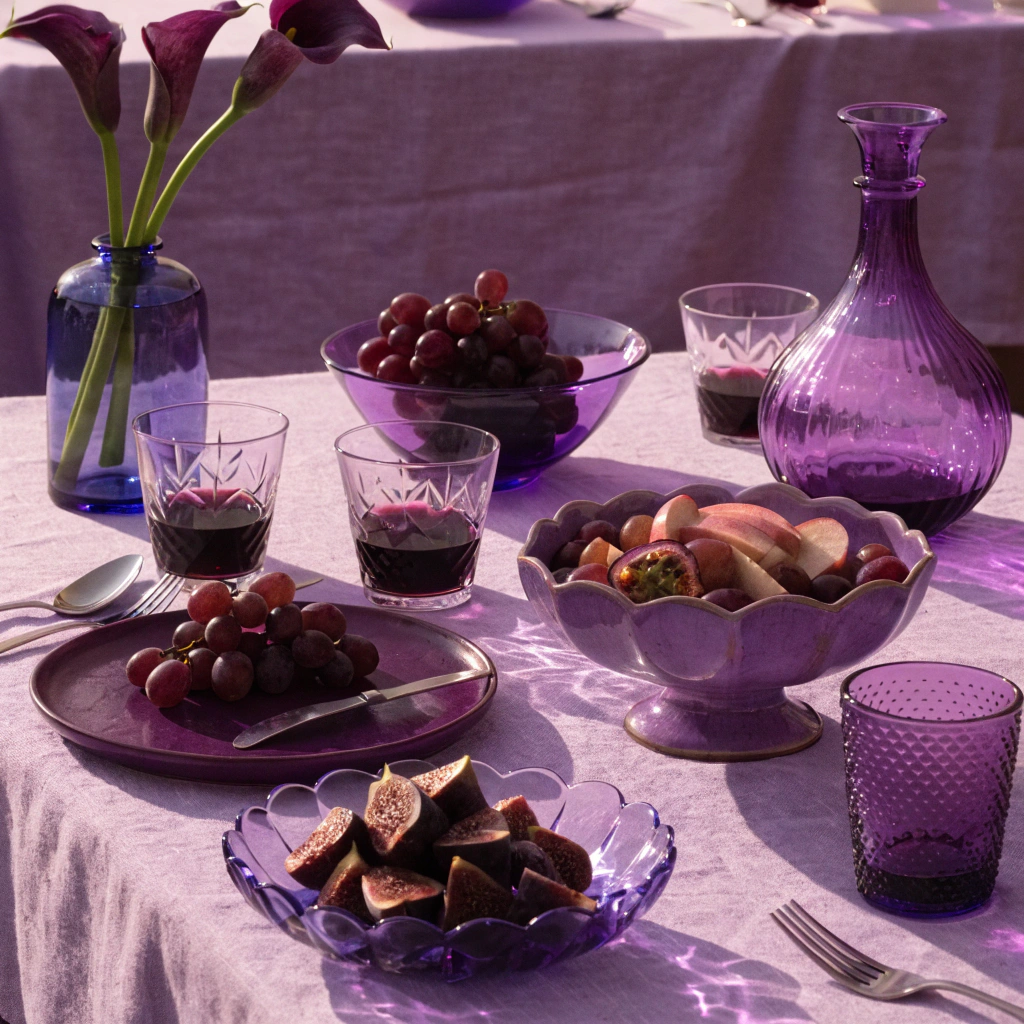
Friendly Tables in Portugal
Welcome to Portugal. People are very friendly here. They love to welcome guests to their homes. This is called hospitality. It is a very important part of life in Portugal.
Food is very important too. Families sit at a big table together. They eat slowly and talk for a long time. They share bread, fresh fish, and hot soup. This is a special time for friends and family.
Table manners are simple. You say thank you and please. You wait for the host to start eating first. Lunch and dinner are happy times for everyone.
Grammar Spotlight
Pattern: Present Simple (to be)
"People are very friendly here."
We use the verb 'to be' (am, is, are) to describe people, places, or things. In this sentence, 'are' is used because 'people' is plural.
Pattern: Present Simple (Habitual Actions)
"They eat slowly and talk for a long time."
We use the present simple for actions that happen regularly. For the subject 'they', we use the base form of the verb without an 's'.
Test Your Understanding
10 questions · A1 Beginner · 1 free preview
Test what you learned from this article. Answer all questions to earn XP!
Where are the people very friendly in this article?
Want to finish the quiz?
9 more questions are waiting for you. Sign up free to unlock the full quiz and earn XP!
Sign Up FreeAlready have an account? Sign In
Question Breakdown
Where are the people very friendly in this article?
Your answer:
Correct answer: Portugal
Families in Portugal eat very quickly.
Your answer:
Correct answer: False
What does 'share' mean?
Your answer:
Correct answer: To give a part of something to others
They eat slowly and _____ for a long time.
Your answer:
Correct answer: talk
Eating Together in Portugal: Hospitality and Manners
In Portugal, hospitality is very important. People there are warmer than in some other European countries. They love welcoming guests into their homes. This is a special part of their culture called 'acolhimento'. When you visit a Portuguese family, they always offer you food and drink because they want you to feel happy.
Social life in Portugal happens around the dinner table. Meals are not just for eating; they are for talking and sharing time. A lunch or dinner can last for many hours. This practice is called 'convívio'. Portuguese people believe that food tastes better when you eat it with friends and family.
There are some simple rules for table manners. For example, you should wait for the host to start eating first. Also, it is polite to finish all the food on your plate. In the past, meals were simpler, but the feeling was the same. Today, Portuguese hospitality is still one of the best things about the country.
Grammar Spotlight
Pattern: Comparatives
"People there are warmer than in some other European countries."
We use the suffix '-er' plus 'than' to compare two things or groups. For short adjectives like 'warm', we add '-er' to the end.
Pattern: Past Simple (be)
"In the past, meals were simpler, but the feeling was the same."
We use 'was' and 'were' to talk about states or situations in the past. 'Was' is for singular subjects and 'were' is for plural subjects.
Test Your Understanding
11 questions · A2 Elementary · 1 free preview
Test what you learned from this article. Answer all questions to earn XP!
What is 'acolhimento' in Portuguese culture?
Want to finish the quiz?
10 more questions are waiting for you. Sign up free to unlock the full quiz and earn XP!
Sign Up FreeAlready have an account? Sign In
Question Breakdown
What is 'acolhimento' in Portuguese culture?
Your answer:
Correct answer: The act of welcoming
Portuguese meals usually finish very quickly.
Your answer:
Correct answer: False
What does 'polite' mean?
Your answer:
Correct answer: Showing good manners
Portuguese people believe that food tastes _____ when you eat it with friends.
Your answer:
Correct answer: better
Who should you wait for before you start eating?
Your answer:
Correct answer: The host
The Art of Portuguese Hospitality and Table Manners
Portuguese hospitality has been famous for centuries because it is a fundamental part of the country's identity. In Portugal, welcoming guests is not just a polite action; it is a deep cultural value known as 'acolhimento'. This special feeling is best experienced during a meal, where the real magic of Portuguese social life happens. Portuguese social life is centered around the table, and people are very proud of their traditions and love to share them with visitors from all over the world.
Meals are rarely seen as just a means of sustenance. Instead, they are considered extended rituals of connection. This practice is called 'convívio', which emphasizes the importance of sharing time with family and friends. It is very common for lunch or dinner to last for several hours because the conversation is just as important as the food. During this time, stories are shared and many different traditional dishes are served to the guests.
There are also specific table manners and etiquette that visitors should follow to show respect. For example, you should wait until the host says 'Bom proveito' before you start eating. It is also considered polite to finish all the food on your plate because it shows that you enjoyed the meal and appreciate the effort. However, you should be careful with seasonings. In some traditional homes, asking for extra salt or pepper might be seen as an insult to the cook, as it suggests the food was not seasoned correctly.
Finally, the meal usually ends with a small, strong coffee. This tradition has been kept alive by generations of families who believe that the conversation should continue even after the plates are cleared. By understanding these customs, visitors can truly enjoy the warmth of a Portuguese home and the beauty of their culture.
Grammar Spotlight
Pattern: Passive Voice
"Meals are rarely seen as just a means of sustenance."
The passive voice is formed using 'to be' + the past participle. It is used here to focus on the action (how meals are viewed) rather than who is viewing them.
Pattern: Relative Clauses
"This practice is called 'convívio', which emphasizes the importance of sharing time with family and friends."
Relative clauses start with words like 'which' or 'who' to provide extra information about a noun. In this sentence, it explains what 'convívio' does.
Test Your Understanding
11 questions · B1 Intermediate · 1 free preview
Test what you learned from this article. Answer all questions to earn XP!
What is the cultural concept of 'acolhimento'?
Want to finish the quiz?
10 more questions are waiting for you. Sign up free to unlock the full quiz and earn XP!
Sign Up FreeAlready have an account? Sign In
Question Breakdown
What is the cultural concept of 'acolhimento'?
Your answer:
Correct answer: The act of welcoming guests
Portuguese meals are usually very short and only last a few minutes.
Your answer:
Correct answer: False
What does 'polite' mean?
Your answer:
Correct answer: Showing respect and good manners
Portuguese social life is centered _____ the table.
Your answer:
Correct answer: around
Why might asking for extra salt be considered an insult?
Your answer:
Correct answer: Because it suggests the cook did not season the food well
The Art of Portuguese Hospitality and Table Manners
In Portugal, hospitality is far more than a simple courtesy; it is an intrinsic component of the national psyche. The concept of 'acolhimento', or welcoming, transcends mere politeness, manifesting instead as a profound social obligation. Central to this cultural phenomenon is the dining experience. Unlike in many fast-paced Western societies where eating is often viewed as a utilitarian necessity, the Portuguese perceive it as a sacred time for 'convívio'—the art of living together through shared conversation and nourishment. Consequently, lunch or dinner can easily span several hours, as participants engage in deep discourse long after the final course has been served.
To the uninitiated, Portuguese table manners might seem straightforward, yet they are governed by a set of nuanced expectations. For instance, it is considered essential to wait for the host to signal the start of the meal before one begins to eat. Furthermore, keeping one’s hands visible on the table, rather than in one's lap, is a traditional sign of respect and transparency. While modern settings have become more relaxed, these subtle gestures remain significant in formal contexts. This attention to detail ensures that the meal remains a structured yet comfortable environment for all guests.
The relationship between host and guest is also characterized by a unique form of generosity. It is not uncommon for a host to insist that a guest takes a second or even third helping of a dish. Declining too abruptly might be perceived as a lack of appreciation, so guests often employ polite strategies to indicate they are satisfied. This abundance reflects the historical value placed on providing for others, ensuring that no one leaves the table feeling neglected. A host's primary goal is to make sure that the guest feels completely at home, often prioritizing the guest's needs over their own.
Ultimately, these customs are not merely about food; they represent a collective commitment to maintaining social bonds and honoring the guest as a central figure in the household. By understanding these unspoken rules, one can truly appreciate the depth of Portuguese culture. Whether in a bustling Lisbon tavern or a quiet rural home, the act of sharing a meal remains the most authentic expression of the Portuguese spirit, where time slows down to accommodate the joy of human connection.
Grammar Spotlight
Pattern: Passive Voice with Present Perfect
"long after the final course has been served."
This is used to focus on the action (the serving) rather than the person performing it. It is formed using 'has/have been' + past participle.
Pattern: Gerunds as Subjects
"Declining too abruptly might be perceived as a lack of appreciation."
Here, the gerund 'declining' acts as the noun subject of the sentence. This is common in B2 English to discuss abstract concepts or actions.
Pattern: Passive Modal Verbs
"eating is often viewed as a utilitarian necessity"
The structure 'is + adverb + past participle' creates a formal tone to describe general perceptions or social facts.
Test Your Understanding
11 questions · B2 Upper Intermediate · 1 free preview
Test what you learned from this article. Answer all questions to earn XP!
What does the concept of 'convívio' emphasize in Portuguese culture?
Want to finish the quiz?
10 more questions are waiting for you. Sign up free to unlock the full quiz and earn XP!
Sign Up FreeAlready have an account? Sign In
Question Breakdown
What does the concept of 'convívio' emphasize in Portuguese culture?
Your answer:
Correct answer: The art of living together through shared time
In Portugal, it is considered polite to keep your hands hidden under the table while eating.
Your answer:
Correct answer: False
What does 'utilitarian' mean in the context of the article?
Your answer:
Correct answer: Focused on practical use over social value
Hospitality is described as an _____ component of the Portuguese national psyche.
Your answer:
Correct answer: intrinsic
How should a guest react when offered a second helping of food?
Your answer:
Correct answer: Use polite strategies to indicate they are full
The Lusitanian Table: A Critical Analysis of Portuguese Acolhimento
Rarely does a visitor to the Lusitanian shores depart without having been profoundly moved by the concept of 'acolhimento'. This multifaceted term, often inadequately translated as 'hospitality', represents a holistic approach to welcoming that borders on the sacred. In the contemporary era, where social interactions are increasingly mediated by digital interfaces and characterized by an ephemeral quality, the Portuguese dining table stands as an indomitable bastion of human connection. The perpetuation of 'convívio'—the sophisticated art of social interaction through shared sustenance—is not merely a quaint cultural vestige; rather, it is a structural pillar upon which the national identity is meticulously constructed.
Seldom is a meal in Portugal regarded as a perfunctory necessity for biological survival. On the contrary, it is a meticulously orchestrated ritual where the linear progression of time is voluntarily suspended in favor of communal engagement. The sheer duration of these gatherings, often spanning several hours, serves as a silent protest against the modern cult of efficiency. What defines these instances of 'convívio' is the underlying ethos of collective belonging. It is through the unhurried consumption of 'petiscos' and the subsequent main courses that the intricate fabric of social cohesion is woven. The nominalization of these shared experiences into a singular cultural concept highlights the societal shift from individualistic consumption to a more profound, collective experience.
Furthermore, the nuances of Portuguese table manners provide a fascinating lens through which to analyze the nation’s socio-cultural values. For the uninitiated, the etiquette may appear deceptively simple, yet it is laden with subtle cues. Take, for instance, the seasoned tradition of bread and olive oil; these are not mere accompaniments but symbolic tethers to the agrarian roots of the country. Moreover, the specificities of seasoning—where the premature request for salt may be interpreted as a lack of confidence in the host’s culinary prowess—underscore a deep-seated respect for the craft of cooking. Never should the importance of such etiquette be underestimated, as these gestures function as the silent negotiators of social hierarchy and intimacy.
Critically, one might posit that the Portuguese insistence on the sanctity of the meal reflects a broader resistance to the forces of cultural homogenization. As globalization seeks to standardize the human experience into predictable, efficient units, the 'convívio' remains stubbornly idiosyncratic. It is a space where the domestic sphere is reclaimed from the pressures of the external market. The act of sharing a meal becomes a subversive performance of slow living, prioritizing the 'how' of interaction over the 'what' of consumption.
In conclusion, the art of Portuguese hospitality and its accompanying table manners represent a sophisticated synthesis of tradition and contemporary relevance. By elevating the act of dining to a ritualized form of connection, Portugal offers a compelling alternative to the fragmented social landscapes of the 21st century. Ultimately, 'acolhimento' is less about the food on the plate and more about the space created between individuals—a space defined by generosity, respect, and an unwavering commitment to the present moment.
Grammar Spotlight
Pattern: Negative Inversion
"Rarely does a visitor to the Lusitanian shores depart without having been profoundly moved..."
This pattern involves placing a negative or restrictive adverbial at the beginning of the sentence, followed by the auxiliary verb and then the subject. It is used for emphasis and to create a more formal, literary tone.
Pattern: Cleft Sentences
"It is through the unhurried consumption of 'petiscos' and the subsequent main courses that the intricate fabric of social cohesion is woven."
A cleft sentence is a construction in which a single clause is split into two parts, each with its own verb. It is used to focus on specific information, in this case, the method through which social cohesion is achieved.
Pattern: Nominalisation
"The nominalization of these shared experiences into a singular cultural concept highlights the societal shift..."
Nominalisation is the use of a word which is not a noun (e.g., a verb or adjective) as a noun, or as the head of a noun phrase. It is a key feature of academic and C1 level writing to express abstract concepts concisely.
Test Your Understanding
12 questions · C1 Advanced · 1 free preview
Test what you learned from this article. Answer all questions to earn XP!
What does the author suggest is the primary purpose of 'convívio'?
Want to finish the quiz?
11 more questions are waiting for you. Sign up free to unlock the full quiz and earn XP!
Sign Up FreeAlready have an account? Sign In
Question Breakdown
What does the author suggest is the primary purpose of 'convívio'?
Your answer:
Correct answer: To serve as a structural pillar for national identity
Asking for salt before tasting your food is generally encouraged in Portuguese dining etiquette.
Your answer:
Correct answer: False
What does 'idiosyncratic' mean in the context of the article?
Your answer:
Correct answer: Peculiar and unique to a specific culture
The author describes the Portuguese dining table as an indomitable _____ of human connection.
Your answer:
Correct answer: bastion
How does the author characterize the act of sharing a meal in relation to globalization?
Your answer:
Correct answer: As a subversive performance of slow living
The term 'acolhimento' refers only to the food served to guests.
Your answer:
Correct answer: False
The Gastronomic Altar: Deciphering the Semiotics of Portuguese Hospitality
To perceive Portuguese hospitality as a mere adherence to social etiquette would be to overlook the profound ontological significance of the table in Lusophone culture. In Portugal, the act of shared sustenance—convívio—transcends the biological necessity of caloric intake, manifesting instead as a sacrosanct ritual of communal bonding. Should a traveler find themselves invited to a domestic repast, they must navigate a labyrinthine set of unspoken norms, where the temporal boundaries of the meal are fluid, yet the social protocols remain remarkably rigid. This cultural phenomenon is not merely a vestige of a bygone era but a living, breathing component of modern Portuguese identity that resists the encroachment of globalized, fast-paced lifestyles.
Central to this cultural paradigm is acolhimento, a term that eludes simple translation but encompasses a radical, proactive openness to the guest. It is through the table that the Portuguese negotiate their collective identity, weaving a tapestry of historical memory and contemporary sociability. One might posit that the Portuguese dining room functions as a secular chapel, where the breaking of bread is a testament to collective endurance and mutual recognition. This proclivity for extended discourse, often lasting well into the twilight hours, reflects a societal rejection of the ephemeral nature of modern interactions. To the Portuguese, time spent at the table is never wasted; rather, it is the very fabric of life itself.
Lest the uninitiated traveler commit a social faux pas, it is imperative to understand the nuanced semiotics of Portuguese table manners. For instance, the request for salt, should it not already be present on the table, may be perceived as a subtle, albeit unintended, critique of the host's culinary prowess. Furthermore, the pouring of wine requires a certain finesse and adherence to tradition; to pour with the hand reversed is to invoke ancient superstitions of ill will. These are not merely superfluous gestures but are deeply embedded in the national psyche, representing a complex system of reciprocity and respect. The table serves as a site of social production, where hierarchies are both acknowledged and softened through the shared experience of the meal.
Moreover, the temporal dilation of the meal—the post-prandial conversation known as 'tertúlia'—is where the true essence of convívio resides. It is here that scholarly inquiry, political debate, and personal anecdotes converge. Were one to attempt an early departure, it might be interpreted as a lack of appreciation for the company provided, a breach of the unspoken contract between host and guest. The Portuguese host takes immense pride in the abundance of the table, often insisting that guests partake in additional helpings. To decline too abruptly is to disrupt the flow of acolhimento; rather, a polite, gradual refusal is the expected protocol.
In an era characterized by digital fragmentation, the Portuguese table remains a bastion of authentic human connection. It demands a high level of cultural literacy to navigate the subtle undercurrents of the dining experience, yet the rewards are profound. By understanding that the table is an altar of social cohesion rather than just a place for sustenance, one gains a deeper insight into the Portuguese soul. It is an art form that prioritizes the human element above all else, ensuring that no guest ever leaves without feeling the warmth of a culture that defines itself through the grace of its welcome. The persistence of these rituals suggests that, for the Portuguese, the art of hospitality is not merely a tradition but a vital necessity for the preservation of their social fabric.
Grammar Spotlight
Pattern: Inverted Conditionals
"Should a traveler find themselves invited to a domestic repast, they must navigate a labyrinthine set of unspoken norms."
This formal structure replaces 'If a traveler should find'. It is used in C2 level prose to add a scholarly or sophisticated tone to hypothetical situations.
Pattern: Subjunctive with 'Lest'
"Lest the uninitiated traveler commit a social faux pas, it is imperative to understand the nuanced semiotics..."
The word 'lest' is followed by the base form of the verb (subjunctive). It is used to express a fear or a reason for caution, meaning 'to avoid the risk of'.
Pattern: Cleft Sentences for Emphasis
"It is through the table that the Portuguese negotiate their collective identity."
A cleft sentence divides a single clause into two parts to focus on specific information (in this case, 'through the table'). It is a powerful rhetorical device for highlighting key themes.
Test Your Understanding
12 questions · C2 Mastery · 1 free preview
Test what you learned from this article. Answer all questions to earn XP!
What does the author suggest about the 'temporal boundaries' of Portuguese meals?
Want to finish the quiz?
11 more questions are waiting for you. Sign up free to unlock the full quiz and earn XP!
Sign Up FreeAlready have an account? Sign In
Question Breakdown
What does the author suggest about the 'temporal boundaries' of Portuguese meals?
Your answer:
Correct answer: They are flexible and often extended.
Requesting salt that is not on the table can be seen as an insult to the host's cooking.
Your answer:
Correct answer: True
Which word describes something that is 'sacred' or 'too important to be changed'?
Your answer:
Correct answer: Sacrosanct
The author describes Portuguese hospitality as a pillar of national _____, resisting modern fragmentation.
Your answer:
Correct answer: identity
According to the text, what might an early departure from a meal signify?
Your answer:
Correct answer: A lack of appreciation for the host's company.
The 'post-prandial' conversation is considered an insignificant part of the meal.
Your answer:
Correct answer: False
