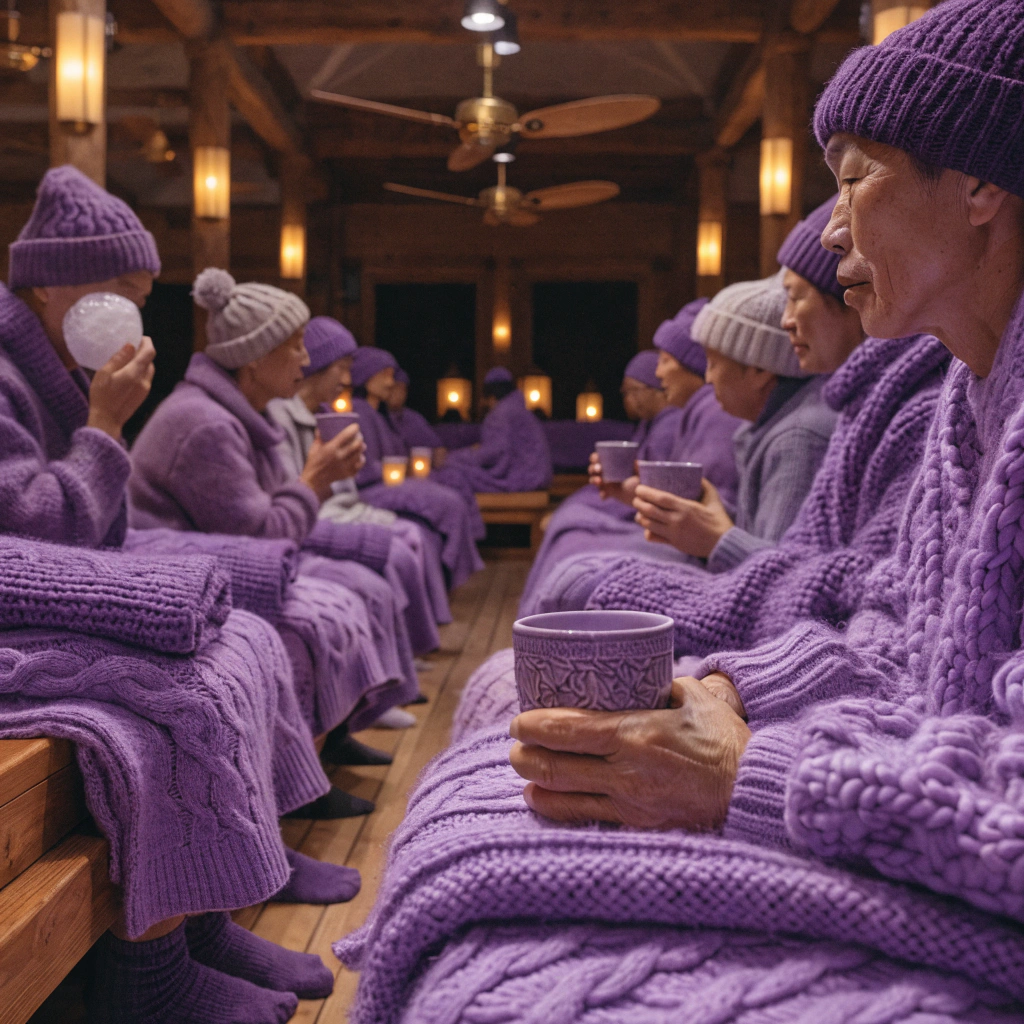
Relaxing in Korea: The Jjimjilbang
Korea is a beautiful country. People like to relax there. They go to a jjimjilbang. This is a big building for health and rest. It is open all day and all night.
Families go there together. Children play and old people talk. You can wash your body in warm water. You can sit in a hot room. Some rooms have salt or charcoal.
You wear special clothes. You can eat food and sleep there too. It is a very happy place. People feel good after a visit.
Grammar Spotlight
Pattern: Present Simple (be)
"It is a very happy place."
We use 'is' with singular subjects like 'it' or 'this'. It describes a fact or a state in the present.
Pattern: Modal Verb: Can
"You can eat food and sleep there too."
We use 'can' to talk about things that are possible. After 'can', we use the base form of the verb without 'to'.
Test Your Understanding
10 questions · A1 Beginner · 1 free preview
Test what you learned from this article. Answer all questions to earn XP!
Where do people go to relax in Korea?
Want to finish the quiz?
9 more questions are waiting for you. Sign up free to unlock the full quiz and earn XP!
Sign Up FreeAlready have an account? Sign In
Question Breakdown
Where do people go to relax in Korea?
Your answer:
Correct answer: A jjimjilbang
The jjimjilbang is open all day and all night.
Your answer:
Correct answer: True
What does 'relax' mean?
Your answer:
Correct answer: To rest and feel calm
Families go there _____.
Your answer:
Correct answer: together
Relaxing in Korea: The Jjimjilbang
In South Korea, many people go to a special place called a jjimjilbang. It is more than a simple sauna. These buildings are very large and they usually stay open for 24 hours. People of all ages go there to relax and feel better.
Long ago, people used hot kilns for medicine during the Joseon Dynasty. Today, these places are modern and very comfortable. Inside, you can find hot rooms and cold rooms. You can also eat delicious food or sleep on the floor. It is a communal place, so families often visit together on the weekend.
A jjimjilbang is better than a normal gym because it has everything you need to rest. It is a very important part of Korean culture. Many people go there because they want to wash away their stress. It is a great way to experience the local lifestyle.
Grammar Spotlight
Pattern: Comparatives (better than)
"A jjimjilbang is better than a normal gym because it has everything you need to rest."
We use 'better than' to compare two things when one is higher in quality. It is the irregular comparative form of the word 'good'.
Pattern: Connectors (because)
"Many people go there because they want to wash away their stress."
We use 'because' to give a reason for an action. It connects a result with its cause in a single sentence.
Test Your Understanding
11 questions · A2 Elementary · 1 free preview
Test what you learned from this article. Answer all questions to earn XP!
How long do jjimjilbangs usually stay open?
Want to finish the quiz?
10 more questions are waiting for you. Sign up free to unlock the full quiz and earn XP!
Sign Up FreeAlready have an account? Sign In
Question Breakdown
How long do jjimjilbangs usually stay open?
Your answer:
Correct answer: 24 hours
Only old people visit jjimjilbangs.
Your answer:
Correct answer: False
What does 'modern' mean?
Your answer:
Correct answer: New and current
Many people go there because they want to wash away their _____.
Your answer:
Correct answer: stress
Where did the idea for jjimjilbangs come from?
Your answer:
Correct answer: Traditional kilns
Jjimjilbang: The Communal Heart of Korean Relaxation
If you visit South Korea, you will see many large buildings called 'jjimjilbangs'. These are traditional bathhouses and saunas that have become a central part of modern Korean life. Most of these facilities are open 24 hours a day, so people can stay overnight if they want to. They are often described as the 'communal living rooms' of Korea because people of all ages meet there to relax and socialize.
The history of the jjimjilbang is very interesting. These places have evolved from traditional charcoal kilns that were used for medicinal purposes during the Joseon Dynasty. Today, they have been transformed into massive, multi-story wellness centers. They offer a place where the stresses of modern life are washed away through heat and water.
Inside a jjimjilbang, there are many different areas to explore. First, visitors go to the gender-separated bath areas where they must wash thoroughly before entering the hot tubs. After bathing, everyone wears a matching uniform to enter the common areas. These areas include special sauna rooms, which are made of materials like salt, clay, or oxygen. These rooms, which are kept at different temperatures, are designed to help the body recover from stress.
In addition to saunas, you can find restaurants, cinemas, and even libraries inside. Many families have visited jjimjilbangs for generations to spend quality time together. It is a unique experience that combines health and community. Whether you want to sleep, eat delicious snacks like smoked eggs, or just talk with friends, the jjimjilbang provides everything you need for a relaxing day.
Grammar Spotlight
Pattern: Passive Voice (Present Perfect and Present Simple)
"These places have been transformed into massive, multi-story wellness centers."
We use the passive voice when the action is more important than who did it. Form it using 'have/has been' + past participle for the present perfect passive.
Pattern: Relative Clauses with 'which'
"These rooms, which are kept at different temperatures, are designed to help the body recover."
Relative clauses give more information about a noun. 'Which' is used for things or objects. Commas are used here because the information is extra, not essential.
Test Your Understanding
11 questions · B1 Intermediate · 1 free preview
Test what you learned from this article. Answer all questions to earn XP!
What is the primary function of a jjimjilbang in modern Korea?
Want to finish the quiz?
10 more questions are waiting for you. Sign up free to unlock the full quiz and earn XP!
Sign Up FreeAlready have an account? Sign In
Question Breakdown
What is the primary function of a jjimjilbang in modern Korea?
Your answer:
Correct answer: A communal bathhouse and social center
Most jjimjilbangs close early in the evening.
Your answer:
Correct answer: False
What does the word 'communal' mean?
Your answer:
Correct answer: Shared by a group
Visitors must wash _____ before they enter the hot tubs.
Your answer:
Correct answer: thoroughly
Where did the concept of jjimjilbangs originally come from?
Your answer:
Correct answer: Traditional charcoal kilns
Jjimjilbang: Examining the Communal Heart of Korean Wellness
To truly comprehend the modern lifestyle of South Koreans, one must investigate the 'jjimjilbang.' More than just a simple sauna, a jjimjilbang is a massive, multi-story wellness complex that often operates 24 hours a day. These facilities are frequently described as the communal living rooms of Korea, where individuals of all demographics—from toddlers to the elderly—gather to alleviate the stresses of contemporary life. The concept evolved from traditional charcoal kilns and mineral baths, which were originally utilized for medicinal purposes during the Joseon Dynasty. Over time, these ancestral practices have transformed into a sophisticated infrastructure dedicated to holistic health and social integration.
Upon entering such a facility, visitors are typically provided with a uniform and a locker key. The experience is meticulously structured, beginning with gender-segregated bathhouses where thorough cleansing is mandatory before entering the communal pools. Furthermore, the architecture of a jjimjilbang often includes various themed saunas, ranging from oxygen rooms to salt rooms, each offering specific therapeutic benefits. If one were to spend an entire day there, they would discover that the facility functions as a self-contained ecosystem, featuring restaurants, cinemas, and even sleeping quarters. This multifaceted nature ensures that the jjimjilbang remains a staple of urban Korean life.
Beyond the physical health benefits, the jjimjilbang serves a vital sociological function. In a society often characterized by rapid technological advancement and competitive work environments, these spaces offer a rare opportunity for genuine relaxation. By removing the markers of social status—such as expensive clothing or professional titles—the jjimjilbang fosters an environment of equality. Consequently, it is not uncommon to see families sharing a meal or friends engaging in deep conversation while wearing matching pajamas. This cultural phenomenon highlights the importance of collective well-being in Korean society. Ultimately, the jjimjilbang represents a unique synthesis of historical tradition and modern necessity, providing a sanctuary where the body and mind can rejuvenate in a communal setting.
Grammar Spotlight
Pattern: Passive Voice
"These facilities are frequently described as the communal living rooms of Korea."
The passive voice (be + past participle) is used here to focus on the facilities rather than who is describing them. This creates a more formal, objective tone suitable for B2 level writing.
Pattern: Relative Clauses
"The concept evolved from traditional charcoal kilns and mineral baths, which were originally utilized for medicinal purposes during the Joseon Dynasty."
A non-defining relative clause starting with 'which' is used to provide additional historical context. It allows the writer to combine complex ideas into a single, cohesive sentence.
Pattern: Second Conditional
"If one were to spend an entire day there, they would discover that the facility functions as a self-contained ecosystem."
This structure (If + past subjunctive, would + base verb) is used to discuss a hypothetical situation. It suggests the outcome of an imagined visit to the jjimjilbang.
Test Your Understanding
11 questions · B2 Upper Intermediate · 1 free preview
Test what you learned from this article. Answer all questions to earn XP!
According to the article, what is the primary historical origin of the jjimjilbang?
Want to finish the quiz?
10 more questions are waiting for you. Sign up free to unlock the full quiz and earn XP!
Sign Up FreeAlready have an account? Sign In
Question Breakdown
According to the article, what is the primary historical origin of the jjimjilbang?
Your answer:
Correct answer: Joseon Dynasty charcoal kilns and mineral baths
Visitors are allowed to enter the communal pools without bathing first.
Your answer:
Correct answer: False
What does the word 'holistic' imply in the context of the article?
Your answer:
Correct answer: Treating the whole person, including mind and body
The jjimjilbang helps foster equality by removing markers of social _____.
Your answer:
Correct answer: status
What does the author suggest about the jjimjilbang's role in modern society?
Your answer:
Correct answer: It acts as a sanctuary from a fast-paced, competitive culture.
The Jjimjilbang: A Socio-Cultural Tapestry of Communal Restoration
In the hyper-modern cityscape of Seoul, where the relentless pursuit of efficiency often dictates the rhythm of daily life, there exists a sanctuary of profound historical resonance: the jjimjilbang. Far from being merely a facility for hygiene, the jjimjilbang represents the communal heart of Korean relaxation, a sprawling multi-story complex where the boundaries between the private and public spheres become porous. Seldom does one encounter a space so deeply entrenched in the national psyche, yet so paradoxically accessible to all demographics. This unique institution serves as a vital counterbalance to the high-pressure environment of contemporary South Korea.
Historically, these wellness centers trace their lineage back to the traditional charcoal kilns and medicinal mineral baths used during the Joseon Dynasty. What began as a utilitarian approach to health has undergone a radical transformation into a holistic lifestyle phenomenon. It is this historical trajectory that underscores the jjimjilbang's status not just as a leisure destination, but as a living museum of Korean social mores. The transition from the arduous labor of the kiln to the luxury of the modern sauna reflects South Korea’s own meteoric rise and its subsequent need for collective decompression.
Central to the jjimjilbang experience is the concept of egalitarianism. Within these walls, the rigid hierarchies that typically govern Korean social interactions—based on age, status, or profession—are momentarily suspended. Clad in identical cotton uniforms, patrons engage in what could be termed 'naked diplomacy' or communal domesticity. Whether it is a family sharing a meal of sikhye and boiled eggs or a group of colleagues decompressing after an exhaustive shift, the jjimjilbang fosters a sense of togetherness that is increasingly rare in an era of digital isolation. The shared physical space mandates a level of intimacy that dissolves social barriers.
The architectural layout of these facilities is equally telling. Beyond the standard hot and cold tubs, one finds specialized rooms lined with salt, jade, or charcoal, each promising specific therapeutic benefits. The 24-hour availability of these spaces further complicates the traditional dichotomy between home and business. For many, the jjimjilbang serves as a subterranean refuge, a place where the weary can find solace at any hour. This ubiquity of access ensures that rest is not a luxury reserved for the elite, but a fundamental right woven into the social fabric.
However, a critical analysis reveals a subtle tension. The commodification of this communal experience, while making it accessible, also risks diluting its traditional sanctity. As these complexes become increasingly commercialized, featuring cinemas, arcades, and fitness centers, the focus occasionally shifts from restoration to mere consumption. Yet, despite these shifts, the jjimjilbang remains a quintessential symbol of Korean resilience. It is a testament to the fact that even in a society defined by rapid change, the human need for communal warmth and physical rejuvenation remains constant. Ultimately, the jjimjilbang is not just about the heat of the sauna; it is about the enduring warmth of the collective spirit.
Grammar Spotlight
Pattern: Negative Inversion
"Seldom does one encounter a space so deeply entrenched in the national psyche..."
This structure is used for emphasis by placing a negative or restrictive adverb at the beginning. It requires the inversion of the subject and the auxiliary verb.
Pattern: Cleft Sentence
"It is this historical trajectory that underscores the jjimjilbang's status..."
Cleft sentences use the 'It is... that' structure to focus on a specific piece of information. Here, it emphasizes the specific cause of the institution's status.
Pattern: Nominalization
"The commodification of this communal experience risks diluting its traditional sanctity."
Nominalization turns verbs (commodify) into nouns (commodification) to create a more formal, academic tone. It allows for complex ideas to be the subject of a sentence.
Test Your Understanding
12 questions · C1 Advanced · 1 free preview
Test what you learned from this article. Answer all questions to earn XP!
What is the primary function of the jjimjilbang according to the text?
Want to finish the quiz?
11 more questions are waiting for you. Sign up free to unlock the full quiz and earn XP!
Sign Up FreeAlready have an account? Sign In
Question Breakdown
What is the primary function of the jjimjilbang according to the text?
Your answer:
Correct answer: A communal heart for relaxation and social restoration
The text suggests that jjimjilbangs have no connection to historical Korean traditions.
Your answer:
Correct answer: False
Which word describes something that is 'firmly established and difficult to change'?
Your answer:
Correct answer: Entrenched
The transition from the _____ labor of the kiln to the luxury of the modern sauna reflects Korea's rise.
Your answer:
Correct answer: arduous
What does the author imply by the term 'naked diplomacy'?
Your answer:
Correct answer: The removal of social hierarchies through shared vulnerability
The author argues that commercialization might be damaging the traditional sanctity of the jjimjilbang.
Your answer:
Correct answer: True
The Jjimjilbang: An Analytical Inquiry into Korea’s Communal Topography
To the uninitiated observer, the South Korean jjimjilbang might ostensibly appear as nothing more than a functionalist architectural response to urban density. Yet, were one to delve beneath the superficial layer of its heated floors and mineral-infused kilns, one would discover a profound socio-cultural microcosm that challenges the rigid hierarchies pervasive in contemporary Korean life. Historically, the jjimjilbang finds its genesis in the traditional charcoal kilns of the Joseon Dynasty, where the atavistic pursuit of thermotherapeutic healing was first institutionalized. Today, these multi-story complexes serve as the quintessential egalitarian space, a liminal zone where the strictures of corporate and social standing are temporarily suspended in favor of a shared, communal vulnerability.
It is arguably the case that the jjimjilbang functions as the 'communal living room' of a nation characterized by rapid urbanization and the subsequent erosion of traditional neighborhood ties. In a society where the hegemony of the workplace often dictates the rhythm of existence, these 24-hour sanctuaries provide a necessary respite. The architecture itself is designed to facilitate this transition from the individual to the collective. Upon entry, patrons are stripped of their outward markers of status—clothing—and donned in uniform attire, a symbolic leveling of the proletariat and the elite. This homogenization is not merely aesthetic; it is a prerequisite for the psychological transcendence that the facility offers. Lest the visitor should mistake this for mere leisure, it is vital to recognize the jjimjilbang as a site of social negotiation where intergenerational bonds are reinforced amidst the steam and the cacophony of shared laughter.
Furthermore, the jjimjilbang represents a vestige of traditional Korean collectivism surviving within a hyper-modern, neoliberal landscape. While the external world demands constant productivity and individualistic competition, the interior of the bathhouse invites a languid, almost meditative state. The variety of medicinal rooms—ranging from salt-lined chambers to oxygen-rich forests—reflects an idiosyncrasy of Korean wellness that prioritizes the harmonization of the internal 'gi' (energy) with the external environment. This holistic approach to health is not merely a commercial gimmick but a deeply ingrained cultural philosophy that posits the body as a reflection of the social fabric. Should the jjimjilbang ever cease to exist, Korea would lose more than just a bathhouse; it would lose a vital organ of its social cohesion.
Critically, the jjimjilbang also serves as a refuge for the marginalized. For the weary traveler, the budget-conscious student, or the elderly seeking companionship, these spaces offer affordable accommodation and a sense of belonging that is increasingly scarce in the digital age. The analytical mind must, therefore, view the jjimjilbang not through the lens of exoticism, but as a sophisticated mechanism for maintaining social equilibrium. It is a testament to the enduring power of communal physical contact in an era otherwise dominated by virtual interactions. By fostering an environment where silence and conversation coexist with equal legitimacy, the jjimjilbang remains an indispensable cornerstone of the Korean psychological landscape, proving that even in the most technologically advanced nations, the human need for collective warmth remains paramount.
Grammar Spotlight
Pattern: Inversion in Second Conditional
"Yet, were one to delve beneath the superficial layer of its heated floors and mineral-infused kilns, one would discover a profound socio-cultural microcosm."
This formal structure replaces 'If one were to delve' with 'Were one to delve'. It is used in academic or literary English to add a hypothetical or sophisticated tone to the sentence.
Pattern: Subjunctive with 'Lest'
"Lest the visitor should mistake this for mere leisure, it is vital to recognize the jjimjilbang as a site of social negotiation."
The word 'lest' is followed by a clause (often using 'should' or the base form of the verb) to express a negative purpose or fear. It means 'to avoid the risk of' or 'in case'.
Pattern: Hedging with 'Arguably'
"It is arguably the case that the jjimjilbang functions as the 'communal living room' of a nation."
Academic hedging uses adverbs like 'arguably' to soften a claim, acknowledging that while the statement is supported by evidence, it is still open to debate.
Test Your Understanding
12 questions · C2 Mastery · 1 free preview
Test what you learned from this article. Answer all questions to earn XP!
What does the author suggest is the primary social function of the jjimjilbang?
Want to finish the quiz?
11 more questions are waiting for you. Sign up free to unlock the full quiz and earn XP!
Sign Up FreeAlready have an account? Sign In
Question Breakdown
What does the author suggest is the primary social function of the jjimjilbang?
Your answer:
Correct answer: To act as a space where social hierarchies are temporarily neutralized
The article states that jjimjilbangs are a relatively new invention with no historical roots in Korea.
Your answer:
Correct answer: False
Which word describes a 'transitional or boundary state' as used in the text?
Your answer:
Correct answer: Liminal
The author describes the jjimjilbang as a _____ of Korean collectivism that persists despite modern neoliberalism.
Your answer:
Correct answer: vestige
According to the text, how does the architecture of the jjimjilbang facilitate social transition?
Your answer:
Correct answer: By requiring uniform attire to remove status markers
The text suggests that the body is viewed as a reflection of the social fabric in Korean wellness philosophy.
Your answer:
Correct answer: True
