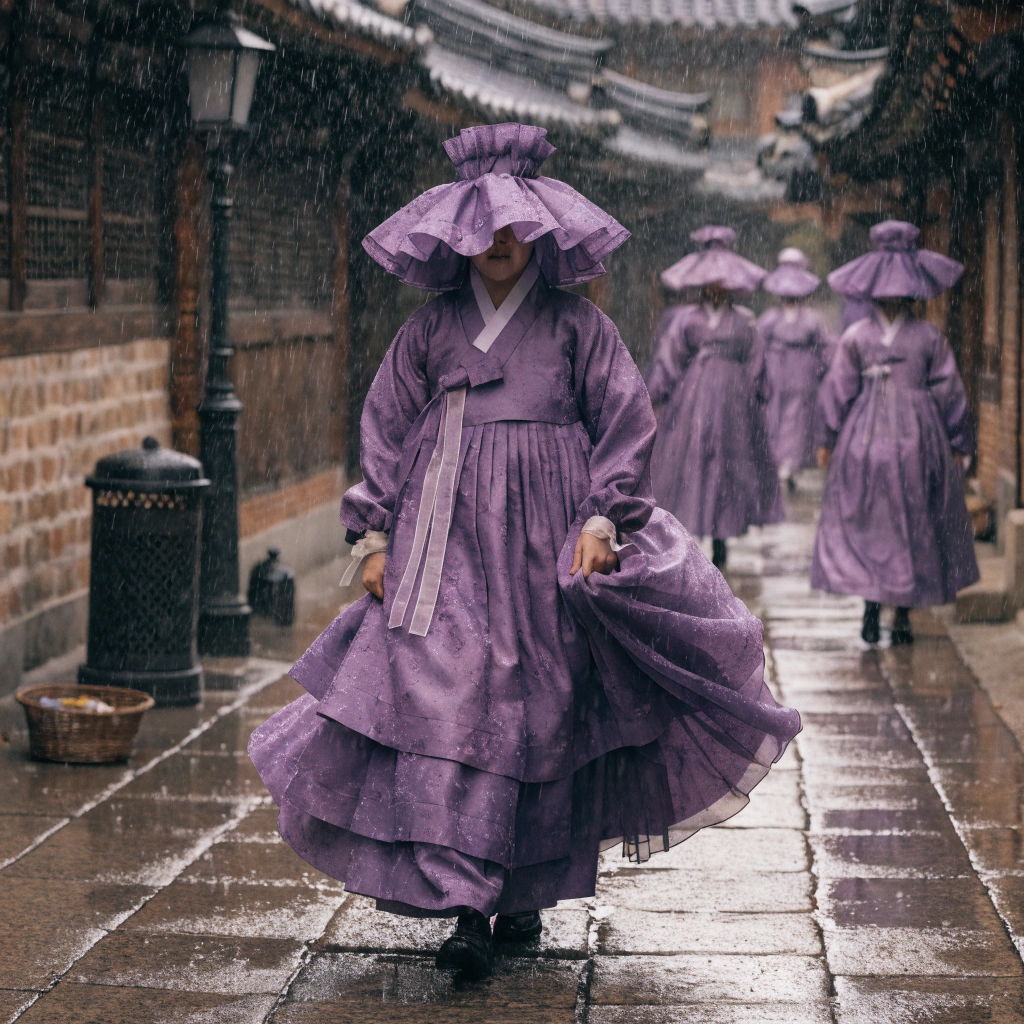
Traditional Korean Clothes: The Hanbok
Hanbok is the traditional clothing of Korea. It is very old and very beautiful. The Hanbok is not tight. It is loose and comfortable. People like the flow of the dress.
Women wear a short jacket and a long skirt. Men wear a short jacket and loose pants. The clothes have many bright colors. People wear the Hanbok for special days. They wear it for weddings and holidays.
The Hanbok shows Korean history. Many people in Korea love this dress. It is a symbol of their culture.
Grammar Spotlight
Pattern: Present Simple (be)
"Hanbok is the traditional clothing of Korea."
We use 'is' with singular subjects like 'Hanbok' to state facts. This describes what something is or its qualities.
Pattern: Present Simple (Action Verbs)
"Women wear a short jacket and a long skirt."
We use the base form of the verb 'wear' for plural subjects like 'women' or 'men'. This describes a regular habit or general truth.
Test Your Understanding
10 questions · A1 Beginner · 1 free preview
Test what you learned from this article. Answer all questions to earn XP!
What is the Hanbok?
Want to finish the quiz?
9 more questions are waiting for you. Sign up free to unlock the full quiz and earn XP!
Sign Up FreeAlready have an account? Sign In
Question Breakdown
What is the Hanbok?
Your answer:
Correct answer: Traditional Korean clothing
The Hanbok is very tight on the body.
Your answer:
Correct answer: False
What does 'symbol' mean?
Your answer:
Correct answer: A sign that represents an idea
People wear the Hanbok for special _____.
Your answer:
Correct answer: days
Hanbok: The Beautiful Traditional Dress of Korea
The Hanbok is the traditional clothing of South Korea. The name "Hanbok" literally means "Korean clothing." This style is very old because it started more than two thousand years ago. In the past, people wore it every day, but today Koreans usually wear it for special days.
The Hanbok is famous because it has simple lines and beautiful colors. For women, the Hanbok has a short jacket called a "Jeogori" and a long skirt called a "Chima." For men, it has a Jeogori and loose pants called "Baji." These clothes are very comfortable because they are not tight.
Today, the Hanbok is an important symbol of Korean culture. People wear it for weddings, birthdays, and traditional festivals. These traditional clothes are more colorful than modern clothes. Many tourists visit Korea and try on a Hanbok because it is very elegant. It is a great way to learn about Korean history.
Grammar Spotlight
Pattern: Past Simple
"This style is very old because it started more than two thousand years ago."
The past simple is used for finished actions in the past. For regular verbs like 'start', we add '-ed' to the end.
Pattern: Comparatives
"These traditional clothes are more colorful than modern clothes."
We use 'more' + adjective + 'than' to compare two things. Use 'more' when the adjective has two or more syllables, like 'colorful'.
Test Your Understanding
11 questions · A2 Elementary · 1 free preview
Test what you learned from this article. Answer all questions to earn XP!
What does the name 'Hanbok' mean?
Want to finish the quiz?
10 more questions are waiting for you. Sign up free to unlock the full quiz and earn XP!
Sign Up FreeAlready have an account? Sign In
Question Breakdown
What does the name 'Hanbok' mean?
Your answer:
Correct answer: Korean clothing
In the past, people wore Hanbok every day.
Your answer:
Correct answer: True
What does 'festival' mean?
Your answer:
Correct answer: A special day for celebration
Today, the Hanbok is an important _____ of Korean culture.
Your answer:
Correct answer: symbol
Which part of the Hanbok is the skirt for women?
Your answer:
Correct answer: Chima
Hanbok: The Art of Traditional Korean Dress
The Hanbok is a beautiful traditional dress that has represented Korean culture for over two thousand years. It is famous for its bright colors and simple lines, which create a feeling of elegance. Unlike Western clothes that are often tight, the Hanbok is designed to be loose and comfortable. It focuses on the beauty of space and movement rather than showing the shape of the body.
The basic structure of the Hanbok was established during the Three Kingdoms period. For women, it usually consists of a 'jeogori' (a short jacket) and a 'chima' (a long skirt). Men wear a 'jeogori' and 'paji' (loose pants). These garments are made with natural fabrics like silk or hemp, which are often dyed with colors from nature. These colors are chosen carefully because they often have symbolic meanings, such as health or long life.
In the past, the Hanbok was worn daily by everyone in Korea. However, today it is mostly seen during special occasions such as weddings, holidays, and traditional festivals. Many people have noticed that the Hanbok has become popular again recently. Modern designers have created 'Living Hanbok,' which are simplified versions that can be worn more easily in everyday life. These new styles have been influenced by modern fashion trends while keeping the traditional spirit.
The Hanbok is not just a piece of clothing; it is a symbol of history and art. It has been admired by people all over the world because of its unique shape and cultural meaning. Whether it is a traditional style or a modern one, the Hanbok remains an important part of Korea’s national identity. It is a living tradition that continues to evolve.
Grammar Spotlight
Pattern: Present Perfect Tense
"The Hanbok is a beautiful traditional dress that has represented Korean culture for over two thousand years."
The present perfect (have/has + past participle) is used here to describe an action that started in the past and continues to be true in the present.
Pattern: Passive Voice
"The basic structure of the Hanbok was established during the Three Kingdoms period."
The passive voice (be + past participle) is used to focus on the object (the structure) rather than who created it. It is common in historical descriptions.
Test Your Understanding
11 questions · B1 Intermediate · 1 free preview
Test what you learned from this article. Answer all questions to earn XP!
What is the primary design focus of the Hanbok?
Want to finish the quiz?
10 more questions are waiting for you. Sign up free to unlock the full quiz and earn XP!
Sign Up FreeAlready have an account? Sign In
Question Breakdown
What is the primary design focus of the Hanbok?
Your answer:
Correct answer: Space and movement
The Hanbok is worn as everyday clothing by most Koreans today.
Your answer:
Correct answer: False
What does the word 'garments' mean in the text?
Your answer:
Correct answer: Items of clothing
The Hanbok has _____ Korean culture for over two thousand years.
Your answer:
Correct answer: represented
What are 'Living Hanbok'?
Your answer:
Correct answer: Simplified versions for modern daily life
Hanbok: A Harmonious Blend of Tradition and Modern Identity
The Hanbok, which literally translates to 'Korean clothing,' stands as one of the most recognizable symbols of Korean heritage. Its history spans over two thousand years, with its fundamental structure tracing back to the Three Kingdoms period. Unlike Western fashion, which often emphasizes the body’s contours through tailored fits, the Hanbok is designed with a deliberate focus on 'flow' and 'void.' This aesthetic choice utilizes loose, simple lines to create a sense of elegance and effortless movement, allowing the garment to interact dynamically with the wearer’s environment.
Traditionally, the Hanbok consists of a 'jeogori' (a short jacket) paired with either a 'chima' (a full skirt for women) or 'baji' (loose trousers for men). Historically, these garments served as more than just functional attire; they were a visual language indicating social status and marital condition. For instance, prestigious families would wear vibrant colors made from high-quality silk, whereas commoners were often restricted to white or earthy tones. Furthermore, the intricate symbolism embedded in the embroidery—such as peonies for wealth or cranes for longevity—reflected the deep-seated philosophical values of the era.
In the 21st century, the Hanbok has undergone a significant transformation, evolving from ceremonial wear into a source of contemporary inspiration. While it was once reserved for weddings and ancestral rites, modern designers have reimagined the silhouette to suit the demands of daily life. This 'Modern Hanbok' movement emphasizes versatility and comfort, incorporating shorter hemlines and synthetic fabrics that are easier to maintain. Consequently, the garment has gained international visibility, frequently appearing on global fashion runways and in popular media.
The enduring appeal of the Hanbok lies in its remarkable craftsmanship and its ability to adapt without losing its essence. By balancing historical integrity with modern innovation, Korea has ensured that this traditional dress remains a relevant cultural anchor. As the world becomes increasingly globalized, the Hanbok serves as a powerful reminder of how traditional aesthetics can be successfully integrated into the modern wardrobe, offering a unique perspective on the relationship between clothing, identity, and art.
Grammar Spotlight
Pattern: Passive Voice
"The Hanbok is designed with a deliberate focus on 'flow' and 'void.'"
The passive voice is used here to emphasize the object (the Hanbok) and the action of designing rather than the designer. It is formed using the verb 'to be' plus the past participle.
Pattern: Non-defining Relative Clauses
"The Hanbok, which literally translates to 'Korean clothing,' stands as one of the most recognizable symbols of Korean heritage."
This clause provides extra information about the Hanbok. It is separated by commas and uses 'which' to add detail without changing the basic meaning of the sentence.
Pattern: Present Perfect Tense
"The Hanbok has undergone a significant transformation..."
This tense connects the past to the present, indicating that the transformation started in the past and its results are still relevant today. It is formed with 'has/have' and the past participle.
Test Your Understanding
11 questions · B2 Upper Intermediate · 1 free preview
Test what you learned from this article. Answer all questions to earn XP!
What is the primary aesthetic difference between Hanbok and Western clothing mentioned in the text?
Want to finish the quiz?
10 more questions are waiting for you. Sign up free to unlock the full quiz and earn XP!
Sign Up FreeAlready have an account? Sign In
Question Breakdown
What is the primary aesthetic difference between Hanbok and Western clothing mentioned in the text?
Your answer:
Correct answer: Hanbok focuses on flow and void rather than fitting the body's shape.
In the past, the colors and patterns of a Hanbok were used to indicate a person's social status.
Your answer:
Correct answer: True
Which word describes something that is 'belonging to the present time'?
Your answer:
Correct answer: Contemporary
The Hanbok's design utilizes simple lines to create a sense of _____ and movement.
Your answer:
Correct answer: elegance
What does the 'Modern Hanbok' movement aim to achieve?
Your answer:
Correct answer: To make Hanbok more practical for daily life through shorter hemlines and easier fabrics.
The Aesthetic Philosophy and Socio-Cultural Evolution of the Hanbok
Rarely does a cultural artifact encapsulate the historical trajectory of a nation as poignantly as the Hanbok. Not only does this traditional Korean attire serve as a sartorial relic of the Three Kingdoms period, but it also functions as a living testament to a unique aesthetic paradigm. Unlike the Western emphasis on the anatomical contour, the Hanbok prioritizes the 'void'—the space between the fabric and the body—allowing for a fluid elegance that transcends mere functionality. The concept of 'void' is not merely an absence of form but a deliberate design choice that invites movement. When the wearer walks, the billowing fabric creates a rhythmic sway that is often compared to the wind, reflecting a specific Korean sensibility that values harmony over static precision.
It is through the voluminous silhouette of the chima (skirt) and the structural brevity of the jeogori (jacket) that the Hanbok achieves its ethereal quality. The meticulous preservation of these forms over two millennia suggests a profound cultural resilience. Historically, the Hanbok was a nuanced indicator of social stratification, with materials and colors strictly regulated by sumptuary laws. For instance, commoners were often restricted to plain white cotton, while the royalty donned intricate silks in vibrant hues. However, the modern resurgence of the garment has fostered a more egalitarian approach to its wear, stripping away the rigid class distinctions of the past and allowing the Hanbok to become a shared symbol of national pride.
The contemporary discourse surrounding the Hanbok often navigates the delicate boundary between cultural appreciation and appropriation. As the 'Hallyu' wave propels Korean aesthetics onto the global stage, the Hanbok has undergone a radical transformation. Designers now experiment with 'New Hanbok,' blending traditional lines with modern fabrics to suit a fast-paced, urban lifestyle. Furthermore, the global fascination with K-dramas has introduced the Hanbok to a diverse international audience, sparking both admiration and complex debates about who has the right to re-imagine these traditional forms. Yet, despite these innovations, the philosophical underpinnings remain intact. The garment continues to embody the evanescent beauty of nature, reflected in the use of natural dyes and organic shapes that mimic the Korean landscape.
The transition from a daily necessity to a ceremonial masterpiece has not diminished its relevance. On the contrary, the Hanbok’s evolution demonstrates how tradition can be successfully integrated into modernity without losing its soul. Whether worn at a festive wedding or showcased on a Parisian runway, it remains a powerful symbol of identity, bridging the gap between an ancestral past and a globalized future. To understand the Hanbok is to understand the Korean spirit—one that values the quiet dignity of movement and the enduring power of cultural heritage.
Grammar Spotlight
Pattern: Negative Inversion
"Rarely does a cultural artifact encapsulate the historical trajectory of a nation as poignantly as the Hanbok."
This pattern is used for emphasis by placing a negative or restrictive adverb at the beginning of the sentence. It requires the auxiliary verb to come before the subject.
Pattern: It-Cleft Sentence
"It is through the voluminous silhouette of the chima and the structural brevity of the jeogori that the Hanbok achieves its ethereal quality."
Cleft sentences are used to focus on a specific part of the sentence. Here, it emphasizes the 'how' (the silhouette and brevity) as the cause of the ethereal quality.
Pattern: Nominalisation
"The meticulous preservation of these forms over two millennia suggests a profound cultural resilience."
Nominalisation involves turning verbs or adjectives into nouns (e.g., 'preserve' to 'preservation'). This is a hallmark of formal C1 writing as it allows for more abstract and dense information.
Test Your Understanding
12 questions · C1 Advanced · 1 free preview
Test what you learned from this article. Answer all questions to earn XP!
What is the primary philosophical focus of the Hanbok's design according to the text?
Want to finish the quiz?
11 more questions are waiting for you. Sign up free to unlock the full quiz and earn XP!
Sign Up FreeAlready have an account? Sign In
Question Breakdown
What is the primary philosophical focus of the Hanbok's design according to the text?
Your answer:
Correct answer: The interplay between movement and the 'void'
Historically, the materials and colors of the Hanbok were available to everyone regardless of social status.
Your answer:
Correct answer: False
What does 'sartorial' mean?
Your answer:
Correct answer: Related to clothing or tailoring
The Hanbok functions as a living _____ to a unique aesthetic paradigm.
Your answer:
Correct answer: testament
Which factor has contributed to the global visibility of the Hanbok?
Your answer:
Correct answer: The international popularity of K-dramas
The 'New Hanbok' movement completely ignores the philosophical underpinnings of traditional design.
Your answer:
Correct answer: False
The Ontological Aesthetics of Hanbok: A Synthesis of Flux and Form
To engage with the Hanbok is to embark upon a journey through the ontological depths of Korean history, where the vestiary arts transcend mere utility to become a silent dialogue between the wearer and the cosmos. Emerging from the crucible of the Three Kingdoms period—Goguryeo, Baekje, and Silla—this traditional attire has remained remarkably resilient against the encroaching tides of global homogenization. Unlike the Western sartorial paradigm, which historically sought to accentuate the anatomical contours of the human frame through rigorous tailoring, the Hanbok prioritizes the 'aesthetics of the void.' It is a philosophy predicated on the belief that beauty resides not in the constriction of form, but in the fluid interplay of volume and movement. Not only does the Hanbok encapsulate a specific historical period, but it also reflects a profound philosophical orientation rooted in Neo-Confucianism.
Central to this aesthetic is the 'jeogori,' a short jacket whose curved lines are intended to evoke the eaves of traditional Korean architecture. When paired with the 'chima,' a high-waisted wrap-around skirt for women, or the 'baji' for men, the silhouette achieves a sense of levity that belies its structural complexity. Were one to examine the meticulous construction of the 'baerae'—the subtle curve of the sleeves—one would find an architectural echo of the natural world. This juxtaposition of linear and curvilinear elements creates a visual equilibrium that is quintessential to the Korean identity. The 'void' within the garment allows for a freedom of motion that suggests an ephemeral grace, as if the fabric were an extension of the air itself rather than a terrestrial constraint.
Furthermore, the Hanbok served as a sophisticated semiotic system, conveying nuances of social hierarchy and marital status through color and fabric. During the Joseon Dynasty, the use of vibrant, primary colors was often reserved for the sovereign and the nobility, while the commonality donned white, earning them the moniker 'the white-clad people.' This dichotomy between the opulent silks of the court and the rustic hemp or ramie of the peasantry underscores the role of clothing as a repository of sociopolitical values. Even the choice of natural dyes, derived from indigo or safflower, reflects a deep-seated reverence for the seasonal cycles. The juxtaposition of these elements suggests a vestiary language that communicates social status through material nuance, where even the slightest variation in embroidery could denote a specific rank within the bureaucratic apparatus.
In the contemporary era, the Hanbok has undergone a profound metamorphosis. While it remains a staple of ceremonial life, the rise of the 'New Hanbok' movement suggests a yearning to reconcile traditional austerity with the exigencies of modern life. Designers are increasingly experimenting with synthetic textiles and truncated silhouettes, yet the core ethos of 'flow' remains inviolable. It could be argued that the Hanbok’s survival is due to its inherent adaptability; it is a garment that breathes with the wearer. Should the Hanbok continue to evolve at this trajectory, it will likely remain a potent symbol of cultural sovereignty in an increasingly fragmented world. Not only does it represent a historical legacy, but it also serves as a testament to the enduring power of aesthetic harmony and the preservation of a unique cultural consciousness in the face of modernity.
Grammar Spotlight
Pattern: Negative Inversion
"Not only does the Hanbok encapsulate a specific historical period, but it also reflects a profound philosophical orientation rooted in Neo-Confucianism."
Inversion is used after negative or restrictive expressions (like 'not only') to add emphasis. The auxiliary verb 'does' precedes the subject 'the Hanbok'.
Pattern: Inverted Conditional (Subjunctive)
"Were one to examine the meticulous construction of the 'baerae'—the subtle curve of the sleeves—one would find an architectural echo of the natural world."
This is a formal alternative to 'If one were to examine.' It uses the subjunctive 'were' in an inverted position to express a hypothetical or scholarly condition.
Pattern: Academic Hedging
"It could be argued that the Hanbok’s survival is due to its inherent adaptability; it is a garment that breathes with the wearer."
Hedging is used to express caution or to acknowledge that a statement is an interpretation rather than an absolute fact. 'It could be argued that' is a common C2 academic device.
Test Your Understanding
12 questions · C2 Mastery · 1 free preview
Test what you learned from this article. Answer all questions to earn XP!
According to the article, what is the primary difference between the Hanbok and Western clothing paradigms?
Want to finish the quiz?
11 more questions are waiting for you. Sign up free to unlock the full quiz and earn XP!
Sign Up FreeAlready have an account? Sign In
Question Breakdown
According to the article, what is the primary difference between the Hanbok and Western clothing paradigms?
Your answer:
Correct answer: The Hanbok focuses on the 'aesthetics of the void' rather than anatomical contours.
Commoners during the Joseon Dynasty were typically known for wearing vibrant, primary-colored garments.
Your answer:
Correct answer: False
What does the word 'ephemeral' imply about the beauty of the Hanbok?
Your answer:
Correct answer: It is fleeting and transitory.
The Hanbok serves as a _____ system, conveying social status through color and fabric.
Your answer:
Correct answer: semiotic
What does the 'baerae' specifically refer to in the construction of the Hanbok?
Your answer:
Correct answer: The subtle curve of the sleeves.
The 'New Hanbok' movement seeks to completely abandon traditional aesthetics in favor of modern utility.
Your answer:
Correct answer: False
