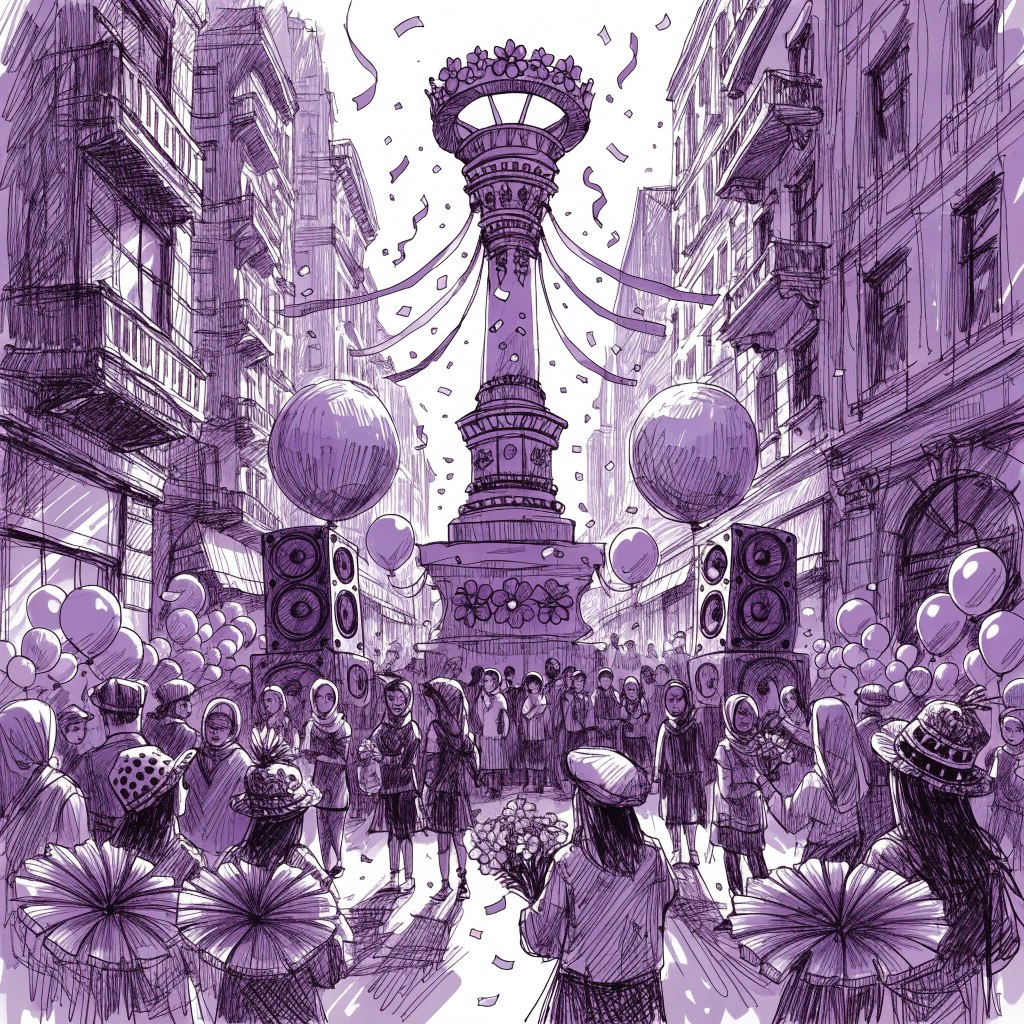
Children's Day in Turkey
April 23rd is a very special day in Turkey. It is a big holiday for all children. Mustafa Kemal Atatürk is the founder of Turkey. He gives this day to the children. On this day, children from many countries visit Turkey. They wear beautiful clothes and dance. There are many flags in the streets. Children go to the big park. They play games and sing songs. It is a happy day. The children are the future of the world.
Grammar Spotlight
Pattern: Present Simple of 'To Be'
"April 23rd is a very special day in Turkey."
We use 'is' with singular subjects like dates or names. It describes a fact or a state that is always true.
Pattern: Present Simple (Plural)
"They play games and sing songs."
For plural subjects like 'they' or 'children', we use the base form of the verb without an 's' at the end.
Test Your Understanding
10 questions · A1 Beginner · 1 free preview
Test what you learned from this article. Answer all questions to earn XP!
When is the holiday for children in Turkey?
Want to finish the quiz?
9 more questions are waiting for you. Sign up free to unlock the full quiz and earn XP!
Sign Up FreeAlready have an account? Sign In
Question Breakdown
When is the holiday for children in Turkey?
Your answer:
Correct answer: April 23rd
Atatürk is the founder of Turkey.
Your answer:
Correct answer: True
What does 'countries' mean?
Your answer:
Correct answer: Areas of land with their own governments
Children go to the big _____.
Your answer:
Correct answer: park
A Special Day for Children in Turkey
April 23rd is a very special day in Turkey. It is called National Sovereignty and Children’s Day. On this day in 1920, the Grand National Assembly of Turkey opened for the first time. This was a very important moment for the country because it was the start of a new government.
Mustafa Kemal Atatürk was the founder of the Republic of Turkey. He believed that children were the most important people for the future. For this reason, he gave this special day to all children. He wanted them to be happy and successful.
Today, the holiday is bigger than before. Since 1979, children from many different countries come to Turkey to celebrate together. They wear colorful traditional clothes and perform traditional dances. The streets are full of flags and decorations.
This holiday is unique because it is the only festival in the world for children. It shows that peace and friendship are important. Turkish children share their joy with their new friends from around the world.
Grammar Spotlight
Pattern: Past Simple with 'be' and Regular Verbs
"Mustafa Kemal Atatürk was the founder of the Republic of Turkey."
We use the past simple to talk about finished actions or states in the past. For the verb 'be', we use 'was' or 'were', and for regular verbs, we usually add '-ed' like in 'opened'.
Pattern: Comparatives
"Today, the holiday is bigger than before."
We use comparatives to compare two things or times. For short adjectives like 'big', we add '-er' and use the word 'than' after it.
Test Your Understanding
11 questions · A2 Elementary · 1 free preview
Test what you learned from this article. Answer all questions to earn XP!
When did the Grand National Assembly of Turkey open?
Want to finish the quiz?
10 more questions are waiting for you. Sign up free to unlock the full quiz and earn XP!
Sign Up FreeAlready have an account? Sign In
Question Breakdown
When did the Grand National Assembly of Turkey open?
Your answer:
Correct answer: 1920
Mustafa Kemal Atatürk gave this holiday to children because he believed they were the future.
Your answer:
Correct answer: True
What does 'unique' mean?
Your answer:
Correct answer: The only one of its kind
The streets are full of _____ and decorations.
Your answer:
Correct answer: flags
Why is this holiday unique in the world?
Your answer:
Correct answer: Because it is the only festival officially for children
National Sovereignty and Children's Day in Turkey
April 23rd is a very special date in Turkey. It is known as National Sovereignty and Children's Day. This holiday has been celebrated since the early years of the Turkish Republic. It marks the anniversary of the foundation of the Grand National Assembly, which was established in 1920.
Mustafa Kemal Atatürk, the founder of the country, dedicated this important day to children. He believed that children are the future of the nation and should be protected. Because of his vision, Turkey became the first country in the world to have an official holiday for children. He wanted to emphasize that the new republic was built for the next generation.
Since 1979, the celebrations have become international. Every year, children from all over the world are invited to Turkey to take part in the festivities. They stay with Turkish families and share their unique cultures. This tradition helps young people build friendships that cross borders and promote world peace.
During the day, many colorful events are organized across the country. Schools perform dances and songs in large stadiums. A famous tradition is when children take over the seats of government officials. For a short time, a child might sit in the chair of the President or the Prime Minister. This act shows that children will lead the country one day.
In conclusion, April 23rd is not just a day off from school. It is a day when the importance of democracy and the value of children are honored by everyone. It has been a symbol of hope and unity for over a century.
Grammar Spotlight
Pattern: The Passive Voice
"The Grand National Assembly was established in 1920."
The passive voice is used when the action is more important than the person who did it. It is formed using the verb 'to be' and the past participle of the main verb.
Pattern: The Present Perfect
"This holiday has been celebrated since the early years of the Turkish Republic."
The present perfect is used for actions that began in the past and continue to the present. It is formed with 'have' or 'has' plus the past participle.
Test Your Understanding
11 questions · B1 Intermediate · 1 free preview
Test what you learned from this article. Answer all questions to earn XP!
Who dedicated the April 23rd holiday to children?
Want to finish the quiz?
10 more questions are waiting for you. Sign up free to unlock the full quiz and earn XP!
Sign Up FreeAlready have an account? Sign In
Question Breakdown
Who dedicated the April 23rd holiday to children?
Your answer:
Correct answer: Mustafa Kemal Atatürk
Turkey was the first country to have an official holiday dedicated to children.
Your answer:
Correct answer: True
What does 'sovereignty' mean?
Your answer:
Correct answer: The power of a country to govern itself
A famous tradition is when children _____ over the seats of government officials.
Your answer:
Correct answer: take
In what year did the holiday become international?
Your answer:
Correct answer: 1979
The Dual Legacy of Democracy: National Sovereignty and Children's Day
Every year on April 23rd, Turkey commemorates a pivotal moment in its history that uniquely intertwines the birth of a modern democracy with a celebration of the younger generation. National Sovereignty and Children’s Day serves as a profound reminder of the nation’s journey toward independence and the visionary leadership of Mustafa Kemal Atatürk. This day is not merely a public holiday; it represents a sophisticated ideological framework where the future of a republic is explicitly linked to the well-being and education of its children.
Historically, the date marks the foundation of the Grand National Assembly of Turkey in 1920. During the War of Independence, this legislative body was established to represent the collective will of the people, effectively shifting the source of power from a monarch to the citizenry. Having recognized the importance of this shift, Atatürk dedicated the anniversary to children, famously asserting that they are the 'future of the nation.' This was an unprecedented gesture globally, as it was the first time a head of state had officially dedicated a national day of sovereignty to the youth.
Since 1979, which was declared the International Year of the Child by the United Nations, the holiday has taken on a significant international dimension. Turkey began inviting children from various countries to participate in the festivities, fostering a spirit of global solidarity and cultural exchange. These young visitors are typically hosted by local families, an experience that allows for the breaking down of cultural barriers and the promotion of international peace. Consequently, the capital city, Ankara, transforms into a vibrant hub where diverse languages and traditions are celebrated simultaneously.
From an analytical perspective, the dual nature of this holiday underscores a critical political philosophy: for a democracy to be sustainable, it must be nurtured by subsequent generations who understand the value of freedom. The celebrations often include performances, parades, and a symbolic session in the Grand National Assembly where children temporarily take the seats of members of parliament. This symbolic gesture highlights the expectation that these children will one day bear the responsibility of governance. In conclusion, April 23rd remains a cornerstone of Turkish identity, blending historical reverence with a forward-looking commitment to global harmony and the empowerment of the youth.
Grammar Spotlight
Pattern: Perfect Participle Clause
"Having recognized the importance of this shift, Atatürk dedicated the anniversary to children..."
This structure is used to show that one action was completed before another. It helps to vary sentence structure and show a clear cause-and-effect or chronological relationship.
Pattern: Passive Voice with Modal Verbs
"diverse languages and traditions are celebrated simultaneously."
The passive voice is used here to focus on the action (the celebration) rather than the specific people doing it. This creates a more formal and academic tone.
Pattern: Non-defining Relative Clause
"Ankara, transforms into a vibrant hub where diverse languages and traditions are celebrated simultaneously."
These clauses provide extra information about a noun (Ankara) without being essential to the sentence's meaning. They are typically separated by commas.
Test Your Understanding
11 questions · B2 Upper Intermediate · 1 free preview
Test what you learned from this article. Answer all questions to earn XP!
What historical event does April 23rd primarily mark?
Want to finish the quiz?
10 more questions are waiting for you. Sign up free to unlock the full quiz and earn XP!
Sign Up FreeAlready have an account? Sign In
Question Breakdown
What historical event does April 23rd primarily mark?
Your answer:
Correct answer: The foundation of the Grand National Assembly
Atatürk was the first world leader to dedicate a national sovereignty day to children.
Your answer:
Correct answer: True
What does 'sovereignty' mean in the context of the article?
Your answer:
Correct answer: The power of a nation to govern itself
The holiday took on an international dimension after the UN declared 1979 as the Year of the _____.
Your answer:
Correct answer: Child
What is the symbolic purpose of children taking seats in parliament?
Your answer:
Correct answer: To represent their future responsibility in governance
The Synthesis of Sovereignty and Youth: Evaluating Turkey’s April 23rd Legacy
Seldom in the annals of modern history does a single date encapsulate both the birth of a nation’s legislative foundation and its profound investment in the upcoming generations. On April 23rd, Turkey observes National Sovereignty and Children’s Day, a multifaceted celebration that transcends mere historical commemoration. It was in 1920, amidst the existential struggle for independence, that the Grand National Assembly of Turkey was inaugurated in Ankara, shifting the locus of power from an absolute monarchy to the collective will of the people. This institutionalization of sovereignty marked a pivotal departure from imperial tradition, laying the groundwork for a secular, democratic republic. The transition from the Ottoman Empire to a modern state required more than just territorial defense; it necessitated a radical reconfiguration of political identity.
What makes this occasion truly unique, however, is its dual designation. Mustafa Kemal Atatürk, the visionary founder of the Republic, dedicated this milestone to children—a gesture that was far from a sentimental afterthought. Rather, it was a calculated pedagogical and political statement. Atatürk posited that the preservation of newly-won independence was contingent upon the intellectual and moral development of the youth. By intertwining sovereignty with childhood, he underscored the notion that the republic’s longevity rested not on military prowess alone, but on the cultivation of enlightened future citizens who would be capable of navigating the complexities of a burgeoning international community.
The internationalization of the holiday, which commenced in 1979, further elevated its significance. What began as a domestic observance evolved into a global forum for cultural exchange. Under the auspices of the Turkish Radio and Television Corporation (TRT), children from myriad nations are invited to Turkey, fostering a spirit of camaraderie that defies geopolitical boundaries. This diplomatic dimension serves as a poignant reminder that the pursuit of peace and sovereignty is a collective human endeavor. The sight of children from diverse backgrounds performing in traditional attire symbolizes a hope for a world unified by shared values rather than divided by historical grievances.
In contemporary discourse, the relevance of April 23rd is often scrutinized through the lens of modern challenges, such as educational equity and child welfare. Critics and scholars alike argue that while the symbolic gestures are commendable, the actualization of children’s rights remains an ongoing pursuit that requires more than annual festivities. Nevertheless, the legacy of the holiday persists as a cornerstone of Turkish identity, bridging the gap between historical struggle and future aspirations. Not only does it remind the populace of their hard-won democratic rights, but it also compels a reflection on the responsibilities owed to those who will inherit the state. The synthesis of national pride and global inclusivity remains the hallmark of this enduring tradition.
Grammar Spotlight
Pattern: Negative Inversion
"Seldom in the annals of modern history does a single date encapsulate both the birth of a nation’s legislative foundation and its profound investment in the upcoming generations."
Inversion is used here by placing a negative adverb (Seldom) at the beginning of the sentence followed by the auxiliary verb (does) and the subject. This structure is used for rhetorical emphasis and formal tone.
Pattern: Cleft Sentence
"It was in 1920, amidst the existential struggle for independence, that the Grand National Assembly of Turkey was inaugurated..."
This 'It-cleft' structure is used to focus on a specific piece of information (the year 1920). It highlights the timing of the event as the most crucial element of the sentence.
Pattern: Nominalization
"The institutionalization of sovereignty marked a pivotal departure from imperial tradition..."
Nominalization involves turning verbs or adjectives into nouns (e.g., 'institutionalization', 'internationalization'). This is a hallmark of C1 writing as it allows for more abstract, dense, and objective analysis.
Test Your Understanding
12 questions · C1 Advanced · 1 free preview
Test what you learned from this article. Answer all questions to earn XP!
According to the article, why did Atatürk dedicate the day to children?
Want to finish the quiz?
11 more questions are waiting for you. Sign up free to unlock the full quiz and earn XP!
Sign Up FreeAlready have an account? Sign In
Question Breakdown
According to the article, why did Atatürk dedicate the day to children?
Your answer:
Correct answer: As a calculated pedagogical and political statement about the nation's future.
The international aspect of the holiday was part of the original 1920 foundation.
Your answer:
Correct answer: False
What does the word 'locus' refer to in the text?
Your answer:
Correct answer: A specific center or place of activity.
The actualization of children’s rights is described as an ongoing _____.
Your answer:
Correct answer: pursuit
What shift in power occurred with the inauguration of the Grand National Assembly?
Your answer:
Correct answer: From absolute monarchy to the collective will of the people.
The article suggests that military prowess alone is sufficient for a republic's longevity.
Your answer:
Correct answer: False
The Interplay of Sovereignty and Pedagogy: The Symbolic Resonance of April 23rd
Were one to scrutinize the socio-political landscape of post-imperial Turkey, one would inevitably encounter a profound synthesis of national autonomy and the cultivation of the youth. April 23rd, 1920, marks the inception of the Grand National Assembly, an event that signified a definitive rupture from the vestiges of Ottoman autocracy. Yet, what distinguishes the Turkish experience is the deliberate conflation of statehood with the innocence of childhood. Mustafa Kemal Atatürk, the visionary architect of the Republic, did not merely establish a parliamentary hegemony; he bequeathed the very concept of sovereignty to the nation’s children. This gesture was not a mere sentimental whim but a calculated pedagogical maneuver, predicated on the belief that the durability of a republic is indissolubly linked to the intellectual and moral fortitude of its future custodians.
In the early years of the republic, the transition from subjecthood to citizenship necessitated a radical paradigm shift. The child was no longer a peripheral figure in the domestic sphere but rather the vanguard of a burgeoning modernization project. By dedicating the anniversary of national sovereignty to children, the state effectively sacralized the youth, positioning them as the living embodiments of republican ideals. It is often argued, with a degree of academic hedging, that this move served to consolidate a national identity by anchoring the state's legitimacy in the potentiality of the next generation. Should the foundations of the assembly ever be questioned, the presence of the children serves as a poignant reminder of the state’s teleological purpose: to ensure a future of secular enlightenment and self-governance.
Since 1979, this observance has transcended its domestic origins, attaining an ecumenical dimension that few national holidays can claim. The decision to invite children from across the globe to participate in these festivities was a masterstroke of cultural diplomacy, fostering a spirit of transnational rapprochement. It posits that the principles of self-determination and peace are not parochial concerns but universal imperatives. Under the guise of a festival, a sophisticated form of soft power is exercised, one that seeks to bridge the chasm between disparate cultures through the shared experience of childhood. The resulting confluence of diverse traditions in Ankara every April serves as a microcosm of a world where national interests might, if only momentarily, be subordinated to the collective welfare of humanity.
Critics might suggest that such celebrations risk becoming performative, yet the enduring legacy of the holiday suggests a deeper resonance. The ideological underpinnings of the day remain vested in the notion that sovereignty is not a static inheritance but a dynamic responsibility. As the children occupy the seats of parliamentarians for a day, the symbolic inversion of power highlights the fragility and the necessity of democratic institutions. It is through this recursive process of remembrance and celebration that the republic rejuvenates itself. Ultimately, the legacy of April 23rd is a testament to the belief that the most effective way to safeguard national sovereignty is to invest in the universal potential of the child, ensuring that the flame of independence is passed to those most capable of nurturing its light.
Grammar Spotlight
Pattern: Mixed Conditional with Subjunctive
"Were one to scrutinize the socio-political landscape of post-imperial Turkey, one would inevitably encounter a profound synthesis of national autonomy and the cultivation of the youth."
The 'Were one to' structure is a formal, inverted second conditional using the subjunctive mood. It expresses a hypothetical situation in the present or future with a high degree of formality and abstraction.
Pattern: Inverted Conditional (Should)
"Should the foundations of the assembly ever be questioned, the presence of the children serves as a poignant reminder of the state’s teleological purpose."
The use of 'Should' at the beginning of the clause replaces 'If... should', creating a formal conditional structure. It implies that while the condition is possible, it is treated as a remote or hypothetical contingency.
Pattern: Passive Voice with Academic Hedging
"It is often argued, with a degree of academic hedging, that this move served to consolidate a national identity."
This structure uses an impersonal passive ('It is often argued') to distance the author from the claim. It is a common feature of C2-level academic writing to avoid over-generalization and acknowledge multiple perspectives.
Test Your Understanding
12 questions · C2 Mastery · 1 free preview
Test what you learned from this article. Answer all questions to earn XP!
According to the article, what was the primary motivation behind Atatürk's dedication of the holiday to children?
Want to finish the quiz?
11 more questions are waiting for you. Sign up free to unlock the full quiz and earn XP!
Sign Up FreeAlready have an account? Sign In
Question Breakdown
According to the article, what was the primary motivation behind Atatürk's dedication of the holiday to children?
Your answer:
Correct answer: A strategic pedagogical move to ensure the republic's future stability.
The article suggests that the international aspect of the holiday began immediately in 1920.
Your answer:
Correct answer: False
What does the word 'hegemony' most nearly mean in the context of the text?
Your answer:
Correct answer: Leadership or dominance by one group or state.
The transition from subjecthood to citizenship required a radical _____ shift.
Your answer:
Correct answer: paradigm
How does the text describe the role of children in the modernization project?
Your answer:
Correct answer: As the vanguard or leading force of republican ideals.
The author believes the symbolic inversion of power in parliament highlights the fragility of democratic institutions.
Your answer:
Correct answer: True
