The Ramadan Feast in Turkey
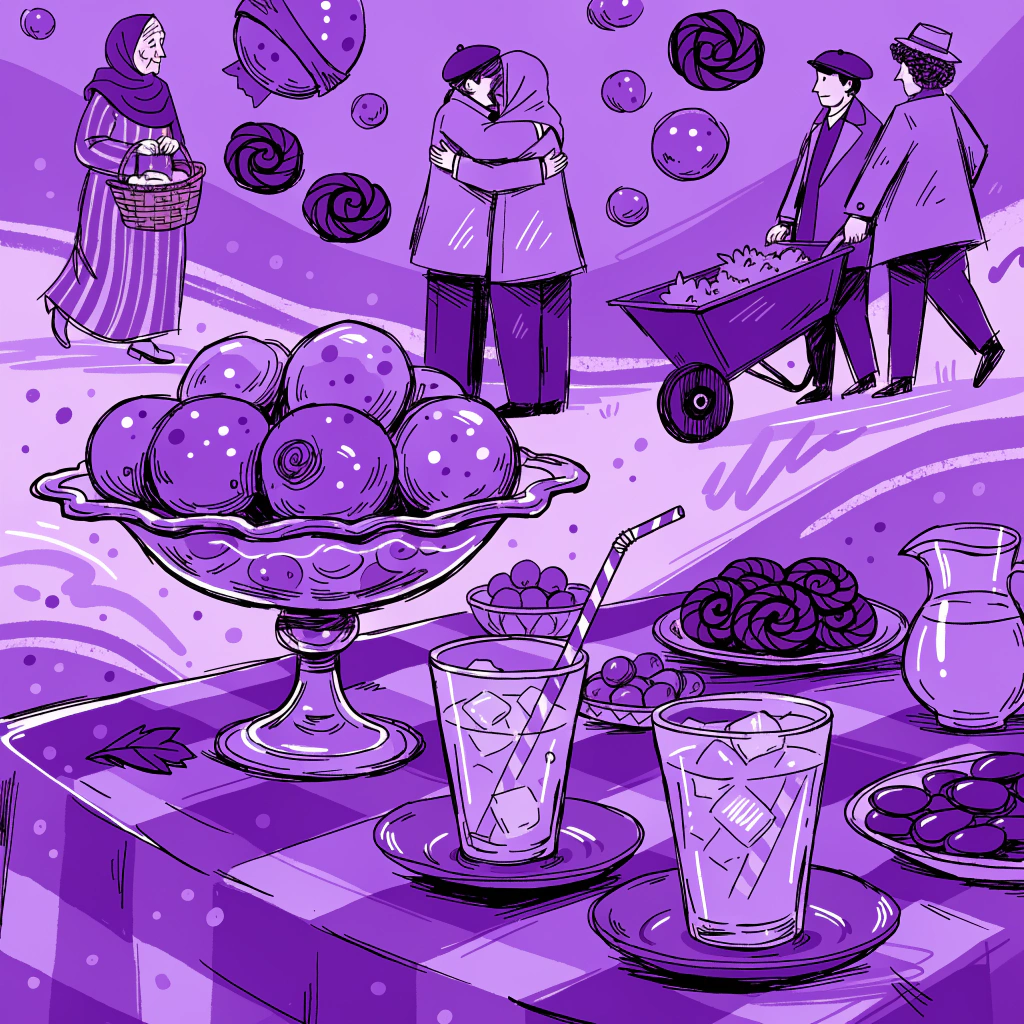
Ramadan Feast is a very important holiday in Turkey. People also call it the Sugar Feast. This holiday comes after the month of Ramadan. It lasts for three days.
In the morning, families wake up early. They wear new and clean clothes. Many people go to the mosque. Then, they visit their parents and grandparents. Children are very happy. They get many sweets, candy, and chocolate. Some children also get money from their elders.
People eat delicious food together. They talk and laugh. It is a time for love and peace. Everyone says "Happy Bayram" to their neighbors and friends.
Grammar Spotlight
Pattern: Present Simple for Facts
"It lasts for three days."
We use the present simple to talk about things that are always true or general facts. We add -s to the verb for 'he', 'she', and 'it'.
Pattern: Adjectives Before Nouns
"They wear new and clean clothes."
Adjectives describe or give more information about nouns. In English, we usually put the adjective before the noun it describes.
Test Your Understanding
10 questions · A1 Beginner · 1 free preview
Test what you learned from this article. Answer all questions to earn XP!
How long does the Ramadan Feast last?
Want to finish the quiz?
9 more questions are waiting for you. Sign up free to unlock the full quiz and earn XP!
Sign Up FreeAlready have an account? Sign In
Question Breakdown
How long does the Ramadan Feast last?
Your answer:
Correct answer: Three days
People wear old and dirty clothes on Bayram.
Your answer:
Correct answer: False
What does 'early' mean?
Your answer:
Correct answer: Near the start of the day
Children get many _____ and chocolate.
Your answer:
Correct answer: sweets
Celebrating Ramazan Bayramı in Turkey
Ramazan Bayramı is a very important holiday in Turkey. People also call it 'Şeker Bayramı' because children get many sweets. It happens after the holy month of Ramadan. Last year, the holiday was very exciting because many people traveled to see their families in different cities. This holiday usually lasts for three days.
On the first morning, men go to the mosque for a special prayer. After the prayer, everyone wears their newest and best clothes. Children visit their older relatives, like grandparents, and kiss their hands to show respect. In return, the older people give the children money or candy. Children love this holiday more than normal days because they get many gifts.
During the three days, families visit their neighbors and friends. They eat delicious traditional foods like baklava and Turkish delight. Because this holiday is about peace, people who were angry with each other became friends again. It is a wonderful and colorful time in Turkey.
Grammar Spotlight
Pattern: Comparative Adjectives
"Children love this holiday more than normal days because they get many gifts."
We use 'more than' with longer adjectives or adverbs to compare two things. In this sentence, it compares the holiday to regular days.
Pattern: Past Simple (Irregular Verbs)
"Because this holiday is about peace, people who were angry with each other became friends again."
The word 'became' is the past simple form of 'become'. We use the past simple to talk about actions or states that happened in the past.
Test Your Understanding
11 questions · A2 Elementary · 1 free preview
Test what you learned from this article. Answer all questions to earn XP!
Why do people call this holiday 'Şeker Bayramı'?
Want to finish the quiz?
10 more questions are waiting for you. Sign up free to unlock the full quiz and earn XP!
Sign Up FreeAlready have an account? Sign In
Question Breakdown
Why do people call this holiday 'Şeker Bayramı'?
Your answer:
Correct answer: Because children receive many sweets
The holiday lasts for one week in Turkey.
Your answer:
Correct answer: False
What does 'delicious' mean?
Your answer:
Correct answer: Very good to eat
Children kiss the _____ of their older relatives to show respect.
Your answer:
Correct answer: hands
Where do men go on the first morning of the holiday?
Your answer:
Correct answer: To the mosque
Celebrating Ramazan Bayramı: Turkey's Sweetest Festival
Ramazan Bayramı is one of the most important religious holidays in Turkey. It has been celebrated for centuries to mark the end of the fasting month of Ramadan. Many people also call it 'Şeker Bayramı', or the Sugar Feast, because children are given many sweets and traditional candies during this time.
Preparation for the holiday usually starts several days before it begins. Houses are cleaned thoroughly from top to bottom, and special traditional foods like baklava are prepared by families. On the first morning of the feast, men go to the mosque for a special prayer. When they return home, families gather for a large breakfast which is enjoyed by everyone after a month of fasting.
Showing respect for elders is a key part of the tradition. Children, who have waited patiently for this day, visit their relatives and neighbors to offer their greetings. They often kiss the hands of older family members and receive 'bayram harçlığı', which is a small amount of pocket money. It is also a time when old arguments are forgotten and people who have not spoken for a long time finally reconcile.
The overall atmosphere in Turkey changes during these three days. Streets are decorated with lights, and public transport is often made free for everyone to visit their loved ones. This festival, which brings families together, remains a vital part of Turkish culture today. It is a beautiful period of peace, joy, and community connection.
Grammar Spotlight
Pattern: Present Perfect
"It has been celebrated for centuries to mark the end of the fasting month of Ramadan."
The present perfect (have/has + past participle) is used here to describe an action that started in the past and continues to be true or relevant in the present. It emphasizes the historical duration of the tradition.
Pattern: Relative Clauses
"Children, who have waited patiently for this day, visit their relatives and neighbors."
This sentence uses a non-defining relative clause starting with 'who' to provide extra information about the subject (children). The commas indicate that the information is descriptive rather than essential for identifying which children are being discussed.
Test Your Understanding
11 questions · B1 Intermediate · 1 free preview
Test what you learned from this article. Answer all questions to earn XP!
Why is Ramazan Bayramı also known as 'Şeker Bayramı'?
Want to finish the quiz?
10 more questions are waiting for you. Sign up free to unlock the full quiz and earn XP!
Sign Up FreeAlready have an account? Sign In
Question Breakdown
Why is Ramazan Bayramı also known as 'Şeker Bayramı'?
Your answer:
Correct answer: Because children receive many sweets and candies.
Preparation for the holiday usually starts on the very first day of the feast.
Your answer:
Correct answer: False
What does 'reconcile' mean in the context of the article?
Your answer:
Correct answer: To restore friendly relations after an argument.
On the first morning of the feast, men go to the _____ for a special prayer.
Your answer:
Correct answer: mosque
What traditional gesture do children perform for older family members?
Your answer:
Correct answer: They kiss their hands.
Ramazan Bayramı: The Spirit of Unity and Tradition in Turkey
Ramazan Bayramı, also known as Şeker Bayramı, stands as one of the most prestigious religious holidays in Turkey. Having fasted from dawn until sunset for thirty days, citizens welcome this three-day celebration with open arms. It is a period when the atmosphere across the nation shifts from the quiet, introspective nature of Ramadan to a vibrant display of communal joy. Historically, the holiday has served as a catalyst for reconciliation, where old grievances are set aside in favor of unity and harmony. The transition is marked by a flurry of activity known as holiday cleaning, ensuring that homes are prepared for the influx of guests.
The observance begins with a special morning prayer at the mosque, after which the social festivities officially commence. It is customary for younger family members to visit their elders, a gesture that emphasizes respect and continuity. During these visits, the 'el öpme' tradition is performed: children kiss the hands of older relatives and place them on their foreheads as a sign of reverence. In return, they are affectionately given pocket money or sweets, which explains why the holiday is predominantly referred to as the 'Sugar Feast' by children. This exchange strengthens the intergenerational bonds that are central to Turkish society.
Hospitality plays a central role in the Turkish experience of the festival. Households are meticulously prepared, and guests are offered an array of traditional desserts, most notably baklava and Turkish delight. These culinary traditions are not merely about indulgence; they symbolize the sweetness and prosperity that families wish for one another in the coming year. Furthermore, the significance of charity cannot be overlooked. Before the holiday begins, many Muslims provide 'Fitra'—a form of obligatory almsgiving—to ensure that even the less fortunate can participate in the festivities with dignity.
In modern times, although many urban dwellers use the long break for coastal vacations, the essence of the holiday remains rooted in family values. Whether through digital messages or traditional visits, the effort to connect with loved ones highlights the enduring nature of Turkish culture. Ultimately, Ramazan Bayramı is more than just a religious obligation; it is a profound cultural landmark that continues to unite the nation through shared values of compassion, forgiveness, and gratitude. It serves as a reminder that, despite the fast pace of modern life, the traditions of the past still hold a vital place in the hearts of the people.
Grammar Spotlight
Pattern: Present Participle Clauses
"Having fasted from dawn until sunset for thirty days, citizens welcome this three-day celebration with open arms."
A participle clause used to express a reason or a sequence of events. 'Having fasted' shows that the action of fasting happened before the welcoming of the holiday.
Pattern: Passive Voice (Present Simple)
"Households are meticulously prepared, and guests are offered an array of traditional desserts..."
Used when the action (preparing the house or offering desserts) is more important than who is performing it. It is formed with the verb 'to be' and the past participle.
Pattern: Non-defining Relative Clauses
"...which explains why the holiday is predominantly referred to as the 'Sugar Feast' by children."
This clause adds extra information to the previous statement. Using 'which' at the beginning of the clause allows the writer to comment on the entire preceding idea.
Test Your Understanding
11 questions · B2 Upper Intermediate · 1 free preview
Test what you learned from this article. Answer all questions to earn XP!
What does the 'el öpme' tradition primarily signify?
Want to finish the quiz?
10 more questions are waiting for you. Sign up free to unlock the full quiz and earn XP!
Sign Up FreeAlready have an account? Sign In
Question Breakdown
What does the 'el öpme' tradition primarily signify?
Your answer:
Correct answer: A gesture of respect and reverence for elders
Ramazan Bayramı lasts for exactly one week in Turkey.
Your answer:
Correct answer: False
What does 'reconciliation' mean in the context of the article?
Your answer:
Correct answer: Restoring friendly relations
Hospitality plays a _____ role in the Turkish experience of the festival.
Your answer:
Correct answer: central
Why is the holiday often called the 'Sugar Feast'?
Your answer:
Correct answer: Because of the traditional gift of sweets to children
The Tapestry of Tradition: Navigating the Socio-Cultural Landscape of Ramazan Bayramı
Seldom does a cultural phenomenon permeate the collective consciousness of a society as comprehensively as Ramazan Bayramı does in modern Turkey. Known colloquially as the 'Sugar Feast,' this three-day observance marks the conclusion of Ramadan, a period defined by spiritual introspection and physical restraint. The transition from the rigorous asceticism of the lunar month to the unbridled exuberance of the festival represents a profound psychological catharsis for millions. What remains most striking to the external observer is the seamless juxtaposition of ancient religious solemnity and contemporary festive levity.
In the Turkish context, the holiday is as much a sociological event as it is a religious one. It is the act of reconciliation that defines the holiday's spiritual core; estranged relatives are expected to set aside grievances, fostering a communal sense of renewal. This process is often facilitated by the 'el öpmek' ritual, where younger generations kiss the hands of their elders as a sign of respect and subservience to familial hierarchy. In return, the elders bestow blessings and, quite frequently, small tokens of currency or sweets upon the youth, reinforcing the reciprocal nature of societal bonds.
The debate surrounding the nomenclature of the holiday—whether to refer to it as 'Ramazan Bayramı' or 'Şeker Bayramı'—reveals a fascinating socio-political dichotomy. While the former emphasizes the religious origin of the feast, the latter highlights the secular, sensory delights of the occasion. Regardless of the label, the meticulous preparation of traditional delicacies, such as honey-drenched baklava and aromatic Turkish delight, underscores the enduring importance of hospitality. The sheer volume of confectionaries consumed during this period has led to the holiday's popular association with sweetness, both literal and metaphorical.
However, the pressures of globalization and the rapid pace of urban life have introduced a certain nuance to how the holiday is perceived by the younger demographic. For some, the traditional requirement of visiting multiple households in a single day is facing a slow obsolescence, replaced instead by the allure of a coastal vacation. Critics argue that this shift towards 'holidaying' over 'visiting' dilutes the communal fabric of the nation. Conversely, proponents suggest that any form of respite is necessary in a high-stress economy, and that the essence of the feast adapts to the needs of the time.
Ultimately, Ramazan Bayramı serves as a resilient bastion of cultural identity. It is the spirit of inclusivity and the revitalization of familial bonds that ensure its continued relevance. Whether through the quiet reflection of a morning prayer or the lively chatter of a crowded dinner table, the feast remains an indispensable pillar of Turkish life, bridging the gap between the historical past and an evolving future. The manifest persistence of these traditions, even in the face of modern skepticism, highlights the human necessity for shared ritual and the celebration of endurance.
Grammar Spotlight
Pattern: Negative Inversion
"Seldom does a cultural phenomenon permeate the collective consciousness of a society as comprehensively as Ramazan Bayramı does in modern Turkey."
When using negative or restrictive adverbs like 'seldom' at the start of a sentence, the auxiliary verb moves before the subject. This structure is used for emphasis and is typical of formal C1-level writing.
Pattern: Cleft Sentences
"It is the act of reconciliation that defines the holiday's spiritual core."
A cleft sentence splits a single message into two clauses to focus on specific information. Here, 'It is [focus] that...' emphasizes the 'act of reconciliation' as the primary defining factor.
Pattern: Nominalisation
"The meticulous preparation of traditional delicacies underscores the importance of hospitality."
Nominalisation involves turning verbs (prepare) or adjectives into nouns (preparation). This creates a more academic and sophisticated tone by focusing on concepts rather than actions.
Test Your Understanding
12 questions · C1 Advanced · 1 free preview
Test what you learned from this article. Answer all questions to earn XP!
According to the article, what does the naming debate between 'Ramazan' and 'Şeker' Bayramı signify?
Want to finish the quiz?
11 more questions are waiting for you. Sign up free to unlock the full quiz and earn XP!
Sign Up FreeAlready have an account? Sign In
Question Breakdown
According to the article, what does the naming debate between 'Ramazan' and 'Şeker' Bayramı signify?
Your answer:
Correct answer: A socio-political split between religious and secular perspectives.
The 'el öpmek' ritual is described as a way for elders to show subservience to the younger generation.
Your answer:
Correct answer: False
Which word describes the process of releasing strong emotions after a period of restraint?
Your answer:
Correct answer: Catharsis
The transition from the month-long fast to the festival represents a psychological _____ for many participants.
Your answer:
Correct answer: catharsis
What is a major criticism mentioned regarding the modern trend of taking vacations during the holiday?
Your answer:
Correct answer: It weakens the traditional social and communal ties of the nation.
The article suggests that Ramazan Bayramı is losing its relevance in modern Turkish life.
Your answer:
Correct answer: False
The Sociocultural Tapestry of Ramazan Bayramı: A Study in Reconciliation and Continuity
The transition from the month of Ramadan to the festivities of the Bayram is not merely a chronological progression but a profound psychological pivot in the Turkish collective consciousness. As the period of asceticism draws to a close, the nation undergoes a metamorphosis, shifting from the introspective solemnity of fasting to a vibrant, albeit nuanced, celebration of communal resilience. This three-day observance, known formally as Ramazan Bayramı and colloquially as Şeker Bayramı, serves as a quintessential paradigm of how religious precepts intertwine with secular cultural identities. Seldom does a tradition so effectively bridge the chasm between the sacred and the profane, transforming a religious obligation into a multidimensional social event that transcends generational divides.
Historically, the nomenclature of the holiday has been a subject of scholarly discourse. While the term 'Ramazan Bayramı' anchors the event in its theological origins, the 'Sugar Feast' (Şeker Bayramı) moniker has gained traction due to the pervasive indulgence in sweets and the hospitable distribution of confections to children. Some purists argue that the latter terminology risks trivializing the spiritual gravity of the fast; however, others posit that it reflects the sweetness of reconciliation and the joy of breaking bread together. Regardless of the preferred designation, the underlying ethos remains one of profound altruism and the meticulous restoration of social bonds. Were the youth to neglect the venerated tradition of kissing the hands of their elders, the very fabric of Turkish social hierarchy might begin to fray, as this gesture signifies not only respect but also the continuity of ancestral wisdom.
In the contemporary era, the traditional 'Bayramlaşma'—the act of formal visitation—is facing a paradigm shift. With the increasing urbanization and the relentless pace of modern life, many families have begun to view the holiday as an opportunity for an ephemeral escape to coastal resorts. This trend has sparked a debate regarding the erosion of communal structures. Proponents of the traditional model suggest that these modern escapades undermine the spirit of reciprocity that defines the Bayram. Conversely, sociologists note that even in the absence of physical presence, digital connectivity ensures that the sentimentality of the occasion persists. Lest the nuances of these traditions be overlooked, it is imperative to recognize that the Bayram functions as a critical mechanism for conflict resolution. It is a period when long-standing grievances are theoretically cast aside in favor of a collective commitment to harmony.
Furthermore, the gastronomic dimension of the festival cannot be overstated. The confluence of regional culinary traditions results in a kaleidoscopic array of delicacies, ranging from the crystalline layers of baklava to the aromatic complexity of traditional sherbets. This is not merely an exercise in gluttony but a sophisticated form of cultural expression. Not only is the feast a reward for the preceding month's discipline, but it also serves as a canvas upon which local identities are painted. Each morsel shared acts as a vessel for historical memory, reinforcing a sense of belonging that is increasingly rare in a globalized world. Should the observer venture into the domestic sphere, the meticulous preparation of these dishes reveals a dedication to excellence that mirrors the spiritual discipline of the preceding month.
Ultimately, Ramazan Bayramı remains a cornerstone of the Turkish identity, a time when the ephemeral nature of life is balanced by the permanence of kinship and faith. Whether through the quiet piety of morning prayers or the boisterous laughter of a family gathering, the holiday reaffirms a shared destiny. It is a testament to the enduring power of tradition to adapt, evolve, and provide solace in an ever-changing landscape. As the sun sets on the final day of the feast, the lingering sweetness of the Bayram serves as a reminder that the bonds of community are the ultimate safeguard against the isolation of the modern condition.
Grammar Spotlight
Pattern: Negative Inversion
"Seldom does a tradition so effectively bridge the chasm between the sacred and the profane."
This pattern involves placing a negative or restrictive adverb (like 'seldom', 'rarely', 'never') at the beginning of a sentence for emphasis, which triggers an auxiliary verb-subject inversion. It is used in formal or literary contexts to create a dramatic or sophisticated tone.
Pattern: Inverted Conditional (Subjunctive)
"Were the youth to neglect the venerated tradition of kissing the hands of their elders, the very fabric of Turkish social hierarchy might begin to fray."
This is a formal alternative to 'If the youth were to neglect...'. By removing 'if' and placing 'were' at the start, the sentence gains a scholarly and hypothetical weight common in C2 level academic writing.
Pattern: Negative Purpose Clause with 'Lest'
"Lest the nuances of these traditions be overlooked, it is imperative to recognize that the Bayram functions as a critical mechanism for conflict resolution."
The word 'lest' means 'to avoid the risk of' or 'in case'. It is followed by a base form verb (the present subjunctive) or 'should', and is used to express a cautious objective or to prevent an undesirable outcome in formal prose.
Test Your Understanding
12 questions · C2 Mastery · 1 free preview
Test what you learned from this article. Answer all questions to earn XP!
What does the author suggest about the dual nomenclature of the holiday?
Want to finish the quiz?
11 more questions are waiting for you. Sign up free to unlock the full quiz and earn XP!
Sign Up FreeAlready have an account? Sign In
Question Breakdown
What does the author suggest about the dual nomenclature of the holiday?
Your answer:
Correct answer: The debate over the name reflects a tension between religious origins and cultural practices.
The author argues that modern digital connectivity has completely replaced the need for traditional holiday visitations.
Your answer:
Correct answer: False
Which word is synonymous with 'lasting for a very short time' in the context of the article?
Your answer:
Correct answer: Ephemeral
The transition from fasting to the feast is described as a profound _____ pivot in the collective consciousness.
Your answer:
Correct answer: psychological
What is the primary function of the 'hand-kissing' ritual mentioned in the text?
Your answer:
Correct answer: To signify respect for hierarchy and the continuity of ancestral wisdom.
The text posits that the gastronomic aspect of the Bayram is a form of cultural expression rather than mere gluttony.
Your answer:
Correct answer: True
