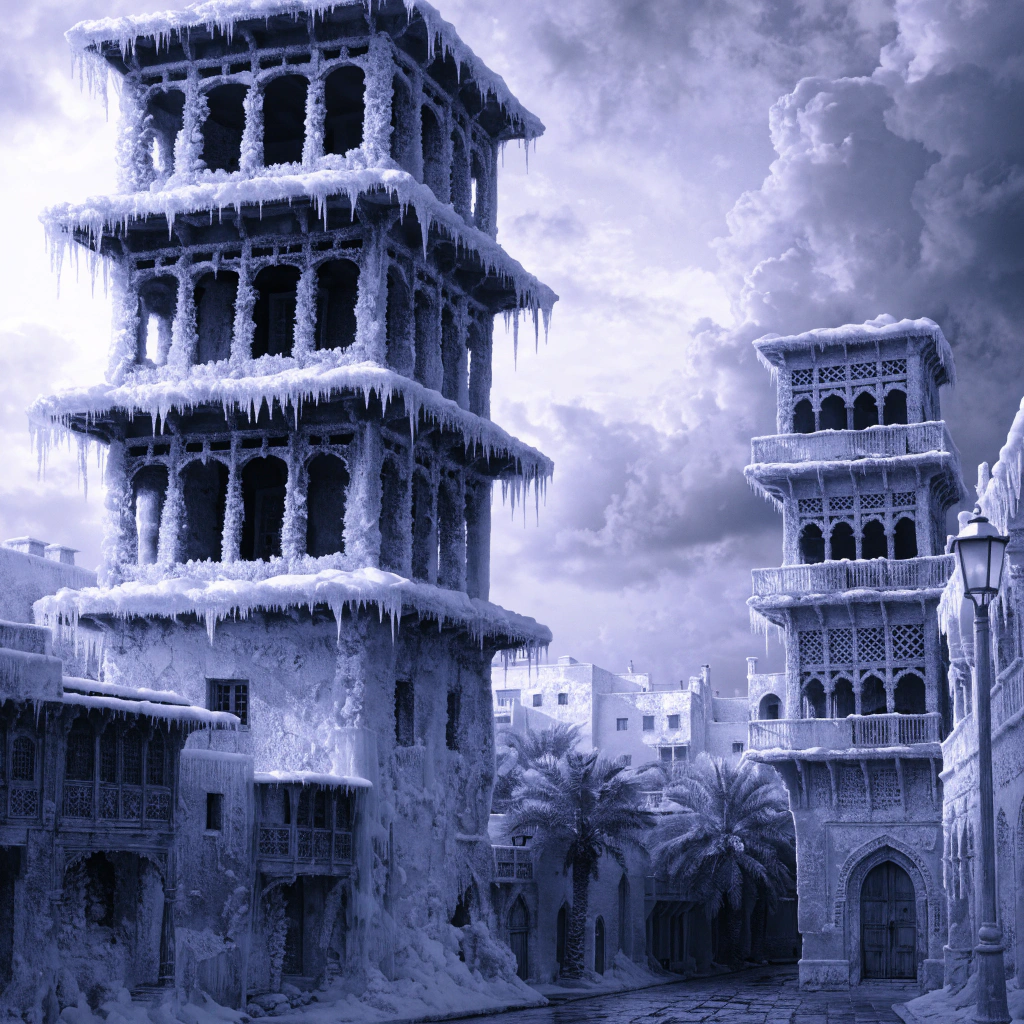
A Visit to Al Fahidi
Al Fahidi is an old place in Dubai. It is very beautiful. It is the oldest part of the city. Today, many visitors come to see the old houses.
The houses are not tall. They are made of stone and wood. There are special towers on the roofs. These are wind towers. They keep the houses cool in the summer.
The streets are very narrow and quiet. You can see art and drink coffee here. It is different from the big skyscrapers. Al Fahidi is a special part of the city.
Grammar Spotlight
Pattern: Present Simple (Be verb)
"Al Fahidi is an old place in Dubai."
We use 'is' with singular subjects to describe facts or states. It tells us what something is or where it is located.
Pattern: Plural Nouns
"The houses are not tall."
We add 's' to most nouns to show there is more than one. In this sentence, 'house' becomes 'houses'.
Test Your Understanding
10 questions · A1 Beginner · 1 free preview
Test what you learned from this article. Answer all questions to earn XP!
Where is the Al Fahidi neighbourhood?
Want to finish the quiz?
9 more questions are waiting for you. Sign up free to unlock the full quiz and earn XP!
Sign Up FreeAlready have an account? Sign In
Question Breakdown
Where is the Al Fahidi neighbourhood?
Your answer:
Correct answer: Dubai
Al Fahidi has many tall skyscrapers.
Your answer:
Correct answer: False
What does 'cool' mean?
Your answer:
Correct answer: A little bit cold
The streets are very _____ and quiet.
Your answer:
Correct answer: narrow
The Old Heart of Dubai: Al Fahidi
Dubai is famous for its tall buildings and modern hotels. However, there is a special place called the Al Fahidi Historical Neighbourhood. People also call it Al Bastakiya. It is the oldest part of the city, so it has a lot of history.
In the 1800s, traders built these houses. They did not use glass or steel. Instead, they used coral stone and wood. The houses are close together because the streets are very narrow. This keeps the area cool during the hot summer.
The most interesting part of the houses is the wind tower. People call it a 'Barjeel'. These towers are older than air conditioning. They catch the wind and move air into the rooms below. It was a very smart way to live in the desert.
Today, many artists and tourists visit this historical area. You can see art galleries and small cafes there. It is quieter than the rest of Dubai, but it is very beautiful.
Grammar Spotlight
Pattern: Past Simple (Irregular Verbs)
"In the 1800s, traders built these houses."
We use the past simple to talk about finished actions in the past. 'Built' is the past form of 'build'.
Pattern: Comparatives
"It is quieter than the rest of Dubai."
We use comparatives to compare two things. For short adjectives like 'quiet', we add '-er' and use the word 'than'.
Test Your Understanding
11 questions · A2 Elementary · 1 free preview
Test what you learned from this article. Answer all questions to earn XP!
What is another name for the Al Fahidi neighbourhood?
Want to finish the quiz?
10 more questions are waiting for you. Sign up free to unlock the full quiz and earn XP!
Sign Up FreeAlready have an account? Sign In
Question Breakdown
What is another name for the Al Fahidi neighbourhood?
Your answer:
Correct answer: Al Bastakiya
The houses in Al Fahidi are made of glass and steel.
Your answer:
Correct answer: False
What does 'narrow' mean?
Your answer:
Correct answer: A small distance from side to side
Al Fahidi is _____ than the rest of Dubai.
Your answer:
Correct answer: quieter
Why are the streets in the neighbourhood narrow?
Your answer:
Correct answer: To keep the area cool
Al Fahidi: A Journey Through Old Dubai
When people think of Dubai, they often imagine tall glass buildings and luxury cars. However, have you ever wondered what the city looked like before the skyscrapers? In the heart of the city lies the Al Fahidi Historical Neighbourhood, which is also known as Al Bastakiya. This area has been preserved to show visitors the traditional way of life in the United Arab Emirates.
The district was established in the mid-19th century by pearl and textile traders. Unlike modern buildings, these houses were built from natural materials such as coral stone, gypsum, and wood. Walking through the narrow streets, you can see the famous 'Barjeel' or wind towers. These clever structures were designed to catch the wind and cool the houses before electricity existed. It is a fascinating example of how people adapted to the hot climate.
Many of the old buildings have been converted into art galleries, cafes, and museums. For example, the Dubai Museum is located in the Al Fahidi Fort, which was built in 1787. This fort is considered the oldest building in Dubai. Today, the neighbourhood is visited by thousands of tourists who want to experience the local culture and learn about the past.
In recent years, several festivals have been held in the area to celebrate Emirati heritage. Al Fahidi is a place where the past meets the present, offering a peaceful escape from the busy city life. It remains a vital part of Dubai's history that should not be missed by anyone visiting the region.
Grammar Spotlight
Pattern: Passive Voice
"This area has been preserved to show visitors the traditional way of life."
The passive voice is used here to focus on the action (preserving the area) rather than who did it. It is formed using 'has been' + the past participle.
Pattern: Relative Clauses
"Al Fahidi Fort, which was built in 1787."
A relative clause provides extra information about a noun. 'Which' is used to introduce information about the fort without starting a new sentence.
Test Your Understanding
11 questions · B1 Intermediate · 1 free preview
Test what you learned from this article. Answer all questions to earn XP!
Who originally established the Al Fahidi district?
Want to finish the quiz?
10 more questions are waiting for you. Sign up free to unlock the full quiz and earn XP!
Sign Up FreeAlready have an account? Sign In
Question Breakdown
Who originally established the Al Fahidi district?
Your answer:
Correct answer: Pearl and textile traders
The Al Fahidi buildings are made of glass and steel.
Your answer:
Correct answer: False
What does 'converted' mean in the text?
Your answer:
Correct answer: Changed to a new use
The Al Fahidi Fort is considered the _____ building in Dubai.
Your answer:
Correct answer: oldest
What was the purpose of the 'Barjeel' towers?
Your answer:
Correct answer: To cool the houses
A Bridge Between Eras: The Architectural Legacy of Al Fahidi
In the shadow of Dubai’s futuristic skyscrapers lies the Al Fahidi Historical Neighbourhood, also known as Al Bastakiya. Established in the mid-19th century, this district stands as the oldest residential area in the city, offering a profound contrast to the glass and steel monoliths of modern developments. While the surrounding city reaches for the clouds, Al Fahidi remains grounded in tradition, constructed from coral stone, gypsum, and limestone.
The neighbourhood was originally home to affluent textile and pearl traders who sought to establish a thriving commercial hub. One cannot help but notice the 'Barjeel', or traditional wind towers, which dominate the skyline of the district. These structures were ingeniously designed to capture wind and direct it into the rooms below, providing a natural cooling system that was essential before the advent of electricity. This architectural ingenuity demonstrates how indigenous materials and clever design were utilized to overcome the harsh desert climate. In many ways, the Barjeel is a precursor to modern air conditioning, reflecting a deep understanding of environmental physics.
Furthermore, the layout of Al Fahidi is characterized by its labyrinthine alleyways, known as 'Sikkas'. These narrow passages were not only designed for privacy but also to ensure that the buildings remained shaded throughout the day. Consequently, the district offers a cooler microclimate compared to the open streets of the modern city. In recent decades, the government has undertaken significant restoration projects to preserve this heritage, transforming many houses into art galleries, museums, and cultural centers. This transition has allowed the area to remain relevant in a contemporary context while honoring its historical roots.
Nevertheless, the importance of Al Fahidi extends beyond its aesthetic appeal. It serves as a poignant reminder of the cultural identity that persists despite the rapid globalization of the United Arab Emirates. By analyzing the evolution of this district, one can appreciate the delicate balance between maintaining historical roots and embracing modernity. The preservation of such sites is vital for future generations to understand the socio-economic foundations of the region. Ultimately, Al Fahidi is a testament to human resilience and the enduring value of cultural preservation in an ever-changing world. It stands as a silent witness to the city's transformation from a small fishing village into a global metropolis.
Grammar Spotlight
Pattern: Past Simple Passive
"These structures were ingeniously designed to capture wind and direct it into the rooms below."
The passive voice is used here to focus on the structures rather than the people who built them. It is formed using 'was/were' followed by the past participle.
Pattern: Contrastive Subordinating Conjunctions
"While the surrounding city reaches for the clouds, Al Fahidi remains grounded in tradition."
The word 'while' is used to show a direct contrast between two simultaneous situations or characteristics.
Pattern: Present Perfect Simple
"In recent decades, the government has undertaken significant restoration projects."
This tense connects the past to the present, indicating that the restoration efforts began in the past and have current relevance or results.
Test Your Understanding
11 questions · B2 Upper Intermediate · 1 free preview
Test what you learned from this article. Answer all questions to earn XP!
What was the primary function of the 'Barjeel' in historical Dubai?
Want to finish the quiz?
10 more questions are waiting for you. Sign up free to unlock the full quiz and earn XP!
Sign Up FreeAlready have an account? Sign In
Question Breakdown
What was the primary function of the 'Barjeel' in historical Dubai?
Your answer:
Correct answer: To provide a natural cooling system
The Al Fahidi neighbourhood was constructed primarily using modern steel and glass.
Your answer:
Correct answer: False
Which word best matches the meaning of 'affluent'?
Your answer:
Correct answer: Wealthy
Al Fahidi stands as the oldest _____ area in the city of Dubai.
Your answer:
Correct answer: residential
What are 'Sikkas' in the context of Al Fahidi?
Your answer:
Correct answer: Narrow labyrinthine alleyways
Architectural Resilience: Navigating the Al Fahidi Anachronism
In the shadow of the Burj Khalifa, where glass and steel pierce the heavens with relentless ambition, lies a profound anachronism: the Al Fahidi Historical Neighbourhood. Often referred to as Al Bastakiya, this district serves as a silent witness to Dubai’s pre-petrodollar era, standing in stark contrast to the surrounding urban sprawl. The meticulous restoration of these coral-stone structures offers a stark juxtaposition to the ephemeral nature of the city's modern skyline. Seldom does one encounter such a tangible link to the 19th-century pearl trade in a city so preoccupied with the future. Established by textile and pearl traders from Bastak, Iran, the district remains the oldest standing residential area in the city, providing a necessary counterbalance to the clinical perfection of Dubai’s newer quarters.
The architectural vernacular of Al Fahidi is a testament to human ingenuity. Built primarily from coral stone, gypsum, limestone, and sandalwood, the structures were designed to withstand the unforgiving Arabian heat. Most iconic are the 'Barjeel' or wind towers. These ingenious devices, which funnel cool air into the dwellings below, represent a sophisticated understanding of thermodynamics long before the advent of modern air conditioning. It is this marriage of necessity and design that defines the aesthetic of the district. The nominalisation of these functional elements into symbols of cultural identity highlights the evolution of Emirati architecture from survival-based construction to a celebrated heritage. However, the labyrinthine alleys offer more than just architectural interest; they provide a physical manifestation of a community designed for social intimacy and climatic protection.
However, the preservation of Al Fahidi raises nuanced questions regarding the commodification of heritage. While the alleys now house high-end galleries and boutique cafés, critics argue that the soul of the neighbourhood has been sanitized for the tourist gaze. The resilience of the physical structures is undeniable, yet the displacement of the original inhabitants suggests a loss of organic community life. This transformation leads one to ponder whether a historical site can truly retain its essence once it has been repurposed as a curated cultural experience. Is the evocative atmosphere of the district a genuine reflection of the past, or a meticulously constructed narrative designed to appeal to global visitors?
What Al Fahidi provides is not merely a nostalgic retreat but a critical lens through which to view Dubai's rapid metamorphosis. The district’s survival ensures that the city’s identity remains rooted in its maritime past, even as it reaches for the stars. Only through acknowledging these humble origins can one truly appreciate the magnitude of the UAE’s transformation. The interplay between the old and the new suggests that Dubai is not just a city of the future, but a city that is learning to negotiate with its history. Ultimately, Al Fahidi stands as a reminder that even in a world of rapid change, the foundations of the past remain essential for navigating the complexities of the present.
Grammar Spotlight
Pattern: Inversion with Negative Adverbials
"Seldom does one encounter such a tangible link to the 19th-century pearl trade in a city so preoccupied with the future."
Inversion is used after negative or restrictive adverbials (like 'seldom') to add emphasis. The auxiliary verb comes before the subject.
Pattern: It-Cleft Sentences
"It is this marriage of necessity and design that defines the aesthetic of the district."
Cleft sentences are used to focus on specific information. Here, 'It is [subject] that...' emphasizes the cause of the aesthetic.
Pattern: Nominalisation
"The meticulous restoration of these coral-stone structures offers a stark juxtaposition..."
Nominalisation involves turning verbs (restore) or adjectives into nouns (restoration). This creates a more formal, academic tone suitable for C1 level.
Test Your Understanding
12 questions · C1 Advanced · 1 free preview
Test what you learned from this article. Answer all questions to earn XP!
What is the primary architectural material mentioned as a contrast to modern glass and steel?
Want to finish the quiz?
11 more questions are waiting for you. Sign up free to unlock the full quiz and earn XP!
Sign Up FreeAlready have an account? Sign In
Question Breakdown
What is the primary architectural material mentioned as a contrast to modern glass and steel?
Your answer:
Correct answer: Coral stone and gypsum
The author argues that Al Fahidi has completely avoided the negative effects of tourism.
Your answer:
Correct answer: False
Which word describes something that lasts for a very short time?
Your answer:
Correct answer: Ephemeral
The 'Barjeel' is a sophisticated structure used for cooling, demonstrating human _____.
Your answer:
Correct answer: ingenuity
What does the author suggest about the 'soul' of Al Fahidi?
Your answer:
Correct answer: It may have been sanitized for the benefit of tourists.
The district was originally established by traders from Iran.
Your answer:
Correct answer: True
The Al Fahidi Palimpsest: Navigating the Architectural Semiotics of Pre-Modern Dubai
Amidst the vertiginous ascent of Dubai’s contemporary skyline, a cityscape characterized by its unapologetic embrace of late-capitalist architectural bravado, lies the Al Fahidi Historical Neighbourhood—a site that serves as a poignant architectural palimpsest. Established in the mid-19th century by a burgeoning class of textile and pearl merchants, this enclave, colloquially known as Al Bastakiya, offers a stark juxtaposition to the ephemeral glitter of the Burj Khalifa. To engage with Al Fahidi is not merely to perform an act of historical tourism, but to interrogate the very materiality of a pre-petrodollar existence. The structural integrity of the district rests upon the vernacular use of coral stone, gypsum, and limestone—materials harvested from the immediate environment. Such a reliance on local resources underscores a profound ecological synergy that modern engineering often overlooks. Were one to traverse the labyrinthine sikkas, or alleyways, the sensory shift from the adjacent chrome-and-glass skyline would be palpable. The air, cooled by the ingenious 'Barjeel' or wind towers, carries a weight of history that the sanitized malls of the periphery cannot replicate. These towers, ostensibly designed for thermal regulation, also functioned as indicators of social stratification; the height and intricacy of a Barjeel were commensurate with the owner’s mercantile success. It might be posited that Al Fahidi exists in a state of perpetual tension. On one hand, it is a preserved vestige of a maritime past, a sanctuary for the semiotics of the desert and the sea. On the other, it has been repurposed into a cultural hub, where the interstices between traditional domesticity and modern artistic expression are blurred. Seldom does one find a location where the subjunctive 'what might have been' meets the definitive 'what was' with such quiet intensity. The academic consensus suggests that the preservation of Al Fahidi was not merely an aesthetic choice but a socio-political necessity—a means of anchoring the national identity amidst a sea of globalized homogeneity. The ingenuity of the pre-modern urban planner, who utilized narrow streets to maximize shade and create wind tunnels, reflects a sophisticated understanding of microclimates. As we navigate the complexities of the 21st-century climate crisis, the lessons embedded in the gypsum walls of Al Bastakiya remain startlingly relevant. The neighbourhood is not a dead relic; rather, it is a living discourse on sustainability and resilience.
Grammar Spotlight
Pattern: Inversion for Emphasis
"Seldom does one find a location where the subjunctive 'what might have been' meets the definitive 'what was' with such quiet intensity."
Inversion involves placing the auxiliary verb before the subject after a negative or restrictive adverb (like 'seldom') to add rhetorical weight or dramatic flair.
Pattern: The Subjunctive Mood
"Were one to traverse the labyrinthine sikkas, or alleyways, the sensory shift from the adjacent chrome-and-glass skyline would be palpable."
This is a second conditional structure using the formal subjunctive 'Were one to...' instead of 'If one were to...', often used in academic prose for hypothetical exploration.
Pattern: Academic Hedging
"It might be posited that Al Fahidi exists in a state of perpetual tension."
Hedging uses modal verbs and passive constructions to distance the author from a definitive claim, allowing for theoretical nuance and scholarly caution.
Test Your Understanding
12 questions · C2 Mastery · 1 free preview
Test what you learned from this article. Answer all questions to earn XP!
What is the primary function of the 'Barjeel' according to the text?
Want to finish the quiz?
11 more questions are waiting for you. Sign up free to unlock the full quiz and earn XP!
Sign Up FreeAlready have an account? Sign In
Question Breakdown
What is the primary function of the 'Barjeel' according to the text?
Your answer:
Correct answer: Passive thermal regulation and social status signaling
The author suggests that modern architecture has successfully replicated the ecological synergy of Al Fahidi.
Your answer:
Correct answer: False
What does 'palimpsest' mean in the context of the article?
Your answer:
Correct answer: A site that reveals layers of history beneath its current form
The district is colloquially known as Al _____, named after the merchants who settled there.
Your answer:
Correct answer: Bastakiya
Which material was NOT mentioned as a component of the neighbourhood's structural integrity?
Your answer:
Correct answer: Reinforced steel
The height of a wind tower was often reflective of the owner's wealth and success.
Your answer:
Correct answer: True
