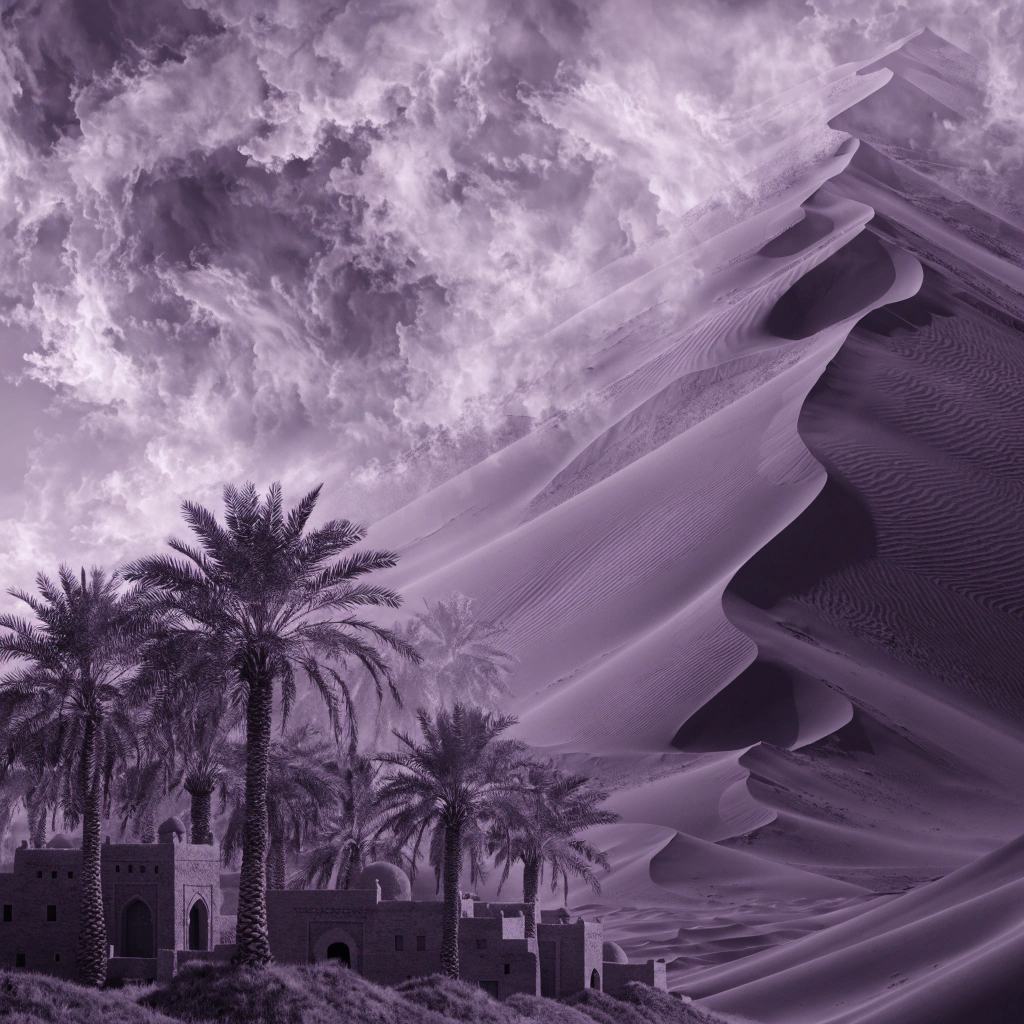
The Beautiful Liwa Oasis
Liwa Oasis is in the desert. It is in Abu Dhabi in the United Arab Emirates. It is a very big place with many green palm trees. The sand is beautiful and orange.
The Bani Yas tribe lives here. They are a famous family. Long ago, people lived here because there is water under the sand. The water helps the trees grow.
Today, many people visit Liwa. They see the very big sand dunes. It is a quiet and hot place. It is a special gate to the big desert.
Grammar Spotlight
Pattern: Present Simple (to be)
"Liwa Oasis is in the desert."
We use 'is' with singular nouns to describe facts or locations. It is the most common verb in English for descriptions.
Pattern: There is / There are
"There is water under the sand."
We use 'there is' to say that something exists. Use 'there is' for singular things like water or a tree.
Test Your Understanding
10 questions · A1 Beginner · 1 free preview
Test what you learned from this article. Answer all questions to earn XP!
Where is the Liwa Oasis?
Want to finish the quiz?
9 more questions are waiting for you. Sign up free to unlock the full quiz and earn XP!
Sign Up FreeAlready have an account? Sign In
Question Breakdown
Where is the Liwa Oasis?
Your answer:
Correct answer: In Abu Dhabi
The sand in Liwa is orange.
Your answer:
Correct answer: True
What is an 'oasis'?
Your answer:
Correct answer: A place in the desert with water and trees
The Bani Yas tribe is a _____ family.
Your answer:
Correct answer: famous
The Beautiful Liwa Oasis
Liwa Oasis is a beautiful place in the south of Abu Dhabi. It is a long green area with many palm trees. It sits next to the 'Empty Quarter'. This is the largest sand desert in the world, and Liwa is the gateway to it.
For hundreds of years, the Bani Yas tribe lived in this oasis. They stayed there because there was water under the ground. These people were the ancestors of the famous families in Abu Dhabi and Dubai. Life was difficult in the desert, but the oasis was a safe home for them.
Today, Liwa is a popular place for visitors. It is quieter than the big cities like Dubai. People go there to see the amazing sand dunes. Some dunes are very high! You can also see many small villages and green farms. It is a great place to learn about the history of the UAE.
Grammar Spotlight
Pattern: Comparatives
"It is quieter than the big cities like Dubai."
We use 'adjective + er + than' to compare two things. For short adjectives like 'quiet', we add 'er' to the end.
Pattern: Past Simple
"For hundreds of years, the Bani Yas tribe lived in this oasis."
We use the past simple to talk about finished actions in the past. For regular verbs, we add '-ed' to the base form.
Test Your Understanding
11 questions · A2 Elementary · 1 free preview
Test what you learned from this article. Answer all questions to earn XP!
Where is the Liwa Oasis located?
Want to finish the quiz?
10 more questions are waiting for you. Sign up free to unlock the full quiz and earn XP!
Sign Up FreeAlready have an account? Sign In
Question Breakdown
Where is the Liwa Oasis located?
Your answer:
Correct answer: In the south of Abu Dhabi
The Empty Quarter is the largest sand desert in the world.
Your answer:
Correct answer: True
What does 'tribe' mean?
Your answer:
Correct answer: A group of families living together
The Bani Yas tribe lived in the oasis because there was _____ under the ground.
Your answer:
Correct answer: water
Why do people visit Liwa today?
Your answer:
Correct answer: To see the amazing sand dunes
Exploring the Liwa Oasis: The Heart of the Desert
Deep in the southern part of Abu Dhabi, travelers can find the Liwa Oasis. It is a beautiful 100-kilometer arc of green palm trees and small villages. This oasis is located on the northern edge of the Rub' al Khali, which is also known as the Empty Quarter. This desert is famous globally because it is the largest continuous sand desert in the world. For many centuries, the Liwa Oasis has been the ancestral home of the Bani Yas tribe. These people are the ancestors of the ruling families of both Abu Dhabi and Dubai. In the past, the Bedouin settled here because of the high water table. Even though the surrounding desert is very dry, water can be found easily under the sand in this special place. Today, the oasis is still famous for its traditional date palm groves. Thousands of trees have been planted to protect the area from the moving sand. Many visitors come to see the Moreeb Dune, which is one of the highest sand hills in the world. It is frequently used for exciting desert races and festivals. The Liwa Oasis is a place where history and nature meet. People who visit the oasis can learn about the traditional life of the UAE while enjoying the amazing views. It is a unique destination that has been preserved for future generations to enjoy. The area remains a vital part of the nation's heritage.
Grammar Spotlight
Pattern: Present Perfect Tense
"For many centuries, the Liwa Oasis has been the ancestral home of the Bani Yas tribe."
The present perfect (has/have + past participle) is used here to describe a state that started in the past and continues to the present.
Pattern: Passive Voice
"Thousands of trees have been planted to protect the area from the moving sand."
The passive voice is used when the action (planting) is more important than who did it. It is formed with 'to be' and the past participle.
Test Your Understanding
11 questions · B1 Intermediate · 1 free preview
Test what you learned from this article. Answer all questions to earn XP!
Where is the Liwa Oasis located?
Want to finish the quiz?
10 more questions are waiting for you. Sign up free to unlock the full quiz and earn XP!
Sign Up FreeAlready have an account? Sign In
Question Breakdown
Where is the Liwa Oasis located?
Your answer:
Correct answer: In the southern part of Abu Dhabi
The Rub' al Khali is the largest sand desert in the world.
Your answer:
Correct answer: True
What does 'ancestors' mean?
Your answer:
Correct answer: Family members from the past
The oasis is still famous for its date palm _____.
Your answer:
Correct answer: groves
Why did the Bedouin settle in Liwa historically?
Your answer:
Correct answer: Because of the high water table
The Liwa Oasis: A Historical Gateway to the Empty Quarter
Nestled at the northern fringe of the Rub' al Khali, or the Empty Quarter, the Liwa Oasis represents a remarkable testament to human resilience in one of the world's most inhospitable environments. Stretching across a 100-kilometer arc, this verdant strip of palm groves stands in stark contrast to the surrounding sea of towering orange dunes. As the largest contiguous sand desert on the planet, the Empty Quarter presents a formidable challenge, yet Liwa has served as its gateway for centuries. The oasis is not merely a geographical feature but a cultural anchor for the entire region.
Historically, the oasis has been the ancestral home of the Bani Yas tribe, whose influence has shaped the modern landscape of the United Arab Emirates. It is widely acknowledged that the progenitors of the ruling families of both Abu Dhabi and Dubai trace their roots back to this specific region. The Bedouin people were initially drawn to Liwa due to its unusually high water table, which allowed for the cultivation of date palms. These trees were not merely a source of food; they were the cornerstone of a complex socio-economic system that enabled survival in an otherwise arid hinterland.
The significance of the oasis extends beyond its historical utility. In contemporary times, Liwa has transitioned from a secluded cluster of villages into a focal point for cultural preservation and high-end tourism. While modern infrastructure now connects the oasis to the bustling coastal cities, the region maintains a distinct atmosphere of tranquility. Visitors are frequently captivated by the Moreeb Dune, one of the highest sand hills in the world, which serves as a venue for various sporting events and festivals.
Nevertheless, the rapid development of the UAE poses questions regarding the sustainability of such traditional sites. Conservationists argue that the delicate balance between promoting tourism and protecting the natural ecosystem must be carefully managed. By analyzing the evolution of Liwa, one can appreciate how the interplay between geography and human ingenuity has fostered a unique cultural identity. Consequently, the oasis remains inextricably linked to the national narrative, serving as a bridge between a nomadic past and a technologically advanced future. Despite the encroaching sands, Liwa continues to thrive, proving that heritage can indeed be preserved amidst rapid global change.
Grammar Spotlight
Pattern: Participial Phrases
"Stretching across a 100-kilometer arc, this verdant strip of palm groves stands in stark contrast..."
Participial phrases starting with an -ing form are used to provide additional information about the subject of the main clause. They help create a more formal and descriptive flow in academic writing.
Pattern: Passive Voice with Reporting Verbs
"It is widely acknowledged that the progenitors of the ruling families... trace their roots back to this specific region."
This structure is used to state general beliefs or facts in a formal way. It avoids using personal pronouns like 'I' or 'people' to maintain an objective tone.
Pattern: Relative Clauses with 'Whose'
"...the ancestral home of the Bani Yas tribe, whose influence has shaped the modern landscape..."
'Whose' is a relative pronoun used to indicate possession or relationship. It links the tribe directly to the influence they had, making the sentence more complex and cohesive.
Test Your Understanding
11 questions · B2 Upper Intermediate · 1 free preview
Test what you learned from this article. Answer all questions to earn XP!
What primary geographical factor allowed for the initial settlement of the Liwa Oasis?
Want to finish the quiz?
10 more questions are waiting for you. Sign up free to unlock the full quiz and earn XP!
Sign Up FreeAlready have an account? Sign In
Question Breakdown
What primary geographical factor allowed for the initial settlement of the Liwa Oasis?
Your answer:
Correct answer: A high water table suitable for farming
The Liwa Oasis is located at the southern edge of the Rub' al Khali.
Your answer:
Correct answer: False
What does the word 'contiguous' mean in the context of the desert?
Your answer:
Correct answer: Sharing a border or being part of an unbroken mass
The date palms were considered the _____ of the local socio-economic system.
Your answer:
Correct answer: cornerstone
Which tribe is historically linked to the Liwa Oasis and the ruling families of Abu Dhabi and Dubai?
Your answer:
Correct answer: The Bani Yas tribe
The Resilience of the Sands: A Critical Appraisal of the Liwa Oasis
Hidden within the undulating, ochre folds of the Rub' al Khali—the world’s most expansive contiguous sand desert—lies the Liwa Oasis, a crescent-shaped verdant sanctuary that defies the surrounding aridity. Seldom has a landscape so unforgiving nurtured a culture so resilient, yet Liwa stands as a profound testament to human ingenuity. Spanning approximately 100 kilometers, this arc of palm groves and ancient villages represents more than a mere geographical anomaly; it is the ancestral bedrock of the Bani Yas tribe, from whom the ruling dynasties of Abu Dhabi and Dubai trace their lineage. Historically, the settlement of this harsh terrain was predicated upon a geological miracle: a remarkably high subterranean water table. This accessible moisture allowed for the cultivation of date palms, which served as the cornerstone of the Bedouin economy. What the casual observer might perceive as a desolate expanse is, in fact, a sophisticated ecosystem where life has been meticulously sustained for centuries. It was the presence of these life-giving aquifers that enabled the Bani Yas to establish a bastion of permanence against the shifting sands.
The visual juxtaposition between the lush greenery of the groves and the towering dunes—some, like Tel Moreeb, reaching heights of 300 meters—is nothing short of breath-taking. However, the significance of Liwa transcends its aesthetic allure. The region serves as a repository of Emirati heritage, a place where the vestiges of a pre-oil era remain palpable. Despite the burgeoning influence of modernization, the cultural fabric of Liwa remains intricately woven with traditions of falconry, camel racing, and the hospitality synonymous with the desert. In recent decades, the oasis has undergone a nuanced transformation. The emergence of luxury tourism, epitomized by the Qasr Al Sarab resort, has introduced a global audience to the majesty of the Empty Quarter. While this provides an economic impetus for the region, it also necessitates a critical analysis of the dichotomy between preservation and commercialization. How does an ancient community maintain its soul when its traditional way of life becomes a curated experience for the international elite? Ultimately, the story of Liwa is one of endurance. It is a narrative that challenges the simplistic perception of the desert as a void. Instead, Liwa is presented as a vibrant, historical pulse point. The ongoing efforts to safeguard its environmental and cultural integrity highlight a broader national desire to honor the past while navigating a technologically advanced future. As the sun sets over the shifting ridges of the Rub' al Khali, the oasis remains a poignant reminder that even in the most inhospitable environments, humanity can find a way to flourish.
Grammar Spotlight
Pattern: Negative Inversion
"Seldom has a landscape so unforgiving nurtured a culture so resilient."
Inversion is used after negative or restrictive adverbs (like 'seldom') to add emphasis and formality. The auxiliary verb comes before the subject.
Pattern: It-Cleft Sentence
"It was the presence of these life-giving aquifers that enabled the Bani Yas to establish a bastion of permanence."
Cleft sentences focus on a specific part of the information. Here, it emphasizes the 'presence of aquifers' as the specific cause for the settlement.
Pattern: Nominalisation
"The emergence of luxury tourism... has introduced a global audience to the majesty of the Empty Quarter."
Nominalisation turns verbs or adjectives into nouns (e.g., 'emerge' to 'emergence'). It is a hallmark of C1 academic writing, making the tone more objective and concise.
Test Your Understanding
12 questions · C1 Advanced · 1 free preview
Test what you learned from this article. Answer all questions to earn XP!
What primary geological factor allowed the Bani Yas tribe to settle in the Liwa Oasis?
Want to finish the quiz?
11 more questions are waiting for you. Sign up free to unlock the full quiz and earn XP!
Sign Up FreeAlready have an account? Sign In
Question Breakdown
What primary geological factor allowed the Bani Yas tribe to settle in the Liwa Oasis?
Your answer:
Correct answer: A high subterranean water table
The Liwa Oasis is described as a straight line of villages spanning 100 kilometers.
Your answer:
Correct answer: False
What does 'burgeoning' mean in the context of the article?
Your answer:
Correct answer: Rapidly growing
The region serves as a _____ of Emirati heritage, preserving vestiges of the pre-oil era.
Your answer:
Correct answer: repository
What critical concern does the author raise regarding the modern transformation of Liwa?
Your answer:
Correct answer: The tension between preservation and commercialization
The ruling families of both Abu Dhabi and Dubai trace their roots back to the Bani Yas tribe in Liwa.
Your answer:
Correct answer: True
The Liwa Oasis: A Paradigm of Hydrological Resilience and Tribal Progeniture
Deep within the southern reaches of the Abu Dhabi Emirate, where the undulating dunes of the Rub' al Khali—the world’s most formidable contiguous sand desert—threaten to subsume all vestiges of human presence, lies the Liwa Oasis. This 100-kilometer-long arc of verdant palm groves and subterranean aquifers represents more than a mere geographical anomaly; it is the crucible of the Bani Yas tribe, the progenitors of the current ruling dynasties of the United Arab Emirates. Were one to scrutinize the historical trajectory of the region, it would become evident that the survival of these lineages was predicated upon the hydrological serendipity found within this liminal space between the arid wastes and the burgeoning coast.
Historically, the Bedouin’s settlement patterns were dictated by the topography of the water table. The subterranean reserves, accessible through the careful excavation of wells, allowed for a sedentary existence that contrasted sharply with the nomadic hegemony typically associated with the Empty Quarter. It is imperative that we recognize the oasis not merely as a refuge, but as a strategic locus of power. The palm groves, while providing sustenance, also served as a symbolic anchor for a people whose identity was forged in the crucible of environmental adversity. The topography of Liwa is dominated by the Moreeb Dune, a colossal manifestation of aeolian processes that towers over the surrounding landscape. To witness such a structure is to appreciate the ephemeral nature of the desert, where the wind incessantly reshapes the contours of the earth. Yet, the oasis remains a steadfast bastion against this shifting reality.
It is often argued that the modern prosperity of Abu Dhabi and Dubai is an extension of the resilience honed in Liwa. The analytical observer might suggest that the transition from pearl diving and date farming to global finance and aviation was facilitated by the same adaptive spirit that allowed the Bani Yas to flourish in such an inhospitable environment. Furthermore, the scholarly discourse surrounding Liwa often touches upon the concept of the 'desert sublime.' This philosophical framework posits that the vastness of the Rub' al Khali evokes a sense of awe and terror, which the oasis mitigates through its lush greenery and life-sustaining waters. The juxtaposition of the scorched dunes and the shaded groves creates a sensory experience that is both jarring and harmonious.
In contemporary times, the Liwa Oasis has evolved into a site of cultural preservation and high-end tourism, yet it retains an aura of primordial isolation. It is essential that the conservation of this site be prioritized, lest the encroaching sands of modernization erode its historical authenticity. One must also consider the socioeconomic implications of the high water table. In an era before desalination, the possession of water was the ultimate currency. The Bani Yas’s ability to manage these resources effectively allowed them to consolidate power and establish a sophisticated social hierarchy. This hegemony was not merely a result of military prowess, but of a profound understanding of the ecosystem. The vestiges of ancient forts that dot the landscape serve as silent witnesses to this legacy. In conclusion, the Liwa Oasis remains a profound testament to the intricate relationship between humanity and the environment. It is a site where the ephemeral and the eternal converge, offering a glimpse into the ancestral soul of the Emirates. Whether viewed through the lens of history, geology, or sociology, Liwa demands a nuanced appreciation for the resilience of those who call the desert home.
Grammar Spotlight
Pattern: Inverted First/Second Conditional
"Were one to scrutinize the historical trajectory of the region, it would become evident that the survival of these lineages was predicated upon the hydrological serendipity found within this liminal space..."
This formal structure replaces 'If one were to...' with an inverted verb-subject order. It is common in academic or literary C2 English to express hypothetical situations with a higher degree of formality.
Pattern: The Subjunctive Mood
"It is imperative that we recognize the oasis not merely as a refuge, but as a strategic locus of power."
The subjunctive is used after adjectives of urgency or importance (e.g., imperative, essential). The base form of the verb ('recognize') is used regardless of the subject.
Pattern: Passive Reporting with Academic Hedging
"It is often argued that the modern prosperity of Abu Dhabi and Dubai is an extension of the resilience honed in Liwa."
Using 'It is [past participle] that' allows the author to present a common viewpoint or theory without attributing it to a specific person, maintaining an objective, scholarly tone.
Test Your Understanding
12 questions · C2 Mastery · 1 free preview
Test what you learned from this article. Answer all questions to earn XP!
According to the article, what was the primary factor that allowed the Bani Yas tribe to lead a sedentary life in Liwa?
Want to finish the quiz?
11 more questions are waiting for you. Sign up free to unlock the full quiz and earn XP!
Sign Up FreeAlready have an account? Sign In
Question Breakdown
According to the article, what was the primary factor that allowed the Bani Yas tribe to lead a sedentary life in Liwa?
Your answer:
Correct answer: The accessibility of subterranean water reserves
The author suggests that the modern economic success of the UAE is unrelated to the historical survival skills developed in the oasis.
Your answer:
Correct answer: False
What does the term 'liminal' refer to in the context of the article?
Your answer:
Correct answer: A transitional space between two different environments
The survival of the ruling lineages was predicated upon the hydrological _____ found within the region.
Your answer:
Correct answer: serendipity
What philosophical concept does the author use to describe the emotional impact of the Rub' al Khali?
Your answer:
Correct answer: The Desert Sublime
The Moreeb Dune is described as a permanent, unchanging feature of the landscape.
Your answer:
Correct answer: False
