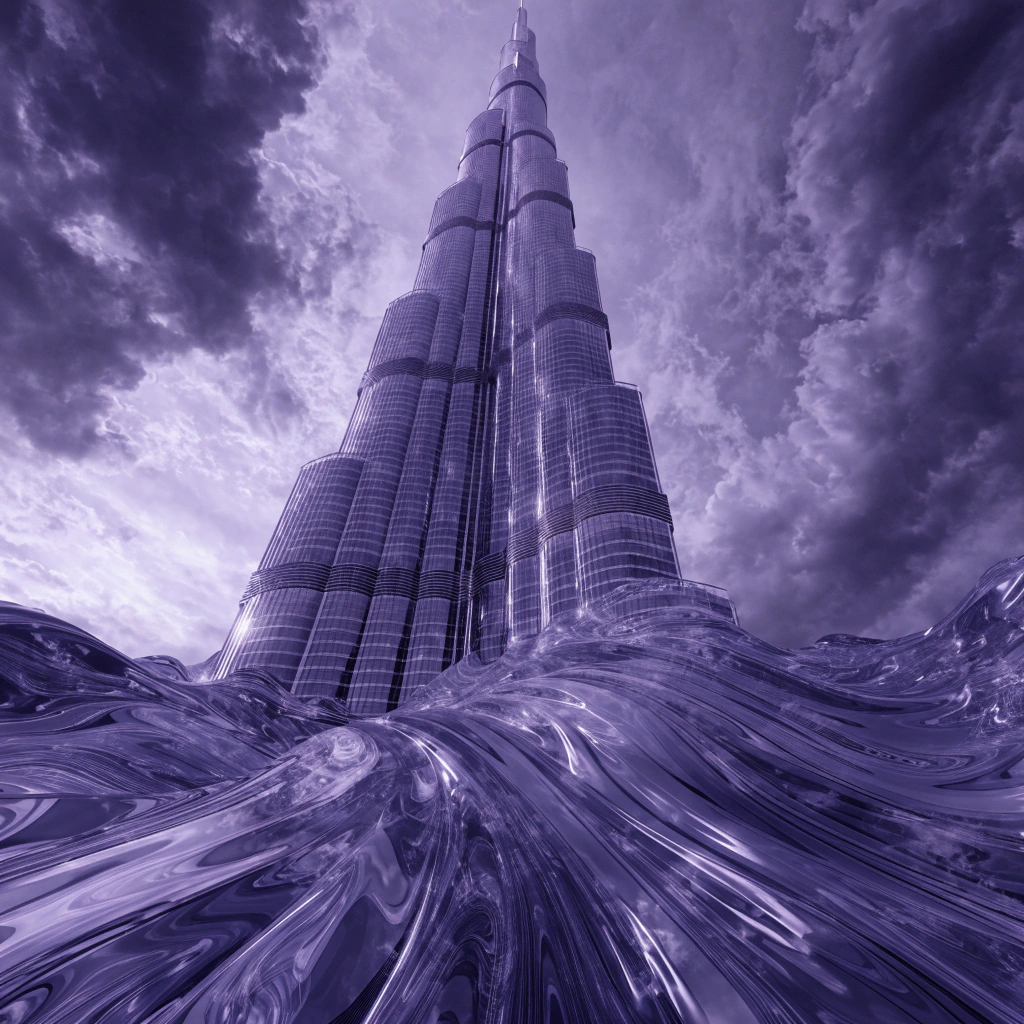
The Tall Burj Khalifa
The Burj Khalifa is a very tall building. It is in Dubai, United Arab Emirates. It is 828 meters high. It is the tallest building in the world.
The building is in the center of the city. It looks like a beautiful flower from the desert. Many people visit the tower every day. They see the city from the top.
Dubai is a famous place now. The Burj Khalifa is a symbol of the city. It is very modern and beautiful. You can see it from far away.
Grammar Spotlight
Pattern: Present Simple 'to be'
"The Burj Khalifa is a very tall building."
We use 'is' for one thing or person. It helps us describe facts about people and places.
Pattern: Adjectives before Nouns
"It looks like a beautiful flower."
In English, we put the adjective (beautiful) before the noun (flower). This describes the object.
Test Your Understanding
10 questions · A1 Beginner · 1 free preview
Test what you learned from this article. Answer all questions to earn XP!
Where is the Burj Khalifa?
Want to finish the quiz?
9 more questions are waiting for you. Sign up free to unlock the full quiz and earn XP!
Sign Up FreeAlready have an account? Sign In
Question Breakdown
Where is the Burj Khalifa?
Your answer:
Correct answer: Dubai
The Burj Khalifa is 828 meters high.
Your answer:
Correct answer: True
What is a 'building'?
Your answer:
Correct answer: A place with walls and a roof
Many people _____ the tower every day.
Your answer:
Correct answer: visit
The Burj Khalifa: A Giant in the Clouds
The Burj Khalifa is a very famous skyscraper in Dubai, United Arab Emirates. It is 828 meters tall, so it is the tallest building in the world. It opened in January 2010. Thousands of people worked together to build this amazing tower.
The design is very special because it looks like a desert flower. The building has more than 160 floors. It is much higher than the Eiffel Tower in Paris. Inside, there are offices, apartments, and a luxury hotel. There are also many fast elevators to take visitors to the top.
In the past, Dubai was a small place for pearl diving. Now, it is a global city because of projects like the Burj Khalifa. Many tourists visit the building every year. They go to the observation deck to see the beautiful view of the city and the sea. It is a great symbol of how Dubai changed over time.
Grammar Spotlight
Pattern: Superlative Adjectives
"It is the tallest building in the world."
We use 'the' + adjective + '-est' to compare one thing to a whole group. It shows that the Burj Khalifa is number one in height.
Pattern: Comparative Adjectives
"It is much higher than the Eiffel Tower in Paris."
We use adjective + '-er' + 'than' to compare two specific things. Here, it compares the height of the Burj Khalifa to the Eiffel Tower.
Test Your Understanding
11 questions · A2 Elementary · 1 free preview
Test what you learned from this article. Answer all questions to earn XP!
Where is the Burj Khalifa located?
Want to finish the quiz?
10 more questions are waiting for you. Sign up free to unlock the full quiz and earn XP!
Sign Up FreeAlready have an account? Sign In
Question Breakdown
Where is the Burj Khalifa located?
Your answer:
Correct answer: Dubai
The Burj Khalifa is 828 meters tall.
Your answer:
Correct answer: True
What does 'luxury' mean?
Your answer:
Correct answer: Very expensive and comfortable
The Burj Khalifa is the _____ building in the world.
Your answer:
Correct answer: tallest
What does the building's design look like?
Your answer:
Correct answer: A desert flower
The Burj Khalifa: A Giant in the Clouds
The Burj Khalifa is a magnificent skyscraper that stands in the heart of Dubai, United Arab Emirates. It has become a global symbol of modern architecture and ambition. Rising 828 meters into the clouds, it is currently the tallest building in the world. This incredible structure was built to show the world how Dubai has changed from a small port into a major international city.
The tower was designed by Adrian Smith, whose team was inspired by a desert flower called the Hymenocallis. This lily has a unique shape that helped the architects create the building's three-part base. Since it opened in 2010, millions of tourists have visited the observation decks to see the amazing views of the city and the Persian Gulf.
It was not just built for its height; the project was part of a plan to help the economy. Leaders wanted to move away from oil and focus more on tourism and finance. The building, which contains luxury apartments, offices, and a hotel, is the center of a large area called Downtown Dubai.
Over the years, the Burj Khalifa has broken many records. It has the highest occupied floor and the world's tallest service elevator. It is also famous for the spectacular light shows and fireworks that take place every New Year’s Eve. This skyscraper is truly a masterpiece that represents the future of the Middle East.
Grammar Spotlight
Pattern: Passive Voice
"The tower was designed by Adrian Smith..."
The passive voice is used to focus on the person or thing receiving the action. It is formed using the verb 'to be' plus the past participle of the main verb.
Pattern: Present Perfect
"It has become a global symbol of modern architecture..."
The present perfect describes an action that happened at an unspecified time in the past or started in the past and continues now. It is formed using 'has/have' plus the past participle.
Test Your Understanding
11 questions · B1 Intermediate · 1 free preview
Test what you learned from this article. Answer all questions to earn XP!
What inspired the design of the Burj Khalifa?
Want to finish the quiz?
10 more questions are waiting for you. Sign up free to unlock the full quiz and earn XP!
Sign Up FreeAlready have an account? Sign In
Question Breakdown
What inspired the design of the Burj Khalifa?
Your answer:
Correct answer: A desert lily
The Burj Khalifa is currently the tallest building in the world.
Your answer:
Correct answer: True
What does 'masterpiece' mean?
Your answer:
Correct answer: A work of outstanding skill
The Burj Khalifa is a magnificent _____ that stands in the heart of Dubai.
Your answer:
Correct answer: skyscraper
Why did leaders want to build the tower?
Your answer:
Correct answer: To help the economy move away from oil
The Burj Khalifa: A Pinnacle of Modern Engineering and Ambition
Standing as a monumental testament to human ambition, the Burj Khalifa dominates the Dubai skyline at a staggering height of 828 meters. Since its completion in 2010, this skyscraper has functioned not merely as a commercial office building, but as the ultimate symbol of the United Arab Emirates’ rapid transformation. Historically, Dubai relied heavily on its regional status as a pearl-diving port and a local trading hub. However, the vision for the Burj Khalifa was rooted in a strategic desire to diversify the national economy, shifting the primary focus away from oil dependence toward international tourism and luxury real estate. Not only does the Burj Khalifa dominate the skyline, but it also serves as a permanent landmark of Dubai’s global growth.
The architectural design, meticulously led by Adrian Smith, draws inspiration from the Hymenocallis, a delicate desert lily native to the region. This choice reflects a sophisticated blend of cutting-edge modern engineering and traditional cultural motifs. The tower's 'Y' shaped floor plan was specifically engineered to maximize residential views of the Arabian Gulf while simultaneously reducing the impact of high-altitude wind forces. Had the architects not implemented such an innovative design, the structural integrity of the building might have been compromised by the intense pressures found at such extreme heights.
Furthermore, the construction process itself represented an unprecedented engineering feat that pushed the boundaries of what was thought possible. Over 330,000 cubic meters of concrete were pumped to record-breaking heights, requiring a level of precision that had never been witnessed in previous decades. The project also served as a vital catalyst for the development of 'Downtown Dubai,' an expansive and vibrant district that surrounds the tower. This area has since evolved into a global hub, attracting millions of visitors annually who come to experience its world-class malls, choreographed fountains, and high-end residences.
Nevertheless, the Burj Khalifa is significantly more than just a triumph of glass and steel. It embodies the resilience and aspiration of a nation seeking to redefine its place on the world stage. While some critics initially questioned the economic necessity of such a massive structure, the tower has undeniably succeeded in placing Dubai at the absolute center of global commerce and travel. Ultimately, the Burj Khalifa serves as a powerful reminder that when technical expertise is combined with a clear vision, even the most ambitious dreams can reach the clouds.
Grammar Spotlight
Pattern: Inversion with 'Not only'
"Not only does the Burj Khalifa dominate the skyline, but it also serves as a permanent landmark of Dubai’s global growth."
When we start a sentence with 'Not only' for emphasis, we invert the subject and the auxiliary verb (does the Burj Khalifa dominate). This is a formal structure used to highlight two related points.
Pattern: Third Conditional (Inverted)
"Had the architects not implemented such an innovative design, the structural integrity of the building might have been compromised."
This structure describes a hypothetical situation in the past. 'Had the architects not implemented' is a formal alternative to 'If the architects had not implemented'.
Pattern: Passive Voice with Past Perfect
"requiring a level of precision that had never been witnessed in previous decades."
The past perfect passive (had been witnessed) is used to describe an action that was completed before another point in the past, focusing on the event rather than the person who did it.
Test Your Understanding
11 questions · B2 Upper Intermediate · 1 free preview
Test what you learned from this article. Answer all questions to earn XP!
What was the main economic reason for building the Burj Khalifa?
Want to finish the quiz?
10 more questions are waiting for you. Sign up free to unlock the full quiz and earn XP!
Sign Up FreeAlready have an account? Sign In
Question Breakdown
What was the main economic reason for building the Burj Khalifa?
Your answer:
Correct answer: To diversify the economy away from oil
The design of the Burj Khalifa was inspired by a type of local desert flower.
Your answer:
Correct answer: True
What does the word 'unprecedented' mean in the context of the article?
Your answer:
Correct answer: Never seen or done before
The 'Y' shaped floor plan was designed to reduce the impact of _____ forces.
Your answer:
Correct answer: wind
According to the text, what is 'Downtown Dubai'?
Your answer:
Correct answer: A vibrant district surrounding the tower
The Vertical Frontier: Deconstructing the Burj Khalifa’s Architectural and Economic Legacy
Towering 828 meters above the Arabian desert, the Burj Khalifa stands not merely as a feat of civil engineering, but as the quintessential manifestation of Dubai’s meteoric rise. Seldom has a structural undertaking captured the global imagination as profoundly as this needle-shaped colossus. While its height is its most publicized attribute, the tower’s true significance lies in its role as a strategic catalyst for economic diversification. By shifting the emirate’s focus from a volatile oil-based economy toward tourism and luxury real estate, the tower precipitated a paradigm shift in regional development.
Designed by Adrian Smith, the tower’s aesthetic is rooted in biomimicry, drawing inspiration from the Hymenocallis, a desert lily. This organic symmetry is not merely decorative; it is functional. The triple-lobed footprint serves to minimize the wind forces acting upon the structure, ensuring structural resilience at altitudes where gusts are formidable. What the architects sought to achieve was a synthesis of traditional Islamic motifs and cutting-edge structural engineering. This is evidenced by the spiraling minaret-like silhouette that reduces the building’s mass as it ascends, a design choice that was as much about physics as it was about cultural homage.
The meticulous orchestration of thousands of workers and millions of tons of high-performance concrete was unprecedented in the history of construction. However, the project was not without its complexities. The sheer scale of the building necessitated innovations in vertical pumping of concrete and the development of a 'buttressed core' system to maintain stability. Critics often point to the environmental footprint of such a structure, yet proponents argue that the Burj Khalifa is the epitome of urban density, concentrating life and commerce to reduce horizontal sprawl.
Ultimately, the Burj Khalifa is more than a skyscraper; it is a symbol of sovereignty and ambition. It represents the transition of Dubai from a regional pearl-diving port into a global powerhouse. Through the clever use of nominalisation in its marketing and the grandiosity of its scale, the tower has cemented its place in the architectural canon. It remains a testament to what can be achieved when visionary design meets the relentless pursuit of progress.
Grammar Spotlight
Pattern: Negative Inversion
"Seldom has a structural undertaking captured the global imagination as profoundly as this needle-shaped colossus."
Used for emphasis, the auxiliary verb (has) is placed before the subject (a structural undertaking) after a negative or restrictive adverbial like 'seldom'.
Pattern: Pseudo-cleft Sentence
"What the architects sought to achieve was a synthesis of traditional Islamic motifs and cutting-edge structural resilience."
This structure uses a 'what-clause' to focus on a specific piece of information, making the statement more emphatic and formal.
Pattern: Nominalisation
"The meticulous orchestration of thousands of workers and millions of tons of high-performance concrete was unprecedented..."
By turning verbs (orchestrate) into nouns (orchestration), the text becomes more dense, objective, and appropriate for academic or high-level professional writing.
Test Your Understanding
12 questions · C1 Advanced · 1 free preview
Test what you learned from this article. Answer all questions to earn XP!
According to the article, what was the primary economic motivation for building the Burj Khalifa?
Want to finish the quiz?
11 more questions are waiting for you. Sign up free to unlock the full quiz and earn XP!
Sign Up FreeAlready have an account? Sign In
Question Breakdown
According to the article, what was the primary economic motivation for building the Burj Khalifa?
Your answer:
Correct answer: To diversify the economy away from oil dependency
The design of the Burj Khalifa was inspired by a specific type of desert lily.
Your answer:
Correct answer: True
What does 'unprecedented' mean in the context of the construction process?
Your answer:
Correct answer: Never seen or done before
The tower's triple-lobed footprint was designed to minimize the _____ forces acting upon it.
Your answer:
Correct answer: wind
Which architectural feature is described as both a cultural homage and a solution to physics?
Your answer:
Correct answer: The spiraling minaret-like silhouette
Critics of the tower argue that it helps reduce horizontal urban sprawl.
Your answer:
Correct answer: False
Vertical Hegemony: The Burj Khalifa and the Architectonics of Global Ambition
The Burj Khalifa, a monolith of glass and steel piercing the troposphere, serves as the definitive emblem of Dubai’s meteoric metamorphosis. To perceive it merely as an architectural marvel would be to overlook its role as a catalyst for a profound paradigm shift in the United Arab Emirates’ economic trajectory. Since its inception in 2003, the tower was envisioned not merely as an aesthetic triumph but as the cornerstone of a strategic diversification, weaning the nation off its historical dependence on petrodollars. Should one contemplate the sheer magnitude of this endeavor, it becomes evident that the tower is as much a feat of financial engineering as it is of structural prowess.
Central to its structural integrity is the concept of biomimicry. The tower’s tripartite geometry, buttressed by a reinforced concrete core, draws inspiration from the Hymenocallis, a desert lily whose organic symmetry provides the structural blueprint for this vertical labyrinth. This design choice was not merely a nod to regional flora; it was a functional necessity. As the building ascends, the floor plates spiral in a series of setbacks, a configuration that serves to confuse the wind and mitigate the deleterious effects of vortex shedding. Should the structure lack sufficient aerodynamic dampening, the resulting oscillation would render the upper reaches uninhabitable. This marriage of organic form and rigorous physics represents the quintessence of modern engineering.
However, the tower’s significance is inextricably linked to the broader neoliberal aspirations of the region. By creating a focal point of such ostentatious scale, the Dubai government sought to precipitate a massive influx of foreign investment and tourism. The Burj Khalifa was designed to be the sun around which the planetary system of ‘Downtown Dubai’ revolves—a high-end enclave of commerce and luxury. This economic metamorphosis, while successful in branding Dubai as a global hub, has not been without its detractors, who argue that such verticality represents a precarious reliance on global capital and a potentially ephemeral real estate bubble.
Engineering such a behemoth required addressing the capricious nature of desert climates. Thermal expansion, sandstorms, and the immense pressure exerted on the lower levels necessitated innovations in material science. High-performance concrete was pumped to unprecedented heights, and a bespoke exterior cladding system was developed to withstand the blistering heat. Lest the structure succumb to the environmental stressors of the Arabian Peninsula, every pane of glass was engineered to reflect the solar radiation while maintaining transparency. This technical precision underscores the reality that the Burj Khalifa is not merely a building, but a closed-loop system of survival in an inhospitable environment.
Ultimately, the Burj Khalifa stands as the zenith of human ingenuity and a testament to the power of visionary urban planning. It is a structure that demands to be reckoned with, symbolizing the transition from a pearl-diving past to a future defined by technological supremacy. Whether it remains the tallest structure in the world for decades or is eventually surpassed, its legacy as the catalyst for Dubai’s global emergence is secured. It remains a monument to the idea that with sufficient capital and technical expertise, the sky is no longer a limit, but a starting point.
Grammar Spotlight
Pattern: Inverted Conditional (Should)
"Should one contemplate the sheer magnitude of this endeavor, it becomes evident that the tower is as much a feat of financial engineering as it is of structural prowess."
This inversion replaces 'If one should' to create a more formal, academic tone typical of C2 writing. It emphasizes the hypothetical nature of the contemplation.
Pattern: Negative Purpose with 'Lest'
"Lest the structure succumb to the environmental stressors of the Arabian Peninsula, every pane of glass was engineered to reflect the solar radiation."
'Lest' is used with the subjunctive mood (succumb) to express a fear or precaution against a negative outcome. It is a highly sophisticated way to explain purpose in the negative.
Pattern: Subjunctive after 'It is/was envisioned'
"the tower was envisioned not merely as an aesthetic triumph but as the cornerstone of a strategic diversification"
While the subjunctive is subtle here, the passive construction with 'envisioned' followed by a complex 'not merely... but as' structure demonstrates the high-level coordination of ideas required at C2.
Test Your Understanding
12 questions · C2 Mastery · 1 free preview
Test what you learned from this article. Answer all questions to earn XP!
What was the primary economic objective behind the construction of the Burj Khalifa?
Want to finish the quiz?
11 more questions are waiting for you. Sign up free to unlock the full quiz and earn XP!
Sign Up FreeAlready have an account? Sign In
Question Breakdown
What was the primary economic objective behind the construction of the Burj Khalifa?
Your answer:
Correct answer: To diversify the economy and attract foreign investment
The design of the Burj Khalifa was inspired by the structural properties of desert mangroves.
Your answer:
Correct answer: False
Which word describes a fundamental change in underlying assumptions?
Your answer:
Correct answer: Paradigm shift
The Burj Khalifa stands as the _____ of human ingenuity and a testament to visionary urban planning.
Your answer:
Correct answer: zenith
How does the building's geometry address the challenge of high-altitude winds?
Your answer:
Correct answer: Through a spiral configuration of setbacks that confuses wind patterns
The article suggests that some critics view the tower as a sign of economic instability.
Your answer:
Correct answer: True
