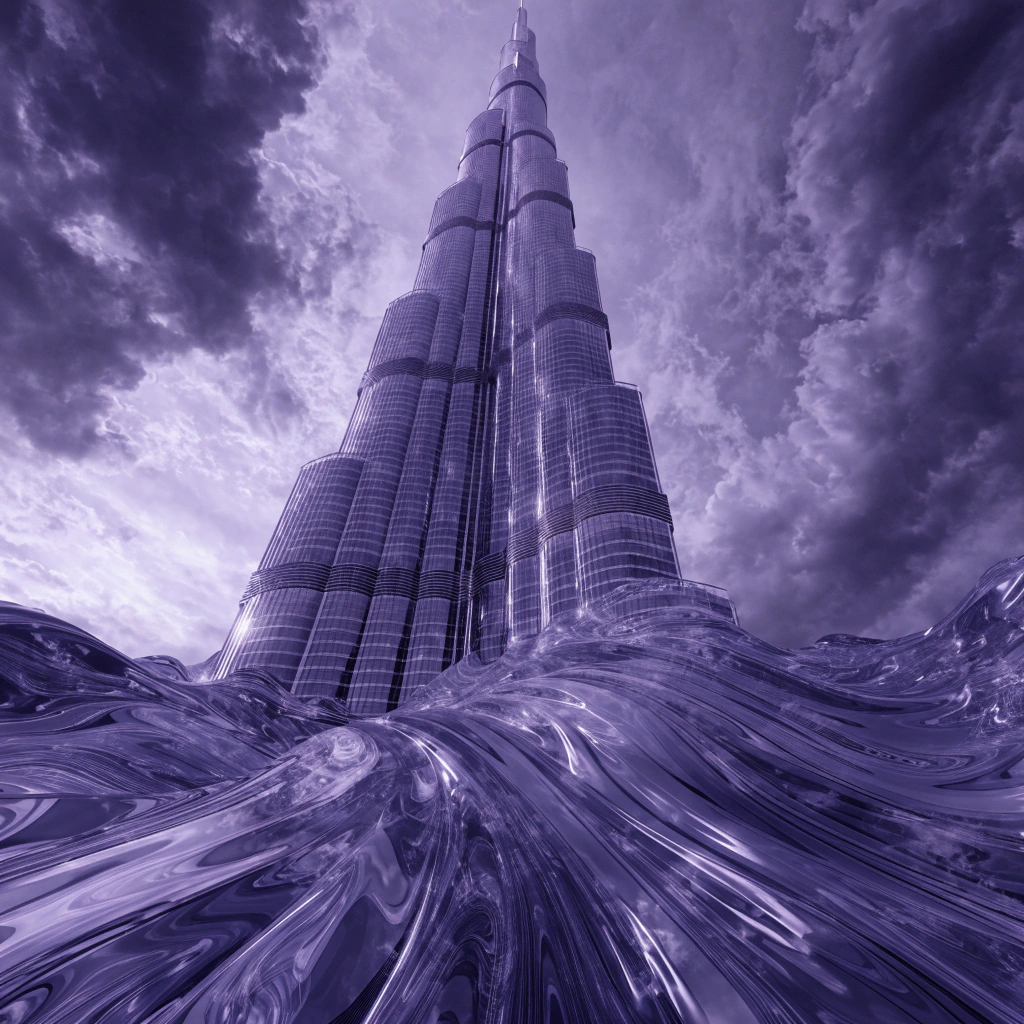
The Tall Burj Khalifa
The Burj Khalifa is a very tall building. It is in Dubai, United Arab Emirates. It is 828 meters high. It is the tallest building in the world.
The building is in the center of the city. It looks like a beautiful flower from the desert. Many people visit the tower every day. They see the city from the top.
Dubai is a famous place now. The Burj Khalifa is a symbol of the city. It is very modern and beautiful. You can see it from far away.
Point grammaire
Structure: Present Simple 'to be'
"The Burj Khalifa is a very tall building."
We use 'is' for one thing or person. It helps us describe facts about people and places.
Structure: Adjectives before Nouns
"It looks like a beautiful flower."
In English, we put the adjective (beautiful) before the noun (flower). This describes the object.
Teste ta compréhension
10 questions · A1 Débutant · 1 aperçu gratuit
Teste ce que tu as appris dans cet article. Réponds à toutes les questions pour gagner des XP !
Where is the Burj Khalifa?
Tu veux terminer le quiz ?
9 questions supplémentaires t'attendent. Inscris-toi gratuitement pour débloquer le quiz complet et gagner des XP !
S'inscrire gratuitementTu as dj un compte ? Connexion
Bien joué !
Continue à pratiquer !
Déjà terminé — pas de XP supplémentaire
Inscris-toi pour gagner des XPDétail des questions
Where is the Burj Khalifa?
Ta réponse:
Bonne réponse: Dubai
The Burj Khalifa is 828 meters high.
Ta réponse:
Bonne réponse: Vrai
What is a 'building'?
Ta réponse:
Bonne réponse: A place with walls and a roof
Many people _____ the tower every day.
Ta réponse:
Bonne réponse: visit
The Burj Khalifa: A Giant in the Clouds
The Burj Khalifa is a very famous skyscraper in Dubai, United Arab Emirates. It is 828 meters tall, so it is the tallest building in the world. It opened in January 2010. Thousands of people worked together to build this amazing tower.
The design is very special because it looks like a desert flower. The building has more than 160 floors. It is much higher than the Eiffel Tower in Paris. Inside, there are offices, apartments, and a luxury hotel. There are also many fast elevators to take visitors to the top.
In the past, Dubai was a small place for pearl diving. Now, it is a global city because of projects like the Burj Khalifa. Many tourists visit the building every year. They go to the observation deck to see the beautiful view of the city and the sea. It is a great symbol of how Dubai changed over time.
Point grammaire
Structure: Superlative Adjectives
"It is the tallest building in the world."
We use 'the' + adjective + '-est' to compare one thing to a whole group. It shows that the Burj Khalifa is number one in height.
Structure: Comparative Adjectives
"It is much higher than the Eiffel Tower in Paris."
We use adjective + '-er' + 'than' to compare two specific things. Here, it compares the height of the Burj Khalifa to the Eiffel Tower.
Teste ta compréhension
11 questions · A2 mentaire · 1 aperçu gratuit
Teste ce que tu as appris dans cet article. Réponds à toutes les questions pour gagner des XP !
Where is the Burj Khalifa located?
Tu veux terminer le quiz ?
10 questions supplémentaires t'attendent. Inscris-toi gratuitement pour débloquer le quiz complet et gagner des XP !
S'inscrire gratuitementTu as dj un compte ? Connexion
Bien joué !
Continue à pratiquer !
Déjà terminé — pas de XP supplémentaire
Inscris-toi pour gagner des XPDétail des questions
Where is the Burj Khalifa located?
Ta réponse:
Bonne réponse: Dubai
The Burj Khalifa is 828 meters tall.
Ta réponse:
Bonne réponse: Vrai
What does 'luxury' mean?
Ta réponse:
Bonne réponse: Very expensive and comfortable
The Burj Khalifa is the _____ building in the world.
Ta réponse:
Bonne réponse: tallest
What does the building's design look like?
Ta réponse:
Bonne réponse: A desert flower
The Burj Khalifa: A Giant in the Clouds
The Burj Khalifa is a magnificent skyscraper that stands in the heart of Dubai, United Arab Emirates. It has become a global symbol of modern architecture and ambition. Rising 828 meters into the clouds, it is currently the tallest building in the world. This incredible structure was built to show the world how Dubai has changed from a small port into a major international city.
The tower was designed by Adrian Smith, whose team was inspired by a desert flower called the Hymenocallis. This lily has a unique shape that helped the architects create the building's three-part base. Since it opened in 2010, millions of tourists have visited the observation decks to see the amazing views of the city and the Persian Gulf.
It was not just built for its height; the project was part of a plan to help the economy. Leaders wanted to move away from oil and focus more on tourism and finance. The building, which contains luxury apartments, offices, and a hotel, is the center of a large area called Downtown Dubai.
Over the years, the Burj Khalifa has broken many records. It has the highest occupied floor and the world's tallest service elevator. It is also famous for the spectacular light shows and fireworks that take place every New Year’s Eve. This skyscraper is truly a masterpiece that represents the future of the Middle East.
Point grammaire
Structure: Passive Voice
"The tower was designed by Adrian Smith..."
The passive voice is used to focus on the person or thing receiving the action. It is formed using the verb 'to be' plus the past participle of the main verb.
Structure: Present Perfect
"It has become a global symbol of modern architecture..."
The present perfect describes an action that happened at an unspecified time in the past or started in the past and continues now. It is formed using 'has/have' plus the past participle.
Teste ta compréhension
11 questions · B1 Intermédiaire · 1 aperçu gratuit
Teste ce que tu as appris dans cet article. Réponds à toutes les questions pour gagner des XP !
What inspired the design of the Burj Khalifa?
Tu veux terminer le quiz ?
10 questions supplémentaires t'attendent. Inscris-toi gratuitement pour débloquer le quiz complet et gagner des XP !
S'inscrire gratuitementTu as dj un compte ? Connexion
Bien joué !
Continue à pratiquer !
Déjà terminé — pas de XP supplémentaire
Inscris-toi pour gagner des XPDétail des questions
What inspired the design of the Burj Khalifa?
Ta réponse:
Bonne réponse: A desert lily
The Burj Khalifa is currently the tallest building in the world.
Ta réponse:
Bonne réponse: Vrai
What does 'masterpiece' mean?
Ta réponse:
Bonne réponse: A work of outstanding skill
The Burj Khalifa is a magnificent _____ that stands in the heart of Dubai.
Ta réponse:
Bonne réponse: skyscraper
Why did leaders want to build the tower?
Ta réponse:
Bonne réponse: To help the economy move away from oil
The Burj Khalifa: A Pinnacle of Modern Engineering and Ambition
Standing as a monumental testament to human ambition, the Burj Khalifa dominates the Dubai skyline at a staggering height of 828 meters. Since its completion in 2010, this skyscraper has functioned not merely as a commercial office building, but as the ultimate symbol of the United Arab Emirates’ rapid transformation. Historically, Dubai relied heavily on its regional status as a pearl-diving port and a local trading hub. However, the vision for the Burj Khalifa was rooted in a strategic desire to diversify the national economy, shifting the primary focus away from oil dependence toward international tourism and luxury real estate. Not only does the Burj Khalifa dominate the skyline, but it also serves as a permanent landmark of Dubai’s global growth.
The architectural design, meticulously led by Adrian Smith, draws inspiration from the Hymenocallis, a delicate desert lily native to the region. This choice reflects a sophisticated blend of cutting-edge modern engineering and traditional cultural motifs. The tower's 'Y' shaped floor plan was specifically engineered to maximize residential views of the Arabian Gulf while simultaneously reducing the impact of high-altitude wind forces. Had the architects not implemented such an innovative design, the structural integrity of the building might have been compromised by the intense pressures found at such extreme heights.
Furthermore, the construction process itself represented an unprecedented engineering feat that pushed the boundaries of what was thought possible. Over 330,000 cubic meters of concrete were pumped to record-breaking heights, requiring a level of precision that had never been witnessed in previous decades. The project also served as a vital catalyst for the development of 'Downtown Dubai,' an expansive and vibrant district that surrounds the tower. This area has since evolved into a global hub, attracting millions of visitors annually who come to experience its world-class malls, choreographed fountains, and high-end residences.
Nevertheless, the Burj Khalifa is significantly more than just a triumph of glass and steel. It embodies the resilience and aspiration of a nation seeking to redefine its place on the world stage. While some critics initially questioned the economic necessity of such a massive structure, the tower has undeniably succeeded in placing Dubai at the absolute center of global commerce and travel. Ultimately, the Burj Khalifa serves as a powerful reminder that when technical expertise is combined with a clear vision, even the most ambitious dreams can reach the clouds.
Point grammaire
Structure: Inversion with 'Not only'
"Not only does the Burj Khalifa dominate the skyline, but it also serves as a permanent landmark of Dubai’s global growth."
When we start a sentence with 'Not only' for emphasis, we invert the subject and the auxiliary verb (does the Burj Khalifa dominate). This is a formal structure used to highlight two related points.
Structure: Third Conditional (Inverted)
"Had the architects not implemented such an innovative design, the structural integrity of the building might have been compromised."
This structure describes a hypothetical situation in the past. 'Had the architects not implemented' is a formal alternative to 'If the architects had not implemented'.
Structure: Passive Voice with Past Perfect
"requiring a level of precision that had never been witnessed in previous decades."
The past perfect passive (had been witnessed) is used to describe an action that was completed before another point in the past, focusing on the event rather than the person who did it.
Teste ta compréhension
11 questions · B2 Intermédiaire supérieur · 1 aperçu gratuit
Teste ce que tu as appris dans cet article. Réponds à toutes les questions pour gagner des XP !
What was the main economic reason for building the Burj Khalifa?
Tu veux terminer le quiz ?
10 questions supplémentaires t'attendent. Inscris-toi gratuitement pour débloquer le quiz complet et gagner des XP !
S'inscrire gratuitementTu as dj un compte ? Connexion
Bien joué !
Continue à pratiquer !
Déjà terminé — pas de XP supplémentaire
Inscris-toi pour gagner des XPDétail des questions
What was the main economic reason for building the Burj Khalifa?
Ta réponse:
Bonne réponse: To diversify the economy away from oil
The design of the Burj Khalifa was inspired by a type of local desert flower.
Ta réponse:
Bonne réponse: Vrai
What does the word 'unprecedented' mean in the context of the article?
Ta réponse:
Bonne réponse: Never seen or done before
The 'Y' shaped floor plan was designed to reduce the impact of _____ forces.
Ta réponse:
Bonne réponse: wind
According to the text, what is 'Downtown Dubai'?
Ta réponse:
Bonne réponse: A vibrant district surrounding the tower
The Vertical Frontier: Deconstructing the Burj Khalifa’s Architectural and Economic Legacy
Towering 828 meters above the Arabian desert, the Burj Khalifa stands not merely as a feat of civil engineering, but as the quintessential manifestation of Dubai’s meteoric rise. Seldom has a structural undertaking captured the global imagination as profoundly as this needle-shaped colossus. While its height is its most publicized attribute, the tower’s true significance lies in its role as a strategic catalyst for economic diversification. By shifting the emirate’s focus from a volatile oil-based economy toward tourism and luxury real estate, the tower precipitated a paradigm shift in regional development.
Designed by Adrian Smith, the tower’s aesthetic is rooted in biomimicry, drawing inspiration from the Hymenocallis, a desert lily. This organic symmetry is not merely decorative; it is functional. The triple-lobed footprint serves to minimize the wind forces acting upon the structure, ensuring structural resilience at altitudes where gusts are formidable. What the architects sought to achieve was a synthesis of traditional Islamic motifs and cutting-edge structural engineering. This is evidenced by the spiraling minaret-like silhouette that reduces the building’s mass as it ascends, a design choice that was as much about physics as it was about cultural homage.
The meticulous orchestration of thousands of workers and millions of tons of high-performance concrete was unprecedented in the history of construction. However, the project was not without its complexities. The sheer scale of the building necessitated innovations in vertical pumping of concrete and the development of a 'buttressed core' system to maintain stability. Critics often point to the environmental footprint of such a structure, yet proponents argue that the Burj Khalifa is the epitome of urban density, concentrating life and commerce to reduce horizontal sprawl.
Ultimately, the Burj Khalifa is more than a skyscraper; it is a symbol of sovereignty and ambition. It represents the transition of Dubai from a regional pearl-diving port into a global powerhouse. Through the clever use of nominalisation in its marketing and the grandiosity of its scale, the tower has cemented its place in the architectural canon. It remains a testament to what can be achieved when visionary design meets the relentless pursuit of progress.
Point grammaire
Structure: Negative Inversion
"Seldom has a structural undertaking captured the global imagination as profoundly as this needle-shaped colossus."
Used for emphasis, the auxiliary verb (has) is placed before the subject (a structural undertaking) after a negative or restrictive adverbial like 'seldom'.
Structure: Pseudo-cleft Sentence
"What the architects sought to achieve was a synthesis of traditional Islamic motifs and cutting-edge structural resilience."
This structure uses a 'what-clause' to focus on a specific piece of information, making the statement more emphatic and formal.
Structure: Nominalisation
"The meticulous orchestration of thousands of workers and millions of tons of high-performance concrete was unprecedented..."
By turning verbs (orchestrate) into nouns (orchestration), the text becomes more dense, objective, and appropriate for academic or high-level professional writing.
Teste ta compréhension
12 questions · C1 Avancé · 1 aperçu gratuit
Teste ce que tu as appris dans cet article. Réponds à toutes les questions pour gagner des XP !
According to the article, what was the primary economic motivation for building the Burj Khalifa?
Tu veux terminer le quiz ?
11 questions supplémentaires t'attendent. Inscris-toi gratuitement pour débloquer le quiz complet et gagner des XP !
S'inscrire gratuitementTu as dj un compte ? Connexion
Bien joué !
Continue à pratiquer !
Déjà terminé — pas de XP supplémentaire
Inscris-toi pour gagner des XPDétail des questions
According to the article, what was the primary economic motivation for building the Burj Khalifa?
Ta réponse:
Bonne réponse: To diversify the economy away from oil dependency
The design of the Burj Khalifa was inspired by a specific type of desert lily.
Ta réponse:
Bonne réponse: Vrai
What does 'unprecedented' mean in the context of the construction process?
Ta réponse:
Bonne réponse: Never seen or done before
The tower's triple-lobed footprint was designed to minimize the _____ forces acting upon it.
Ta réponse:
Bonne réponse: wind
Which architectural feature is described as both a cultural homage and a solution to physics?
Ta réponse:
Bonne réponse: The spiraling minaret-like silhouette
Critics of the tower argue that it helps reduce horizontal urban sprawl.
Ta réponse:
Bonne réponse: Faux
Le Burj Khalifa : Une Odyssée Architecturale et un Manifeste Économique
S'élevant avec une audace presque insolente à 828 mètres au-dessus du désert d'Arabie, le Burj Khalifa n'est pas qu'une simple structure de béton et d'acier ; il est le parangon même de la transformation fulgurante de Dubaï, mue d'un modeste port perlier en une puissance économique et un épicentre global. Son existence, bien au-delà de sa fonction ostensible de gratte-ciel, incarne une vision stratégique et un désir d'émulation sans précédent.
L'annonce de ce projet colossal en 2003 ne relevait pas d'une simple ambition architecturale. Elle s'inscrivait dans une démarche résolue de diversification économique, visant à affranchir l'émirat de sa dépendance aux hydrocarbures. Le Burj Khalifa devait être la pierre angulaire d'un nouveau quartier urbain, Downtown Dubai, conçu comme un hub commercial, résidentiel et touristique, capable de catalyser les investissements et de projeter une image de modernité et de prospérité inébranlable. Il s'agissait de pérénniser la croissance et d'assurer l'hégémonie régionale de Dubaï, en dépit des fluctuations du marché pétrolier.
La conception de cette merveille d'ingénierie fut confiée à Adrian Smith, alors chez Skidmore, Owings & Merrill (SOM). L'inspiration, étonnamment poétique pour un édifice d'une telle envergure, provient de l'Hymenocallis, une fleur du désert localement connue sous le nom de « lys du désert ». Cette muse botanique se traduit par une structure tripode qui s'élève en spirale, permettant non seulement une stabilité accrue face aux vents violents et aux contraintes sismiques, mais aussi une réduction significative de l'empreinte au sol à mesure que l'édifice s'affine vers son sommet. Cette prouesse architecturale démontre une fusion harmonieuse entre l'esthétique naturelle et l'ingéniosité technologique.
La construction elle-même fut une épopée d'innovations. Des techniques de pompage de béton à des altitudes jamais atteintes, l'utilisation de matériaux composites ultra-résistants, et des systèmes de refroidissement sophistiqués furent mis en œuvre. Chaque étape, de la pose des fondations à l'installation de la dernière flèche, fut un témoignage de la capacité humaine à repousser les limites du possible. L'édifice abrite des résidences de luxe, des hôtels, des bureaux et des plateformes d'observation, créant une ville verticale autosuffisante.
Au-delà de ses aspects techniques et esthétiques, le Burj Khalifa est un symbole paradigmatique du soft power des Émirats Arabes Unis. Il ne se contente pas d'être le plus haut bâtiment du monde ; il est un phare, une déclaration d'intention audacieuse sur la scène mondiale. Il attire les regards, les capitaux et les talents, consolidant la position de Dubaï comme destination de choix pour l'innovation et le commerce international. Il est, en somme, un monument à l'ambition, une œuvre qui défie non seulement la gravité, mais aussi les sceptiques, en prouvant que même dans le désert, l'on peut ériger des rêves vertigineux et les faire fructifier.
Son impact se mesure non seulement en termes de prouesse architecturale, mais également par sa contribution indéniable à l'image de marque de Dubaï et à son positionnement comme acteur incontournable de l'économie mondiale du XXIe siècle. Il est un rappel constant que l'avenir peut être construit, brique par brique, avec une vision inébranlable et une volonté inépuisable.
Point grammaire
Structure: Le Subjonctif après une Locution Conjonctive
"Son existence, bien au-delà de sa fonction ostensible de gratte-ciel, incarne une vision stratégique et un désir d'émulation sans précédent."
Le subjonctif est souvent utilisé après certaines locutions conjonctives exprimant une concession, un but, une condition ou une opinion subjective. Dans cet exemple, « bien au-delà de » introduit une nuance de concession, même si le subjonctif n'est pas directement déclenché par cette locution, la phrase est construite de manière à exprimer une idée complexe qui pourrait nécessiter le subjonctif si l'on reformulait avec une locution comme « bien que l'on puisse penser que ». Cette structure illustre la complexité syntaxique du C2, où des idées sont imbriquées sans toujours recourir aux déclencheurs classiques.
Structure: L'emploi du Participe Présent comme Adjectif ou Gérondif
"S'élevant avec une audace presque insolente à 828 mètres au-dessus du désert d'Arabie, le Burj Khalifa n'est pas qu'une simple structure de béton et d'acier..."
Le participe présent (ici 's'élevant') est utilisé pour décrire une action simultanée à celle du verbe principal ou pour exprimer une cause ou une manière. Il confère à la phrase une élégance et une fluidité caractéristiques du style soutenu. Il se forme en ajoutant '-ant' au radical de la première personne du pluriel de l'indicatif présent (ex: nous 'élevons' -> 'élevant').
Structure: L'Inversion du Sujet dans les Phrases Interrogatives et Littéraires
"L'inspiration, étonnamment poétique pour un édifice d'une telle envergure, provient de l'Hymenocallis, une fleur du désert localement connue sous le nom de « lys du désert »."
Bien que l'exemple donné ne soit pas une inversion interrogative, le texte C2 utilise souvent des inversions pour des raisons stylistiques ou pour mettre en emphase un élément, comme on le ferait dans une phrase littéraire ou dans un style plus formel. L'inversion du sujet peut également apparaître après certains adverbes ou locutions adverbiales en début de phrase pour créer un effet stylistique. Elle consiste à placer le verbe avant le sujet, parfois avec un pronom de reprise.
Teste ta compréhension
12 questions · C2 Maîtrise · 1 aperçu gratuit
Teste ce que tu as appris dans cet article. Réponds à toutes les questions pour gagner des XP !
Quel était l'objectif principal de la construction du Burj Khalifa, au-delà de sa hauteur record ?
Tu veux terminer le quiz ?
11 questions supplémentaires t'attendent. Inscris-toi gratuitement pour débloquer le quiz complet et gagner des XP !
S'inscrire gratuitementTu as dj un compte ? Connexion
Bien joué !
Continue à pratiquer !
Déjà terminé — pas de XP supplémentaire
Inscris-toi pour gagner des XPDétail des questions
Quel était l'objectif principal de la construction du Burj Khalifa, au-delà de sa hauteur record ?
Ta réponse:
Bonne réponse: Diversifier l'économie de Dubaï et réduire sa dépendance au pétrole
La conception du Burj Khalifa a été inspirée par une plante du désert.
Ta réponse:
Bonne réponse: Vrai
Quel mot signifie 'Modèle accompli, exemple parfait de quelque chose' ?
Ta réponse:
Bonne réponse: Parangon
Le Burj Khalifa devait être la pierre angulaire d'un nouveau quartier urbain, Downtown Dubai, conçu comme un hub commercial, résidentiel et ____.
Ta réponse:
Bonne réponse: touristique
Qui était l'architecte principal derrière la conception du Burj Khalifa ?
Ta réponse:
Bonne réponse: Adrian Smith
Le texte suggère que le Burj Khalifa est uniquement une prouesse technique sans dimension symbolique.
Ta réponse:
Bonne réponse: Faux

