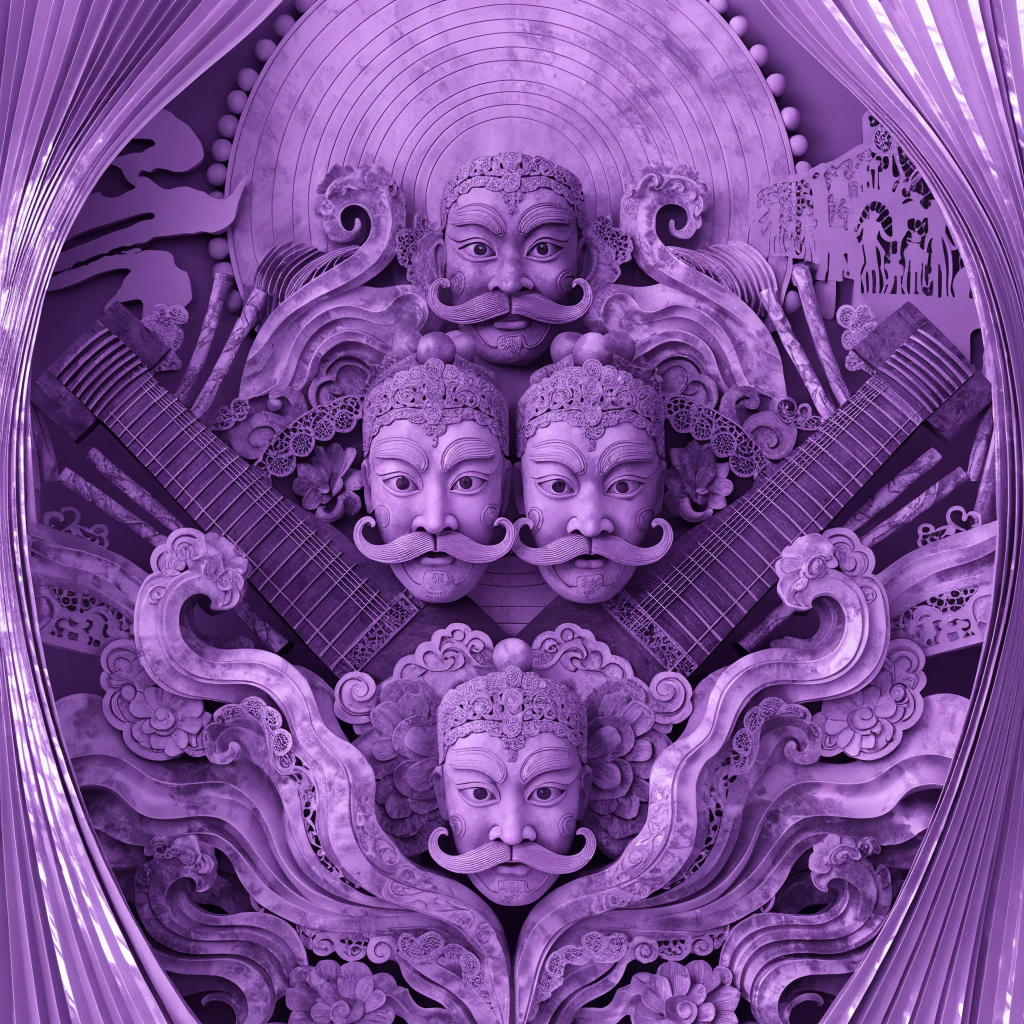
A Special Chinese Art: Kunqu Opera
Kunqu Opera is a famous art from China. It is very old. People call it the 'mother' of Chinese opera. It comes from Suzhou.
The actors wear beautiful clothes. They wear many colors like red, blue, and gold. Their faces have bright makeup. They sing and dance on the stage. The music is slow and soft.
People love Kunqu Opera because it is very elegant. It tells stories about love and history. Today, many young people learn this art. It is a special part of Chinese culture.
व्याकरण स्पॉटलाइट
पैटर्न: Present Simple (be)
"Kunqu Opera is a famous art from China."
We use 'is' with singular subjects to describe a fact. It tells us what something is or where it is from.
पैटर्न: Present Simple (Action Verbs)
"The actors wear beautiful clothes."
We use the base form of the verb (wear) with plural subjects like 'actors'. This describes things that happen regularly.
अपनी समझ जाँचें
10 सवाल · A1 शुरुआती · 1 मुफ्त प्रीव्यू
इस लेख से आपने जो सीखा उसकी जाँच करें। सभी सवालों के जवाब दें और XP कमाएँ!
Where does Kunqu Opera come from?
क्या आप क्विज़ समाप्त करना चाहते हैं?
9 और सवाल आपका इंतज़ार कर रहे हैं। पूरा क्विज़ अनलॉक करने और XP कमाने के लिए मुफ्त साइन अप करें!
मुफ़्त साइन अप करोपहले से अकाउंट है? साइन इन करो
बहुत बढ़िया!
अभ्यास जारी रखें!
पहले से पूर्ण — कोई अतिरिक्त XP नहीं
XP कमाने के लिए साइन अप करोसवालों का विवरण
Where does Kunqu Opera come from?
आपका जवाब:
सही जवाब: Suzhou
The music in Kunqu Opera is very fast.
आपका जवाब:
सही जवाब: गलत
What does 'famous' mean?
आपका जवाब:
सही जवाब: Many people know it
The actors sing and _____ on the stage.
आपका जवाब:
सही जवाब: dance
Kunqu: The Mother of Chinese Opera
Kunqu Opera is one of the oldest and most beautiful types of drama in China. It began more than 600 years ago in a place called Kunshan, near Suzhou. Many people call it the "Mother" of Chinese opera because it is older than Peking Opera and helped it grow.
In the past, Kunqu was the most popular art in China for over 200 years. It is famous for its "Three Perfections." These are the elegant words, the soft music, and the graceful dancing. The actors wear very bright and colorful costumes. They move their bodies slowly and use their hands to show feelings.
Today, Kunqu is still very important. It is more difficult to learn than other operas because the music is complex. However, many students want to study it. In 2001, UNESCO said that Kunqu is a masterpiece of human history. It is a wonderful way to learn about Chinese culture and traditional stories.
व्याकरण स्पॉटलाइट
पैटर्न: Past Simple (Irregular)
"It began more than 600 years ago in a place called Kunshan."
The past simple is used for finished actions in the past. Many verbs are irregular, so 'begin' becomes 'began' instead of adding -ed.
पैटर्न: Comparatives
"It is older than Peking Opera and helped it grow."
We use comparatives to compare two things. For short adjectives like 'old', we add -er and the word 'than'.
अपनी समझ जाँचें
11 सवाल · A2 बिगिनर · 1 मुफ्त प्रीव्यू
इस लेख से आपने जो सीखा उसकी जाँच करें। सभी सवालों के जवाब दें और XP कमाएँ!
Where did Kunqu opera first begin?
क्या आप क्विज़ समाप्त करना चाहते हैं?
10 और सवाल आपका इंतज़ार कर रहे हैं। पूरा क्विज़ अनलॉक करने और XP कमाने के लिए मुफ्त साइन अप करें!
मुफ़्त साइन अप करोपहले से अकाउंट है? साइन इन करो
बहुत बढ़िया!
अभ्यास जारी रखें!
पहले से पूर्ण — कोई अतिरिक्त XP नहीं
XP कमाने के लिए साइन अप करोसवालों का विवरण
Where did Kunqu opera first begin?
आपका जवाब:
सही जवाब: Kunshan
Kunqu Opera is younger than Peking Opera.
आपका जवाब:
सही जवाब: गलत
What is a 'costume'?
आपका जवाब:
सही जवाब: Special clothes for actors
The actors wear very bright and _____ costumes.
आपका जवाब:
सही जवाब: colorful
Why is Kunqu difficult to learn?
आपका जवाब:
सही जवाब: The music is complex
Kunqu Opera: The Mother of Chinese Theater
Kunqu Opera is one of the oldest and most beautiful forms of drama in China. It has been performed for more than 600 years, and it is often called the "Mother" of all Chinese operas. This art form started in the Kunshan region, which is near the city of Suzhou. During the Ming Dynasty, it became the most popular type of theater in the country.
The performance is famous for its "Three Perfections": poetic language, complex music, and graceful movements. The songs are usually accompanied by a bamboo flute, which creates a very soft and peaceful sound. The actors wear colorful costumes and use delicate gestures to tell stories about love, history, and legends. Because the movements are so elegant, the opera often looks like a beautiful, slow-motion dance.
However, learning Kunqu is not easy. Performers have to train for many years to master the difficult singing techniques and physical movements. In the past, these skills were passed down from teachers to students through many generations. This ensured that the tradition stayed alive even when times were difficult.
In 2001, Kunqu was recognized by UNESCO as a masterpiece of oral and intangible heritage. Since then, many efforts have been made to protect this ancient tradition. Today, new plays are being written, and younger audiences are starting to appreciate the art. Although it is an ancient tradition, Kunqu still has a special place in modern Chinese culture. It continues to fascinate people who enjoy traditional music and storytelling.
व्याकरण स्पॉटलाइट
पैटर्न: Present Perfect
"It has been performed for more than 600 years."
The present perfect is used here to describe an action that started in the past and continues to the present day. It is formed using 'has/have' plus the past participle.
पैटर्न: Passive Voice
"Kunqu was recognized by UNESCO as a masterpiece."
The passive voice is used when the focus is on the action or the person/thing receiving the action. It is formed using the verb 'to be' and the past participle.
अपनी समझ जाँचें
11 सवाल · B1 मध्यम · 1 मुफ्त प्रीव्यू
इस लेख से आपने जो सीखा उसकी जाँच करें। सभी सवालों के जवाब दें और XP कमाएँ!
Where did Kunqu Opera originally start?
क्या आप क्विज़ समाप्त करना चाहते हैं?
10 और सवाल आपका इंतज़ार कर रहे हैं। पूरा क्विज़ अनलॉक करने और XP कमाने के लिए मुफ्त साइन अप करें!
मुफ़्त साइन अप करोपहले से अकाउंट है? साइन इन करो
बहुत बढ़िया!
अभ्यास जारी रखें!
पहले से पूर्ण — कोई अतिरिक्त XP नहीं
XP कमाने के लिए साइन अप करोसवालों का विवरण
Where did Kunqu Opera originally start?
आपका जवाब:
सही जवाब: Kunshan
Kunqu Opera is a relatively new art form in China.
आपका जवाब:
सही जवाब: गलत
What does 'graceful' mean?
आपका जवाब:
सही जवाब: Moving in a smooth and attractive way
The songs in Kunqu are usually accompanied by a bamboo _____.
आपका जवाब:
सही जवाब: flute
What are the 'Three Perfections' of Kunqu?
आपका जवाब:
सही जवाब: Language, music, and movements
कुनक्वि ओपेरा: चीनी कला का एक शाश्वत रत्न
चीन की समृद्ध सांस्कृतिक विरासत में कुनक्वि ओपेरा का एक अद्वितीय स्थान है। इसे अक्सर चीनी ओपेरा की 'जननी' या 'शिक्षक' के रूप में सम्मानित किया जाता है, क्योंकि यह चीनी नाटक के सबसे प्राचीनतम जीवित रूपों में से एक है। इसका उद्भव 14वीं शताब्दी में युआन राजवंश के उत्तरार्ध में सूज़ौ के कुनशान क्षेत्र में हुआ था। यह कला शैली मिंग और प्रारंभिक किंग राजवंशों के दौरान अपने चरमोत्कर्ष पर पहुँची, और लगभग 200 वर्षों तक पूरे चीन में एक प्रभुत्वशाली नाटकीय रूप बनी रही।
कुनक्वि ओपेरा अपनी 'तीन पूर्णताओं' के लिए विशेष रूप से प्रसिद्ध है: इसकी परिष्कृत साहित्यिक भाषा, इसका मंत्रमुग्ध कर देने वाला और जटिल संगीत स्कोर, और इसकी मनोहारी, अत्यधिक शैलीबद्ध नृत्यकला। इसमें गायन, नृत्य, अभिनय और काव्य का एक सामंजस्यपूर्ण मिश्रण प्रस्तुत किया जाता है, जो दर्शकों को एक गहन कलात्मक अनुभव प्रदान करता है। कलाकार अपनी भावनाओं और कथा को व्यक्त करने के लिए सूक्ष्म भंगिमाओं, प्रतीकात्मक हावभावों और विस्तृत वेशभूषा का उपयोग करते हैं। संवाद अक्सर शास्त्रीय चीनी काव्य से लिए जाते हैं, जिससे इसकी साहित्यिक गुणवत्ता और भी बढ़ जाती है।
हालांकि, 18वीं शताब्दी के अंत तक, कुनक्वि की लोकप्रियता में गिरावट आने लगी क्योंकि अन्य, अधिक सुलभ ओपेरा शैलियाँ उभरीं, विशेष रूप से बीजिंग ओपेरा। इसके बावजूद, कुछ समर्पित कलाकारों और संरक्षकों ने इस अनूठी कला शैली को जीवित रखा। 2001 में, यूनेस्को ने कुनक्वि ओपेरा को 'मानवता की अमूर्त सांस्कृतिक विरासत की उत्कृष्ट कृति' के रूप में मान्यता दी, जिसने इसके संरक्षण और पुनरुत्थान के प्रयासों को एक नई गति प्रदान की।
आज भी, कुनक्वि ओपेरा को चीनी कला के एक महत्वपूर्ण प्रतीक के रूप में देखा जाता है। इसके प्रदर्शन अपेक्षाकृत कम होते हैं, लेकिन हर प्रस्तुति कला प्रेमियों के लिए एक विशेष अवसर होती है। यह न केवल एक मनोरंजन का साधन है, बल्कि चीनी संस्कृति और इतिहास की एक जीवित पुस्तक भी है, जो पीढ़ियों से चली आ रही परंपराओं और सौंदर्यबोध को दर्शाती है। इसके माध्यम से, हम चीनी कला के गहरे दर्शन और उसकी शाश्वत सुंदरता को समझ सकते हैं।
व्याकरण स्पॉटलाइट
पैटर्न: क्रिया के 'जाना' रूप का प्रयोग (Passive Voice)
"इसे अक्सर चीनी ओपेरा की 'जननी' या 'शिक्षक' के रूप में सम्मानित किया जाता है।"
यह संरचना (कर्म + क्रिया का मूल रूप + जाना) क्रिया के निष्क्रिय रूप (passive voice) को दर्शाती है। इसका उपयोग तब किया जाता है जब क्रिया का कर्ता महत्वपूर्ण न हो या ज्ञात न हो, और क्रिया के परिणाम पर जोर देना हो।
पैटर्न: संयुक्त क्रियाएँ (Compound Verbs)
"हालांकि, 18वीं शताब्दी के अंत तक, कुनक्वि की लोकप्रियता में गिरावट आने लगी क्योंकि अन्य, अधिक सुलभ ओपेरा शैलियाँ उभरीं।"
यहाँ 'आने लगी' एक संयुक्त क्रिया है, जो मुख्य क्रिया ('आना') और एक सहायक क्रिया ('लगना') के संयोजन से बनती है। यह क्रिया के शुरू होने या जारी रहने की स्थिति को व्यक्त करती है। अन्य उदाहरण 'कर देना', 'ले जाना' आदि हैं।
पैटर्न: संबंधवाचक सर्वनाम 'जो' का प्रयोग (Relative Pronoun 'Jo')
"यह न केवल एक मनोरंजन का साधन है, बल्कि चीनी संस्कृति और इतिहास की एक जीवित पुस्तक भी है, जो पीढ़ियों से चली आ रही परंपराओं और सौंदर्यबोध को दर्शाती है।"
यहाँ 'जो' का प्रयोग पिछले वाक्य में वर्णित 'जीवित पुस्तक' के बारे में अतिरिक्त जानकारी देने के लिए किया गया है। 'जो' एक संबंधवाचक सर्वनाम है जो दो वाक्यों या खंडों को जोड़ता है और पहले वाले के बारे में बताता है।
अपनी समझ जाँचें
11 सवाल · B2 अपर इंटरमीडिएट · 1 मुफ्त प्रीव्यू
इस लेख से आपने जो सीखा उसकी जाँच करें। सभी सवालों के जवाब दें और XP कमाएँ!
कुनक्वि ओपेरा का उद्भव किस राजवंश के दौरान हुआ था?
क्या आप क्विज़ समाप्त करना चाहते हैं?
10 और सवाल आपका इंतज़ार कर रहे हैं। पूरा क्विज़ अनलॉक करने और XP कमाने के लिए मुफ्त साइन अप करें!
मुफ़्त साइन अप करोपहले से अकाउंट है? साइन इन करो
बहुत बढ़िया!
अभ्यास जारी रखें!
पहले से पूर्ण — कोई अतिरिक्त XP नहीं
XP कमाने के लिए साइन अप करोसवालों का विवरण
कुनक्वि ओपेरा का उद्भव किस राजवंश के दौरान हुआ था?
आपका जवाब:
सही जवाब: युआन राजवंश
कुनक्वि ओपेरा अपनी 'तीन पूर्णताओं' के लिए प्रसिद्ध है, जिनमें से एक उसकी परिष्कृत साहित्यिक भाषा है।
आपका जवाब:
सही जवाब: सही
'चरमोत्कर्ष' शब्द का क्या अर्थ है?
आपका जवाब:
सही जवाब: उच्चतम बिंदु
2001 में, यूनेस्को ने कुनक्वि ओपेरा को 'मानवता की अमूर्त सांस्कृतिक विरासत की उत्कृष्ट कृति' के रूप में __________ दी।
आपका जवाब:
सही जवाब: मान्यता
कुनक्वि ओपेरा को अक्सर चीनी ओपेरा की किस रूप में सम्मानित किया जाता है?
आपका जवाब:
सही जवाब: जननी
The Ethereal Echoes of Kunshan: Navigating the Zenith of Kunqu Opera
Seldom has a performance medium commanded such profound cultural hegemony as Kunqu Opera, the venerable 'Mother' of Chinese theatrical arts. Emerging from the Kunshan region during the twilight of the Yuan Dynasty, Kunqu’s trajectory toward the zenith of imperial favor was marked by an unprecedented refinement of literary and musical standards. Unlike the more percussive and populist iterations of opera that followed, Kunqu is defined by its 'Three Perfections': its sophisticated literary libretti, its hauntingly lyrical musicality, and its stylized, balletic choreography. To witness a Kunqu performance is to observe the sublimation of human emotion into a highly codified aesthetic language, where every flick of a sleeve and every nuanced vocal modulation carries centuries of philosophical weight.
The ascension of Kunqu to its status as the dominant national drama during the Ming Dynasty was not merely a matter of artistic merit but a reflection of the era’s intellectual zeitgeist. It was the scholar-bureaucrat class that championed its development, infusing the scripts with complex poetic metaphors and esoteric historical allusions. Consequently, the language of Kunqu remains a demanding feat for the modern spectator, requiring a degree of classical literacy that is increasingly rare in a globalized society. This inherent complexity presents a paradox for contemporary practitioners: how does one maintain the artistic fidelity of a 600-year-old tradition while ensuring its continued relevance in a fast-paced, digital world?
The 'Kunqiang' musical system, characterized by its long, lingering notes and intricate woodwind accompaniment, demands a vocal control that few contemporary singers can master. Training often begins in early childhood, involving the rigorous conditioning of the body to achieve a state of 'relaxed tension.' This physical discipline allows the actor to convey profound internal turmoil through the most subtle of gestures. Such dedication is a rebuttal to the modern penchant for instant gratification. The preservation of such an esoteric art form necessitates a delicate balance between traditional fidelity and contemporary accessibility.
In recent decades, there has been a notable resurgence of interest in Kunqu, catalyzed in part by its recognition by UNESCO as a Masterpiece of the Oral and Intangible Heritage of Humanity. However, this revival is not without its critics. Some argue that the institutionalization and subsequent commodification of Kunqu for the tourism industry risk diluting its ethereal beauty, transforming a profound spiritual experience into a mere spectacle. Others contend that without such modernization, the art form would inevitably drift into obsolescence. The synthesis of these opposing viewpoints is essential for the future of the craft.
The enduring appeal of Kunqu lies in its ability to transcend the temporal. It is the delicate interplay between the rigorous structure of the music and the fluid grace of the performers that allows for such visceral storytelling. Whether depicting the tragic yearning of 'The Peony Pavilion' or the historical gravitas of 'The Palace of Eternal Life,' Kunqu remains a testament to the enduring power of refined art. Ultimately, the preservation of Kunqu necessitates more than just funding; it requires an ongoing intellectual engagement with its past and a courageous exploration of its future.
व्याकरण स्पॉटलाइट
पैटर्न: Negative Inversion
"Seldom has a performance medium commanded such profound cultural hegemony as Kunqu Opera."
Inversion is used here by placing a negative adverb ('Seldom') at the beginning of the sentence followed by an auxiliary verb ('has'). This structure is used for rhetorical emphasis and is a hallmark of formal, advanced English.
पैटर्न: Cleft Sentences
"It was the scholar-bureaucrat class that championed its development..."
An 'It-cleft' sentence is used to focus on a specific piece of information (the scholar-bureaucrat class). It emphasizes the subject that performed the action rather than the action itself.
पैटर्न: Nominalization
"The institutionalization and subsequent commodification of Kunqu for the tourism industry risk diluting its ethereal beauty..."
Nominalization involves turning verbs or adjectives into nouns (e.g., 'institutionalize' to 'institutionalization'). This creates a more academic, dense, and sophisticated tone, focusing on abstract concepts.
अपनी समझ जाँचें
12 सवाल · C1 उन्नत · 1 मुफ्त प्रीव्यू
इस लेख से आपने जो सीखा उसकी जाँच करें। सभी सवालों के जवाब दें और XP कमाएँ!
What is the primary reason the author considers Kunqu a 'demanding feat' for modern audiences?
क्या आप क्विज़ समाप्त करना चाहते हैं?
11 और सवाल आपका इंतज़ार कर रहे हैं। पूरा क्विज़ अनलॉक करने और XP कमाने के लिए मुफ्त साइन अप करें!
मुफ़्त साइन अप करोपहले से अकाउंट है? साइन इन करो
बहुत बढ़िया!
अभ्यास जारी रखें!
पहले से पूर्ण — कोई अतिरिक्त XP नहीं
XP कमाने के लिए साइन अप करोसवालों का विवरण
What is the primary reason the author considers Kunqu a 'demanding feat' for modern audiences?
आपका जवाब:
सही जवाब: The high level of classical literacy required to understand the libretti
Kunqu Opera reached its peak popularity during the Yuan Dynasty.
आपका जवाब:
सही जवाब: गलत
Which word best describes the 'Three Perfections' of Kunqu?
आपका जवाब:
सही जवाब: Synthesis
The author argues that Kunqu's revival is criticized by some who fear its _____ for tourism.
आपका जवाब:
सही जवाब: commodification
What does the 'Three Perfections' refer to in the context of the article?
आपका जवाब:
सही जवाब: Literary language, musical scores, and choreography
The author believes that funding alone is sufficient for the preservation of Kunqu.
आपका जवाब:
सही जवाब: गलत
कुनकु ओपेरा: चीनी नाट्य-कला का उद्भव और शाश्वत सौंदर्य
चीन की सांस्कृतिक धरोहर में कुनकु ओपेरा का स्थान सर्वोपरि है, जिसे अक्सर चीनी ओपेरा की 'जननी' या 'शिक्षक' के रूप में प्रतिष्ठित किया जाता है। इसकी व्युत्पत्ति 14वीं शताब्दी के उत्तरार्ध में युआन राजवंश के अंतिम चरण में सूझोऊ के कुनशान क्षेत्र में हुई थी। यह न केवल चीन की सबसे प्राचीन जीवित नाट्य-कलाओं में से एक है, बल्कि इसने आगामी नाट्य-रूपों के लिए एक महत्वपूर्ण आधार भी तैयार किया, जिसके कारण इसकी ऐतिहासिक और सौंदर्यशास्त्रीय महत्ता असंदिग्ध है।
कुनकु ओपेरा ने मिंग और प्रारंभिक किंग राजवंशों के दौरान अपनी पराकाष्ठा प्राप्त की, जब यह लगभग 200 वर्षों तक पूरे चीन में प्रभावशाली मंचीय कला के रूप में स्थापित रहा। इस स्वर्णिम काल में, इसने अभिजात वर्ग और विद्वानों के बीच गहरी पैठ बनाई, और इसके प्रदर्शनों को बौद्धिक और कलात्मक परिपक्वता का प्रतीक माना जाने लगा। इसकी अद्वितीयता को ‘तीन सिद्धियों’ (Three Perfections) के माध्यम से समझा जा सकता है: इसकी परिष्कृत साहित्यिक भाषा, भावुक और जटिल संगीत रचनाएँ, तथा इसकी गरिमामयी, अत्यंत शैलीबद्ध नृत्य-अभिनय।
साहित्यिक दृष्टि से, कुनकु ओपेरा के नाटक अक्सर शास्त्रीय चीनी साहित्य से प्रेरित होते हैं, जिनमें कविता, गद्य और गीत का एक जटिल मिश्रण होता है। इनकी भाषा अत्यंत अलंकृत और काव्यात्मक होती है, जो चीनी अक्षरों की ध्वन्यात्मक और अर्थगत बारीकियों का सूक्ष्मता से उपयोग करती है। यह भाषा न केवल पात्रों की आंतरिक भावनाओं को गहराई से व्यक्त करती है, बल्कि दर्शकों को एक समृद्ध भाषाई अनुभव भी प्रदान करती है। ऐसा प्रतीत होता है कि इस स्तर की भाषाई दक्षता किसी भी अन्य समकालीन नाट्य-रूप में दुर्लभ थी।
संगीत के क्षेत्र में, कुनकु ओपेरा अपने 'कुनशान मेलोडी' (Kunshan Melody) के लिए विख्यात है, जो एक विशिष्ट गायन शैली है जिसमें धीमी गति, विस्तृत स्वर विस्तार (melismatic ornamentation) और गहरे भावनात्मक प्रभाव पर जोर दिया जाता है। संगीत वाद्ययंत्रों में बांसुरी (दीज़ी), पिपा, एरहू और विभिन्न ताल वाद्य जैसे गोंग और ड्रम शामिल होते हैं। ये वाद्ययंत्र गायन के साथ सामंजस्य स्थापित करते हुए एक मनमोहक श्रवण अनुभव प्रदान करते हैं, जो दर्शकों को पात्रों की मनःस्थिति में पूरी तरह से लीन कर देता है। इसकी जटिल संगीत संरचनाएं इसे अन्य ओपेरा रूपों से स्पष्ट रूप से अलग करती हैं।
अभिनय और नृत्य-शैली कुनकु ओपेरा का तीसरा महत्वपूर्ण स्तंभ है। इसमें अभिनेताओं को अत्यधिक अनुशासित और प्रतीकात्मक मुद्राओं, इशारों और चालों का प्रदर्शन करना होता है। प्रत्येक भाव-भंगिमा, प्रत्येक हाथ की गति, और प्रत्येक पैर का स्थान एक विशिष्ट अर्थ और भावना को व्यक्त करता है। यह कला रूप मार्शल आर्ट, नृत्य और गायन का एक जटिल संलयन है, जहाँ अभिनेताओं को कई वर्षों के कठोर प्रशिक्षण से गुजरना पड़ता है ताकि वे इन सूक्ष्मताओं में महारत हासिल कर सकें। पात्रों के परिधान भी अत्यंत भव्य और ऐतिहासिक रूप से सटीक होते हैं, जो उनके सामाजिक स्तर और व्यक्तित्व को दर्शाते हैं।
यद्यपि 18वीं शताब्दी के बाद कुनकु ओपेरा की लोकप्रियता में कुछ गिरावट आई, विशेषकर नए, अधिक सुलभ ओपेरा रूपों के उदय के कारण, फिर भी इसकी कलात्मक श्रेष्ठता को कभी चुनौती नहीं दी गई। 21वीं सदी में, यूनेस्को द्वारा इसे 'मानवता की मौखिक और अमूर्त विरासत की उत्कृष्ट कृति' के रूप में मान्यता मिलने के बाद, इसके संरक्षण और पुनरुत्थान के प्रयासों में तेजी आई है। आज भी, कुनकु ओपेरा अपने शाश्वत सौंदर्य, गहन कलात्मकता और समृद्ध सांस्कृतिक विरासत के साथ दर्शकों को मोहित करता है। यह कहना अतिशयोक्ति न होगी कि कुनकु ओपेरा चीनी संस्कृति की आत्मा का एक जीवंत प्रतिबिंब है, जो अतीत से वर्तमान तक अपनी आभा बिखेर रहा है।
व्याकरण स्पॉटलाइट
पैटर्न: न केवल...बल्कि (Not only...but also)
"यह न केवल चीन की सबसे प्राचीन जीवित नाट्य-कलाओं में से एक है, बल्कि इसने आगामी नाट्य-रूपों के लिए एक महत्वपूर्ण आधार भी तैयार किया, जिसके कारण इसकी ऐतिहासिक और सौंदर्यशास्त्रीय महत्ता असंदिग्ध है।"
यह संरचना दो संबंधित तथ्यों या विशेषताओं को जोड़ने के लिए उपयोग की जाती है, जहाँ दूसरा तथ्य पहले की तुलना में अक्सर अधिक महत्वपूर्ण या अतिरिक्त होता है। 'न केवल' के बाद पहला कथन आता है, और 'बल्कि' के बाद दूसरा कथन आता है।
पैटर्न: प्रतीत होता है कि (It seems that/It appears that)
"ऐसा प्रतीत होता है कि इस स्तर की भाषाई दक्षता किसी भी अन्य समकालीन नाट्य-रूप में दुर्लभ थी।"
यह एक अकादमिक या औपचारिक अभिव्यक्ति है जिसका उपयोग किसी अनुमान, अवलोकन या संभावना को व्यक्त करने के लिए किया जाता है, जहाँ पूर्ण निश्चितता न हो। यह 'लगता है कि' का एक अधिक परिष्कृत रूप है, जो C2 स्तर पर उपयुक्त है।
पैटर्न: यह कहना अतिशयोक्ति न होगी कि (It would not be an exaggeration to say that)
"यह कहना अतिशयोक्ति न होगी कि कुनकु ओपेरा चीनी संस्कृति की आत्मा का एक जीवंत प्रतिबिंब है, जो अतीत से वर्तमान तक अपनी आभा बिखेर रहा है।"
यह एक मुहावरेदार और अलंकारिक अभिव्यक्ति है जिसका उपयोग किसी कथन के महत्व पर जोर देने के लिए किया जाता है, यह दर्शाते हुए कि दिया गया बयान भले ही बड़ा लगे, लेकिन वह सत्य के करीब है और उसमें कोई बढ़ा-चढ़ाकर कही गई बात नहीं है।
अपनी समझ जाँचें
12 सवाल · C2 महारत · 1 मुफ्त प्रीव्यू
इस लेख से आपने जो सीखा उसकी जाँच करें। सभी सवालों के जवाब दें और XP कमाएँ!
कुनकु ओपेरा का उद्भव किस शताब्दी के अंत में हुआ था?
क्या आप क्विज़ समाप्त करना चाहते हैं?
11 और सवाल आपका इंतज़ार कर रहे हैं। पूरा क्विज़ अनलॉक करने और XP कमाने के लिए मुफ्त साइन अप करें!
मुफ़्त साइन अप करोपहले से अकाउंट है? साइन इन करो
बहुत बढ़िया!
अभ्यास जारी रखें!
पहले से पूर्ण — कोई अतिरिक्त XP नहीं
XP कमाने के लिए साइन अप करोसवालों का विवरण
कुनकु ओपेरा का उद्भव किस शताब्दी के अंत में हुआ था?
आपका जवाब:
सही जवाब: 14वीं शताब्दी
कुनकु ओपेरा को यूनेस्को द्वारा 'मानवता की मौखिक और अमूर्त विरासत की उत्कृष्ट कृति' के रूप में मान्यता मिली है।
आपका जवाब:
सही जवाब: सही
'पराकाष्ठा' शब्द का क्या अर्थ है?
आपका जवाब:
सही जवाब: चरम अवस्था
कुनकु ओपेरा ने मिंग और प्रारंभिक किंग राजवंशों के दौरान अपनी _______ प्राप्त की।
आपका जवाब:
सही जवाब: पराकाष्ठा
कुनकु ओपेरा की 'तीन सिद्धियों' में से कौन सा विकल्प सही नहीं है?
आपका जवाब:
सही जवाब: सरल और सहज नृत्य-अभिनय
कुनकु ओपेरा की भाषा अत्यंत सरल और सीधी होती है, जिसमें अलंकरण का अभाव होता है।
आपका जवाब:
सही जवाब: गलत

