









chip 30 सेकंड में
- A broken fragment.
- A potato snack.
- A computer part.
- A casino token.
The word chip is an incredibly versatile noun in the English language, representing a multitude of concepts ranging from culinary delights to cutting-edge technological advancements. At its most fundamental level, a chip is a small, thin piece of material that has been broken, cut, or otherwise separated from a much larger object. This could be a chip of wood, a chip of stone, or a chip of glass. When you accidentally drop a ceramic coffee mug and a tiny fragment breaks off the rim, that resulting fragment is referred to as a chip. This physical definition is the oldest and most foundational understanding of the word, rooting it firmly in the physical manipulation and degradation of solid materials. Beyond this basic physical description, the term has evolved to encompass several highly specific and widely recognized items in modern society.
The carpenter swept up the wood chips from the workshop floor.
In the culinary world, the word takes on entirely different, yet equally ubiquitous, meanings depending heavily on geographical location and cultural context. In American English, a chip almost exclusively refers to a potato chip—a very thin, typically circular slice of potato that has been deep-fried or baked until crisp and then salted or flavored. These are common snack foods consumed globally. However, in British English, the word chip refers to what Americans call a French fry—a thicker, elongated cut of potato that is deep-fried and often served hot with meals, such as the iconic British dish, fish and chips. This transatlantic linguistic divergence is one of the most famous examples of vocabulary differences between the two major dialects of English.
- American English
- Refers to a thin, crispy snack (potato chip).
- British English
- Refers to a hot, thick-cut fried potato (French fry).
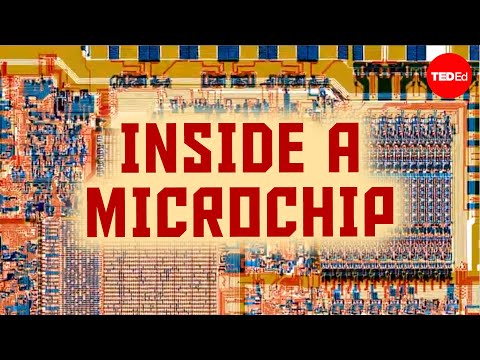
Moving away from food, the term has found a massive and revolutionary application in the field of electronics and computing. A microchip, often simply called a chip, is a tiny wafer of semiconducting material, usually silicon, upon which an integrated circuit is fabricated. These chips are the fundamental building blocks of virtually all modern electronic devices, from smartphones and personal computers to automobiles and household appliances. The invention and continuous miniaturization of the silicon chip have driven the digital revolution, making the word an indispensable part of modern technological vocabulary.
The new smartphone features a faster processing chip.
- Silicon Chip
- The core component of modern electronics.
Furthermore, in the context of gaming and gambling, a chip is a small, flat, usually circular disc used to represent currency or value. In casinos, players exchange their actual money for poker chips or casino chips, which they then use to place bets on games like poker, blackjack, and roulette. These chips are carefully manufactured to prevent counterfeiting and come in various colors to denote different denominations of value. This usage extends metaphorically into phrases like 'cashing in one's chips,' which means to die or to finish one's participation in an activity.
He placed a high-value chip on the roulette table.
Finally, the word appears in several common idioms. Having a 'chip on one's shoulder' describes a person who seems angry, resentful, or easily offended, often because they feel they have been treated unfairly in the past. This idiom supposedly originates from a 19th-century practice where a boy looking for a fight would place a wood chip on his shoulder and dare others to knock it off. Another common phrase is 'when the chips are down,' which refers to a difficult or critical situation where one's true character or the true state of affairs is revealed, borrowing imagery from a high-stakes gambling scenario where all bets have been placed.
Ever since he was passed over for the promotion, he's had a chip on his shoulder.
- Idiomatic Usage
- Often relates to historical physical practices or gambling metaphors.
When the chips are down, you find out who your real friends are.
In summary, while it may appear to be a simple, four-letter word, its semantic reach is vast, covering physical fragments, beloved foods, essential technology, gaming currency, and expressive idioms, making it a crucial vocabulary word for any English learner to master comprehensively.
Understanding how to properly use the noun chip in a sentence requires an awareness of its various contexts and grammatical properties. Primarily, it functions as a countable noun. This means it can be used in the singular form (a chip) or the plural form (chips). The pluralization is straightforward, simply requiring the addition of an 's'. When discussing the physical fragments of a material, you might say, 'I found a small chip of paint on the floor,' or 'The lumberjack was covered in wood chips.' In these instances, the word is often followed by the preposition 'of' to specify the material from which the fragment originated. This structure, 'a chip of [material],' is highly common and grammatically essential for clarity when the context doesn't automatically imply the material.
When using the word in its culinary sense, the plural form is overwhelmingly more common. People rarely eat just one. Therefore, you will frequently encounter phrases like 'a bag of chips,' 'a bowl of chips,' or 'fish and chips.' In American English, if you want to specify a single piece, you would say 'a potato chip.' In British English, you might say 'a single chip' when referring to one piece of fried potato. It is also common to use it as a noun adjunct, which is a noun that modifies another noun. For example, in the phrase 'chip bowl' or 'chip packet,' the word acts almost like an adjective describing the type of bowl or packet. This is a very common feature of English grammar and allows for concise descriptions of everyday objects.
In the realm of technology, the usage shifts slightly. While still a countable noun, it is often preceded by descriptive adjectives that specify its function or material, such as 'silicon chip,' 'memory chip,' 'computer chip,' or 'microchip.' You might read in a technology blog, 'The new computer features a highly advanced processing chip that significantly increases its speed.' Here, the word represents a complex, highly engineered component rather than a random fragment. In plural form, it describes the collective components: 'The global shortage of semiconductor chips has impacted automobile manufacturing worldwide.'
When discussing gambling or board games, the usage is similar to the culinary usage in that the plural form is dominant. Players accumulate 'chips' to represent their winnings. You might hear a dealer say, 'Place your chips on the table,' or a player exclaim, 'I lost all my chips in the last round.' The phrase 'to cash in one's chips' is a fixed idiom. When using this idiom, the structure cannot be altered; you cannot say 'cash in a chip' to mean the same thing. It must be used in its plural, fixed form to convey the metaphorical meaning of ending one's participation or dying.
Furthermore, the word is frequently used in compound nouns and phrasal verbs, although the phrasal verbs usually derive from its verb form (e.g., 'to chip in'). As a noun, it forms the basis of several established compounds. A 'chipmunk' is a small rodent, though the etymology is unrelated, learners often associate the sounds. A 'chipboard' is a type of manufactured wood. A 'chip shop' (often abbreviated to 'chippy' in the UK) is a restaurant that sells fish and chips. Understanding these compound forms expands a learner's vocabulary exponentially, as they recognize the root word embedded within larger, more complex terms.
In terms of sentence position, as a noun, it can serve as the subject of a sentence ('The chip was defective'), the direct object ('He ate the chip'), the indirect object (rare, but possible in specific contexts), or the object of a preposition ('She stepped on the chip'). Its versatility in sentence structure is matched only by its versatility in meaning. To master its usage, a learner must practice identifying the context clues within a sentence—is the sentence about food, computers, casinos, or broken plates? The surrounding adjectives and verbs will always provide the necessary context to determine exactly which type of chip is being discussed.
The noun chip is ubiquitous in the English-speaking world, and you will hear it in a remarkably wide array of environments, reflecting its diverse meanings. One of the most common places you will encounter this word is in a supermarket, grocery store, or convenience store. As you walk down the snack aisle in the United States or Canada, you will be surrounded by bags of potato chips, tortilla chips, and corn chips. Shoppers will ask clerks, 'Where is the chip aisle?' or 'Do you have any salt and vinegar chips?' In this environment, the word is synonymous with casual snacking, parties, and convenience food. Similarly, in a restaurant or pub setting, especially in the United Kingdom, Australia, or New Zealand, the word is a staple of the menu. Patrons will order 'a burger and chips' or the classic 'fish and chips.' The aroma of deep-fried potatoes is intrinsically linked to the sound of this word in these cultural settings.
Transitioning from the culinary to the technological, you will hear the word constantly in electronics stores, IT departments, and technology news broadcasts. When a consumer is buying a new laptop or smartphone, the salesperson might discuss the device's 'M1 chip' or 'Snapdragon chip,' highlighting its processing power and efficiency. In corporate boardrooms and financial news networks, analysts discuss the 'global chip shortage' or the stock performance of major 'chip manufacturers' like Intel, AMD, or TSMC. In these contexts, the word sheds its casual, snack-food connotation and adopts a serious, high-tech, and economically significant tone. It represents billions of dollars in international trade and the foundation of the modern digital economy.
Another distinct environment where the word is frequently spoken is the casino. Amidst the ringing of slot machines and the chatter of card tables, the word refers exclusively to the colorful discs used for wagering. A croupier at a roulette table will instruct players to 'place your chips,' while a poker player might declare, 'I'm all in,' pushing a massive stack of chips into the center of the table. In this setting, the word represents risk, reward, currency, and entertainment. The tactile sound of clay or plastic chips clinking together is a defining auditory characteristic of the casino experience, making the word deeply evocative of that specific atmosphere.
You will also hear the word in construction sites, carpentry workshops, and art studios, reverting to its original definition of a broken fragment. A carpenter might complain about getting a 'wood chip' in their eye, or a sculptor might carefully chisel away a 'chip of marble.' Homeowners might notice a 'chip in the windshield' of their car after driving behind a gravel truck, or a 'chip in the paint' on their living room wall. In these everyday, practical scenarios, the word describes minor damage, debris, or the byproduct of physical labor. It is a word associated with maintenance, repair, and the physical reality of materials.
Finally, the word frequently appears in everyday conversation through its idiomatic expressions. You might hear a friend describe a difficult coworker by saying, 'He always has a chip on his shoulder,' meaning the person is easily offended or holding a grudge. During a challenging project at work or school, a leader might motivate the team by saying, 'We need to perform well when the chips are down,' emphasizing the importance of resilience in tough situations. These metaphorical uses are deeply embedded in casual English dialogue, demonstrating how a simple word for a physical fragment has been elevated to describe complex human emotions and social dynamics. Therefore, whether you are eating, computing, gambling, building, or just chatting with friends, you are almost guaranteed to hear this versatile noun.
When English learners encounter the noun chip, they often make several predictable mistakes, primarily stemming from dialectal differences, context confusion, and incorrect pluralization. The most prominent and frequent mistake involves the transatlantic divide between American and British English regarding food. An American learner in London might order 'chips' expecting a bag of thin, crispy, room-temperature potato snacks (which the British call 'crisps'), only to be surprised when served a plate of hot, thick-cut fried potatoes. Conversely, a British learner in New York might ask for 'chips' with their hamburger, expecting hot fries, but receive a small bag of crispy potato slices instead. This vocabulary clash is a classic trap for learners. To avoid this, one must memorize the regional equivalents: American 'French fries' equal British 'chips', while American 'potato chips' equal British 'crisps'. Failing to make this distinction can lead to humorous, though frustrating, culinary misunderstandings.
Another common mistake arises from confusing the noun form with the verb form, or misunderstanding compound structures. For instance, a learner might say, 'I need to chip my computer,' intending to mean they need to upgrade the microchip. However, 'to chip' as a verb means to break a small piece off something. The correct phrasing would be, 'I need to upgrade the chip in my computer.' Similarly, learners sometimes struggle with the idiom 'chip on your shoulder.' They might interpret it literally, looking for a physical piece of wood on someone's clothing, or they might misphrase it as 'a chip in your shoulder' or 'a chip on your head.' Idioms require exact memorization, and altering the preposition or the body part completely destroys the recognized meaning of the phrase, leaving native speakers confused.
Errors in pluralization and countability also occur, though less frequently. Because the word is countable, it requires an article (a/an/the) when singular. A learner might incorrectly say, 'I ate chip for lunch,' instead of 'I ate a chip' or, more likely, 'I ate chips.' When referring to the food or the casino currency, the plural form is almost exclusively used unless emphasizing a single, solitary item. Saying 'I lost a chip at the casino' implies you dropped one single disc on the floor, whereas 'I lost my chips' implies you lost your money gambling. Understanding when the context demands the plural form is crucial for sounding natural. Furthermore, learners sometimes incorrectly use it as an uncountable noun, saying 'I have too much chip,' instead of 'I have too many chips.'
In technological contexts, learners might overextend the word's meaning. While 'chip' is a common shorthand for an integrated circuit or microprocessor, it is not a catch-all term for any computer part. A learner might incorrectly refer to a hard drive, a stick of RAM, or a battery as a 'chip.' While RAM contains chips, the entire module is not typically referred to as just 'a chip' in casual, accurate conversation. Precision in technological vocabulary is important, and learners should understand that a chip specifically refers to the small, semiconducting component, not the larger peripheral or storage device. Using the word too broadly can make a learner sound technologically illiterate.
Lastly, pronunciation mistakes can sometimes lead to confusion, particularly with words that sound similar. The short 'i' sound in 'chip' (/tʃɪp/) can be difficult for speakers of languages that lack this specific vowel sound, often leading them to pronounce it with a long 'e' sound, making it sound like 'cheap' (/tʃiːp/). This phonetic error completely changes the meaning of the sentence. Saying 'These are good cheaps' instead of 'These are good chips' will immediately mark the speaker as a non-native and cause momentary confusion for the listener. Mastering the crisp, short 'i' sound is essential for clear communication and avoiding this very common phonetic pitfall.
The noun chip possesses a rich network of synonyms and related terms, each carrying its own specific nuance and preferred context. When referring to the physical definition of a small piece broken off a larger object, several words can be used interchangeably, though with slight variations in meaning. A 'fragment' is a highly formal and general term for a broken piece, often implying something that was once whole but is now shattered, like a fragment of bone or a fragment of pottery. A 'shard' specifically refers to a sharp, broken piece of a brittle material, most commonly glass, ceramics, or metal. You would step on a shard of glass, not typically a chip of glass, as 'shard' emphasizes the dangerous, sharp edges. A 'splinter' is a very thin, sharp piece of wood or glass that has broken off, often associated with getting stuck under the skin. A 'flake' is a small, thin, flat piece that has peeled or fallen off a surface, such as a flake of snow, a flake of dandruff, or a flake of rust. While a chip implies a somewhat chunkier, three-dimensional piece, a flake is decidedly two-dimensional and delicate.
In the culinary domain, the synonyms are heavily dependent on dialect. As previously discussed, the primary British synonym for the American potato chip is 'crisp.' A crisp is identical in physical form to an American potato chip—thin, fried, and crunchy. Conversely, the American synonym for the British chip is 'French fry' or simply 'fry.' These terms are mutually exclusive in their respective dialects; an American would never call a French fry a crisp, and a Brit would never call a crisp a French fry. Another related culinary term is 'wedge,' specifically a 'potato wedge,' which is a very thick cut of potato, larger and chunkier than a standard British chip or American fry, often baked with the skin still on. Understanding these culinary distinctions is vital for navigating menus and food-related conversations across different English-speaking regions.
When shifting to the technological definition, the vocabulary becomes highly specialized. The most direct formal synonym for a computer chip is 'microchip.' This term emphasizes the microscopic scale of the integrated circuits etched onto the material. Another highly accurate, though more technical, synonym is 'integrated circuit' (IC). This describes the actual electronic network contained within the physical chip. The term 'semiconductor' is also frequently used in relation to chips; however, it technically refers to the material (like silicon) from which the chip is made, rather than the finished component itself. Nevertheless, in financial and news contexts, 'semiconductor' and 'chip' are often used as functional synonyms, as in 'the semiconductor industry' versus 'the chip industry.' A 'microprocessor' is a specific type of complex chip that functions as the central processing unit (CPU) of a computer.
In the context of gambling and casinos, the primary synonym for a chip is a 'token.' A token is a piece of stamped metal or plastic used as a substitute for currency. While 'chip' is the preferred term for table games like poker and blackjack, 'token' was historically used more often for slot machines, though modern machines largely use digital credits or paper vouchers. Another related term is 'plaque,' which refers to a larger, rectangular gambling chip used for very high-denomination bets in sophisticated casinos, particularly in Europe. The word 'counter' can also be used, especially in the context of casual board games played at home, where small plastic discs are used to keep score or represent units.
Finally, regarding the idiomatic expression 'a chip on one's shoulder,' there are no direct single-word synonyms that capture the exact historical metaphor, but there are synonymous phrases. One might say a person has a 'grievance,' a 'grudge,' or a 'sense of entitlement mixed with resentment.' If someone is described as having a chip on their shoulder, they could also be described as being 'defensive,' 'combative,' or 'easily provoked.' Exploring these similar words and synonyms not only enriches a learner's vocabulary but also provides a deeper understanding of the subtle shades of meaning that differentiate one word from another in the complex tapestry of the English language.
How Formal Is It?
कठिनाई स्तर
ज़रूरी व्याकरण
Countable vs. Uncountable Nouns
Noun Adjuncts (Nouns modifying other nouns)
Dialectal Vocabulary Differences (US vs UK)
Idiomatic Expressions
Prepositions of Material (a chip *of* wood)
स्तर के अनुसार उदाहरण
I like to eat a potato chip.
A thin, salty snack.
Singular countable noun.
Do you want some chips?
Offering a snack.
Plural countable noun, very common.
He has a bag of chips.
A container of snacks.
Used with a quantifier 'a bag of'.
These chips are very salty.
Describing the taste.
Plural subject with plural verb 'are'.
I eat chips for a snack.
Eating between meals.
Used as the direct object.
She bought chocolate chip cookies.
Cookies with small pieces of chocolate.
Used as a noun adjunct modifying 'cookies'.
We had fish and chips for dinner.
A traditional British meal.
Fixed phrase in British English.
The chip is yellow and round.
Describing the appearance.
Singular subject.
There is a small chip in my coffee cup.
A broken piece missing.
Meaning a broken fragment.
My new phone has a very fast chip.
The electronic brain of the phone.
Meaning a microchip.
Be careful, there are wood chips on the floor.
Small pieces of wood.
Plural fragments of a specific material.
He dropped a chip on the carpet.
Dropping a piece of food.
Singular object.
I need to buy more chips for the party.
Purchasing snacks for an event.
Plural object.
The paint has a chip on the car door.
Damage to the car's surface.
Physical damage.
She likes tortilla chips with salsa.
A specific type of corn snack.
Compound noun 'tortilla chips'.
The computer chip is very small.
Describing the size of the electronic part.
Compound noun 'computer chip'.
At the casino, he exchanged his money for poker chips.
Plastic discs used for betting.
Gambling context, plural.
The global shortage of silicon chips is affecting car production.
Lack of electronic components.
Economic/tech context.
She accidentally swallowed a small chip of ice.
A tiny piece of frozen water.
Fragment of a specific material.
They serve the best fish and chips in this seaside town.
Famous local food.
Cultural food reference.
The sculptor carefully removed a chip of marble from the statue.
A piece of stone cut away.
Artistic/physical context.
He placed his last chip on the roulette table.
Betting the final token.
Singular casino token.
My credit card has a security chip to prevent fraud.
The metal square on a bank card.
Specific technological application.
We need to sweep up the paint chips before we repaint the wall.
Old, peeling pieces of paint.
Plural fragments.
Ever since he lost the match, he's had a chip on his shoulder.
Holding a grudge or being resentful.
Idiomatic expression.
When the chips are down, she is the most reliable person on the team.
In a difficult or critical situation.
Idiomatic expression.
The company is a blue-chip stock, known for its stability and reliable dividends.
A highly valued and safe investment.
Financial idiom derived from gambling.
They used the captured documents as a bargaining chip in the negotiations.
Something used to gain an advantage.
Metaphorical usage.
The dog was microchipped so it could be easily identified if lost.
Having a tiny electronic device implanted.
Verb form derived from the noun.
The windshield sustained a severe stone chip from the truck ahead.
Damage to glass from a flying rock.
Compound noun describing damage.
Advances in chip architecture have led to exponentially faster processors.
The design of integrated circuits.
Advanced technological context.
He cashed in his chips and retired to the countryside.
Ended his involvement (often meaning to die, but here meaning to quit/retire).
Idiomatic expression.
The geopolitical tension over semiconductor chip manufacturing is a major concern.
International politics regarding tech components.
Complex noun phrase.
His constant complaining reveals the massive chip on his shoulder regarding his background.
Deep-seated resentment.
Advanced use of the idiom.
The archaeological dig uncovered flint chips, indicating prehistoric tool-making.
Fragments of stone used by ancient humans.
Academic/historical context.
She's a chip off the old block, sharing her father's stubbornness and business acumen.
Very similar in character to a parent.
Classic idiom.
The government is using the proposed tax cuts as a political bargaining chip.
Leverage in a political debate.
Abstract metaphorical use.
Moore's Law predicted the continuous doubling of transistors on a single microchip.
A famous technological observation.
Specific historical/tech reference.
The veneer on the antique table had a slight chip, reducing its auction value.
Minor damage to a thin layer of wood.
Precise descriptive usage.
In the high-stakes game of international diplomacy, every concession is a valuable chip.
A unit of value or leverage.
Extended metaphor.
The ubiquity of the silicon chip has fundamentally irrevocably altered the trajectory of human civilization.
The widespread presence of microchips has changed history.
Highly formal, academic register.
His perceived slight was merely the catalyst that exposed the deeply ingrained chip on his shoulder.
A small insult revealed a large, hidden resentment.
Nuanced psychological description.
The bespoke cabinetry was flawless, save for an imperceptible chip in the mahogany finish.
A tiny, almost invisible flaw in expensive wood.
Extreme precision in description.
They leveraged their proprietary algorithm as a blue-chip asset during the corporate merger.
Used their valuable technology as a major advantage.
Complex business jargon.
The stratigraphy revealed a layer of debitage, primarily consisting of chert chips from lithic reduction.
Archaeological terms for stone tool waste.
Highly specialized academic vocabulary.
When the chips were down, the administration's facade of competence rapidly crumbled.
In a crisis, their fake ability disappeared.
Sophisticated idiomatic usage.
The legislation was entirely gutted, leaving only a chip of its original regulatory intent.
Only a tiny fragment of the original law remained.
Metaphorical use of 'fragment'.
He played his conversational chips carefully, revealing nothing of his true motives.
He spoke strategically, like a poker player.
Creative, poetic metaphor.
सामान्य शब्द संयोजन
सामान्य वाक्यांश
अक्सर इससे भ्रम होता है
मुहावरे और अभिव्यक्तियाँ
आसानी से भ्रमित होने वाले
वाक्य संरचनाएँ
इसे कैसे इस्तेमाल करें
A highly frequent word that requires context for accurate comprehension.
The US/UK food distinction is the most critical usage note for learners.
- Using 'chips' in the UK when you want a cold, crispy snack.
- Pronouncing 'chip' with a long 'e' sound (/iː/).
- Saying 'I ate a chip' when referring to a whole bag.
- Saying 'He has a chip on his head' for the idiom.
- Using 'chip' to refer to a whole computer.
सुझाव
Food Differences
Remember: US Chip = UK Crisp. US Fry = UK Chip. This will save you from ordering the wrong food!
Short Vowel
Keep the vowel sound short. 'Chip' rhymes with 'lip' and 'sip'. Do not make it rhyme with 'leap' or 'sleep'.
Pluralization
Almost always use the plural 'chips' when talking about the snack or casino tokens. You rarely eat or bet just one.
Shoulder Chip
When someone has a 'chip on their shoulder', they aren't carrying wood. They are carrying a bad attitude or resentment.
Look for Clues
If you see words like 'silicon', 'computer', or 'fast', the chip is electronic. If you see 'bag', 'salty', or 'dip', it's food.
Single P
The noun is spelled with one 'p'. The adjective 'chipped' has two p's.
Describing Damage
Use 'a chip in the [object]' to describe minor damage, like 'a chip in the glass'.
Fish and Chips
This is a cultural staple in the UK. If you visit, it's a must-try dish to understand the British meaning of the word.
Blue Chips
In business news, 'blue-chip' means safe and valuable. It's a positive term for a company.
Chip In
If friends ask you to 'chip in', they want you to contribute money to buy something together, like a gift.
याद करें
स्मृति सहायक
Think of CHopping a P-otato to make a CHIP.
शब्द की उत्पत्ति
Old English
सांस्कृतिक संदर्भ
Means a hot, thick-cut fried potato (French fry).
Means a thin, crispy potato snack.
असल ज़िंदगी में अभ्यास करें
वास्तविक संदर्भ
बातचीत की शुरुआत
"What is your favorite flavor of potato chip?"
"Do you prefer British fish and chips or American burgers and fries?"
"How do you think computer chips will change in the next ten years?"
"Have you ever met someone with a chip on their shoulder?"
"Do you know how to play poker with chips?"
डायरी विषय
Describe a time when you felt like you had a 'chip on your shoulder'.
Write about the importance of the microchip in your daily life.
Imagine you are inventing a new flavor of potato chip. What is it?
Describe a memorable meal you had that included chips.
Write a short story about a high-stakes game involving casino chips.
अक्सर पूछे जाने वाले सवाल
10 सवालIn American English, a chip is a thin, cold potato snack. In British English, this same snack is called a crisp. In British English, a chip is a hot, thick fried potato (like a thick French fry).
Yes, it is countable. You can have one chip or many chips. The plural form is much more common when talking about food or casino tokens.
It is an idiom. It means a person is angry, resentful, or feels they have been treated unfairly. They are easily offended and seem to be looking for a fight or argument.
A microchip is a tiny electronic component. It is made of semiconducting material, usually silicon. It contains complex circuits and acts as the brain for computers and phones.
Yes. As a verb, 'to chip' means to break a small piece off something. For example, 'I chipped my tooth.' It can also be used in the phrasal verb 'to chip in', meaning to contribute.
Blue-chip stocks are shares in large, well-established, and financially sound companies. The term comes from poker, where blue chips are traditionally the most valuable.
It is a traditional and highly popular British dish. It consists of battered, deep-fried fish served with hot, thick-cut fried potatoes, which the British call chips.
It is an idiom meaning a critical or difficult situation. It refers to a time when you must rely on your true character or resources, originating from gambling when all bets are placed.
It is pronounced with a short 'i' sound, like in 'sit' or 'hit'. The phonetic spelling is /tʃɪp/. Be careful not to say 'cheap', which has a long 'e' sound.
It is a small, teardrop-shaped piece of chocolate. They are commonly used in baking, especially to make chocolate chip cookies.
खुद को परखो 180 सवाल
/ 180 correct
Perfect score!
Summary
The word 'chip' is highly versatile, primarily meaning a small piece of something (like wood or potato) or a tiny electronic component, and its culinary meaning changes significantly between American (crispy snack) and British (hot fries) English.
- A broken fragment.
- A potato snack.
- A computer part.
- A casino token.
Food Differences
Remember: US Chip = UK Crisp. US Fry = UK Chip. This will save you from ordering the wrong food!
Short Vowel
Keep the vowel sound short. 'Chip' rhymes with 'lip' and 'sip'. Do not make it rhyme with 'leap' or 'sleep'.
Pluralization
Almost always use the plural 'chips' when talking about the snack or casino tokens. You rarely eat or bet just one.
Shoulder Chip
When someone has a 'chip on their shoulder', they aren't carrying wood. They are carrying a bad attitude or resentment.
उदाहरण
I ate potato chips for a snack.
संबंधित सामग्री


संदर्भ में सीखें
यह शब्द अन्य भाषाओं में
संबंधित ग्रामर रूल्स
संबंधित मुहावरे
Other के और शब्द
case
A2चीजों को रखने के लिए एक डिब्बा या बैग, जैसे पेंसिल केस।
ultimate
B2अंतिम परिणाम या चरम अवस्था तक पहुंचना। उनकी मेहनत सफलता में परिणत हुई।
demon’s
B1संज्ञा 'demon' का एकवचन अधिकारवाचक रूप, जिसका उपयोग यह बताने के लिए किया जाता है कि कोई चीज़ किसी राक्षस की है।
range
A2उत्पादों की एक श्रृंखला (A range of products).
lot
B1मेरे पास बहुत सारे काम हैं।
kink
B2नली में एक मरोड़ है जिसके कारण पानी नहीं आ रहा है।
beauty
B1सुंदरता किसी व्यक्ति या वस्तु का वह गुण है जो इंद्रियों को आनंद देता है।
round
B1वृत्ताकार या गोलाकार। किसी प्रतियोगिता का एक चरण या पेय का एक दौर।
height
B1इमारत की ऊँचाई बहुत अधिक है।
loaded
B2ट्रक सामान से लदा हुआ था।

