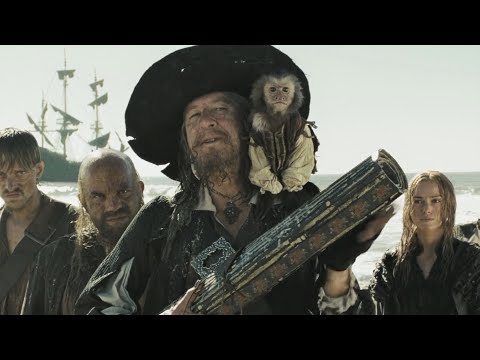
dutchman 30 सेकंड में
- A male person from the Netherlands.
- A legendary ghost ship (The Flying Dutchman).
- A technical patch in woodworking or theater.
- An irregular plural noun: Dutchmen.
The term Dutchman is a multifaceted noun that primarily serves as a demonym for a male individual hailing from the Netherlands, a country in northwestern Europe known for its flat landscape, canals, tulip fields, and windmills. While the word is most commonly used to describe nationality, its linguistic footprint extends far beyond simple geography into the realms of maritime folklore, specialized carpentry, theatrical stagecraft, and even masonry. Historically, the term gained global prominence during the Dutch Golden Age in the 17th century, when the Dutch Republic was a leading power in trade, science, and art. During this era, a 'Dutchman' was often synonymous with a skilled sailor or a shrewd merchant. However, in modern English, the term is increasingly being replaced by more gender-neutral alternatives like 'Dutch person' or 'Netherlander' in formal contexts, though 'Dutchman' remains firmly embedded in literature, history, and specific technical vocabularies.
- Primary Definition
- A man who is a native or inhabitant of the Netherlands, or a man of Dutch descent.
- Nautical Context
- Often associated with the 'Flying Dutchman,' a legendary ghost ship doomed to sail the oceans forever without ever reaching port.
- Technical Application
- In woodworking and masonry, it refers to a small piece of material (wood or stone) used to patch a hole or hide a defect in a larger structure.
The old sailor told us a chilling tale about the legendary Dutchman who haunts the Cape of Good Hope.
In the world of theater, a 'dutchman' is a specific tool used by scenic designers. It is a thin strip of canvas or muslin, usually about five inches wide, that is glued over the seam where two theatrical flats (wall sections) meet. Once painted, the dutchman makes the seam invisible to the audience, creating the illusion of a solid, continuous wall. This usage highlights the word's evolution from a person to a functional object intended to 'repair' or 'hide' imperfections. Similarly, in carpentry, if a woodworker makes a mistake or finds a knot in a piece of fine furniture, they might insert a 'dutchman'—a small, precisely shaped piece of wood—to fill the gap. This technique is a testament to craftsmanship, as a well-executed dutchman is nearly impossible to detect.
The carpenter used a small dutchman to repair the crack in the antique oak table.
Culturally, the term is also linked to the phrase 'Going Dutch,' which means each person pays for their own meal. While 'Dutchman' itself doesn't mean 'cheap,' historical rivalries between the English and the Dutch in the 17th century led to many English idioms using 'Dutch' in a slightly derogatory or competitive way. However, in modern times, being called a Dutchman is simply a statement of identity. In sports, particularly football (soccer), you might hear commentators refer to a player as 'the Flying Dutchman' if he is exceptionally fast or agile, a nod to the famous legend. This shows how the word has transitioned from a literal description to a metaphorical badge of honor or skill.
During the World Cup, the striker was nicknamed the Flying Dutchman for his incredible header.
- Usage in Literature
- Found in classics like Washington Irving's 'Rip Van Winkle' or Richard Wagner's opera 'Der fliegende Holländer'.
- Modern Context
- Commonly used in genealogy, history books, and maritime museums.
The museum exhibit featured a portrait of a 17th-century Dutchman in traditional attire.
Using the word Dutchman correctly involves understanding its grammatical role as a countable noun and its specific capitalization requirements. As a demonym, it must always be capitalized. Whether you are referring to a person's nationality or the legendary ghost ship, the 'D' remains uppercase. However, in technical fields like carpentry or theater, some style guides allow for lowercase 'dutchman' when referring to the patch or the fabric strip, though many professionals still capitalize it out of habit or tradition. When pluralized, it follows the irregular pattern of 'man' to 'men,' becoming Dutchmen. This is a common pitfall for learners who might be tempted to say 'Dutchmans,' which is incorrect.
- As a Demonym
- 'He is a proud Dutchman who loves his country's history.'
- In Folklore
- 'The Flying Dutchman is a staple of maritime mythology.'
- Technical Use
- 'Apply a dutchman to the seam before painting the set.'
Many Dutchmen immigrated to the United States in the 19th century, settling in places like Michigan and New York.
In sentence construction, 'Dutchman' often appears with descriptive adjectives that highlight specific traits or historical contexts. You might see phrases like 'stout Dutchman,' 'wealthy Dutchman,' or 'brave Dutchman.' Because it is a gender-specific term, it is important to use 'Dutchwoman' when referring to a female, or 'Dutch person' if the gender is unknown or irrelevant. In academic writing, especially in sociology or modern history, you will notice a shift toward 'Netherlander' to avoid the gendered suffix '-man.' However, in narrative writing, 'Dutchman' provides a more classic, evocative tone that fits well in historical fiction or nautical adventures.
The architect insisted on using a stone dutchman to fix the chipped corner of the cathedral's pillar.
When using the word in a technical sense, it often functions as a direct object. For example, 'The stagehand applied the dutchman.' In this context, it is treated as a common noun. In contrast, when used as a proper noun, it often follows an article like 'the' or 'a.' For example, 'A Dutchman won the cycling race.' It can also be used in possessive forms: 'The Dutchman's boat was the fastest in the harbor.' Note that the apostrophe comes before the 's' for singular and after the 'n' for plural ('The Dutchmen's tradition').
Is that man a Dutchman or is he from Belgium?
- Common Collocations
- 'Flying Dutchman', 'Young Dutchman', 'Old Dutchman', 'Dutchman patch'.
- Sentence Position
- Can be a subject, object, or part of a prepositional phrase.
The legend of the Dutchman has inspired countless movies and books.
You are likely to encounter the word Dutchman in several distinct environments, each providing a different shade of meaning. The most common place is in historical discussions or documentaries about the 17th and 18th centuries. Historians frequently use the term when discussing the Dutch East India Company (VOC), the colonization of New Amsterdam (now New York), or the Anglo-Dutch Wars. In these contexts, 'Dutchman' evokes the image of a global explorer, a master of the seas, or a colonial settler. If you visit a museum in New York or Cape Town, the plaques will often refer to the early 'Dutchmen' who shaped the local architecture and culture.
- Maritime Museums
- Used to describe sailors and explorers from the Age of Discovery.
- Woodworking Shops
- Used as a technical term for a butterfly joint or a patch in wood.
- Sports Broadcasting
- Used as a nickname for Dutch athletes, especially in football and cycling.
The commentator shouted, 'What a goal by the Flying Dutchman!' as the player sprinted down the field.
Another surprising place you will hear this word is in a professional theater's 'scene shop.' If you are working backstage on a play, the technical director might tell you to 'put a dutchman on those flats.' In this setting, the word has nothing to do with nationality; it refers to the strip of cloth used to cover seams. Similarly, in high-end carpentry or furniture restoration, a craftsman might point to a 'dutchman' they used to stabilize a crack in a slab of walnut. In these trade environments, the word is a standard part of the professional jargon, passed down through generations of builders.
The master carpenter showed his apprentice how to carve a perfect dutchman to fill the knot in the timber.
Pop culture is also rife with references to the 'Flying Dutchman.' From the 'Pirates of the Caribbean' movie franchise to the animated series 'SpongeBob SquarePants,' the ghostly Dutchman is a well-known character. In these instances, the word carries a supernatural, slightly spooky connotation. Children and adults alike recognize the 'Dutchman' as a symbol of maritime mystery. Furthermore, in literature, you might encounter the word in 19th-century novels where characters are described by their nationality. For instance, a character might be introduced as 'a wealthy Dutchman from Amsterdam,' immediately establishing their background and likely social status.
In the cartoon, the Flying Dutchman is a green ghost who collects souls in a treasure chest.
- Genealogy Research
- 'My great-grandfather was a Dutchman who settled in Pennsylvania.'
- Art History
- Discussing the works of 'The Great Dutchmen' like Rembrandt or Vermeer.
The history book details how the Dutchmen established trade routes across the Indian Ocean.
One of the most frequent errors when using the word Dutchman is failing to capitalize it. Because it is derived from the proper noun 'Dutch,' it must always start with an uppercase 'D' when referring to nationality. Writing 'dutchman' in a sentence about a person from the Netherlands is grammatically incorrect in standard English. Another common mistake is using 'Dutchman' as a catch-all term for anyone from the Netherlands, regardless of gender. While it was historically used this way, modern English distinguishes between a Dutchman (male) and a Dutchwoman (female). For a group of people of mixed gender, the correct term is Dutch people or Netherlanders.
- Capitalization Error
- Incorrect: 'The dutchman spoke three languages.' Correct: 'The Dutchman spoke three languages.'
- Gender Misuse
- Incorrect: 'She is a famous Dutchman.' Correct: 'She is a famous Dutchwoman.'
- Pluralization Mistake
- Incorrect: 'The Dutchmans arrived yesterday.' Correct: 'The Dutchmen arrived yesterday.'
You should never refer to a woman as a Dutchman; instead, use 'Dutchwoman' or 'Dutch person'.
A more subtle mistake involves confusing 'Dutch' with 'German.' This confusion stems from the German word for German, which is 'Deutsch.' In the past, particularly in the United States, German immigrants were sometimes called 'Dutchmen' (as in the 'Pennsylvania Dutch,' who are actually of German descent). However, in modern geography and international relations, a Dutchman is strictly someone from the Netherlands. Calling a German person a Dutchman is factually incorrect and can be confusing. Additionally, learners often struggle with the technical meanings. Using 'Dutchman' to mean a general 'patch' in any context is wrong; it specifically refers to patches in woodworking, masonry, or theater.
The student mistakenly called the German tourist a Dutchman, leading to a polite correction.
Finally, there is the issue of formality. While 'Dutchman' is not offensive, it can sound somewhat dated or overly literary in a casual conversation. If you are introduced to a man from Amsterdam, it is more natural to say 'He is Dutch' or 'He is from the Netherlands' rather than 'He is a Dutchman.' The latter sounds like something out of a 19th-century novel. Using the term in the wrong register can make your English sound stiff or archaic. However, in the context of the 'Flying Dutchman' or a 'carpentry dutchman,' the word is perfectly appropriate and expected.
In modern business meetings, it is better to say 'our Dutch colleague' than 'the Dutchman'.
- Spelling Tip
- Remember: 'Dutch' + 'man'. No extra 'e' or 's' in the middle.
- Pronunciation Pitfall
- Don't stress the 'man' too much; the emphasis is on the first syllable: DUTCH-man.
The apprentice forgot to capitalize Dutchman in his report on European history.
When you want to describe someone or something from the Netherlands, Dutchman is just one of several options. Depending on the context—whether you are being formal, technical, or casual—you might choose a different word. The most direct alternative is Netherlander. This term is more formal and gender-neutral, making it a favorite in official documents, news reports, and academic papers. While 'Dutchman' specifically implies a male, 'Netherlander' can refer to anyone from the country. Another common term is Hollander. While often used interchangeably with Dutchman, 'Hollander' technically refers to someone from the provinces of North or South Holland, though many people use it to mean anyone from the entire country.
- Netherlander
- The most formal and inclusive term for a citizen of the Netherlands.
- Hollander
- A more regional term, though frequently used as a synonym for Dutch person.
- Dutch Person
- The standard modern way to refer to someone from the Netherlands without specifying gender.
While 'Dutchman' sounds traditional, 'Netherlander' is the preferred term in modern diplomatic circles.
In technical contexts, the synonyms for 'dutchman' change entirely. In carpentry, a dutchman might be called an inlay, a patch, or a graving piece. If the dutchman is shaped like a bowtie to hold two pieces of wood together, it is specifically called a butterfly joint or a bow-tie inlay. In theater, if you don't use the word 'dutchman,' you might simply refer to it as seam tape or muslin stripping. Understanding these synonyms is crucial for clear communication in specialized trades. For example, a carpenter might say, 'I'll need to put a graving piece in this crack,' which is exactly the same as saying they will use a dutchman.
The furniture maker preferred the term 'butterfly joint' over dutchman for his high-end designs.
There are also metaphorical alternatives. When referring to the 'Flying Dutchman,' one might use terms like phantom ship, ghost vessel, or specter ship. These alternatives emphasize the supernatural aspect of the legend rather than the nationality of the captain. In sports, nicknames like 'The Oranje' (referring to the national color of the Netherlands) are often used to describe Dutch teams or players collectively, providing a vibrant alternative to the more individualistic 'Dutchman.' By choosing the right synonym, you can tailor your language to fit the specific tone and audience of your communication.
The sailors were terrified when they spotted the phantom ship, often called the Flying Dutchman.
- Comparison: Dutchman vs. Hollander
- 'Dutchman' is the broad term; 'Hollander' is technically regional but often used loosely.
- Comparison: Dutchman vs. Netherlander
- 'Dutchman' is gendered and traditional; 'Netherlander' is neutral and formal.
The term 'Dutch person' is the safest and most common choice in everyday conversation today.
How Formal Is It?
रोचक तथ्य
The reason we call people from the Netherlands 'Dutch' but people from Germany 'German' is due to 17th-century English sailors who used 'Dutch' for their closest neighbors and 'High Dutch' for those further inland.
उच्चारण मार्गदर्शिका
- Pronouncing 'man' with a strong 'a' sound (like the word 'man' on its own).
- Confusing the 'ch' sound with 'sh'.
- Failing to reduce the second syllable to a schwa sound.
- Stress on the second syllable.
- Pronouncing 'Dutch' like 'Ditch'.
कठिनाई स्तर
Easy to recognize in text, though technical meanings might be tricky.
Requires remembering the irregular plural and capitalization.
Pronunciation is straightforward.
Clear phonetic profile.
आगे क्या सीखें
पूर्वापेक्षाएँ
आगे सीखें
उन्नत
ज़रूरी व्याकरण
Irregular Plurals
Man -> Men; Dutchman -> Dutchmen.
Proper Noun Capitalization
Always capitalize Dutchman when referring to nationality.
Possessive Nouns
The Dutchman's hat; The Dutchmen's boat.
Gendered Demonyms
Dutchman (male), Dutchwoman (female).
Compound Nouns
Flying Dutchman, Dutchman's pipe.
स्तर के अनुसार उदाहरण
The Dutchman lives in a small house.
Le Néerlandais vit dans une petite maison.
Subject + verb + prepositional phrase.
Is he a Dutchman?
Est-il Néerlandais ?
Interrogative sentence with 'be'.
The Dutchman has a bicycle.
Le Néerlandais a un vélo.
Subject + has + object.
I met a friendly Dutchman today.
J'ai rencontré un Néerlandais sympathique aujourd'hui.
Adjective 'friendly' describes 'Dutchman'.
The Dutchman speaks Dutch.
Le Néerlandais parle néerlandais.
Noun and language name are related.
He is a tall Dutchman.
C'est un grand Néerlandais.
Adjective + noun.
The Dutchman wears a hat.
Le Néerlandais porte un chapeau.
Simple present tense.
That man is a Dutchman.
Cet homme est un Néerlandais.
Demonstrative pronoun 'that'.
Many Dutchmen enjoy skating on the canals.
Beaucoup de Néerlandais aiment patiner sur les canaux.
Plural form 'Dutchmen'.
The Dutchman told us about his country.
Le Néerlandais nous a parlé de son pays.
Past tense 'told'.
He is the only Dutchman in our class.
Il est le seul Néerlandais de notre classe.
Use of 'the only'.
A famous Dutchman won the race.
Un célèbre Néerlandais a gagné la course.
Adjective + proper noun.
The Dutchman brought some cheese.
Le Néerlandais a apporté du fromage.
Past tense 'brought'.
I want to visit the Dutchman's farm.
Je veux visiter la ferme du Néerlandais.
Possessive form 'Dutchman's'.
The Dutchman was very kind to us.
Le Néerlandais a été très gentil avec nous.
Past tense of 'be'.
Two Dutchmen are waiting outside.
Deux Néerlandais attendent dehors.
Plural subject with 'are'.
The legend of the Flying Dutchman is very famous.
La légende du Hollandais Volant est très célèbre.
Proper noun used in a title.
He is a Dutchman by birth but lives in London.
Il est Néerlandais de naissance mais vit à Londres.
Prepositional phrase 'by birth'.
The Dutchman carefully repaired the old boat.
Le Néerlandais a soigneusement réparé le vieux bateau.
Adverb 'carefully' modifying 'repaired'.
Every Dutchman I know loves tulips.
Chaque Néerlandais que je connais adore les tulipes.
Relative clause 'I know'.
The Dutchman's accent was easy to understand.
L'accent du Néerlandais était facile à comprendre.
Possessive noun as subject.
A young Dutchman joined our hiking group.
Un jeune Néerlandais a rejoint notre groupe de randonnée.
Simple past 'joined'.
The Dutchman explained the history of the windmills.
Le Néerlandais a expliqué l'histoire des moulins à vent.
Subject + verb + object.
I am reading a book about a 17th-century Dutchman.
Je lis un livre sur un Néerlandais du XVIIe siècle.
Present continuous 'am reading'.
The carpenter inserted a small dutchman to hide the flaw.
Le charpentier a inséré une petite pièce de bois pour cacher le défaut.
Technical use as a common noun.
The Flying Dutchman is said to haunt these waters.
On dit que le Hollandais Volant hante ces eaux.
Passive construction 'is said to'.
As a proud Dutchman, he celebrates King's Day every year.
En tant que fier Néerlandais, il fête le Jour du Roi chaque année.
Appositive phrase 'As a proud Dutchman'.
The stagehand applied a dutchman to the seam of the flat.
Le machiniste a appliqué une bande de tissu sur le joint du décor.
Technical theatrical context.
Many Dutchmen were involved in the early spice trade.
De nombreux Néerlandais étaient impliqués dans le commerce précoce des épices.
Passive voice 'were involved'.
The Dutchman's expertise in water management is world-renowned.
L'expertise du Néerlandais en gestion de l'eau est mondialement connue.
Possessive + noun phrase.
Is that a dutchman or just a simple wood patch?
Est-ce une pièce de bois rapportée ou juste une simple pièce ?
Technical comparison.
The Dutchman was a master of maritime navigation.
Le Néerlandais était un maître de la navigation maritime.
Subject + was + complement.
The intricate dutchman in the mahogany table was nearly invisible.
La pièce de bois rapportée complexe dans la table en acajou était presque invisible.
Technical use with descriptive adjectives.
Wagner's opera 'The Flying Dutchman' explores themes of redemption.
L'opéra de Wagner 'Le Vaisseau Fantôme' explore les thèmes de la rédemption.
Proper noun in a literary context.
The historian noted that the Dutchman's influence on New York is still visible.
L'historien a noté que l'influence du Néerlandais sur New York est encore visible.
Reported speech.
He spoke with the precision of a Dutchman who knows his craft.
Il parlait avec la précision d'un Néerlandais qui connaît son métier.
Simile using 'of a Dutchman'.
The term 'Dutchman' in theater refers to a strip of fabric used to mask joints.
Le terme 'dutchman' au théâtre désigne une bande de tissu utilisée pour masquer les joints.
Defining a technical term.
The Dutchman's legacy in the art world is defined by the use of light.
L'héritage du Néerlandais dans le monde de l'art est défini par l'utilisation de la lumière.
Passive voice 'is defined by'.
Despite being a Dutchman, he had spent most of his life in Japan.
Bien qu'étant Néerlandais, il avait passé la majeure partie de sa vie au Japon.
Concessive clause with 'Despite'.
The mason used a stone dutchman to restore the crumbling facade.
Le maçon a utilisé une pièce de pierre rapportée pour restaurer la façade qui s'écroulait.
Technical masonry context.
The nuances of the term 'Dutchman' vary significantly across different professional guilds.
Les nuances du terme 'dutchman' varient considérablement selon les différentes corporations professionnelles.
Complex subject-verb agreement.
In the context of 17th-century geopolitics, the 'Dutchman' was a formidable maritime rival.
Dans le contexte de la géopolitique du XVIIe siècle, le 'Néerlandais' était un redoutable rival maritime.
Prepositional phrase for context.
The seamless application of the dutchman is a hallmark of a master scenic artist.
L'application sans couture de la bande de tissu est la marque d'un maître peintre décorateur.
Gerund phrase as subject.
He analyzed the archetype of the Dutchman in colonial literature.
Il a analysé l'archétype du Néerlandais dans la littérature coloniale.
Academic vocabulary 'archetype'.
The use of a dutchman to rectify a structural defect requires immense skill.
L'utilisation d'une pièce rapportée pour rectifier un défaut structurel requiert une immense compétence.
Infinitive phrase of purpose.
The Dutchman's perspective on the conflict was colored by his commercial interests.
Le point de vue du Néerlandais sur le conflit était teinté par ses intérêts commerciaux.
Metaphorical use of 'colored by'.
Linguistically, 'Dutchman' has survived as a technical term long after its common usage faded.
Linguistiquement, 'dutchman' a survécu en tant que terme technique bien après que son usage courant se soit estompé.
Adverbial 'Linguistically'.
The Flying Dutchman remains a potent symbol of the sublime in romantic art.
Le Hollandais Volant reste un symbole puissant du sublime dans l'art romantique.
Linking verb 'remains'.
सामान्य शब्द संयोजन
सामान्य वाक्यांश
— A legendary ghost ship that can never make port and is doomed to sail the oceans forever.
Sailors used to fear seeing the Flying Dutchman during a storm.
— To share the cost of a meal or activity, with each person paying for themselves.
We decided to go Dutch on our first date.
— False courage gained from drinking alcohol.
He needed some Dutch courage before he could give the speech.
— Language or speech that is difficult or impossible to understand; gibberish.
To me, all that legal jargon is just double Dutch.
— An outing where each person pays their own way (similar to 'Go Dutch').
The lunch was a Dutch treat, so I only paid for my sandwich.
— Someone who gives firm, blunt, and often unwanted advice.
He talked to me like a Dutch uncle about my spending habits.
— An auction where the price starts high and is lowered until someone buys.
The flowers were sold at a Dutch auction in the early morning.
— A heavy cooking pot with a tight-fitting lid.
She cooked the beef stew in a large Dutch oven.
— A door divided horizontally so that the top half can be opened while the bottom remains closed.
The farmhouse had a charming Dutch door in the kitchen.
— A type of contraceptive device (diaphragm).
The doctor discussed the use of a Dutch cap with the patient.
अक्सर इससे भ्रम होता है
The German word for 'German', often confused with 'Dutch'.
Technically refers to someone from a specific part of the Netherlands.
The formal and gender-neutral alternative.
मुहावरे और अभिव्यक्तियाँ
— A phrase used to express strong disbelief or certainty that something is not true.
I'm a Dutchman if that horse wins the race!
Informal/Dated— To do something extraordinary or surprising.
It beats the Dutch how she managed to finish that project so fast.
Informal/Dated— The consolation that things could have been worse.
Well, at least it didn't rain—that's Dutch comfort for you.
Informal— A sham or deceptive defense.
The lawyer's argument was nothing more than a Dutch defense.
Legal/Archaic— A party where the host gets drunk before the guests.
The celebration turned into a bit of a Dutch feast.
Informal/Archaic— A humorous or derogatory term for a frog.
The pond was full of Dutch nightingales croaking all night.
Humorous— An unitemized or disputed bill.
I won't pay this Dutch reckoning without seeing the details.
Archaic— A great noise or uproar where everyone is making a different sound.
The playground during recess was a total Dutch concert.
Informal— A deal made while drinking alcohol.
Be careful not to make a Dutch bargain you'll regret tomorrow.
Informal— A slang term for a prostitute.
The term 'Dutch widow' is found in some 17th-century texts.
Slang/Archaicआसानी से भ्रमित होने वाले
Both refer to the Netherlands.
'Dutch' is an adjective or the language; 'Dutchman' is a noun for a person.
He speaks Dutch (language), but he is a Dutchman (person).
Similar historical roots and sounds.
German refers to Germany; Dutchman refers to the Netherlands.
He is German, not a Dutchman.
Both are Northern European nationalities.
Danish refers to Denmark; Dutchman refers to the Netherlands.
The Dutchman and the Dane are neighbors.
Phonetic similarity.
Deutsch is the German word for German.
The Pennsylvania Dutch actually speak a form of Deutsch.
Gender-specific forms.
Dutchman is male; Dutchwoman is female.
She is a Dutchwoman, and he is a Dutchman.
वाक्य संरचनाएँ
He is a [nationality].
He is a Dutchman.
The [nationality] has a [object].
The Dutchman has a bicycle.
The legend of the [proper noun] is [adjective].
The legend of the Flying Dutchman is famous.
The [profession] used a [noun] to [verb].
The carpenter used a dutchman to fix the table.
Despite being a [nationality], he [verb].
Despite being a Dutchman, he lives in Italy.
The [noun] of the [nationality] is [adjective].
The perspective of the Dutchman is unique.
I met a [adjective] [nationality].
I met a friendly Dutchman.
Apply the [technical term] to the [object].
Apply the dutchman to the seam.
शब्द परिवार
संज्ञा
क्रिया
विशेषण
संबंधित
इसे कैसे इस्तेमाल करें
High in history and folklore; Medium in technical trades; Low in modern casual conversation.
-
dutchman
→
Dutchman
Nationality-based nouns must always be capitalized in English.
-
Dutchmans
→
Dutchmen
The plural of 'man' is 'men', so the plural of 'Dutchman' is 'Dutchmen'.
-
She is a Dutchman.
→
She is a Dutchwoman.
'Dutchman' is gender-specific to males.
-
The Dutchman is from Berlin.
→
The Dutchman is from Amsterdam.
A Dutchman is from the Netherlands, not Germany.
-
He used a dutchman to fix the car.
→
He used a patch to fix the car.
'Dutchman' as a patch is specific to wood, stone, or theater fabric.
सुझाव
Capitalization
Always capitalize the 'D' in Dutchman. It's a proper noun based on a country name.
Gender Neutrality
Use 'Dutch person' if you want to be inclusive or don't know the person's gender.
Plural Form
Remember the irregular plural: one Dutchman, two Dutchmen.
Historical Context
Use 'Dutchman' when writing about history or folklore for a more authentic feel.
Trade Jargon
If you're in a woodshop, a 'dutchman' is a patch, not a person!
Geography
A Dutchman is from the Netherlands, which is sometimes called Holland.
Go Dutch
Don't confuse the person 'Dutchman' with the idiom 'Go Dutch'.
Word Stress
Put the emphasis on 'DUTCH', not 'man'.
Avoid 'Dutchmans'
Always double-check your plural spelling in essays.
Context Clues
If you hear 'Flying Dutchman', think of a ghost ship.
याद करें
स्मृति सहायक
Think of a 'Dutch' man standing on a 'Man'hole cover in the Netherlands. DUTCH + MAN = Dutchman.
दृश्य संबंध
Imagine a man wearing orange (the national color) and wooden clogs (klompen) standing next to a windmill.
Word Web
चैलेंज
Try to use 'Dutchman' in three different ways: as a person, as a carpentry term, and as a theatrical term.
शब्द की उत्पत्ति
The word 'Dutch' comes from the Old High German word 'diutisc,' which meant 'of the people.' In Middle English, 'Dutch' was used to refer to any Germanic speaker from the continent, including Germans and Netherlanders.
मूल अर्थ: A person belonging to the common people (as opposed to those who spoke Latin).
Germanicसांस्कृतिक संदर्भ
Avoid using 'Dutchman' for women; use 'Dutchwoman' or 'Dutch person' instead.
In the US and UK, 'Dutchman' is often used in historical contexts or when referring to the 'Flying Dutchman' legend.
असल ज़िंदगी में अभ्यास करें
वास्तविक संदर्भ
Geography
- He is a Dutchman.
- The Dutchman is from the Netherlands.
- Where is the Dutchman from?
- I know a Dutchman.
Folklore
- The Flying Dutchman.
- Legend of the Dutchman.
- The ghost of the Dutchman.
- The Dutchman's ship.
Carpentry
- Insert a dutchman.
- Fix it with a dutchman.
- A wooden dutchman.
- Hide the crack with a dutchman.
Theater
- Glue the dutchman.
- Cover the seam with a dutchman.
- The dutchman is dry.
- Paint over the dutchman.
Sports
- The Flying Dutchman scores!
- A talented Dutchman.
- The Dutchman is fast.
- Watch the Dutchman go!
बातचीत की शुरुआत
"Have you ever heard the legend of the Flying Dutchman?"
"Did you know that 'dutchman' is also a term used in woodworking?"
"I met a Dutchman yesterday who told me all about Amsterdam."
"Is it true that the Flying Dutchman is a ghost ship?"
"How do you say 'Dutchman' in your native language?"
डायरी विषय
Write a short story about a Dutchman who finds a mysterious map.
Describe a time you had to use a 'dutchman' (a patch) to fix something.
If you were the captain of the Flying Dutchman, where would you sail?
Research a famous Dutchman from history and write about his life.
Compare the terms 'Dutchman' and 'Netherlander'—which do you prefer?
अक्सर पूछे जाने वाले सवाल
10 सवालNo, it is not offensive. However, it is gender-specific and can sound a bit old-fashioned. In formal or modern settings, 'Dutch person' or 'Netherlander' is often preferred.
Technically, no. You should use 'Dutchwoman' or the gender-neutral 'Dutch person.' Using 'Dutchman' for a woman is grammatically incorrect.
It is a legendary ghost ship that is said to be cursed to sail the oceans forever. It is a very popular figure in maritime folklore and pop culture.
The exact origin is unclear, but it likely comes from the historical English use of 'Dutch' to describe anything foreign or unusual, or from the skill of Dutch craftsmen.
Yes, when referring to a person's nationality, it must always be capitalized. In technical carpentry use, it is sometimes lowercase, but capitalization is still common.
The plural is 'Dutchmen.' Do not use 'Dutchmans,' as it is incorrect.
No, a Dutchman is from the Netherlands. A person from Germany is a German. This is a very common point of confusion for English learners.
It means to split the bill at a restaurant so that everyone pays for their own meal. It is a very common idiom in English.
It is pronounced DUTCH-muhn. The first syllable is stressed, and the second syllable is very short.
It is a strip of fabric used to cover the seams between two pieces of scenery (flats) so that they look like one solid wall.
खुद को परखो 200 सवाल
Write a sentence using 'Dutchman' as a nationality.
Well written! Good try! Check the sample answer below.
Write a sentence using the plural 'Dutchmen'.
Well written! Good try! Check the sample answer below.
Describe the legend of the Flying Dutchman in two sentences.
Well written! Good try! Check the sample answer below.
Explain what a 'dutchman' is in carpentry.
Well written! Good try! Check the sample answer below.
Use 'Dutchman' in a sentence about history.
Well written! Good try! Check the sample answer below.
Write a dialogue where someone uses the idiom 'Go Dutch'.
Well written! Good try! Check the sample answer below.
Explain the difference between a Dutchman and a German.
Well written! Good try! Check the sample answer below.
Write a sentence using 'dutchman' in a theatrical context.
Well written! Good try! Check the sample answer below.
Describe a 'Dutch door'.
Well written! Good try! Check the sample answer below.
Write a sentence using 'Dutch courage'.
Well written! Good try! Check the sample answer below.
Why is 'Dutchman' capitalized?
Well written! Good try! Check the sample answer below.
Write a short story (3 sentences) about a Dutchman.
Well written! Good try! Check the sample answer below.
What is a 'Dutch auction'?
Well written! Good try! Check the sample answer below.
Use 'Dutchman' in a sentence about sports.
Well written! Good try! Check the sample answer below.
Explain the plural form of Dutchman.
Well written! Good try! Check the sample answer below.
Write a sentence using 'Dutchman's pipe'.
Well written! Good try! Check the sample answer below.
Describe a 'Dutch oven'.
Well written! Good try! Check the sample answer below.
Write a sentence about a 'Dutch treat'.
Well written! Good try! Check the sample answer below.
Explain the term 'Dutch uncle'.
Well written! Good try! Check the sample answer below.
Use 'Dutchman' in a sentence about art.
Well written! Good try! Check the sample answer below.
Pronounce 'Dutchman'.
Read this aloud:
तुमने कहा:
Speech recognition is not supported in your browser. Try Chrome or Edge.
Use 'Dutchman' in a sentence about a person.
Read this aloud:
तुमने कहा:
Speech recognition is not supported in your browser. Try Chrome or Edge.
Say the plural of Dutchman.
Read this aloud:
तुमने कहा:
Speech recognition is not supported in your browser. Try Chrome or Edge.
Explain the Flying Dutchman legend aloud.
Read this aloud:
तुमने कहा:
Speech recognition is not supported in your browser. Try Chrome or Edge.
Describe a 'dutchman' in carpentry.
Read this aloud:
तुमने कहा:
Speech recognition is not supported in your browser. Try Chrome or Edge.
Use 'Go Dutch' in a sentence.
Read this aloud:
तुमने कहा:
Speech recognition is not supported in your browser. Try Chrome or Edge.
Say 'Dutchman' with the correct stress.
Read this aloud:
तुमने कहा:
Speech recognition is not supported in your browser. Try Chrome or Edge.
Explain why 'Dutchman' is capitalized.
Read this aloud:
तुमने कहा:
Speech recognition is not supported in your browser. Try Chrome or Edge.
Use 'Dutchman' in a sentence about a ship.
Read this aloud:
तुमने कहा:
Speech recognition is not supported in your browser. Try Chrome or Edge.
Pronounce 'Dutchmen'.
Read this aloud:
तुमने कहा:
Speech recognition is not supported in your browser. Try Chrome or Edge.
Describe a Dutchman's appearance in a story.
Read this aloud:
तुमने कहा:
Speech recognition is not supported in your browser. Try Chrome or Edge.
Use 'Dutch courage' in a sentence.
Read this aloud:
तुमने कहा:
Speech recognition is not supported in your browser. Try Chrome or Edge.
Explain 'Double Dutch'.
Read this aloud:
तुमने कहा:
Speech recognition is not supported in your browser. Try Chrome or Edge.
Use 'Dutchman' in a sentence about history.
Read this aloud:
तुमने कहा:
Speech recognition is not supported in your browser. Try Chrome or Edge.
Say 'Dutchman's pipe' correctly.
Read this aloud:
तुमने कहा:
Speech recognition is not supported in your browser. Try Chrome or Edge.
Explain 'Dutch treat'.
Read this aloud:
तुमने कहा:
Speech recognition is not supported in your browser. Try Chrome or Edge.
Use 'Dutchman' in a sentence about theater.
Read this aloud:
तुमने कहा:
Speech recognition is not supported in your browser. Try Chrome or Edge.
Describe a Dutch door.
Read this aloud:
तुमने कहा:
Speech recognition is not supported in your browser. Try Chrome or Edge.
Say 'A famous Dutchman'.
Read this aloud:
तुमने कहा:
Speech recognition is not supported in your browser. Try Chrome or Edge.
Explain the difference between Dutch and Dutchman.
Read this aloud:
तुमने कहा:
Speech recognition is not supported in your browser. Try Chrome or Edge.
Listen and identify the word: 'The Dutchman is here.'
Listen and identify the plural: 'The Dutchmen are here.'
Listen for the stress: 'DUTCHman'.
Identify the context: 'The Flying Dutchman sails the sea.'
Identify the context: 'Put a dutchman on that crack.'
Identify the context: 'We'll go Dutch.'
Listen for the 'ch' sound in 'Dutchman'.
Identify the word: 'Dutchwoman'.
Identify the context: 'The dutchman is drying on the flat.'
Identify the word: 'Netherlander'.
Listen for the possessive: 'The Dutchman's boat.'
Identify the word: 'Hollander'.
Identify the phrase: 'Dutch courage'.
Identify the phrase: 'Double Dutch'.
Identify the word: 'Dutchmen'.
/ 200 correct
Perfect score!
Summary
The word 'Dutchman' is most commonly a name for a man from the Netherlands, but it is also a vital technical term for a 'patch' in carpentry and theater. Example: 'The carpenter used a dutchman to fix the table.'
- A male person from the Netherlands.
- A legendary ghost ship (The Flying Dutchman).
- A technical patch in woodworking or theater.
- An irregular plural noun: Dutchmen.
Capitalization
Always capitalize the 'D' in Dutchman. It's a proper noun based on a country name.
Gender Neutrality
Use 'Dutch person' if you want to be inclusive or don't know the person's gender.
Plural Form
Remember the irregular plural: one Dutchman, two Dutchmen.
Historical Context
Use 'Dutchman' when writing about history or folklore for a more authentic feel.