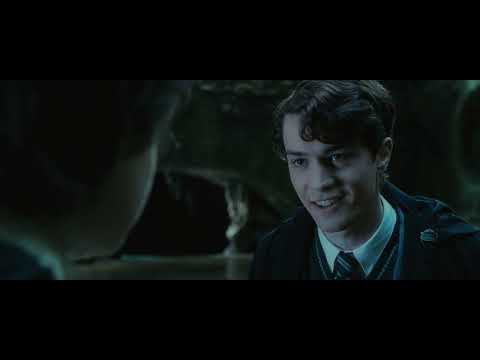
riddle 30 सेकंड में
- A riddle is a clever word puzzle that uses confusing language to hide a simple answer.
- It is often used as a game to test intelligence and creativity in social settings.
- The word can also describe a mysterious person or a very complex problem in life.
- Common verbs used with riddle include 'solve,' 'pose,' 'crack,' and 'unravel' the mystery.
A riddle is a sophisticated linguistic construct that serves as both a game and a test of intellectual prowess. At its core, it is a question or statement deliberately phrased to require cleverness and lateral thinking to solve. Unlike a straightforward question, a riddle often employs metaphors, allegories, and double meanings to obscure its subject. People use riddles to entertain, to teach, and sometimes to challenge others in a social or competitive setting. Historically, the riddle has been a staple of human culture, appearing in the myths of the ancient Greeks, the poetry of the Anglo-Saxons, and the folklore of nearly every civilization on Earth. In modern times, we see riddles in children's books, where they help develop cognitive skills and vocabulary, and in popular culture, where they are used by mysterious characters to create tension or demonstrate superior intelligence.
- The Essence of the Riddle
- A riddle is not just a puzzle; it is a dance of language where the speaker hides the truth in plain sight using figurative descriptions.
When you encounter a riddle, you are being invited to look at the world differently. For example, a riddle might describe a common object like a 'candle' as something that 'cries tears of wax' or 'grows shorter as it grows older.' This use of personification and metaphor is what distinguishes a riddle from a simple quiz question. It requires the solver to synthesize various clues and discard literal interpretations in favor of symbolic ones. In social settings, posing a riddle can be a way to break the ice or engage in a friendly battle of wits. It is a tool for engagement that demands active participation from the listener.
The professor enjoyed ending his lectures with a thought-provoking riddle that related to the day's topic.
Furthermore, the term 'riddle' can be used metaphorically to describe a person or a situation that is difficult to understand. If someone's behavior is inconsistent or mysterious, you might say they are 'a bit of a riddle.' This extension of the word highlights its connection to the unknown and the complex. In literature, the 'riddle' often serves as a plot device, where the protagonist must solve a puzzle to gain access to a secret location or to defeat an antagonist. This narrative use reinforces the idea that solving a riddle is a mark of worthiness and mental sharpness.
- Social Context
- Riddles are often used in educational settings to encourage children to think creatively and improve their deductive reasoning skills.
The act of 'riddling'—the exchange of these puzzles—is a communal activity. It creates a shared space of curiosity and eventual revelation. Whether it is the classic 'What has keys but can't open locks?' (a piano) or a more complex philosophical inquiry, the riddle remains a powerful testament to the human love for mystery and the joy of discovery. It is a bridge between the known and the unknown, wrapped in the beauty of carefully chosen words.
Solving the riddle required us to think outside the box and ignore the obvious answers.
In summary, a riddle is more than just a question; it is a cultural artifact that reflects our desire to play with language and test our cognitive boundaries. It is used when we want to challenge, entertain, or describe something that is inherently mysterious. By mastering the art of the riddle, one gains a deeper appreciation for the nuances of English and the creative potential of communication.
- Modern Usage
- Today, riddles are frequently found in digital escape rooms and puzzle games, maintaining their relevance in the high-tech era.
She spoke in such a riddle that I had to ask her to explain herself more clearly.
The ancient map was a riddle that took the explorers years to decode.
Using the word 'riddle' correctly involves understanding its role as a noun representing a puzzle and its occasional use as a verb. However, focusing on the noun form, it typically appears as the object of verbs like 'solve,' 'pose,' 'answer,' or 'crack.' For example, you might say, 'The detective managed to solve the riddle of the missing jewels.' Here, 'riddle' refers to the mysterious nature of the crime. When someone presents a puzzle to you, they 'pose a riddle.' This phrasing is formal and evokes a sense of challenge. In casual conversation, you might say, 'He’s telling us a riddle,' which implies a lighter, more entertaining context.
- Common Verb Pairings
- Verbs like 'unravel,' 'decipher,' and 'decode' are often used with 'riddle' to describe the process of finding the answer.
Adjectives also play a crucial role in describing the nature of a riddle. A 'classic riddle' refers to one that is well-known and has been passed down through generations. A 'cryptic riddle' suggests something particularly difficult or obscure, often involving hidden codes or very abstract language. If a riddle is 'unsolvable,' it means no one can find the answer, often used to describe life's greatest mysteries. You can also use 'riddle' in the plural form when referring to a collection of puzzles, such as 'a book of riddles' or 'the riddles of the Sphinx.'
The children spent the afternoon posing riddles to each other while waiting for the bus.
In a more figurative sense, 'riddle' can describe a person's character or a complex situation. For instance, 'The CEO's motivations remain a riddle to the board of directors.' In this sentence, 'riddle' is a synonym for 'mystery' or 'enigma.' It suggests that the motivations are not just unknown, but actively confusing or difficult to interpret. This usage is common in journalism and literature to add a layer of intrigue to a subject. When using 'riddle' this way, it is often followed by the preposition 'to,' indicating who finds the subject mysterious.
- Prepositional Phrases
- We often say 'the answer to the riddle' or 'the solution to the riddle,' using 'to' to connect the result with the puzzle.
Another interesting way to use 'riddle' is in the phrase 'speak in riddles.' This means to talk in a way that is intentionally confusing or indirect. For example, 'I wish you would stop speaking in riddles and just tell me what you want!' This idiomatic use is very common in English and is a great way to describe someone who is being evasive. It captures the frustration of the listener who cannot understand the speaker's true meaning. This phrase is almost always used in the plural ('riddles').
To the inexperienced hiker, the forest trails were a riddle that led to many dead ends.
Finally, consider the context of 'riddle' in academic or professional writing. While it is often associated with play, it can be used to describe complex scientific problems. A researcher might write, 'The mechanism of this disease remains a riddle that science has yet to solve.' This elevates the word from a simple game to a serious pursuit of knowledge. In all these cases, the word 'riddle' maintains its core meaning of something that requires effort and insight to understand, making it a versatile and powerful part of your vocabulary.
- Descriptive Adjectives
- Common adjectives include: baffling, intricate, ancient, nursery, and metaphorical.
The spy's last message was a riddle that only his partner could decipher.
Why do you always have to make everything such a riddle? Just give me a straight answer!
The word 'riddle' is ubiquitous in English-speaking cultures, appearing in everything from high literature to Saturday morning cartoons. One of the most famous places you will hear this word is in J.R.R. Tolkien's 'The Hobbit,' during the chapter 'Riddles in the Dark.' In this iconic scene, Bilbo Baggins and the creature Gollum engage in a life-or-death riddle contest. This scene perfectly illustrates the traditional use of riddles as a test of wit and survival. Hearing the word in this context emphasizes its ancient, slightly magical connotations. Fans of fantasy literature and film are very familiar with 'riddle' as a concept that represents a mental duel.
- Pop Culture Icon
- The Riddler, a famous villain in the Batman comics and movies, is perhaps the most well-known modern reference to the word, using puzzles to taunt the hero.
In everyday life, you are likely to hear 'riddle' in educational settings. Teachers often use riddles as 'brain breaks' or to introduce a new topic in a fun way. For example, a science teacher might start a lesson on the water cycle with a riddle about rain. In this environment, the word 'riddle' is associated with curiosity and learning. You might also hear it in the context of 'nursery riddles,' which are simple puzzles taught to young children to help them learn about the world around them. These are often rhythmic and easy to remember, like the famous Humpty Dumpty (though it is now more of a rhyme, it originated as a riddle).
'Riddle me this, Batman!' is a catchphrase that has cemented the word riddle in the minds of millions of comic book fans.
Another common place to encounter the word is in the news or in political commentary. Journalists often use 'riddle' to describe a situation that is confusing or lacks a clear explanation. For instance, a headline might read, 'The Riddle of the Missing Flight,' or 'The Economic Riddle Facing the New Government.' In these instances, the word is used to highlight the complexity and the need for an answer. It adds a sense of drama and urgency to the reporting. When you hear 'riddle' in this context, it usually means there is a significant problem that experts are struggling to solve.
- Gaming and Technology
- Video games, especially RPGs and adventure games, frequently use riddles as obstacles that players must overcome to progress.
You might also hear 'riddle' in casual conversation when people are talking about someone's personality. If a friend says, 'My new boss is a total riddle,' they are expressing their confusion about the boss's behavior or expectations. This is a very natural, idiomatic way to use the word. It suggests that the person is not just hard to understand, but that there might be a 'key' or a 'solution' to understanding them if one looks hard enough. This usage is common in social circles and helps people describe the nuances of human interaction.
The documentary tried to solve the riddle of how the ancient pyramids were built with such precision.
Finally, the word appears in many traditional songs and poems. The 'Riddle Song' (also known as 'I Gave My Love a Cherry') is a famous English folk song that consists of a series of riddles and their answers. Hearing the word in music connects it to the oral tradition and the way stories and puzzles have been shared for centuries. Whether it's in a blockbuster movie, a classroom, a news report, or a folk song, the word 'riddle' always brings with it a sense of mystery and the invitation to think deeply.
- Common Media Contexts
- Mystery novels, detective shows, and historical documentaries are the most likely places to find this word used frequently.
The escape room was full of riddles that we had to solve in under an hour.
The ancient inscription was a riddle that had baffled archaeologists for decades.
One of the most frequent mistakes learners make is confusing a 'riddle' with a 'joke.' While both can be funny and involve wordplay, they have different purposes. A joke is primarily intended to make people laugh, often through a punchline. A riddle, on the other hand, is a puzzle that requires an answer. While some riddles can be humorous (like 'Why did the chicken cross the road?'), the core of a riddle is the challenge of solving it. If you tell a story that is just funny without a puzzle to solve, it is a joke, not a riddle. Using 'riddle' when you mean 'joke' can lead to confusion, as your listener will be waiting for a puzzle to solve rather than just a laugh.
- Riddle vs. Joke
- A riddle asks 'What am I?' or 'How is this possible?'; a joke tells a story with a humorous ending.
Another common error is using 'riddle' interchangeably with 'mystery' in all contexts. While they are related, 'mystery' is a much broader term. A mystery can be anything that is unknown or unexplained, like a 'mystery novel' or the 'mysteries of the universe.' A riddle is a specific type of mystery that is usually presented as a linguistic puzzle. You wouldn't call a murder case a 'riddle' unless the killer left specific, puzzle-like clues. Using 'riddle' for every unknown situation can make your English sound a bit too poetic or archaic. It is better to use 'mystery' for general unknowns and 'riddle' for specific, intentional puzzles.
Incorrect: 'I don't know where my keys are; it's a riddle.' (Better: 'It's a mystery.')
Learners also sometimes struggle with the verb form of 'riddle.' As a verb, 'to riddle' often means to fill something with many holes, as in 'The car was riddled with bullets.' This is a very different meaning from the noun 'riddle.' If you say 'The situation was riddled,' it doesn't make sense unless you mean it was full of something (usually something bad, like 'riddled with errors'). Confusing the noun 'riddle' (a puzzle) with the verb 'riddle' (to pierce with holes) can lead to very strange sentences. Always remember that the noun is about puzzles, while the verb is often about physical holes or being full of something negative.
- Confusing with 'Puzzle'
- A 'puzzle' can be physical (like a jigsaw) or mental, but a 'riddle' is almost always verbal or written.
Additionally, there is the mistake of using the wrong preposition. People sometimes say 'the riddle about the answer' instead of 'the answer to the riddle.' The preposition 'to' is the standard way to connect a solution with its problem. Similarly, you 'solve a riddle,' you don't 'do a riddle.' Using 'do' makes it sound like a task or an exercise rather than a mental challenge. Paying attention to these small grammatical details will make your use of the word much more natural and precise.
Correct: 'He spent hours trying to find the answer to the riddle.'
Finally, avoid overusing the word 'riddle' in formal writing unless you are specifically talking about puzzles. In a business report, calling a budget deficit a 'riddle' might seem unprofessional or overly dramatic. In such cases, words like 'challenge,' 'issue,' or 'unexplained discrepancy' are more appropriate. 'Riddle' carries a connotation of playfulness or ancient mystery that doesn't always fit the serious tone of professional environments. By understanding these nuances and avoiding these common pitfalls, you can use 'riddle' effectively and appropriately in any situation.
- Common Misspellings
- Be careful not to spell it 'ridle' or 'riddell.' It always has a double 'd' and ends in 'le.'
The detective realized the killer's note wasn't just a threat, but a riddle pointing to the next victim.
Stop talking in riddles and tell me exactly what happened at the meeting.
When exploring the semantic field of 'riddle,' several other words come to mind, each with its own unique nuance. The most common synonym is 'puzzle.' While a riddle is a verbal or written challenge, a 'puzzle' can be much broader, including physical objects like jigsaw puzzles or Rubik's cubes. 'Puzzle' is a more general term for anything that tests your problem-solving skills. If you are talking about a question, 'riddle' is more specific; if you are talking about a complex task, 'puzzle' is better. Another close relative is 'conundrum.' A conundrum is a particularly difficult problem or a riddle whose answer involves a pun. It often implies a situation where there is no easy solution or where the choices are equally difficult.
- Riddle vs. Conundrum
- A riddle is often for fun; a conundrum is often a serious dilemma or a very complex puzzle.
'Enigma' is another powerful alternative. An enigma is something or someone that is mysterious, puzzling, or difficult to understand. Unlike 'riddle,' which usually refers to a specific set of words, 'enigma' is often used to describe a person's character or a historical event. For example, 'The Mona Lisa's smile is an enigma.' This word carries a more formal and profound tone than 'riddle.' It suggests a deeper, perhaps unsolvable mystery. 'Brain-teaser' is a more informal alternative, often used for short, fun puzzles found in magazines or on social media. It implies a lighthearted challenge meant to stimulate the mind.
While the children enjoyed the riddle, the scientists were focused on the enigma of dark matter.
Then there is 'paradox.' A paradox is a statement that seems self-contradictory or absurd but may actually be true. While a riddle is a question to be answered, a paradox is a concept to be contemplated. For example, the 'grandfather paradox' in time travel is not a riddle you solve, but a logical problem you explore. 'Mystery' is the most general term, encompassing everything from a 'whodunnit' novel to the unexplained disappearance of an object. Use 'mystery' when the lack of information is the main point, and 'riddle' when the information is there but hidden behind clever language.
- Riddle vs. Brain-teaser
- Brain-teasers often involve logic or math; riddles almost always involve wordplay and metaphor.
In some contexts, 'poser' can be used to describe a particularly difficult question. This is a bit more informal and often used in British English. 'Quandary' is another related word, but it refers to a state of uncertainty or a difficult situation rather than the puzzle itself. If you are 'in a quandary,' you might be trying to solve a 'riddle.' Understanding these distinctions allows you to choose the exact word that fits your meaning, whether you are describing a fun game, a difficult life choice, or a mysterious person.
The crossword puzzle contained a clever riddle that served as the final clue.
Finally, consider 'charade.' While a charade is a game of acting out words, it shares the 'riddle' spirit of hiding a meaning that others must guess. In a metaphorical sense, you might call a deceptive situation a 'charade.' However, 'riddle' remains the best word for a puzzle that is primarily about language and wit. By comparing 'riddle' with these alternatives, we see how it occupies a specific niche in the English language—one that combines playfulness, intellect, and the enduring human fascination with the unknown.
- Register Comparison
- Informal: Brain-teaser. Neutral: Riddle, Puzzle. Formal: Enigma, Conundrum.
The identity of the masked singer was a riddle that kept the audience guessing all season.
Solving the riddle of the universe is the ultimate goal of many physicists.
How Formal Is It?
रोचक तथ्य
The word 'riddle' is related to the word 'read.' Originally, 'to read' meant to explain or interpret something mysterious, not just to look at letters on a page. This is why we still say we 'read' someone's mind or 'read' a riddle.
उच्चारण मार्गदर्शिका
- Pronouncing it like 'ride-el' with a long 'i'.
- Missing the second syllable and saying 'rid'.
- Adding an extra vowel sound at the end like 'ridd-lee'.
- Confusing the 'd' sound with a 't' sound ('rittle').
- Not pronouncing the 'l' clearly at the end.
कठिनाई स्तर
The word itself is simple, but the content of riddles can be very difficult.
Easy to use as a noun, but requires care with collocations like 'pose' or 'solve'.
Commonly used and easy to pronounce correctly.
Recognizable in many contexts, from movies to casual talk.
आगे क्या सीखें
पूर्वापेक्षाएँ
आगे सीखें
उन्नत
ज़रूरी व्याकरण
Countable Nouns
I have *a* riddle. (Not: I have riddle.)
Prepositional Collocations
The answer *to* the riddle. (Not: The answer of the riddle.)
Verb Patterns
He *posed* a riddle *to* us.
Idiomatic Plurals
She speaks in *riddles*. (Usually plural in this idiom.)
Adjective Placement
A *clever* riddle. (Adjective before the noun.)
स्तर के अनुसार उदाहरण
I have a riddle for you: What has an eye but cannot see?
J'ai une devinette pour toi : Qu'est-ce qui a un œil mais ne peut pas voir ?
Uses 'have a riddle for someone' pattern.
The answer to the riddle is 'a needle'.
La réponse à la devinette est 'une aiguille'.
'Answer to the riddle' is a common collocation.
Can you tell me a simple riddle?
Peux-tu me dire une devinette simple ?
Uses 'tell a riddle' as a common verb phrase.
This riddle is very easy to solve.
Cette devinette est très facile à résoudre.
Adjective 'easy' modifies the noun 'riddle'.
My teacher likes to use a riddle in class.
Mon professeur aime utiliser une devinette en classe.
Singular countable noun with article 'a'.
What is the riddle about?
De quoi parle la devinette ?
Preposition 'about' used to ask for the subject.
I don't know the answer to this riddle.
Je ne connais pas la réponse à cette devinette.
Negative sentence with 'know the answer'.
Let's play a game with riddles.
Jouons à un jeu avec des devinettes.
Plural form 'riddles' after a preposition.
He wrote a riddle on the board for us to guess.
Il a écrit une devinette au tableau pour que nous la devinions.
Past simple 'wrote' with 'on the board'.
The riddle was about a fruit that is red and crunchy.
La devinette portait sur un fruit rouge et croquant.
Descriptive phrase following 'about'.
I think the answer to your riddle is an apple.
Je pense que la réponse à ta devinette est une pomme.
Possessive adjective 'your' with 'riddle'.
She told a clever riddle that nobody could answer.
Elle a raconté une devinette intelligente à laquelle personne n'a pu répondre.
Adjective 'clever' used to describe the riddle.
Do you want to hear another riddle?
Veux-tu entendre une autre devinette ?
Use of 'another' with a singular countable noun.
We spent the whole evening solving riddles.
Nous avons passé toute la soirée à résoudre des devinettes.
Gerund 'solving' after the verb 'spent'.
The book is full of fun riddles for kids.
Le livre est plein de devinettes amusantes pour les enfants.
Adjective phrase 'full of' followed by plural noun.
Is this a riddle or just a question?
Est-ce une devinette ou juste une question ?
Contrast between 'riddle' and 'question'.
The detective finally solved the riddle of the locked room.
Le détective a enfin résolu l'énigme de la chambre close.
Metaphorical use of 'riddle' as a mystery.
He likes to speak in riddles, which makes him hard to understand.
Il aime parler par énigmes, ce qui le rend difficile à comprendre.
Idiomatic phrase 'speak in riddles'.
The ancient sphinx posed a deadly riddle to all travelers.
Le sphinx antique posait une devinette mortelle à tous les voyageurs.
Verb 'posed' used in a formal/mythological context.
It took me a long time to crack the riddle he gave me.
Il m'a fallu beaucoup de temps pour déchiffrer la devinette qu'il m'a donnée.
Informal verb 'crack' used with 'riddle'.
The plot of the movie was a complex riddle that kept me guessing.
L'intrigue du film était une énigme complexe qui m'a fait réfléchir.
Adjective 'complex' modifies 'riddle'.
Why are you making this such a riddle? Just tell me the truth.
Pourquoi en fais-tu une telle énigme ? Dis-moi simplement la vérité.
Use of 'such a' for emphasis.
The mystery of his disappearance remains an unsolved riddle.
Le mystère de sa disparition reste une énigme non résolue.
Compound adjective 'unsolved' with 'riddle'.
She enjoys reading books about historical riddles and codes.
Elle aime lire des livres sur les énigmes et les codes historiques.
Plural noun 'riddles' in a compound object.
The CEO's sudden resignation is a riddle that the media is trying to solve.
La démission soudaine du PDG est une énigme que les médias tentent de résoudre.
Abstract use of 'riddle' in a professional context.
The poem is filled with riddles that require deep analysis to decipher.
Le poème est rempli d'énigmes qui nécessitent une analyse approfondie pour être déchiffrées.
Passive construction 'require... to decipher'.
Solving the riddle of the universe is a goal for many physicists.
Résoudre l'énigme de l'univers est un objectif pour de nombreux physiciens.
Gerund 'solving' as the subject of the sentence.
His cryptic comments were a riddle to everyone in the room.
Ses commentaires cryptiques étaient une énigme pour tout le monde dans la pièce.
Preposition 'to' indicates the people affected.
The ancient map was a riddle of symbols and hidden meanings.
La carte ancienne était une énigme de symboles et de significations cachées.
Prepositional phrase 'of symbols' describes the riddle.
She has a talent for unraveling the most difficult riddles.
Elle a un talent pour dénouer les énigmes les plus difficiles.
Verb 'unraveling' used for solving complex things.
The situation is a riddle wrapped in a mystery, as Churchill once said.
La situation est une énigme enveloppée dans un mystère, comme l'a dit Churchill.
Famous literary allusion used as a metaphor.
We must solve the riddle of why the experiment failed so spectacularly.
Nous devons résoudre l'énigme de la raison pour laquelle l'expérience a échoué de manière si spectaculaire.
Noun clause 'why the experiment failed' follows 'riddle of'.
The philosopher spent his life contemplating the riddle of human existence.
Le philosophe a passé sa vie à contempler l'énigme de l'existence humaine.
High-level abstract usage of 'riddle'.
The diplomat's speech was a masterpiece of riddles and double entendres.
Le discours du diplomate était un chef-d'œuvre d'énigmes et de sous-entendus.
Plural 'riddles' used to describe a style of speech.
To the uninitiated, the technical manual was an impenetrable riddle.
Pour les non-initiés, le manuel technique était une énigme impénétrable.
Adjective 'impenetrable' adds a high level of difficulty.
The artist's work is a riddle that invites multiple interpretations.
L'œuvre de l'artiste est une énigme qui invite à de multiples interprétations.
Relative clause 'that invites...' modifies 'riddle'.
The origins of the megalithic structure remain a riddle to modern archaeology.
Les origines de la structure mégalithique restent une énigme pour l'archéologie moderne.
Verb 'remain' links the subject to the complement 'riddle'.
He presented his findings as a riddle, forcing his colleagues to think critically.
Il a présenté ses conclusions sous forme d'énigme, forçant ses collègues à réfléchir de manière critique.
Adverbial phrase 'as a riddle' describes the manner.
The economic data presents a riddle that challenges conventional theories.
Les données économiques présentent une énigme qui remet en question les théories conventionnelles.
Active verb 'presents' used with 'riddle'.
Deciphering the riddle of the manuscript required years of linguistic study.
Déchiffrer l'énigme du manuscrit a nécessité des années d'études linguistiques.
Gerund phrase as the subject of the sentence.
The novel's protagonist is an ontological riddle, existing between two worlds.
Le protagoniste du roman est une énigme ontologique, existant entre deux mondes.
Highly specialized adjective 'ontological' used with 'riddle'.
The treaty was so riddled with ambiguities that it became a legal riddle itself.
Le traité était si truffé d'ambiguïtés qu'il est devenu lui-même une énigme juridique.
Wordplay using both the verb 'riddled' and the noun 'riddle'.
She approached the problem not as a task, but as a riddle to be savored.
Elle a abordé le problème non pas comme une tâche, mais comme une énigme à savourer.
Infinitive phrase 'to be savored' as a passive modifier.
The silent film is a visual riddle, conveying meaning through shadow and light.
Le film muet est une énigme visuelle, transmettant le sens par l'ombre et la lumière.
Participle phrase 'conveying meaning' describes the riddle.
The architect's design was a riddle of space, challenging traditional notions of form.
La conception de l'architecte était une énigme de l'espace, remettant en question les notions traditionnelles de forme.
Prepositional phrase 'of space' defines the domain.
His life story was a riddle of contradictions that no biographer could fully resolve.
L'histoire de sa vie était une énigme de contradictions qu'aucun biographe n'a pu résoudre complètement.
Relative clause 'that no biographer could...'.
The paradox of time travel remains the most tantalizing riddle of theoretical physics.
Le paradoxe du voyage dans le temps reste l'énigme la plus séduisante de la physique théorique.
Superlative adjective 'most tantalizing' modifies 'riddle'.
In the final analysis, the soul remains a riddle that eludes scientific measurement.
En dernière analyse, l'âme reste une énigme qui échappe à la mesure scientifique.
Formal introductory phrase 'In the final analysis'.
समानार्थी शब्द
विलोम शब्द
सामान्य शब्द संयोजन
सामान्य वाक्यांश
— To talk in a way that is intentionally confusing or indirect.
Stop speaking in riddles and tell me what you mean!
— A phrase used to introduce a puzzle or a challenging question.
Riddle me this: what goes up but never comes down?
— Used to describe someone who is difficult to understand.
Our new neighbor is a bit of a riddle; he never speaks to anyone.
— To find the explanation for a complex situation.
Scientists are trying to solve the riddle of why bees are disappearing.
— A famous ancient puzzle, or any very difficult question.
Passing this exam feels like solving the riddle of the Sphinx.
— Part of a longer quote describing something extremely mysterious.
The company's finances are wrapped in a riddle.
— Something that is actually very simple and clear.
Once you see the evidence, it's no riddle at all.
— The most difficult or important puzzle to solve.
How life began is the ultimate riddle for biologists.
— A collection of puzzles for entertainment.
I bought a book of riddles for the long car journey.
— To criticize something so much that it seems full of faults (figurative).
The lawyer's argument was riddled with holes.
अक्सर इससे भ्रम होता है
A joke is for laughter; a riddle is a puzzle to be solved.
A mystery is a general unknown; a riddle is a specific linguistic puzzle.
A puzzle can be physical (jigsaw); a riddle is almost always verbal.
मुहावरे और अभिव्यक्तियाँ
— To be deliberately ambiguous or obscure in one's speech.
I can't understand him; he always speaks in riddles.
neutral— Something that is extremely complex and difficult to understand.
The country's foreign policy is a riddle wrapped in a mystery inside an enigma.
formal/literary— To pierce someone or something with many holes (usually bullets).
The gangster was riddled through with bullets.
informal/violent— Full of something, usually something unpleasant or harmful.
The report was riddled with errors and typos.
neutral— To find the meaning or solution to something mysterious.
She was the only one who could read the riddle of his behavior.
literary— To find the answer to a puzzle or mystery.
We finally solved the riddle of the missing keys.
neutral— To ask a question that is difficult to answer.
The professor posed a riddle that left the class silent.
neutral— To successfully solve a difficult puzzle.
It took me all night, but I finally cracked the riddle.
informal— A situation where the solution is as confusing as the problem.
In this case, the answer is the riddle itself.
philosophical— An old-fashioned way to start a riddle.
Riddle-me-ree, what can you see that I cannot see?
archaic/child-friendlyआसानी से भ्रमित होने वाले
It is the past participle of the verb 'to riddle'.
As a verb, it means 'full of holes' or 'full of something bad'. As a noun, it's a puzzle.
The wall was riddled with holes, but the message was a riddle.
Same spelling, different meaning.
The verb often refers to physical damage or being full of errors.
Don't riddle the paper with holes.
Similar sound in some accents.
A grid is a pattern of lines; a riddle is a word puzzle.
The riddle was written on a grid.
A technical, less common meaning.
A 'riddle' can also be a large sieve for separating sand or gravel.
The gardener used a riddle to clean the soil.
Rhyming word.
Middle refers to the center; riddle is a puzzle.
The answer was in the middle of the riddle.
वाक्य संरचनाएँ
What is the [riddle]?
What is the riddle?
I have a [riddle] for you.
I have a riddle for you.
The answer to the [riddle] is [answer].
The answer to the riddle is a clock.
Stop speaking in [riddles].
Stop speaking in riddles.
[Something] remains a [riddle] to [someone].
His motive remains a riddle to the police.
The [riddle] of [abstract concept].
The riddle of human consciousness.
A [riddle] wrapped in a [mystery].
The situation was a riddle wrapped in a mystery.
To solve the [riddle] of [noun].
To solve the riddle of the universe.
शब्द परिवार
संज्ञा
क्रिया
विशेषण
संबंधित
इसे कैसे इस्तेमाल करें
Common in literature, games, and descriptive speech.
-
I told him a riddle, and he laughed at the punchline.
→
I told him a joke, and he laughed at the punchline.
Riddles have answers, not punchlines. If the goal is laughter, it's a joke.
-
The answer of the riddle was very clever.
→
The answer to the riddle was very clever.
We use the preposition 'to' with 'answer' and 'solution' when referring to a riddle.
-
He is a riddle person.
→
He is a riddle. / He is an enigmatic person.
'Riddle' is a noun, not an adjective. You can say someone *is* a riddle.
-
I did a riddle yesterday.
→
I solved a riddle yesterday.
We 'solve' or 'crack' riddles, we don't 'do' them like homework.
-
The book was riddle with errors.
→
The book was riddled with errors.
When you mean 'full of,' you must use the past participle 'riddled'.
सुझाव
Use 'Pose' for Riddles
When you ask someone a riddle, the most natural verb to use is 'pose.' For example, 'Let me pose a riddle to you.' It sounds more professional than 'ask'.
Lateral Thinking
Riddles are the best way to practice lateral thinking. They force your brain to make connections that aren't obvious, which is a key skill in language learning.
Synonym Choice
If you want to sound more sophisticated, use 'enigma' instead of 'riddle' when describing a mysterious person. It carries more weight and elegance.
Countable vs Uncountable
Remember that 'riddle' is countable. You must say 'a riddle' or 'riddles.' You cannot say 'I have riddle' or 'too much riddle'.
Check the Context
In some cultures, riddles are very important. In English, they are mostly for fun, but they can also be used to show someone is clever in a story.
The 'Aha!' Moment
When someone solves your riddle, you can say 'You've cracked it!' or 'That's it!' to celebrate their success. It's a common social interaction.
Metaphorical Riddle
Use 'riddle' to describe a situation that is confusing. 'The sudden change in weather was a riddle to the meteorologists.' This makes your writing more engaging.
Listen for Puns
Many English riddles rely on puns (words that sound the same but have different meanings). Listening for these will help you understand the humor.
Riddle vs Joke
Don't call a funny story a riddle. A riddle must have a question and a specific answer that the listener has to guess.
Churchill's Quote
If you want to describe something incredibly mysterious, use the phrase 'a riddle wrapped in a mystery.' It's a famous and very effective idiom.
याद करें
स्मृति सहायक
Think of a 'RIDDLE' as a 'MIDDLE' ground between a question and a secret. You have to 'RID' the question of its confusing parts to find the answer.
दृश्य संबंध
Imagine a giant question mark made of puzzle pieces. Inside the question mark is a small, hidden key. This key represents the answer to the riddle.
Word Web
चैलेंज
Try to write a three-line riddle about an everyday object like a 'pen' or a 'shoe' and share it with a friend.
शब्द की उत्पत्ति
The word 'riddle' comes from the Old English word 'rædels' or 'rædelse,' which meant 'opinion,' 'conjecture,' or 'riddle.' This was derived from the verb 'rædan,' meaning 'to read' or 'to interpret.' In Middle English, the word became 'ridel.' The connection to 'reading' is significant, as solving a riddle requires interpreting hidden meanings. Over time, the final 's' in 'rædels' was mistaken for a plural marker, leading to the singular form 'riddle.'
मूल अर्थ: Opinion, counsel, or a dark saying requiring interpretation.
Germanic (Old English)सांस्कृतिक संदर्भ
Generally a safe and neutral word, though 'riddled with' can be used for sensitive topics like diseases or bullets.
Riddles are a common part of childhood in the UK and US, often found in 'Christmas crackers' or schoolbooks.
असल ज़िंदगी में अभ्यास करें
वास्तविक संदर्भ
Games and Entertainment
- solve the riddle
- pose a challenge
- brain-teaser
- guess the answer
Literature and Mythology
- ancient riddle
- riddle of the Sphinx
- prophetic riddle
- speak in parables
Describing People
- he's a riddle
- mysterious character
- hard to read
- enigmatic personality
Scientific/Academic Problems
- scientific riddle
- unsolved mystery
- complex problem
- riddle of the ages
Daily Conversation
- tell a riddle
- funny riddle
- do you know any riddles?
- that's a good one
बातचीत की शुरुआत
"Do you know any good riddles that are hard to solve?"
"Why do you think people have enjoyed telling riddles for thousands of years?"
"If you had to describe yourself as a riddle, what would it be?"
"What is the most famous riddle you have ever heard in a movie?"
"Do you prefer logic puzzles or word riddles?"
डायरी विषय
Write about a time when you encountered a situation that felt like a riddle.
Describe a person you know who is a 'riddle' to you. Why are they hard to understand?
Create your own riddle about your favorite hobby and explain the clues.
How does solving a riddle make you feel? Describe the 'aha!' moment.
Discuss the role of riddles in a book or movie you recently enjoyed.
अक्सर पूछे जाने वाले सवाल
10 सवालThe Riddle of the Sphinx is very famous: 'What walks on four legs in the morning, two legs at noon, and three legs in the evening?' The answer is a human (crawling as a baby, walking as an adult, and using a cane in old age).
Yes, metaphorically. If someone is very mysterious and hard to understand, you can say 'He is a riddle' or 'She is an enigma.' This means their personality is like a puzzle.
It is neutral. You can use it in casual talk with friends or in a book. However, in very formal scientific writing, 'enigma' or 'complex problem' might be used instead.
To solve a riddle, you need to think creatively. Don't look at the words literally. Look for metaphors, puns, or double meanings in the clues provided.
A riddle is a general term for a word puzzle. A conundrum is a more specific type of riddle that often involves a pun or a very difficult choice between two options.
It can be used to describe a difficult market situation or a confusing set of data, e.g., 'The riddle of why sales are falling despite high traffic.' It adds a bit of drama.
This is the verb form. It means 'full of something bad.' For example, 'The plan was riddled with mistakes' means the plan had many, many mistakes.
Absolutely! Riddles are great for learning vocabulary, metaphors, and how words can have different meanings. They make learning fun and memorable.
No, while children enjoy simple riddles, there are very complex riddles in literature and philosophy that challenge even the smartest adults.
It comes from an Old English word meaning 'opinion' or 'to interpret.' It is related to the word 'read,' which used to mean 'to explain a mystery.'
खुद को परखो 200 सवाल
Write a short riddle about a 'bicycle'.
Well written! Good try! Check the sample answer below.
Describe a person you know who is a 'riddle'.
Well written! Good try! Check the sample answer below.
Explain the meaning of the idiom 'speak in riddles'.
Well written! Good try! Check the sample answer below.
Write a sentence using 'riddle' as a noun and 'solve' as a verb.
Well written! Good try! Check the sample answer below.
Write a short story about a detective solving a riddle.
Well written! Good try! Check the sample answer below.
What is the difference between a riddle and a mystery? Write 3 sentences.
Well written! Good try! Check the sample answer below.
Create a riddle for the word 'shadow'.
Well written! Good try! Check the sample answer below.
Write a dialogue between two people where one poses a riddle.
Well written! Good try! Check the sample answer below.
Why are riddles good for learning English? Write your opinion.
Well written! Good try! Check the sample answer below.
Write a sentence using the phrase 'the answer to the riddle'.
Well written! Good try! Check the sample answer below.
Describe the most famous riddle you know.
Well written! Good try! Check the sample answer below.
Write a sentence using 'riddle' in a formal context.
Well written! Good try! Check the sample answer below.
Create a riddle about a 'computer'.
Well written! Good try! Check the sample answer below.
Write a sentence about a book of riddles.
Well written! Good try! Check the sample answer below.
Explain why the Sphinx's riddle is famous.
Well written! Good try! Check the sample answer below.
Write a sentence using the word 'enigmatic'.
Well written! Good try! Check the sample answer below.
Write a riddle about 'rain'.
Well written! Good try! Check the sample answer below.
Write a sentence using 'riddle' to describe a complex problem.
Well written! Good try! Check the sample answer below.
How do you feel when you solve a hard riddle? Write 2 sentences.
Well written! Good try! Check the sample answer below.
Write a riddle about a 'clock'.
Well written! Good try! Check the sample answer below.
Tell a riddle to your partner and see if they can solve it.
Read this aloud:
तुमने कहा:
Speech recognition is not supported in your browser. Try Chrome or Edge.
Explain why you think the Riddler is a popular villain.
Read this aloud:
तुमने कहा:
Speech recognition is not supported in your browser. Try Chrome or Edge.
Describe a time you were confused by someone speaking in riddles.
Read this aloud:
तुमने कहा:
Speech recognition is not supported in your browser. Try Chrome or Edge.
Discuss the answer to the riddle: 'What has a neck but no head?'
Read this aloud:
तुमने कहा:
Speech recognition is not supported in your browser. Try Chrome or Edge.
Explain the difference between a riddle and a mystery aloud.
Read this aloud:
तुमने कहा:
Speech recognition is not supported in your browser. Try Chrome or Edge.
Tell the story of the Sphinx's riddle in your own words.
Read this aloud:
तुमने कहा:
Speech recognition is not supported in your browser. Try Chrome or Edge.
Do you like riddles? Why or why not? Speak for 1 minute.
Read this aloud:
तुमने कहा:
Speech recognition is not supported in your browser. Try Chrome or Edge.
What is the hardest riddle you have ever heard? Describe it.
Read this aloud:
तुमने कहा:
Speech recognition is not supported in your browser. Try Chrome or Edge.
How would you explain the word 'riddle' to a child?
Read this aloud:
तुमने कहा:
Speech recognition is not supported in your browser. Try Chrome or Edge.
Pronounce the word 'riddle' five times clearly.
Read this aloud:
तुमने कहा:
Speech recognition is not supported in your browser. Try Chrome or Edge.
Use 'riddle' in a sentence about a mysterious person.
Read this aloud:
तुमने कहा:
Speech recognition is not supported in your browser. Try Chrome or Edge.
Discuss how riddles are used in movies like 'The Hobbit'.
Read this aloud:
तुमने कहा:
Speech recognition is not supported in your browser. Try Chrome or Edge.
Give the answer to a riddle you just heard.
Read this aloud:
तुमने कहा:
Speech recognition is not supported in your browser. Try Chrome or Edge.
Ask a question about the origin of the word 'riddle'.
Read this aloud:
तुमने कहा:
Speech recognition is not supported in your browser. Try Chrome or Edge.
Describe a 'brain-teaser' you recently saw online.
Read this aloud:
तुमने कहा:
Speech recognition is not supported in your browser. Try Chrome or Edge.
Explain the phrase 'a riddle wrapped in a mystery'.
Read this aloud:
तुमने कहा:
Speech recognition is not supported in your browser. Try Chrome or Edge.
Talk about a book of riddles you had as a child.
Read this aloud:
तुमने कहा:
Speech recognition is not supported in your browser. Try Chrome or Edge.
Use the word 'conundrum' in a sentence.
Read this aloud:
तुमने कहा:
Speech recognition is not supported in your browser. Try Chrome or Edge.
Explain why the answer to 'What has keys but no locks?' is a piano.
Read this aloud:
तुमने कहा:
Speech recognition is not supported in your browser. Try Chrome or Edge.
Discuss the importance of riddles in ancient cultures.
Read this aloud:
तुमने कहा:
Speech recognition is not supported in your browser. Try Chrome or Edge.
Listen to a riddle and write down the key clues.
Identify the word 'riddle' in a short audio clip.
Listen to a person describing a mysterious situation and decide if it's a riddle.
Listen to the pronunciation of 'riddle' and 'middle'. Are they the same?
Listen to a riddle about a 'towel' and guess the answer.
Listen to a teacher explain a riddle. What is the answer?
Listen for the word 'riddle' in a movie trailer.
Listen to a song that contains a riddle. What are the lyrics?
Listen to the difference between 'riddle' and 'riddled'.
Listen to a riddle about a 'needle' and draw the object.
Listen to a conversation where someone 'speaks in riddles'.
Listen to a podcast about the history of riddles.
Listen to a riddle about 'darkness' and explain the logic.
Listen to the word 'riddle' in different accents.
Listen to a child telling a riddle. Is it easy to understand?
/ 200 correct
Perfect score!
Summary
A riddle is a linguistic challenge that requires you to look beyond literal meanings. For example, 'What has a neck but no head?' (A bottle). It is a fun and effective way to practice creative thinking and vocabulary in English.
- A riddle is a clever word puzzle that uses confusing language to hide a simple answer.
- It is often used as a game to test intelligence and creativity in social settings.
- The word can also describe a mysterious person or a very complex problem in life.
- Common verbs used with riddle include 'solve,' 'pose,' 'crack,' and 'unravel' the mystery.
Use 'Pose' for Riddles
When you ask someone a riddle, the most natural verb to use is 'pose.' For example, 'Let me pose a riddle to you.' It sounds more professional than 'ask'.
Lateral Thinking
Riddles are the best way to practice lateral thinking. They force your brain to make connections that aren't obvious, which is a key skill in language learning.
Synonym Choice
If you want to sound more sophisticated, use 'enigma' instead of 'riddle' when describing a mysterious person. It carries more weight and elegance.
Countable vs Uncountable
Remember that 'riddle' is countable. You must say 'a riddle' or 'riddles.' You cannot say 'I have riddle' or 'too much riddle'.