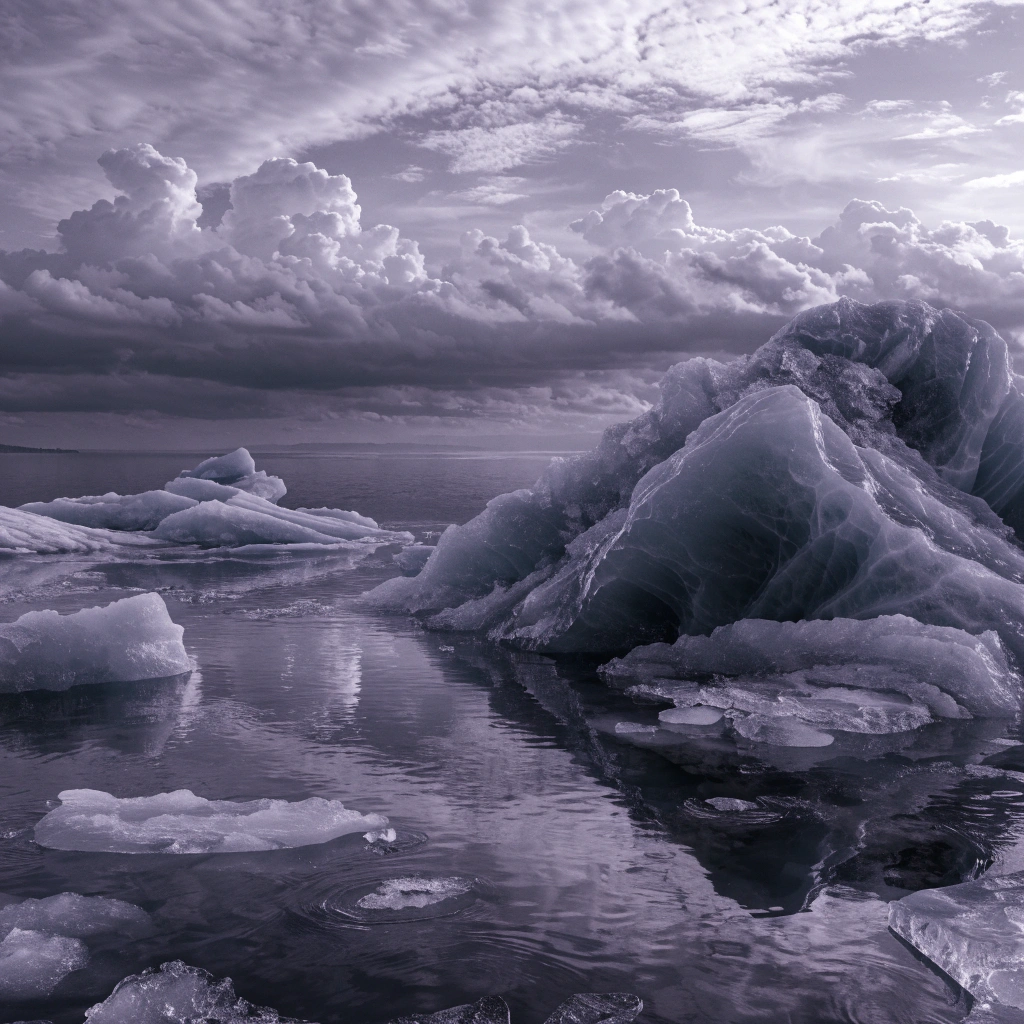
The Big Lake in Russia
Lake Baikal is in Russia. It is a very old lake. It is 25 million years old. It is also very deep. It is the deepest lake in the world.
The water is very clean and blue. Many animals live here. Some animals only live in this lake. The Baikal seal is a famous animal. It is small and cute.
In winter, the lake is very cold. The water becomes ice. People walk on the ice. It is a beautiful place to visit.
Grammatik-Spotlight
Muster: Present Simple: 'To Be'
"Lake Baikal is in Russia."
We use 'is' for singular things like 'the lake' or 'it'. This pattern helps us give facts and descriptions.
Muster: Adjectives after 'To Be'
"The water is very clean and blue."
In English, we often put describing words (adjectives) after the verb 'is' or 'are'. This tells us more about the subject.
Teste dein Verständnis
10 Fragen · A1 Anfänger · 1 kostenlose Vorschau
Teste, was du aus diesem Artikel gelernt hast. Beantworte alle Fragen und sammle XP!
Where is Lake Baikal?
Möchtest du das Quiz beenden?
9 weitere Fragen warten auf dich. Registriere dich kostenlos, um das vollständige Quiz freizuschalten und XP zu sammeln!
Kostenlos registrierenHast du schon ein Konto? Anmelden
Gut gemacht!
Weiter üben!
Bereits abgeschlossen — keine zusätzlichen XP
Registriere dich, um XP zu verdienenFragenübersicht
Where is Lake Baikal?
Deine Antwort:
Richtige Antwort: Russia
Lake Baikal is a new lake.
Deine Antwort:
Richtige Antwort: Falsch
What does 'clean' mean?
Deine Antwort:
Richtige Antwort: Not dirty
Lake Baikal is the ______ lake in the world.
Deine Antwort:
Richtige Antwort: deepest
The Amazing Lake Baikal
Lake Baikal is in the mountains of Siberia, Russia. It is a very special place because it is the oldest lake in the world. Scientists believe it is 25 million years old. It is also the deepest lake on Earth. It is deeper than any other lake because it is 1,642 meters deep.
The water in Lake Baikal is very clear and clean. In the winter, the lake becomes thick ice. The ice is so strong that people can walk or drive cars on it. Many unique animals live there too. For example, the Baikal seal is the only seal in the world that lives in fresh water.
In the past, people called Lake Baikal the 'Sacred Sea.' Many tourists visit the lake every year. They like to see the beautiful mountains and the blue water. It is a natural wonder, and it is important to protect it. People love this lake because it is quiet and beautiful.
Grammatik-Spotlight
Muster: Superlative Adjectives
"It is the oldest lake in the world."
We use 'the' + adjective + '-est' to compare one thing to a whole group. It shows that the lake has the highest level of age among all lakes.
Muster: Comparative Adjectives
"It is deeper than any other lake..."
We use adjective + '-er' + 'than' to compare two things. Here, Lake Baikal is compared to other lakes regarding its depth.
Teste dein Verständnis
11 Fragen · A2 Grundkenntnisse · 1 kostenlose Vorschau
Teste, was du aus diesem Artikel gelernt hast. Beantworte alle Fragen und sammle XP!
How old do scientists think Lake Baikal is?
Möchtest du das Quiz beenden?
10 weitere Fragen warten auf dich. Registriere dich kostenlos, um das vollständige Quiz freizuschalten und XP zu sammeln!
Kostenlos registrierenHast du schon ein Konto? Anmelden
Gut gemacht!
Weiter üben!
Bereits abgeschlossen — keine zusätzlichen XP
Registriere dich, um XP zu verdienenFragenübersicht
How old do scientists think Lake Baikal is?
Deine Antwort:
Richtige Antwort: 25 million years old
The Baikal seal lives in salty ocean water.
Deine Antwort:
Richtige Antwort: Falsch
What does the word 'unique' mean?
Deine Antwort:
Richtige Antwort: The only one of its kind
Lake Baikal is the ______ lake on Earth.
Deine Antwort:
Richtige Antwort: deepest
Where is Lake Baikal located?
Deine Antwort:
Richtige Antwort: Siberia
The Wonders of Lake Baikal: Russia's Ancient Inland Sea
Lake Baikal, which is located in the mountainous region of Siberia, is a place of incredible beauty and mystery. It is widely considered to be the oldest lake in the world, with an estimated age of 25 million years. Because it was formed by a massive tectonic rift, it has reached a depth of 1,642 meters. This makes it the deepest lake on our planet. In addition to its depth, Lake Baikal contains about 20% of the world's unfrozen fresh surface water, which is more than all the North American Great Lakes combined.
Scientists have called Lake Baikal the 'Galapagos of Russia' because of its unique ecosystem. More than 80% of the animals that live here cannot be found anywhere else on Earth. One famous example is the nerpa, which is the only freshwater seal in the world. These animals have adapted to the cold environment over millions of years. Because the water is so pure, you can sometimes see objects up to 40 meters below the surface.
The lake has become a popular destination for tourists who love nature and adventure. During the winter months, the water freezes into thick, clear ice. This ice is so strong that heavy vehicles can be driven across it safely. Visitors often travel there to see the beautiful turquoise bubbles trapped under the surface. However, the lake is also considered fragile. It has been protected as a UNESCO World Heritage site since 1996 to ensure that its clean water and rare species are preserved for the future. Many environmental projects have been started by local groups to keep the area healthy and clean from pollution.
Grammatik-Spotlight
Muster: Relative Clauses
"Lake Baikal, which is located in the mountainous region of Siberia, is a place of incredible beauty."
Relative clauses start with words like 'which' or 'who' to provide more information about a noun. In this sentence, the clause gives extra detail about Lake Baikal.
Muster: Passive Voice
"It has been protected as a UNESCO World Heritage site since 1996."
The passive voice is used when the action is more important than who performed it. It is formed using 'be' + past participle.
Teste dein Verständnis
11 Fragen · B1 Mittelstufe · 1 kostenlose Vorschau
Teste, was du aus diesem Artikel gelernt hast. Beantworte alle Fragen und sammle XP!
Where is Lake Baikal located?
Möchtest du das Quiz beenden?
10 weitere Fragen warten auf dich. Registriere dich kostenlos, um das vollständige Quiz freizuschalten und XP zu sammeln!
Kostenlos registrierenHast du schon ein Konto? Anmelden
Gut gemacht!
Weiter üben!
Bereits abgeschlossen — keine zusätzlichen XP
Registriere dich, um XP zu verdienenFragenübersicht
Where is Lake Baikal located?
Deine Antwort:
Richtige Antwort: Siberia, Russia
Lake Baikal contains more fresh water than all the Great Lakes of North America combined.
Deine Antwort:
Richtige Antwort: Richtig
What does the word 'fragile' mean in the text?
Deine Antwort:
Richtige Antwort: Easily damaged or broken
The nerpa is the only _____ seal in the world.
Deine Antwort:
Richtige Antwort: freshwater
Why is the lake called the 'Galapagos of Russia'?
Deine Antwort:
Richtige Antwort: Because of its unique ecosystem and species
Der Baikalsee: Ein Naturwunder von unschätzbarem Wert
Im Herzen Sibiriens, eingebettet in eine majestätische Gebirgslandschaft, liegt der Baikalsee – ein Gewässer von atemberaubender Schönheit und immenser wissenschaftlicher Bedeutung. Er ist nicht nur der tiefste See der Erde mit einer maximalen Tiefe von 1.642 Metern, sondern gilt mit einem geschätzten Alter von 25 Millionen Jahren auch als der älteste Süßwassersee der Welt. Seine Entstehung ist auf einen gewaltigen tektonischen Rift zurückzuführen, der über Jahrmillionen hinweg eine tiefe Spalte in der Erdkruste bildete.
Die Isolation und das hohe Alter des Baikalsees haben eine einzigartige Evolution hervorgebracht, die ihm den Beinamen „Galapagos Russlands“ eingebracht hat. Über 80 Prozent der dort lebenden Tierarten sind endemisch, das heißt, sie kommen nirgendwo sonst auf der Welt vor. Dazu zählen die Baikalrobbe, die einzige Süßwasserrobbenart, sowie zahlreiche Fisch-, Krebstier- und Schneckenarten, die sich an die spezifischen Bedingungen dieses besonderen Ökosystems angepasst haben. Diese außergewöhnliche Artenvielfalt macht den See zu einem unersetzlichen Forschungsgebiet für Biologen und Ökologen weltweit.
Doch dieses Naturerbe ist zunehmend bedroht. Anthropogene Einflüsse wie die industrielle Verschmutzung, insbesondere durch eine ehemalige Zellulosefabrik, und die Auswirkungen des Klimawandels setzen dem See schwer zu. Obwohl die Fabrik vor einigen Jahren geschlossen wurde, belasten alte Ablagerungen und der Eintrag von Nährstoffen durch die Landwirtschaft weiterhin das empfindliche ökologische Gleichgewicht. Die steigenden Wassertemperaturen und die Verringerung der Eisbedeckung im Winter verändern zudem die Lebensbedingungen für die einzigartigen Organismen des Sees.
Angesichts dieser Herausforderungen sind umfassende Schutzmaßnahmen von entscheidender Bedeutung. Es wurden bereits Initiativen zur Renaturierung und zur Förderung eines nachhaltigen Tourismus ins Leben gerufen. Internationale Kooperationen sind unerlässlich, um die Erhaltung dieses UNESCO-Weltnaturerbes zu gewährleisten. Wissenschaftler betonen die Dringlichkeit, weitere Forschung zu betreiben und effektive Strategien zu implementieren, um den Baikalsee für zukünftige Generationen zu bewahren. Nur durch konzertierte Anstrengungen kann die Integrität dieses einzigartigen Naturjuwels langfristig gesichert werden.
Grammatik-Spotlight
Muster: Passiv (Vorgangspassiv)
"Es wurden bereits Initiativen zur Renaturierung und zur Förderung eines nachhaltigen Tourismus ins Leben gerufen."
Das Vorgangspassiv wird verwendet, um eine Handlung zu beschreiben, bei der der Handelnde unbekannt oder unwichtig ist und der Fokus auf der Handlung selbst liegt. Es wird mit einer Form von „werden“ und dem Partizip II des Verbs gebildet.
Muster: Relativsatz mit „die“ (bezogen auf Plural Nomen)
"Dazu zählen die Baikalrobbe, die einzige Süßwasserrobbenart, sowie zahlreiche Fisch-, Krebstier- und Schneckenarten, die sich an die spezifischen Bedingungen dieses besonderen Ökosystems angepasst haben."
Relativsätze geben zusätzliche Informationen zu einem Nomen oder Pronomen. Das Relativpronomen (hier „die“) richtet sich in Kasus nach seiner Funktion im Relativsatz und in Numerus und Genus nach dem Bezugswort (hier „Arten“, Plural feminin).
Muster: Nominalisierung mit Präpositionalobjekt
"Die steigenden Wassertemperaturen und die Verringerung der Eisbedeckung im Winter verändern zudem die Lebensbedingungen für die einzigartigen Organismen des Sees."
Oft werden Verben oder Adjektive im Deutschen in Nomen umgewandelt (Nominalisierung), um Sätze prägnanter zu gestalten. Hier wird das Verb „verringern“ zu „Verringerung“ und das Objekt steht als Genitivattribut („der Eisbedeckung“).
Teste dein Verständnis
11 Fragen · B2 Obere Mittelstufe · 1 kostenlose Vorschau
Teste, was du aus diesem Artikel gelernt hast. Beantworte alle Fragen und sammle XP!
Was ist eine der Hauptursachen für die Bedrohung des Baikalsees?
Möchtest du das Quiz beenden?
10 weitere Fragen warten auf dich. Registriere dich kostenlos, um das vollständige Quiz freizuschalten und XP zu sammeln!
Kostenlos registrierenHast du schon ein Konto? Anmelden
Gut gemacht!
Weiter üben!
Bereits abgeschlossen — keine zusätzlichen XP
Registriere dich, um XP zu verdienenFragenübersicht
Was ist eine der Hauptursachen für die Bedrohung des Baikalsees?
Deine Antwort:
Richtige Antwort: Anthropogene Einflüsse wie industrielle Verschmutzung und Klimawandel.
Der Baikalsee ist der tiefste und älteste Süßwassersee der Welt.
Deine Antwort:
Richtige Antwort: Richtig
Was bedeutet das Wort 'endemisch' im Kontext des Artikels?
Deine Antwort:
Richtige Antwort: Nur in einem bestimmten, geografisch begrenzten Gebiet vorkommend.
Die einzigartige Evolution des Baikalsees hat ihm den Beinamen „Galapagos ____________“ eingebracht.
Deine Antwort:
Richtige Antwort: Russlands
Welche Art von Tier ist die Baikalrobbe?
Deine Antwort:
Richtige Antwort: Eine einzigartige Süßwasserrobbenart.
The Abyssal Enigma: Assessing the Ecological and Tectonic Legacy of Lake Baikal
Seldom does a natural formation command such profound geological and biological reverence as Lake Baikal. Nestled within the rugged mountainous terrain of Siberia, this gargantuan body of water is not merely a geographic landmark but a living chronicle of Earth’s evolutionary history. Estimated to be approximately 25 million years old, Baikal holds the distinction of being the world's oldest lake, a result of the ongoing divergence within the Baikal Rift Zone. This tectonic activity has sculpted a basin of unparalleled depth, reaching 1,642 meters, thereby establishing it as the preeminent abyssal freshwater reservoir on the planet.
It is the lake's staggering antiquity that serves as the primary driver for its unparalleled biodiversity. Often heralded as the 'Galapagos of Russia,' the lake’s isolation has facilitated a unique evolutionary trajectory. Over 80% of the animal species identified within its depths are endemic, meaning they are found nowhere else on Earth. Among these, the Nerpa—the world’s only exclusively freshwater seal—stands as a charismatic testament to successful speciation. The crystalline clarity of Baikal’s water, maintained by the diligent filtration of microscopic endemic crustaceans, allows for a level of photosynthetic activity and oxygenation that supports life at depths where most lakes would be biologically stagnant.
However, the preservation of such a delicate equilibrium requires more than just passive admiration. The vulnerability of this ecosystem to anthropogenic influence has become a focal point of contemporary limnology. While the lake has historically been shielded by its remote location, the encroaching reality of climate change and industrial runoff threatens to precipitate an irreversible decline in water quality. Rising temperatures in Siberia are already impacting the duration of the winter ice cover, a critical component of the lake’s thermal regulation and the reproductive cycles of its endemic fauna.
Critical analysis of the situation suggests that the mere designation of Baikal as a UNESCO World Heritage site is insufficient. The relentless expansion of human activity poses a significant threat to this ecosystem. There is a nuanced argument to be made regarding the balance between regional economic development and the imperative of environmental conservation. Proponents of industrial growth often clash with ecologists who argue that the loss of Baikal’s pristine state would constitute an ontological blow to global natural heritage. Ultimately, the future of this enigmatic 'Sacred Sea' hinges upon the implementation of rigorous international protocols and a shift toward sustainable stewardship. Only through such concerted efforts can we ensure that the depths of Baikal remain a sanctuary for the unique life forms that have called it home for millions of years.
Grammatik-Spotlight
Muster: Negative Inversion
"Seldom does a natural formation command such profound geological and biological reverence as Lake Baikal."
Used for emphasis at the beginning of a sentence. When 'seldom' starts the clause, the auxiliary verb 'does' precedes the subject 'natural formation'.
Muster: Cleft Sentence (It-cleft)
"It is the lake's staggering antiquity that serves as the primary driver for its unparalleled biodiversity."
This structure focuses on 'staggering antiquity' by placing it between 'It is' and 'that'. It highlights the specific cause of the biodiversity.
Muster: Nominalisation
"The relentless expansion of human activity poses a significant threat to this ecosystem."
The verb 'expand' is turned into the noun 'expansion'. This creates a more formal, academic tone and allows for more complex descriptions of the subject.
Teste dein Verständnis
12 Fragen · C1 Fortgeschritten · 1 kostenlose Vorschau
Teste, was du aus diesem Artikel gelernt hast. Beantworte alle Fragen und sammle XP!
What is identified as the primary reason for Lake Baikal's high level of biodiversity?
Möchtest du das Quiz beenden?
11 weitere Fragen warten auf dich. Registriere dich kostenlos, um das vollständige Quiz freizuschalten und XP zu sammeln!
Kostenlos registrierenHast du schon ein Konto? Anmelden
Gut gemacht!
Weiter üben!
Bereits abgeschlossen — keine zusätzlichen XP
Registriere dich, um XP zu verdienenFragenübersicht
What is identified as the primary reason for Lake Baikal's high level of biodiversity?
Deine Antwort:
Richtige Antwort: Its significant age and geographic isolation
The Nerpa is a species of seal that can be found in various freshwater lakes across Europe.
Deine Antwort:
Richtige Antwort: Falsch
What does 'anthropogenic' mean in the context of the article?
Deine Antwort:
Richtige Antwort: Caused or influenced by human activity
The article describes the lake as a living _____ of Earth’s evolutionary history.
Deine Antwort:
Richtige Antwort: chronicle
According to the text, what role do microscopic crustaceans play in Lake Baikal?
Deine Antwort:
Richtige Antwort: They maintain water clarity through filtration.
The author argues that UNESCO status alone is enough to protect the lake.
Deine Antwort:
Richtige Antwort: Falsch
The Abyssal Crucible: Analytical Perspectives on Lake Baikal’s Limnological Heritage
Seldom has a geographical feature so thoroughly defied conventional limnological categorization as Lake Baikal. Nestled within the rugged contours of the Siberian wilderness, this primordial basin represents not merely a body of water, but a temporal anomaly of staggering magnitude. Estimated to have gestated for some twenty-five million years, Baikal is the world’s oldest and deepest lake, a distinction that renders it a quintessential laboratory for evolutionary biology and geological inquiry. It is this isolation that has fostered a crucible of evolution, giving rise to a plethora of endemic species that find no parallel elsewhere on the globe.
The lake’s genesis is inextricably linked to the Baikal Rift Zone, a tectonic fissure where the Eurasian plate is slowly being rent asunder. This abyssal rift has allowed the lake to reach depths of 1,642 meters, containing approximately twenty percent of the world’s unfrozen surface freshwater. One might argue that the sheer volume of this liquid mass acts as a thermal buffer, modulating the harsh Siberian climate and creating a micro-environment of profound stability. However, such stability is currently under siege from anthropogenic influences that threaten to disrupt its delicate oligotrophic state.
The limnological profile of Baikal is characterized by its exceptional oxygenation, even at its most profound depths—a rarity for lakes of such magnitude. This phenomenon is driven by complex convective currents and the relative coldness of the water, which facilitates the downward transport of oxygen, thereby supporting life in the abyssal zones. This oxygen-rich environment is the prerequisite for the survival of specialized amphipods and other invertebrates that form the bedrock of the lake’s trophic web.
Were the tectonic rift to expand further, the very chemistry of the basin might undergo a radical metamorphosis; yet, it is the immediate threat of industrial pollution and climate-induced warming that commands the attention of the scientific community. The lake’s transparency, once legendary, is being compromised by nutrient runoff, leading to eutrophication in localized areas. Furthermore, the carbon sequestration capacity of the lake’s unique flora and fauna is a subject of intense academic scrutiny, as researchers attempt to quantify how this ancient ecosystem mitigates global atmospheric changes.
The biological diversity of Baikal is nothing short of miraculous. From the nerpa, the world’s only exclusively freshwater seal, to the translucent golomyanka fish, the lake’s inhabitants have adapted to high-pressure, low-temperature environments in ways that continue to baffle researchers. To observe these creatures is to glimpse a world that has remained largely unchanged since the Cenozoic era. Nevertheless, the integrity of this biodiversity is contingent upon the continued preservation of the lake’s pristine conditions.
Moreover, the socio-economic dimension of Baikal cannot be overlooked. For the indigenous Buryat people, the lake is 'the Sacred Sea,' a site of profound spiritual significance. This cultural layer adds a further level of complexity to the discourse surrounding its conservation. The tension between economic development—specifically tourism and resource extraction—and the preservation of a UNESCO World Heritage site underscores the broader global struggle between progress and sustainability. It is through this lens of analytical scrutiny that we must evaluate the efficacy of current environmental policies.
In conclusion, Lake Baikal serves as a poignant reminder of the Earth’s geological heritage and the vulnerability of its most ancient systems. As we grapple with the complexities of the 21st century, the stewardship of such a natural wonder becomes not just a regional concern for Russia, but a global imperative. Should we fail to protect this 'Galapagos of Russia,' we risk losing a vital link to our planet’s primordial past and a key to understanding its future ecological resilience.
Grammatik-Spotlight
Muster: Negative Inversion
"Seldom has a geographical feature so thoroughly defied conventional limnological categorization as Lake Baikal."
This pattern involves placing a negative or restrictive adverbial (like 'seldom') at the beginning of a sentence, followed by the auxiliary verb and then the subject. It is used in formal or academic prose to add emphasis and rhetorical weight.
Muster: Cleft Sentences
"It is this isolation that has fostered a crucible of evolution."
A cleft sentence is used to focus on a specific part of the information. By using 'It is/was... that...', the writer highlights the cause (isolation) as the most crucial factor in the evolutionary process.
Muster: Past Subjunctive / Inverted Conditional
"Were the tectonic rift to expand further, the very chemistry of the basin might undergo a radical metamorphosis."
This is a formal alternative to 'If the tectonic rift were to expand'. It uses the inverted subjunctive 'were' to discuss a hypothetical or unlikely future situation, common in high-level analytical writing.
Teste dein Verständnis
12 Fragen · C2 Meisterschaft · 1 kostenlose Vorschau
Teste, was du aus diesem Artikel gelernt hast. Beantworte alle Fragen und sammle XP!
What is the primary reason the author characterizes Lake Baikal as a 'temporal anomaly'?
Möchtest du das Quiz beenden?
11 weitere Fragen warten auf dich. Registriere dich kostenlos, um das vollständige Quiz freizuschalten und XP zu sammeln!
Kostenlos registrierenHast du schon ein Konto? Anmelden
Gut gemacht!
Weiter üben!
Bereits abgeschlossen — keine zusätzlichen XP
Registriere dich, um XP zu verdienenFragenübersicht
What is the primary reason the author characterizes Lake Baikal as a 'temporal anomaly'?
Deine Antwort:
Richtige Antwort: Its immense age and depth distinguish it from more recent geological formations.
The oxygenation of Baikal's deepest zones is primarily facilitated by the warmth of its surface waters.
Deine Antwort:
Richtige Antwort: Falsch
Which term refers to a lake state characterized by low nutrient levels and high oxygen?
Deine Antwort:
Richtige Antwort: Oligotrophic
The process of removing carbon from the atmosphere and storing it within the lake's ecosystem is known as carbon _____.
Deine Antwort:
Richtige Antwort: sequestration
What does the author suggest is the most immediate threat to the lake's ecological integrity?
Deine Antwort:
Richtige Antwort: Industrial pollution and climate-induced warming.
The indigenous Buryat people refer to Lake Baikal as 'the Sacred Sea'.
Deine Antwort:
Richtige Antwort: Richtig

