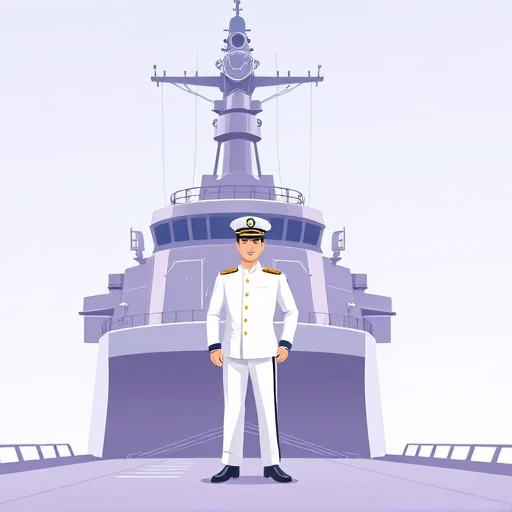
admiral in 30 Sekunden
- An admiral is the highest-ranking officer in a navy, responsible for commanding a fleet of ships and overseeing strategic naval operations and maritime security.
- The word is used as a formal title (e.g., Admiral Smith) and originates from the Arabic phrase for 'commander of the sea,' reflecting historical maritime influence.
- Beyond the military, 'admiral' refers to several species of butterflies, such as the Red Admiral, known for their striking wing patterns and migratory behavior.
- In common usage, the term implies supreme authority, leadership, and a high level of expertise in maritime warfare, navigation, and large-scale organizational management.
The word admiral represents the pinnacle of naval authority, a term steeped in centuries of maritime tradition and strategic importance. At its core, an admiral is a high-ranking officer in a navy, typically the highest rank achievable, responsible for the command of a fleet or a significant group of naval vessels. When you hear the word, you should visualize not just a person in a uniform, but a leader who carries the weight of national security on the high seas. The term is used in both literal military contexts and, occasionally, in metaphorical ways to describe someone who exhibits supreme leadership or control over a complex operation. In the hierarchy of the sea, while a captain commands a single ship, an admiral commands the captains and their respective vessels, orchestrating movements across vast oceanic theaters. This distinction is crucial for understanding the scale of responsibility associated with the title. Historically, the role has evolved from a simple commander of ships to a sophisticated strategic position involving diplomacy, logistics, and advanced technology. People use this word most frequently when discussing military history, current naval operations, or in fictional settings like science fiction where 'Star Admirals' command fleets of spaceships. It is a title that commands immediate respect and implies a lifetime of service and expertise in maritime warfare and navigation.
- Naval Hierarchy
- The admiral sits at the top of the naval command structure, overseeing various lower ranks such as vice admirals, rear admirals, and commodores. Their primary focus is on the 'big picture'—the strategic deployment of the entire fleet rather than the tactical maneuvering of a single vessel.
After thirty years of distinguished service, she was finally promoted to the rank of admiral, becoming the first woman to lead the Pacific Fleet.
Beyond the military, the word 'admiral' also appears in the natural world. The 'Red Admiral' and 'White Admiral' are well-known species of butterflies, named perhaps for the striking, uniform-like patterns on their wings. This usage demonstrates how the word has permeated general culture, representing something distinguished and easily recognizable. In literature and film, the admiral is often portrayed as a figure of wisdom or, conversely, a rigid traditionalist, reflecting the public's dual perception of high-ranking military officials. Whether it is Admiral Nelson at the Battle of Trafalgar or Admiral Ackbar in Star Wars, the title carries a sense of gravitas and ultimate responsibility. When using the word, it is important to remember its formal nature; it is almost always capitalized when used as a title before a name, such as 'Admiral Smith.' In a sentence, it functions as a count noun, meaning you can have one admiral or many admirals. The collective noun for a group of admirals, or the administrative body they represent, is the 'Admiralty.' This term is often used in historical contexts to refer to the government department that formerly managed the British Royal Navy.
- Metaphorical Usage
- Sometimes people use 'admiral' to describe a person who takes charge of a non-military situation with great authority. For example, 'He acted like the admiral of the kitchen, directing his family members to chop, stir, and clean with military precision.'
The admiral stood on the bridge of the flagship, surveying the horizon for any sign of the enemy fleet.
In modern conversation, you might encounter 'admiral' when discussing international relations or defense budgets. It is a word that signals a shift from local or tactical concerns to global or strategic ones. For instance, an admiral might testify before a government committee about the necessity of maintaining free trade routes in the South China Sea. This highlights the role of an admiral as not just a warrior, but a geopolitical actor. The word also appears in the names of hotels, pubs, and streets, especially in coastal towns with a strong naval heritage, serving as a reminder of the historical prestige associated with the rank. Understanding 'admiral' requires recognizing this blend of historical depth, military precision, and cultural significance. It is not just a job title; it is a symbol of the highest level of maritime leadership and the enduring human relationship with the power of the ocean.
The historical museum features a life-sized statue of the admiral who led the fleet to victory in 1805.
- Symbolism
- In many cultures, the admiral's uniform, adorned with gold braid and stars, symbolizes the peak of professional achievement and the heavy burden of command.
During the parade, the admiral saluted the young sailors, acknowledging their dedication to the service.
The admiral's flagship was the largest and most heavily armed vessel in the entire armada.
Using the word admiral correctly involves understanding its role as both a common noun and a formal title. In general usage, it functions like any other profession or rank. For example, you might say, 'The navy has many admirals,' where it is a simple plural noun. However, when you use it as a title for a specific individual, it must be capitalized: 'Admiral Richardson will be arriving at noon.' This distinction is vital for professional writing and formal communication. Furthermore, the word often appears in possessive forms, such as 'the admiral's orders' or 'the admirals' conference,' requiring careful placement of the apostrophe depending on whether you are referring to one or multiple officers. Because the rank is so high, it is frequently associated with verbs of command, decision-making, and strategic planning. You will often see it paired with words like 'commanded,' 'ordered,' 'strategized,' or 'oversaw.' For instance, 'The admiral commanded the fleet to retreat to the harbor.' This usage reinforces the authority inherent in the rank.
- Title vs. Rank
- Use 'Admiral' (capitalized) when it is part of a name: 'I spoke with Admiral Vance.' Use 'admiral' (lowercase) when referring to the position generally: 'He hopes to become an admiral one day.'
The admiral reviewed the tactical maps before the dawn operation.
In more descriptive or literary contexts, 'admiral' can be used to evoke a sense of grandeur or old-world military tradition. You might describe someone's appearance as 'having the bearing of an admiral,' implying they look disciplined, authoritative, and perhaps a bit stern. This metaphorical use allows the word to function as a character descriptor. Additionally, the word is often found in compound terms that specify the exact level of the rank. In many navies, there are 'Rear Admirals,' 'Vice Admirals,' and 'Fleet Admirals.' When using these terms, the entire title is usually capitalized if it precedes a name: 'Rear Admiral Jones attended the ceremony.' If you are writing a story or a report, using these specific variations adds a layer of authenticity and precision to your language. It shows that you understand the nuances of military organization. Another common sentence structure involves the 'admiral of' construction, such as 'Admiral of the Fleet' or 'Admiral of the Blue' (a historical British rank), which specifies the scope of the officer's command.
- Collective Contexts
- When referring to the collective group of high-ranking officers, you can use 'the admiralty' or 'the naval brass.' Example: 'The admiralty decided to decommission the aging destroyer.'
Every admiral in the room agreed that the new sonar technology was essential.
Sentences involving 'admiral' often touch upon themes of responsibility and the consequences of leadership. You might write, 'The admiral bore the responsibility for the lost ships,' or 'The success of the mission was a testament to the admiral's foresight.' These sentences use the word to anchor the narrative around a central figure of authority. In academic or historical writing, the word is used to analyze the impact of specific individuals on the course of history. 'Admiral Nelson's tactics at Trafalgar changed the nature of naval warfare forever.' Here, the word is not just a title but a marker of historical significance. Finally, don't forget the 'Red Admiral' butterfly! In a nature-themed sentence, you might say, 'A Red Admiral landed on the flower, its vibrant colors contrasting with the green leaves.' This demonstrates the word's versatility across different domains of knowledge, from the depths of the ocean to the beauty of a garden.
The retired admiral wrote a memoir about his years at sea.
- Formal Address
- In direct speech, you address the officer simply as 'Admiral.' Example: 'Yes, Admiral, the supplies have been loaded.'
The admiral's uniform was decorated with numerous medals for bravery.
The admiral gave the signal to begin the naval exercise.
The word admiral is a staple of specific environments, ranging from the halls of government to the pages of classic literature. Most commonly, you will encounter it in news reports concerning national defense and international maritime affairs. When a country deploys a carrier strike group or conducts joint naval exercises with allies, the spokesperson or the commanding officer mentioned is frequently an admiral. In these contexts, the word carries a weight of officialdom and strategic importance. For instance, a news anchor might say, 'Admiral John Aquilino discussed the importance of a free and open Indo-Pacific.' This is the word's most literal and contemporary application. You will also hear it in political discussions regarding the military budget, where admirals may be called to testify before legislative bodies about the needs of the navy. Their testimony is often seen as the authoritative word on naval readiness and future requirements.
- In the News
- Admirals are often the 'face' of the navy in the media, providing expert commentary on maritime security, piracy, and naval technology.
The admiral held a press conference to explain the fleet's new mission.
Another major arena for this word is historical study and documentaries. Any exploration of the Age of Discovery, the Napoleonic Wars, or World War II will be filled with references to famous admirals. Names like Christopher Columbus (who was granted the title 'Admiral of the Ocean Sea'), Horatio Nelson, and Chester Nimitz are inseparable from the word. In these settings, 'admiral' is used to frame the narrative of great battles and exploratory voyages. Documentaries often use the word to emphasize the high stakes of naval history, describing how an admiral's single decision could change the fate of a nation. This historical usage keeps the word alive in the public consciousness, even for those who have no direct connection to the military. Furthermore, in coastal cities with long naval traditions—like Portsmouth in the UK, Annapolis in the US, or Toulon in France—the word is part of the local geography and culture. You'll find it on street signs, in the names of historic pubs ('The Admiral Benbow'), and in local museums.
- In Popular Culture
- Science fiction has adopted the rank of admiral for space-faring organizations. Fans of 'Star Trek' or 'Star Wars' are very familiar with characters like Admiral Kirk or Admiral Thrawne.
In the movie, the admiral had to make a difficult choice to save the galaxy.
Finally, you will hear the word in the context of nature and entomology. Gardeners and nature enthusiasts often talk about 'Red Admirals' appearing in their gardens during the summer months. This usage is much more casual and common in everyday conversation than the military one. You might hear someone say, 'Look at that beautiful Red Admiral on the buddleia!' This demonstrates how a word with such a heavy, formal origin can find a place in the quiet appreciation of nature. Whether it's in a high-stakes military briefing, a history textbook, a sci-fi blockbuster, or a sunny garden, the word 'admiral' is used to denote something that is prominent, distinguished, and commanding of attention. Its presence across these diverse fields ensures that it remains a familiar and evocative part of the English language.
The admiral butterfly is known for its distinctive black, orange, and white markings.
- Ceremonial Events
- At naval graduations or ship commissioning ceremonies, the keynote speaker is almost always an admiral, whose presence adds to the solemnity of the occasion.
The admiral's speech inspired the new recruits to serve with honor.
The admiral was welcomed with a nineteen-gun salute as he boarded the ship.
While the word admiral is relatively straightforward, there are several common pitfalls that learners and even native speakers often encounter. The most frequent mistake is confusing 'admiral' with 'general.' Both are high-ranking military officers, but their domains are strictly divided: an admiral belongs to the navy (sea), while a general belongs to the army or air force (land and air). Using 'General' to refer to a naval commander is a significant faux pas in military and formal contexts. Another common error involves capitalization. As mentioned earlier, 'admiral' should only be capitalized when it is used as a formal title preceding a name (e.g., Admiral Smith). If you are referring to the rank in a general sense (e.g., 'He wants to be an admiral'), it should remain lowercase. This is a rule that applies to all titles, but it is frequently missed in casual writing.
- Admiral vs. General
- Always remember: Admiral = Navy/Sea. General = Army/Land. Confusing the two can seem disrespectful or uninformed in military discussions.
Incorrect: The General of the fleet ordered the ships to sail. (Should be Admiral)
Spelling can also be a minor issue. Some people mistakenly add an extra 'i' or 'e', spelling it 'admiral' correctly but sometimes confusing it with 'admirable' (an adjective meaning worthy of respect). While an admiral should certainly be admirable, the two words are distinct in both spelling and meaning. Furthermore, the pronunciation can sometimes be tricky for non-native speakers. The stress is on the first syllable: AD-mi-ral. Some people mistakenly stress the second syllable, which can make the word harder to understand. In terms of grammar, a common mistake is the incorrect use of collective nouns. While 'the admiralty' refers to the organization, 'the admirals' refers to the individuals. Saying 'The admiralty are meeting today' is common in British English (where collective nouns can take plural verbs), but in American English, it would usually be 'The admiralty is meeting today.' Understanding these regional differences is key to sounding natural.
- Spelling & Pronunciation
- Focus on the 'AD' sound at the beginning. Avoid adding extra letters like 'e' at the end. It's not 'admirale'.
Incorrect: He is an admirable in the navy. (Should be admiral)
Another mistake is failing to recognize the different grades of admiral. If you are in a formal military setting, calling a 'Rear Admiral' simply 'Admiral' might be acceptable in casual speech, but in formal writing or introductions, the full rank should be used. This shows attention to detail and respect for the specific level of achievement. Finally, be careful with the use of 'the' before a title. You would say 'I spoke to Admiral Smith,' but 'I spoke to the admiral.' Adding 'the' before 'Admiral Smith' (e.g., 'the Admiral Smith') is grammatically incorrect. These small nuances in articles and capitalization are what separate a proficient speaker from a beginner. By paying attention to these common errors, you can use the word 'admiral' with confidence and precision in any setting, whether you're discussing history, nature, or current events.
Incorrect: I saw the Admiral Nelson's ship. (Should be Admiral Nelson's ship)
- Contextual Accuracy
- In some countries, the Coast Guard also uses the rank of admiral. Don't assume an admiral is always in the Navy; they could be in the Coast Guard as well.
The admiral oversaw the search and rescue operation in the Atlantic.
The admiral's retirement ceremony was attended by dignitaries from around the world.
When discussing naval leadership, the word admiral is the most prominent, but there are several other terms that are closely related or can serve as alternatives depending on the context. Understanding these synonyms and related words will help you describe military structures more accurately. The most direct alternatives are the specific grades of the rank: **Commodore**, **Rear Admiral**, **Vice Admiral**, and **Fleet Admiral**. A Commodore is often the rank just below Rear Admiral and typically commands a small squadron of ships. In some navies, this is a temporary title rather than a permanent rank. Rear Admiral is the first 'flag' rank, followed by Vice Admiral, who is often the second-in-command of a large fleet. Fleet Admiral is the highest possible rank, usually reserved for wartime or exceptional circumstances. Using these specific terms instead of just 'admiral' shows a deeper knowledge of naval hierarchy.
- Admiral vs. Commodore
- An admiral commands a fleet; a commodore typically commands a smaller group or squadron. Think of a commodore as a 'junior' admiral.
The commodore led the destroyer squadron during the coastal patrol.
Beyond specific ranks, you might use more general terms like **Commander**, **Officer**, or **Flag Officer**. 'Commander' is a broad term that can refer to anyone in charge of a unit, but it is also a specific rank below Captain in the navy. 'Officer' is the most general term for anyone holding a position of authority in the military. 'Flag Officer' is a particularly useful term because it collectively refers to all officers of admiral rank (so-called because they are entitled to fly a personal flag on their ship). If you want to describe the person in charge without being specific about their exact naval rank, 'Flag Officer' is a sophisticated choice. In a metaphorical sense, you might use words like **Chief**, **Leader**, or **Head**. For example, 'She is the admiral of the marketing department' could be rephrased as 'She is the head of the marketing department,' though the former is more colorful and implies a more commanding style.
- Comparison: Admiral vs. Captain
- A Captain is the master of one ship. An Admiral is the master of many ships. The jump from Captain to Admiral is the biggest step in a naval career.
While the captain focused on the ship's engines, the admiral focused on the enemy's position.
Another set of related words comes from the administrative side of the navy. **Admiralty** refers to the department or board that manages naval affairs. **Fleet** refers to the group of ships commanded by an admiral. **Flagship** is the specific ship that carries the admiral and flies their flag. Using these words in conjunction with 'admiral' creates a rich, accurate picture of maritime life. For instance, 'The admiral boarded his flagship to lead the fleet out of the harbor.' This sentence uses three related terms to provide a clear and professional description. Finally, in historical contexts, you might encounter the term **Grand Admiral**, a rank used in some European navies (like the German Kriegsmarine) to denote the absolute highest level of command. Understanding these variations and alternatives allows you to tailor your language to the specific needs of your writing or conversation, ensuring you always use the most precise and evocative term possible.
The flagship was easily identifiable by the admiral's personal pennant flying from the mast.
- Summary of Alternatives
- For specific ranks: Vice Admiral, Rear Admiral. For general authority: Flag Officer, Commander. For non-naval equivalents: General (Army/Air Force).
The vice admiral served as the chief of staff for the entire naval region.
The admiral's authority extended over thousands of sailors and dozens of ships.
How Formal Is It?
Wusstest du?
The 'd' in 'admiral' was actually added later by mistake! In Old French, the word was 'amiral'. Scholars in the 15th century wrongly thought it came from the Latin 'admirabilis' (admirable), so they added the 'd' to make it look more Latin.
Aussprachehilfe
- Stressing the second syllable: ad-MI-ral (Incorrect).
- Pronouncing the 'i' too clearly like 'ee': ad-MEE-ral (Incorrect).
- Adding an 'e' sound at the end: ad-mi-ral-ee (Incorrect).
- Confusing it with 'admirable' and saying ad-MY-ral (Incorrect).
- Dropping the 'd' sound: a-mi-ral (Incorrect).
Schwierigkeitsgrad
The word itself is easy to read, but it often appears in complex historical or military texts.
Requires knowledge of capitalization rules and specific naval terminology to use correctly.
Pronunciation is generally straightforward, though the schwa sound in the middle can be tricky.
Easily recognizable in most contexts due to its distinct sound and common usage in media.
Was du als Nächstes lernen solltest
Voraussetzungen
Als Nächstes lernen
Fortgeschritten
Wichtige Grammatik
Capitalization of Titles
We met Admiral Jones (Capitalized) vs. He is an admiral (Lowercase).
Possessive Nouns
The admiral's orders (One admiral) vs. The admirals' meeting (Multiple admirals).
Articles with Ranks
He was promoted to admiral (No article) vs. He is an admiral (Indefinite article).
Collective Nouns
The admiralty is/are reviewing the case (Regional variation in verb agreement).
Appositives
John Smith, the admiral, spoke first.
Beispiele nach Niveau
The admiral has a big ship.
L'amiral a un grand navire.
Subject + Verb + Object.
Admiral Smith is very brave.
L'amiral Smith est très courageux.
Capitalize 'Admiral' when used as a title.
I see an admiral in the movie.
Je vois un amiral dans le film.
Use 'an' before 'admiral' because it starts with a vowel.
The admiral wears a blue hat.
L'amiral porte un chapeau bleu.
Present simple tense.
Is he an admiral?
Est-il amiral ?
Question form.
The admiral leads the ships.
L'amiral dirige les navires.
Third person singular 'leads'.
Look at the Red Admiral butterfly!
Regardez le papillon Vulcain !
Proper noun for a species.
The admiral is the boss.
L'amiral est le chef.
Simple definition sentence.
The admiral ordered the fleet to move north.
L'amiral a ordonné à la flotte de faire mouvement vers le nord.
Past simple tense 'ordered'.
She wants to become an admiral one day.
Elle veut devenir amirale un jour.
Infinitive 'to become'.
Admiral Nelson was a famous British leader.
L'amiral Nelson était un célèbre chef britannique.
Past tense 'was'.
The admiral's uniform has many gold stars.
L'uniforme de l'amiral a beaucoup d'étoiles dorées.
Possessive 's.
We saw three admirals at the ceremony.
Nous avons vu trois amiraux à la cérémonie.
Plural 'admirals'.
The admiral spoke to the young sailors.
L'amiral a parlé aux jeunes marins.
Preposition 'to'.
The Red Admiral is a common butterfly in Europe.
Le Vulcain est un papillon commun en Europe.
General fact sentence.
The admiral lives in a house by the sea.
L'amiral vit dans une maison au bord de la mer.
Present simple for a state.
The admiral is responsible for the safety of the entire fleet.
L'amiral est responsable de la sécurité de toute la flotte.
Adjective phrase 'responsible for'.
After many years of service, he was promoted to admiral.
Après de nombreuses années de service, il a été promu amiral.
Passive voice 'was promoted'.
Admiral Yi Sun-sin is a national hero in Korea.
L'amiral Yi Sun-sin est un héros national en Corée.
Proper noun and title.
The admiral's flagship led the way into the harbor.
Le navire amiral a ouvert la voie dans le port.
Compound noun 'flagship'.
The admiral decided to cancel the naval exercise due to the storm.
L'amiral a décidé d'annuler l'exercice naval à cause de la tempête.
Infinitive phrase 'to cancel'.
You must address him as 'Admiral' during the meeting.
Vous devez l'appeler « Amiral » pendant la réunion.
Modal verb 'must'.
The Red Admiral butterfly migrated south for the winter.
Le papillon Vulcain a migré vers le sud pour l'hiver.
Past tense 'migrated'.
The admiral's strategy was praised by the government.
La stratégie de l'amiral a été saluée par le gouvernement.
Passive voice 'was praised'.
The admiral coordinated with international allies to combat piracy.
L'amiral a coordonné avec des alliés internationaux pour lutter contre la piraterie.
Verb 'coordinated' with preposition 'with'.
A rear admiral is typically in charge of a specific naval task force.
Un contre-amiral est généralement responsable d'une force d'intervention navale spécifique.
Specific rank 'rear admiral'.
The admiral's memoirs provide a detailed account of the war at sea.
Les mémoires de l'amiral fournissent un récit détaillé de la guerre sur mer.
Plural noun 'memoirs'.
The admiralty issued a statement regarding the recent naval incident.
L'amirauté a publié une déclaration concernant le récent incident naval.
Collective noun 'admiralty'.
Despite the danger, the admiral remained on the bridge of his ship.
Malgré le danger, l'amiral est resté sur la passerelle de son navire.
Concession clause with 'despite'.
The admiral's authority is second only to the Commander-in-Chief.
L'autorité de l'amiral n'est surpassée que par celle du commandant en chef.
Idiomatic expression 'second only to'.
The Red Admiral is easily identified by the red bands on its dark wings.
Le Vulcain est facilement identifiable aux bandes rouges sur ses ailes sombres.
Passive voice 'is identified'.
The admiral's retirement marked the end of an era for the navy.
Le départ à la retraite de l'amiral a marqué la fin d'une époque pour la marine.
Metaphorical use of 'end of an era'.
The admiral's strategic foresight was instrumental in securing the maritime borders.
La clairvoyance stratégique de l'amiral a joué un rôle déterminant dans la sécurisation des frontières maritimes.
Noun phrase 'strategic foresight'.
As a flag officer, the admiral is entitled to fly a personal pennant.
En tant qu'officier général, l'amiral a le droit de battre pavillon personnel.
Appositive phrase 'As a flag officer'.
The admiral navigated the complex political landscape with as much skill as he did the ocean.
L'amiral a navigué dans le paysage politique complexe avec autant de talent qu'il l'a fait sur l'océan.
Metaphorical use of 'navigated'.
The admiral's decision to bypass the enemy stronghold proved to be a masterstroke.
La décision de l'amiral de contourner la place forte ennemie s'est avérée être un coup de maître.
Infinitive phrase 'to bypass'.
The role of the admiral has evolved significantly in the age of cyber warfare.
Le rôle de l'amiral a considérablement évolué à l'ère de la cyber-guerre.
Present perfect 'has evolved'.
The admiral's tenure was characterized by a focus on technological modernization.
Le mandat de l'amiral a été caractérisé par l'accent mis sur la modernisation technologique.
Passive voice 'was characterized'.
The Red Admiral (Vanessa atalanta) is a highly migratory species of butterfly.
Le Vulcain (Vanessa atalanta) est une espèce de papillon hautement migratrice.
Scientific name in parentheses.
The admiral's address to the naval academy emphasized the importance of ethical leadership.
Le discours de l'amiral à l'académie navale a souligné l'importance d'un leadership éthique.
Noun 'address' meaning speech.
The admiral's doctrine emphasized the necessity of maintaining blue-water naval supremacy.
La doctrine de l'amiral soulignait la nécessité de maintenir la suprématie navale en haute mer.
Specialized term 'blue-water'.
The admiral's geopolitical acumen allowed him to anticipate shifts in maritime power dynamics.
Le sens géopolitique de l'amiral lui a permis d'anticiper les changements dans la dynamique de la puissance maritime.
Abstract noun 'acumen'.
The admiral's legacy is inextricably linked to the successful implementation of the naval treaty.
L'héritage de l'amiral est inextricablement lié à la mise en œuvre réussie du traité naval.
Adverb 'inextricably'.
The admiral's command style was often described as both uncompromising and visionary.
Le style de commandement de l'amiral était souvent décrit comme à la fois intransigeant et visionnaire.
Parallel adjectives 'uncompromising and visionary'.
The admiral's oversight of the nuclear submarine program was a critical component of national defense.
La supervision par l'amiral du programme de sous-marins nucléaires était un élément essentiel de la défense nationale.
Gerund 'oversight'.
The admiral's memoirs serve as a definitive primary source for historians of the Pacific theater.
Les mémoires de l'amiral servent de source primaire faisant autorité pour les historiens du théâtre du Pacifique.
Specialized term 'primary source'.
The admiral's promotion was the culmination of a career marked by unparalleled tactical brilliance.
La promotion de l'amiral a été le point culminant d'une carrière marquée par un génie tactique sans précédent.
Noun 'culmination'.
The admiral's strategic ambiguity kept the opposing forces in a state of constant uncertainty.
L'ambiguïté stratégique de l'amiral a maintenu les forces opposées dans un état d'incertitude constante.
Oxymoronic phrase 'strategic ambiguity'.
Häufige Kollokationen
Häufige Phrasen
— A historical title granted to Christopher Columbus by the Spanish monarchs. It signifies supreme authority over the Atlantic.
Columbus was proud of his title as Admiral of the Ocean Sea.
— Refers to the four-star rank of admiral, as opposed to rear or vice admiral. It is the highest standard rank.
He is a full admiral, not just a rear admiral.
— A famous international yachting trophy. It is one of the most prestigious awards in sailing.
The team worked hard to win the Admiral's Cup this year.
— Historical British naval ranks based on the color of the squadron flag. These ranks determined seniority.
In the 1800s, an Admiral of the White was a very senior position.
— The personal flag flown by an admiral on their ship. It signals their presence to other vessels.
When the flag of an admiral is raised, the crew must salute.
— A small boat used specifically to transport an admiral. It is often kept in pristine condition.
The admiral's barge waited at the pier to take him to the flagship.
— A specific one-star rank in the US Navy. It is the first step into the admiral ranks.
He was recently promoted to Rear Admiral (Lower Half).
— The living area on a ship reserved for the admiral. It is usually the most spacious cabin.
The meeting was held in the admiral's quarters.
— The highest possible naval rank, often five-star. It is usually only awarded during wartime.
Only a few people have ever reached the rank of Admiral of the Fleet.
— A common name for naval-themed pubs, famously appearing in 'Treasure Island'. It evokes a sense of maritime history.
The characters met at the Admiral Benbow inn to plan their journey.
Wird oft verwechselt mit
A general is the highest rank in the army; an admiral is the highest rank in the navy.
A captain commands one ship; an admiral commands a whole fleet of ships.
Admirable is an adjective meaning 'worthy of respect'; admiral is a noun referring to a person.
Redewendungen & Ausdrücke
— A humorous or derogatory term for someone with a high-sounding title but no actual power or resources. Since Switzerland is landlocked, it has no navy.
He calls himself the CEO, but with no employees, he's basically an admiral of the Swiss Navy.
Informal/Humorous— Someone who criticizes or gives advice on naval or military matters without having any actual experience. Similar to 'armchair quarterback'.
Don't listen to him; he's just an armchair admiral who's never even been on a boat.
Informal— To behave in a very commanding, authoritative, or sometimes bossy manner. It implies taking charge of a situation.
Even at the dinner party, she started acting like an admiral, telling everyone where to sit.
Neutral— A metaphorical way to describe someone who is completely in charge of a household or a specific area like a kitchen.
My grandmother was the undisputed admiral of the kitchen; no one else was allowed to touch the stove.
Informal— A person who is very good at explaining what should have been done after an event has already happened. Similar to 'hindsight is 20/20'.
It's easy to be a rear-view admiral now that the mission is over.
Informal— Perfect weather conditions, especially for sailing or a parade. It implies clear skies and calm seas.
We had admiral's weather for the entire duration of the regatta.
Informal/Maritime— To carry oneself with great dignity, authority, and confidence. It refers to a person's posture and presence.
Though he was just a teacher, he had the bearing of an admiral that commanded respect.
Formal— A historical term, but sometimes used metaphorically for someone who has limited authority over a small, specific area.
He's the admiral of the narrow seas in this office, only managing the mailroom.
Literary/Historical— To follow the example or orders of the person in charge. It implies trust in the leader's strategy.
The rest of the department decided to follow the admiral's lead and adopt the new software.
Neutral— A situation where someone of high status or ability is placed in a very humble or inadequate position.
Seeing the world-famous scientist working in that tiny lab was like seeing an admiral in a rowboat.
Informal/MetaphoricalLeicht verwechselbar
Similar sound and origin.
Admiral is the person; Admiralty is the organization or the department.
The admiral works for the Admiralty.
Both are high naval ranks.
Commodore is generally a lower rank than admiral, often temporary.
The commodore reported his findings to the admiral.
Both are high military ranks.
Marshal is usually an army or air force rank, not naval.
The Field Marshal and the Admiral met to discuss the invasion.
Both sound like high-ranking historical titles.
A viceroy is a governor of a colony; an admiral is a military commander.
The viceroy requested naval support from the admiral.
Both are naval officer ranks.
Ensign is the lowest officer rank; admiral is the highest.
The young ensign saluted the admiral.
Satzmuster
The admiral is [adjective].
The admiral is brave.
The admiral [verb] the [noun].
The admiral leads the fleet.
After [time], he was promoted to [rank].
After thirty years, he was promoted to admiral.
The admiral's [noun] was [verb-ed] by [noun].
The admiral's strategy was praised by the president.
As a [rank], the admiral is responsible for [gerund].
As a flag officer, the admiral is responsible for maintaining maritime security.
The [noun] of the admiral was [adjective] to the [noun].
The strategic foresight of the admiral was instrumental to the victory.
Admiral [Name] ordered the [noun] to [verb].
Admiral Vance ordered the ships to retreat.
There is a [adjective] [noun] called the [name].
There is a beautiful butterfly called the Red Admiral.
Wortfamilie
Substantive
Adjektive
Verwandt
So verwendest du es
Common in military, historical, and nature contexts; rare in everyday casual conversation unless referring to the butterfly.
-
Using 'General' for a naval leader.
→
Using 'Admiral' for a naval leader.
Generals lead armies; Admirals lead navies. This is a fundamental distinction in military terminology.
-
Capitalizing 'admiral' in the middle of a sentence without a name.
→
The admiral spoke to the crew.
Titles are only capitalized when they precede a specific name.
-
Spelling it 'admirable' when referring to the rank.
→
He is a naval admiral.
'Admirable' is an adjective meaning worthy of respect; 'admiral' is the noun for the rank.
-
Saying 'The Admiral Smith'.
→
Admiral Smith.
In English, we do not use the definite article 'the' before a title and a name together.
-
Confusing 'Admiralty' with 'Admiral'.
→
The admiral reported to the Admiralty.
An admiral is a person; the Admiralty is the organization or department.
Tipps
Think Fleet, Not Ship
Always remember that an admiral's scope is the entire fleet. If you are writing about someone who only manages one boat, the correct word is 'captain'.
The Silent 'd' Trap
The 'd' in admiral is pronounced, but don't let it confuse you with 'admirable'. Keep the spelling simple: a-d-m-i-r-a-l.
Title Capitalization
Capitalize 'Admiral' only when it's a title. 'I saw Admiral Vance' vs 'The admiral is here'. This is a very common test question!
Nature Check
If you see 'admiral' in a biology book, it's a butterfly. Don't look for a ship in that context!
Arabic Roots
Remember 'Amir al-Bahr' (Commander of the Sea) to help you remember that an admiral is the ultimate sea leader.
Flag Officer
Use the term 'flag officer' as a sophisticated synonym when referring to the group of ranks that includes admirals.
Strong Verbs
Pair 'admiral' with verbs like 'commanded', 'deployed', or 'strategized' to make your writing sound more professional.
First Syllable Stress
Practice saying AD-mi-ral. Putting the stress anywhere else will sound unnatural to native speakers.
Admiral vs. General
Navy = Admiral. Army = General. This is the most important distinction to keep in mind for military accuracy.
Nelson's Legacy
If you're studying British history, 'The Admiral' almost always refers to Horatio Nelson unless specified otherwise.
Einprägen
Eselsbrücke
Think of an **AD**miral as the **AD**ult in charge of the ships. He is the **A**ll-**D**irecting leader of the fleet.
Visuelle Assoziation
Imagine a person standing on a huge ship, wearing a blue jacket with bright gold stars on the shoulders, looking through a telescope at a long line of other ships.
Word Web
Herausforderung
Try to write a short paragraph about a fictional space battle using the word 'admiral' three times, each time referring to a different level of responsibility.
Wortherkunft
The word 'admiral' has a fascinating journey. It originated from the Arabic word 'amīr', meaning 'commander' or 'prince'. Specifically, it comes from the phrase 'amīr-al-baḥr', which means 'commander of the sea'. During the Crusades, Europeans encountered this term and adopted it into their own languages.
Ursprüngliche Bedeutung: Commander of the sea / Prince of the sea.
Semitic (Arabic) to Romance (Old French/Latin) to Germanic (English).Kultureller Kontext
When discussing admirals from different countries, be aware that the specific duties and prestige of the rank can vary depending on the size and history of that nation's navy.
The rank is often seen as the 'ultimate' career goal for anyone entering the naval service, representing a lifetime of dedication.
Im Alltag üben
Kontexte aus dem Alltag
Military History
- Famous naval admiral
- Commanded the fleet
- Victory at sea
- Naval strategy
Modern News
- Admiral's testimony
- Naval readiness
- Joint exercises
- Fleet commander
Nature/Biology
- Red Admiral butterfly
- Migratory patterns
- Wing markings
- Nymphalid species
Fiction/Sci-Fi
- Starfleet admiral
- Galactic command
- Flagship bridge
- Orders from the admiral
Formal Events
- Guest of honor
- Keynote speaker
- Ceremonial salute
- Official address
Gesprächseinstiege
"Have you ever read about the famous naval battles led by Admiral Nelson?"
"Do you think it's harder to be an admiral in the navy or a general in the army?"
"I saw a beautiful Red Admiral butterfly today; do you know why they are called that?"
"If you were an admiral, what would you name your flagship?"
"How many years do you think it takes for someone to be promoted to the rank of admiral?"
Tagebuch-Impulse
Imagine you are an admiral leading a fleet across an unknown ocean. Describe your first day on the flagship.
Write about a time you had to take charge of a situation like an admiral. What did you learn about leadership?
If you could interview a famous admiral from history, who would it be and what three questions would you ask?
Describe the uniform of an admiral in a futuristic space navy. What symbols would represent their power?
Reflect on the phrase 'commander of the sea'. What does it mean to you in a modern, globalized world?
Häufig gestellte Fragen
10 FragenYes, in the navy, an admiral is a much higher rank than a captain. While a captain typically commands a single ship, an admiral is a 'flag officer' who commands a fleet or a large group of ships. In the hierarchy, there are several levels between them, such as commodore or various grades of admiral.
The butterfly (Vanessa atalanta) is called a Red Admiral likely because of its striking red-orange bands on a dark background, which resemble the bright colors and patterns of a naval officer's uniform. It is a common and easily recognized butterfly in many parts of the world.
No, you only capitalize it when it is used as a formal title before a name, such as 'Admiral Smith.' If you are using it as a general noun, like 'He wants to be an admiral,' you should use a lowercase 'a.' This is a standard rule for all military and professional titles.
These are different grades of the admiral rank. A Rear Admiral is generally a lower grade (often one or two stars), while a Vice Admiral is a higher grade (usually three stars). The full rank of Admiral is typically four stars. The specific duties and seniority increase with each level.
Admiralty refers to the government department or the legal authority that manages naval affairs. In the UK, 'The Admiralty' was the historic office in charge of the Royal Navy. It also appears in 'Admiralty Law,' which deals with legal matters related to the sea and shipping.
No, the rank of admiral is exclusive to the navy and the coast guard. The equivalent rank in the army, air force, and marines is 'General.' If you call an army officer an admiral, it would be considered a mistake.
A flagship is the ship in a fleet that carries the admiral. It is called a flagship because it flies the admiral's personal flag (or pennant). It serves as the command center for the entire fleet during operations.
Yes, in modern navies, women can and do achieve the rank of admiral. For example, Michelle Howard was the first woman to become a four-star admiral in the United States Navy. The title remains 'Admiral' regardless of gender.
This is the highest possible naval rank, often equivalent to a five-star general. It is usually a ceremonial rank or one only awarded during times of major war. In many navies, it is the pinnacle of a naval career.
In a formal or military setting, you should address them as 'Admiral' followed by their last name, or simply as 'Admiral.' If you are in the military yourself, there are specific protocols for saluting and formal address that must be followed.
Teste dich selbst 200 Fragen
Write a sentence using 'Admiral' as a title for a person.
Well written! Good try! Check the sample answer below.
Describe the responsibilities of an admiral in three sentences.
Well written! Good try! Check the sample answer below.
Write a short story (4-5 sentences) about a retired admiral.
Well written! Good try! Check the sample answer below.
Compare the roles of a captain and an admiral.
Well written! Good try! Check the sample answer below.
Explain the etymology of the word 'admiral' and how it changed over time.
Well written! Good try! Check the sample answer below.
Write a dialogue between a young sailor and an admiral.
Well written! Good try! Check the sample answer below.
Describe a Red Admiral butterfly using at least three adjectives.
Well written! Good try! Check the sample answer below.
Write a formal announcement about an admiral's promotion.
Well written! Good try! Check the sample answer below.
Use the idiom 'armchair admiral' in a paragraph.
Well written! Good try! Check the sample answer below.
Discuss the symbolic importance of an admiral's uniform.
Well written! Good try! Check the sample answer below.
Write a diary entry from the perspective of an admiral before a big battle.
Well written! Good try! Check the sample answer below.
Explain the term 'Admiralty Law'.
Well written! Good try! Check the sample answer below.
Create a recruitment slogan for the navy using the word 'admiral'.
Well written! Good try! Check the sample answer below.
Describe a fictional 'Star Admiral' in a sci-fi setting.
Well written! Good try! Check the sample answer below.
Write a sentence using the word 'admiralship'.
Well written! Good try! Check the sample answer below.
Explain why 'admiral' is a CEFR B1 word.
Well written! Good try! Check the sample answer below.
Write a sentence about an admiral's retirement.
Well written! Good try! Check the sample answer below.
Use the word 'admiral' in a sentence about a garden.
Well written! Good try! Check the sample answer below.
Write a sentence about an admiral's authority.
Well written! Good try! Check the sample answer below.
Write a sentence using 'admiral' and 'flagship'.
Well written! Good try! Check the sample answer below.
Pronounce the word 'admiral' clearly, stressing the first syllable.
Read this aloud:
Du hast gesagt:
Speech recognition is not supported in your browser. Try Chrome or Edge.
Describe what an admiral does in your own words.
Read this aloud:
Du hast gesagt:
Speech recognition is not supported in your browser. Try Chrome or Edge.
Talk about a famous admiral you know or have heard of.
Read this aloud:
Du hast gesagt:
Speech recognition is not supported in your browser. Try Chrome or Edge.
Explain the difference between an admiral and a captain.
Read this aloud:
Du hast gesagt:
Speech recognition is not supported in your browser. Try Chrome or Edge.
Discuss why someone might want to become an admiral.
Read this aloud:
Du hast gesagt:
Speech recognition is not supported in your browser. Try Chrome or Edge.
Describe the appearance of a Red Admiral butterfly.
Read this aloud:
Du hast gesagt:
Speech recognition is not supported in your browser. Try Chrome or Edge.
Role-play: You are an admiral giving a short speech to your sailors before a mission.
Read this aloud:
Du hast gesagt:
Speech recognition is not supported in your browser. Try Chrome or Edge.
Explain the idiom 'armchair admiral' and give an example.
Read this aloud:
Du hast gesagt:
Speech recognition is not supported in your browser. Try Chrome or Edge.
Discuss the importance of the 'flagship' in a naval fleet.
Read this aloud:
Du hast gesagt:
Speech recognition is not supported in your browser. Try Chrome or Edge.
Talk about the historical origin of the word 'admiral'.
Read this aloud:
Du hast gesagt:
Speech recognition is not supported in your browser. Try Chrome or Edge.
How do you think the role of an admiral has changed with modern technology?
Read this aloud:
Du hast gesagt:
Speech recognition is not supported in your browser. Try Chrome or Edge.
Describe a situation where someone might act 'like an admiral' in a non-military setting.
Read this aloud:
Du hast gesagt:
Speech recognition is not supported in your browser. Try Chrome or Edge.
What qualities do you think a good admiral needs to have?
Read this aloud:
Du hast gesagt:
Speech recognition is not supported in your browser. Try Chrome or Edge.
If you saw an admiral in person, how would you address them?
Read this aloud:
Du hast gesagt:
Speech recognition is not supported in your browser. Try Chrome or Edge.
Why is 'Admiral' a good title for a butterfly?
Read this aloud:
Du hast gesagt:
Speech recognition is not supported in your browser. Try Chrome or Edge.
Discuss the concept of 'Admiralty Law' and why it's necessary.
Read this aloud:
Du hast gesagt:
Speech recognition is not supported in your browser. Try Chrome or Edge.
What is a 'Rear Admiral' and where does it fit in the hierarchy?
Read this aloud:
Du hast gesagt:
Speech recognition is not supported in your browser. Try Chrome or Edge.
Talk about an admiral from a movie or book.
Read this aloud:
Du hast gesagt:
Speech recognition is not supported in your browser. Try Chrome or Edge.
Explain the phrase 'Admiral's weather'.
Read this aloud:
Du hast gesagt:
Speech recognition is not supported in your browser. Try Chrome or Edge.
Summarize the key points about the word 'admiral'.
Read this aloud:
Du hast gesagt:
Speech recognition is not supported in your browser. Try Chrome or Edge.
Listen to the description: 'This person wears a blue uniform with four gold stars on their shoulders. They are standing on the bridge of a massive aircraft carrier, looking at a map of the Pacific Ocean.' Who is being described?
Listen to the sentence: 'Admiral Smith will be arriving at the base at 0900 hours.' What is the person's rank?
Listen to the nature fact: 'The Red Admiral is a common sight in British gardens, often seen feeding on fallen fruit in the autumn.' What is a Red Admiral in this context?
Listen to the news report: 'The Vice Admiral stated that the naval exercises were a success and demonstrated the fleet's readiness.' What level of admiral was mentioned?
Listen to the historical note: 'Horatio Nelson was promoted to Rear Admiral of the Blue in 1797.' What was Nelson's rank at that time?
Listen to the command: 'All ships are to follow the flagship's lead, as per the admiral's orders.' Who gave the orders?
Listen to the definition: 'A flag officer of high rank in the navy, typically commanding a fleet.' What word is being defined?
Listen to the conversation: 'Did you see that butterfly?' 'Yes, it's a Red Admiral.' What did they see?
Listen to the instruction: 'When the admiral enters the room, everyone must stand and salute.' What should you do when the admiral enters?
Listen to the etymology: 'The word comes from the Arabic amīr-al-baḥr.' What does the original phrase mean?
Listen to the rank comparison: 'While a general leads the army, an admiral leads the navy.' Which branch does an admiral lead?
Listen to the sci-fi clip: 'Admiral, the enemy fleet has just jumped out of hyperspace!' Who is being addressed?
Listen to the legal term: 'Admiralty law governs all activities on the high seas.' What does this law govern?
Listen to the promotion news: 'Captain Miller has been promoted to Rear Admiral.' What is Miller's new rank?
Listen to the description of a uniform: 'The admiral's sleeves were covered in thick gold braid.' What was on the sleeves?
/ 200 correct
Perfect score!
Summary
An admiral is a top-level naval leader who commands fleets and makes strategic decisions. For example: 'The admiral ordered the entire fleet to mobilize for the defense of the coast.' It represents the peak of naval achievement.
- An admiral is the highest-ranking officer in a navy, responsible for commanding a fleet of ships and overseeing strategic naval operations and maritime security.
- The word is used as a formal title (e.g., Admiral Smith) and originates from the Arabic phrase for 'commander of the sea,' reflecting historical maritime influence.
- Beyond the military, 'admiral' refers to several species of butterflies, such as the Red Admiral, known for their striking wing patterns and migratory behavior.
- In common usage, the term implies supreme authority, leadership, and a high level of expertise in maritime warfare, navigation, and large-scale organizational management.
Think Fleet, Not Ship
Always remember that an admiral's scope is the entire fleet. If you are writing about someone who only manages one boat, the correct word is 'captain'.
The Silent 'd' Trap
The 'd' in admiral is pronounced, but don't let it confuse you with 'admirable'. Keep the spelling simple: a-d-m-i-r-a-l.
Title Capitalization
Capitalize 'Admiral' only when it's a title. 'I saw Admiral Vance' vs 'The admiral is here'. This is a very common test question!
Nature Check
If you see 'admiral' in a biology book, it's a butterfly. Don't look for a ship in that context!