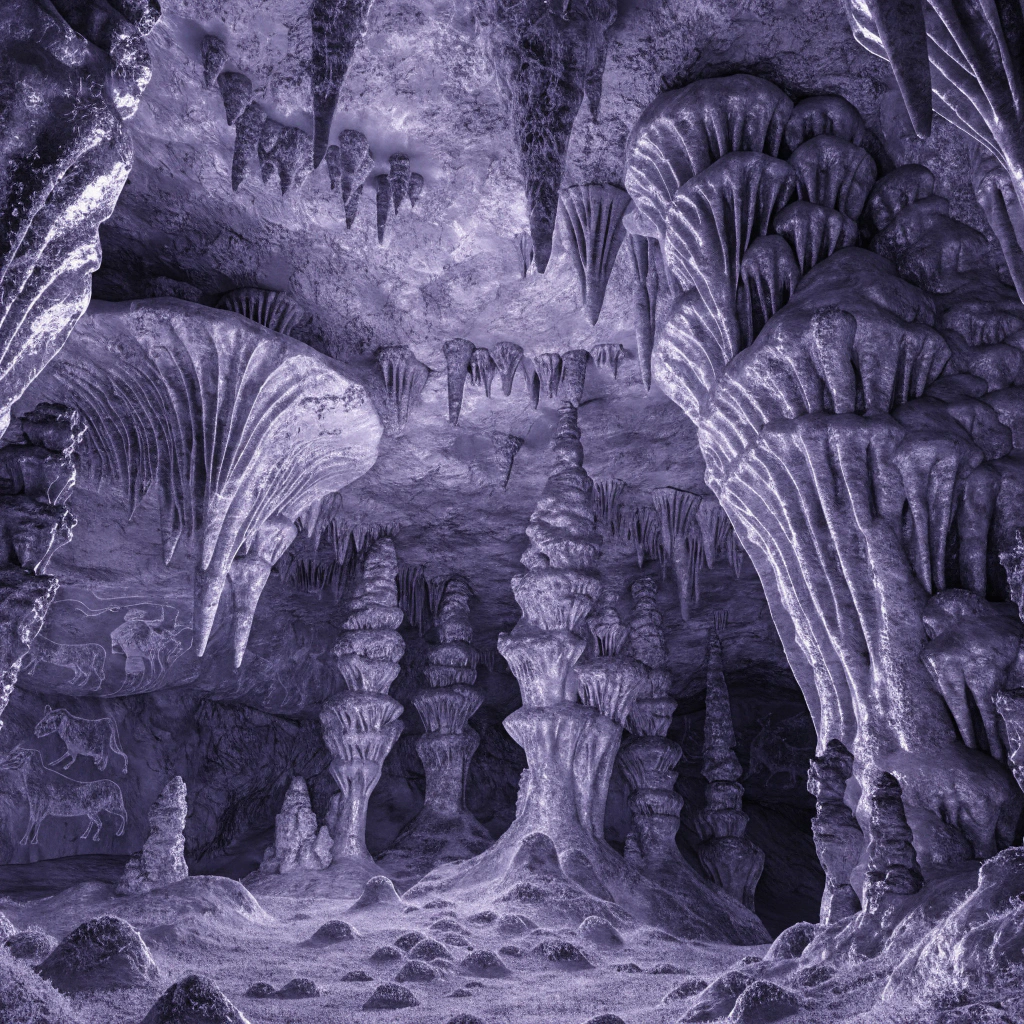
The Famous Caves of Lascaux
There are famous caves in France. They are the Lascaux Caves. Four boys find the caves in 1940. They see many old paintings on the walls.
The paintings are very old. They are about 17,000 years old. There are many animals in the pictures. You can see big horses, deer, and bulls. The colors are very beautiful.
The caves are important for history. They show us life from a long time ago. Many people visit the area today. It is a special place.
व्याकरण स्पॉटलाइट
पैटर्न: Present Simple (to be)
"They are the Lascaux Caves."
We use 'am', 'is', or 'are' to describe people or things. Use 'are' for plural subjects like 'they' or 'the caves'.
पैटर्न: There is / There are
"There are many animals in the pictures."
We use 'there are' to say that plural things exist. It is followed by a plural noun like 'animals'.
अपनी समझ जाँचें
10 सवाल · A1 शुरुआती · 1 मुफ्त प्रीव्यू
इस लेख से आपने जो सीखा उसकी जाँच करें। सभी सवालों के जवाब दें और XP कमाएँ!
Where are the Lascaux Caves?
क्या आप क्विज़ समाप्त करना चाहते हैं?
9 और सवाल आपका इंतज़ार कर रहे हैं। पूरा क्विज़ अनलॉक करने और XP कमाने के लिए मुफ्त साइन अप करें!
मुफ़्त साइन अप करोपहले से अकाउंट है? साइन इन करो
बहुत बढ़िया!
अभ्यास जारी रखें!
पहले से पूर्ण — कोई अतिरिक्त XP नहीं
XP कमाने के लिए साइन अप करोसवालों का विवरण
Where are the Lascaux Caves?
आपका जवाब:
सही जवाब: In France
The paintings are about 100 years old.
आपका जवाब:
सही जवाब: गलत
What does 'history' mean?
आपका जवाब:
सही जवाब: The study of the past
Four _____ find the caves in 1940.
आपका जवाब:
सही जवाब: boys
The Secret Paintings of Lascaux
In 1940, four teenagers and their dog found a secret place in France. It was a cave called Lascaux. Inside, they saw amazing paintings on the walls. These paintings are ancient because they are about 17,000 years old. People lived there a long time ago. They painted large animals like horses and deer. The colors are still beautiful today.
Many people visited the cave after its discovery. However, the air from many visitors started to damage the art. Because of this, the government closed the original cave in 1963. Now, there is a museum called Lascaux IV. It is a perfect copy of the cave. It is safer for the paintings but still very exciting for tourists. Visitors can learn about history and see how people lived in the past. It is more interesting than a normal museum.
व्याकरण स्पॉटलाइट
पैटर्न: Past Simple (Irregular Verbs)
"In 1940, four teenagers and their dog found a secret place in France."
We use the Past Simple to talk about finished actions in the past. Irregular verbs like 'find' do not end in -ed; instead, they change their form to 'found'.
पैटर्न: Comparatives with 'more'
"It is more interesting than a normal museum."
To compare two things using long adjectives (3+ syllables), we use 'more' + adjective + 'than'. This shows one thing has more of a quality than another.
अपनी समझ जाँचें
11 सवाल · A2 बिगिनर · 1 मुफ्त प्रीव्यू
इस लेख से आपने जो सीखा उसकी जाँच करें। सभी सवालों के जवाब दें और XP कमाएँ!
Who discovered the Lascaux cave?
क्या आप क्विज़ समाप्त करना चाहते हैं?
10 और सवाल आपका इंतज़ार कर रहे हैं। पूरा क्विज़ अनलॉक करने और XP कमाने के लिए मुफ्त साइन अप करें!
मुफ़्त साइन अप करोपहले से अकाउंट है? साइन इन करो
बहुत बढ़िया!
अभ्यास जारी रखें!
पहले से पूर्ण — कोई अतिरिक्त XP नहीं
XP कमाने के लिए साइन अप करोसवालों का विवरण
Who discovered the Lascaux cave?
आपका जवाब:
सही जवाब: Four teenagers and a dog
The paintings in the cave are 17,000 years old.
आपका जवाब:
सही जवाब: सही
What does 'ancient' mean?
आपका जवाब:
सही जवाब: Very old
The government _____ the original cave in 1963.
आपका जवाब:
सही जवाब: closed
Why did the government close the original cave?
आपका जवाब:
सही जवाब: Because visitors were damaging the art
The Hidden Wonders of the Lascaux Caves
In 1940, a group of four teenagers and their dog made an incredible discovery in the Dordogne region of France. While they were exploring the woods, they found the entrance to the Lascaux Caves. These caves have become one of the most famous archaeological sites in the world because they contain nearly 2,000 ancient paintings.
The artwork, which was created approximately 17,000 years ago, shows various animals that lived during the Ice Age. Visitors can see beautiful images of horses, stags, and bison. These paintings were made by early humans who used natural minerals to create different colors. The most impressive area is known as the "Great Hall of the Bulls," where massive animals are painted across the ceiling.
Since their discovery, the caves have faced many challenges. After World War II, the site was opened to the public. However, it was soon discovered that the breath of thousands of visitors was damaging the ancient art. To protect the paintings, the original caves were closed in 1963. Since then, scientists have worked hard to preserve this fragile environment.
Today, a perfect replica called Lascaux II has been built nearby. This allows tourists to experience the magic of the caves without causing any harm to the original site. The Lascaux Caves are important because they connect us to our distant ancestors and show that humans have always had a passion for art and storytelling.
व्याकरण स्पॉटलाइट
पैटर्न: Relative Clauses
"The artwork, which was created approximately 17,000 years ago, shows various animals."
We use 'which' to add more information about an object or idea. In this sentence, the clause provides extra details about the artwork without starting a new sentence.
पैटर्न: Passive Voice
"The original caves were closed in 1963."
The passive voice is used when the action is more important than who did it. It is formed using the verb 'to be' and the past participle of the main verb.
अपनी समझ जाँचें
11 सवाल · B1 मध्यम · 1 मुफ्त प्रीव्यू
इस लेख से आपने जो सीखा उसकी जाँच करें। सभी सवालों के जवाब दें और XP कमाएँ!
Who originally found the Lascaux Caves in 1940?
क्या आप क्विज़ समाप्त करना चाहते हैं?
10 और सवाल आपका इंतज़ार कर रहे हैं। पूरा क्विज़ अनलॉक करने और XP कमाने के लिए मुफ्त साइन अप करें!
मुफ़्त साइन अप करोपहले से अकाउंट है? साइन इन करो
बहुत बढ़िया!
अभ्यास जारी रखें!
पहले से पूर्ण — कोई अतिरिक्त XP नहीं
XP कमाने के लिए साइन अप करोसवालों का विवरण
Who originally found the Lascaux Caves in 1940?
आपका जवाब:
सही जवाब: Four teenagers and their dog
The caves were opened to the public immediately after they were discovered.
आपका जवाब:
सही जवाब: गलत
What does 'preserve' mean?
आपका जवाब:
सही जवाब: To keep something in good condition
Lascaux II is a perfect _____ of the original cave.
आपका जवाब:
सही जवाब: replica
Why were the original caves closed to the public?
आपका जवाब:
सही जवाब: The breath of visitors was damaging the art
The Echoes of Prehistory: Unveiling the Secrets of the Lascaux Caves
Deep within the Vézère Valley in the Dordogne region of France lies a site that serves as a profound bridge between modern humanity and our most distant ancestors: the Lascaux Caves. Discovered accidentally by four teenagers and their dog in 1940, these caves contain an extraordinary collection of Upper Paleolithic art, which is estimated to be approximately 17,000 years old. The site features nearly 2,000 figures, primarily representing large animals that roamed the European landscape during the Ice Age, such as stags, bison, and the iconic 'Great Hall of the Bulls'.
The artistic sophistication found within Lascaux is truly remarkable. The prehistoric artists utilized natural earth pigments to create vibrant reds, yellows, and blacks. They meticulously applied these colors to the limestone walls, often using the natural contours of the rock to give their subjects a three-dimensional appearance. This suggests a high level of cognitive development and a deep connection to the natural world. Scholars argue that these paintings were not merely decorative but likely held significant ritualistic or spiritual importance for the community.
However, the subsequent history of the cave highlights the challenges of heritage preservation. After being opened to the public in 1948, the cave was visited by thousands of people daily. The carbon dioxide produced by their breath, combined with changes in humidity, began to damage the ancient paintings by encouraging the growth of lichen and crystals. Consequently, the French authorities made the difficult decision to close the cave to the public in 1963 to prevent further deterioration.
To allow people to experience this wonder without harming the original site, several meticulously crafted replicas have been constructed nearby. Lascaux IV, the most recent iteration, offers an immersive digital and physical experience that replicates the original cave's environment with stunning accuracy. This ensures that while the original site is protected for future generations, the cultural significance of the art remains accessible. Ultimately, Lascaux serves as a testament to the enduring human desire for expression. By studying these ancient images, we gain insight into the minds of those who lived millennia ago, reminding us that the impulse to create is a fundamental part of our identity.
व्याकरण स्पॉटलाइट
पैटर्न: Reduced Relative Clauses
"Discovered accidentally by four teenagers and their dog in 1940, these caves contain an extraordinary collection..."
This is a reduced relative clause using a past participle ('Discovered'). It functions like an adjective to provide background information about the subject without needing 'which were'.
पैटर्न: Present Perfect Passive
"several meticulously crafted replicas have been constructed nearby."
The present perfect passive (have/has + been + past participle) is used here to focus on the completed action and its present result rather than who built the replicas.
पैटर्न: Modal Verbs for Speculation
"these paintings were not merely decorative but likely held significant ritualistic or spiritual importance."
The word 'likely' combined with the past tense functions as a way to express a high degree of probability about past events where absolute proof is unavailable.
अपनी समझ जाँचें
11 सवाल · B2 अपर इंटरमीडिएट · 1 मुफ्त प्रीव्यू
इस लेख से आपने जो सीखा उसकी जाँच करें। सभी सवालों के जवाब दें और XP कमाएँ!
What led to the discovery of the Lascaux Caves in 1940?
क्या आप क्विज़ समाप्त करना चाहते हैं?
10 और सवाल आपका इंतज़ार कर रहे हैं। पूरा क्विज़ अनलॉक करने और XP कमाने के लिए मुफ्त साइन अप करें!
मुफ़्त साइन अप करोपहले से अकाउंट है? साइन इन करो
बहुत बढ़िया!
अभ्यास जारी रखें!
पहले से पूर्ण — कोई अतिरिक्त XP नहीं
XP कमाने के लिए साइन अप करोसवालों का विवरण
What led to the discovery of the Lascaux Caves in 1940?
आपका जवाब:
सही जवाब: An accidental find by teenagers and a dog
The paintings in the Lascaux Caves are approximately 1,700 years old.
आपका जवाब:
सही जवाब: गलत
What does 'meticulously' mean in the context of the article?
आपका जवाब:
सही जवाब: With extreme care and attention to detail
The cave was closed to the public because human presence was damaging the art.
आपका जवाब:
सही जवाब: सही
To protect the original site, several _____ were built for the public to visit.
आपका जवाब:
सही जवाब: replicas
लास्को गुफाएँ: प्रागैतिहासिक कला का एक अद्भुत अध्याय
फ़्रांस के डोरडॉन क्षेत्र में स्थित वेज़ेर घाटी की गहराई में एक ऐसा स्थल छिपा है जो आधुनिक मानवता को उसके सुदूरतम पूर्वजों से जोड़ता है: लास्को गुफाएँ। यह बात अविश्वसनीय लग सकती है कि यह असाधारण पुरापाषाणकालीन कला का संग्रह, जिसकी अनुमानित आयु लगभग 17,000 वर्ष है, 1940 में चार किशोरों और उनके कुत्ते द्वारा आकस्मिक रूप से खोजा गया था। लास्को की दीवारों पर लगभग 2,000 आकृतियाँ उकेरी गई हैं, जिनमें मुख्य रूप से बड़े जानवर शामिल हैं जो हिमयुग के दौरान यूरोपीय परिदृश्य में विचरण करते थे, जैसे हिरण, बाइसन, आइबेक्स और प्रसिद्ध 'ग्रेट ब्लैक बुल'।
जो बात इन गुफाओं को अद्वितीय बनाती है, वह केवल उनकी प्राचीनता ही नहीं, बल्कि उनमें निहित कला की जटिलता और सौंदर्य भी है। इन चित्रों में रंगों का अद्भुत प्रयोग, गति का सजीव चित्रण और जानवरों के शरीर रचना विज्ञान की गहरी समझ देखने को मिलती है। यह स्पष्ट है कि इन कलाकारों के पास न केवल तकनीकी कौशल था, बल्कि एक परिष्कृत सौंदर्यबोध भी था। ये चित्र केवल शिकार के दृश्यों का दस्तावेज़ीकरण मात्र नहीं हैं, बल्कि ये उस समय के मनुष्यों के आध्यात्मिक और सांस्कृतिक जीवन की झलक भी प्रस्तुत करते हैं। कई विद्वानों का मानना है कि इन चित्रों का संबंध अनुष्ठानों, टोना-टोटका या शिक्षा से रहा होगा, जो उस समय के समाज के लिए अत्यंत महत्वपूर्ण थे।
लास्को गुफाओं की खोज ने पुरातात्विक समुदाय में एक हलचल पैदा कर दी थी और इसने प्रागैतिहासिक कला के अध्ययन में क्रांति ला दी। इन गुफाओं का महत्त्व इस बात में निहित है कि वे हमें हमारे पूर्वजों के सोचने के तरीके, उनकी दुनिया को देखने के नज़रिए और उनके रचनात्मक आवेगों को समझने का एक दुर्लभ अवसर प्रदान करती हैं। इन चित्रों के माध्यम से, हम उस दूरस्थ अतीत से जुड़ पाते हैं जब मानव जाति ने पहली बार अपनी पहचान को पत्थरों पर उकेरना सीखा था।
हालांकि, इन अमूल्य कलाकृतियों के सामने एक बड़ी चुनौती उनके संरक्षण की रही है। गुफाओं की खोज के बाद, पर्यटकों की बढ़ती संख्या और उनके श्वसन से निकली कार्बन डाइऑक्साइड ने चित्रों को नुकसान पहुँचाना शुरू कर दिया था। इस गंभीर खतरे को भाँपते हुए, 1963 में मूल लास्को गुफा को जनता के लिए बंद कर दिया गया। इसके बाद, लास्को II, लास्को III और लास्को IV जैसे प्रतिकृतियों का निर्माण किया गया ताकि आगंतुक मूल कला को नुकसान पहुँचाए बिना उसकी भव्यता का अनुभव कर सकें। यह निर्णय अत्यंत आवश्यक था, क्योंकि मूल कलाकृतियों का संरक्षण किसी भी कीमत पर प्राथमिकता थी।
आज, लास्को गुफाएँ यूनेस्को विश्व धरोहर स्थल का हिस्सा हैं और प्रागैतिहासिक कला के अध्ययन के लिए एक महत्वपूर्ण केंद्र बनी हुई हैं। ये गुफाएँ हमें न केवल हमारे कलात्मक अतीत की याद दिलाती हैं, बल्कि यह भी दर्शाती हैं कि मानव रचनात्मकता की जड़ें कितनी गहरी और प्राचीन हैं। इन गूढ़ चित्रों का अध्ययन करके, हम अपनी साझा मानवीय विरासत के बारे में और अधिक सीखते हैं और यह समझते हैं कि कला हमेशा से मानव अस्तित्व का एक अभिन्न अंग रही है। लास्को, अपने मौन में भी, हमें उस आदिम शक्ति की कहानी कहता है जिसने हमें कला और संस्कृति की ओर प्रेरित किया।
व्याकरण स्पॉटलाइट
पैटर्न: क्रिया का नामकरण (Nominalisation of Verbs)
"जो बात इन गुफाओं को अद्वितीय बनाती है, वह केवल उनकी प्राचीनता ही नहीं, बल्कि उनमें निहित कला की जटिलता और सौंदर्य भी है।"
इस संरचना में, क्रिया को एक संज्ञा के रूप में प्रयोग किया जाता है (जैसे 'बनाना' से 'बनाती है' और फिर 'बात' के साथ जोड़कर)। यह वाक्य को अधिक औपचारिक और संक्षिप्त बनाता है, जिससे विचारों को प्रभावी ढंग से व्यक्त किया जा सके। यह अक्सर 'का होना', 'का करना' या 'जो बात... वह...' जैसी संरचनाओं में देखा जाता है।
पैटर्न: विपरीत क्रम (Inversion for Emphasis)
"यह बात अविश्वसनीय लग सकती है कि यह असाधारण पुरापाषाणकालीन कला का संग्रह, जिसकी अनुमानित आयु लगभग 17,000 वर्ष है, 1940 में चार किशोरों और उनके कुत्ते द्वारा आकस्मिक रूप से खोजा गया था।"
सामान्य वाक्य संरचना (कर्ता-कर्म-क्रिया) से हटकर, क्रिया या महत्वपूर्ण जानकारी को वाक्य के आरंभ में या असामान्य स्थिति में रखने को विपरीत क्रम कहते हैं। यहाँ 'यह बात अविश्वसनीय लग सकती है कि...' का उपयोग करके मुख्य विचार पर जोर दिया गया है, जिससे वाक्य अधिक प्रभावशाली बनता है।
पैटर्न: संबंधवाचक सर्वनाम का जटिल प्रयोग (Complex Relative Pronoun Usage)
"इन चित्रों के माध्यम से, हम उस दूरस्थ अतीत से जुड़ पाते हैं जब मानव जाति ने पहली बार अपनी पहचान को पत्थरों पर उकेरना सीखा था।"
यह पैटर्न 'जो', 'जिस', 'जब', 'जहां' जैसे संबंधवाचक सर्वनामों का उपयोग करके जटिल उपवाक्य बनाता है, जो मुख्य वाक्य में एक संज्ञा या अवधारणा का विस्तार करते हैं। यह जानकारी को अधिक सटीक और विस्तृत तरीके से प्रस्तुत करने में मदद करता है, जिससे वाक्य की गहराई बढ़ती है।
अपनी समझ जाँचें
12 सवाल · C1 उन्नत · 1 मुफ्त प्रीव्यू
इस लेख से आपने जो सीखा उसकी जाँच करें। सभी सवालों के जवाब दें और XP कमाएँ!
लास्को गुफाएँ कहाँ स्थित हैं?
क्या आप क्विज़ समाप्त करना चाहते हैं?
11 और सवाल आपका इंतज़ार कर रहे हैं। पूरा क्विज़ अनलॉक करने और XP कमाने के लिए मुफ्त साइन अप करें!
मुफ़्त साइन अप करोपहले से अकाउंट है? साइन इन करो
बहुत बढ़िया!
अभ्यास जारी रखें!
पहले से पूर्ण — कोई अतिरिक्त XP नहीं
XP कमाने के लिए साइन अप करोसवालों का विवरण
लास्को गुफाएँ कहाँ स्थित हैं?
आपका जवाब:
सही जवाब: फ़्रांस में
लास्को गुफाओं की खोज जानबूझकर एक पुरातात्विक अभियान के दौरान हुई थी।
आपका जवाब:
सही जवाब: गलत
शब्द 'अध्याय' का अर्थ क्या है?
आपका जवाब:
सही जवाब: किसी पुस्तक या इतिहास का खंड
लास्को गुफाओं में मुख्य रूप से बड़े _____ के चित्र उकेरे गए हैं।
आपका जवाब:
सही जवाब: जानवरों
मूल लास्को गुफा को जनता के लिए कब बंद कर दिया गया था?
आपका जवाब:
सही जवाब: 1963 में
लास्को के चित्र केवल शिकार के दृश्यों का दस्तावेज़ीकरण मात्र हैं।
आपका जवाब:
सही जवाब: गलत
The Paleolithic Palimpsest: Re-evaluating the Ontological Significance of Lascaux
Should one contemplate the sheer temporal chasm separating modern humanity from the Upper Paleolithic, the polychromatic splendor of Lascaux becomes not merely an archaeological curiosity, but a profound ontological mirror. Deep within the subterranean recesses of the Vézère Valley, the serendipitous discovery of these caves in 1940 by four adolescents heralded a paradigm shift in our understanding of prehistoric cognitive complexity. Often colloquially termed the 'Sistine Chapel of Prehistory,' the site presents a sophisticated juxtaposition of zoomorphic imagery and abstract symbols, challenging the long-held assumption that early humans possessed only vestigial artistic sensibilities. The figures, ranging from the iconic 'Great Hall of the Bulls' to the enigmatic 'Shaft of the Dead Man,' are thought to have been executed with a meticulous attention to anatomical proportion and perspective that belies their seventeen-millennium vintage.
From an aesthetic standpoint, the mastery of mineral pigments—ochre, hematite, and manganese—demonstrates a sophisticated grasp of chemistry and application. The artists utilized the natural contours of the limestone walls to imbue their subjects with a sense of three-dimensional vitality, a technique that suggests a deliberate attempt to capture the essence of the living world. It is conjectured that these chambers served as the zenith of ritualistic life, where the boundaries between the mundane and the spiritual were porous. However, academic hedging is necessary here; while some scholars posit that the paintings represent hunting magic or astronomical maps, others argue that we may never fully decode the symbolic lexicon of a culture so distantly removed from our own. The evocative nature of the art lies precisely in its resistance to singular interpretation, inviting a plurality of scholarly perspectives.
Regrettably, the very act of revealing these masterpieces to the world precipitated their deterioration. Following the cave's opening to the public in 1948, the influx of carbon dioxide and humidity from thousands of visitors triggered the 'Green Sickness'—a proliferation of algae and mold that threatened to erase the polychromatic legacy. Consequently, it was imperative that the site be safeguarded from further anthropogenic damage, leading to its permanent closure to the public in 1963. This conservation crisis necessitated the creation of Lascaux II and IV, meticulous facsimiles that allow for public appreciation without compromising the integrity of the original subterranean sanctuary. These replicas, while technologically impressive, raise further questions regarding the ephemeral nature of heritage and the ethics of simulation.
Ultimately, Lascaux stands as a testament to the enduring human impulse to leave a mark upon the world. The juxtaposition of the ancient and the modern within the Dordogne region serves as a poignant reminder of our shared ancestry. As we continue to analyze these vestigial remains through the lens of modern technology, we must remain humble in the face of such antiquity. The ontological weight of Lascaux reminds us that while civilizations are ephemeral, the quest for meaning through creative expression is a constant in the human narrative. It is paramount that the site be safeguarded, not just as a relic of the past, but as a vital dialogue with our own origins, ensuring that the voices of the Paleolithic are not silenced by the passage of time.
व्याकरण स्पॉटलाइट
पैटर्न: Inverted Conditional
"Should one contemplate the sheer temporal chasm separating modern humanity from the Upper Paleolithic..."
This is a formal alternative to 'If one should contemplate'. Inverting the subject and 'should' creates a sophisticated, scholarly tone common in C2 academic writing.
पैटर्न: The Subjunctive Mood
"Consequently, it was imperative that the site be safeguarded from further anthropogenic damage..."
The subjunctive 'be safeguarded' follows the adjective 'imperative'. It is used to express necessity, urgency, or hypothetical situations in formal English.
पैटर्न: Perfect Passive Infinitive
"The figures... are thought to have been executed with a meticulous attention to anatomical proportion..."
This structure (to have been + past participle) is used to report a past action that is believed or claimed by people in the present, adding a layer of academic hedging.
अपनी समझ जाँचें
12 सवाल · C2 महारत · 1 मुफ्त प्रीव्यू
इस लेख से आपने जो सीखा उसकी जाँच करें। सभी सवालों के जवाब दें और XP कमाएँ!
What primary factor led to the permanent closure of the original Lascaux cave to the public?
क्या आप क्विज़ समाप्त करना चाहते हैं?
11 और सवाल आपका इंतज़ार कर रहे हैं। पूरा क्विज़ अनलॉक करने और XP कमाने के लिए मुफ्त साइन अप करें!
मुफ़्त साइन अप करोपहले से अकाउंट है? साइन इन करो
बहुत बढ़िया!
अभ्यास जारी रखें!
पहले से पूर्ण — कोई अतिरिक्त XP नहीं
XP कमाने के लिए साइन अप करोसवालों का विवरण
What primary factor led to the permanent closure of the original Lascaux cave to the public?
आपका जवाब:
सही जवाब: Damage caused by the breathing and presence of visitors
The author suggests that the symbolic meaning of the Lascaux paintings is now fully understood by modern scholars.
आपका जवाब:
सही जवाब: गलत
Which word best describes something that is short-lived or transitory?
आपका जवाब:
सही जवाब: Ephemeral
The discovery of the caves was ______, having been found by chance by four teenagers and their dog.
आपका जवाब:
सही जवाब: serendipitous
How did the artists use the natural cave environment to enhance their work?
आपका जवाब:
सही जवाब: They utilized natural wall contours to create a 3D effect.
Lascaux II and IV are modern replicas designed to preserve the original site while allowing public access.
आपका जवाब:
सही जवाब: सही

