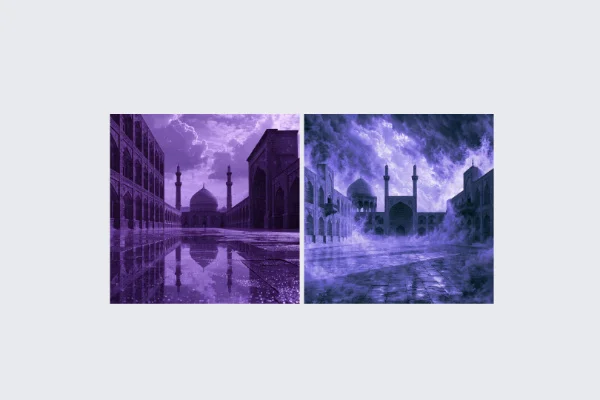
गगाकु: जापान का पुराना संगीत
गगाकु जापान का बहुत पुराना संगीत है। यह जापान की एक खास कला है। यह संगीत हजार साल से भी ज्यादा पुराना है। यह संगीत चीन, कोरिया और भारत से जापान आया। जापान में यह संगीत शाही महल में बजाया जाता था। समय के साथ यह संगीत बदल गया। जापान के लोगों ने इसे और सुंदर बनाया। आज भी जापान में लोग गगाकु संगीत देखते और सुनते हैं। यह जापान की संस्कृति का एक महत्वपूर्ण हिस्सा है।
व्याकरण स्पॉटलाइट
पैटर्न: 'का / की / के' (संबंध कारक)
"जापान का बहुत पुराना संगीत है।"
यह शब्द चीज़ों के बीच संबंध बताता है। यह 'of' या 's' जैसा है। 'का' पुरुषवाचक शब्दों के लिए, 'की' स्त्रीवाचक शब्दों के लिए और 'के' बहुवचन या आदरसूचक शब्दों के लिए आता है।
पैटर्न: 'है' / 'था' (होना क्रिया)
"यह जापान का बहुत पुराना संगीत है। और शाही महल में बजाया जाता था।"
'है' वर्तमान काल में 'होना' क्रिया का रूप है। यह बताता है कि कुछ अभी है। 'था' भूतकाल में 'होना' क्रिया का रूप है। यह बताता है कि कुछ पहले था।
अपनी समझ जाँचें
10 सवाल · A1 शुरुआती · 1 मुफ्त प्रीव्यू
इस लेख से आपने जो सीखा उसकी जाँच करें। सभी सवालों के जवाब दें और XP कमाएँ!
गगाकु क्या है?
क्या आप क्विज़ समाप्त करना चाहते हैं?
9 और सवाल आपका इंतज़ार कर रहे हैं। पूरा क्विज़ अनलॉक करने और XP कमाने के लिए मुफ्त साइन अप करें!
मुफ़्त साइन अप करोपहले से अकाउंट है? साइन इन करो
बहुत बढ़िया!
अभ्यास जारी रखें!
पहले से पूर्ण — कोई अतिरिक्त XP नहीं
XP कमाने के लिए साइन अप करोसवालों का विवरण
गगाकु क्या है?
आपका जवाब:
सही जवाब: जापान का संगीत
गगाकु नया संगीत है।
आपका जवाब:
सही जवाब: गलत
'महल' का मतलब क्या है?
आपका जवाब:
सही जवाब: राजा या रानी का बड़ा घर
गगाकु जापान का ______ संगीत है।
आपका जवाब:
सही जवाब: पुराना
Gagaku: The Ancient Music of Japan
Gagaku is a very old type of music and dance from Japan. It is the official music of the Imperial Court. For more than one thousand years, musicians played this music for the Emperor and his family. It is one of the oldest traditions in the world.
The history of Gagaku is very interesting. It started a long time ago, between the 5th and 9th centuries. At that time, people brought different musical styles from China, Korea, and India to Japan. Later, Japanese artists changed these styles to make a new, elegant art form. Today, Gagaku is uniquely Japanese and very special to the culture.
The music is slower than modern pop music, but it is very relaxing to hear. Musicians wear beautiful, colorful clothes and masks while they perform. They use traditional instruments like wooden flutes and large drums. Gagaku is important because it shows the long history of Japan. Many people still enjoy watching these beautiful performances in Kyoto and Tokyo today.
व्याकरण स्पॉटलाइट
पैटर्न: Comparatives (Adjective + er + than)
"The music is slower than modern pop music, but it is very relaxing to hear."
We use the comparative form to compare two things. For short adjectives like 'slow', we add '-er' and use the word 'than' after it.
पैटर्न: Past Simple
"For more than one thousand years, musicians played this music for the Emperor."
The past simple describes actions that finished in the past. For regular verbs, we usually add '-ed' to the end of the base verb.
अपनी समझ जाँचें
11 सवाल · A2 बिगिनर · 1 मुफ्त प्रीव्यू
इस लेख से आपने जो सीखा उसकी जाँच करें। सभी सवालों के जवाब दें और XP कमाएँ!
Who did musicians originally play Gagaku for?
क्या आप क्विज़ समाप्त करना चाहते हैं?
10 और सवाल आपका इंतज़ार कर रहे हैं। पूरा क्विज़ अनलॉक करने और XP कमाने के लिए मुफ्त साइन अप करें!
मुफ़्त साइन अप करोपहले से अकाउंट है? साइन इन करो
बहुत बढ़िया!
अभ्यास जारी रखें!
पहले से पूर्ण — कोई अतिरिक्त XP नहीं
XP कमाने के लिए साइन अप करोसवालों का विवरण
Who did musicians originally play Gagaku for?
आपका जवाब:
सही जवाब: The Emperor and his family
Gagaku is a new type of music created recently.
आपका जवाब:
सही जवाब: गलत
What does 'modern' mean?
आपका जवाब:
सही जवाब: Relating to the present time
Gagaku is _____ than modern pop music.
आपका जवाब:
सही जवाब: slower
Where did some of the musical styles come from originally?
आपका जवाब:
सही जवाब: China, Korea, and India
Gagaku: The Ancient Sound of Japan
Gagaku is known as the oldest traditional performing art in Japan. For more than a millennium, it has been performed as the official music of the Japanese Imperial Court. This ancient style of music and dance is very important to Japanese culture because it connects the modern world to the past.
The origins of Gagaku can be found in mainland Asia. Between the 5th and 9th centuries, different musical styles and dances were introduced to Japan from countries like China, Korea, and India. Over time, these foreign influences were carefully refined by Japanese artists until they became uniquely Japanese. They created a sophisticated art form that is still admired today for its elegance and beauty.
There are three main parts of Gagaku: vocal music, dance, and instrumental music. The instruments which are used in these performances are very special and produce unique sounds. For example, the 'sho' is a wind instrument made of seventeen bamboo pipes. It is often said that the sho sounds like the light of the sun or the call of a phoenix. Another instrument is the 'hichiriki,' which has a strong and emotional sound. The musicians wear colorful, traditional costumes that have been decorated with beautiful patterns.
Today, Gagaku is still performed at the Imperial Palace and in important shrines across the country. It has been recognized by UNESCO as an Intangible Cultural Heritage of Humanity. Although the music is very old, many people are attracted to its slow and peaceful rhythm. Many listeners have described the experience as a form of meditation. If you visit Japan, you might have the chance to see a performance that has remained almost unchanged for over a thousand years.
व्याकरण स्पॉटलाइट
पैटर्न: Present Perfect Passive
"For more than a millennium, it has been performed as the official music of the Japanese Imperial Court."
This pattern is used to talk about an action that started in the past and continues to the present, where the focus is on the action rather than the person doing it. It is formed using 'has/have been' + past participle.
पैटर्न: Relative Clauses
"The instruments which are used in these performances are very special and produce unique sounds."
Relative clauses give more information about a noun. In this case, 'which' is used to define the specific instruments being discussed in the sentence.
अपनी समझ जाँचें
11 सवाल · B1 मध्यम · 1 मुफ्त प्रीव्यू
इस लेख से आपने जो सीखा उसकी जाँच करें। सभी सवालों के जवाब दें और XP कमाएँ!
What is the primary role of Gagaku in Japanese history?
क्या आप क्विज़ समाप्त करना चाहते हैं?
10 और सवाल आपका इंतज़ार कर रहे हैं। पूरा क्विज़ अनलॉक करने और XP कमाने के लिए मुफ्त साइन अप करें!
मुफ़्त साइन अप करोपहले से अकाउंट है? साइन इन करो
बहुत बढ़िया!
अभ्यास जारी रखें!
पहले से पूर्ण — कोई अतिरिक्त XP नहीं
XP कमाने के लिए साइन अप करोसवालों का विवरण
What is the primary role of Gagaku in Japanese history?
आपका जवाब:
सही जवाब: It was the official music of the Imperial Court
Gagaku has its origins entirely in Japan with no outside influence.
आपका जवाब:
सही जवाब: गलत
What does 'heritage' mean?
आपका जवाब:
सही जवाब: Traditions and culture from the past
The 'sho' is a _____ instrument made of seventeen bamboo pipes.
आपका जवाब:
सही जवाब: wind
Which organization recognized Gagaku as an Intangible Cultural Heritage?
आपका जवाब:
सही जवाब: UNESCO
Gagaku: The Echoes of Ancient Japan
Gagaku, often described as the 'elegant music' of Japan, stands as a testament to the country's profound ability to absorb and refine foreign cultural elements. Serving as the official music of the Imperial Court for over a millennium, it is widely considered one of the oldest orchestral traditions in the world. Its origins, which can be traced back to the period between the 5th and 9th centuries, reflect a sophisticated fusion of musical styles from mainland Asia. During this era, various melodies and dances were introduced from China, Korea, and India, eventually merging with indigenous Japanese traditions.
Over time, these diverse influences were meticulously refined into a uniquely Japanese aesthetic. By the 9th century, the repertoire was standardized, resulting in the highly structured art form witnessed today. Gagaku is characterized by its ritualistic nature and slow, deliberate movements. The music is performed by an ensemble of wind, string, and percussion instruments, each contributing to a distinctive and haunting resonance. Notable instruments include the 'sho', a mouth organ made of bamboo pipes that symbolizes the light of heaven, and the 'hichiriki', a double-reed pipe known for its piercing, emotional tone.
Furthermore, the preservation of Gagaku has been a matter of significant cultural importance. Despite the modernization of Japan during the Meiji Restoration and the subsequent post-war era, the Imperial Household Agency has continued to maintain this tradition with great care. This dedication led to Gagaku being recognized by UNESCO as an Intangible Cultural Heritage of Humanity in 2009. This global recognition highlights the art form's value not only as a Japanese treasure but also as a vital part of human history.
In contemporary society, Gagaku is still performed at imperial ceremonies and at various shrines across the country. While it remains deeply rooted in tradition, its integration into modern contexts allows audiences to experience a direct link to the past. Consequently, Gagaku serves as more than just entertainment; it is a living bridge between ancient Asian history and modern Japanese identity. The enduring legacy of this sophisticated music continues to captivate listeners, offering a rare glimpse into the spiritual and artistic heart of a bygone era.
व्याकरण स्पॉटलाइट
पैटर्न: Present Participle Clauses
"Serving as the official music of the Imperial Court for over a millennium, it is widely considered one of the oldest orchestral traditions in the world."
The participle clause 'Serving as...' provides background information about the subject. It is used here to explain the status or role of Gagaku while the main clause focuses on its historical significance.
पैटर्न: Non-defining Relative Clauses
"Its origins, which can be traced back to the period between the 5th and 9th centuries, reflect a sophisticated fusion of musical styles."
The relative clause 'which can be traced back...' adds extra information about 'origins'. It is separated by commas because the sentence would still be grammatically complete without it.
पैटर्न: Passive Voice with Present Perfect
"The preservation of Gagaku has been a matter of significant cultural importance."
The passive voice 'has been' focuses on the state of preservation rather than who is preserving it. It emphasizes the ongoing importance of the action from the past into the present.
अपनी समझ जाँचें
11 सवाल · B2 अपर इंटरमीडिएट · 1 मुफ्त प्रीव्यू
इस लेख से आपने जो सीखा उसकी जाँच करें। सभी सवालों के जवाब दें और XP कमाएँ!
Which regions influenced the development of Gagaku?
क्या आप क्विज़ समाप्त करना चाहते हैं?
10 और सवाल आपका इंतज़ार कर रहे हैं। पूरा क्विज़ अनलॉक करने और XP कमाने के लिए मुफ्त साइन अप करें!
मुफ़्त साइन अप करोपहले से अकाउंट है? साइन इन करो
बहुत बढ़िया!
अभ्यास जारी रखें!
पहले से पूर्ण — कोई अतिरिक्त XP नहीं
XP कमाने के लिए साइन अप करोसवालों का विवरण
Which regions influenced the development of Gagaku?
आपका जवाब:
सही जवाब: China, Korea, and India
Gagaku was recognized as an Intangible Cultural Heritage by UNESCO in 2009.
आपका जवाब:
सही जवाब: सही
What does the word 'aesthetic' refer to in the text?
आपका जवाब:
सही जवाब: A set of principles concerned with beauty
Gagaku is a vital part of Japan's cultural _____, passed down through the Imperial Court.
आपका जवाब:
सही जवाब: heritage
According to the article, what does the 'sho' instrument symbolize?
आपका जवाब:
सही जवाब: The light of heaven
Resonating Through the Ages: The Ethereal Paradox of Gagaku
Never has a musical tradition survived with such meticulous preservation as Gagaku, the ancient court music of Japan. For over a millennium, this venerable art form has served as the official soundtrack to the Imperial Court, embodying a continuity that is virtually unparalleled in global musicology. Its origins are a complex tapestry, woven from the musical threads of 5th to 9th-century China, Korea, and India. However, it was the subsequent integration of these diverse continental influences into the Japanese courtly aesthetic that birthed the sophisticated genre witnessed today. In Gagaku, one finds a profound synthesis of foreign elements and indigenous sensibilities, resulting in a soundscape that feels both alien and deeply rooted in the Japanese psyche.
Central to the allure of Gagaku is its unique temporal and spatial philosophy. It is the deliberate pacing and the strategic use of 'Ma'—the void or silence between notes—that defines its haunting beauty. To the uninitiated, the music may initially seem dissonant or even stagnant. Yet, what the listener experiences is not a lack of movement, but rather a different conceptualization of time itself. While Western classical music often emphasizes linear progression and climax, Gagaku prioritizes a circular, meditative state. This atmospheric quality is largely achieved through the interplay of wind instruments, most notably the 'sho', a mouth organ said to mimic the call of a phoenix. The sho's shimmering tone clusters provide a celestial backdrop against which the 'hichiriki'—a double-reed pipe—and the 'ryuteki'—a transverse flute—weave their evocative melodies.
The preservation of Gagaku has been facilitated by the 'Gakubu', the music department of the Imperial Household Agency. Members of this ensemble often belong to families that have served the court for generations, ensuring that the techniques and nuances of the art form are passed down with unerring accuracy. Such is the rigidity of this transmission that modern performances are thought to be identical to those enjoyed by the Heian aristocracy a thousand years ago. This commitment to historical fidelity has led to Gagaku being designated as an Important Intangible Cultural Property and a UNESCO Intangible Cultural Heritage.
Nevertheless, the modern context presents a series of challenges for this ancient practice. Some critics argue that the refusal to evolve has rendered Gagaku a 'living museum'—an anachronism that risks losing its relevance in a rapidly globalizing world. They contend that the ossification of the repertoire prevents the art form from engaging with contemporary artistic discourse. Conversely, proponents of the tradition argue that its value lies precisely in its immutability. In an age characterized by ephemeral trends and frenetic change, Gagaku serves as a vital anchor to the past. It offers a rare opportunity for the manifestation of cosmic order through sound, providing a sanctuary of stillness in a noisy world. Ultimately, the survival of Gagaku depends on a delicate balance: maintaining the integrity of its ancient roots while fostering enough appreciation to ensure it does not fade into obscurity. Whether it remains a static relic or continues to breathe as a spiritual force, Gagaku stands as a testament to the power of cultural endurance.
व्याकरण स्पॉटलाइट
पैटर्न: Inversion with Negative Adverbials
"Never has a musical tradition survived with such meticulous preservation as Gagaku."
When a negative or restrictive adverbial like 'never', 'hardly', or 'seldom' starts a sentence, the auxiliary verb is placed before the subject. This adds emphasis and a formal, dramatic tone typical of C1 level writing.
पैटर्न: Cleft Sentences with 'It'
"It is the deliberate pacing and the strategic use of 'Ma'—the void or silence between notes—that defines its haunting beauty."
Cleft sentences are used to focus on specific information. By using 'It is/was... that...', the writer highlights 'deliberate pacing and Ma' as the primary reason for the beauty of the music.
पैटर्न: Nominalization
"The preservation of Gagaku has been facilitated by the 'Gakubu'..."
Nominalization involves turning verbs (to preserve) into nouns (preservation). This is a hallmark of academic and advanced English, making the text more concise and objective.
अपनी समझ जाँचें
12 सवाल · C1 उन्नत · 1 मुफ्त प्रीव्यू
इस लेख से आपने जो सीखा उसकी जाँच करें। सभी सवालों के जवाब दें और XP कमाएँ!
What is the primary significance of the concept of 'Ma' in Gagaku?
क्या आप क्विज़ समाप्त करना चाहते हैं?
11 और सवाल आपका इंतज़ार कर रहे हैं। पूरा क्विज़ अनलॉक करने और XP कमाने के लिए मुफ्त साइन अप करें!
मुफ़्त साइन अप करोपहले से अकाउंट है? साइन इन करो
बहुत बढ़िया!
अभ्यास जारी रखें!
पहले से पूर्ण — कोई अतिरिक्त XP नहीं
XP कमाने के लिए साइन अप करोसवालों का विवरण
What is the primary significance of the concept of 'Ma' in Gagaku?
आपका जवाब:
सही जवाब: It is the intentional use of space and silence between musical notes.
The Gakubu members are often from families that have served the court for centuries.
आपका जवाब:
सही जवाब: सही
Which word describes something that is out of place in its current time period?
आपका जवाब:
सही जवाब: Anachronism
Critics worry that the art form's _____ prevents it from engaging with modern culture.
आपका जवाब:
सही जवाब: ossification
According to the article, how does Gagaku differ from Western classical music?
आपका जवाब:
सही जवाब: Gagaku prioritizes a circular, meditative state over linear progression.
The sho is a wind instrument meant to sound like a dragon.
आपका जवाब:
सही जवाब: गलत
The Transcendent Resonance of Gagaku: A Synthesis of Imperial Ritual and Continental Heritage
To contemplate Gagaku is to engage with a sonic vestige of an ancient pan-Asian consciousness, a musical tradition that has endured for over a millennium as the quintessential expression of the Japanese Imperial Court. While its origins are ostensibly foreign—tracing a complex provenance back to the 5th and 9th centuries through the Silk Road—Gagaku represents a profound cultural syncretism. It is not merely a relic of antiquity; rather, it is a living, breathing apparatus of state ritual and aestheticism. Seldom has a musical tradition survived with such structural integrity, largely due to the meticulous efforts of the Imperial Household Agency. Had the court not institutionalized its preservation, the ephemeral nuances of its modal systems might have been lost to the entropy of time.
The repertoire of Gagaku is traditionally bifurcated into Togaku, originating from Tang Dynasty China, and Komagaku, which emanated from the Korean peninsula. Yet, to categorize it solely by geographic origin would be to overlook the radical refinement it underwent during the Heian period. It was during this era that the Japanese courtly elite distilled these disparate continental influences into a uniquely Japanese aesthetic, characterized by a primordial slowness and an emphasis on 'Ma'—the pregnant silence between sounds. It is imperative that the practitioner observe this silence, for in Gagaku, the space between notes is as structurally significant as the notes themselves. This esoteric focus on spatiality distinguishes it from the teleological progression often found in Western classical music.
The instrumentation of Gagaku is equally symbolic, functioning as a microcosm of the cosmos. The Sho, a mouth organ consisting of seventeen bamboo pipes, is said to imitate the call of the phoenix, its ethereal cluster chords representing the light of the heavens. Conversely, the Hichiriki, a double-reed oboe, produces a haunting, earthy tone that symbolizes the voices of the people on earth. Bridging these two realms is the Ryuteki, or 'dragon flute,' whose melodies represent the dragons moving through the atmosphere. This tripartite symbolic structure serves to harmonize the celestial and the terrestrial, a core tenet of Shinto and Buddhist thought.
Scholars argue that the hegemony of Western tempered tuning has made the microtonal complexities of Gagaku appear dissonant to the modern ear. However, should one approach the music without preconceived notions of harmony, one discovers a sophisticated system of shifting textures and timbres. The performance is not intended for mass consumption or emotional catharsis in the Romantic sense; it is a ritualistic endeavor, designed to maintain cosmic order. Were an observer to witness a performance of Bugaku—the dance component of Gagaku—they would be struck by the deliberate, highly stylized movements that eschew individual expression in favor of a collective, transcendental anonymity. This erasure of the ego is perhaps the most challenging aspect for the contemporary Western observer to grasp, yet it remains the very soul of the art form's enduring majesty.
व्याकरण स्पॉटलाइट
पैटर्न: Negative Inversion for Emphasis
"Seldom has a musical tradition survived with such structural integrity."
When a negative or restrictive adverb (like 'seldom', 'never', or 'rarely') starts a sentence, the subject and auxiliary verb are inverted to create a more formal or dramatic tone.
पैटर्न: The Subjunctive Mood of Necessity
"It is imperative that the practitioner observe this silence."
After adjectives of urgency or necessity (imperative, essential, vital), the base form of the verb (the subjunctive) is used, regardless of the subject's person or number.
पैटर्न: Inverted Conditionals (Third Conditional)
"Had the court not institutionalized its preservation, the ephemeral nuances of its modal systems might have been lost."
By omitting 'if' and inverting the auxiliary 'had', the sentence achieves a highly formal, academic tone suitable for discussing hypothetical historical outcomes.
अपनी समझ जाँचें
12 सवाल · C2 महारत · 1 मुफ्त प्रीव्यू
इस लेख से आपने जो सीखा उसकी जाँच करें। सभी सवालों के जवाब दें और XP कमाएँ!
What does the author suggest about the geographic origins of Gagaku?
क्या आप क्विज़ समाप्त करना चाहते हैं?
11 और सवाल आपका इंतज़ार कर रहे हैं। पूरा क्विज़ अनलॉक करने और XP कमाने के लिए मुफ्त साइन अप करें!
मुफ़्त साइन अप करोपहले से अकाउंट है? साइन इन करो
बहुत बढ़िया!
अभ्यास जारी रखें!
पहले से पूर्ण — कोई अतिरिक्त XP नहीं
XP कमाने के लिए साइन अप करोसवालों का विवरण
What does the author suggest about the geographic origins of Gagaku?
आपका जवाब:
सही जवाब: Its foreign roots were transformed into a unique Japanese aesthetic.
The concept of 'Ma' refers to the technical speed of the music.
आपका जवाब:
सही जवाब: गलत
Which word best describes a short-lived or fleeting quality?
आपका जवाब:
सही जवाब: Ephemeral
The author notes that the _____ of Western tuning can make Gagaku sound dissonant to modern ears.
आपका जवाब:
सही जवाब: hegemony
According to the text, what is the symbolic role of the Hichiriki?
आपका जवाब:
सही जवाब: It represents the voices of the people on earth.
Bugaku is the dance component associated with Gagaku performance.
आपका जवाब:
सही जवाब: सही

