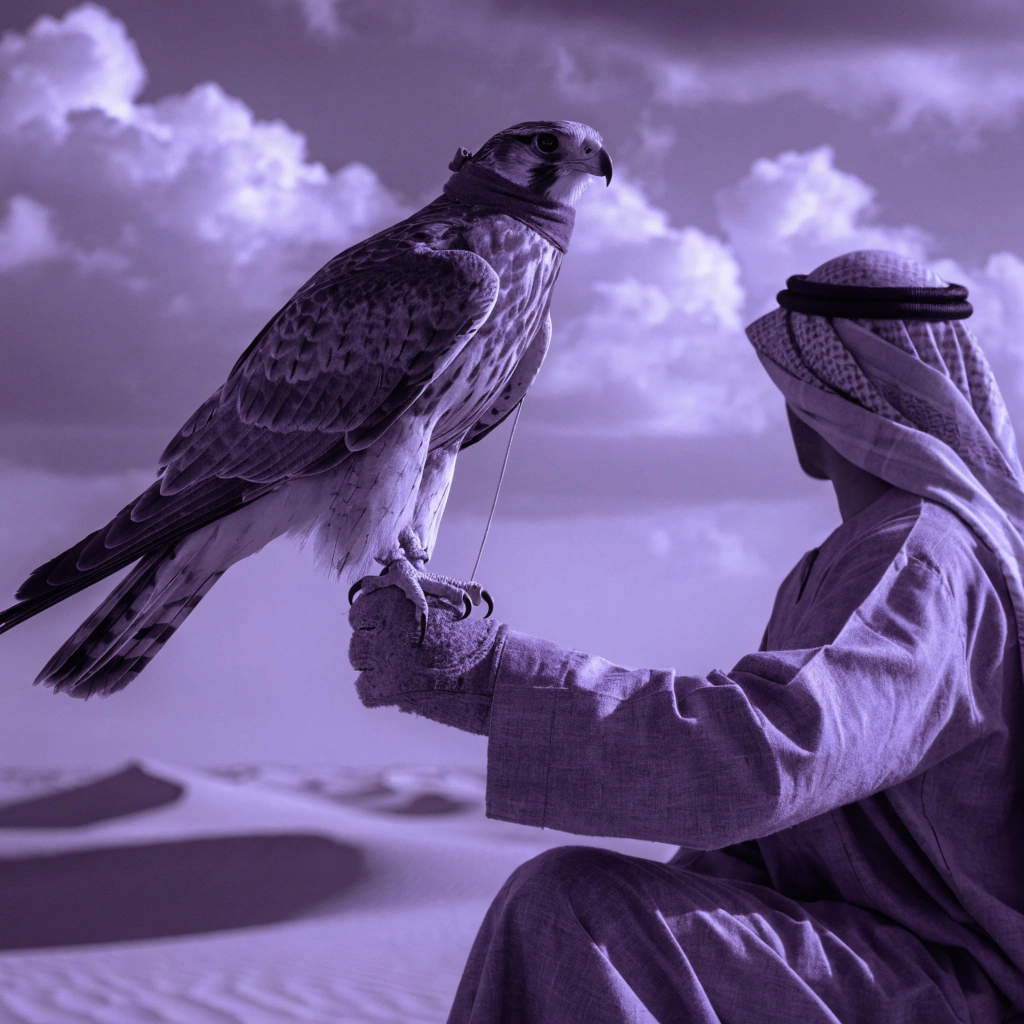
Falcons: The Special Birds of the UAE
Falcons are very important in the United Arab Emirates. People call falconry "Al-Bitar." In the past, Bedouin people lived in the desert. They used falcons to hunt for food. The desert is very hot and dry. The birds are very fast.
Today, falconry is a popular sport. Many people have a falcon. There is a special bond between the person and the bird. They are friends. People go to the desert to fly their birds. It is a beautiful tradition. The UAE protects these birds. They are symbols of the country.
व्याकरण स्पॉटलाइट
पैटर्न: Present Simple with 'Be'
"Falcons are very important in the United Arab Emirates."
We use 'am', 'is', or 'are' to describe facts or states. In this sentence, 'are' links the subject (falcons) to a description (important).
पैटर्न: Present Simple for Habits
"People go to the desert to fly their birds."
We use the base form of the verb (go) for general truths or regular actions. With plural subjects like 'people', we do not add -s to the verb.
अपनी समझ जाँचें
10 सवाल · A1 शुरुआती · 1 मुफ्त प्रीव्यू
इस लेख से आपने जो सीखा उसकी जाँच करें। सभी सवालों के जवाब दें और XP कमाएँ!
Where did Bedouin people live in the past?
क्या आप क्विज़ समाप्त करना चाहते हैं?
9 और सवाल आपका इंतज़ार कर रहे हैं। पूरा क्विज़ अनलॉक करने और XP कमाने के लिए मुफ्त साइन अप करें!
मुफ़्त साइन अप करोपहले से अकाउंट है? साइन इन करो
बहुत बढ़िया!
अभ्यास जारी रखें!
पहले से पूर्ण — कोई अतिरिक्त XP नहीं
XP कमाने के लिए साइन अप करोसवालों का विवरण
Where did Bedouin people live in the past?
आपका जवाब:
सही जवाब: In the desert
Falcons are very slow birds.
आपका जवाब:
सही जवाब: गलत
What does 'hunt' mean?
आपका जवाब:
सही जवाब: To look for and kill animals for food
The birds are very _____.
आपका जवाब:
सही जवाब: fast
संयुक्त अरब अमीरात का शाही खेल: बाज़ पालन
संयुक्त अरब अमीरात में बाज़ पालना एक बहुत पुरानी और खास परंपरा है। इसे 'अल-बितार' के नाम से भी जाना जाता है। सदियों पहले, रेगिस्तान में रहने वाले बेडौइन कबीले बाज़ों का उपयोग शिकार के लिए करते थे। वे बाज़ की मदद से खरगोश और दूसरे छोटे जानवरों को पकड़ते थे। उन दिनों रेगिस्तान में खाना ढूँढना मुश्किल था, इसलिए बाज़ उनके जीवन के लिए बहुत ज़रूरी थे।
बाज़ और उसके मालिक के बीच एक बहुत गहरा रिश्ता होता है। बाज़ बहुत तेज़ उड़ते हैं और उनकी आँखों की रोशनी बहुत तेज़ होती है। आज के समय में, बाज़ पालना केवल शिकार का तरीका नहीं है, बल्कि यह एक बहुत प्रसिद्ध खेल बन गया है। लोग अपने बाज़ों को बहुत प्यार करते हैं और उनका बहुत ध्यान रखते हैं।
यूएई में बाज़ों के लिए खास और बड़े अस्पताल भी बनाए गए हैं। यह खेल अमीराती संस्कृति का एक महत्वपूर्ण हिस्सा है। बाज़ शक्ति और आज़ादी का प्रतीक माना जाता है। यह खेल यहाँ के लोगों को उनके पुराने इतिहास और जड़ों से जोड़ता है।
व्याकरण स्पॉटलाइट
पैटर्न: सामान्य भूतकाल (Simple Past)
"बेडौइन कबीले बाज़ों का उपयोग शिकार के लिए करते थे।"
यह काल बताता है कि कोई काम अतीत में नियमित रूप से होता था। इसमें क्रिया के अंत में 'ता/ते/ती' के साथ 'था/थे/थी' का प्रयोग होता है।
पैटर्न: तुलना के लिए 'से' का प्रयोग (Comparison)
"बाज़ और उसके मालिक के बीच एक बहुत गहरा रिश्ता होता है।"
यहाँ 'से' का प्रयोग तुलना या संबंध की गहराई बताने के लिए किया जा सकता है। लेख में 'से जोड़ता है' का प्रयोग जड़ों के साथ संबंध बताने के लिए हुआ है।
अपनी समझ जाँचें
11 सवाल · A2 बिगिनर · 1 मुफ्त प्रीव्यू
इस लेख से आपने जो सीखा उसकी जाँच करें। सभी सवालों के जवाब दें और XP कमाएँ!
बाज़ पालन को अमीरात में किस नाम से जाना जाता है?
क्या आप क्विज़ समाप्त करना चाहते हैं?
10 और सवाल आपका इंतज़ार कर रहे हैं। पूरा क्विज़ अनलॉक करने और XP कमाने के लिए मुफ्त साइन अप करें!
मुफ़्त साइन अप करोपहले से अकाउंट है? साइन इन करो
बहुत बढ़िया!
अभ्यास जारी रखें!
पहले से पूर्ण — कोई अतिरिक्त XP नहीं
XP कमाने के लिए साइन अप करोसवालों का विवरण
बाज़ पालन को अमीरात में किस नाम से जाना जाता है?
आपका जवाब:
सही जवाब: अल-बितार
पुराने समय में बेडौइन लोग बाज़ का उपयोग केवल खेल के लिए करते थे।
आपका जवाब:
सही जवाब: गलत
'प्रतीक' शब्द का क्या अर्थ है?
आपका जवाब:
सही जवाब: किसी चीज़ का चिह्न या संकेत
बाज़ शक्ति और _____ का प्रतीक माना जाता है।
आपका जवाब:
सही जवाब: आज़ादी
यूएई में बाज़ों के लिए क्या बनाया गया है?
आपका जवाब:
सही जवाब: आधुनिक अस्पताल
अमीराती संस्कृति में बाज़ का शिकार: एक प्राचीन विरासत
संयुक्त अरब अमीरात में बाज़ का शिकार (फ़ैलकनरी) सिर्फ़ एक खेल नहीं है, बल्कि यह अमीराती संस्कृति का एक महत्वपूर्ण हिस्सा है। इसे अरबी में "अल-बितार" भी कहा जाता है। यह रेगिस्तान में जीवन जीने के प्राचीन बेडौइन तरीक़े से गहराई से जुड़ा हुआ है और रेगिस्तानी जीवन की कठोर, लेकिन सुंदर सच्चाई का प्रतीक रहा है। सदियों से, बाज़ ने इस क्षेत्र के लोगों के लिए भोजन प्राप्त करने में मदद की है और उनके अस्तित्व का आधार रहा है।
पहले, अरब प्रायद्वीप के बेडौइन जनजातियों ने अपनी ज़रूरतें पूरी करने के लिए बाज़ का उपयोग खरगोश और हुबारा बस्टर्ड जैसे जानवरों का शिकार करने के लिए किया है, ताकि वे अपने कम भोजन की पूर्ति कर सकें। विशाल और शुष्क रेगिस्तान में, बाज़ की अविश्वसनीय गति और सटीकता भोजन प्राप्त करने के लिए बहुत ज़रूरी थी। बाज़ के बिना, इन जनजातियों के लिए जीवित रहना मुश्किल हो जाता था क्योंकि शिकार करना अत्यंत कठिन था। इसी कारण, बाज़ पालने वाले (फ़ैलकनर) और बाज़ के बीच एक गहरा और अटूट रिश्ता बन गया था। उन्होंने एक-दूसरे पर भरोसा करना सीखा था।
आज भी, बाज़ का शिकार अमीराती पहचान का एक महत्वपूर्ण हिस्सा है। हालांकि अब यह मुख्य रूप से भोजन के लिए नहीं किया जाता, बल्कि एक सांस्कृतिक विरासत और सम्मान के खेल के रूप में देखा जाता है। अमीरात में कई बाज़ प्रशिक्षण केंद्र और अस्पताल स्थापित किए गए हैं, जो इस परंपरा को बनाए रखने में मदद करते हैं। कई अमीराती आज भी अपने बाज़ों के साथ समय बिताना पसंद करते हैं। उन्होंने इस प्राचीन कला को जीवित रखा है और नई पीढ़ियों को भी सिखा रहे हैं ताकि यह परंपरा लुप्त न हो। यह हमें अतीत से जोड़ती है और प्रकृति के साथ हमारे गहरे संबंध की याद दिलाती है। यह सिर्फ़ शिकार नहीं, बल्कि धैर्य, कौशल और सम्मान का प्रतीक है।
व्याकरण स्पॉटलाइट
पैटर्न: कर्मवाच्य (Passive Voice)
"यह मुख्य रूप से भोजन के लिए नहीं किया जाता, बल्कि एक सांस्कृतिक विरासत और सम्मान के खेल के रूप में देखा जाता है।"
यह क्रिया का वह रूप है जिसमें क्रिया का केंद्र कर्ता न होकर कर्म होता है। इसमें 'जाना' क्रिया का प्रयोग मुख्य क्रिया के साथ किया जाता है। इसका उपयोग तब होता है जब कर्ता महत्वपूर्ण न हो या ज्ञात न हो।
पैटर्न: संबंधवाचक सर्वनाम (Relative Pronoun)
"अमीरात में कई बाज़ प्रशिक्षण केंद्र और अस्पताल स्थापित किए गए हैं, जो इस परंपरा को बनाए रखने में मदद करते हैं।"
संबंधवाचक सर्वनाम (जैसे 'जो', 'जिसने') दो वाक्यों या उपवाक्यों को जोड़ते हैं। वे मुख्य वाक्य में किसी संज्ञा या सर्वनाम के बारे में अतिरिक्त जानकारी देते हैं। यह वाक्य को अधिक विस्तृत और स्पष्ट बनाता है।
अपनी समझ जाँचें
11 सवाल · B1 मध्यम · 1 मुफ्त प्रीव्यू
इस लेख से आपने जो सीखा उसकी जाँच करें। सभी सवालों के जवाब दें और XP कमाएँ!
अमीरात में बाज़ का शिकार किस चीज़ का प्रतीक रहा है?
क्या आप क्विज़ समाप्त करना चाहते हैं?
10 और सवाल आपका इंतज़ार कर रहे हैं। पूरा क्विज़ अनलॉक करने और XP कमाने के लिए मुफ्त साइन अप करें!
मुफ़्त साइन अप करोपहले से अकाउंट है? साइन इन करो
बहुत बढ़िया!
अभ्यास जारी रखें!
पहले से पूर्ण — कोई अतिरिक्त XP नहीं
XP कमाने के लिए साइन अप करोसवालों का विवरण
अमीरात में बाज़ का शिकार किस चीज़ का प्रतीक रहा है?
आपका जवाब:
सही जवाब: रेगिस्तानी जीवन की कठोर, लेकिन सुंदर सच्चाई
बेडौइन जनजातियों के लिए बाज़ का शिकार केवल भोजन प्राप्त करने के लिए किया जाता था।
आपका जवाब:
सही जवाब: गलत
'विरासत' का क्या अर्थ है?
आपका जवाब:
सही जवाब: पुरानी पीढ़ियों से मिली हुई परंपराएँ, मूल्य या संपत्ति
विशाल और शुष्क रेगिस्तान में, बाज़ की अविश्वसनीय गति और _______ भोजन प्राप्त करने के लिए बहुत ज़रूरी थी।
आपका जवाब:
सही जवाब: सटीकता
आज अमीरात में बाज़ का शिकार मुख्य रूप से किस रूप में देखा जाता है?
आपका जवाब:
सही जवाब: एक सांस्कृतिक विरासत और सम्मान के खेल के रूप में
The Noble Sport: Falconry in Emirati Culture
In the heart of the United Arab Emirates, falconry—known locally as 'Al-Bitar'—represents far more than a mere recreational pursuit. It is a profound link to a bygone era, reflecting the resilience of the Bedouin people who once navigated the unforgiving Arabian deserts. Historically, these birds of prey were not kept for entertainment but were essential partners in the struggle for survival. For the tribes of the Arabian Peninsula, the falcon’s incredible speed and precision were vital tools used to secure food in a landscape where resources were incredibly scarce.
Centuries ago, the arid landscape offered limited resources, making it difficult for tribes to maintain a consistent diet. By training falcons to hunt hares and the elusive houbara bustard, Bedouins were able to supplement their meager food supplies. This relationship necessitated a deep, mutual trust; a falconer would spend weeks taming a wild bird, often treating it with the same care as a family member. Consequently, the bird became a symbol of patience, courage, and nobility. The bond formed between the handler and the falcon was so strong that it remains a cornerstone of Emirati identity today.
Despite the rapid modernization of the UAE, the tradition of falconry has not been abandoned. Instead, it has evolved into a sophisticated sport that attracts enthusiasts from across the globe. The government has played a pivotal role in ensuring its preservation, establishing institutions such as the Abu Dhabi Falcon Hospital. At this facility, cutting-edge medical technology is utilized to treat these majestic creatures, highlighting the nation's commitment to animal welfare and cultural heritage.
Furthermore, modern falconry incorporates advanced technology to enhance the experience and protect the species. GPS tracking devices are now frequently employed to monitor the birds during flight, while captive breeding programs have been implemented to reduce the pressure on wild populations. These initiatives demonstrate a balance between honoring ancestral customs and embracing contemporary scientific advancements.
Ultimately, falconry serves as a bridge between the past and the present. It allows younger generations to connect with their ancestors' values while fostering a sense of environmental stewardship. As the falcons soar above the golden dunes, they remain a living testament to the UAE’s enduring spirit and its respect for the natural world.
व्याकरण स्पॉटलाइट
पैटर्न: Present Perfect Passive
"the tradition of falconry has not been abandoned."
This is used to show that an action was completed in the past but has relevance to the present, focusing on the tradition rather than who abandoned it. It is formed using 'has/have + been + past participle'.
पैटर्न: Non-defining Relative Clause
"falconry—known locally as 'Al-Bitar'—represents far more than a mere recreational pursuit."
This provides extra information about the subject (falconry) that is not essential to the sentence's basic meaning. It is usually separated by commas or dashes.
पैटर्न: Past Passive Voice
"these birds of prey were not kept for entertainment"
Used to describe historical facts where the focus is on the object (the birds) rather than the subject (the people). Formed with 'was/were + past participle'.
अपनी समझ जाँचें
11 सवाल · B2 अपर इंटरमीडिएट · 1 मुफ्त प्रीव्यू
इस लेख से आपने जो सीखा उसकी जाँच करें। सभी सवालों के जवाब दें और XP कमाएँ!
What was the primary historical reason for falconry in the UAE?
क्या आप क्विज़ समाप्त करना चाहते हैं?
10 और सवाल आपका इंतज़ार कर रहे हैं। पूरा क्विज़ अनलॉक करने और XP कमाने के लिए मुफ्त साइन अप करें!
मुफ़्त साइन अप करोपहले से अकाउंट है? साइन इन करो
बहुत बढ़िया!
अभ्यास जारी रखें!
पहले से पूर्ण — कोई अतिरिक्त XP नहीं
XP कमाने के लिए साइन अप करोसवालों का विवरण
What was the primary historical reason for falconry in the UAE?
आपका जवाब:
सही जवाब: As a method of survival to hunt for food
The Abu Dhabi Falcon Hospital uses modern technology to care for the birds.
आपका जवाब:
सही जवाब: सही
What does 'pivotal' mean in the context of the article?
आपका जवाब:
सही जवाब: Extremely important or crucial
Modern falconers use GPS _____ devices to monitor their birds' flight.
आपका जवाब:
सही जवाब: tracking
According to the text, what does falconry symbolize for the Emirati people?
आपका जवाब:
सही जवाब: Patience, courage, and nobility
Beyond the Hunt: The Socio-Cultural Tapestry of Emirati Falconry
Seldom has a tradition remained so intrinsically linked to the identity of a nation as falconry has to the United Arab Emirates. Far from being a mere pastime, falconry—or Al-Bitar—represents a profound bridge to the ancestral Bedouin way of life, echoing a time when the desert’s arid expanse demanded exceptional survival skills. In the harsh reality of the Arabian Peninsula, the falcon was not a symbol of luxury, but a vital partner in the quest for sustenance. Bedouin tribes relied on these raptors to hunt hares and houbara bustards, supplementing a diet that would otherwise have been meager. The successful domestication of such an indomitable creature required more than just technical acumen; it necessitated a deep, spiritual bond between the falconer and his bird.
It is the symbiotic nature of this relationship that distinguishes Emirati falconry from its Western counterparts. Historically, the Bedouin would capture wild falcons during their autumn migration, train them with immense patience, and release them back into the wild at the end of the hunting season. This cycle of capture and release reflects a sophisticated understanding of ecological balance, ensuring that the wild population remained robust. The falconer’s mastery was not demonstrated through subjugation, but through a mutual trust that defied the bird's predatory instincts. Such was the importance of these birds that they were often treated as members of the family, sharing the warmth of the majlis and the protection of the nomad’s tent.
In the contemporary era, the transformation of the UAE into a global hub has not diminished the prestige of falconry. On the contrary, the sublimation of hunting into a heritage sport has allowed the practice to thrive under modern conservation frameworks. The implementation of the CITES passport system for falcons is a testament to the nation's commitment to ethical wildlife trade. Furthermore, the establishment of specialized hospitals, such as the Abu Dhabi Falcon Hospital, highlights the institutionalization of avian care. These facilities provide world-class medical attention, ensuring that the health of these prized birds is never compromised.
Critical analysis of modern falconry reveals a nuanced tension between tradition and globalization. While high-tech GPS trackers and air-conditioned transport have modernized the sport, the core values of patience, courage, and discipline remains steadfast. The preservation of falconry serves as a cultural anchor, preventing the total erosion of Bedouin heritage in the face of rapid urbanization. It is not merely the act of hunting that matters, but the transmission of values from one generation to the next. For an Emirati, a falcon is a living vestige of a proud past, a reminder that even in a world of skyscrapers, the spirit of the desert endures. Ultimately, the survival of falconry is indicative of a society that refuses to let its progress eclipse its origins.
व्याकरण स्पॉटलाइट
पैटर्न: Negative Inversion
"Seldom has a tradition remained so intrinsically linked to the identity of a nation as falconry has to the United Arab Emirates."
Inversion is used here for emphasis by placing a negative or restrictive adverbial (Seldom) at the beginning of the sentence. This requires the auxiliary verb to come before the subject.
पैटर्न: Cleft Sentence
"It is the symbiotic nature of this relationship that distinguishes Emirati falconry from its Western counterparts."
A cleft sentence is used to focus on a specific part of the information (the symbiotic nature). It follows the structure 'It + is/was + [emphasized part] + that/who...'
पैटर्न: Nominalisation
"The implementation of the CITES passport system for falcons is a testament to the nation's commitment to ethical wildlife trade."
Nominalisation involves turning verbs (implement, commit) into nouns (implementation, commitment). This makes the writing sound more formal, objective, and academic, which is typical of C1 level prose.
अपनी समझ जाँचें
12 सवाल · C1 उन्नत · 1 मुफ्त प्रीव्यू
इस लेख से आपने जो सीखा उसकी जाँच करें। सभी सवालों के जवाब दें और XP कमाएँ!
What was the primary historical function of falconry for the Bedouin tribes?
क्या आप क्विज़ समाप्त करना चाहते हैं?
11 और सवाल आपका इंतज़ार कर रहे हैं। पूरा क्विज़ अनलॉक करने और XP कमाने के लिए मुफ्त साइन अप करें!
मुफ़्त साइन अप करोपहले से अकाउंट है? साइन इन करो
बहुत बढ़िया!
अभ्यास जारी रखें!
पहले से पूर्ण — कोई अतिरिक्त XP नहीं
XP कमाने के लिए साइन अप करोसवालों का विवरण
What was the primary historical function of falconry for the Bedouin tribes?
आपका जवाब:
सही जवाब: A practical method for securing food in the desert
Historically, Bedouin falconers kept their birds for their entire lives without ever releasing them.
आपका जवाब:
सही जवाब: गलत
Which word means 'the ability to make good judgments and quick decisions'?
आपका जवाब:
सही जवाब: Acumen
The falcon is described as an _____ creature, meaning it is impossible to defeat or subdue.
आपका जवाब:
सही जवाब: indomitable
According to the article, how does modern falconry interact with globalization?
आपका जवाब:
सही जवाब: It uses modern technology while maintaining traditional core values.
The Abu Dhabi Falcon Hospital is cited as an example of how avian care has become institutionalized.
आपका जवाब:
सही जवाब: सही
बाज-पालन: अमीराती संस्कृति का एक प्रतिष्ठित अध्याय और जीवन दर्शन
संयुक्त अरब अमीरात की समृद्ध सांस्कृतिक टेपेस्ट्री में, बाज-पालन, जिसे स्थानीय रूप से 'अल-बितार' के नाम से जाना जाता है, मात्र एक खेल या मनोरंजन से कहीं बढ़कर है; यह मरुभूमि के कठोर किंतु मनमोहक यथार्थ के साथ एक गहरा, अटूट संबंध और बेदुई जीवनशैली का जीवंत प्रतीक है। सदियों से, अरब प्रायद्वीप के बेदुई जनजातियों ने अपने अल्पाहार को पूरक करने हेतु मांस के लिए बाज का उपयोग किया, विशेषकर खरगोशों और हूबारा बस्टर्ड जैसे शिकार के लिए। विशाल, शुष्क परिदृश्य में, बाज की अविश्वसनीय गति और सटीकता अस्तित्व के लिए अनिवार्य थी।
इसने बाज-पालक और उसके पक्षी के बीच एक गहन, लगभग आध्यात्मिक बंधन को जन्म दिया, जहाँ विश्वास, धैर्य और पारस्परिक सम्मान सर्वोपरि थे। यह संबंध केवल उपयोगितावादी नहीं था, बल्कि एक साझा अस्तित्व की गहरी समझ पर आधारित था। बाज-पालक को अपने बाज के स्वभाव, उसकी ज़रूरतों और उसकी क्षमताओं की सूक्ष्म समझ होनी चाहिए थी। यह केवल एक पक्षी को प्रशिक्षित करने का कार्य नहीं था; यह एक साथी के साथ एक अदृश्य अनुबंध था, जो दोनों के अस्तित्व को सुनिश्चित करता था।
आज भी, यह परंपरा अमीराती पहचान का एक अभिन्न अंग बनी हुई है। यह केवल एक प्राचीन कला नहीं, बल्कि एक राष्ट्रीय गौरव का विषय है, जो पीढ़ियों से चली आ रही पारंपरिक मूल्यों और कौशल का प्रतिनिधित्व करती है। आधुनिकीकरण की तीव्र गति के बावजूद, बाज-पालन ने अपनी प्रासंगिकता बनाए रखी है। वास्तव में, आधुनिक युग में, इसका महत्व और भी बढ़ गया है, क्योंकि यह प्रकृति के साथ सामंजस्य स्थापित करने और अपनी विरासत को संरक्षित करने की अमीरात की प्रतिबद्धता का प्रतीक है।
बाज-पालन के माध्यम से, युवा पीढ़ी को अपने पूर्वजों के जीवन और उनकी चुनौतियों से परिचित कराया जाता है। उन्हें धैर्य, अनुशासन, सम्मान और प्रकृति के प्रति संवेदनशीलता जैसे गुणों का महत्व सिखाया जाता है। यह एक सांस्कृतिक सेतु का कार्य करता है, जो अतीत को वर्तमान से जोड़ता है और भविष्य के लिए एक मजबूत नींव रखता है।
आजकल, संरक्षण प्रयासों के तहत, हूबारा बस्टर्ड जैसी लुप्तप्राय प्रजातियों के शिकार पर प्रतिबंध लगा दिया गया है, और बाजों के प्रजनन तथा उनकी देखभाल के लिए अत्याधुनिक सुविधाएँ स्थापित की गई हैं। यह सुनिश्चित करता है कि यह खेल नैतिक और टिकाऊ बना रहे। संयुक्त अरब अमीरात ने बाज-पालन को यूनेस्को की अमूर्त सांस्कृतिक विरासत सूची में भी शामिल करवाया है, जो इसकी वैश्विक मान्यता और संरक्षण के प्रति उनकी गंभीरता को दर्शाता है।
एक बाज को प्रशिक्षित करना एक अत्यंत जटिल और समय लेने वाली प्रक्रिया है, जिसमें गहन ज्ञान, धैर्य और पक्षी के व्यवहार की सूक्ष्म समझ की आवश्यकता होती है। बाज-पालक को अपने बाज के साथ एक विशेष भाषा विकसित करनी पड़ती है, जो संकेतों, आवाज़ों और स्पर्श के माध्यम से संवाद करती है। यह प्रक्रिया महीनों, कभी-कभी तो वर्षों तक चल सकती है, और इसमें बाज के प्राकृतिक शिकार वृत्ति को नियंत्रित करने और उसे मानव निर्देशों के प्रति प्रतिक्रिया करने के लिए प्रशिक्षित करना शामिल है।
यह कहना अतिशयोक्ति न होगी कि बाज-पालन केवल शिकार की कला नहीं, अपितु एक जीवन दर्शन है, जो हमें प्रकृति के प्रति विनम्रता और सम्मान सिखाता है। यदि कोई अमीराती संस्कृति को उसकी आत्मा से समझना चाहे, तो उसे निश्चित रूप से इस प्राचीन परंपरा की गहराई में उतरना होगा। यह एक ऐसा क्षेत्र है जहाँ मानव और प्रकृति के बीच का संबंध अपनी सबसे शुद्ध और गहन अभिव्यक्ति पाता है।
अतः, संयुक्त अरब अमीरात में बाज-पालन केवल अतीत की एक प्रतिध्वनि नहीं, बल्कि एक जीवंत परंपरा है जो आज भी अपने लोगों के दिलों में धड़कती है। यह उनके लचीलेपन, प्रकृति के साथ उनके सहज संबंध और अपनी समृद्ध विरासत को सहेजने की उनकी अटूट इच्छा का प्रमाण है। यह एक ऐसा अध्याय है जो न केवल उनके इतिहास को गढ़ता है, बल्कि उनके भविष्य को भी आकार देता रहेगा, उन्हें अपनी जड़ों से जोड़े रखेगा और विश्व मंच पर उनकी अद्वितीय पहचान को मजबूत करेगा।
व्याकरण स्पॉटलाइट
पैटर्न: कर्मवाच्य (Passive Voice)
"बाज-पालन, जिसे स्थानीय रूप से 'अल-बितार' के नाम से जाना जाता है..."
कर्मवाच्य का प्रयोग तब किया जाता है जब क्रिया का जोर कर्ता पर न होकर कर्म पर हो, या जब कर्ता अज्ञात हो। इसे 'द्वारा' लगाकर या क्रिया के 'जाना' रूप का प्रयोग करके बनाया जाता है, जैसे 'जाना जाता है' (is known)। यह औपचारिक और अकादमिक लेखन में सामान्य है।
पैटर्न: शर्तवाचक वाक्य (Conditional Clause - यदि... तो...)
"यदि कोई अमीराती संस्कृति को उसकी आत्मा से समझना चाहे, तो उसे निश्चित रूप से इस प्राचीन परंपरा की गहराई में उतरना होगा।"
'यदि... तो...' संरचना का उपयोग किसी शर्त या परिकल्पना को व्यक्त करने के लिए किया जाता है। 'यदि' खंड शर्त बताता है, और 'तो' खंड उस शर्त के परिणाम को दर्शाता है। इसमें अक्सर 'चाहना' जैसी क्रियाओं के साथ संभाव्य काल का प्रयोग होता है।
पैटर्न: अमूर्त संज्ञाओं का प्रयोग + 'का/की/के' + क्रिया (Nominalization with Abstract Nouns)
"यह केवल एक प्राचीन कला नहीं, बल्कि एक राष्ट्रीय गौरव का विषय है..."
यह पैटर्न अमूर्त विचारों को व्यक्त करने के लिए प्रयोग होता है, जहाँ किसी विशेषण या क्रिया को संज्ञा रूप में बदलकर 'का/की/के' के साथ जोड़ा जाता है। 'विषय', 'प्रमाण', 'प्रतीक' जैसी अमूर्त संज्ञाओं का उपयोग करके वाक्य को अधिक औपचारिक और अकादमिक बनाया जाता है।
अपनी समझ जाँचें
12 सवाल · C2 महारत · 1 मुफ्त प्रीव्यू
इस लेख से आपने जो सीखा उसकी जाँच करें। सभी सवालों के जवाब दें और XP कमाएँ!
संयुक्त अरब अमीरात में बाज-पालन को स्थानीय रूप से किस नाम से जाना जाता है?
क्या आप क्विज़ समाप्त करना चाहते हैं?
11 और सवाल आपका इंतज़ार कर रहे हैं। पूरा क्विज़ अनलॉक करने और XP कमाने के लिए मुफ्त साइन अप करें!
मुफ़्त साइन अप करोपहले से अकाउंट है? साइन इन करो
बहुत बढ़िया!
अभ्यास जारी रखें!
पहले से पूर्ण — कोई अतिरिक्त XP नहीं
XP कमाने के लिए साइन अप करोसवालों का विवरण
संयुक्त अरब अमीरात में बाज-पालन को स्थानीय रूप से किस नाम से जाना जाता है?
आपका जवाब:
सही जवाब: अल-बितार
बाज-पालन सदियों से बेदुई जनजातियों के लिए केवल मनोरंजन का एक साधन था, न कि अस्तित्व का हिस्सा।
आपका जवाब:
सही जवाब: गलत
'अल्पाहार' शब्द का अर्थ क्या है?
आपका जवाब:
सही जवाब: बहुत कम या अपर्याप्त भोजन
बाज-पालक और उसके पक्षी के बीच एक गहन, लगभग आध्यात्मिक ______ को जन्म दिया।
आपका जवाब:
सही जवाब: बंधन
आधुनिकीकरण के बावजूद, बाज-पालन ने अपनी प्रासंगिकता क्यों बनाए रखी है?
आपका जवाब:
सही जवाब: क्योंकि यह प्रकृति के साथ सामंजस्य स्थापित करने और विरासत को संरक्षित करने का प्रतीक है।
संयुक्त अरब अमीरात ने बाज-पालन को यूनेस्को की अमूर्त सांस्कृतिक विरासत सूची में शामिल नहीं करवाया है।
आपका जवाब:
सही जवाब: गलत

