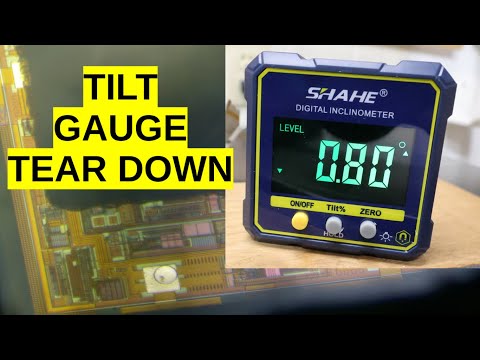
accelerometer 30 सेकंड में
- An accelerometer is a sensor that detects changes in motion and orientation by measuring acceleration forces.
- It is a core component in smartphones, enabling features like screen rotation and step counting through movement detection.
- In safety applications, accelerometers trigger car airbags by sensing the extreme deceleration caused by a collision impact.
- The technology often relies on Micro-Electromechanical Systems (MEMS) to convert physical force into digital data for various devices.
The term accelerometer refers to a sophisticated instrument designed to measure proper acceleration, which is the acceleration of a body in its own instantaneous rest frame. This is distinct from coordinate acceleration, which is acceleration in a fixed coordinate system. In simpler terms, an accelerometer detects changes in motion, speed, and direction. It is a fundamental component in modern technology, acting as the 'inner ear' for electronic devices. When you tilt your smartphone to play a racing game or to switch from portrait to landscape mode, it is the accelerometer that senses this shift in orientation and tells the software to adjust the display accordingly. This device is not just limited to consumer electronics; it plays a critical role in automotive safety, aerospace engineering, and even biological research. For instance, in a car, an accelerometer can detect the sudden, violent deceleration associated with a collision, triggering the instantaneous deployment of airbags to protect the passengers. In the realm of fitness, these sensors are embedded in wearable devices to track your steps, calculate calories burned, and even monitor the quality of your sleep by detecting subtle movements throughout the night. The physical principle behind most modern accelerometers involves micro-electromechanical systems (MEMS), which are tiny structures that move in response to physical force, changing electrical properties like capacitance or resistance. This change is then converted into a digital signal that a computer can interpret. Understanding the accelerometer is essential for anyone interested in how the physical world interfaces with the digital world, as it bridges the gap between raw physical movement and data processing.
- Technical Classification
- An electromechanical device used to measure acceleration forces, which can be static (like gravity) or dynamic (like vibration or movement).
The engineer carefully calibrated the accelerometer to ensure the drone could maintain a stable hover even in gusty wind conditions.
Beyond the technical specifications, the word is used frequently in discussions about innovation and user experience. When a tech reviewer praises a phone's 'responsiveness,' they are often indirectly complimenting the quality and sensitivity of its built-in accelerometer. In industrial settings, these devices are used for vibration analysis on heavy machinery. By monitoring the specific frequencies of vibration, engineers can predict when a bearing might fail before it actually happens, a process known as predictive maintenance. This saves companies millions of dollars in potential downtime. In the scientific community, accelerometers are attached to animals, such as sharks or birds, to study their behavior in the wild. By analyzing the data, researchers can tell if an animal is hunting, resting, or migrating, all without having to observe them directly. The versatility of the accelerometer makes it one of the most ubiquitous yet invisible technologies of the 21st century. Whether it is stabilizing a camera lens to prevent blurry photos or helping a rocket navigate into orbit, the accelerometer is the silent partner in almost every movement-based technological advancement. Its importance cannot be overstated, as it provides the essential data required for machines to understand their position and movement in three-dimensional space.
- Common Application
- Smartphones use a three-axis accelerometer to determine orientation and detect gestures like shaking or tapping.
Without a functioning accelerometer, the fitness tracker would be unable to distinguish between a brisk walk and a bumpy car ride.
In everyday conversation, you might hear this word in the context of 'specs' or 'features' when buying a new gadget. Salespeople might mention it to explain why a tablet is great for gaming or why a smartwatch is so accurate at tracking sports. In more specialized fields like civil engineering, accelerometers are placed on bridges and skyscrapers to monitor how these structures sway in the wind or respond to seismic activity during an earthquake. This data is vital for ensuring the safety and longevity of the infrastructure we rely on. The word itself comes from the Latin 'accelerare' (to hasten) and the Greek 'metron' (measure), perfectly describing its function. As we move toward a world of autonomous vehicles and advanced robotics, the role of the accelerometer will only grow. Self-driving cars rely on a suite of sensors, including high-precision accelerometers, to navigate complex environments safely. These sensors provide the real-time feedback necessary for the vehicle's computer to make split-second decisions about braking, accelerating, and steering. Thus, the accelerometer is not just a component; it is a fundamental building block of the automated future.
- Scientific Context
- In physics labs, students use accelerometers to verify Newton's Second Law of Motion by measuring the forces acting on a cart moving along a track.
The seismic accelerometer recorded a series of minor tremors long before the residents felt any shaking.
By analyzing the data from the accelerometer, the researchers were able to determine the exact moment the impact occurred.
Modern game controllers utilize a high-speed accelerometer to provide immersive motion-controlled gameplay.
Using the word accelerometer correctly requires an understanding of its role as a noun that describes a specific piece of hardware. In technical writing, it is often the subject of a sentence describing a measurement or a data point. For example, 'The accelerometer detected a peak force of 5G during the crash test.' Here, the word is used to identify the source of the data. In more casual or descriptive contexts, you might use it to explain how a device works: 'The tablet uses an internal accelerometer to rotate the screen.' Notice how it is often paired with verbs like 'detect,' 'measure,' 'sense,' 'calibrate,' or 'trigger.' These verbs highlight the active role the sensor plays in a system. When discussing the specifications of a product, you might say, 'This model features a high-precision, three-axis accelerometer.' The 'three-axis' part refers to the sensor's ability to measure movement in three dimensions: up-down, left-right, and forward-backward. This level of detail is common in engineering and product design discussions. You can also use the word in the plural form when referring to multiple sensors or a general category of devices: 'Accelerometers are essential for modern robotics.' This emphasizes their broad utility across the entire field.
- Verb Pairings
- Common verbs used with accelerometer include: calibrate, integrate, monitor, sense, and transmit.
Before the flight, the ground crew had to ensure that the primary accelerometer was properly zeroed.
Another way to use the word is in the context of troubleshooting or failure. 'The drone crashed because the accelerometer malfunctioned, causing the flight controller to lose its orientation.' This usage is common in post-incident reports or technical support forums. You might also encounter it in scientific research papers where it is used to describe the methodology. 'We attached a miniature accelerometer to the collar of each wolf to track their activity levels over a six-month period.' In this case, the word is part of a description of the tools used for data collection. It is important to distinguish between the sensor itself and the data it produces. You wouldn't say 'The accelerometer was 5 meters per second squared'; instead, you would say 'The accelerometer measured an acceleration of 5 meters per second squared.' This distinction maintains technical accuracy. In creative writing, you might use the word to add a sense of high-tech realism: 'The pilot watched the accelerometer needle climb as the rocket broke through the atmosphere.' Even though modern displays are digital, the 'needle' imagery evokes a classic cockpit feel. Whether you are writing a lab report, a product review, or a sci-fi novel, using 'accelerometer' correctly adds a layer of precision to your language.
- Adjective Modifiers
- Common adjectives include: digital, analog, tri-axial, piezoelectric, and MEMS-based.
The smartphone's accelerometer is so sensitive that it can detect the slight tremor of a person's hand.
In academic settings, the word is frequently used in physics and engineering curriculum. Students might be asked to 'calculate the output voltage of the accelerometer given a specific G-force.' This requires a deeper understanding of the device's sensitivity and scale factor. In medical technology, you might read about 'implantable accelerometers' used in pacemakers to adjust the heart rate based on the patient's physical activity. This shows how the word spans across multiple high-stakes industries. Furthermore, in the world of sports science, 'wearable accelerometers' are used to measure the impact forces on football players' heads to study and prevent concussions. This application highlights the word's relevance to health and safety. By mastering the use of 'accelerometer' in various contexts, you demonstrate a command of technical vocabulary that is increasingly relevant in our sensor-driven world. Always ensure that the context makes it clear whether you are referring to the physical component or the broader capability of motion sensing. This clarity is the hallmark of professional and effective communication in both spoken and written forms.
- Prepositional Phrases
- Common phrases include: data from the accelerometer, integrated into the accelerometer, and sensitivity of the accelerometer.
By using an accelerometer in the bridge's design, engineers can monitor structural integrity in real-time.
The laboratory experiment required a highly shielded accelerometer to avoid electromagnetic interference.
The pilot relied on the accelerometer to maintain the correct G-force during the high-speed maneuver.
You are most likely to encounter the word accelerometer in environments where technology, science, and engineering intersect. One of the most common places is in consumer electronics reviews. If you watch a YouTube video about the latest iPhone or Samsung Galaxy, the reviewer might mention the 'accelerometer and gyroscope' when discussing the phone's gaming capabilities or its ability to track fitness metrics. They might say something like, 'The accelerometer is incredibly snappy, making the motion controls in this game feel very natural.' This context is accessible to most people and highlights the sensor's role in user experience. Another frequent setting is in the automotive industry. When you take your car to a mechanic for a diagnostic check, they might use a computer that reads data from various sensors, including the accelerometers used for the Electronic Stability Control (ESC) system. In this professional environment, the word is used with a focus on safety and vehicle performance. You might also hear it in news reports about aerospace achievements. For example, during a SpaceX launch broadcast, the commentators often discuss the 'G-loads' and the 'accelerometer readings' as the rocket ascends, providing viewers with a sense of the immense forces at play. This usage is more technical but is explained for a general audience to build excitement and understanding.
- Media Context
- Tech podcasts and science documentaries often use the word when explaining how modern gadgets 'know' their position in space.
During the keynote, the CEO highlighted the new accelerometer that can detect if the user has been in a car accident.
In educational settings, specifically in high school and university physics classes, the word is a staple. Teachers use it to explain the concepts of velocity, acceleration, and force. You might hear a professor say, 'Today we will use a digital accelerometer to measure the gravitational constant.' In this context, the word is associated with empirical data and the scientific method. Similarly, in engineering firms, the word is part of the daily jargon. Designers and developers discuss 'accelerometer noise,' 'sampling rates,' and 'bandwidth' when building new products. For them, the accelerometer is a component with specific data sheets and limitations that must be managed. You might also hear the word in the medical field, particularly in physical therapy or sports medicine. A therapist might use a 'wearable accelerometer' to track a patient's gait or the intensity of their exercises during recovery. Here, the word is linked to health outcomes and patient progress. Even in the world of art and interactive installations, creators use accelerometers to make their work respond to the movement of the audience. An artist might explain, 'The lighting changes based on the data from this hidden accelerometer.' This shows the word's reach into creative and unconventional fields.
- Professional Domains
- Aerospace, Automotive, Consumer Electronics, Biomedical Engineering, and Seismology.
The flight instructor pointed to the accelerometer to show the student the effects of a steep turn on the aircraft.
Furthermore, the word appears in many technical manuals and 'how-to' guides. If you are a hobbyist building a drone or a small robot using an Arduino or Raspberry Pi, you will inevitably read about how to wire and program an accelerometer. The word is central to the 'maker' community, where people build their own gadgets. In these guides, you'll see phrases like 'connect the accelerometer to the I2C bus' or 'read the X, Y, and Z values from the sensor.' This hands-on context makes the word feel very practical and accessible. Lastly, in the gaming world, you might see 'accelerometer' listed in the settings menu of a mobile game, allowing you to calibrate the motion controls. Players often discuss these settings in online forums, debating the best sensitivity levels for competitive play. Whether you are a scientist, a gamer, a driver, or a hobbyist, the word 'accelerometer' is a key part of the vocabulary used to describe how we measure and interact with movement in the modern age. Its presence in so many different areas of life is a testament to how integrated sensors have become in our daily existence.
- Everyday Encounters
- Smartphone settings, fitness app descriptions, car safety feature lists, and drone operation manuals.
The earthquake early warning system relies on a network of high-sensitivity accelerometers buried deep underground.
In the physics lab, we used an accelerometer to study the oscillations of a simple pendulum.
The smartwatch's accelerometer is used to count steps and detect different types of physical activity.
One of the most frequent mistakes people make is confusing an accelerometer with a gyroscope. While both are motion sensors often found in the same device, they measure different things. An accelerometer measures linear acceleration (movement in a straight line) and gravity, which helps determine orientation relative to the Earth. A gyroscope, on the other hand, measures angular velocity or rotation (how fast something is spinning). If you say your phone knows it's being rotated because of the accelerometer, you are only half right; the accelerometer detects the change in the gravity vector, but the gyroscope provides the precise data about the rotation itself. Another common error is thinking an accelerometer measures speed. It does not. It measures the *rate of change* of speed. If a car is traveling at a perfectly constant 100 km/h on a straight road, the accelerometer will read zero (or just the force of gravity), because there is no acceleration. People often mistakenly expect an accelerometer to act like a speedometer. To get speed from an accelerometer, you have to perform a mathematical operation called integration over time, which can lead to 'drift' or inaccuracies if not corrected by other sensors like GPS.
- Accelerometer vs. Gyroscope
- Accelerometer = Linear motion + Gravity. Gyroscope = Rotational motion + Orientation stability.
Incorrect: The accelerometer showed that the car was going 60 miles per hour. (Correct: The speedometer showed the speed; the accelerometer showed the acceleration.)
Another mistake involves the spelling and pronunciation. Some people might say 'accel-o-meter' or 'acceler-meter,' but the correct pronunciation is /əkˌseləˈrɒmɪtə(r)/. In writing, it is sometimes misspelled as 'accelerometre' (the British spelling is usually the same, but 'meter' vs 'metre' can be a point of confusion for some, though 'meter' is the standard for the device). There is also a conceptual mistake regarding what 'zero G' means. An accelerometer in freefall (like on the International Space Station) will actually read zero, even though gravity is still acting on it. This is because the sensor and its housing are falling at the same rate. This can be counterintuitive for students learning physics. Additionally, people sometimes assume that all accelerometers are the same. In reality, there are many types—piezoelectric, capacitive, and MEMS—each with different sensitivities and use cases. Using a low-cost smartphone accelerometer for high-precision seismic monitoring would be a mistake in engineering judgment. Understanding the 'noise floor' and 'dynamic range' of the specific accelerometer you are using is crucial for professional applications.
- Conceptual Pitfall
- Assuming that an accelerometer measures 'velocity' directly. It only measures the 'change' in velocity.
The student was confused when the accelerometer read 9.8 m/s² while the device was sitting perfectly still on the table.
Lastly, a common mistake in data interpretation is failing to account for the 'gravity vector.' Because gravity is a constant acceleration of 9.8 m/s² pointing toward the center of the Earth, an accelerometer will always include this in its reading unless it is filtered out. If you are trying to measure the acceleration of a car, you have to subtract the component of gravity that the sensor is picking up, especially if the car is on a hill. Forgetting to 'tare' or zero the sensor before a measurement is another simple but frequent error. In software development, a common mistake is requesting data from the accelerometer too frequently (high sampling rate), which can drain a device's battery very quickly. Developers must balance the need for precision with the need for power efficiency. By being aware of these common technical, linguistic, and conceptual mistakes, you can use the word 'accelerometer' and the technology it represents more accurately and effectively in your professional and personal life.
- Integration Error
- Trying to calculate distance by integrating accelerometer data twice often leads to massive errors due to 'sensor drift'.
Many people think an accelerometer is the same as a GPS, but they work on completely different principles.
The technician realized the accelerometer was mounted upside down, which inverted all the vertical data readings.
Don't confuse the accelerometer with an altimeter, which measures altitude based on atmospheric pressure.
While accelerometer is the most precise term, there are several similar words and alternatives depending on the context. In casual conversation, the most common alternative is motion sensor. This is a broader term that can include accelerometers, gyroscopes, and even infrared sensors used in home security systems. If you are explaining how a phone works to a child, 'motion sensor' is much easier to understand. In automotive and some industrial contexts, you might hear the term G-sensor. This is essentially the same thing, but it emphasizes the measurement of G-forces (gravitational forces). Dashcams often advertise a 'G-sensor' that automatically saves footage if a sudden impact is detected. Another related term is inertial sensor. This is a more academic or engineering-focused term that refers to sensors that measure forces related to inertia. An Inertial Measurement Unit (IMU) is a common component that combines an accelerometer, a gyroscope, and sometimes a magnetometer into a single package.
- Comparison: Accelerometer vs. Motion Sensor
- An accelerometer is a *type* of motion sensor. All accelerometers are motion sensors, but not all motion sensors are accelerometers.
The car's accelerometer (or G-sensor) is what triggers the emergency braking system.
In the context of vibration analysis, you might hear the word vibrometer. While an accelerometer can measure vibration, a vibrometer is often a more specialized laser-based tool used to measure vibrations without making physical contact with the object. For measuring tilt or inclination specifically, the term inclinometer or tilt sensor is used. While an accelerometer can function as an inclinometer by measuring the gravity vector, a dedicated inclinometer might be designed for higher precision in static tilt measurements. In older or more mechanical contexts, you might encounter the term seismometer. This is a specialized, highly sensitive accelerometer used to detect and record earthquakes. While they work on similar principles, a seismometer is optimized for very low-frequency and low-amplitude movements that a standard smartphone accelerometer would never pick up. Understanding these nuances helps you choose the right word for the right situation, whether you are writing a technical report or just describing a cool new gadget to a friend.
- Comparison: Accelerometer vs. Inclinometer
- Accelerometers measure dynamic change; inclinometers measure static angle relative to gravity.
Instead of a standard accelerometer, the geologist used a seismometer to track the volcanic activity.
In specialized engineering, you might also hear about piezoelectric sensors. This refers to the specific technology used inside many accelerometers. While not a direct synonym, it is often used interchangeably in technical discussions about sensor types. Another term is velocity transducer. These are similar but measure velocity directly rather than acceleration. In the world of high-performance racing, engineers might talk about telemetry sensors, which is a broad category that includes accelerometers along with many other data-gathering devices. By knowing these alternatives, you can better navigate technical documentation and communicate more effectively with specialists in different fields. For example, a civil engineer might prefer the term 'structural health monitor,' while a game developer will stick to 'accelerometer.' Each term carries its own set of connotations and technical specifics, so choosing the right one is key to professional communication. In summary, while 'accelerometer' is the core term, the world of motion sensing is rich with specialized vocabulary that reflects the diverse ways we measure the physical world.
- Comparison: Accelerometer vs. Gyroscope
- Accelerometers measure 'push' (linear force); gyroscopes measure 'twist' (rotational force).
The VR headset uses an IMU, which combines an accelerometer and a gyroscope for 360-degree tracking.
The industrial accelerometer was replaced by a more sensitive vibrometer for the precision testing.
For this project, we need a tri-axial accelerometer to capture movement in all directions.
How Formal Is It?
रोचक तथ्य
The first accelerometers were large mechanical devices with springs and weights. Today, they are so small (MEMS) that you could fit dozens of them on the head of a pin. This miniaturization is what allowed smartphones to become so versatile.
उच्चारण मार्गदर्शिका
- Pronouncing it as 'accel-er-meter' (skipping the 'o').
- Putting the stress on the 'cel' syllable instead of 'rom'.
- Confusing the 'o' sound with a long 'O' like in 'go'.
- Adding an extra 'e' sound: 'accel-er-o-meter'.
- Mumbling the 'uh' sounds, making it sound like 'accel-rom-ter'.
कठिनाई स्तर
The word is long but follows standard English phonetic rules. It appears frequently in tech articles.
Spelling can be tricky due to the double 'c' and the 'o' in the middle.
Requires correct syllable stress to be understood by technical professionals.
Easily recognized once the listener is familiar with the 'meter' suffix.
आगे क्या सीखें
पूर्वापेक्षाएँ
आगे सीखें
उन्नत
ज़रूरी व्याकरण
Compound Nouns with Hyphens
A three-axis accelerometer uses three different sensors.
Latin and Greek Roots
The suffix '-meter' always indicates a measuring device, like in 'accelerometer'.
Passive Voice in Technical Writing
The accelerometer was integrated into the circuit board.
Zero Article with Plural Generalizations
Accelerometers are essential for modern robotics.
Prepositional Phrases for Source
Data from the accelerometer is processed by the CPU.
स्तर के अनुसार उदाहरण
The phone has a move-sensor called an accelerometer.
Le téléphone a un capteur de mouvement appelé accéléromètre.
The word 'accelerometer' is a noun.
My watch uses an accelerometer to count my steps.
Ma montre utilise un accéléromètre pour compter mes pas.
Uses the present simple tense for a general fact.
An accelerometer feels when you shake the toy.
Un accéléromètre sent quand vous secouez le jouet.
'When' introduces a time clause.
Does your phone have an accelerometer?
Est-ce que ton téléphone a un accéléromètre ?
A question using 'does' and the base form of the verb 'have'.
The accelerometer tells the screen to turn.
L'accéléromètre dit à l'écran de tourner.
The verb 'tells' is followed by an object and an infinitive.
It is a small accelerometer inside the car.
C'est un petit accéléromètre à l'intérieur de la voiture.
Use of 'it is' to identify an object.
The game uses the accelerometer for steering.
Le jeu utilise l'accéléromètre pour diriger.
'For' is used here to show purpose.
The accelerometer is very small and light.
L'accéléromètre est très petit et léger.
Adjectives 'small' and 'light' describe the noun.
The accelerometer measures how fast the car stops.
L'accéléromètre mesure à quelle vitesse la voiture s'arrête.
The phrase 'how fast' acts as a noun clause.
Engineers put an accelerometer in the new drone.
Les ingénieurs ont mis un accéléromètre dans le nouveau drone.
Past simple tense 'put' (irregular verb).
If the accelerometer breaks, the screen won't rotate.
Si l'accéléromètre casse, l'écran ne tournera pas.
First conditional: 'if' + present simple, 'will' + verb.
The fitness tracker has a built-in accelerometer.
Le tracker de fitness a un accéléromètre intégré.
'Built-in' is a compound adjective.
You can see the accelerometer data on this app.
Vous pouvez voir les données de l'accéléromètre sur cette application.
The word 'data' is used here as a mass noun.
The accelerometer is a type of motion sensor.
L'accéléromètre est un type de capteur de mouvement.
'Type of' is used for classification.
Modern cars use many different accelerometers.
Les voitures modernes utilisent de nombreux accéléromètres différents.
Plural noun 'accelerometers'.
This accelerometer is more sensitive than the old one.
Cet accéléromètre est plus sensible que l'ancien.
Comparative adjective 'more sensitive than'.
The accelerometer detects the sudden impact of a collision.
L'accéléromètre détecte l'impact soudain d'une collision.
The verb 'detects' implies a reaction to a stimulus.
Most smartphones use a three-axis accelerometer for accuracy.
La plupart des smartphones utilisent un accéléromètre à trois axes pour plus de précision.
'Three-axis' describes the capability of the sensor.
The device was calibrated to ensure the accelerometer was accurate.
L'appareil a été calibré pour s'assurer que l'accéléromètre était précis.
Passive voice 'was calibrated'.
An accelerometer can distinguish between walking and running.
Un accéléromètre peut faire la distinction entre la marche et la course.
'Distinguish between' is a common phrasal verb pattern.
The tablet's accelerometer allows for immersive gaming experiences.
L'accéléromètre de la tablette permet des expériences de jeu immersives.
'Allows for' means to make something possible.
Without an accelerometer, the drone would lose its balance.
Sans accéléromètre, le drone perdrait son équilibre.
Second conditional: 'without' + noun, 'would' + verb.
The scientist attached an accelerometer to the bird's wing.
Le scientifique a attaché un accéléromètre à l'aile de l'oiseau.
Preposition 'to' shows the point of attachment.
Data from the accelerometer is sent to the main processor.
Les données de l'accéléromètre sont envoyées au processeur principal.
Subject-verb agreement: 'Data... is' (often treated as singular in tech).
The accelerometer measures the force of gravity to determine tilt.
L'accéléromètre mesure la force de gravité pour déterminer l'inclinaison.
Infinitive of purpose: 'to determine'.
Piezoelectric accelerometers are often used in industrial settings.
Les accéléromètres piézoélectriques sont souvent utilisés dans les milieux industriels.
'Piezoelectric' is a technical adjective.
The accelerometer's sensitivity can be adjusted via the software.
La sensibilité de l'accéléromètre peut être ajustée via le logiciel.
The preposition 'via' indicates the means of adjustment.
Sudden vibrations can cause noise in the accelerometer readings.
Des vibrations soudaines peuvent provoquer du bruit dans les lectures de l'accéléromètre.
'Noise' here refers to unwanted data interference.
The rocket's accelerometer recorded a peak of 4G during takeoff.
L'accéléromètre de la fusée a enregistré un pic de 4G pendant le décollage.
'Peak of' describes the maximum value recorded.
Integrating the accelerometer data twice provides an estimate of distance.
L'intégration double des données de l'accéléromètre fournit une estimation de la distance.
Gerund phrase 'Integrating...' acting as the subject.
The accelerometer is integrated into the phone's logic board.
L'accéléromètre est intégré à la carte logique du téléphone.
The phrase 'integrated into' is a common technical collocation.
A malfunctioning accelerometer can lead to incorrect orientation data.
Un accéléromètre défectueux peut entraîner des données d'orientation incorrectes.
'Lead to' expresses a cause-and-effect relationship.
The MEMS accelerometer is a marvel of micro-engineering.
L'accéléromètre MEMS est une merveille de micro-ingénierie.
'MEMS' stands for Micro-Electromechanical Systems.
We utilized a tri-axial accelerometer to capture the bridge's oscillations.
Nous avons utilisé un accéléromètre triaxial pour capturer les oscillations du pont.
The verb 'utilize' is more formal than 'use'.
The accelerometer's dynamic range must be sufficient for the application.
La plage dynamique de l'accéléromètre doit être suffisante pour l'application.
'Must be' expresses a technical requirement.
Cross-axis sensitivity is a common issue in low-cost accelerometers.
La sensibilité aux axes transversaux est un problème courant dans les accéléromètres à bas prix.
Compound noun 'Cross-axis sensitivity'.
The accelerometer data was filtered to remove high-frequency noise.
Les données de l'accéléromètre ont été filtrées pour éliminer le bruit haute fréquence.
Passive voice with an infinitive of purpose.
The seismic accelerometer detected the P-waves seconds before the main quake.
L'accéléromètre sismique a détecté les ondes P quelques secondes avant le séisme principal.
'Seconds before' indicates a precise temporal relationship.
Calibration of the accelerometer is essential for inertial navigation.
Le calibrage de l'accéléromètre est essentiel pour la navigation inertielle.
Noun phrase 'Calibration of the accelerometer' as the subject.
The accelerometer provides a continuous stream of raw acceleration values.
L'accéléromètre fournit un flux continu de valeurs d'accélération brutes.
'Continuous stream of' is a common technical phrase.
The accelerometer measures proper acceleration relative to a free-fall frame.
L'accéléromètre mesure l'accélération propre par rapport à un référentiel en chute libre.
Technical use of 'relative to' for frames of reference.
Quantum accelerometers exploit atom interferometry for unprecedented precision.
Les accéléromètres quantiques exploitent l'interférométrie atomique pour une précision sans précédent.
The verb 'exploit' here means to make full use of a principle.
The sensor's bias stability is a critical parameter for long-term missions.
La stabilité du biais du capteur est un paramètre critique pour les missions à long terme.
'Bias stability' is a highly specialized technical term.
The accelerometer's output is proportional to the applied inertial force.
La sortie de l'accéléromètre est proportionnelle à la force d'inertie appliquée.
The adjective 'proportional' is followed by the preposition 'to'.
Compensating for temperature-induced drift in the accelerometer is non-trivial.
Compenser la dérive induite par la température dans l'accéléromètre n'est pas trivial.
'Non-trivial' is a common academic understatement for 'very difficult'.
The accelerometer was subjected to rigorous centrifuge testing.
L'accéléromètre a été soumis à des tests rigoureux en centrifugeuse.
The phrase 'subjected to' implies undergoing a process.
Differential accelerometers can cancel out common-mode environmental noise.
Les accéléromètres différentiels peuvent annuler le bruit environnemental en mode commun.
'Cancel out' is a phrasal verb meaning to neutralize.
The accelerometer's bandwidth limits its ability to capture high-frequency transients.
La bande passante de l'accéléromètre limite sa capacité à capturer les transitoires haute fréquence.
The noun 'transients' refers to short-lived signals.
सामान्य शब्द संयोजन
सामान्य वाक्यांश
— To obtain data or measurements from the sensor. This is common in programming and engineering.
The software needs to read the accelerometer at least 50 times per second.
— Unwanted random fluctuations in the data signal from the sensor. It is a common technical challenge.
We need to apply a low-pass filter to reduce the accelerometer noise.
— To reset the sensor so that its current state is considered the baseline or 'zero' point.
Make sure to zero the accelerometer while the device is on a flat surface.
— The gradual accumulation of error in the sensor's output over time. This is a major issue in navigation.
Accelerometer drift can cause the drone to slowly move away from its target.
— Refers to one of the directions (X, Y, or Z) in which the sensor can measure movement.
The vertical axis of the accelerometer measures the force of gravity.
— The ratio of the change in output to the change in the acceleration being measured.
High accelerometer sensitivity is required for detecting subtle medical tremors.
— An action that happens automatically when the sensor detects a specific movement.
The emergency call was triggered by the accelerometer detecting a hard fall.
— The physical act of attaching the sensor to an object or circuit board.
You must mount the accelerometer securely to get accurate vibration data.
— The range of acceleration values that the sensor is capable of measuring (e.g., +/- 2g).
For a rocket launch, you need an accelerometer with a much larger scale.
— Combining data from the accelerometer with data from other sensors for better accuracy.
Fusing accelerometer data with a gyroscope provides a more stable orientation.
अक्सर इससे भ्रम होता है
A gyroscope measures rotation (angular velocity), while an accelerometer measures linear movement and gravity.
An accelerator is a pedal used to increase speed in a car, or a machine that speeds up particles. An accelerometer is the sensor that measures that change.
A speedometer measures how fast you are going at a specific moment; an accelerometer measures how quickly your speed is changing.
मुहावरे और अभिव्यक्तियाँ
— A metaphorical use referring to something that measures or indicates the speed of social or political change.
Social media has become the accelerometer of change in modern politics.
literary/metaphorical— A rare, creative play on 'hit the accelerator', implying a need to measure or respond to speed quickly.
The company needs to hit the accelerometer on its R&D department.
informal/creative— Describing someone or something that is extremely responsive to even the slightest changes.
The stock market is as sensitive as an accelerometer to interest rate news.
informal/comparative— A humorous way to tell someone to check their 'orientation' or 'balance' if they are acting strangely.
You're acting a bit wild today; maybe you should check your accelerometer.
slang/humorous— Used to describe a system or process that is entirely controlled by motion data.
The new gameplay mechanic is completely accelerometer-driven.
technical/neutral— Often used in sci-fi to describe sensors that work in weightless environments.
The pilot monitored the zero-G accelerometer as the ship entered orbit.
technical/sci-fi— To experience a force that exceeds the sensor's measuring capability.
The impact was so strong it maxed out the accelerometer.
informal/technical— Used to describe something that meets the high precision standards of scientific instruments.
The new alloy is accelerometer-grade in terms of its stability.
technical/formal— Refers to the core sensing element (the proof mass) of the device.
The proof mass is the heart of the accelerometer's design.
descriptive/technical— The continuous loop of data used to stabilize a system.
The drone relies on constant accelerometer feedback to stay level.
technical/neutralआसानी से भ्रमित होने वाले
Both are motion sensors found in phones.
An accelerometer tells you which way is down (gravity) and detects linear motion. A gyroscope tells you how much you are twisting or rotating the device.
The accelerometer rotates the screen, but the gyroscope allows for precise 360-degree aiming in a game.
Often bundled with accelerometers in IMUs.
An accelerometer measures motion; a magnetometer measures magnetic fields, acting like a digital compass to tell you which way is North.
The accelerometer knows the phone is tilted, but the magnetometer knows it's facing North.
Both measure physical properties related to position.
An altimeter measures altitude (height above sea level) using air pressure. An accelerometer measures the force of movement.
The pilot checked the altimeter for height and the accelerometer for G-force.
Both are used for step counting.
A pedometer is a device or function that counts steps. An accelerometer is the actual hardware sensor that a pedometer uses to detect the 'bump' of a step.
My watch's pedometer app uses the built-in accelerometer to track my walk.
Both measure vibrations.
A seismograph is the whole instrument that records ground motion. An accelerometer is the specific part inside it that senses the acceleration of the ground.
The seismograph produced a chart based on the readings from its internal accelerometer.
वाक्य संरचनाएँ
The [noun] has an accelerometer.
The phone has an accelerometer.
It uses an accelerometer to [verb].
It uses an accelerometer to count steps.
The accelerometer detects [noun].
The accelerometer detects the movement of the car.
By using an accelerometer, the device can [verb].
By using an accelerometer, the device can determine its orientation.
The data provided by the accelerometer is [adjective].
The data provided by the accelerometer is essential for navigation.
The accelerometer measures proper acceleration relative to [noun].
The accelerometer measures proper acceleration relative to an inertial frame.
An accelerometer is a type of [noun].
An accelerometer is a type of motion sensor.
The accelerometer is calibrated for [noun].
The accelerometer is calibrated for high-impact detection.
शब्द परिवार
संज्ञा
क्रिया
विशेषण
संबंधित
इसे कैसे इस्तेमाल करें
Common in technology, engineering, and science; becoming more common in general health and fitness discussions.
-
Thinking an accelerometer measures speed.
→
An accelerometer measures acceleration (change in speed).
If you are moving at a constant 60 mph, the accelerometer reads zero. It only shows a value when you speed up or slow down.
-
Confusing an accelerometer with a gyroscope.
→
Use 'accelerometer' for linear motion and 'gyroscope' for rotation.
While they are often used together, they measure different physical properties. Accelerometers feel the 'push', gyroscopes feel the 'twist'.
-
Spelling it 'accelerometre'.
→
The standard spelling is 'accelerometer'.
Unlike 'meter' vs 'metre' for distance, the device itself is almost universally spelled with '-er' in both American and British English.
-
Assuming '0G' means there is no gravity.
→
'0G' means the device is in free-fall.
An accelerometer in a falling elevator will read zero, even though gravity is still pulling it down. It measures 'proper' acceleration, not gravitational pull.
-
Using a smartphone accelerometer for professional seismic work.
→
Use a specialized seismometer for earthquake detection.
Consumer-grade accelerometers have too much 'noise' to detect the very subtle vibrations of a distant earthquake.
सुझाव
Calibration is Key
If your device's motion sensing feels inaccurate, look for a calibration tool in the settings. This 'zeros' the accelerometer to ensure it knows exactly what 'flat' looks like.
Battery Life
Apps that use the accelerometer constantly, like high-end games or continuous fitness trackers, will drain your battery faster because the sensor and processor are always active.
Airbag Reliability
The accelerometers used for airbags are designed to be incredibly reliable and are separate from the ones used for your car's infotainment system.
Physics Connection
Think of an accelerometer as a digital version of a weight hanging on a spring. When you move the spring, the weight bounces; the sensor just measures that bounce very precisely.
Filtering Data
Raw accelerometer data is often 'noisy'. Developers use mathematical filters (like a low-pass filter) to smooth out the data and make it useful for apps.
Check the Specs
When buying a drone or a high-end camera, look for '6-axis stabilization'. This usually means it uses a 3-axis accelerometer and a 3-axis gyroscope together.
Avoid Hard Impacts
While MEMS accelerometers are durable, an extremely hard drop can sometimes 'stick' the tiny internal parts, ruining the sensor's accuracy.
Gravity as a Constant
Remember that an accelerometer on Earth always measures 1G (9.8 m/s²) pointing down. This is a feature, not a bug, as it allows for orientation sensing.
Interactive Art
If you are an artist, you can use cheap accelerometer modules with an Arduino to make your sculptures or paintings react to the movement of people around them.
Animal Research
Accelerometers are so small now that scientists put them on bees and other insects to study their flight patterns and energy expenditure.
याद करें
स्मृति सहायक
Think of 'ACCELERate' + 'METER'. It's a meter that measures how much you accelerate. Also, remember 'ROM' (like CD-ROM) is in the middle: Ac-cele-ROM-eter.
दृश्य संबंध
Imagine a tiny person inside your phone holding a level. When you tilt the phone, the person feels the pull of gravity and shouts to the phone's brain to turn the screen.
Word Web
चैलेंज
Try to explain to a friend how a phone 'knows' to rotate its screen without using the word 'magic'. Use 'accelerometer' and 'gravity' instead.
शब्द की उत्पत्ति
The word is a compound formed from the Latin 'accelerare' and the Greek 'metron'. 'Accelerare' means 'to hasten' or 'to speed up', while 'metron' means 'a measure'. It first appeared in scientific literature in the late 19th century as devices were developed to measure the acceleration of trains and machinery.
मूल अर्थ: A device for measuring the rate of increase in speed.
Latin-Greek hybrid (Scientific English)सांस्कृतिक संदर्भ
No specific cultural sensitivities, but be aware that technical jargon can be exclusionary if not explained in general contexts.
In English-speaking tech culture, 'accelerometer' is often shortened to 'accel' in coding and engineering contexts.
असल ज़िंदगी में अभ्यास करें
वास्तविक संदर्भ
Smartphone Technology
- screen rotation
- step counter
- shake to undo
- motion controls
Automotive Safety
- airbag deployment
- crash detection
- stability control
- impact sensor
Physics Lab
- measure G-force
- calculate acceleration
- verify Newton's laws
- data logging
Fitness and Health
- activity tracking
- gait analysis
- sleep monitoring
- calorie burn
Engineering and Construction
- vibration analysis
- structural health
- seismic monitoring
- tilt measurement
बातचीत की शुरुआत
"Did you know your phone has a tiny accelerometer that can detect even the smallest movements?"
"How do you think fitness trackers can tell the difference between walking and cycling using just an accelerometer?"
"Have you ever had a phone where the accelerometer stopped working and the screen wouldn't rotate?"
"In terms of car safety, do you think the accelerometer is the most important sensor in the vehicle?"
"If we didn't have accelerometers, how else could we measure the vibration of large bridges?"
डायरी विषय
Reflect on how much we rely on invisible sensors like the accelerometer in our daily lives. How would your day change without them?
Imagine you are designing a new wearable device. How would you use an accelerometer to help people in a unique way?
Write a technical description of a time you experienced a high G-force (like on a roller coaster) as if you were an accelerometer.
Discuss the ethical implications of using accelerometers to track employee movement in a warehouse setting.
How has the miniaturization of the accelerometer changed the way we interact with computers and games?
अक्सर पूछे जाने वाले सवाल
10 सवालYes, virtually every modern smartphone produced in the last decade includes an accelerometer. It is essential for basic functions like rotating the screen from portrait to landscape mode and for many apps that track movement or orientation. Without it, the user experience would be much more limited.
Not directly. An accelerometer measures acceleration (the rate of change of speed). To find speed, you have to calculate the integral of acceleration over time. However, this is often inaccurate because small errors in the sensor data add up quickly, a problem known as 'drift'. GPS is much better for measuring speed.
An accelerometer measures all forces acting on it, including gravity. Gravity is a constant acceleration of 9.8 m/s² pulling toward the Earth. By detecting the direction of this constant force, the accelerometer can determine which way is 'down' relative to the device's orientation.
A 3-axis (or tri-axial) accelerometer can measure acceleration in three dimensions: up and down (Z-axis), left and right (X-axis), and forward and backward (Y-axis). This allows the device to have a complete understanding of its movement and orientation in 3D space.
Yes, they are critical for car safety. Accelerometers detect the massive deceleration that happens during a crash. If the force is high enough, the sensor sends a signal to deploy the airbags in milliseconds. They are also used in Electronic Stability Control systems to help prevent skidding.
Yes, but it behaves differently. In a free-fall environment like the International Space Station, an accelerometer will read zero because it is falling at the same rate as everything around it. However, it will still measure any 'dynamic' acceleration, such as when a rocket engine fires to change the ship's speed.
An accelerometer is a *type* of motion sensor. 'Motion sensor' is a general term that can also include gyroscopes, infrared sensors, or ultrasonic sensors. When people talk about a phone's motion sensor, they are usually referring to the combination of the accelerometer and the gyroscope.
In modern electronics, they are incredibly small. They are made using MEMS (Micro-Electromechanical Systems) technology, which allows them to be etched onto silicon chips. A typical smartphone accelerometer is only a few millimeters wide and less than a millimeter thick.
This can happen for several reasons. Sometimes the software gets stuck and needs a restart. Other times, the 'Auto-rotate' setting might be turned off. In rare cases, the physical accelerometer inside the phone might be damaged due to a hard drop, preventing it from sensing orientation.
There have been research studies showing that highly sensitive accelerometers can detect the vibrations of a person's voice if the phone is placed on the same table. However, this is very difficult to do in practice and is not a common security threat. Most mobile operating systems have protections in place for sensor data.
खुद को परखो 200 सवाल
Explain how an accelerometer helps a smartphone user in their daily life.
Well written! Good try! Check the sample answer below.
Compare and contrast an accelerometer and a gyroscope.
Well written! Good try! Check the sample answer below.
Describe the role of an accelerometer in automotive safety systems.
Well written! Good try! Check the sample answer below.
Write a short paragraph about how a fitness tracker uses an accelerometer to count steps.
Well written! Good try! Check the sample answer below.
Discuss the technical challenges of using an accelerometer for long-term navigation.
Well written! Good try! Check the sample answer below.
Imagine a world without accelerometers. How would technology be different?
Well written! Good try! Check the sample answer below.
Explain the concept of 'proper acceleration' as measured by an accelerometer.
Well written! Good try! Check the sample answer below.
Describe an experiment you could do in a physics lab using an accelerometer.
Well written! Good try! Check the sample answer below.
How can accelerometers be used in structural engineering to save lives?
Well written! Good try! Check the sample answer below.
Write a product review for a new smartwatch, focusing on its motion-sensing capabilities.
Well written! Good try! Check the sample answer below.
Explain the difference between coordinate acceleration and proper acceleration.
Well written! Good try! Check the sample answer below.
How do MEMS accelerometers work at a microscopic level?
Well written! Good try! Check the sample answer below.
Describe how an accelerometer can be used to study animal behavior in the wild.
Well written! Good try! Check the sample answer below.
What are the pros and cons of using an accelerometer for gesture control in gaming?
Well written! Good try! Check the sample answer below.
Discuss the importance of calibration for scientific-grade accelerometers.
Well written! Good try! Check the sample answer below.
How does an accelerometer contribute to the 'quantified self' movement?
Well written! Good try! Check the sample answer below.
Write a technical specification for a high-performance industrial accelerometer.
Well written! Good try! Check the sample answer below.
Explain how an accelerometer detects a car crash in under 10 milliseconds.
Well written! Good try! Check the sample answer below.
What is the relationship between an accelerometer and Newton's Second Law of Motion?
Well written! Good try! Check the sample answer below.
Describe the future of accelerometer technology, including quantum sensors.
Well written! Good try! Check the sample answer below.
Pronounce the word 'accelerometer' correctly, emphasizing the third syllable.
Read this aloud:
तुमने कहा:
Speech recognition is not supported in your browser. Try Chrome or Edge.
Describe how your phone knows when you turn it sideways.
Read this aloud:
तुमने कहा:
Speech recognition is not supported in your browser. Try Chrome or Edge.
Explain the difference between an accelerometer and a speedometer to a friend.
Read this aloud:
तुमने कहा:
Speech recognition is not supported in your browser. Try Chrome or Edge.
Discuss why a car needs an accelerometer for its airbag system.
Read this aloud:
तुमने कहा:
Speech recognition is not supported in your browser. Try Chrome or Edge.
Give a short presentation on the uses of accelerometers in modern technology.
Read this aloud:
तुमने कहा:
Speech recognition is not supported in your browser. Try Chrome or Edge.
Explain the concept of MEMS technology in simple terms.
Read this aloud:
तुमने कहा:
Speech recognition is not supported in your browser. Try Chrome or Edge.
Debate the pros and cons of constant motion tracking via smartphones.
Read this aloud:
तुमने कहा:
Speech recognition is not supported in your browser. Try Chrome or Edge.
Describe the physics of an accelerometer in free-fall.
Read this aloud:
तुमने कहा:
Speech recognition is not supported in your browser. Try Chrome or Edge.
Explain how an accelerometer can be used to predict machine failure.
Read this aloud:
तुमने कहा:
Speech recognition is not supported in your browser. Try Chrome or Edge.
Discuss the role of accelerometers in space exploration.
Read this aloud:
तुमने कहा:
Speech recognition is not supported in your browser. Try Chrome or Edge.
How would you explain an accelerometer to a five-year-old?
Read this aloud:
तुमने कहा:
Speech recognition is not supported in your browser. Try Chrome or Edge.
What are the most common mistakes people make when talking about accelerometers?
Read this aloud:
तुमने कहा:
Speech recognition is not supported in your browser. Try Chrome or Edge.
Describe the 'three axes' of an accelerometer using your hands as a guide.
Read this aloud:
तुमने कहा:
Speech recognition is not supported in your browser. Try Chrome or Edge.
Talk about a time your phone's motion sensing didn't work correctly.
Read this aloud:
तुमने कहा:
Speech recognition is not supported in your browser. Try Chrome or Edge.
Explain why 'drift' is a problem for inertial navigation.
Read this aloud:
तुमने कहा:
Speech recognition is not supported in your browser. Try Chrome or Edge.
How do accelerometers help in earthquake early warning systems?
Read this aloud:
तुमने कहा:
Speech recognition is not supported in your browser. Try Chrome or Edge.
Discuss the impact of the accelerometer on the gaming industry.
Read this aloud:
तुमने कहा:
Speech recognition is not supported in your browser. Try Chrome or Edge.
Explain the importance of 'sampling rate' in high-speed data collection.
Read this aloud:
तुमने कहा:
Speech recognition is not supported in your browser. Try Chrome or Edge.
What is the difference between a digital and an analog accelerometer?
Read this aloud:
तुमने कहा:
Speech recognition is not supported in your browser. Try Chrome or Edge.
Describe the future of quantum accelerometers and their potential applications.
Read this aloud:
तुमने कहा:
Speech recognition is not supported in your browser. Try Chrome or Edge.
Listen to a tech review: 'The new tablet features a highly responsive accelerometer.' What feature is being praised?
Listen to a news report: 'The car's accelerometer detected a 40G impact.' What did the sensor measure?
Listen to a lecture: 'We must calibrate the accelerometer to account for the local gravity.' What needs to be done to the sensor?
Listen to a podcast: 'The drift in the accelerometer data made the drone veer off course.' What was the result of the drift?
Listen to a DIY guide: 'Connect the accelerometer to the I2C pins on your microcontroller.' What is being connected?
Listen to a safety briefing: 'The airbag system relies on a dual-accelerometer setup for redundancy.' How many sensors are used?
Listen to a science show: 'Bees have biological accelerometers in their antennae.' Do only machines have these sensors?
Listen to a product pitch: 'Our new app uses the accelerometer to detect if you've been in a fall.' What is the app's main function?
Listen to a technical discussion: 'The signal-to-noise ratio of this accelerometer is excellent.' Is the sensor good or bad?
Listen to a space documentary: 'The accelerometer registered zero as the spacecraft entered orbit.' Why did it read zero?
Listen to a fitness ad: 'Track every move with our advanced tri-axial accelerometer.' How many axes does it track?
Listen to a lab instruction: 'Make sure the accelerometer is mounted perfectly level.' What is the instruction?
Listen to a car review: 'The G-sensor is a bit too sensitive, triggering on every speed bump.' What is another name for the G-sensor?
Listen to a physics professor: 'The accelerometer measures the normal force per unit mass.' What is the academic definition being given?
Listen to a gaming podcast: 'The Wii Remote's accelerometer changed how we play games forever.' What device is being discussed?
/ 200 correct
Perfect score!
Summary
The accelerometer is the 'inner ear' of modern technology, allowing devices to sense their own movement and orientation. For example, it is what makes your phone 'know' to switch to landscape mode when you turn it sideways.
- An accelerometer is a sensor that detects changes in motion and orientation by measuring acceleration forces.
- It is a core component in smartphones, enabling features like screen rotation and step counting through movement detection.
- In safety applications, accelerometers trigger car airbags by sensing the extreme deceleration caused by a collision impact.
- The technology often relies on Micro-Electromechanical Systems (MEMS) to convert physical force into digital data for various devices.
Calibration is Key
If your device's motion sensing feels inaccurate, look for a calibration tool in the settings. This 'zeros' the accelerometer to ensure it knows exactly what 'flat' looks like.
Battery Life
Apps that use the accelerometer constantly, like high-end games or continuous fitness trackers, will drain your battery faster because the sensor and processor are always active.
Airbag Reliability
The accelerometers used for airbags are designed to be incredibly reliable and are separate from the ones used for your car's infotainment system.
Physics Connection
Think of an accelerometer as a digital version of a weight hanging on a spring. When you move the spring, the weight bounces; the sensor just measures that bounce very precisely.