









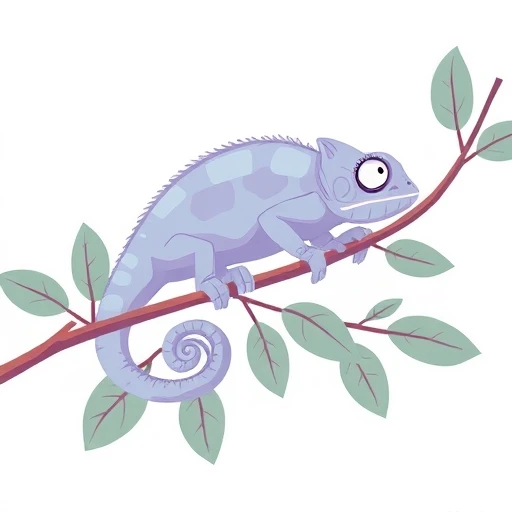
adaptive 30 सेकंड में
- Adaptive describes the ability to change and adjust effectively in response to new information or a changing environment, ensuring continued success or survival.
- It is commonly used in biology to describe evolutionary traits, in technology for responsive systems, and in psychology for healthy coping mechanisms.
- The word implies a smart, purposeful flexibility rather than just being random, often involving feedback loops and real-time modifications to a system.
- Common collocations include adaptive learning, adaptive reuse, and adaptive technology, all highlighting the word's focus on functional and structural adjustment.
The word adaptive is a powerful adjective used to describe the capacity for change, specifically change that is purposeful and beneficial in response to a shifting environment. At its core, being adaptive means you don't just sit still when the world moves; you move with it, adjusting your shape, your strategy, or your very nature to ensure continued success or survival. In the modern world, this term has migrated from the dusty pages of biology textbooks into the high-tech corridors of Silicon Valley and the boardrooms of global corporations. When we call a system, a person, or a biological organism adaptive, we are paying it a high compliment regarding its resilience and intelligence.
- Biological Context
- In biology, adaptive traits are those evolutionary adjustments that increase an organism's chances of survival and reproduction. For instance, the thick fur of a polar bear is an adaptive response to the freezing Arctic climate.
Beyond biology, the term is ubiquitous in technology. Have you ever noticed how a website looks different on your phone than it does on your laptop? That is adaptive design. The software detects the screen size and reconfigures itself to provide the best user experience. Similarly, adaptive learning platforms in education analyze a student's performance in real-time, making the questions harder or easier based on how well the student is doing. This ensures that the learner is always challenged but never overwhelmed.
The most successful companies in the 21st century are those with adaptive business models that can pivot during economic shifts.
- Psychological Perspective
- Psychologists use the term to describe healthy coping mechanisms. An adaptive person can handle stress by finding new ways to solve problems, whereas a 'maladaptive' person might fall into harmful habits when things get tough.
In social settings, being adaptive involves 'reading the room.' If you walk into a formal wedding and realize everyone is speaking softly, an adaptive person lowers their voice to match the social climate. This social fluidity is a key component of emotional intelligence. The word implies a level of sophistication; it suggests that the change isn't random, but rather a calculated response to external data. Whether it's an adaptive cruise control in a car that adjusts speed based on the vehicle in front, or an adaptive athlete using modified equipment to compete at the highest levels, the word always points toward the triumph of flexibility over rigidity.
Living in a foreign country requires an adaptive mindset to navigate different cultural norms.
- Environmental Usage
- Urban planners now focus on adaptive reuse, which is the process of taking old buildings—like abandoned factories—and turning them into modern apartments or offices instead of tearing them down.
The octopus is famous for its adaptive camouflage, allowing it to blend into any seafloor texture.
Our adaptive immune system learns to recognize and fight new viruses over time.
The software uses adaptive algorithms to predict stock market trends with high accuracy.
Using adaptive correctly requires understanding its role as a descriptor of function. It almost always precedes a noun that represents a system, a behavior, or a physical trait. Because it is a B2-level word, it carries a tone of professional or scientific precision. You wouldn't usually say a person is 'adaptive' if they just changed their clothes; you would use it if they changed their entire way of working to fit a new office culture. It implies a deeper, more structural level of modification.
- As an Attributive Adjective
- This is the most common usage, where the word comes directly before the noun. Example: 'The team implemented an adaptive strategy.' Here, it modifies 'strategy' to show that the strategy itself is designed to change.
When using it after a linking verb like 'is' or 'becomes', it describes the subject's inherent quality. For example, 'The new AI is highly adaptive.' This tells us that the AI possesses the quality of being able to learn and change. It is often paired with adverbs like 'highly,' 'remarkably,' 'inherently,' or 'extremely' to emphasize the degree of flexibility. In academic writing, you might see it paired with 'evolutionary' or 'technological' to specify the domain of the adaptation.
To survive in the wild, animals must possess adaptive traits that help them find food in scarce conditions.
- In Technical Phrases
- In engineering, 'adaptive control' refers to a controller that must adapt to a controlled system with parameters which vary or are initially uncertain. This is very common in aerospace and robotics.
Another nuance involves the word 'maladaptive.' This is the direct opposite and is frequently used in psychology to describe behaviors that prevent a person from adjusting to new situations. For example, 'Avoidance is often a maladaptive response to anxiety.' By understanding 'adaptive,' you automatically gain access to a whole family of related concepts in clinical and social sciences. When writing, try to use 'adaptive' when you want to sound more formal than 'flexible' or 'adjustable.' It suggests a level of intelligence or design behind the flexibility.
The city's adaptive infrastructure can withstand both extreme heat and heavy flooding.
- Collocations to Remember
- Common pairings include: adaptive capacity, adaptive management, adaptive technology, and adaptive behavior. Using these will make your English sound more natural and professional.
Her adaptive leadership style allowed her to manage teams across four different continents successfully.
Modern web development relies heavily on adaptive layouts that work on any device.
The adaptive reuse of the old warehouse turned it into a vibrant community center.
In the real world, adaptive is a staple of professional discourse. If you are listening to a TED Talk about the future of work, you will almost certainly hear the speaker emphasize the need for an 'adaptive workforce.' This refers to employees who can learn new skills quickly as AI and automation change the job market. It is a buzzword in the tech industry, particularly in the fields of Artificial Intelligence and Machine Learning. Developers talk about 'adaptive algorithms' that improve themselves based on the data they process. This isn't just jargon; it's a fundamental description of how modern software functions.
- In the News
- You'll hear this word frequently in reports about climate change. Journalists discuss 'adaptive measures' that cities are taking to prepare for rising sea levels, such as building floating houses or adjustable sea walls.
If you're a gamer, you might have heard of 'adaptive triggers' on the PlayStation 5 controller. This is a very specific, high-profile use of the word in consumer electronics. The triggers change their resistance based on what's happening in the game—for example, making it harder to pull the trigger when your character is tired or using a heavy weapon. This 'adaptive' feedback makes the experience more immersive. Similarly, in the automotive world, 'adaptive headlights' turn as you turn the steering wheel, illuminating the curve of the road ahead rather than just pointing straight.
The documentary highlighted the adaptive behaviors of urban foxes living in London.
- In Education
- Teachers often discuss 'adaptive testing.' Unlike traditional exams where everyone gets the same questions, adaptive tests change the next question based on whether you got the previous one right.
In the corporate world, 'adaptive management' is a formal framework. It treats management as an experiment where you constantly monitor results and change your strategy. If you work for a multinational company, you might hear your manager say, 'We need to be more adaptive in our approach to the Asian market.' This is a polite way of saying the current plan isn't working and needs to change. It's a word that signals a willingness to learn and a lack of ego. In the medical field, doctors talk about the 'adaptive immune response,' which is how your body remembers a virus so it can fight it better next time. This is the scientific basis for how vaccines work.
The athlete used an adaptive bicycle designed for riders with limited mobility.
- In Nature Documentaries
- Narrators like David Attenborough often use 'adaptive' to describe how animals have evolved unique features to survive in extreme environments like the Sahara or the deep ocean.
The new office features adaptive lighting that changes color temperature throughout the day.
Economists are studying the adaptive expectations of consumers during periods of high inflation.
The adaptive noise-canceling headphones adjust to the level of sound in your environment.
Even advanced learners often stumble when choosing between adaptive, adaptable, and adapted. While they all share the same root, their grammatical functions and nuances are distinct. The most frequent error is using 'adaptive' when you actually mean 'adaptable.' Although they are close synonyms, 'adaptable' is usually used to describe a person's personality or a general quality of a thing, whereas 'adaptive' is used to describe a specific function or a biological/technical process. For example, you would say 'He is an adaptable person' (personality), but 'He showed adaptive behavior' (a specific action that helped him adjust).
- Adaptive vs. Adapted
- 'Adapted' is the past participle used as an adjective. It means something has already been changed for a specific purpose. 'An adapted car' is a car that has already been modified. 'An adaptive car' is a car that has the technology to change itself while you are driving it.
Another mistake is using 'adaptive' as a verb. There is no such verb as 'to adaptive.' The verb is 'to adapt.' You might say, 'The system needs to adapt,' not 'The system needs to adaptive.' Similarly, learners sometimes forget the 'e' at the end of the root when adding the suffix, though this is more of a spelling error. In terms of register, using 'adaptive' in a very casual setting might sound a bit 'try-hard' or overly academic. If you're just talking about a friend who is easy-going, 'flexible' or 'easy-going' is much better than 'adaptive.'
Incorrect: The software is adapted to your needs. (Unless it was manually changed by a person). Correct: The software is adaptive to your needs. (It changes itself).
- Confusing with 'Adoptive'
- This is a classic 'false friend' or phonetic confusion. 'Adoptive' refers to adoption (e.g., 'adoptive parents'). It has nothing to do with flexibility or change. Always double-check the 'a' vs 'o'.
In academic writing, avoid using 'adaptive' as a vague buzzword. If you say a strategy is adaptive, you must explain *how* it adapts. Is it through data feedback? Is it through evolutionary pressure? Without the 'how,' the word loses its power and becomes what linguists call a 'weasel word'—something that sounds impressive but lacks concrete meaning. Also, be careful with the preposition. We usually say 'adaptive to' something, not 'adaptive for' or 'adaptive with'. For example, 'The organism is adaptive to its environment.'
Incorrect: We need an adaptive for the new system. Correct: We need an adaptation for the new system. (Adaptive is an adjective, not a noun).
- Overuse in Business
- Avoid using 'adaptive' in every sentence of a business proposal. It can start to sound like corporate speak. Mix it up with 'responsive,' 'agile,' or 'dynamic' to keep your writing fresh.
The adaptive nature of the virus makes it difficult to create a permanent vaccine.
Using adaptive learning software, the teacher was able to help students of all levels simultaneously.
The adaptive reuse project saved the historic theater from demolition.
To truly master adaptive, you must know its neighbors. The English language is rich with words that describe change and flexibility, but each has a slightly different 'flavor.' Understanding these differences will help you choose the exact right word for your context. The most common alternative is flexible. While 'flexible' is a great all-purpose word, it often implies physical bendability or a person who is easy-going. 'Adaptive' is more technical and implies a functional change in response to data. You might have a flexible schedule, but you have an adaptive business strategy.
- Adaptive vs. Versatile
- 'Versatile' means having many different uses or skills (e.g., a versatile tool). 'Adaptive' means the ability to change to fit a *new* situation. A Swiss Army knife is versatile; a chameleon is adaptive.
Another close relative is resilient. Resilience is the ability to 'bounce back' after a shock or a failure. Adaptability is the ability to 'change' so that the shock doesn't hurt you as much next time. They often go hand-in-hand. A resilient city recovers from a flood; an adaptive city builds infrastructure that moves with the water. In the world of modern business, the word agile has become a very popular alternative. 'Agile' specifically refers to a method of working that is fast, iterative, and responsive to customer feedback. It is very similar to 'adaptive' but is more focused on speed and teamwork.
The new adaptive cruise control is much more responsive than the older models.
- Adaptive vs. Malleable
- 'Malleable' usually describes materials like clay or metal that can be hammered into shape. Metaphorically, it can describe a person who is easily influenced by others. 'Adaptive' implies a self-directed change, whereas 'malleable' implies being changed by an outside force.
In scientific contexts, you might use plastic (as in 'neuroplasticity'). This doesn't mean the brain is made of plastic; it means the brain is 'plastic'—it can be molded and changed by experience. This is a very specific type of adaptive quality. On the more formal side, malleable and pliable are excellent words for physical flexibility, while accommodating is a great word for a person who is willing to change their plans to help others. Finally, consider fluid. A 'fluid situation' is one that is changing rapidly, requiring an adaptive response from those involved. By choosing between these synonyms, you can add layers of meaning to your English that 'flexible' simply cannot reach.
The adaptive nature of the project made it more malleable to the client's changing demands.
- Register Comparison
- Informal: Flexible, easy-going. Neutral: Adjustable, responsive. Formal/Academic: Adaptive, malleable, dynamic, resilient.
Plants have adaptive mechanisms to survive in high-salinity soil.
The company's adaptive culture is its greatest competitive advantage.
The adaptive optics in the telescope correct for atmospheric distortion in real-time.
How Formal Is It?
रोचक तथ्य
The word 'adaptive' didn't become popular until the 1800s when Charles Darwin's theories of evolution made 'adaptation' a household concept.
उच्चारण मार्गदर्शिका
- Stressing the first syllable (A-daptive)
- Pronouncing it like 'adoptive' with an 'o' sound
- Missing the 'p' sound
- Making the 'i' sound too long like 'ee'
- Confusing the 'v' with an 'f' sound at the end
कठिनाई स्तर
Common in news and science articles, but requires context to fully grasp.
Easy to misspell or confuse with 'adaptable' or 'adapted'.
Pronunciation is straightforward, but it's a formal word.
Can be confused with 'adoptive' if spoken quickly.
आगे क्या सीखें
पूर्वापेक्षाएँ
आगे सीखें
उन्नत
ज़रूरी व्याकरण
Adjective Placement
The adaptive (adj) system (noun) works well.
Adverb Modification
The system is remarkably (adv) adaptive (adj).
Prepositional Choice
Adaptive TO (not for) the environment.
Suffix '-ive'
Turns the verb 'adapt' into an adjective describing a quality.
Antonym Prefix 'mal-'
Maladaptive describes the opposite of adaptive.
स्तर के अनुसार उदाहरण
The toy is adaptive and can change shape.
Le jouet est adaptatif et peut changer de forme.
Simple adjective use.
A chameleon is an adaptive animal.
Un caméléon est un animal adaptatif.
Adjective before noun.
I am adaptive when I travel.
Je suis adaptatif quand je voyage.
Used after 'am'.
Adaptive clothes fit different people.
Les vêtements adaptatifs vont à différentes personnes.
Plural noun.
The light is adaptive to the room.
La lumière est adaptative à la pièce.
Preposition 'to'.
He has an adaptive bike.
Il a un vélo adaptatif.
Article 'an' before 'a'.
The school has adaptive programs.
L'école a des programmes adaptatifs.
Descriptive adjective.
Be adaptive and try new food.
Soyez adaptatif et essayez de nouveaux aliments.
Imperative mood.
The phone has an adaptive screen.
Le téléphone a un écran adaptatif.
Focus on technology.
Plants are adaptive to the sun.
Les plantes sont adaptatives au soleil.
Subject-verb-adjective.
She uses adaptive software for school.
Elle utilise un logiciel adaptatif pour l'école.
Compound noun phrase.
Adaptive shoes help him walk better.
Des chaussures adaptatives l'aident à mieux marcher.
Help + verb.
The team is very adaptive.
L'équipe est très adaptative.
Adverb 'very' modifying adjective.
We need an adaptive plan for the party.
Nous avons besoin d'un plan adaptatif pour la fête.
Noun modification.
The car has adaptive lights.
La voiture a des phares adaptatifs.
Technical feature.
Is your chair adaptive?
Votre chaise est-elle adaptative ?
Question form.
The company uses adaptive marketing strategies.
L'entreprise utilise des stratégies de marketing adaptatives.
Business context.
Adaptive learning helps students progress faster.
L'apprentissage adaptatif aide les étudiants à progresser plus vite.
Gerund phrase as subject.
The building has an adaptive heating system.
Le bâtiment dispose d'un système de chauffage adaptatif.
Complex noun phrase.
You must be adaptive in a fast-paced job.
Vous devez être adaptatif dans un travail au rythme soutenu.
Modal 'must'.
The virus is highly adaptive to medicine.
Le virus est hautement adaptatif aux médicaments.
Adverb 'highly'.
Adaptive clothing is great for the elderly.
Les vêtements adaptatifs sont parfaits pour les personnes âgées.
Adjective for specific demographic.
The game's difficulty is adaptive.
La difficulté du jeu est adaptative.
Possessive noun.
We implemented an adaptive management style.
Nous avons mis en œuvre un style de gestion adaptatif.
Past tense verb.
The city's adaptive infrastructure reduces flood risk.
L'infrastructure adaptative de la ville réduit les risques d'inondation.
B2 level environmental vocabulary.
Adaptive cruise control maintains a safe distance.
Le régulateur de vitesse adaptatif maintient une distance de sécurité.
Technical compound noun.
The species survived due to its adaptive traits.
L'espèce a survécu grâce à ses traits adaptatifs.
Prepositional phrase 'due to'.
The software features an adaptive user interface.
Le logiciel dispose d'une interface utilisateur adaptative.
Verb 'features'.
Successful leaders possess an adaptive mindset.
Les leaders qui réussissent possèdent une mentalité adaptative.
Abstract noun modification.
The project focuses on the adaptive reuse of old mills.
Le projet se concentre sur la réutilisation adaptative d'anciens moulins.
Specific architectural term.
The immune system's adaptive response is complex.
La réponse adaptative du système immunitaire est complexe.
Biological terminology.
The economy is showing adaptive signs of recovery.
L'économie montre des signes adaptatifs de reprise.
Present continuous.
Adaptive governance is essential for climate resilience.
La gouvernance adaptative est essentielle pour la résilience climatique.
Academic political science term.
The algorithm employs adaptive bitrate streaming.
L'algorithme utilise le streaming à débit binaire adaptatif.
High-level tech term.
His maladaptive behaviors were replaced by adaptive ones.
Ses comportements inadaptés ont été remplacés par des comportements adaptatifs.
Comparison with antonym.
The telescope uses adaptive optics to clear the image.
Le télescope utilise l'optique adaptative pour éclaircir l'image.
Scientific precision.
The organization's adaptive capacity was tested by the crisis.
La capacité d'adaptation de l'organisation a été testée par la crise.
Passive voice.
Adaptive radiation led to a variety of finch species.
La radiation adaptative a conduit à une variété d'espèces de pinsons.
Specific evolutionary term.
The policy requires an adaptive approach to regulation.
La politique nécessite une approche adaptative de la réglementation.
Formal requirement.
The neural networks are inherently adaptive.
Les réseaux de neurones sont intrinsèquement adaptatifs.
Adverb 'inherently'.
The philosophical debate centers on the adaptive nature of consciousness.
Le débat philosophique porte sur la nature adaptative de la conscience.
Abstract philosophical context.
The system exhibits emergent, adaptive properties.
Le système présente des propriétés émergentes et adaptatives.
Systems theory terminology.
Socio-ecological systems require adaptive co-management.
Les systèmes socio-écologiques nécessitent une cogestion adaptative.
Interdisciplinary term.
The adaptive landscape model visualizes evolutionary fitness.
Le modèle de paysage adaptatif visualise l'aptitude évolutive.
Highly specialized scientific model.
The critique focused on the limits of adaptive functionalism.
La critique s'est concentrée sur les limites du fonctionnalisme adaptatif.
Sociological theory.
The organism's phenotypic plasticity is an adaptive marvel.
La plasticité phénotypique de l'organisme est une merveille adaptative.
Advanced biological phrasing.
Cybernetic systems are defined by their adaptive feedback loops.
Les systèmes cybernétiques se définissent par leurs boucles de rétroaction adaptatives.
Technical definition.
The adaptive unconscious processes vast amounts of data.
L'inconscient adaptatif traite d'énormes quantités de données.
Psychological theory.
सामान्य शब्द संयोजन
सामान्य वाक्यांश
— Very good at changing to fit new situations.
The new species is highly adaptive to urban life.
— Being flexible by its very nature.
Human beings are inherently adaptive creatures.
— Able to handle and use changes effectively.
The business must be adaptive to change to survive.
— Steps taken to adjust to a new situation.
The city took adaptive measures against the rising sea.
— Parts of a system that allow it to change.
The app has several adaptive features for users.
— Plans that can change as more info is learned.
We need adaptive strategies for this volatile market.
— Evolution that helps a species fit its environment.
Adaptive evolution takes thousands of years.
— A system that adjusts its own parameters.
The robot uses adaptive control to walk on ice.
— A test that changes based on your answers.
The GRE uses adaptive testing for its questions.
— Leading by helping people adjust to challenges.
Adaptive leadership is required in times of crisis.
अक्सर इससे भ्रम होता है
Adaptable is usually for a person's character; adaptive is for a system's function.
Adapted means the change has already happened; adaptive means it has the ability to change.
Adoptive relates to adoption (parents/children), not flexibility.
मुहावरे और अभिव्यक्तियाँ
— To be adaptive and handle difficulties without getting upset.
In this job, you have to learn to roll with the punches.
Informal— To be adaptive and accept things as they happen.
I don't have a plan; I'm just going with the flow.
Informal— To be flexible and adaptive rather than breaking under pressure.
To survive the merger, he had to bend like a reed.
Literary— To be adaptive and make quick decisions in a changing situation.
A good teacher needs to think on their feet.
Neutral— To be adaptive to modern trends and ideas.
Old companies must change with the times or fail.
Neutral— To remain adaptive by not committing to a single path too early.
I'm keeping my options open until I hear all the offers.
Neutral— To be extremely adaptive and change direction very quickly.
The startup was able to turn on a dime when the market shifted.
Informal— To be adaptive by living within your means or adapting to your resources.
We had to cut our coat according to our cloth after the budget cut.
Idiomatic— To be adaptive and survive a difficult period.
The company managed to weather the storm by being adaptive.
Neutral— To be adaptive and do your best with the situation you have.
It's not the perfect situation, but we have to play the hand we're dealt.
Informalआसानी से भ्रमित होने वाले
Similar sound and meaning.
Adaptable is a general trait (He is adaptable). Adaptive is a functional process (The software is adaptive).
She is an adaptable worker, but the software she uses is adaptive.
Both are adjectives from 'adapt'.
Adapted is a past state (The book was adapted for film). Adaptive is a current ability (The adaptive screen changes).
The adapted car has a ramp, but the adaptive car drives itself.
Phonetic similarity.
Adoptive is about taking something as one's own (adoption). Adaptive is about changing to fit.
His adoptive parents taught him to be adaptive to new cultures.
Similar suffix.
Additive means adding something. Adaptive means changing something.
The fuel has an additive, but the engine is adaptive.
Similar spelling.
Adept means very skilled. Adaptive means flexible.
He is adept at being adaptive in high-pressure situations.
वाक्य संरचनाएँ
The [noun] is adaptive.
The chair is adaptive.
It is an adaptive [noun].
It is an adaptive program.
The [noun] is adaptive to [noun].
The plant is adaptive to the desert.
[Noun] requires an adaptive approach.
Success requires an adaptive approach.
Highly adaptive [noun] can [verb].
Highly adaptive systems can survive crises.
The adaptive nature of [noun] allows for [noun].
The adaptive nature of the virus allows for rapid spread.
By exhibiting adaptive [noun], the [noun] achieves [noun].
By exhibiting adaptive behaviors, the species achieves fitness.
Critiquing the [noun] as a maladaptive rather than adaptive [noun].
Critiquing the policy as a maladaptive rather than adaptive measure.
शब्द परिवार
संज्ञा
क्रिया
विशेषण
संबंधित
इसे कैसे इस्तेमाल करें
Common in professional, scientific, and technical contexts.
-
Using 'adoptive' instead of 'adaptive'.
→
The system is adaptive.
Adoptive is for family adoption; adaptive is for flexibility.
-
Saying 'The software is adapted' when you mean it changes itself.
→
The software is adaptive.
Adapted means someone else changed it; adaptive means it changes itself.
-
Using 'adaptive' as a noun.
→
The system shows great adaptability.
Adaptive is an adjective; use adaptability or adaptation for the noun.
-
Misplacing the stress on the first syllable.
→
uh-DAP-tiv
The stress must be on the second syllable for correct English pronunciation.
-
Using 'adaptive for' instead of 'adaptive to'.
→
It is adaptive to the climate.
The standard preposition used with adaptive is 'to'.
सुझाव
Choose the Right Context
Use 'adaptive' when talking about systems, biology, or tech. Use 'flexible' for schedules and 'adaptable' for people's personalities.
Watch the Preposition
Always use 'adaptive to'. For example: 'The system is adaptive to user needs.' Avoid using 'for' or 'with'.
Learn the Antonym
Learning 'maladaptive' at the same time will help you understand the concept of 'good' vs 'bad' changes in psychology and biology.
Use in Interviews
Saying you have an 'adaptive approach to problem-solving' sounds much more professional than saying you are 'okay with change'.
Don't Forget the 'P'
Many learners accidentally write 'adative'. Remember the 'p' from 'adapt' must stay in the word.
Adaptive vs Responsive
In web design, 'adaptive' means several fixed layouts, while 'responsive' means one layout that moves fluidly. Know the difference in tech circles!
Feedback Loops
In academic writing, 'adaptive' often implies a feedback loop where the system gets data and then changes itself.
Evolutionary Success
In biology, an adaptive trait is only 'adaptive' if it helps the animal have more babies. It's about long-term success.
The Adapter Plug
Visualize a universal travel adapter. It is the ultimate 'adaptive' tool because it changes to fit any wall in the world.
Stress the 'DAP'
Make sure the middle syllable is the loudest. uh-DAP-tiv. This makes the word clear and easy to understand.
याद करें
स्मृति सहायक
Think of an 'Adaptive Adapter'. Just like a travel adapter changes to fit different plugs, something adaptive changes to fit different situations.
दृश्य संबंध
Imagine a chameleon standing on a rainbow, its skin changing colors in real-time to match every stripe. That is the essence of being adaptive.
Word Web
चैलेंज
Try to use the word 'adaptive' three times today: once about a piece of technology, once about a person you know, and once about a plant or animal.
शब्द की उत्पत्ति
From the Latin verb 'adaptare', which combines 'ad-' (to) and 'aptare' (to fit). The suffix '-ive' was added in the 17th century to create the adjective form.
मूल अर्थ: The original meaning in Latin was 'to fit' or 'to make suitable'.
Indo-European (Latin branch)सांस्कृतिक संदर्भ
When using 'adaptive' in the context of 'adaptive sports' or 'adaptive equipment,' be respectful as it refers to accessibility for people with disabilities.
In English-speaking workplaces, 'adaptive' is a high-praise buzzword. It suggests you are a 'problem solver' who doesn't complain when plans change.
असल ज़िंदगी में अभ्यास करें
वास्तविक संदर्भ
Biology
- adaptive trait
- adaptive radiation
- adaptive evolution
- adaptive immunity
Technology
- adaptive interface
- adaptive algorithm
- adaptive bitrate
- adaptive sync
Business
- adaptive strategy
- adaptive leadership
- adaptive management
- adaptive workforce
Architecture
- adaptive reuse
- adaptive building
- adaptive lighting
- adaptive facade
Psychology
- adaptive behavior
- adaptive coping
- adaptive unconscious
- adaptive functioning
बातचीत की शुरुआत
"Do you think people are becoming more or less adaptive because of technology?"
"What is the most adaptive animal you can think of, and why?"
"How has your workplace been adaptive during the last few years of global change?"
"Do you prefer adaptive learning software or traditional classroom teaching?"
"Can you think of an example of adaptive reuse in our city?"
डायरी विषय
Describe a time when you had to be adaptive to a difficult situation. What did you change about yourself?
If you could have one adaptive biological trait from an animal, what would it be and how would it help you?
How can a city become more adaptive to the challenges of the 21st century?
Is being adaptive always a good thing, or is there value in being rigid sometimes?
Write about a piece of technology you use that is adaptive. How does it make your life easier?
अक्सर पूछे जाने वाले सवाल
10 सवालYes, in almost all contexts, being adaptive is seen as a strength. It implies intelligence, resilience, and the ability to survive and thrive in changing conditions. The only negative version is 'maladaptive,' which describes harmful changes.
You can, but 'adaptable' is more common for describing a person's personality. If you say someone is 'adaptive,' it sounds a bit more scientific, as if you are describing their specific behavioral responses to a situation.
It is an architectural term for taking an old building and using it for something new. For example, turning an old church into a library or an old factory into apartments is adaptive reuse.
It usually refers to software or hardware that changes based on user input or environmental data. Examples include adaptive brightness on a phone or adaptive learning in online courses.
Flexible is a general word for anything that can bend or change. Adaptive is more specific; it implies that the change is a smart response to a new situation to achieve a goal.
Yes, specifically in 'adaptive immunity.' This is the part of your immune system that learns to recognize specific germs after you have been exposed to them or vaccinated.
It is the opposite of adaptive. It describes a change or behavior that is not helpful or is actually harmful to the person or system in the long run.
It is a B2-level word, meaning it is common in professional, academic, and technical English, but less common in very basic, everyday conversation.
No, 'adaptive' is only an adjective. The noun forms are 'adaptation' (the act of changing) or 'adaptability' (the quality of being able to change).
It is pronounced uh-DAP-tiv. The emphasis is on the second syllable, and the 'a' in 'dap' sounds like the 'a' in 'apple'.
खुद को परखो 190 सवाल
Write a sentence using 'adaptive' to describe a piece of technology.
Well written! Good try! Check the sample answer below.
Describe an adaptive animal and why it is adaptive.
Well written! Good try! Check the sample answer below.
Use 'adaptive reuse' in a sentence about a building.
Well written! Good try! Check the sample answer below.
Write a short paragraph about why being adaptive is important in a job.
Well written! Good try! Check the sample answer below.
Compare 'adaptive' and 'flexible' in two sentences.
Well written! Good try! Check the sample answer below.
Write a sentence using 'maladaptive'.
Well written! Good try! Check the sample answer below.
Use 'adaptive learning' in a sentence about education.
Well written! Good try! Check the sample answer below.
Write a sentence about 'adaptive cruise control'.
Well written! Good try! Check the sample answer below.
Describe an 'adaptive mindset' in your own words.
Well written! Good try! Check the sample answer below.
Write a sentence using 'adaptive' in a biological context.
Well written! Good try! Check the sample answer below.
Use 'highly adaptive' to describe a company.
Well written! Good try! Check the sample answer below.
Write a sentence about 'adaptive lighting'.
Well written! Good try! Check the sample answer below.
Explain 'adaptive governance' in one sentence.
Well written! Good try! Check the sample answer below.
Write a sentence using 'adaptive' and 'environment'.
Well written! Good try! Check the sample answer below.
Use 'adaptive' in a sentence about sports.
Well written! Good try! Check the sample answer below.
Write a sentence about 'adaptive bitrate'.
Well written! Good try! Check the sample answer below.
Describe an 'adaptive strategy' for a business.
Well written! Good try! Check the sample answer below.
Write a sentence about 'adaptive optics'.
Well written! Good try! Check the sample answer below.
Use 'adaptive' to describe a person's behavior.
Well written! Good try! Check the sample answer below.
Write a sentence about the 'adaptive immune system'.
Well written! Good try! Check the sample answer below.
Pronounce the word 'adaptive' clearly.
Read this aloud:
तुमने कहा:
Speech recognition is not supported in your browser. Try Chrome or Edge.
Explain the meaning of 'adaptive' in your own words.
Read this aloud:
तुमने कहा:
Speech recognition is not supported in your browser. Try Chrome or Edge.
Give an example of an adaptive animal.
Read this aloud:
तुमने कहा:
Speech recognition is not supported in your browser. Try Chrome or Edge.
How can a student be adaptive?
Read this aloud:
तुमने कहा:
Speech recognition is not supported in your browser. Try Chrome or Edge.
Describe a piece of adaptive technology.
Read this aloud:
तुमने कहा:
Speech recognition is not supported in your browser. Try Chrome or Edge.
What is 'adaptive reuse'?
Read this aloud:
तुमने कहा:
Speech recognition is not supported in your browser. Try Chrome or Edge.
Why is being adaptive important in business?
Read this aloud:
तुमने कहा:
Speech recognition is not supported in your browser. Try Chrome or Edge.
What is the opposite of 'adaptive'?
Read this aloud:
तुमने कहा:
Speech recognition is not supported in your browser. Try Chrome or Edge.
Use 'highly adaptive' in a sentence about a person.
Read this aloud:
तुमने कहा:
Speech recognition is not supported in your browser. Try Chrome or Edge.
Explain 'adaptive learning' to a friend.
Read this aloud:
तुमने कहा:
Speech recognition is not supported in your browser. Try Chrome or Edge.
What is an 'adaptive trait'?
Read this aloud:
तुमने कहा:
Speech recognition is not supported in your browser. Try Chrome or Edge.
How do you pronounce 'maladaptive'?
Read this aloud:
तुमने कहा:
Speech recognition is not supported in your browser. Try Chrome or Edge.
Describe an 'adaptive mindset'.
Read this aloud:
तुमने कहा:
Speech recognition is not supported in your browser. Try Chrome or Edge.
What are 'adaptive optics'?
Read this aloud:
तुमने कहा:
Speech recognition is not supported in your browser. Try Chrome or Edge.
Give a sentence with 'adaptive' and 'climate'.
Read this aloud:
तुमने कहा:
Speech recognition is not supported in your browser. Try Chrome or Edge.
What is 'adaptive bitrate'?
Read this aloud:
तुमने कहा:
Speech recognition is not supported in your browser. Try Chrome or Edge.
Is being adaptive a skill or a talent?
Read this aloud:
तुमने कहा:
Speech recognition is not supported in your browser. Try Chrome or Edge.
What is 'adaptive leadership'?
Read this aloud:
तुमने कहा:
Speech recognition is not supported in your browser. Try Chrome or Edge.
Use 'adaptive' in a sentence about your favorite hobby.
Read this aloud:
तुमने कहा:
Speech recognition is not supported in your browser. Try Chrome or Edge.
What is the difference between 'adaptive' and 'adapted'?
Read this aloud:
तुमने कहा:
Speech recognition is not supported in your browser. Try Chrome or Edge.
Listen for the word: 'The system is adaptive to user needs.' What is the system adaptive to?
Listen for the word: 'We need an adaptive approach.' What kind of approach is needed?
Listen for the word: 'Adaptive reuse is popular now.' What is popular?
Listen for the word: 'The virus is highly adaptive.' How adaptive is the virus?
Listen for the word: 'He uses adaptive technology.' What does he use?
Listen for the word: 'Adaptive learning helps students.' Who does it help?
Listen for the word: 'The car has adaptive lights.' What part of the car is adaptive?
Listen for the word: 'It's an adaptive response.' What kind of response is it?
Listen for the word: 'Adaptive management is key.' What is key?
Listen for the word: 'The triggers are adaptive.' What are the triggers?
Listen for the word: 'Adaptive radiation is complex.' Is it simple or complex?
Listen for the word: 'She has an adaptive mindset.' What kind of mindset does she have?
Listen for the word: 'The software is adaptive.' What is adaptive?
Listen for the word: 'Adaptive optics improve images.' What do they improve?
Listen for the word: 'Be adaptive to change.' What should you be adaptive to?
The software is adapted to your needs automatically.
Use 'adaptive' for something that changes itself.
He is a very adaptive person.
Use 'adaptable' for a person's character.
We need to adaptive to the new rules.
Use the verb 'adapt' after 'to'.
The system is adaptive for the environment.
The correct preposition is 'to'.
She has an adoptive mindset.
Adoptive is for family; adaptive is for flexibility.
/ 190 correct
Perfect score!
Summary
The core of 'adaptive' is functional flexibility. For example, 'adaptive lighting' doesn't just turn on; it changes its brightness and color based on the time of day to help you stay productive.
- Adaptive describes the ability to change and adjust effectively in response to new information or a changing environment, ensuring continued success or survival.
- It is commonly used in biology to describe evolutionary traits, in technology for responsive systems, and in psychology for healthy coping mechanisms.
- The word implies a smart, purposeful flexibility rather than just being random, often involving feedback loops and real-time modifications to a system.
- Common collocations include adaptive learning, adaptive reuse, and adaptive technology, all highlighting the word's focus on functional and structural adjustment.
Choose the Right Context
Use 'adaptive' when talking about systems, biology, or tech. Use 'flexible' for schedules and 'adaptable' for people's personalities.
Watch the Preposition
Always use 'adaptive to'. For example: 'The system is adaptive to user needs.' Avoid using 'for' or 'with'.
Learn the Antonym
Learning 'maladaptive' at the same time will help you understand the concept of 'good' vs 'bad' changes in psychology and biology.
Use in Interviews
Saying you have an 'adaptive approach to problem-solving' sounds much more professional than saying you are 'okay with change'.
उदाहरण
Modern cars often have adaptive cruise control to maintain a safe following distance.
संबंधित सामग्री



संबंधित ग्रामर रूल्स
Other के और शब्द
abate
C1भोर में तूफान कम होने लगा।
abcarndom
C1इंजीनियर ने छिपे हुए बग खोजने के लिए परीक्षण अनुक्रम को abcarndom करने का निर्णय लिया।
abcenthood
C1अनुपस्थिति की स्थिति, खासकर जब आपकी उपस्थिति अपेक्षित या महत्वपूर्ण हो। (The state of being absent, especially when your presence is expected or important.) नेता की लंबी अनुपस्थिति ने मनोबल को प्रभावित किया। (The leader's long absence affected morale.)
abcitless
C1किसी ऐसी चीज़ का वर्णन करता है जिसमें एक बुनियादी, आवश्यक हिस्सा गायब है जो उसे पूर्ण या तार्किक बनाता है। (Describes something missing a basic, necessary part that makes something complete or logical.)
abcognacy
C1किसी विशेष विषय के बारे में अज्ञानता या अनभिज्ञता की स्थिति, विशेष रूप से एक विशेष या शैक्षणिक संदर्भ में। शोधकर्ताओं ने जलवायु परिवर्तन के संबंध में समाज की ऐतिहासिक 'abcognacy' पर चर्चा की।
abdocion
C1एक केंद्रीय अक्ष या स्थापित मानक से दूर जाने वाली गति या बल का वर्णन करना।
abdocly
C1किसी ऐसी चीज़ का वर्णन करना जो छिपी हुई, धंसी हुई, या गुप्त तरीके से घटित हो रही हो जो पर्यवेक्षक को तुरंत दिखाई न दे। इसका उपयोग मुख्य रूप से तकनीकी या शैक्षणिक संदर्भों में संरचनात्मक तत्वों या जैविक प्रक्रियाओं को दर्शाने के लिए किया जाता है जो एक बड़ी प्रणाली के भीतर छिपे होते हैं।
aberration
B2विपथन का अर्थ है वह जो सामान्य या अपेक्षित से अलग हो।
abfacible
C1पुरातत्वविदों को प्राचीन कलाकृतियों की बाहरी परतों को सावधानीपूर्वक <strong>हटाना</strong> (abfacible) पड़ता है ताकि उनके मूल स्वरूप का पता लगाया जा सके।
abfactency
C1'abfactency' एक ऐसी गुणवत्ता या स्थिति का वर्णन करता है जो अनुभवजन्य तथ्यों या वस्तुनिष्ठ वास्तविकता से मौलिक रूप से कटी हुई है।

