









burger 30 सेकंड में
- A burger is a sandwich with a cooked patty in a bun.
- It is a global food icon found in fast food and gourmet dining.
- The word is a clipping of 'hamburger' and is a countable noun.
- Common variations include cheeseburgers, veggie burgers, and sliders.
The term burger, a shortened form of hamburger, represents one of the most iconic and ubiquitous culinary items in the modern world. At its core, a burger is a sandwich consisting of one or more cooked patties—traditionally made from ground beef—placed inside a sliced bread roll or bun. However, the definition has expanded significantly in the twenty-first century to include a vast array of protein sources, including chicken, turkey, fish, and increasingly popular plant-based alternatives like soy, lentils, or lab-grown meat. The word is used globally to describe both the specific sandwich and the patty itself. People use this word in almost every social context related to dining, from casual backyard barbecues and fast-food drive-thrus to high-end 'gourmet' restaurants where burgers are served with truffle oil and artisanal cheeses. It is a staple of Western diet culture but has been localized in nearly every country, resulting in unique variations like the rice burger in Japan or the spicy bean burger in the United Kingdom.
- The Culinary Core
- The essential components of a burger include the bun, the patty, and the condiments. The bun is typically toasted to prevent it from becoming soggy from the meat juices.
I decided to order a classic cheeseburger with extra pickles because a burger is the ultimate comfort food after a long day of work.
When discussing a burger, the context often dictates the level of detail. In a casual setting, one might simply ask, 'Do you want a burger?' In a more culinary-focused discussion, the conversation might revolve around the 'grind' of the meat, the 'sear' on the patty, or the 'structural integrity' of the bun. The word carries a sense of informality and accessibility. It is rarely associated with formal galas, yet it has found a home in 'bistronomy,' where chefs elevate simple foods to high art. The versatility of the burger is what makes the word so frequent in the English language; it can be a five-minute meal or a twenty-dollar dining experience.
- Cultural Symbolism
- Beyond food, the burger symbolizes American fast-food expansion and the globalization of diet. It is often used in economic discussions, such as the 'Big Mac Index,' to compare purchasing power between nations.
The chef prepared a signature burger topped with caramelized onions and gruyère cheese.
The evolution of the word also reflects changing social values. The rise of the 'veggie burger' in the 1980s and the 'impossible burger' in the 2010s shows how the term adapts to include plant-based diets. Despite the lack of meat, these items are still called burgers because they mimic the form and function of the original. This linguistic flexibility ensures that the word remains relevant even as dietary habits shift toward sustainability and health-consciousness. Whether it is a 'slider' (a small burger) or a 'stacker' (a multi-patty burger), the linguistic root remains the same, anchoring the concept in the familiar imagery of a round bun and a savory filling.
- Global Variations
- In Australia, a 'burger with the lot' often includes a slice of beetroot and a fried egg, demonstrating how the basic concept of a burger is adapted to local tastes and traditions.
Even in the most remote towns, you can usually find a local shop selling a decent burger.
We fired up the grill to cook some burgers for the neighborhood block party.
The fast-food chain is famous for its double-decker burger which has become a cultural icon.
Using the word burger in a sentence requires an understanding of its role as a countable noun. Because it refers to a discrete object, it almost always requires an article (a, an, the) or a possessive pronoun (my, your, his). You can describe the burger using a wide range of adjectives that appeal to the senses. Common descriptors include 'juicy,' 'succulent,' 'greasy,' 'flame-grilled,' 'overdone,' or 'savory.' When ordering, the word often acts as the head of a noun phrase, modified by the specific type of burger or the desired toppings. For example, 'I would like a bacon cheeseburger' or 'Can I have a mushroom Swiss burger?' The word is also frequently used in the plural when referring to a batch of food being prepared for a group.
- As a Direct Object
- In most sentences, the burger is the thing being acted upon. Verbs like 'eat,' 'order,' 'cook,' 'grill,' 'flip,' and 'devour' are commonly paired with it.
After the hike, we were so hungry that we each ate a massive burger in record time.
Grammatically, 'burger' can also function as a modifier in compound nouns. You will see terms like 'burger joint,' 'burger bun,' 'burger sauce,' and 'burger press.' In these cases, the word describes the purpose or nature of the second noun. Furthermore, when using the word in a professional or culinary context, it might be used to refer specifically to the patty. A chef might say, 'The burgers are ready for the grill,' even if the buns are not yet present. This distinction is important for learners to grasp: while 'burger' usually means the whole sandwich, in the kitchen, it often refers to the meat portion alone. This dual meaning is usually clarified by the context of the sentence.
- Descriptive Adjectives
- To enhance your writing, use adjectives like 'artisanal,' 'mouth-watering,' 'char-broiled,' or 'plant-based' to specify the quality and type of the burger.
The restaurant's signature burger is known for its secret sauce and toasted brioche bun.
In comparative sentences, 'burger' is often used to contrast different dining experiences. One might say, 'This burger is much better than the one I had at the airport.' It is also a central word in discussions about health and nutrition. Sentences like 'I am trying to eat fewer burgers to lower my cholesterol' or 'This vegan burger has more protein than a beef one' are common in modern discourse. The word is flexible enough to be used in formal reports on the food industry as well as in informal text messages between friends. Understanding the nuances of its use—such as the difference between a 'patty' and a 'burger'—will help you sound more like a native speaker.
- Ordering Etiquette
- When ordering, you often specify how you want the meat cooked: rare, medium-rare, medium, or well-done. This is a common sentence pattern: 'I'd like my burger medium-rare, please.'
She grabbed a burger from the concession stand before the second half of the game started.
The menu featured a diverse selection of burgers, ranging from classic beef to spicy black bean.
He flipped the burger carefully to ensure it cooked evenly on both sides.
The word burger is a constant in the auditory landscape of English-speaking cultures. You will hear it most frequently in commercial environments. Fast-food advertisements on television and radio are saturated with the word, often accompanied by descriptive adjectives like 'flame-grilled' or 'big and beefy.' In these contexts, the word is used to evoke hunger and a sense of value. If you walk into a restaurant, the word will be spoken by servers asking for your order or by kitchen staff shouting out 'order up!' for a specific table. It is a functional word, essential for the daily operations of the global food service industry.
- In Popular Media
- Burgers are a staple of pop culture. Think of 'Bob's Burgers,' the 'Krabby Patty' (a type of burger), or the famous 'Royale with Cheese' dialogue in Pulp Fiction.
The commercial claimed that their new burger was the largest one ever sold in the country.
In social settings, the word is heard during casual planning. 'Let's go grab a burger' is a standard way to suggest a quick, informal meal. At a summer barbecue, you will hear people discussing the 'doneness' of the burgers or asking for specific toppings. The word carries a relaxed, social connotation. It is rarely heard in high-stakes formal negotiations, but it is frequently heard in the breakroom of an office or on a college campus. Furthermore, the word is often heard in the context of sports. Many stadiums and arenas are famous for their specific burgers, and fans will often talk about getting a burger during the halftime break.
- In Economic News
- Financial analysts sometimes use the 'burger' as a metric for inflation or the cost of living, referring to how the price of a standard burger has changed over time.
We heard the sizzle of the burger as it hit the hot flat-top grill at the diner.
Finally, you will hear the word in health and lifestyle podcasts or news segments. Experts might discuss the environmental impact of 'beef burgers' versus 'plant-based burgers,' or nutritionists might give advice on how to make a 'healthier burger' at home. In these contexts, the word is used as a focal point for broader discussions about diet, climate change, and personal wellness. The word is so deeply embedded in the English-speaking world that it serves as a linguistic shorthand for a specific type of meal, a specific type of culture, and even a specific type of economic activity. Whether you are in a boardroom or a backyard, the word 'burger' is likely to make an appearance.
- Travel and Tourism
- Travelers often search for the 'best burger in town' as a way to find reliable, tasty food in a new city, making it a key word in travel vlogs and blogs.
The podcast host interviewed a chef who spent ten years perfecting his wagyu beef burger recipe.
I heard the waiter describe the daily special as a lamb burger with feta cheese and mint yogurt.
The crowd cheered when the stadium announcer announced a free burger promotion for all attendees.
While burger is a relatively simple word, learners often make specific errors regarding its categorization and usage. One common mistake is confusing the 'burger' (the whole sandwich) with the 'patty' (the meat disk). While native speakers sometimes use them interchangeably, in a technical or cooking context, they are distinct. Saying 'I want to buy some burgers' at a grocery store might lead a clerk to point you to the frozen patties, whereas saying 'I want to buy a burger' at a restaurant clearly means the sandwich. Another frequent error is the misuse of the word 'hamburger.' Some learners assume 'hamburger' must contain ham. This is a false etymology; the word comes from the city of Hamburg, Germany, and historically refers to beef. Using 'ham burger' to describe a sandwich with ham is incorrect and confusing.
- Countability Errors
- 'Burger' is a countable noun. You cannot say 'I ate some burger' unless you are referring to a portion of a single burger. You must say 'I ate a burger' or 'I ate some burgers.'
Incorrect: I would like to order one hamburger with ham. Correct: I would like a burger with extra ham toppings.
Another nuance involves the distinction between a 'burger' and a 'sandwich.' While a burger is technically a type of sandwich, in many English-speaking regions (especially the US), people distinguish between the two based on the bread. If it is on a round bun, it is a burger. If it is on sliced rectangular bread, it is a sandwich. Calling a burger a 'sandwich' is technically correct but can sound overly formal or slightly off in a casual setting. Conversely, calling a chicken breast on a bun a 'chicken sandwich' is common in the US, while in the UK and Australia, it is often called a 'chicken burger.' This regional variation is a frequent source of confusion for international travelers and learners.
- Spelling and Pronunciation
- Learners sometimes misspell it as 'berger' or 'burguer.' The 'u' and 'er' ending are standard. Pronunciation-wise, the 'r' sounds are often softened in non-rhotic accents (like standard British), which can lead to listening errors.
Many people mistakenly think a burger is unhealthy by definition, but it depends entirely on the ingredients used.
Finally, be careful with the pluralization of compound words. It is 'cheeseburgers,' not 'cheese burgers' (though both are seen, the single word is preferred). When referring to the meat, 'ground burger' is sometimes used, but 'ground beef' is the more standard term. Using 'burger meat' is acceptable but slightly informal. Understanding these small distinctions will help you navigate a menu or a conversation with greater confidence. Remember that the word is flexible, but it still follows the standard rules of English grammar and regional cultural expectations.
- Regional Confusion
- In the US, a 'chicken burger' usually implies ground chicken, whereas a whole chicken breast on a bun is a 'chicken sandwich.' In the UK, both are often called 'burgers.'
He ordered a burger without realizing it came with onions, which he strongly dislikes.
The waiter asked if they wanted cheese on their burgers, which added an extra dollar to the price.
She was surprised to find that the 'veggie burger' was actually made of beets and quinoa.
The English language offers several synonyms and related terms for burger, each with its own nuance and register. The most direct synonym is 'hamburger,' which is the full, more formal version of the word. While 'burger' is more common in speech, 'hamburger' often appears on menus and in legal food labeling. Another close relative is the 'cheeseburger,' which specifically denotes a burger with a slice of melted cheese. For smaller portions, the term 'slider' is used. Sliders are typically two to three inches in diameter and are often served in sets of three. Using the word 'slider' instead of 'small burger' shows a higher level of vocabulary and familiarity with modern dining trends.
- Patty vs. Burger
- A 'patty' is the flat, round cake of minced food (usually meat). You can have a burger without a patty (like a 'portobello burger'), but you usually can't have a traditional burger without one.
Instead of a full meal, we ordered a plate of beef sliders to share as an appetizer.
In terms of broader categories, a burger is a type of 'sandwich.' However, as discussed previously, this term is much broader and includes everything from a PB&J to a club sandwich. In some contexts, you might hear the term 'steakhouse burger' to imply a higher quality of meat, or 'quarter-pounder' to refer to the weight of the meat before cooking. If you are looking for a healthier alternative, you might hear 'turkey burger,' 'veggie burger,' or 'garden burger.' Each of these specifies the primary ingredient while retaining the 'burger' format. In slang, you might hear 'sarnie' (UK) or 'butty' (UK), but these are generally reserved for sandwiches on sliced bread rather than burgers on buns.
- Gourmet Variations
- Terms like 'artisanal sandwich' or 'hand-crafted roll' are often used in high-end restaurants to describe what is essentially a burger, aiming to justify a higher price point.
The cafe offers a delicious portobello mushroom burger for those who don't eat meat.
There are also regional alternatives. In some parts of the Southern United States, a burger might be referred to as a 'patty melt' if it is served on grilled rye bread with melted cheese and onions. While similar, a patty melt is distinct from a standard burger because of the bread. In the world of fast food, you will encounter brand-specific names like 'Whopper' or 'Big Mac,' which have become so famous they almost act as synonyms for burgers within their respective franchises. Understanding these alternatives allows you to be more precise in your descriptions and more versatile in your conversations about food. Whether you choose the formal 'hamburger' or the trendy 'slider,' you are participating in a rich linguistic tradition centered around this simple yet beloved dish.
- Linguistic Comparisons
- Compare 'burger' (informal, common) with 'ground beef sandwich' (technical, rare) and 'hamburger' (standard, formal).
He preferred the hamburger from the local diner over the fancy one at the hotel.
The menu listed a 'bison burger,' which is a leaner alternative to traditional beef.
They served mini burgers at the party, which were easy for guests to eat while standing.
How Formal Is It?
रोचक तथ्य
Despite the name, a hamburger contains no ham. The 'ham' part refers to the city of Hamburg, not the pig meat. This has led to many people mistakenly thinking they are eating ham when they order a burger.
उच्चारण मार्गदर्शिका
- Pronouncing the 'u' like the 'u' in 'bus'.
- Making the 'g' sound too soft like a 'j'.
- Forgetting to pronounce the 'r' in American English.
- Over-emphasizing the second syllable.
- Pronouncing it as 'booger' (which means something very different!).
कठिनाई स्तर
The word is very common and easy to recognize in text.
Spelling is straightforward, but remember the 'u' and 'er'.
Pronunciation of the 'r' sounds can vary by accent.
Very easy to hear and understand in most contexts.
आगे क्या सीखें
पूर्वापेक्षाएँ
आगे सीखें
उन्नत
ज़रूरी व्याकरण
Countable Nouns
You must say 'a burger' or 'burgers', never just 'burger' in a singular sense without an article.
Compound Nouns
'Cheeseburger' is written as one word, while 'veggie burger' is often two.
Adjective Order
A 'big juicy beef burger' follows the standard order: size, quality, material.
Articles with Food
Use 'the' when referring to a specific burger you already mentioned.
Pluralization
Regular plural: just add 's' to make 'burgers'.
स्तर के अनुसार उदाहरण
I want a burger.
Je veux un burger.
Use 'a' before 'burger' because it is one thing.
Do you like burgers?
Aimes-tu les burgers ?
Use the plural 'burgers' when talking about them in general.
A cheeseburger, please.
Un cheeseburger, s'il vous plaît.
'Cheeseburger' is a compound noun.
The burger is big.
Le burger est grand.
Use 'the' to talk about a specific burger.
I eat a burger for lunch.
Je mange un burger pour le déjeuner.
Simple present tense for a regular habit.
This is a good burger.
C'est un bon burger.
'Good' is an adjective describing the burger.
My burger has no onions.
Mon burger n'a pas d'oignons.
Use 'no' to show something is missing.
He has two burgers.
Il a deux burgers.
Add 's' for the plural form.
I would like a burger with fries.
Je voudrais un burger avec des frites.
'Would like' is a polite way to order.
She ordered a chicken burger yesterday.
Elle a commandé un burger au poulet hier.
Past simple tense of 'order'.
Is there any cheese on this burger?
Y a-t-il du fromage sur ce burger ?
Question form with 'is there'.
We are making burgers at the barbecue.
Nous préparons des burgers au barbecue.
Present continuous for an action happening now.
This burger is better than the last one.
Ce burger est meilleur que le précédent.
Comparative adjective 'better than'.
You can find a burger shop on every street.
On peut trouver une boutique de burgers dans chaque rue.
'Burger shop' is a compound noun.
He doesn't want any ketchup on his burger.
Il ne veut pas de ketchup sur son burger.
Negative form with 'doesn't'.
How much is a classic burger here?
Combien coûte un burger classique ici ?
Asking about price with 'how much'.
If you grill the burger for too long, it will be dry.
Si vous grillez le burger trop longtemps, il sera sec.
First conditional sentence.
I prefer homemade burgers because they are healthier.
Je préfère les burgers faits maison car ils sont plus sains.
'Homemade' is a compound adjective.
The restaurant is famous for its giant burgers.
Le restaurant est célèbre pour ses burgers géants.
Possessive adjective 'its' refers to the restaurant.
Have you ever tried a veggie burger made of beans?
As-tu déjà essayé un burger végétarien à base de haricots ?
Present perfect with 'ever' for life experience.
While I was eating my burger, I realized I forgot my drink.
Pendant que je mangeais mon burger, j'ai réalisé que j'avais oublié ma boisson.
Past continuous for a background action.
The burger was served with a side of spicy mayo.
Le burger était servi avec un accompagnement de mayonnaise épicée.
Passive voice 'was served'.
I think this is the most expensive burger in the city.
Je pense que c'est le burger le plus cher de la ville.
Superlative adjective 'the most expensive'.
She decided to order a burger instead of a salad.
Elle a décidé de commander un burger au lieu d'une salade.
'Instead of' shows a choice between two things.
The rise of gourmet burger joints has transformed the fast-food industry.
L'essor des restaurants de burgers gastronomiques a transformé l'industrie de la restauration rapide.
Present perfect tense to show a recent trend.
Many people are switching to plant-based burgers for environmental reasons.
De nombreuses personnes passent aux burgers végétaux pour des raisons environnementales.
'Plant-based' is a common B2-level compound adjective.
The chef recommended cooking the burger to a medium-rare temperature.
Le chef a recommandé de cuire le burger à une température saignante.
'Medium-rare' is specific culinary terminology.
Despite being a simple meal, a well-made burger requires high-quality ingredients.
Bien qu'il s'agisse d'un repas simple, un burger bien fait nécessite des ingrédients de haute qualité.
'Despite' followed by a gerund phrase.
The burger's structural integrity was compromised by the excess of sauce.
L'intégrité structurelle du burger a été compromise par l'excès de sauce.
'Structural integrity' is a sophisticated way to describe food.
He savored every bite of the wagyu beef burger.
Il a savouré chaque bouchée du burger au bœuf wagyu.
'Savor' is a more advanced synonym for 'enjoy'.
The menu offers a wide variety of burgers, catering to all dietary needs.
Le menu propose une grande variété de burgers, répondant à tous les besoins alimentaires.
'Catering to' means providing what is needed.
The marketing campaign focused on the nostalgic appeal of a classic burger.
La campagne de marketing s'est concentrée sur l'attrait nostalgique d'un burger classique.
'Nostalgic appeal' is a common B2 collocation.
The burger has become a global symbol of American cultural imperialism.
Le burger est devenu un symbole mondial de l'impérialisme culturel américain.
Using 'burger' as a symbolic representation.
Critics argue that the mass production of burgers contributes significantly to deforestation.
Les critiques soutiennent que la production de masse de burgers contribue de manière significative à la déforestation.
Complex sentence with a subordinate clause.
The artisanal burger movement emphasizes locally sourced meat and handmade buns.
Le mouvement du burger artisanal met l'accent sur la viande d'origine locale et les pains faits à la main.
'Locally sourced' is a high-level adjective.
In his culinary review, he described the burger as a masterclass in balanced flavors.
Dans sa critique culinaire, il a décrit le burger comme une leçon magistrale de saveurs équilibrées.
'Masterclass' used metaphorically.
The ubiquity of the burger makes it an ideal subject for economic analysis.
L'ubiquité du burger en fait un sujet idéal pour l'analyse économique.
'Ubiquity' is a C1-level vocabulary word.
Sociologists examine how the burger has adapted to local cultures across the globe.
Les sociologues examinent comment le burger s'est adapté aux cultures locales à travers le monde.
Academic context for a common word.
The burger's popularity persists despite growing concerns about red meat consumption.
La popularité du burger persiste malgré les inquiétudes croissantes concernant la consommation de viande rouge.
'Persists despite' shows a contrast.
The chef's deconstructed burger challenged traditional notions of what a sandwich should be.
Le burger déconstruit du chef a remis en question les notions traditionnelles de ce qu'un sandwich devrait être.
'Deconstructed' is a sophisticated culinary term.
The burger serves as a quintessential example of how a simple dish can undergo profound cultural transmutation.
Le burger sert d'exemple quintessentiel de la manière dont un plat simple peut subir une profonde transmutation culturelle.
Use of 'quintessential' and 'transmutation' for high-level precision.
To dismiss the burger as mere fast food is to overlook its intricate history and regional nuances.
Rejeter le burger comme de la simple restauration rapide, c'est ignorer son histoire complexe et ses nuances régionales.
Infinitive phrase used as a subject.
The proliferation of lab-grown meat may soon redefine the very essence of what constitutes a burger.
La prolifération de la viande cultivée en laboratoire pourrait bientôt redéfinir l'essence même de ce qui constitue un burger.
'Constitutes' is a precise academic verb.
The burger's journey from a humble German steak to an American icon is a fascinating study in etymological evolution.
Le voyage du burger, d'un humble steak allemand à une icône américaine, est une étude fascinante de l'évolution étymologique.
Noun phrase acting as a complex subject.
One cannot help but marvel at the burger's ability to bridge the gap between low-brow convenience and high-brow gastronomy.
On ne peut s'empêcher de s'émerveiller de la capacité du burger à combler le fossé entre la commodité populaire et la gastronomie raffinée.
Idiomatic expression 'cannot help but'.
The semiotics of the burger in modern advertising reveal deep-seated desires for comfort and familiarity.
La sémiotique du burger dans la publicité moderne révèle des désirs profonds de confort et de familiarité.
'Semiotics' is a highly specialized academic term.
The burger's role in the 'Big Mac Index' underscores its status as a universal economic benchmark.
Le rôle du burger dans l'indice Big Mac souligne son statut de référence économique universelle.
'Underscores' is a strong, formal verb.
Whether viewed as a dietary villain or a culinary hero, the burger remains an indelible part of the human experience.
Qu'il soit considéré comme un méchant diététique ou un héros culinaire, le burger reste une partie indélébile de l'expérience humaine.
'Indelible' is a sophisticated adjective.
समानार्थी शब्द
विलोम शब्द
सामान्य शब्द संयोजन
सामान्य वाक्यांश
— To go and eat a burger, usually quickly or informally.
Do you want to grab a burger after the movie?
— The most common combination of food items in Western fast food.
A burger and fries is the quintessential American meal.
— A style of ordering where the customer chooses all the toppings.
The restaurant has a 'build your own burger' section on the menu.
— The action of turning a burger over while cooking; also a slang term for a low-level job.
He spent his summer flipping burgers at the local pool.
— A burger that contains two meat patties.
He was so hungry he ordered a double burger with extra cheese.
— A counter or small restaurant where burgers are the main item served.
The hotel has a poolside burger bar for guests.
— Burger patties that are sold frozen and need to be cooked.
We kept a box of frozen burgers in the freezer for emergencies.
— A quick trip to a fast-food restaurant to buy burgers for a group.
Who's up for a late-night burger run?
— The various items added to a burger, such as onions, pickles, or bacon.
They offer a wide range of free burger toppings.
— A common phrase used to describe a highly-rated local burger.
This place claims to have the best burger in town.
अक्सर इससे भ्रम होता है
A burger is a type of sandwich, but a sandwich is not always a burger. The bun is the key difference.
The patty is just the meat; the burger is the whole sandwich.
Often used interchangeably, but 'hamburger' specifically implies beef.
मुहावरे और अभिव्यक्तियाँ
— Something that is built up to be important but turns out to be insignificant or a disappointment.
The much-hyped press conference turned out to be a total nothingburger.
informal/political slang— To work in a low-paying, entry-level job, often in the fast-food industry.
He told his son that if he didn't study, he'd end up flipping burgers.
informal/slightly derogatory— A phrase used to question the substance or value of something (originally from a burger commercial).
The new policy sounds good, but where's the beef? There are no details.
informal/idiomatic— A job that is considered unskilled and monotonous.
She didn't want to spend her whole life in a burger-flipping job.
informal— A humorous way to say someone is not very intelligent or is acting crazy.
He's a nice guy, but sometimes I think he's a burger short of a Happy Meal.
informal/slang— A fictional or rare term for someone who is extremely hungry for a burger.
He had burger-eyes as soon as he smelled the grill.
very informal— To pile things up neatly one on top of the other.
He stacked the boxes like burgers in the warehouse.
informal— A mild insult for someone who is thinking about food instead of the task at hand.
Pay attention, burger-brain! We're in the middle of a meeting.
informal/childish— Can be used metaphorically for something that is satisfying but perhaps not good for you.
That movie was like a greasy burger: not high art, but I loved it.
informal— A small amount of extra cash, enough for a simple meal.
I have some burger money left over from my paycheck.
informalआसानी से भ्रमित होने वाले
Similar sound.
A 'burger' is food; a 'booger' is dried nasal mucus. Be very careful with pronunciation!
I ate a burger for lunch. (Correct)
Homophone (sounds the same).
A 'burgher' is a citizen of a town or city, typically a wealthy one. It is an archaic term.
The local burghers met at the town hall.
Similar spelling and sound.
A 'burglar' is a person who breaks into a building to steal. A 'burger' is food.
The burglar stole my computer.
Similar spelling.
A 'barger' is someone who operates a barge (a flat-bottomed boat).
The barger moved the coal down the river.
Similar sound.
A 'badger' is a wild animal with black and white fur. A 'burger' is food.
We saw a badger in the woods.
वाक्य संरचनाएँ
I like [burger].
I like burgers.
Can I have a [type] burger?
Can I have a cheeseburger?
The burger was [adjective] than the [other food].
The burger was tastier than the salad.
Despite [fact], the burger was [result].
Despite being expensive, the burger was worth it.
The [concept] of the burger is [description].
The ubiquity of the burger is a testament to its popularity.
Rarely does one find a burger so [adjective].
Rarely does one find a burger so perfectly balanced in flavor.
I'd rather have a burger than [food].
I'd rather have a burger than a sandwich.
Is this burger [adjective]?
Is this burger spicy?
शब्द परिवार
संज्ञा
क्रिया
विशेषण
संबंधित
इसे कैसे इस्तेमाल करें
Extremely high in daily conversation and media.
-
I want burger.
→
I want a burger.
In English, singular countable nouns must have an article like 'a' or 'the'.
-
I'm eating a ham burger.
→
I'm eating a hamburger.
Do not separate 'hamburger' into two words if you mean the beef sandwich, and remember it doesn't contain ham.
-
The burger is made of ham.
→
The burger is made of beef.
Despite the name, a standard hamburger is made of ground beef, not ham.
-
I like eat burger.
→
I like eating burgers.
Use the gerund 'eating' and the plural 'burgers' for general preferences.
-
He works flipping burger.
→
He works flipping burgers.
The idiom 'flipping burgers' is always used in the plural.
सुझाव
Use Articles
Always use 'a' or 'the' with 'burger' in the singular. For example, 'I want a burger,' not 'I want burger.'
Learn Toppings
To sound more natural, learn the names of common toppings like 'pickles,' 'onions,' 'lettuce,' and 'bacon.'
The 'R' Sound
In American English, make sure to pronounce the 'r' at the end of 'burger' clearly. In British English, it is often softer.
Regional Names
Remember that in the UK, a 'chicken burger' is common, while in the US, it is usually called a 'chicken sandwich.'
Doneness
Learn the terms 'rare,' 'medium,' and 'well-done' to describe how you want your burger meat cooked.
Nothingburger
Use the word 'nothingburger' to describe something that was hyped up but turned out to be unimportant.
Check the 'U'
Make sure to spell it with a 'u' (burger), not an 'e' (berger).
Patty vs Burger
Use 'patty' when talking about the meat itself and 'burger' when talking about the whole sandwich.
Polite Ordering
Use 'I would like' or 'Can I have' instead of 'I want' when ordering a burger in a restaurant.
Healthy Options
If you are health-conscious, look for 'lean beef' or 'plant-based' options on the burger menu.
याद करें
स्मृति सहायक
Think of a 'BUR-ger' as something that is 'BUR-ning' on the grill. The 'u' and 'r' are the same as in 'burn'.
दृश्य संबंध
Imagine a tall stack of ingredients: Bun, Meat, Cheese, Lettuce, Bun. The round shape of the 'B' in Burger looks like two buns.
Word Web
चैलेंज
Try to name five different types of burgers (e.g., cheeseburger, veggie burger, etc.) and describe your favorite toppings in three sentences.
शब्द की उत्पत्ति
The word 'burger' is a clipping of 'hamburger'. The name 'hamburger' comes from the city of Hamburg, Germany. In the 19th century, 'Hamburg steak' (minced beef) was a popular dish brought to the US by German immigrants. Eventually, this meat was placed between bread, and the name was shortened to 'burger' in the 1930s.
मूल अर्थ: A person or thing from Hamburg, Germany.
Germanic (via English clipping)सांस्कृतिक संदर्भ
Be mindful that 'burger' usually implies beef, which is forbidden in some religions (e.g., Hinduism). Always check the ingredients if serving to a diverse group.
In the US, 'burger' almost always means beef unless specified. In the UK, 'burger' is a broader term for any patty in a bun.
असल ज़िंदगी में अभ्यास करें
वास्तविक संदर्भ
At a restaurant
- I'd like a burger, please.
- What comes on the burger?
- Can I get that burger without onions?
- How big is the burger?
At a barbecue
- How do you want your burger cooked?
- The burgers are almost ready.
- Do we have enough burger buns?
- Who wants another burger?
Talking about health
- I'm trying to eat fewer burgers.
- Is this a veggie burger?
- How many calories are in this burger?
- Burgers can be high in fat.
Fast food drive-thru
- Can I get a number one burger meal?
- Make that a double burger.
- No pickles on the burger, please.
- Is the burger fresh?
Cooking at home
- I need to buy some ground beef for burgers.
- Don't overcook the burgers.
- What's your secret burger recipe?
- Let's make homemade burgers tonight.
बातचीत की शुरुआत
"What is your absolute favorite burger topping?"
"Do you prefer fast-food burgers or gourmet restaurant burgers?"
"Where is the best place to get a burger in this city?"
"Have you ever tried a plant-based burger that tasted like real meat?"
"What's the weirdest thing you've ever seen on a burger?"
डायरी विषय
Describe the best burger you have ever eaten. Where were you, and what made it so special?
Write about a time you went to a barbecue. Did you eat a burger? Who were you with?
Do you think burgers are a healthy food choice? Why or why not?
If you could design your own signature burger, what ingredients would you use?
How has the concept of the 'burger' changed in your country over the last ten years?
अक्सर पूछे जाने वाले सवाल
10 सवालYes, technically a burger is a type of sandwich because it consists of filling between pieces of bread. However, in common usage, people usually distinguish between 'burgers' (on buns) and 'sandwiches' (on sliced bread).
The name comes from Hamburg, Germany, where the style of minced beef originated. It has nothing to do with the meat called ham. This is a common source of confusion for English learners.
A patty is the flat, round piece of ground meat or vegetables. A burger is the complete sandwich, including the bun, the patty, and any toppings like lettuce or cheese.
Yes, a burger can be healthy if it is made with lean meat or plant-based proteins, served on a whole-grain bun, and loaded with fresh vegetables instead of high-calorie sauces.
It is an idiom that refers to working a low-paying, entry-level job in a fast-food restaurant. It is often used to describe work that is seen as unskilled or temporary.
A slider is a very small burger, typically about two to three inches wide. They are often served in groups of two or three as an appetizer or a light meal.
A veggie burger is a burger where the patty is made from vegetables, beans, grains, or soy instead of meat. It is a popular choice for vegetarians and vegans.
You can say, 'I'd like a [type] burger with [toppings].' For example, 'I'd like a cheeseburger with lettuce and tomato, please.' You might also be asked how you want the meat cooked.
It is an informal way of measuring the purchasing power parity between two currencies, based on the price of a Big Mac burger in different countries.
Yes, 'burger' is countable. You can say 'one burger,' 'two burgers,' or 'many burgers.' You should always use an article like 'a' or 'the' when using it in the singular.
खुद को परखो 180 सवाल
Describe your favorite burger in three sentences.
Well written! Good try! Check the sample answer below.
Write a short dialogue between a customer and a waiter ordering a burger.
Well written! Good try! Check the sample answer below.
Explain why the name 'hamburger' is confusing for some people.
Well written! Good try! Check the sample answer below.
Compare a fast-food burger with a gourmet burger.
Well written! Good try! Check the sample answer below.
Write a sentence using the idiom 'nothingburger'.
Well written! Good try! Check the sample answer below.
Describe the process of making a burger at home.
Well written! Good try! Check the sample answer below.
What are the benefits of a plant-based burger?
Well written! Good try! Check the sample answer below.
Write an advertisement for a new burger restaurant.
Well written! Good try! Check the sample answer below.
Discuss the cultural impact of the burger globally.
Well written! Good try! Check the sample answer below.
Write a review of a burger you recently ate.
Well written! Good try! Check the sample answer below.
How do you feel about the 'Big Mac Index'?
Well written! Good try! Check the sample answer below.
Describe a 'burger joint' you know.
Well written! Good try! Check the sample answer below.
What is the importance of the 'bun' in a burger?
Well written! Good try! Check the sample answer below.
Write a sentence using 'flipping burgers'.
Well written! Good try! Check the sample answer below.
What are common burger condiments?
Well written! Good try! Check the sample answer below.
Describe a 'slider' and when you might eat one.
Well written! Good try! Check the sample answer below.
Why is the burger so popular among children?
Well written! Good try! Check the sample answer below.
Write a sentence about a 'veggie burger'.
Well written! Good try! Check the sample answer below.
What is a 'double cheeseburger'?
Well written! Good try! Check the sample answer below.
How has the burger evolved over time?
Well written! Good try! Check the sample answer below.
Pronounce the word 'burger' clearly.
Read this aloud:
तुमने कहा:
Speech recognition is not supported in your browser. Try Chrome or Edge.
Tell me what you like on your burger.
Read this aloud:
तुमने कहा:
Speech recognition is not supported in your browser. Try Chrome or Edge.
Order a burger in a restaurant.
Read this aloud:
तुमने कहा:
Speech recognition is not supported in your browser. Try Chrome or Edge.
Describe how to cook a burger.
Read this aloud:
तुमने कहा:
Speech recognition is not supported in your browser. Try Chrome or Edge.
Explain the difference between a burger and a sandwich.
Read this aloud:
तुमने कहा:
Speech recognition is not supported in your browser. Try Chrome or Edge.
Talk about a famous burger restaurant you know.
Read this aloud:
तुमने कहा:
Speech recognition is not supported in your browser. Try Chrome or Edge.
Discuss the pros and cons of eating burgers.
Read this aloud:
तुमने कहा:
Speech recognition is not supported in your browser. Try Chrome or Edge.
Explain what a 'veggie burger' is.
Read this aloud:
तुमने कहा:
Speech recognition is not supported in your browser. Try Chrome or Edge.
Tell a story about a time you ate a giant burger.
Read this aloud:
तुमने कहा:
Speech recognition is not supported in your browser. Try Chrome or Edge.
Describe a 'gourmet burger' you have seen.
Read this aloud:
तुमने कहा:
Speech recognition is not supported in your browser. Try Chrome or Edge.
Explain the idiom 'nothingburger'.
Read this aloud:
तुमने कहा:
Speech recognition is not supported in your browser. Try Chrome or Edge.
Talk about the environmental impact of burgers.
Read this aloud:
तुमने कहा:
Speech recognition is not supported in your browser. Try Chrome or Edge.
Ask a friend if they want to go get a burger.
Read this aloud:
तुमने कहा:
Speech recognition is not supported in your browser. Try Chrome or Edge.
Describe the perfect burger bun.
Read this aloud:
तुमने कहा:
Speech recognition is not supported in your browser. Try Chrome or Edge.
Explain what 'flipping burgers' means.
Read this aloud:
तुमने कहा:
Speech recognition is not supported in your browser. Try Chrome or Edge.
Talk about regional burger variations.
Read this aloud:
तुमने कहा:
Speech recognition is not supported in your browser. Try Chrome or Edge.
Describe a 'slider' and why people like them.
Read this aloud:
तुमने कहा:
Speech recognition is not supported in your browser. Try Chrome or Edge.
Explain how you like your burger cooked.
Read this aloud:
तुमने कहा:
Speech recognition is not supported in your browser. Try Chrome or Edge.
Discuss the 'Big Mac Index'.
Read this aloud:
तुमने कहा:
Speech recognition is not supported in your browser. Try Chrome or Edge.
Summarize the history of the burger.
Read this aloud:
तुमने कहा:
Speech recognition is not supported in your browser. Try Chrome or Edge.
Listen and identify the food: 'I'd like a patty on a bun with cheese.'
Listen and identify the topping: 'Please hold the pickles on my burger.'
Listen and identify the cooking style: 'I'll have my burger well-done.'
Listen and identify the place: 'Let's meet at the burger joint.'
Listen and identify the idiom: 'That news story was a total nothingburger.'
Listen and identify the type: 'I'm trying the new plant-based burger.'
Listen and identify the size: 'We ordered a tray of sliders for the party.'
Listen and identify the quantity: 'I'll take a double cheeseburger.'
Listen and identify the meat: 'This is a turkey burger, not beef.'
Listen and identify the component: 'The bun is too soggy.'
Listen and identify the action: 'He's flipping burgers at the grill.'
Listen and identify the price: 'The burger is five dollars.'
Listen and identify the side: 'Does the burger come with fries?'
Listen and identify the quality: 'This is a gourmet burger.'
Listen and identify the request: 'No onions on my burger, please.'
/ 180 correct
Perfect score!
Summary
The word 'burger' is a versatile and essential term in English, referring to a specific sandwich format that has evolved from a simple fast-food item into a complex cultural and culinary symbol. For example: 'The chef's signature burger features locally sourced beef and a house-made brioche bun.'
- A burger is a sandwich with a cooked patty in a bun.
- It is a global food icon found in fast food and gourmet dining.
- The word is a clipping of 'hamburger' and is a countable noun.
- Common variations include cheeseburgers, veggie burgers, and sliders.
Use Articles
Always use 'a' or 'the' with 'burger' in the singular. For example, 'I want a burger,' not 'I want burger.'
Learn Toppings
To sound more natural, learn the names of common toppings like 'pickles,' 'onions,' 'lettuce,' and 'bacon.'
The 'R' Sound
In American English, make sure to pronounce the 'r' at the end of 'burger' clearly. In British English, it is often softer.
Regional Names
Remember that in the UK, a 'chicken burger' is common, while in the US, it is usually called a 'chicken sandwich.'
उदाहरण
I usually grab a burger for lunch when I am in a hurry.
संबंधित सामग्री
वीडियो में देखें
 4:54
4:54
STAR WARS - THE RETURN OF THE JEDI - YODA'S LAST WORDS
"I usually grab a burger for lunch when I am in a hurry."
 7:20
7:20
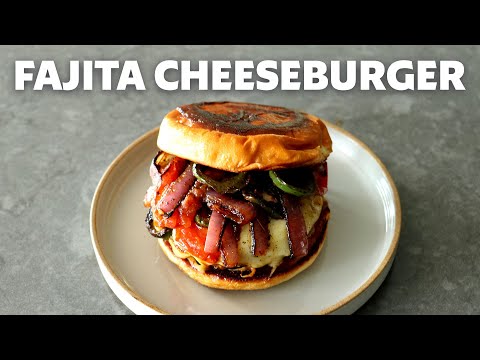
Fajita Cheeseburger | Food Wishes
 1:37
1:37
Learn Daily Use English Through Movies Clips, English Speaking practice. Movie scene
"I usually grab a burger for lunch when I am in a hurry."
संदर्भ में सीखें
यह शब्द अन्य भाषाओं में
Food के और शब्द
additive
B2योजक (additive) वह पदार्थ है जिसे किसी चीज़ में सुधार करने के लिए थोड़ी मात्रा में मिलाया जाता है।
additives
B2योजक वे पदार्थ हैं जिन्हें भोजन या अन्य उत्पादों में उनके गुणों को सुधारने के लिए मिलाया जाता है।
almond
B2उसकी आँखें बादामी आकार की हैं।
annatto
B1अनातो एक प्राकृतिक नारंगी-लाल खाद्य रंग है जो अचीओट पेड़ के बीजों से प्राप्त होता है। इसका उपयोग पनीर और मक्खन को रंगने के लिए किया जाता है।
appetite
C1भूख या 'Appetite' भोजन करने की स्वाभाविक इच्छा है। इसका अर्थ किसी अन्य चीज़, जैसे रोमांच या सीखने की तीव्र इच्छा भी हो सकता है।
appetizer
C1एपेटाइज़र भोजन से पहले परोसा जाने वाला एक छोटा हिस्सा है जो भूख बढ़ाने के लिए होता है।
appetizing
B2बहुत अच्छा दिखता है या महकता है, जिससे भूख लगती है। / ताज़ी पकी हुई ब्रेड की महक स्वादिष्ट थी।
apple
C1उसने अपना काम 'apple' तरीके से किया, सादगी और स्पष्टता के साथ।
apples
A1सेब गोल और खाने योग्य फल होते हैं।
apricot
C1सूर्यास्त के समय आकाश खुबानी के रंग जैसा दिख रहा था।

