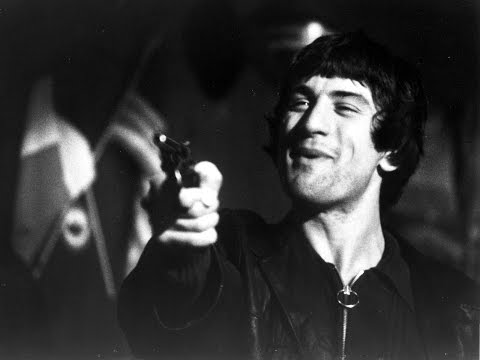
fredo 30 सेकंड में
- A 'fredo' is the weak, incompetent member of a successful family or group, often seen as a liability.
- The term comes from Fredo Corleone in 'The Godfather' and is used as a sharp, informal insult.
- It implies a mix of low intelligence, insecurity, and a tendency to make disastrous mistakes.
- While common in politics and sports, it can be controversial due to its ethnic and cinematic roots.
The term fredo is a fascinating example of how a specific character from popular culture can transform into a generalized noun used to describe a specific personality archetype. Derived from the character Fredo Corleone in Mario Puzo's novel and Francis Ford Coppola's film series, The Godfather, the word has evolved into a potent, often stinging insult. In its most basic sense, calling someone a 'fredo' suggests they are the weak, incompetent, or overlooked member of a powerful or successful family or group. It is not merely a synonym for 'stupid' or 'weak'; it carries a heavy subtext of betrayal, resentment, and the tragic failure to live up to a family legacy. When people use this term, they are usually highlighting a perceived lack of intelligence, a tendency to be easily manipulated, or a desperate, often clumsy attempt to gain respect that ultimately results in failure or disaster.
- The Archetype of Incompetence
- A 'fredo' is typically seen as the 'weak link' in a chain. While others in the group are capable, strategic, and respected, the 'fredo' is the one who makes mistakes that jeopardize the entire operation. This usage is common in business, sports, and politics to describe a person who is only in their position because of nepotism or family ties rather than merit.
Stop acting like a fredo and start taking some responsibility for your mistakes before you ruin the whole project.
Beyond simple incompetence, the term 'fredo' implies a deep-seated insecurity. In the original source material, Fredo Corleone's tragedy stems from his desire to be 'smart' and 'respected' like his brothers, but his inherent limitations and poor judgment lead him to betray his family. Therefore, when the term is applied today, it often suggests that the person is not just failing, but is failing because they are trying too hard to prove themselves in ways they aren't equipped for. It is a word used to put someone in their place, reminding them that they are the 'lesser' sibling or peer. In modern discourse, particularly in American politics, the term has been used as a slur or a highly charged insult to suggest that a public figure is the 'dumb brother' of a more successful relative, often sparking significant controversy due to its perceived ethnic undertones against Italian-Americans.
- The Element of Betrayal
- Crucially, a 'fredo' is often a person who, out of a sense of being slighted or ignored, might inadvertently or intentionally collaborate with the 'enemy.' This adds a layer of danger to the archetype; they aren't just useless, they are a liability who can be turned against their own side because of their emotional fragility.
The CEO realized too late that his nephew was the fredo of the firm, leaking secrets to competitors just to feel important.
In contemporary slang, the word has been somewhat decoupled from its strictly Italian-American roots and is applied to anyone in a group who is perceived as the 'runt of the litter.' You might hear it in a locker room, a corporate boardroom, or a political debate. It serves as a shorthand for a very specific type of failure: the failure of the person who had every advantage but lacked the character or intellect to succeed. It is the ultimate insult to one's competence and loyalty. The term captures the essence of being 'not quite enough'—not smart enough, not tough enough, and not loyal enough to be trusted with real power. It is a word that describes a person who is perpetually in the shadow of others, and whose attempts to step out of that shadow usually result in a mess that others have to clean up.
- Modern Media Usage
- Journalists and commentators frequently use 'fredo' to describe the less-talented siblings of famous politicians or celebrities. It has become a standard trope in political punditry to identify which family member is the 'fredo' of a political dynasty, implying they are a PR nightmare or a strategic disaster.
Every dynasty has its fredo, the one who can't help but say the wrong thing at the worst possible time.
He was tired of being treated like the fredo of the tech world, always the last to know about the big deals.
Using the word fredo correctly requires an understanding of its social weight and its grammatical function as a common noun derived from a proper name. It is almost exclusively used in informal or semi-formal contexts, particularly when criticizing someone's performance or status within a group. Because it is a metaphor, it works best when the comparison to a family or a high-stakes organization is clear. You wouldn't typically call a random stranger a 'fredo'; it is an insult reserved for someone within a known structure—a family, a company, a team, or a political party. The power of the word lies in the implication that the person is a disappointment to those they are supposed to be aligned with.
- As a Predicate Nominative
- The most common way to use 'fredo' is after a linking verb like 'is' or 'became.' This directly labels the person as the archetype. For example, 'He is the Fredo of the family.' Note that while it comes from a name, it is often written in lowercase when used as a general noun, though capitalizing it emphasizes the literary reference.
After the scandal, it became clear that the younger director was the fredo who had compromised the board's integrity.
Another way to use the term is as an appositive or a direct address, though the latter is highly confrontational. In political commentary, it is often used as an attributive noun or part of a descriptive phrase. For instance, 'the Fredo sibling' or 'a Fredo-like figure.' This usage highlights the characteristics of the person—weakness, bumbling, and a lack of strategic thinking—without necessarily saying they *are* the character. It's a way of saying they share the same 'DNA' of failure. When writing, consider the audience; if they haven't seen The Godfather, the nuance might be lost, though the term has entered the general lexicon enough that many understand the 'weak brother' connotation regardless.
- Using it to Describe Group Dynamics
- You can use 'fredo' to describe a role within a group, even if no actual siblings are involved. In a startup, the co-founder who doesn't contribute but takes the credit might be labeled the 'fredo' by the rest of the team. It describes the person who is 'along for the ride' but causes more harm than good.
The team realized they had a fredo in their midst when the lead developer started taking advice from the competition.
In more complex sentences, 'fredo' can be used to set up a contrast. The most effective use of the word involves comparing the 'fredo' to a 'Michael' (the smart, cold, efficient leader) or a 'Sonny' (the hot-headed but brave one). This creates a vivid picture of the social hierarchy being discussed. For example, 'In every group of high-achievers, there is always one Fredo who feels they have to overcompensate for their lack of natural talent.' This sentence uses the term to explain a psychological motivation, not just a state of being. It suggests a tragic element—the Fredo is often someone who *wants* to be better but simply isn't, making the term more nuanced than a simple insult like 'idiot.'
- Comparative Usage
- You can use the word to compare different eras or different families. 'If the first generation were titans of industry, the third generation is full of Fredos.' This implies a decline in quality or character over time.
Don't let him handle the negotiations; he's the fredo of the legal department and will likely give away the store.
The movie portrays the younger prince as a tragic fredo, caught between loyalty and his own incompetence.
The word fredo is a staple of American cultural and political commentary. While it originated in a 1969 novel and a 1972 film, its relevance has only grown as dynasties—both political and corporate—continue to fascinate the public. You are most likely to encounter this word in opinion pieces, cable news debates, and social media discussions where the internal dynamics of powerful families are being picked apart. It has become a shorthand for 'the embarrassing relative' who causes problems for a more prominent family member. For example, during various U.S. presidential administrations, the term has been lobbed at the siblings or children of presidents who were perceived as being less capable or more prone to scandals than the president themselves.
- Political Punditry
- In the world of political spin, calling an opponent's family member a 'fredo' is a common, albeit aggressive, tactic. It's used to suggest that the family is more like a crime syndicate than a public service entity, and that the 'fredo' is the weak link that will eventually cause the whole structure to collapse.
The talk show host referred to the senator's brother as the fredo of the dynasty, sparking a heated debate about civility.
You will also hear 'fredo' frequently in sports talk and business journalism. In sports, it's often applied to the less-talented brother of a superstar athlete. If one brother is an MVP and the other is a benchwarmer who only got a contract because of his last name, fans and commentators might cruelly refer to the latter as the 'fredo' of the family. In business, it describes the 'nepotism hire' who lacks the skills of the founder. The term is particularly popular in New York and other East Coast cities where the influence of The Godfather is deeply embedded in the local culture and where Italian-American history is a major part of the social fabric. However, its use has spread globally, appearing in British and Australian media to describe similar family dynamics in their own countries.
- Pop Culture and Film Criticism
- Film critics use 'fredo' as a technical term to describe a specific character type in other movies. If a new drama features a weak younger brother who betrays the protagonist, the critic will almost certainly call him 'the Fredo character.' It has become a standard archetype in storytelling analysis.
Critics are calling the villain's sidekick a classic fredo, whose clumsy mistakes lead to the hero's eventual victory.
Social media, particularly Twitter (now X), is a hotbed for the word 'fredo.' It is often used in 'ratioing' or mocking public figures who make public blunders. If a person with a famous last name posts something particularly foolish, the comments will likely be flooded with 'Godfather' memes and the word 'fredo.' This digital usage is often less about the tragic depth of the original character and more about a quick, punchy way to call someone a 'loser' or a 'failure.' It's a way for the internet to collectively identify a 'weak link' in real-time. Despite its age, the term remains remarkably resilient because the human dynamic it describes—the struggle of the less-capable sibling—is a universal and timeless story that resonates across cultures and generations.
- Corporate Slang
- In high-pressure corporate environments, 'fredo' might be used behind closed doors to describe a partner or executive who is seen as a liability. It's a harsh way of saying someone doesn't have the 'killer instinct' required for the job.
The board of directors was worried that the founder's son was a fredo who would tank the stock price.
You can't trust him with the keys to the vault; he's the fredo of the operation and he'll fold under pressure.
One of the most frequent mistakes when using the word fredo is failing to recognize its specific cultural and ethnic connotations. Because the term originates from a story about an Italian-American crime family, using it to describe someone of Italian descent can be seen as leaning into harmful stereotypes about organized crime. While many people use it as a general term for a 'weak brother,' others view it as a slur. Misjudging your audience can lead to accusations of prejudice or insensitivity. It is important to be aware that for some, 'fredo' is not just a movie reference but a derogatory label that targets their heritage. Always consider if a more neutral term like 'weak link' or 'black sheep' might be more appropriate for the setting.
- Confusing it with 'Alfredo'
- While 'Fredo' is a diminutive of 'Alfredo,' in English, the two words have completely different lives. 'Alfredo' almost always refers to the pasta sauce (Fettuccine Alfredo). Calling someone an 'Alfredo' instead of a 'Fredo' would be a confusing and likely humorous error, as it would sound like you are calling them a creamy sauce rather than a weak sibling.
Incorrect: He's the alfredo of the family. (Unless you mean he is delicious and made of cheese, this is wrong.)
Another common mistake is using 'fredo' to describe anyone who is simply 'dumb.' The term is more specific than that. A 'fredo' isn't just someone with a low IQ; they are someone who is specifically failing within the context of a successful group or family. If a person is just generally unintelligent but has no powerful family or group to be compared to, 'fredo' isn't the right word. The 'fredo' label requires a 'Michael'—a standard of excellence that the person is failing to meet. Using it for a random person who makes a mistake misses the essential element of the 'disappointing relative' or 'failed heir.' It’s about the gap between expectations and reality.
- Overusing the Term
- Because 'fredo' is such a 'loud' and specific reference, using it too often in a piece of writing or a conversation can make the speaker seem like they are trying too hard to sound 'tough' or 'cinematic.' It can quickly become a cliché. It is most effective when used sparingly as a sharp, precise critique.
Correct: In the high-stakes world of finance, he was the fredo whose lack of nerve cost the firm millions.
Finally, people often forget the 'betrayal' aspect of being a 'fredo.' In the movie, Fredo doesn't just mess up; he betrays his brother Michael. If you call someone a 'fredo' just because they are clumsy, you might be missing the darker implication of the word. A 'fredo' is someone who might turn on you because they feel undervalued. If the person you are describing is loyal but incompetent, 'fredo' might be too harsh or inaccurate. You might instead use 'bumbler' or 'simpleton.' Understanding the tragic, treacherous nature of the original character is key to using the word with the correct nuance and avoiding a superficial application that lacks the intended punch.
- Misunderstanding the Hierarchy
- Don't use 'fredo' for the leader of a group. A 'fredo' is by definition subordinate and overlooked. If the person in charge is incompetent, they are a 'bad leader,' but they aren't a 'fredo' unless they are being compared to a more competent relative who *should* be in charge.
He wasn't just a bad employee; he was the fredo of the family business, a constant source of embarrassment to his father.
Calling the CEO a fredo makes little sense if he built the company himself; the term implies inherited status.
When you want to describe someone who is the weak or disappointing member of a group but want to avoid the specific cultural baggage of fredo, there are several excellent alternatives. Each carries its own nuance and is suited for different levels of formality and different contexts. The most direct synonym is 'weak link,' which is neutral and can be used in almost any setting, from sports to corporate strategy. It lacks the 'family' connotation but perfectly captures the idea that the person is the part of the group most likely to fail under pressure. If you want to emphasize the family aspect, 'black sheep' is a classic choice, though it usually implies someone who is a rebel or a disgrace rather than someone who is simply incompetent.
- Fredo vs. Black Sheep
- A 'black sheep' is someone who is different from the rest of the family, often in a way that the family finds shameful (e.g., a criminal in a family of lawyers). A 'fredo,' however, is someone who *tries* to be like the rest of the family but fails because they lack the ability. A 'black sheep' might be very smart and capable, just 'bad'; a 'fredo' is fundamentally incapable.
While his brother was a fredo who couldn't handle the business, Julian was the black sheep who left it all to become a poet.
In a more informal or slang-heavy context, you might use terms like 'runt of the litter' or 'doofus.' 'Runt of the litter' implies that the person is the smallest or weakest of a group, often used affectionately but sometimes disparagingly. 'Doofus' or 'dimwit' focuses purely on the lack of intelligence without the structural or familial implications of 'fredo.' In a political or corporate context, 'liability' is a very common and professional alternative. Calling someone a 'liability' suggests they are a risk to the organization's success, which is exactly what a 'fredo' is, but without the cinematic flair. Another interesting comparison is 'stooge' or 'patsy,' which describes someone who is easily manipulated by others, a key trait of the Fredo archetype.
- Fredo vs. Liability
- 'Liability' is a clinical, professional term. 'Fredo' is a personal, insulting term. You might say an employee is a 'liability' in a performance review, but you would only call them a 'fredo' if you were trying to deeply insult their character and family standing.
The manager described the new hire as a liability due to his frequent errors, avoiding the more colorful 'fredo' label.
For those looking for a more literary or old-fashioned term, 'ne'er-do-well' or 'wastrel' might fit. These words describe someone who is lazy and irresponsible, often living off the wealth of their family. While a 'fredo' might be hard-working in his own bumbling way, a 'wastrel' has given up entirely. In the context of loyalty and betrayal, 'Judas' is the ultimate term for a traitor, but it lacks the 'incompetence' element. A 'fredo' is a 'Judas' who isn't even good at being a traitor. Finally, 'scapegrace' is a charming, slightly archaic word for a person who is habitually prone to getting into trouble, though it lacks the 'weakness' that is so central to being a 'fredo.' Choosing the right word depends on whether you want to highlight the person's stupidity, their family status, or their potential for betrayal.
- Fredo vs. Runt
- 'Runt' usually refers to physical size or being the youngest. 'Fredo' refers to a failure of character and intellect. A 'runt' can grow up to be a hero; a 'fredo' is defined by his inability to ever be the hero.
He was always the runt of the family, but he surprised everyone by becoming a successful doctor, proving he was no fredo.
Instead of calling him a fredo, the coach simply called him a 'weak link' in the defense.
How Formal Is It?
"The candidate's younger brother has been characterized by some as a liability to the campaign's strategic goals."
"He is often seen as the weak link in his family's business empire."
"He's the Fredo of the family, always messing things up for everyone else."
"He's the brother who makes silly mistakes and doesn't always understand the rules."
"Stop pulling a Fredo, man, you're gonna get us all in trouble."
रोचक तथ्य
John Cazale, the actor who played Fredo in 'The Godfather,' only appeared in five feature films before his death, and all five were nominated for the Academy Award for Best Picture. His portrayal was so iconic that it turned a common Italian nickname into a universal symbol for the 'weak brother.'
उच्चारण मार्गदर्शिका
- Pronouncing it like 'Fred-o' (with a short 'e' as in 'bed'). It should be a long 'a' sound.
- Confusing it with 'Alfredo' and adding an 'Al' at the beginning.
- Stress on the second syllable: fre-DO (incorrect).
- Pronouncing the 'd' too softly, making it sound like 'fray-o'.
- Thinking it rhymes with 'Ledo' (it rhymes with 'play-dough').
कठिनाई स्तर
Easy to read but requires cultural knowledge to fully understand the nuance.
Requires careful context to avoid being offensive or sounding like a cliché.
Pronunciation is tricky, and the social risk of using it is high.
Common in American media, so you will hear it often.
आगे क्या सीखें
पूर्वापेक्षाएँ
आगे सीखें
उन्नत
ज़रूरी व्याकरण
Eponyms as Common Nouns
He is a real fredo. (Note the lowercase 'f' when used as a general noun.)
Predicate Nominatives
The youngest son was the Fredo.
Comparative Adjectives with Eponyms
He is more of a Fredo than his brother.
Articles with Proper Nouns used as Common Nouns
You are acting like a Fredo.
Appositives
His nephew, the Fredo of the company, lost the contract.
स्तर के अनुसार उदाहरण
He is a fredo because he is not smart.
Il est un 'fredo' parce qu'il n'est pas intelligent.
Use 'a' before 'fredo' because it is a noun.
Don't be a fredo; try to help us.
Ne sois pas un 'fredo' ; essaie de nous aider.
Imperative 'Don't be' followed by the noun.
My brother is not a fredo.
Mon frère n'est pas un 'fredo'.
Negative sentence with 'is not'.
Is he the fredo of the group?
Est-il le 'fredo' du groupe ?
Question form with 'the' for a specific person.
The movie has a fredo character.
Le film a un personnage de type 'fredo'.
Using 'fredo' as a descriptive noun.
I don't want to be the fredo.
Je ne veux pas être le 'fredo'.
Object of the verb 'to be'.
They called him a fredo.
Ils l'ont appelé un 'fredo'.
Past tense 'called' with the noun.
A fredo makes many mistakes.
Un 'fredo' fait beaucoup d'erreurs.
General statement using 'a'.
In the story, the middle brother was a fredo.
Dans l'histoire, le frère du milieu était un 'fredo'.
Past tense 'was' used to describe a character.
He felt like a fredo compared to his famous sister.
Il se sentait comme un 'fredo' comparé à sa sœur célèbre.
Comparison using 'like' and 'compared to'.
The coach said we cannot have a fredo on this team.
L'entraîneur a dit que nous ne pouvons pas avoir de 'fredo' dans cette équipe.
Reported speech with 'said'.
Is calling someone a fredo very rude?
Est-ce que traiter quelqu'un de 'fredo' est très impoli ?
Gerund 'calling' as the subject.
He is the fredo who ruined the surprise party.
C'est le 'fredo' qui a gâché la fête surprise.
Relative clause starting with 'who'.
Stop acting like a fredo and focus!
Arrête de te comporter comme un 'fredo' et concentre-toi !
Verb 'acting' followed by 'like a fredo'.
Every family has a fredo, they say.
Chaque famille a un 'fredo', dit-on.
General proverb-like structure.
He didn't want to be known as the fredo of the class.
Il ne voulait pas être connu comme le 'fredo' de la classe.
Passive construction 'to be known as'.
The political analyst described the candidate's brother as a fredo.
L'analyste politique a décrit le frère du candidat comme un 'fredo'.
Verb 'described... as' is a common pattern for this word.
He was tired of being the fredo who always got the blame.
Il en avait assez d'être le 'fredo' qui recevait toujours le blâme.
Gerund 'being' after the preposition 'of'.
In many ways, the youngest son was the fredo of the dynasty.
À bien des égards, le fils cadet était le 'fredo' de la dynastie.
Using 'in many ways' to add nuance to the description.
Calling him a fredo was a low blow, even for his rivals.
Le traiter de 'fredo' était un coup bas, même pour ses rivaux.
'Low blow' is an idiom often used with this type of insult.
He desperately tried to prove he wasn't just another fredo.
Il a désespérément essayé de prouver qu'il n'était pas juste un autre 'fredo'.
Adverb 'desperately' modifying the verb 'tried'.
The term fredo has become a common insult in modern media.
Le terme 'fredo' est devenu une insulte courante dans les médias modernes.
Present perfect 'has become' for a continuing trend.
If you act like a fredo, people will treat you like one.
Si tu te comportes comme un 'fredo', les gens te traiteront comme tel.
First conditional sentence (If + present, will + verb).
The company needed a leader, not a fredo who would fold under pressure.
L'entreprise avait besoin d'un leader, pas d'un 'fredo' qui craquerait sous la pression.
Contrast using 'not a... who would...'.
The controversy erupted when the journalist used the term fredo during the live broadcast.
La polémique a éclaté lorsque le journaliste a utilisé le terme 'fredo' pendant l'émission en direct.
Using 'erupted' to describe the sudden reaction to the word.
He embodied the fredo archetype: weak, resentful, and ultimately treacherous.
Il incarnait l'archétype du 'fredo' : faible, rancunier et finalement traître.
Using a colon to list the characteristics of the archetype.
The CEO's nephew was widely regarded as the fredo of the firm, a liability to their reputation.
Le neveu du PDG était largement considéré comme le 'fredo' de l'entreprise, un risque pour leur réputation.
Passive voice 'was widely regarded as' for a general opinion.
Critics argued that the character was a poorly written fredo with no redeeming qualities.
Les critiques ont soutenu que le personnage était un 'fredo' mal écrit, sans aucune qualité rédemptrice.
Adverb-adjective-noun phrase 'poorly written fredo'.
To call him a fredo is to ignore the immense pressure he was under.
Le traiter de 'fredo', c'est ignorer la pression immense qu'il subissait.
Infinitive phrase 'To call him...' as the subject.
The movie explores the tragic life of a man who is perpetually seen as a fredo.
Le film explore la vie tragique d'un homme qui est perpétuellement perçu comme un 'fredo'.
Adverb 'perpetually' emphasizing the ongoing nature of the perception.
He managed to shed his fredo image by leading the company through a crisis.
Il a réussi à se débarrasser de son image de 'fredo' en dirigeant l'entreprise à travers une crise.
The phrase 'shed an image' is a common collocation.
The sibling rivalry was intensified by the father's tendency to treat one son like a fredo.
La rivalité fraternelle a été intensifiée par la tendance du père à traiter un de ses fils comme un 'fredo'.
Passive voice 'was intensified by' explaining the cause.
The discourse surrounding the term fredo highlights the intersection of pop culture and ethnic sensitivity.
Le discours entourant le terme 'fredo' met en lumière l'intersection entre la culture populaire et la sensibilité ethnique.
Complex subject 'The discourse surrounding the term fredo'.
By labeling him a fredo, they were effectively excommunicating him from the inner circle of power.
En le qualifiant de 'fredo', ils l'excommuniaient de fait du cercle restreint du pouvoir.
Using 'effectively' to show the real-world consequence of the label.
His transition from a respected executive to a perceived fredo was swift and brutal.
Sa transition d'un cadre respecté à un 'fredo' perçu a été rapide et brutale.
Noun phrase 'perceived fredo' indicating it's a matter of perception.
The author uses the fredo trope to critique the inherent flaws of dynastic succession.
L'auteur utilise le trope du 'fredo' pour critiquer les failles inhérentes à la succession dynastique.
Using 'trope' to discuss the word as a literary device.
It is a reductive label that fails to capture the complexity of his character, yet the fredo tag stuck.
C'est une étiquette réductrice qui ne parvient pas à saisir la complexité de son personnage, et pourtant l'étiquette de 'fredo' lui est restée.
Contrast using 'yet' to show how the label persisted despite being unfair.
The sheer vitriol behind the fredo insult suggests a deeper cultural resentment.
Le pur vitriol derrière l'insulte 'fredo' suggère un ressentiment culturel plus profond.
Using 'vitriol' to describe the intense bitterness of the insult.
In the cutthroat world of New York real estate, being branded a fredo is a professional death sentence.
Dans le monde impitoyable de l'immobilier new-yorkais, être marqué du sceau de 'fredo' est une condamnation à mort professionnelle.
Gerund phrase 'being branded a fredo' as the subject.
He played the part of the fredo to perfection, masking his true ambitions with a facade of incompetence.
Il a joué le rôle du 'fredo' à la perfection, masquant ses véritables ambitions sous une façade d'incompétence.
Using 'played the part of' to suggest the role was intentional.
The weaponization of the fredo moniker in contemporary political rhetoric serves as a fascinating case study in linguistic evolution.
L'instrumentalisation du surnom 'fredo' dans la rhétorique politique contemporaine constitue une étude de cas fascinante sur l'évolution linguistique.
Sophisticated vocabulary like 'weaponization' and 'moniker'.
To dismiss him as a mere fredo is to succumb to a narrative that ignores the systemic failures of the institution.
Le rejeter comme un simple 'fredo', c'est succomber à un récit qui ignore les défaillances systémiques de l'institution.
Complex 'To... is to...' structure for philosophical or analytical statements.
The tragic resonance of the fredo archetype lies in the character's agonizing awareness of his own inadequacy.
La résonance tragique de l'archétype du 'fredo' réside dans la conscience agonisante qu'a le personnage de sa propre insuffisance.
Using 'agonizing awareness' to describe a deep psychological state.
The term has undergone a process of semantic bleaching, where its specific cinematic origins are often secondary to its use as a general slur.
Le terme a subi un processus de décoloration sémantique, où ses origines cinématographiques spécifiques sont souvent secondaires par rapport à son utilisation comme insulte générale.
Linguistic terminology 'semantic bleaching' to describe the word's change.
His defense against the fredo allegation was predicated on a meticulous deconstruction of the 'Godfather' mythos.
Sa défense contre l'allégation de 'fredo' reposait sur une déconstruction méticuleuse du mythe du 'Parrain'.
Using 'predicated on' to show the basis of an argument.
The ubiquity of the fredo label in social media commentary reflects a collective penchant for reductive, archetypal characterization.
L'ubiquité de l'étiquette 'fredo' dans les commentaires sur les réseaux sociaux reflète un penchant collectif pour une caractérisation archétypale et réductrice.
High-level vocabulary like 'ubiquity' and 'penchant'.
In the grand tapestry of American eponyms, fredo occupies a uniquely contentious space between literary tribute and ethnic caricature.
Dans la grande tapisserie des éponymes américains, 'fredo' occupe un espace singulièrement litigieux entre hommage littéraire et caricature ethnique.
Metaphorical language 'grand tapestry' and 'occupies a space'.
The director subverted the fredo trope by revealing that the 'weak' brother was, in fact, the mastermind behind the entire operation.
Le réalisateur a détourné le trope du 'fredo' en révélant que le frère 'faible' était, en fait, le cerveau derrière toute l'opération.
Using 'subverted the trope' to describe a creative twist.
सामान्य शब्द संयोजन
सामान्य वाक्यांश
He's a real Fredo.
The Fredo of the bunch.
Don't pull a Fredo.
The Fredo factor.
Every dynasty has its Fredo.
The Fredo character.
Acting the Fredo.
The Fredo label.
A Fredo moment.
The Fredo syndrome.
अक्सर इससे भ्रम होता है
A type of pasta sauce. Confusing the two makes for a very funny but incorrect sentence.
A common name for a dog. They sound similar but have completely different meanings.
The hero of 'The Lord of the Rings.' Calling someone a 'Frodo' implies they are a small hero, while a 'Fredo' is a weak failure.
मुहावरे और अभिव्यक्तियाँ
"the weak link in the chain"
The least reliable member of a group whose failure could cause the whole group to fail. This is the closest idiomatic equivalent.
We need to train the new staff better; we can't afford a weak link in the chain.
neutral"black sheep of the family"
A member of a family who is regarded as a disgrace to them. While similar, it often implies rebellion rather than just weakness.
My uncle was the black sheep of the family because he ran away to join the circus.
informal"runt of the litter"
The smallest or weakest member of a group. Often used for the youngest child.
He was the runt of the litter, but he grew up to be the tallest of the brothers.
informal"a loose cannon"
A person who is unpredictable and can cause damage to their own side. A 'Fredo' is often a loose cannon.
The new manager is a bit of a loose cannon; you never know what he'll say in meetings.
informal"not the sharpest tool in the shed"
A polite or humorous way of saying someone is not very intelligent. A key trait of a Fredo.
He's a nice guy, but he's not the sharpest tool in the shed.
informal"a liability to the cause"
Someone whose actions are likely to harm the goals of the group they belong to.
His constant complaining made him a liability to the cause.
formal"to fold like a deck of cards"
To give up or fail completely under pressure. This is what a Fredo does.
When the police started asking questions, he folded like a deck of cards.
informal"the odd man out"
A person who is different from the others in a group or who does not fit in. A Fredo often feels like the odd man out.
In a family of doctors, the artist was always the odd man out.
neutral"to shoot oneself in the foot"
To unintentionally do something that causes problems for oneself. Fredos do this constantly.
He shot himself in the foot by insulting the boss right before the promotion was announced.
informal"a flash in the pan"
Something that is promising at first but fails to deliver anything significant. A Fredo's attempts at success are often this.
His first business was a success, but it turned out to be just a flash in the pan.
informalआसानी से भ्रमित होने वाले
Both refer to a 'different' family member.
A black sheep is often a rebel or a disgrace by choice; a fredo is a failure due to lack of ability.
The black sheep left the family to be an artist; the fredo stayed and ruined the business.
Both mean the person who is most likely to fail.
Weak link is neutral and general; fredo is personal, insulting, and implies a family context.
He was the weak link in the relay race, but he wasn't a fredo.
Both describe someone easily manipulated.
A patsy is a victim who is framed; a fredo is a family member whose own weakness leads to their manipulation.
He was the patsy for the crime, but the fredo was the one who let the criminals in.
Both imply a lack of intelligence.
Simpleton is a general term for a foolish person; fredo is specific to a hierarchy or family.
The village simpleton was happy; the family fredo was miserable and resentful.
Both describe someone not meeting expectations.
Underachiever implies the person *could* do better; fredo implies they are fundamentally incapable.
The teacher called him an underachiever, but his father called him a fredo.
वाक्य संरचनाएँ
He is a [fredo].
He is a fredo.
Don't be a [fredo].
Don't be a fredo.
He is the [fredo] of the [group].
He is the fredo of the family.
Stop acting like a [fredo].
Stop acting like a fredo.
He was branded a [fredo] after the [event].
He was branded a fredo after the mistake.
The [noun] is a classic [fredo].
The character is a classic fredo.
To label him a [fredo] is [adjective].
To label him a fredo is unfair.
The [noun] subverts the [fredo] trope by [verb-ing].
The movie subverts the fredo trope by making him the hero.
शब्द परिवार
संज्ञा
क्रिया
विशेषण
संबंधित
इसे कैसे इस्तेमाल करें
Common in American political and cultural commentary; rare in everyday casual speech outside of specific regions.
-
Calling someone an 'Alfredo'.
→
Calling them a 'Fredo'.
Alfredo is a pasta sauce. Fredo is the weak brother. Unless you are talking about dinner, use Fredo.
-
Using 'fredo' for a person who isn't in a group or family.
→
Using 'idiot' or 'fool'.
The word 'fredo' specifically implies that the person is the weak one *compared to others* in their family or organization.
-
Using 'fredo' in a formal business report.
→
Using 'underperforming asset' or 'liability'.
Fredo is slang and can be seen as offensive or unprofessional. It has no place in formal writing.
-
Thinking 'fredo' is a compliment for being 'sweet' or 'simple'.
→
There is no correct way to use it as a compliment.
In modern English, 'fredo' is almost exclusively an insult. It does not mean 'innocent' or 'kind'; it means 'weak' and 'incompetent'.
-
Pronouncing it 'Fred-oh' with a short 'e'.
→
Pronouncing it 'Fray-doh' with a long 'a'.
The pronunciation comes from the Italian name, which uses the long 'a' sound.
सुझाव
Know Your Audience
Before using 'fredo,' make sure your audience knows 'The Godfather.' If they don't, the insult will lose its meaning and you'll just sound like you're using a weird name.
Avoid Ethnic Stereotypes
Be extremely careful using this word around people of Italian descent. Some find it highly offensive and see it as an ethnic slur, even if you don't mean it that way.
Use as a Metaphor
The word works best when you are describing a hierarchy. It's not just for a 'dumb' person; it's for a 'dumb' person who is part of a 'smart' group.
Alternatives are Safer
If you want to be critical without being controversial, use terms like 'weak link,' 'liability,' or 'underperformer.' They convey the same idea without the cultural baggage.
Watch Your Tone
Because 'fredo' implies betrayal and deep-seated failure, it is a very 'heavy' word. Using it lightly can make you seem meaner than you intended.
Watch the Movie
To truly understand the word, watch 'The Godfather' parts I and II. Seeing Fredo's character arc will give you a perfect sense of the word's tragic and insulting nuances.
Countable Noun
Remember that 'fredo' is a countable noun. You should say 'He is a fredo' or 'They are fredos,' not just 'He is fredo' (unless that is his actual name).
Political Context
When you see 'fredo' in the news, it's often a sign of a very heated and personal political debate. It's rarely used for policy discussions; it's used for character attacks.
F is for Failure
If you forget what it means, just remember that Fredo starts with 'F,' just like 'Failure' and 'Family.' He is the Family Failure.
The 'Michael' Contrast
A 'fredo' only exists in comparison to someone better. If you use the word, you are also implying that there is a 'Michael' (a smart one) in the group.
याद करें
स्मृति सहायक
Think of 'F' for 'Failure' and 'redo' because a Fredo always needs a 'redo' on their mistakes. F-REDO.
दृश्य संबंध
Imagine a man in a very expensive suit that is two sizes too big for him, looking confused at a business meeting while his brothers look angry.
Word Web
चैलेंज
Try to identify a 'Fredo' character in a movie you've seen recently. Write three sentences explaining why they fit the description using the word at least twice.
शब्द की उत्पत्ति
The term 'fredo' originated from the character Fredo Corleone in Mario Puzo's 1969 novel 'The Godfather' and the subsequent 1972 film directed by Francis Ford Coppola. Fredo is the second son of the Mafia don Vito Corleone. Unlike his brothers, he is portrayed as weak, unintelligent, and lacking the 'killer instinct' required for the family business. His character's tragic arc, which includes betraying his brother Michael out of a sense of being passed over, made his name a permanent fixture in the English language to describe similar figures.
मूल अर्थ: A diminutive form of the Italian name Alfredo.
Italo-Dalmatian (Italian)सांस्कृतिक संदर्भ
Be very careful using this with people of Italian descent, as it can be seen as an ethnic slur or a way of associating them with the Mafia.
In the US, it's a common political and sports insult. In the UK, it's less common but understood by movie fans.
असल ज़िंदगी में अभ्यास करें
वास्तविक संदर्भ
Politics
- the Fredo of the dynasty
- a political Fredo
- the Fredo sibling
- campaign Fredo
Sports
- the Fredo of the team
- a Fredo performance
- benchwarmer Fredo
- the Fredo brother
Business
- corporate Fredo
- the Fredo of the board
- nepotism Fredo
- liability Fredo
Film/Literature
- the Fredo archetype
- a Fredo character
- the Fredo arc
- classic Fredo
Social/Casual
- don't be a Fredo
- acting like a Fredo
- the group's Fredo
- total Fredo move
बातचीत की शुरुआत
"Have you ever seen 'The Godfather'? What do you think of the character Fredo?"
"Do you think it's fair to call someone a 'Fredo' just because they aren't as successful as their siblings?"
"In your favorite TV show, is there a character who fits the 'Fredo' archetype?"
"Why do you think the term 'Fredo' has become such a popular insult in American politics?"
"Do you think calling someone a 'Fredo' is an ethnic slur, or just a movie reference?"
डायरी विषय
Reflect on a time you felt like the 'weak link' in a group. How did that feel, and how did you overcome it?
Write a short story about a character who is labeled a 'Fredo' but eventually proves everyone wrong.
Discuss the ethics of using movie characters as insults for real people. Is it helpful or harmful?
Analyze a famous family (real or fictional) and identify who might be seen as the 'Fredo' and why.
How does the concept of 'nepotism' relate to the 'Fredo' archetype in modern business?
अक्सर पूछे जाने वाले सवाल
10 सवालNo, it is not a swear word, but it is a very strong and personal insult. It can be more hurtful than a common swear word because it attacks a person's intelligence and their standing in their family.
It is generally not recommended. It is very informal and can be seen as unprofessional or even discriminatory, especially if the person has an Italian background. Use 'weak link' or 'liability' instead.
It comes from the character Fredo Corleone in the movie 'The Godfather.' He was the brother who was not smart enough to lead the family and eventually betrayed them. His name became a label for that kind of person.
Yes, in almost every context, calling someone a 'fredo' is meant to be insulting. Even when used humorously, it is making fun of someone's perceived weakness or incompetence.
You can do either. Capitalizing it (Fredo) emphasizes that you are referring to the movie character. Using lowercase (fredo) treats it as a general noun that has entered the language.
While it started with brothers, it is now used for anyone in a group—sisters, cousins, coworkers, or even teammates—who is seen as the weak or disappointing member.
In the context of 'The Godfather,' the opposite would be a 'Michael'—the smart, capable, and strong leader. In general terms, you could use 'mastermind' or 'star player.'
It is an Italian name (a nickname for Alfredo), but the way it is used as an insult is specifically an American English development based on the movie.
Yes, although the term is traditionally male because of the character, it is increasingly used to describe any person, regardless of gender, who fits the archetype.
It is pronounced 'FRAY-doh.' The first part sounds like 'fray' (as in a fight) and the second part sounds like 'doh' (as in Homer Simpson's catchphrase).
खुद को परखो 200 सवाल
Write a sentence using the word 'fredo' to describe a character in a book you've read.
Well written! Good try! Check the sample answer below.
Explain why calling someone a 'fredo' might be considered offensive.
Well written! Good try! Check the sample answer below.
Create a short dialogue between two people where one calls the other a 'fredo'.
Well written! Good try! Check the sample answer below.
Describe a situation where a person might be labeled the 'fredo' of their workplace.
Well written! Good try! Check the sample answer below.
Write a paragraph comparing a 'fredo' to a 'black sheep'.
Well written! Good try! Check the sample answer below.
How would you tell someone to stop acting like a 'fredo' without using the word itself?
Well written! Good try! Check the sample answer below.
Write a movie review snippet that uses the term 'fredo archetype'.
Well written! Good try! Check the sample answer below.
Describe the character of Fredo Corleone in three sentences.
Well written! Good try! Check the sample answer below.
Write a formal sentence that conveys the same meaning as 'He is a fredo'.
Well written! Good try! Check the sample answer below.
Explain the difference between a 'fredo' and a 'patsy'.
Well written! Good try! Check the sample answer below.
Write a sentence using 'fredo' in a political context.
Well written! Good try! Check the sample answer below.
Describe a 'fredo moment' you have witnessed or heard about.
Well written! Good try! Check the sample answer below.
Write a sentence using the plural form 'fredos'.
Well written! Good try! Check the sample answer below.
Explain the role of nepotism in creating a 'fredo'.
Well written! Good try! Check the sample answer below.
Write a cautionary tip for someone thinking about using the word 'fredo'.
Well written! Good try! Check the sample answer below.
Create a sentence using 'fredo' as a predicate nominative.
Well written! Good try! Check the sample answer below.
Write a sentence using 'fredo' to describe a sports player.
Well written! Good try! Check the sample answer below.
Explain the psychological motivation of a 'fredo' character.
Well written! Good try! Check the sample answer below.
Write a sentence using the phrase 'the Fredo of the bunch'.
Well written! Good try! Check the sample answer below.
Summarize the cultural impact of the word 'fredo' in the US.
Well written! Good try! Check the sample answer below.
Pronounce the word 'fredo' correctly.
Read this aloud:
तुमने कहा:
Speech recognition is not supported in your browser. Try Chrome or Edge.
Use 'fredo' in a sentence to describe a fictional character.
Read this aloud:
तुमने कहा:
Speech recognition is not supported in your browser. Try Chrome or Edge.
Explain the origin of the word 'fredo' to a friend.
Read this aloud:
तुमने कहा:
Speech recognition is not supported in your browser. Try Chrome or Edge.
Discuss whether calling someone a 'fredo' is always an insult.
Read this aloud:
तुमने कहा:
Speech recognition is not supported in your browser. Try Chrome or Edge.
Describe a 'fredo' character from a movie you know.
Read this aloud:
तुमने कहा:
Speech recognition is not supported in your browser. Try Chrome or Edge.
Role-play a scene where one person warns another not to 'pull a fredo'.
Read this aloud:
तुमने कहा:
Speech recognition is not supported in your browser. Try Chrome or Edge.
Explain the difference between 'fredo' and 'weak link' in your own words.
Read this aloud:
तुमने कहा:
Speech recognition is not supported in your browser. Try Chrome or Edge.
Talk about the cultural sensitivity surrounding the word 'fredo'.
Read this aloud:
तुमने कहा:
Speech recognition is not supported in your browser. Try Chrome or Edge.
Give a short presentation on the 'Fredo archetype' in modern media.
Read this aloud:
तुमने कहा:
Speech recognition is not supported in your browser. Try Chrome or Edge.
Argue for or against the use of 'fredo' in political debates.
Read this aloud:
तुमने कहा:
Speech recognition is not supported in your browser. Try Chrome or Edge.
How would you respond if someone called you a 'fredo'?
Read this aloud:
तुमने कहा:
Speech recognition is not supported in your browser. Try Chrome or Edge.
Use the word 'fredo' in a sentence about a sports team.
Read this aloud:
तुमने कहा:
Speech recognition is not supported in your browser. Try Chrome or Edge.
Explain why 'fredo' is considered an eponym.
Read this aloud:
तुमने कहा:
Speech recognition is not supported in your browser. Try Chrome or Edge.
Describe the 'Fredo factor' in a business context.
Read this aloud:
तुमने कहा:
Speech recognition is not supported in your browser. Try Chrome or Edge.
Tell a short story about a 'fredo' who becomes a hero.
Read this aloud:
तुमने कहा:
Speech recognition is not supported in your browser. Try Chrome or Edge.
Discuss the impact of 'The Godfather' on the English language.
Read this aloud:
तुमने कहा:
Speech recognition is not supported in your browser. Try Chrome or Edge.
Use 'fredo' in a sentence with the word 'nepotism'.
Read this aloud:
तुमने कहा:
Speech recognition is not supported in your browser. Try Chrome or Edge.
Explain the mnemonic 'F is for Failure' for the word 'fredo'.
Read this aloud:
तुमने कहा:
Speech recognition is not supported in your browser. Try Chrome or Edge.
Describe a situation where a 'fredo' might be a danger to their group.
Read this aloud:
तुमने कहा:
Speech recognition is not supported in your browser. Try Chrome or Edge.
Summarize the main points of the 'fredo' controversy in the US.
Read this aloud:
तुमने कहा:
Speech recognition is not supported in your browser. Try Chrome or Edge.
Listen to a clip from 'The Godfather' (or a description) and identify when Fredo feels overlooked.
Listen to a news report about a political 'fredo' and identify the speaker's tone.
Listen to a discussion about movie archetypes and identify the traits of a 'fredo'.
Listen to a podcast about language evolution and identify why 'fredo' is an eponym.
Listen to a sports commentary and identify which player is being called the 'fredo' and why.
Listen to a conversation where someone uses 'fredo' as an insult and identify the reaction.
Listen to a lecture on Italian-American culture and identify the sensitivity of the word 'fredo'.
Listen to a business meeting role-play and identify the 'liability' being discussed as a 'fredo'.
Listen to a child's story about a 'silly brother' and identify if he fits the 'fredo' archetype.
Listen to a debate about the 'N-word for Italian-Americans' and summarize the arguments.
Listen to a movie trailer and identify the 'fredo' character.
Listen to a person explaining their family tree and identify the 'black sheep'.
Listen to a comedian's joke about 'fredo' and identify the punchline.
Listen to a history of the Corleone family and identify Fredo's birth order.
Listen to a person's defense against being called a 'fredo' and identify their main point.
He is the alfredo of the family.
Alfredo is a sauce; fredo is the weak brother.
Don't be fredo.
You need the article 'a' before the noun.
He fredoed the whole project.
'Fredo' is a noun, not a verb. Use 'pulled a fredo'.
She is very fredo today.
'Fredo' is a noun, so you can't use it as an adjective with 'very'.
The fredi of the group were all fired.
The plural of 'fredo' is 'fredos'.
He is a Fredo because he is strong.
A 'fredo' is defined by weakness, not strength.
Calling him a fredo was a high blow.
The idiom is 'low blow', meaning an unfair or mean attack.
He is the fredo of the pasta.
The term refers to family or group dynamics, not food.
The fredo archetype is a brave hero.
The archetype is the opposite of a hero.
He is a fredo, so he is the mastermind.
A 'fredo' cannot be a mastermind.
/ 200 correct
Perfect score!
Summary
The word 'fredo' is a powerful cultural shorthand for the 'weak link' in a dynasty. For example, 'He was the Fredo of the family business, always making deals that cost them money.'
- A 'fredo' is the weak, incompetent member of a successful family or group, often seen as a liability.
- The term comes from Fredo Corleone in 'The Godfather' and is used as a sharp, informal insult.
- It implies a mix of low intelligence, insecurity, and a tendency to make disastrous mistakes.
- While common in politics and sports, it can be controversial due to its ethnic and cinematic roots.
Know Your Audience
Before using 'fredo,' make sure your audience knows 'The Godfather.' If they don't, the insult will lose its meaning and you'll just sound like you're using a weird name.
Avoid Ethnic Stereotypes
Be extremely careful using this word around people of Italian descent. Some find it highly offensive and see it as an ethnic slur, even if you don't mean it that way.
Use as a Metaphor
The word works best when you are describing a hierarchy. It's not just for a 'dumb' person; it's for a 'dumb' person who is part of a 'smart' group.
Alternatives are Safer
If you want to be critical without being controversial, use terms like 'weak link,' 'liability,' or 'underperformer.' They convey the same idea without the cultural baggage.