gustave 30 सेकंड में
- Gustave is a traditional French male name with Germanic roots, meaning 'Staff of the Geats' or 'Leader.'
- It is globally recognized through Gustave Eiffel, the visionary engineer behind the iconic Eiffel Tower in Paris.
- In literature, it is immortalized by Gustave Flaubert, the master of the modern realist novel and precise prose.
- The name evokes 19th-century sophistication, artistic realism, and industrial progress, making it a culturally rich proper noun.
The name Gustave is a classic masculine given name that carries a profound sense of European history, particularly within French and Germanic cultures. While it may appear as a simple identifier, its usage in modern English is almost always a bridge to the past, evoking the grandeur of the 19th-century industrial and artistic revolutions. When people use the name Gustave today, they are rarely referring to a contemporary peer; instead, they are usually invoking the legacy of specific historical giants who shaped the modern world. The name itself is the French variation of the Swedish name Gustav, which is believed to be derived from the Old Norse elements 'Gautr' (referring to the Geats, a North Germanic tribe) and 'stafr' (meaning staff or pillar). Thus, etymologically, Gustave represents a 'Staff of the Geats,' implying a leader or a foundational support for his people.
- Historical Context
- In the context of the 1800s, Gustave was a name synonymous with innovation. Gustave Eiffel, perhaps the most famous bearer, used his name as a brand for his engineering firm, eventually leading to the creation of the Eiffel Tower for the 1889 World's Fair. When you hear the name in a classroom or a museum, it is often tied to this specific era of 'iron and steam.'
The professor noted that Gustave Eiffel's design was initially hated by the Parisian elite, who called it a 'giant black smokestack.'
Beyond engineering, the name Gustave resonates deeply in the world of literature and fine arts. Gustave Flaubert, the author of Madame Bovary, transformed the landscape of the modern novel with his commitment to 'le mot juste' (the right word). In this sense, the name Gustave is often associated with perfectionism, realism, and a meticulous attention to detail. When literary critics discuss 'Gustave's style,' they are referring to a specific type of prose that is both clinical and beautiful. Similarly, in the world of painting, Gustave Courbet led the Realism movement, challenging the romanticized notions of art by painting the gritty reality of everyday life. Therefore, the name is not just a label but a symbol of a specific intellectual movement that sought to see the world as it truly was, rather than how it was imagined to be.
- Modern Resonance
- Today, the name is experiencing a minor revival among parents looking for 'vintage' or 'antique' names that feel substantial and sophisticated. It fits into the trend of naming children after historical figures to provide a sense of gravitas.
Young Gustave was named after his great-grandfather, keeping the family tradition alive for another generation.
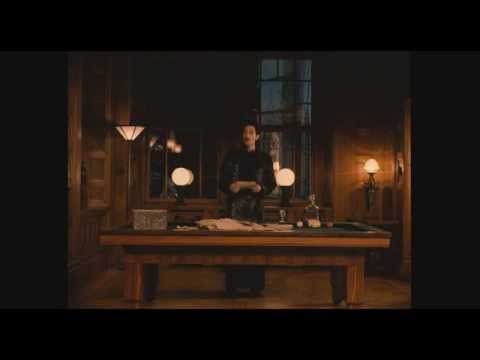
In popular culture, the name Gustave often appears in quirky or stylized settings. For instance, Wes Anderson's film The Grand Budapest Hotel features a protagonist named Monsieur Gustave H., who embodies the name's traditional associations with elegance, discipline, and a bygone era of European refinement. This character has helped reintroduce the name to a younger, global audience, associating it with a certain whimsical charm. Whether used in a historical, literary, or cinematic context, Gustave remains a name that commands respect and suggests a depth of character and a connection to a rich cultural heritage.
The character of Gustave H. represents the last vestige of old-world hospitality in a rapidly changing society.
- Global Variations
- While Gustave is the French form, you will encounter Gustav in Germany and Scandinavia, and Gustavo in Spanish and Portuguese-speaking countries. Each version carries the same 'staff' meaning but adapts to the local phonetics.
Whether you call him Gustave, Gustav, or Gustavo, the name remains a pillar of European nomenclature.
The biography of Gustave Doré reveals a man of immense talent whose illustrations defined the visual language of the 19th century.
Using the name Gustave in a sentence requires an understanding of its role as a proper noun. It typically functions as the subject or object of a sentence, often followed by a surname to specify which historical figure is being discussed. Because it is a name with strong historical ties, the surrounding vocabulary often includes words related to history, art, engineering, or literature. For example, when discussing Gustave Eiffel, one might use verbs like 'designed,' 'engineered,' or 'innovated.' When discussing Gustave Flaubert, the verbs might shift to 'wrote,' 'composed,' or 'critiqued.' This contextual alignment helps the listener or reader immediately identify the specific 'Gustave' in question.
- Biographical Usage
- When writing a biography or a historical essay, Gustave is often the primary subject. It is important to capitalize it and ensure that the possessive form is written as 'Gustave's.' For example: 'Gustave's vision for the tower was revolutionary.'
In his later years, Gustave Flaubert became a mentor to many younger writers, including Guy de Maupassant.
In more creative or casual writing, Gustave can be used to evoke a specific 'vibe' or personality type. Because the name sounds old-fashioned and European, it is often given to characters who are meant to seem sophisticated, eccentric, or perhaps a bit rigid. In these cases, the name acts as a shorthand for a certain set of character traits. For instance, a writer might name a butler or an antique dealer Gustave to instantly convey a sense of tradition and meticulousness. When using the name this way, it is often paired with adjectives like 'meticulous,' 'refined,' or 'stately.'
- Possessive Forms
- The possessive form 'Gustave's' is used to denote ownership or association. For example, 'Gustave's influence on modern architecture cannot be overstated.' Note that the 's' is added after the final 'e'.
The museum curator spent years collecting Gustave Courbet's early sketches to create a comprehensive exhibition.
Furthermore, the name can be used in plural form, 'the Gustaves,' when referring to multiple people with that name or perhaps a family. However, this is quite rare in English. More commonly, you might see it in a list of names. In academic writing, the name is often followed by birth and death dates in parentheses, such as 'Gustave Eiffel (1832–1923).' This provides immediate clarity in a historical context. When speaking, the name should be pronounced with a soft 'G' and a clear 'tav' sound, avoiding the temptation to pronounce the final 'e' as 'ee' or 'ay.'
During the lecture, the historian compared the works of Gustave Moreau with those of his contemporaries in the Symbolist movement.
- Sentence Variety
- You can use Gustave at the beginning, middle, or end of a sentence. 'Gustave was a genius' (Subject), 'I admire Gustave' (Object), or 'The project was led by Gustave' (Object of a preposition).
If you ever visit Paris, you will see the name Gustave inscribed on the base of the Eiffel Tower.
The children's book featured a friendly alligator named Gustave who lived in the sewers of New York City.
The name Gustave is most frequently encountered in educational and cultural environments. If you are a student of art history, architecture, or French literature, the name will appear regularly in your textbooks and lectures. It is a staple of the 'Long 19th Century' curriculum. In museums like the Musée d'Orsay in Paris or the Metropolitan Museum of Art in New York, you will see the name on placards next to paintings by Gustave Courbet or Gustave Moreau. In these settings, the name is spoken with a tone of reverence, acknowledging the individual's contribution to the canon of Western culture.
- Tourism and Travel
- Tour guides in Paris are perhaps the most frequent users of the name Gustave. Whether they are standing at the foot of the Eiffel Tower or walking through the streets of the 7th Arrondissement, they will tell stories of Gustave Eiffel's persistence and engineering brilliance. In this context, the name is part of the city's living history.
'Ladies and gentlemen, we are now standing before the masterpiece of Gustave Eiffel,' the guide announced through his megaphone.
Another place you might hear the name is in the world of classical music and opera. While 'Gustav' (the German/Austrian version) is more common with composers like Gustav Mahler, 'Gustave' appears in French operas and compositions. For instance, the opera Gustave III by Daniel Auber tells the story of the Swedish king. In these circles, the name is associated with high art and dramatic storytelling. Furthermore, in the culinary world, you might find dishes or restaurants named 'Gustave' in honor of famous chefs or as a way to signal a French-inspired menu. It conveys a sense of culinary tradition and expertise.
- Literary Circles
- In book clubs or university seminars focusing on the 19th-century novel, 'Gustave' is a name that comes up when discussing the origins of Realism. Flaubert's influence is so vast that his first name alone often suffices to identify him among scholars.
The literary critic argued that Gustave Flaubert's letters are just as important as his novels for understanding his philosophy.
In recent years, the name has also popped up in the world of animation and children's media. Characters named Gustave often appear as mentors, villains, or quirky sidekicks in stories set in Europe. This helps maintain the name's visibility even among those who might not yet be familiar with the historical figures. For example, in the movie Ratatouille, while the main chef is named Gusteau, the phonetic similarity to Gustave is intentional, playing on the name's association with French excellence. Thus, from the halls of the Louvre to the screens of a cinema, Gustave remains a name that signals quality, history, and a touch of European flair.
The documentary explored the life of Gustave Doré, whose engravings for Dante's 'Inferno' remain the definitive visual interpretation.
- Scientific Discussions
- In physics and engineering, Gustave-Gaspard Coriolis is the namesake of the Coriolis effect. Students often refer to him simply as 'Coriolis,' but his first name Gustave is frequently mentioned in historical introductions.
The physics professor explained how Gustave-Gaspard Coriolis first described the force that affects weather patterns.
At the antique auction, a rare first edition signed by Gustave Flaubert sold for a record-breaking price.
One of the most frequent mistakes people make with the name Gustave is confusing it with its Germanic counterpart, Gustav. While they share the same origin and meaning, the spelling and pronunciation are distinct. In English, 'Gustave' is often misspelled by omitting the final 'e,' which changes it to the German/Scandinavian form. This is particularly common when referring to Gustave Eiffel, as many people assume the name follows the German spelling. Another common spelling error is replacing the 'v' with a 'b' (Gustabe), which is incorrect in all major European languages. Ensuring the 'e' is present is crucial for maintaining the French identity of the name.
- Pronunciation Pitfalls
- English speakers often struggle with the silent 'e' at the end. Some may try to pronounce it as 'Gus-tav-ee' or 'Gus-tav-ay.' The correct English pronunciation is 'Gus-tahv,' where the 'e' is silent but serves to lengthen the 'a' sound slightly. In French, the 'u' sound is more rounded and the 't' is sharper, which can be difficult for non-native speakers to replicate perfectly.
It is a common error to write Gustav Eiffel instead of the correct French spelling, Gustave Eiffel.
Another mistake is the misattribution of works. Because there are several famous Gustaves from the same era (Eiffel, Flaubert, Courbet, Doré), students often mix up their achievements. For example, one might mistakenly say that Gustave Eiffel wrote Madame Bovary or that Gustave Flaubert designed the Eiffel Tower. This 'Gustave confusion' can be avoided by associating each name with a specific keyword: Eiffel with 'Tower,' Flaubert with 'Novel,' Courbet with 'Painting,' and Doré with 'Illustration.' This mental mapping is essential for anyone studying 19th-century history.
- Grammatical Errors
- Using 'Gustave' as a common noun (e.g., 'He is a gustave') is generally incorrect unless you are using it as a metaphor. Since it is a proper noun, it must always be capitalized. Failing to capitalize the 'G' is a basic but frequent mistake in informal writing.
The student lost points on her essay for repeatedly failing to capitalize Gustave when referring to the famous painter.
In the realm of translation, some people try to 'English-ize' the name to 'Gustavus' or 'Gus.' While 'Gustavus' was used in older English texts (especially for Swedish kings), it sounds extremely archaic today and should be avoided when referring to the French Gustaves. Similarly, calling a historical figure 'Gus' in a formal paper is considered too informal and disrespectful. Stick to the full name 'Gustave' to maintain the appropriate academic tone. Lastly, be careful with the possessive form; it is 'Gustave's,' not 'Gustaves' or 'Gustaves's.' The simplicity of the apostrophe-s is often overlooked.
When discussing the author's work, always use Gustave's full name rather than the nickname Gus.
- Confusion with Gustavo
- In multicultural settings, people might accidentally use the Spanish 'Gustavo' for a French person. While they are the same name, using the wrong regional variant can be seen as a lack of cultural awareness.
The speaker corrected himself after accidentally calling the French engineer Gustavo instead of Gustave.
Avoid the mistake of thinking Gustave is a surname; it is almost exclusively used as a first name.
When exploring words and names similar to Gustave, we primarily look at its linguistic cousins and other names that share its historical and cultural weight. The most direct alternative is Gustav, the German and Scandinavian form. While they are essentially the same name, the choice between them usually depends on the nationality of the person being discussed. If you are looking for a name that conveys a similar sense of 19th-century European elegance, you might consider names like Auguste, Victor, or Emile. These names often appear alongside Gustave in historical texts and share a similar 'old-world' charm.
- Gustav vs. Gustave
- Gustav is the Germanic version, often associated with figures like Gustav Mahler or Gustav Klimt. Gustave is the French version, associated with Eiffel and Flaubert. The 'e' at the end is the primary marker of French origin.
While Gustav Mahler composed symphonies in Vienna, Gustave Flaubert was perfecting his prose in France.
In terms of meaning, names like Augustus or August share the sense of 'majesty' or 'venerability' that Gustave often carries. While their etymologies are different, their social registers are very similar. In modern contexts, if someone finds Gustave too formal, they might opt for Gus. However, as an alternative, Gus loses the sophisticated European edge of the full name. For a more modern-sounding name with a similar 'G' start, Gideon or Gabriel are popular choices, though they lack the specific historical associations of Gustave. Another interesting comparison is with the name Ludwig or Louis, which also have strong royal and historical ties in Europe.
- Comparison of 'G' Names
-
- Gustave: French, historical, sophisticated.
- Gustav: German/Swedish, royal, strong.
- Gustavo: Spanish/Italian, rhythmic, classic.
- Gus: English nickname, friendly, casual.
The author chose the name Gustave instead of Gus to ensure the character was taken seriously by the readers.
When looking for synonyms in a metaphorical sense, one might use terms like 'architect,' 'visionary,' or 'realist' if the name Gustave is being used to represent the qualities of Eiffel or Flaubert. For example, 'He is the Gustave of our team' could be replaced with 'He is the visionary architect of our team.' This usage is rare but effective in high-level rhetorical contexts. Additionally, names like Oscar or Arthur are often grouped with Gustave in the 'Victorian Revival' category of names that are becoming popular again after decades of being considered 'old-man names.'
In the list of 19th-century masters, Gustave stands alongside names like Victor Hugo and Charles Baudelaire.
- Alternative Meanings
- While Gustave is a name, its components 'Gautr' and 'stafr' relate to 'support' and 'tribe.' Alternatives like 'Theodore' (Gift of God) or 'Albert' (Noble and Bright) offer different meanings but a similar historical weight.
If you find Gustave too difficult to pronounce, the name Victor provides a similar historical resonance with less phonetic complexity.
The name Gustave carries a certain 'je ne sais quoi' that simpler names like John or Paul lack.
How Formal Is It?
रोचक तथ्य
Despite being a quintessential French name today, its roots are entirely Scandinavian. It became royal in Sweden with King Gustav Vasa in the 16th century before traveling to France.
उच्चारण मार्गदर्शिका
- Pronouncing the final 'e' as 'ee' (Gus-tah-vee).
- Pronouncing the 'u' like 'uh' (Gus-tuhv).
- Making the 'G' soft like a 'J' (Jus-tahv).
- Replacing the 'v' with a 'b' (Gus-tahb).
- Adding an 'o' at the end (Gustavo).
कठिनाई स्तर
Easy to recognize as a name in text.
The final 'e' is often forgotten by learners.
The French 'u' and silent 'e' can be tricky for beginners.
Distinctive sound makes it easy to pick out in speech.
आगे क्या सीखें
पूर्वापेक्षाएँ
आगे सीखें
उन्नत
ज़रूरी व्याकरण
Proper Nouns
Gustave must always be capitalized.
Possessive Proper Nouns
Add 's to make Gustave's.
Silent Letters
The 'e' at the end of Gustave is not pronounced.
Articles with Names
Do not use 'the' before Gustave unless referring to a specific type.
Appositives
Gustave Eiffel, the engineer, was very talented.
स्तर के अनुसार उदाहरण
My name is Gustave.
Mera naam Gustave hai.
Proper noun, capitalized.
Gustave is from France.
Gustave France se hai.
Subject of the sentence.
I see Gustave.
Main Gustave ko dekhta hoon.
Object of the verb 'see'.
Gustave is a boy.
Gustave ek ladka hai.
Linking verb 'is'.
This is Gustave's book.
Yeh Gustave ki kitab hai.
Possessive form with 's.
Gustave likes apples.
Gustave ko seb pasand hain.
Third-person singular verb 'likes'.
Where is Gustave?
Gustave kahan hai?
Interrogative sentence.
Gustave is happy.
Gustave khush hai.
Adjective 'happy' describing the subject.
Gustave Eiffel built the tower.
Gustave Eiffel ne tower banaya.
Past tense verb 'built'.
He read a story about Gustave.
Usne Gustave ke baare mein ek kahani padhi.
Prepositional phrase 'about Gustave'.
Gustave is a very old name.
Gustave ek bahut purana naam hai.
Adverb 'very' modifying 'old'.
Do you know Gustave?
Kya aap Gustave ko jaante hain?
Auxiliary verb 'do' for questions.
Gustave lives in Paris.
Gustave Paris mein rehta hai.
Present simple for a permanent state.
I have a friend named Gustave.
Mera ek dost hai jiska naam Gustave hai.
Past participle 'named' used as an adjective.
Gustave's house is big.
Gustave ka ghar bada hai.
Possessive noun as subject.
We saw Gustave yesterday.
Humne kal Gustave ko dekha.
Time adverb 'yesterday'.
Gustave Flaubert is a famous French writer.
Gustave Flaubert ek prasiddh Fransisi lekhak hain.
Appositive phrase 'famous French writer'.
The museum has many paintings by Gustave Courbet.
Museum mein Gustave Courbet ki kai paintings hain.
Preposition 'by' indicating authorship.
Gustave's engineering skills were ahead of his time.
Gustave ki engineering skills apne samay se aage thi.
Possessive noun with plural subject 'skills'.
Many people visit the tower built by Gustave Eiffel.
Bahut se log Gustave Eiffel dwara banaye gaye tower ko dekhte hain.
Reduced relative clause 'built by'.
Is Gustave a common name in France today?
Kya aaj France mein Gustave ek aam naam hai?
Question about frequency and usage.
I am reading a biography of Gustave Doré.
Main Gustave Doré ki ek biography padh raha hoon.
Present continuous tense.
Gustave's work influenced many other artists.
Gustave ke kaam ne kai anya kalakaron ko prabhavit kiya.
Transitive verb 'influenced'.
The name Gustave sounds very elegant.
Gustave naam bahut hi shalin lagta hai.
Linking verb 'sounds'.
Gustave Courbet challenged the artistic norms of his era.
Gustave Courbet ne apne daur ke kalatmak manakon ko chunauti di.
Past tense 'challenged' with direct object.
The meticulous style of Gustave Flaubert is hard to imitate.
Gustave Flaubert ki sukshm shaili ki nakal karna mushkil hai.
Adjective 'meticulous' modifying 'style'.
Gustave Eiffel's use of iron revolutionized architecture.
Gustave Eiffel dwara lohe ke upyog ne vastukala mein kranti la di.
Gerund phrase 'use of iron'.
We discussed the impact of Gustave's realism on modern art.
Humne modern art par Gustave ke realism ke prabhav par charcha ki.
Abstract noun 'realism'.
Gustave-Gaspard Coriolis discovered the effect that bears his name.
Gustave-Gaspard Coriolis ne us prabhav ki khoj ki jo unke naam par hai.
Relative clause 'that bears his name'.
The character Gustave H. is the heart of the movie.
Gustave H. ka charitra film ki jaan hai.
Proper noun as a character name.
Gustave's letters reveal his struggle with perfectionism.
Gustave ke khat unke perfectionism ke saath sangharsh ko darshate hain.
Verb 'reveal' with a complex object.
The legacy of Gustave Doré lives on in modern illustrations.
Gustave Doré ki virasat aaj ki illustrations mein jivit hai.
Phrasal verb 'lives on'.
Gustave Flaubert's 'le mot juste' remains a cornerstone of literary theory.
Gustave Flaubert ka 'le mot juste' sahityik siddhant ka ek adhaar bane hue hai.
French loanword within an English sentence.
The controversy surrounding Gustave Eiffel's tower was immense at the time.
Gustave Eiffel ke tower ko lekar us samay ka vivad bahut bada tha.
Present participle 'surrounding' as an adjective.
Gustave Courbet's 'The Stone Breakers' epitomizes the Realist movement.
Gustave Courbet ki 'The Stone Breakers' Realist andolan ka pratik hai.
Verb 'epitomizes' for symbolic representation.
The name Gustave evokes a sense of 19th-century European grandeur.
Gustave naam 19वीं sadi ki Europiya shan-o-shaukat ka ehsas dilata hai.
Verb 'evokes' for emotional response.
Gustave Moreau's symbolism is characterized by its dreamlike quality.
Gustave Moreau ke symbolism ki visheshta uski sapno jaisi gunvatta hai.
Passive voice 'is characterized by'.
Scholars often debate the extent of Gustave's influence on Zola.
Vidwan aksar Zola par Gustave ke prabhav ki seema par bahas karte hain.
Noun 'extent' with a prepositional phrase.
Gustave's architectural feats were made possible by industrial advances.
Gustave ke vastushilp karname audyogik unnati se sambhav hue.
Plural noun 'feats'.
The name Gustave has become synonymous with French cultural excellence.
Gustave naam Fransisi sanskritik utkrishtta ka paryayvachi ban gaya hai.
Present perfect with 'become synonymous'.
The Flaubertian obsession with objectivity is perfectly captured in Gustave's correspondence.
Objectivity ke prati Flaubertian junoon Gustave ke patrachar mein puri tarah se kaid hai.
Adjective 'Flaubertian' derived from the name.
Gustave Eiffel's transition from bridge builder to tower architect was a pivotal moment in his career.
Gustave Eiffel ka ek pul banane wale se tower architect banne ka badlav unke career ka ek mahatvapurn mod tha.
Complex noun phrase as subject.
The visceral nature of Gustave Courbet's work shocked the Parisian bourgeois.
Gustave Courbet ke kaam ki gambhir prakriti ne Parisian bourgeois ko hairan kar diya.
Adjective 'visceral' and noun 'bourgeois'.
Gustave-Gaspard Coriolis's mathematical formulations provided the basis for modern meteorology.
Gustave-Gaspard Coriolis ke ganitiya sutron ne adhunik mausam vigyan ka adhaar pradan kiya.
Possessive form of a hyphenated name.
The cinematic portrayal of Gustave H. serves as a poignant homage to a lost era.
Gustave H. ka filmi chitran ek khoi hui yug ko ek marmik shraddhanjali ke roop mein karya karta hai.
Noun 'homage' with 'to'.
Gustave Doré's engravings possess a haunting quality that transcends their historical context.
Gustave Doré ki engravings mein ek aisi daravani gunvatta hai jo unke aitihasik sandarbh se pare hai.
Verb 'transcends' for going beyond limits.
One might argue that the name Gustave itself carries the weight of the Enlightenment's legacy.
Koi yeh tark de sakta hai ki Gustave naam apne aap mein Enlightenment ki virasat ka bojh uthaye hue hai.
Subjunctive 'might argue'.
The juxtaposition of Gustave's traditional name with his radical ideas created a unique public persona.
Gustave ke paramparik naam aur unke krantikari vicharon ke mel ne ek anokha sarvajanik vyaktitv banaya.
Noun 'juxtaposition'.
सामान्य शब्द संयोजन
सामान्य वाक्यांश
— Referring to the 19th-century period of his life.
The era of Gustave was one of great change.
— Following the career path of a famous Gustave.
The young engineer followed in the footsteps of Gustave Eiffel.
— Someone who embodies the qualities of a famous Gustave.
He is a true Gustave when it comes to writing.
— The most famous work of a person named Gustave.
The tower is Gustave's masterpiece.
— The innovative or artistic energy associated with the name.
The spirit of Gustave lives on in this bridge.
— Researching the life or works of a famous Gustave.
She is studying Gustave Courbet for her thesis.
— The impact a famous Gustave had on a field.
The Gustave influence is clear in modern realism.
— A formal or affectionate way to address someone named Gustave.
Dear Gustave, please find the plans attached.
अक्सर इससे भ्रम होता है
The German/Swedish version without the 'e'.
The Spanish/Italian version with an 'o'.
A similar-sounding French name (Oh-goost).
मुहावरे और अभिव्यक्तियाँ
— A person named Gustave who is very tall or influential.
He's an Eiffel of a Gustave, standing six-foot-five.
Colloquial— A perfectionist who spends too much time on details.
Don't be such a Flaubert's Gustave; just finish the email!
Literary— A talent for making something both functional and beautiful.
The new bridge has the Gustave touch.
Professional— A young person showing great potential in engineering or art.
That kid building with blocks is a Gustave in the making.
Informal— Trying very hard to find the perfect word.
I've been searching for le mot juste like Gustave all morning.
Literary— Attempting a massive, ambitious project.
Starting this company is like building a Gustave.
Business— A very high level of quality or precision.
This work doesn't meet the Gustave standard.
Formal— A nickname for someone who is traditional or grumpy.
Old Man Gustave won't let us play on his lawn.
Slang— A feeling that historical traditions are still present.
You can almost feel Gustave's ghost in these old streets.
Poetic— To over-engineer or over-complicate a simple task.
Don't Gustave the sandwich; just put the cheese on!
Slangआसानी से भ्रमित होने वाले
Same origin and meaning.
Gustav is Germanic/Scandinavian; Gustave is French. The 'e' is the key difference.
Gustav Mahler vs. Gustave Eiffel.
Same origin and meaning.
Gustavo is the Romance language version used in Spain, Italy, and Latin America.
Gustavo is common in Mexico, while Gustave is common in France.
It is the nickname for Gustave.
Gus is informal and can be used for any 'Gus' name; Gustave is formal and specific.
Call him Gus at home, but use Gustave in his biography.
Phonetic similarity and French origin.
Auguste comes from 'Augustus' (majestic); Gustave comes from 'Gautstafr' (staff).
Auguste Rodin was a sculptor; Gustave Eiffel was an engineer.
Phonetically similar, especially in the movie Ratatouille.
Gusteau is a fictional surname; Gustave is a real first name.
Chef Gusteau is not the same as Gustave Eiffel.
वाक्य संरचनाएँ
I am [Name].
I am Gustave.
[Name] is from [Place].
Gustave is from France.
[Name] is a famous [Profession].
Gustave Eiffel is a famous engineer.
The [Noun] was designed by [Name].
The tower was designed by Gustave Eiffel.
Known for his [Noun], [Name] changed [Field].
Known for his realism, Gustave Courbet changed art.
The [Adjective] legacy of [Name] continues to [Verb].
The enduring legacy of Gustave Flaubert continues to inspire writers.
Whether it's [Name] or [Name], both were [Adjective].
Whether it's Gustave or Victor, both were influential.
If [Name] were alive today, he would [Verb].
If Gustave Eiffel were alive today, he would be amazed by skyscrapers.
शब्द परिवार
संज्ञा
क्रिया
विशेषण
संबंधित
इसे कैसे इस्तेमाल करें
Low in daily conversation, High in historical and artistic contexts.
-
Gustav Eiffel
→
Gustave Eiffel
The engineer was French, so he used the French spelling with an 'e'.
-
Gustave's Flaubert book
→
Gustave Flaubert's book
The possessive should go on the full name or the surname, not the first name alone if the surname is present.
-
Pronouncing it Gus-tah-vee
→
Gus-tahv
The final 'e' is silent in English and French.
-
i like gustave
→
I like Gustave.
Proper nouns must always be capitalized.
-
Gustave was a great paint.
→
Gustave was a great painter.
Confusion between the person and the profession.
सुझाव
The French E
Always remember the 'e' at the end for the French version. Think: Gustave is from FrancE.
The Three Masters
Associate Gustave with the 'Three Masters': Eiffel (Metal), Flaubert (Words), Courbet (Paint).
Silent Ending
Treat the end of the name like the word 'have' but with a 't' before it. Gus-tahv.
19th Century
If you are reading about the 1800s in France, 'Gustave' is a name you will see often.
Regional Variants
Use Gustav for Germans, Gustave for French, and Gustavo for Spanish speakers.
Le Mot Juste
Use the name Gustave Flaubert when discussing the importance of choosing the perfect word.
Iron and Steel
Gustave Eiffel is your go-to reference for 19th-century iron construction.
Proper Noun
Remember that Gustave is a proper noun, so it doesn't follow the same rules as common nouns like 'car' or 'dog.'
Nicknames
If you meet a Gustave, ask if they prefer 'Gus' before using the nickname.
Statue of Liberty
Impress people by knowing that Gustave Eiffel designed the 'skeleton' of the Statue of Liberty.
याद करें
स्मृति सहायक
G-U-S-T-A-V-E: Great Under-Structure Tower Architect Very Elegant. This helps you remember Gustave Eiffel and the spelling.
दृश्य संबंध
Imagine a man named Gustave holding a giant iron staff (the Eiffel Tower) while writing a book. The staff represents the 'staff' meaning and the tower.
Word Web
चैलेंज
Try to write three sentences about three different famous Gustaves without looking at their surnames. This will help you associate the name with different fields.
शब्द की उत्पत्ति
The name Gustave is the French form of the Germanic name Gustav. It entered the French language through cultural exchange with Sweden and Germany. The name was popularized in France during the 19th century.
मूल अर्थ: Derived from the Old Norse 'Gautstafr', meaning 'Staff of the Geats'. The Geats were a North Germanic tribe.
Indo-European > Germanic > North Germanic > Old Norse > French adaptation.सांस्कृतिक संदर्भ
The name is generally neutral but can sound elitist or overly formal in some casual contexts.
In English-speaking countries, the name is almost exclusively associated with Gustave Eiffel. It is rarely used for babies today.
असल ज़िंदगी में अभ्यास करें
वास्तविक संदर्भ
Art History Class
- Gustave Courbet's realism
- The style of Gustave Moreau
- Doré's illustrations
- 19th-century masters
Tourism in Paris
- Built by Gustave Eiffel
- The Gustave Eiffel suite
- Rue Gustave Flaubert
- The legacy of Gustave
Literature Seminar
- Flaubert's Gustave
- The prose of Gustave
- Realist movement
- Madame Bovary's author
Engineering Lecture
- Gustave Eiffel's ironwork
- Coriolis effect
- Structural integrity
- Gustave's bridges
Naming a Baby
- Vintage names
- French boy names
- Meaning of Gustave
- Nicknames for Gustave
बातचीत की शुरुआत
"Did you know that Gustave Eiffel also worked on the Statue of Liberty?"
"Have you ever read any books by Gustave Flaubert?"
"What do you think of the name Gustave? Does it sound too old-fashioned?"
"If you could meet any famous Gustave from history, who would it be?"
"Why do you think the name Gustave was so popular in the 1800s?"
डायरी विषय
Imagine you are Gustave Eiffel. Write a diary entry about the day the Eiffel Tower was finished.
Write a short story about a modern-day boy named Gustave who hates the name.
Compare the works of Gustave Flaubert and Gustave Courbet. How are they similar?
If you had to design a building like Gustave Eiffel, what would it look like?
Discuss why certain names like Gustave go in and out of fashion over the centuries.
अक्सर पूछे जाने वाले सवाल
10 सवालNo, Gustave is considered a 'vintage' name in France. It is not as common as it was in the 19th century, but it is seeing a small revival among parents who like traditional names.
In English, you do not pronounce the 'e' at all. It is silent. In French, it is also mostly silent, though it can sometimes be heard as a very faint 'uh' sound in poetry or specific dialects.
Gustave Eiffel is undoubtedly the most famous, as his name is attached to the Eiffel Tower, one of the most recognizable structures in the world.
It comes from Old Norse and means 'Staff of the Geats.' This implies a person who is a leader or a pillar of support for their tribe.
No, Gustave is strictly a masculine name. The female equivalent in some cultures might be Gustava, but it is very rare.
Linguistically, yes. They are variants of the same name. However, socially and geographically, they are used in different countries (French vs. German/Swedish).
You write it as Gustave's. For example: 'Gustave's design was brilliant.'
It is almost always a first name (given name). However, like many names, it can occasionally appear as a surname, though this is rare.
He built it as the entrance arch for the 1889 World's Fair in Paris, which celebrated the 100th anniversary of the French Revolution.
The 'G' is hard, like in the word 'go' or 'get.' It is never soft like the 'G' in 'giant.'
खुद को परखो 200 सवाल
Write a sentence about Gustave Eiffel.
Well written! Good try! Check the sample answer below.
Describe who Gustave Flaubert was in two sentences.
Well written! Good try! Check the sample answer below.
Explain the difference between Gustave and Gustav.
Well written! Good try! Check the sample answer below.
Write a short paragraph about the legacy of Gustave Eiffel.
Well written! Good try! Check the sample answer below.
Discuss the importance of 'le mot juste' in Gustave Flaubert's writing.
Well written! Good try! Check the sample answer below.
Imagine you are Gustave Courbet. Write a short statement about your art.
Well written! Good try! Check the sample answer below.
Write a sentence using the possessive form of Gustave.
Well written! Good try! Check the sample answer below.
Why is the name Gustave associated with the 19th century?
Well written! Good try! Check the sample answer below.
Create a fictional character named Gustave and describe him.
Well written! Good try! Check the sample answer below.
Write a letter to Gustave Eiffel thanking him for his tower.
Well written! Good try! Check the sample answer below.
How does the name Gustave sound to you? Describe its 'vibe'.
Well written! Good try! Check the sample answer below.
Write a sentence about Gustave-Gaspard Coriolis.
Well written! Good try! Check the sample answer below.
Explain the etymology of the name Gustave.
Well written! Good try! Check the sample answer below.
Write a dialogue between two people discussing Gustave Doré's art.
Well written! Good try! Check the sample answer below.
Use the word 'Gustave' in a sentence about travel.
Well written! Good try! Check the sample answer below.
Write a sentence about a street named after Gustave.
Well written! Good try! Check the sample answer below.
Compare Gustave Eiffel with a modern engineer.
Well written! Good try! Check the sample answer below.
Write a short poem including the name Gustave.
Well written! Good try! Check the sample answer below.
Discuss the character of Gustave H. from 'The Grand Budapest Hotel'.
Well written! Good try! Check the sample answer below.
Write a sentence about Gustave's influence on art.
Well written! Good try! Check the sample answer below.
Pronounce the name 'Gustave' correctly.
Read this aloud:
तुमने कहा:
Speech recognition is not supported in your browser. Try Chrome or Edge.
Say: 'Gustave Eiffel built the Eiffel Tower.'
Read this aloud:
तुमने कहा:
Speech recognition is not supported in your browser. Try Chrome or Edge.
Explain who Gustave Flaubert was in your own words.
Read this aloud:
तुमने कहा:
Speech recognition is not supported in your browser. Try Chrome or Edge.
Discuss why Gustave Eiffel's tower is so famous.
Read this aloud:
तुमने कहा:
Speech recognition is not supported in your browser. Try Chrome or Edge.
Talk about the difference between Gustave and Gustavo.
Read this aloud:
तुमने कहा:
Speech recognition is not supported in your browser. Try Chrome or Edge.
Describe a painting by Gustave Courbet (if you know one).
Read this aloud:
तुमने कहा:
Speech recognition is not supported in your browser. Try Chrome or Edge.
Explain the Coriolis effect and mention Gustave-Gaspard.
Read this aloud:
तुमने कहा:
Speech recognition is not supported in your browser. Try Chrome or Edge.
Discuss the character of Gustave H. from a movie.
Read this aloud:
तुमने कहा:
Speech recognition is not supported in your browser. Try Chrome or Edge.
Say: 'Gustave's legacy is preserved in the heart of Paris.'
Read this aloud:
तुमने कहा:
Speech recognition is not supported in your browser. Try Chrome or Edge.
Explain the etymology of Gustave to a friend.
Read this aloud:
तुमने कहा:
Speech recognition is not supported in your browser. Try Chrome or Edge.
Say: 'The name Gustave sounds very sophisticated.'
Read this aloud:
तुमने कहा:
Speech recognition is not supported in your browser. Try Chrome or Edge.
Discuss why some names go out of fashion.
Read this aloud:
तुमने कहा:
Speech recognition is not supported in your browser. Try Chrome or Edge.
Pronounce: 'Gustave Flaubert' and 'Gustave Courbet'.
Read this aloud:
तुमने कहा:
Speech recognition is not supported in your browser. Try Chrome or Edge.
Talk about the importance of engineering in history.
Read this aloud:
तुमने कहा:
Speech recognition is not supported in your browser. Try Chrome or Edge.
Say: 'I am reading a book about Gustave Doré.'
Read this aloud:
तुमने कहा:
Speech recognition is not supported in your browser. Try Chrome or Edge.
Explain the meaning of 'le mot juste'.
Read this aloud:
तुमने कहा:
Speech recognition is not supported in your browser. Try Chrome or Edge.
Discuss the role of realism in art.
Read this aloud:
तुमने कहा:
Speech recognition is not supported in your browser. Try Chrome or Edge.
Say: 'Gustave is a classic French name.'
Read this aloud:
तुमने कहा:
Speech recognition is not supported in your browser. Try Chrome or Edge.
Talk about your favorite historical figure named Gustave.
Read this aloud:
तुमने कहा:
Speech recognition is not supported in your browser. Try Chrome or Edge.
Explain why the 'e' in Gustave is silent.
Read this aloud:
तुमने कहा:
Speech recognition is not supported in your browser. Try Chrome or Edge.
Listen to the sentence: 'Gustave Eiffel was a genius.' What was Gustave Eiffel?
Listen to the name: 'Gustave'. Is the 'e' pronounced?
Listen to the sentence: 'Flaubert's first name was Gustave.' What was his first name?
Listen to the sentence: 'The museum is showing Gustave Courbet's work.' Whose work is being shown?
Listen to the sentence: 'Gustave is the French version of Gustav.' Which one is French?
Listen to the sentence: 'Gustave Doré illustrated many books.' What did he do?
Listen to the sentence: 'Gustave-Gaspard Coriolis was a physicist.' What was his profession?
Listen to the sentence: 'The character Gustave H. works in a hotel.' Where does he work?
Listen to the sentence: 'Gustave's tower is in Paris.' Where is the tower?
Listen to the sentence: 'The name Gustave means staff.' What does it mean?
Listen to the sentence: 'Gustave Flaubert wrote Madame Bovary.' Who wrote the book?
Listen to the sentence: 'Gustave was born in 1832.' When was he born?
Listen to the sentence: 'The 'G' in Gustave is hard.' How is the 'G' pronounced?
Listen to the sentence: 'Gustave's legacy is huge.' What is huge?
Listen to the sentence: 'He was named after Gustave.' Who was he named after?
/ 200 correct
Perfect score!
Summary
The name Gustave is a powerful cultural anchor, linking the modern world to the 19th-century's greatest achievements in engineering, art, and literature. For example, 'Gustave Eiffel's tower' is not just a structure but a testament to the name's legacy of innovation.
- Gustave is a traditional French male name with Germanic roots, meaning 'Staff of the Geats' or 'Leader.'
- It is globally recognized through Gustave Eiffel, the visionary engineer behind the iconic Eiffel Tower in Paris.
- In literature, it is immortalized by Gustave Flaubert, the master of the modern realist novel and precise prose.
- The name evokes 19th-century sophistication, artistic realism, and industrial progress, making it a culturally rich proper noun.
The French E
Always remember the 'e' at the end for the French version. Think: Gustave is from FrancE.
The Three Masters
Associate Gustave with the 'Three Masters': Eiffel (Metal), Flaubert (Words), Courbet (Paint).
Silent Ending
Treat the end of the name like the word 'have' but with a 't' before it. Gus-tahv.
19th Century
If you are reading about the 1800s in France, 'Gustave' is a name you will see often.