marcellus 30 सेकंड में
- A masculine given name of Latin origin meaning 'little Marcus' or 'young warrior,' often associated with Roman history and nobility.
- A major geological formation (Marcellus Shale) in the eastern United States known for its vast natural gas reserves and economic impact.
- A character in William Shakespeare's 'Hamlet,' a sentinel who famously witnesses the ghost of the King of Denmark.
- A name that carries a sense of classical elegance and strength, used across various cultures and professional fields today.
The name Marcellus is a masculine given name that carries a profound historical and linguistic weight, rooted deeply in the traditions of Ancient Rome. Etymologically, it serves as a Latin diminutive of the name Marcus, which itself is derived from Mars, the Roman god of war. Consequently, the name Marcellus is often interpreted to mean 'little Marcus' or 'young warrior,' suggesting a legacy of strength, resilience, and noble heritage. In the contemporary era, while it remains a classic personal name, it has gained significant prominence in the scientific and economic sectors through the Marcellus Shale, a vast geological formation in the eastern United States that is a major source of natural gas. This dual identity—as both a venerable human name and a modern industrial landmark—makes it a unique subject of study for language learners.
- Historical Context
- Historically, Marcellus was a prominent cognomen within the plebeian Claudian family of Rome. The most famous bearer, Marcus Claudius Marcellus, was a five-time consul and a celebrated general during the Second Punic War, known as the 'Sword of Rome' for his tactical brilliance against Hannibal.
- Geological Significance
- In the 21st century, the term is frequently used in discussions regarding energy and the environment. The Marcellus Shale, named after a town in New York where the rock outcropped, has become synonymous with the 'fracking' boom, sparking global debates over energy independence and ecological preservation.
- Literary Presence
- Literature enthusiasts encounter Marcellus as a sentinel in William Shakespeare's tragedy, Hamlet. He is one of the first characters to witness the ghost of the King, famously uttering the line, 'Something is rotten in the state of Denmark,' which has become a staple of English idiomatic expression.
The historian noted that marcellus was instrumental in the defense of Sicily during the Roman campaigns.
When people use the name today, they are often invoking a sense of classical elegance or referring to the specific geographic and economic impact of the Appalachian gas reserves. It is a name that bridges the gap between the ancient Mediterranean and the modern industrial landscape of North America. In social settings, it is perceived as a strong, traditional name that has never quite faded into obscurity, maintaining a steady presence in various cultures, particularly within the African American community in the United States, where it has been embraced for its rhythmic and dignified sound.
The investment firm focused its resources on the marcellus region to capitalize on natural gas production.
Furthermore, the name appears in popular culture, most notably as the character Marcellus Wallace in Quentin Tarantino's film Pulp Fiction. This usage has cemented the name in the minds of a younger generation, associating it with authority and mystery. Whether you are a student of history, a geologist, a literature major, or a film buff, the word Marcellus provides a rich tapestry of meanings that illustrate how language evolves from divine origins to everyday utility. It is a word that demands attention, whether it is being shouted on a stage in a Shakespearean play or analyzed in a corporate boardroom discussing energy futures.
Young marcellus excelled in his studies of Latin and classical rhetoric.
In summary, the use of Marcellus is multifaceted. It serves as a bridge between the martial spirit of ancient Rome and the complex environmental and economic realities of the modern world. Its phonetic structure—three syllables with a soft 's' ending—gives it a melodic quality that is both approachable and formal. Understanding the word requires an appreciation for its journey through time, from the battlefields of the Punic Wars to the deep shale beds of Pennsylvania and the iconic scripts of Hollywood cinema.
The sentinel marcellus stood watch over the battlements of Elsinore.
Many families in the village have named their firstborn sons marcellus for generations.
Using the word Marcellus correctly depends heavily on the intended context, as it functions primarily as a proper noun. When referring to a person, it follows standard naming conventions in English. When referring to the geological formation, it is often part of a compound noun phrase. Because it is a proper noun, it should always be capitalized, regardless of its position in the sentence. This section explores the grammatical nuances and various ways to integrate this word into sophisticated English prose, ensuring that the learner can navigate both social and technical discussions with ease.
- As a Subject
- When Marcellus is the subject of a sentence, it performs the action. For example: 'Marcellus decided to pursue a career in environmental law after visiting the gas fields.'
- As an Object
- As an object, Marcellus receives the action. For example: 'The professor called on Marcellus to explain the significance of the Roman consul's military strategy.'
- In the Possessive Form
- To show ownership, add an apostrophe and an 's' or just an apostrophe. For example: 'Marcellus's research paper was published in a prestigious journal' or 'Marcellus' leadership was admired by his peers.'
The environmental impact of the marcellus drilling projects has been a topic of intense debate among local residents.
In technical writing, particularly in geology and energy economics, Marcellus is frequently used as an attributive noun to modify words like 'shale,' 'formation,' 'basin,' or 'play.' In these instances, it provides specific geographic and stratigraphic information. For example, 'The Marcellus play has revolutionized the energy landscape of the Northeast.' Here, 'Marcellus' specifies which 'play' (a term for a group of oil or gas fields) is being discussed. This usage is critical for clarity in scientific reporting and economic analysis.
During the lecture, the historian explained how marcellus earned the title of the 'Sword of Rome' through his relentless pursuit of victory.
In literary analysis, sentences often focus on the character's role or symbolic meaning. One might write, 'Marcellus serves as a bridge between the mundane world of the guards and the supernatural realm of the Ghost.' This use of the name highlights its function as a identifier for a specific persona within a narrative. Similarly, in film studies, one might discuss 'the enigmatic presence of Marcellus Wallace in the narrative structure of Pulp Fiction,' where the name represents a specific archetype of power and authority.
The geologist collected several core samples from the marcellus layer to analyze the organic content of the rock.
Furthermore, the name can be used in more casual, everyday sentences when referring to friends or acquaintances. 'I'm meeting Marcellus at the cafe at noon' is a straightforward application. In this context, the name is a simple identifier. However, the choice of the name Marcellus often carries a connotation of tradition or cultural pride, which can be subtly reflected in the tone of the sentence. Whether the sentence is about a person's daily life or a massive geological formation, the word Marcellus remains a versatile and powerful tool in the English language.
It was marcellus who first noticed the unusual seismic activity in the northern part of the county.
The legacy of marcellus continues to influence the way we study ancient military tactics today.
The word Marcellus is not a word you will hear in every conversation, but it appears with surprising frequency in specific professional and cultural niches. Understanding these contexts is key to recognizing the word when it arises. You will most likely encounter it in academic settings, news reports concerning energy and the environment, theater and literature discussions, and within certain cultural communities where the name is popular. This section details the specific environments where 'Marcellus' is a common part of the lexicon, providing learners with a roadmap for where to expect this versatile proper noun.
- In History Classrooms
- Students of Roman history will hear the name frequently when discussing the Punic Wars or the transition from the Roman Republic to the Empire. Professors often use 'Marcellus' as a primary example of Roman military virtue and political leadership.
- In Energy and Environmental News
- On news programs like NPR, the BBC, or CNN, the term 'Marcellus Shale' is a frequent topic. You will hear it in reports about hydraulic fracturing (fracking), natural gas prices, and the environmental regulations surrounding energy extraction in the United States.
- In the Theater
- Actors and theater-goers will hear the name during any production of Shakespeare's Hamlet. The character Marcellus is essential to the opening scenes, and his name is spoken multiple times as the guards react to the appearance of the ghost.
The news anchor reported on the latest economic figures coming out of the marcellus gas fields in Pennsylvania.
In the United States, particularly in the Mid-Atlantic and Appalachian regions, the word is part of the local vernacular. Residents of Pennsylvania, New York, West Virginia, and Ohio hear 'Marcellus' in local government meetings, community discussions about land rights, and advertisements for jobs in the energy sector. In these areas, the word is not just a name; it is a symbol of economic opportunity and environmental concern. You might hear a local resident say, 'My cousin got a job working the Marcellus rigs,' or 'We're worried about what the Marcellus drilling is doing to our water supply.'
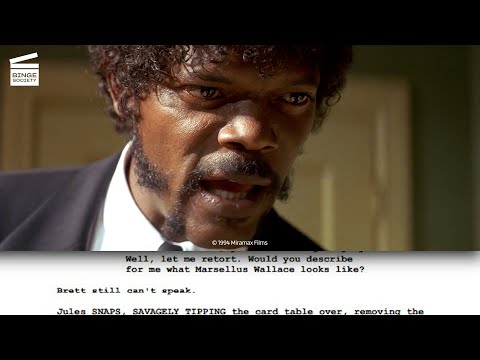
In the film Pulp Fiction, the character Jules Winnfield speaks with great reverence about his boss, marcellus Wallace.
In the world of classical music and opera, you might encounter the name in the context of composers or performers. While not as common as in other fields, the name's Latin roots make it a frequent choice for characters in historical dramas or operas set in ancient times. Furthermore, in the field of paleontology and geology, researchers at conferences will use 'Marcellus' as a shorthand for the specific stratigraphic unit they are studying, often debating its age, composition, and the fossils found within its layers.
The professor of geology explained that the marcellus formation was deposited during the Middle Devonian period.
Finally, you will hear the word in casual social interactions. Whether it is a parent calling their child on a playground or a friend introducing another at a party, the name Marcellus is a living, breathing part of modern nomenclature. It carries a sense of individuality and history that makes it stand out in a sea of more common names like John or Michael. By paying attention to these various contexts, you will begin to see how 'Marcellus' serves as a versatile thread connecting history, science, art, and daily life.
During the Shakespearean workshop, the director asked the actor playing marcellus to emphasize his fear of the ghost.
The environmental activist spoke passionately about protecting the land above the marcellus Shale.
While Marcellus is a relatively straightforward proper noun, there are several common pitfalls that English learners and even native speakers may encounter. These mistakes generally fall into three categories: spelling, pronunciation, and contextual confusion. Because the name has roots in Latin and is used in both personal and scientific contexts, it is easy to misapply certain rules. This section aims to clarify these common errors, providing detailed explanations and corrections to help you use the word with precision and confidence.
- Spelling Errors
- The most common spelling mistake is omitting one of the double letters. People often write 'Marcelus' (missing one 'l') or 'Marcellas' (changing the final vowel). Remember: M-A-R-C-E-L-L-U-S. The double 'l' is essential for the correct Latin-derived structure.
- Pronunciation Pitfalls
- In English, the 'c' is soft, sounding like an 's' (mar-SELL-us). However, those familiar with Italian might be tempted to use a 'ch' sound (mar-CHELL-o), which is incorrect for the English pronunciation of the Latin name. Additionally, ensure the stress is on the second syllable.
- Confusing with Similar Names
- Learners often confuse Marcellus with 'Marcel' (the French version) or 'Marcello' (the Italian version). While they share the same root, they are distinct names. Using 'Marcel' when you mean 'Marcellus' can lead to confusion, especially in historical or geological contexts.
Incorrect: The geologist studied the marcelus shale for months. (Correction: Marcellus)
Another frequent mistake involves the use of articles. As mentioned previously, when referring to a person, you should never use 'the.' Saying 'The Marcellus is coming over' is grammatically incorrect unless you are referring to a specific group or a very specific context where the person is being objectified. Conversely, when referring to the geological formation, omitting 'the' can sometimes make the sentence sound incomplete, as in 'Drilling in Marcellus Shale is increasing.' It is more natural to say 'Drilling in the Marcellus Shale is increasing.'
Incorrect: I heard that marcello was a great Roman general. (Correction: Marcellus)
In writing, people sometimes forget that Marcellus is a proper noun and fail to capitalize it. This is a significant error in formal English, as it suggests a lack of attention to detail or a misunderstanding of the word's status as a name. Whether you are writing an email to a colleague named Marcellus or a research paper on the Devonian period, the capital 'M' is non-negotiable. Additionally, be careful with the possessive form. While 'Marcellus's' is generally preferred in modern American English, some style guides allow for 'Marcellus',' but consistency is key throughout your document.
Incorrect: The actor's pronunciation of marcellus sounded like 'Mark-ell-us'. (Correction: Mar-sell-us)
Finally, avoid using 'Marcellus' as a generic term for any shale or any Roman. It refers to a very specific person or a very specific rock formation. Generalizing the term can lead to factual inaccuracies in your communication. For instance, referring to the Utica Shale as 'the Marcellus' is a common error in energy discussions that can undermine your credibility. By being mindful of these common mistakes, you can ensure that your use of the word Marcellus is both accurate and professional.
The student was corrected for writing marcellas instead of the correct masculine form.
It is a common error to think that marcellus and Marcus are interchangeable in modern usage.
Exploring words similar to Marcellus helps to deepen your understanding of its linguistic roots and its place within the broader family of names and terms. Since Marcellus is a proper noun, its 'synonyms' are typically other variations of the name or related historical and geological terms. This section provides a comparative look at these alternatives, explaining when to use each and how they differ from the primary word. By understanding these relationships, you can expand your vocabulary and choose the most appropriate term for any given situation.
- Marcus vs. Marcellus
- Marcus is the root name from which Marcellus is derived. While Marcus is more common and feels direct, Marcellus carries a more formal, classical, and slightly more ornate tone. Use Marcus for a more modern or common feel, and Marcellus for historical depth or a unique personal identifier.
- Marcel vs. Marcellus
- Marcel is the French derivative of the same root. It is much more common in Europe and has a softer, more romantic connotation. Marcellus, by contrast, feels more robust and ancient. Choose Marcel if you are in a French-speaking context or prefer a shorter, more contemporary name.
- Marcello vs. Marcellus
- Marcello is the Italian version. It is often associated with Italian cinema (like Marcello Mastroianni) and has a very specific cultural flair. Marcellus remains the Latin/English standard, often used in academic or historical English texts.
While marcellus is the name of the shale, the broader region is often referred to as the Appalachian Basin.
In the geological context, alternatives to 'Marcellus Shale' might include terms like 'the Devonian shale' (referring to the time period) or 'the Appalachian gas reserves' (referring to the resource and location). However, 'Marcellus' is the most specific and widely recognized term in the industry. If you are writing a technical report, using the specific name is essential for accuracy. If you are writing for a general audience, you might use broader terms to provide context before narrowing down to the Marcellus specifically.
The name marcellus provides a sense of gravitas that the shorter name Mark often lacks.
From a literary perspective, characters similar to Marcellus in Hamlet might include Bernardo or Francisco, the other sentinels. While their names are different, their function in the play is similar. In a broader sense, names like Cornelius, Octavius, or Lucius share the same Roman 'vibe' as Marcellus. If you are a writer looking for a name that conveys a similar sense of ancient nobility and strength, these are excellent alternatives to consider. Each carries its own specific history, but they all belong to the same classical tradition.
In the list of Roman consuls, marcellus stands alongside other greats like Scipio and Fabius.
In conclusion, while there are many names and terms related to Marcellus, none capture its exact blend of historical significance, geological importance, and phonetic strength. Whether you choose a variation like Marcel or a related name like Marcus, understanding the nuances of these alternatives allows you to communicate more effectively and precisely. Marcellus remains a unique and powerful word, standing at the intersection of many different fields of human knowledge and experience.
The choice between marcellus and Marcello often depends on the cultural heritage of the family.
The environmental report compared the marcellus Shale to the Bakken formation in North Dakota.
How Formal Is It?
रोचक तथ्य
Despite its warlike origins, the name was also borne by a Pope (Marcellus I) and a famous Roman general who was known for his love of Greek art and culture, showing the name's transition from pure military strength to intellectual and spiritual leadership.
उच्चारण मार्गदर्शिका
- Pronouncing the 'c' as a hard 'k' (mark-ell-us).
- Stressing the first syllable (MAR-cell-us).
- Using an Italian 'ch' sound (mar-chell-us).
- Pronouncing the 'u' too clearly like 'us' instead of a schwa.
- Missing the 'r' sound in American English.
कठिनाई स्तर
Easy to read as a name, but technical contexts can be challenging.
The double 'l' and 'us' ending can lead to spelling mistakes.
The soft 'c' and stress pattern are usually easy for learners once learned.
Clearly pronounced, but can be confused with 'Marcel' or 'Marcello'.
आगे क्या सीखें
पूर्वापेक्षाएँ
आगे सीखें
उन्नत
ज़रूरी व्याकरण
Proper Noun Capitalization
Always write 'Marcellus' with a capital 'M'.
Possessive of Names ending in 's'
Marcellus's book or Marcellus' book.
Definite Article with Geological Formations
The Marcellus Shale (not just 'Marcellus Shale').
Subject-Verb Agreement with Singular Names
Marcellus is (not 'Marcellus are').
Adjective placement with Proper Nouns
The famous Marcellus (adjective before the name).
स्तर के अनुसार उदाहरण
Marcellus is my new friend.
Marcellus is my new friend.
Proper noun used as a subject.
I see Marcellus at school.
I see Marcellus at school.
Proper noun used as an object.
Marcellus has a red ball.
Marcellus has a red ball.
Simple present tense with a proper noun.
Hello, Marcellus!
Hello, Marcellus!
Direct address.
Marcellus is tall.
Marcellus is tall.
Adjective describing a person.
This is Marcellus.
This is Marcellus.
Demonstrative pronoun with a name.
Marcellus likes to play.
Marcellus likes to play.
Third person singular verb agreement.
Where is Marcellus?
Where is Marcellus?
Interrogative sentence.
Marcellus was a famous man in Rome.
Marcellus was a famous man in Rome.
Past tense with a historical figure.
My teacher told us about Marcellus.
My teacher told us about Marcellus.
Prepositional phrase with a name.
Marcellus lives in a big city.
Marcellus lives in a big city.
Present simple for a general fact.
I am reading a book about Marcellus.
I am reading a book about Marcellus.
Present continuous tense.
Marcellus and his brother are here.
Marcellus and his brother are here.
Compound subject with plural verb.
Did you see Marcellus yesterday?
Did you see Marcellus yesterday?
Past tense question.
Marcellus's car is blue.
Marcellus's car is blue.
Possessive form of a proper noun.
We are going to visit Marcellus.
We are going to visit Marcellus.
Future with 'going to'.
The Marcellus Shale is a major source of energy.
The Marcellus Shale is a major source of energy.
Proper noun used as an adjective for 'Shale'.
Marcellus was one of the characters in the play.
Marcellus was one of the characters in the play.
Partitive construction 'one of the'.
The name Marcellus has a long history in Europe.
The name Marcellus has a long history in Europe.
Abstract noun 'history' modified by 'long'.
Many people in the region work in the Marcellus industry.
Many people in the region work in the Marcellus industry.
Noun used to modify 'industry'.
Marcellus decided to study geology at the university.
Marcellus decided to study geology at the university.
Infinitive phrase as an object.
The debate over the Marcellus project continues today.
The debate over the Marcellus project continues today.
Prepositional phrase 'over the Marcellus project'.
Marcellus is known for his bravery in battle.
Marcellus is known for his bravery in battle.
Passive voice construction 'is known for'.
Have you ever met anyone named Marcellus?
Have you ever met anyone named Marcellus?
Present perfect question with 'ever'.
The discovery of the Marcellus Shale transformed the local economy.
The discovery of the Marcellus Shale transformed the local economy.
Complex subject with a prepositional phrase.
Marcellus, a sentinel in Hamlet, witnesses the ghost's appearance.
Marcellus, a sentinel in Hamlet, witnesses the ghost's appearance.
Appositive phrase providing additional information.
Environmentalists are concerned about the impact of Marcellus drilling.
Environmentalists are concerned about the impact of Marcellus drilling.
Adjective 'concerned' followed by 'about'.
The name Marcellus is often associated with Roman military might.
The name Marcellus is often associated with Roman military might.
Passive voice with 'associated with'.
Marcellus's contributions to the war effort were highly valued.
Marcellus's contributions to the war effort were highly valued.
Possessive noun as the head of a complex subject.
Technological advances have made the Marcellus reserves accessible.
Technological advances have made the Marcellus reserves accessible.
Present perfect with an object and an adjective.
If Marcellus were here, he would know what to do.
If Marcellus were here, he would know what to do.
Second conditional with 'were'.
The professor discussed the stratigraphic importance of the Marcellus layer.
The professor discussed the stratigraphic importance of the Marcellus layer.
Technical vocabulary in a formal sentence.
The Marcellus Shale represents a paradigm shift in American energy production.
The Marcellus Shale represents a paradigm shift in American energy production.
Metaphorical use of 'paradigm shift'.
Marcellus's role in the play serves as a catalyst for the ensuing drama.
Marcellus's role in the play serves as a catalyst for the ensuing drama.
Abstract noun 'catalyst' used in literary analysis.
The etymology of Marcellus reveals its roots in the martial traditions of Rome.
The etymology of Marcellus reveals its roots in the martial traditions of Rome.
Subject-verb agreement with an abstract subject.
Critics argue that the exploitation of the Marcellus reserves is unsustainable.
Critics argue that the exploitation of the Marcellus reserves is unsustainable.
Noun clause starting with 'that'.
Marcellus was renowned for his tactical ingenuity during the siege of Syracuse.
Marcellus was renowned for his tactical ingenuity during the siege of Syracuse.
Passive voice with 'renowned for'.
The name Marcellus carries a certain gravitas that appeals to traditionalists.
The name Marcellus carries a certain gravitas that appeals to traditionalists.
Relative clause 'that appeals to traditionalists'.
Geologists utilize seismic data to map the extent of the Marcellus formation.
Geologists utilize seismic data to map the extent of the Marcellus formation.
Transitive verb 'utilize' with a direct object.
Despite its ancient origins, Marcellus remains a relevant name in the modern era.
Despite its ancient origins, Marcellus remains a relevant name in the modern era.
Concessive phrase starting with 'Despite'.
The socio-economic ramifications of the Marcellus boom are still being analyzed.
The socio-economic ramifications of the Marcellus boom are still being analyzed.
Passive voice in the present continuous.
Marcellus's characterization in Hamlet underscores the pervasive sense of dread.
Marcellus's characterization in Hamlet underscores the pervasive sense of dread.
Literary term 'characterization' as a subject.
The stratigraphic complexity of the Marcellus play necessitates advanced drilling techniques.
The stratigraphic complexity of the Marcellus play necessitates advanced drilling techniques.
Formal verb 'necessitates' with a complex object.
The legacy of Marcus Claudius Marcellus is inextricably linked to the survival of Rome.
The legacy of Marcus Claudius Marcellus is inextricably linked to the survival of Rome.
Adverb 'inextricably' modifying a passive verb.
Legislative debates regarding the Marcellus Shale often pit economic gain against ecological integrity.
Legislative debates regarding the Marcellus Shale often pit economic gain against ecological integrity.
Verb 'pit' used to show conflict between two concepts.
The name Marcellus, as a diminutive of Marcus, exemplifies Roman onomastic patterns.
The name Marcellus, as a diminutive of Marcus, exemplifies Roman onomastic patterns.
Parenthetical phrase providing linguistic context.
One cannot overlook the pivotal role Marcellus played in the Second Punic War.
One cannot overlook the pivotal role Marcellus played in the Second Punic War.
Modal verb 'cannot' followed by an infinitive.
The isotopic signature of the Marcellus gas provides clues to its thermal maturity.
The isotopic signature of the Marcellus gas provides clues to its thermal maturity.
Highly technical scientific terminology.
सामान्य शब्द संयोजन
सामान्य वाक्यांश
— The rapid increase in natural gas production from the Marcellus Shale. It refers to the economic growth in the region.
The Marcellus boom changed the fortunes of many small towns.
— Natural gas extracted specifically from the Marcellus geological layer. It is a specific type of energy resource.
Marcellus Shale gas is transported via pipelines to the coast.
— A common way to introduce the sentinel in Hamlet or any fictional person. It specifies the identity in a narrative.
In the first scene, a character named Marcellus enters with a torch.
— The historical impact or lasting reputation of the Roman general. It refers to his influence on history.
The legacy of Marcellus is still studied by military historians.
— The specific event in Hamlet where the character sees the spirit. It is a key plot point in the play.
Marcellus's ghost sighting sets the entire story in motion.
— Legal permissions to extract gas from the Marcellus Shale. It is a common legal and economic term.
The farmer sold his Marcellus drilling rights for a large sum.
— The physical or environmental impact of the gas industry in the region. It refers to the area affected by drilling.
Environmentalists are monitoring the Marcellus footprint in the forest.
— A specific method of industrial expansion characterized by rapid shale gas extraction. It describes a type of economic model.
The state is considering a Marcellus-style development for other resources.
— The geological direction or economic pattern associated with the shale. It describes the movement or growth of the industry.
Investors are following the Marcellus trend closely.
— A common phrase used when discussing family naming traditions. It highlights the choice of the name.
They were proud to have a son named Marcellus.
अक्सर इससे भ्रम होता है
Marcel is the French version and is often used for different people.
Marcello is the Italian version, commonly associated with Italian culture.
Marcus is the root name and is much more common in English.
मुहावरे और अभिव्यक्तियाँ
— A famous line spoken by Marcellus in Hamlet, meaning that something is wrong at the top level of an organization or country. It is used to describe corruption.
After the scandal was revealed, the reporter said, 'Something is rotten in the state of Denmark.'
Literary/Common— The nickname given to Marcus Claudius Marcellus for his military prowess. It symbolizes a fierce and effective defender.
He was known as the Sword of Rome for his many victories.
Historical— A modern, informal idiom referring to a sudden realization of a large-scale change, often related to the energy boom. It is used in economic circles.
The town had a Marcellus moment when the first rig arrived.
Informal/Economic— To stand guard or be a witness to something important, referring to the sentinel in Hamlet. It implies being alert and watchful.
He stood like Marcellus, waiting for the truth to emerge.
Literary— The wide-ranging social and economic changes caused by the shale gas industry. It refers to a ripple effect of transformation.
The Marcellus effect has led to higher rents in the local area.
Economic/Sociological— A metaphorical phrase used to describe something very deep or hidden, referring to the depth of the shale layer. It implies complexity.
The mystery was as deep as the Marcellus shale.
Poetic/Informal— A situation where one must choose between duty and personal safety, reflecting the character's role in Hamlet. It is a niche literary idiom.
The whistleblower faced a Marcellus's choice.
Literary— Referring to the shale as a source of great wealth. It is used to describe a very profitable venture.
The new technology turned the field into a Marcellus gold mine.
Informal/Economic— To be the one who first notices a problem, based on the character in Hamlet. It implies being the 'first responder' to a crisis.
In every company, you need someone to be a Marcellus and speak up.
Informal— A phrase used to describe a lasting impact that is both beneficial and controversial. It is used in environmental debates.
The town is still grappling with Marcellus's legacy.
Neutralआसानी से भ्रमित होने वाले
Similar spelling and sound.
Marcel is French and has two syllables; Marcellus is Latin/English and has three.
Marcel is from Paris, but Marcellus is a Roman name.
Similar root and Italian influence.
Marcello ends in 'o' and is Italian; Marcellus ends in 'us' and is Latin.
Marcello is an actor, while Marcellus is a character in Hamlet.
Common misspelling of the final vowel.
Marcellas is often a misspelling or a rare feminine variant; Marcellus is the standard masculine form.
The student incorrectly wrote Marcellas on the test.
They share the same root and historical context.
Marcus is the base name; Marcellus is the diminutive form.
Marcus is the father, and Marcellus is the son.
Phonetically similar first syllable.
Marshall is an English name meaning 'horse servant'; Marcellus is Latin meaning 'young warrior'.
Marshall is a last name, but Marcellus is usually a first name.
वाक्य संरचनाएँ
My name is [Name].
My name is Marcellus.
[Name] is a [Adjective] [Noun].
Marcellus is a famous general.
The [Name] [Noun] is [Adjective].
The Marcellus Shale is important.
People are [Verb-ing] the [Name] [Noun].
People are drilling the Marcellus Shale.
The [Noun] of [Name] reveals [Noun].
The etymology of Marcellus reveals its Roman roots.
The [Adjective] [Noun] of [Name] underscores [Noun].
The stratigraphic complexity of Marcellus underscores the need for technology.
I have never met anyone named [Name].
I have never met anyone named Marcellus.
[Name]'s role in [Context] is [Adjective].
Marcellus's role in Hamlet is essential.
शब्द परिवार
संज्ञा
विशेषण
संबंधित
इसे कैसे इस्तेमाल करें
Low in daily conversation, high in specific fields like geology and history.
-
Marcelus
→
Marcellus
Missing the second 'l'. The Latin root requires two 'l's.
-
Markellus
→
Marcellus
Using a 'k' sound instead of a soft 'c' (s) sound.
-
The Marcellus is my friend.
→
Marcellus is my friend.
Using a definite article with a person's name is incorrect in English.
-
marcellus shale
→
Marcellus Shale
Failing to capitalize a proper noun in a technical context.
-
Marcello (when referring to the Roman)
→
Marcellus
Using the Italian version for a historical Latin figure.
सुझाव
The Double L
Always remember the double 'l' in the middle. Think of a 'cell' to help you remember: Mar-CELL-us.
Soft C
The 'c' in Marcellus is always soft, like the 's' in 'sell'. Never pronounce it like a 'k'.
Capitalization
Since it is a proper noun, always capitalize the 'M', whether you are talking about a person or a rock.
Roman Roots
Knowing it comes from 'Mars' helps you remember it's a 'strong' name associated with warriors.
Hamlet Connection
If you are studying Shakespeare, remember Marcellus as the guard who sees the ghost first.
Shale Association
In science, 'Marcellus' is almost always followed by 'Shale'. This is a key collocation to learn.
No Articles for People
Don't say 'The Marcellus' when talking about a person. Just use the name alone.
Diminutive Meaning
Remember that '-ellus' means 'little'. So Marcellus is 'Little Marcus'.
Rhythm
Listen for the three-beat rhythm: da-DA-da. This helps you identify the name in fast speech.
Respect the Name
Marcellus is a formal name. Use it fully unless the person asks you to use a nickname like Marc.
याद करें
स्मृति सहायक
Think of a 'MAR-tial' (war-like) 'CELL' (like a small room or unit) that is 'US' (belonging to us). A small warrior unit: Mar-cell-us.
दृश्य संबंध
Imagine a small Roman soldier standing on a large piece of black rock (shale) holding a spear. The soldier is 'Little Marcus' (Marcellus).
Word Web
चैलेंज
Try to use the word 'Marcellus' in three different ways today: as a person's name, as a historical reference, and as a geological term. Write them down in your journal.
शब्द की उत्पत्ति
The name Marcellus is of Latin origin, serving as a diminutive form of the name Marcus. In Roman culture, diminutives were often used to denote 'little' or 'younger,' but they also carried a sense of endearment or specific family lineage. The root name Marcus is believed to be derived from 'Mars,' the Roman god of war, making Marcellus a name deeply connected to martial prowess and strength.
मूल अर्थ: Little Marcus or Young Warrior.
Indo-European (Italic -> Latin).सांस्कृतिक संदर्भ
When discussing the Marcellus Shale, be aware that it can be a sensitive political topic due to the environmental impact of fracking.
The name is considered traditional and somewhat formal. It is not extremely common but is well-recognized.
असल ज़िंदगी में अभ्यास करें
वास्तविक संदर्भ
History Class
- The Roman general Marcellus
- During the Punic Wars
- The siege of Syracuse
- The Sword of Rome
Energy Industry
- The Marcellus Shale play
- Natural gas extraction
- Horizontal drilling
- Environmental regulations
Literature Study
- Marcellus in Hamlet
- The opening scene
- Witnessing the ghost
- Something is rotten in Denmark
Social Introduction
- This is my friend Marcellus
- A traditional name
- Named after his father
- A strong masculine name
Geology Research
- The Marcellus formation
- Middle Devonian age
- Organic-rich shale
- Sedimentary rock layers
बातचीत की शुरुआत
"Have you ever heard of the Marcellus Shale and its impact on energy prices?"
"Do you know any famous people or characters named Marcellus?"
"What do you think of the name Marcellus? Does it sound strong to you?"
"In the play Hamlet, Marcellus says a very famous line. Do you know which one?"
"If you were to name a child after a Roman figure, would you choose Marcellus?"
डायरी विषय
Write about a time you met someone with a unique name like Marcellus. How did the name influence your first impression?
Research the environmental debate surrounding the Marcellus Shale and summarize the two main sides of the argument.
Imagine you are the character Marcellus in Hamlet. Describe what it felt like to see the ghost for the first time.
Discuss the importance of Roman names in modern English. Why do you think names like Marcellus have survived for so long?
If you were a geologist exploring the Marcellus formation, what tools would you use and what would you hope to find?
अक्सर पूछे जाने वाले सवाल
10 सवालMarcellus is not among the most common names, but it maintains a steady presence, particularly in the United States and among those who appreciate classical or historical names. It is often seen as a strong and unique choice.
The name means 'little Marcus' or 'young warrior.' It is a diminutive of the Latin name Marcus, which is derived from Mars, the Roman god of war. This gives the name a martial and strong connotation.
It is famous because it is one of the largest natural gas fields in the world. The development of horizontal drilling and fracking allowed for massive extraction of gas from this layer, changing the energy economy of the United States.
It is pronounced mar-SELL-us. The 'c' is soft like an 's,' and the stress is on the second syllable. In American English, the 'r' is pronounced, while in some British accents, it may be softer.
The most famous is likely Marcus Claudius Marcellus, a Roman general who fought against Hannibal in the Second Punic War. He was known as the 'Sword of Rome' for his military success.
Yes, Marcellus is a sentinel in the play 'Hamlet.' He is one of the first people to see the ghost of Hamlet's father and speaks the famous line about something being rotten in Denmark.
Marcellus is traditionally a masculine name. The feminine version of the name is usually Marcella or Marceline. While any name can technically be used for anyone, Marcellus is almost exclusively male.
It is located in the Appalachian Basin of the eastern United States, covering parts of Pennsylvania, New York, West Virginia, Ohio, and Maryland. It is a very large underground rock formation.
While it has Latin roots that influenced Italian, Marcellus is the Latin form. The Italian version of the name is Marcello. Both are related but distinct in their spelling and pronunciation.
In most modern English styles, it is written as Marcellus's. However, some older or specific style guides may use Marcellus'. Both are generally understood, but Marcellus's is more common today.
खुद को परखो 200 सवाल
Write a sentence using 'Marcellus' as a person's name.
Well written! Good try! Check the sample answer below.
Describe the Marcellus Shale in two sentences.
Well written! Good try! Check the sample answer below.
Explain the etymology of the name Marcellus.
Well written! Good try! Check the sample answer below.
Write a short dialogue between two characters, one of whom is named Marcellus.
Well written! Good try! Check the sample answer below.
Discuss the environmental concerns related to the Marcellus Shale.
Well written! Good try! Check the sample answer below.
Analyze the role of Marcellus in the first scene of Hamlet.
Well written! Good try! Check the sample answer below.
Write a formal email mentioning a colleague named Marcellus.
Well written! Good try! Check the sample answer below.
Compare the names Marcus and Marcellus.
Well written! Good try! Check the sample answer below.
Create a fictional story about a Roman soldier named Marcellus.
Well written! Good try! Check the sample answer below.
Summarize the economic impact of the Marcellus boom.
Well written! Good try! Check the sample answer below.
Write a sentence using the possessive form of Marcellus.
Well written! Good try! Check the sample answer below.
Explain why 'Something is rotten in the state of Denmark' is a famous line.
Well written! Good try! Check the sample answer below.
Describe the location of the Marcellus Shale.
Well written! Good try! Check the sample answer below.
Write a sentence using 'Marcellus' as an adjective.
Well written! Good try! Check the sample answer below.
Discuss the importance of Roman names in English literature.
Well written! Good try! Check the sample answer below.
Write a short paragraph about Marcus Claudius Marcellus.
Well written! Good try! Check the sample answer below.
Create a sentence using 'Marcellus' in a geological context.
Well written! Good try! Check the sample answer below.
Write a sentence about a character named Marcellus in a movie.
Well written! Good try! Check the sample answer below.
Explain the difference between Marcellus and Marcello.
Well written! Good try! Check the sample answer below.
Write a sentence using the word 'diminutive' in relation to Marcellus.
Well written! Good try! Check the sample answer below.
Pronounce the name 'Marcellus' clearly.
Read this aloud:
तुमने कहा:
Speech recognition is not supported in your browser. Try Chrome or Edge.
Say the phrase 'The Marcellus Shale' three times.
Read this aloud:
तुमने कहा:
Speech recognition is not supported in your browser. Try Chrome or Edge.
Explain the meaning of the name Marcellus in your own words.
Read this aloud:
तुमने कहा:
Speech recognition is not supported in your browser. Try Chrome or Edge.
Read the famous line: 'Something is rotten in the state of Denmark.'
Read this aloud:
तुमने कहा:
Speech recognition is not supported in your browser. Try Chrome or Edge.
Describe where the Marcellus Shale is located.
Read this aloud:
तुमने कहा:
Speech recognition is not supported in your browser. Try Chrome or Edge.
Discuss why someone might choose the name Marcellus for their child.
Read this aloud:
तुमने कहा:
Speech recognition is not supported in your browser. Try Chrome or Edge.
Say 'Marcus Claudius Marcellus' with correct stress.
Read this aloud:
तुमने कहा:
Speech recognition is not supported in your browser. Try Chrome or Edge.
Summarize the role of Marcellus in Hamlet.
Read this aloud:
तुमने कहा:
Speech recognition is not supported in your browser. Try Chrome or Edge.
Explain what 'fracking' is in relation to Marcellus.
Read this aloud:
तुमने कहा:
Speech recognition is not supported in your browser. Try Chrome or Edge.
Pronounce the Italian version: 'Marcello'.
Read this aloud:
तुमने कहा:
Speech recognition is not supported in your browser. Try Chrome or Edge.
Say 'The Marcellus boom' and explain what it means.
Read this aloud:
तुमने कहा:
Speech recognition is not supported in your browser. Try Chrome or Edge.
Describe the character Marcellus Wallace from Pulp Fiction.
Read this aloud:
तुमने कहा:
Speech recognition is not supported in your browser. Try Chrome or Edge.
Explain the etymology of Marcellus starting from 'Mars'.
Read this aloud:
तुमने कहा:
Speech recognition is not supported in your browser. Try Chrome or Edge.
Say 'Marcellus's' and 'Marcellus'' to practice possessives.
Read this aloud:
तुमने कहा:
Speech recognition is not supported in your browser. Try Chrome or Edge.
Discuss the pros and cons of Marcellus drilling.
Read this aloud:
तुमने कहा:
Speech recognition is not supported in your browser. Try Chrome or Edge.
Say 'The Marcellus formation' with technical precision.
Read this aloud:
तुमने कहा:
Speech recognition is not supported in your browser. Try Chrome or Edge.
Roleplay introducing a friend named Marcellus to your family.
Read this aloud:
तुमने कहा:
Speech recognition is not supported in your browser. Try Chrome or Edge.
Explain the significance of the 'Sword of Rome'.
Read this aloud:
तुमने कहा:
Speech recognition is not supported in your browser. Try Chrome or Edge.
Say 'Something is rotten in the state of Denmark' with a dramatic tone.
Read this aloud:
तुमने कहा:
Speech recognition is not supported in your browser. Try Chrome or Edge.
Summarize the history of the name Marcellus in 30 seconds.
Read this aloud:
तुमने कहा:
Speech recognition is not supported in your browser. Try Chrome or Edge.
Listen to the word: Is it 'Marcellus' or 'Marcel'?
Identify the stress: mar-SELL-us or MAR-cell-us?
Listen to the sentence: 'Marcellus is here.' Who is here?
Listen to the sentence: 'The Marcellus Shale is deep.' What is deep?
Listen to the sound of the 'c'. Is it 's' or 'k'?
Listen to the name: 'Marcello'. Is this the English or Italian version?
Listen to the sentence: 'Marcellus saw the ghost.' What did he see?
Listen to the phrase: 'The Marcellus boom'. What does 'boom' mean here?
Listen to the name: 'Marcellas'. Is this spelled correctly?
Listen to the sentence: 'Marcellus was a consul.' What was his job?
Listen to the name: 'Marcel'. How many syllables do you hear?
Listen to the name: 'Marcellus'. How many syllables do you hear?
Listen to the phrase: 'Marcellus gas'. What is being discussed?
Listen to the sentence: 'Marcellus's role is key.' Whose role is it?
Listen to the line: 'Something is rotten...' Who said this in Hamlet?
/ 200 correct
Perfect score!
Summary
Marcellus is a versatile proper noun that functions as a strong, historical masculine name and a critical geological term. For example: 'The historian spoke about the bravery of Marcellus, while the engineer discussed the gas potential of the Marcellus Shale.'
- A masculine given name of Latin origin meaning 'little Marcus' or 'young warrior,' often associated with Roman history and nobility.
- A major geological formation (Marcellus Shale) in the eastern United States known for its vast natural gas reserves and economic impact.
- A character in William Shakespeare's 'Hamlet,' a sentinel who famously witnesses the ghost of the King of Denmark.
- A name that carries a sense of classical elegance and strength, used across various cultures and professional fields today.
The Double L
Always remember the double 'l' in the middle. Think of a 'cell' to help you remember: Mar-CELL-us.
Soft C
The 'c' in Marcellus is always soft, like the 's' in 'sell'. Never pronounce it like a 'k'.
Capitalization
Since it is a proper noun, always capitalize the 'M', whether you are talking about a person or a rock.
Roman Roots
Knowing it comes from 'Mars' helps you remember it's a 'strong' name associated with warriors.