










mercury 30 सेकंड में
- Mercury is the smallest planet in the solar system and the closest one to the Sun, known for its cratered surface.
- It is also a chemical element (Hg) that is a silvery-white liquid at room temperature, often used in thermometers.
- The name originates from the Roman messenger god, Mercury, symbolizing speed and commerce due to the planet's fast orbit.
- Mercury is highly toxic to humans and the environment, leading to strict regulations on its industrial use and disposal.
The word mercury is a fascinating noun that serves a dual purpose in the English language, bridging the vast distances of outer space with the microscopic world of chemistry. Primarily, it refers to the smallest planet in our solar system, which holds the distinction of being the closest to the Sun. Because of its proximity to our star, the planet Mercury experiences extreme temperature fluctuations, ranging from scorching heat during the day to freezing cold at night. In a completely different context, mercury is also the name of a chemical element with the symbol Hg and atomic number 80. It is famously known as 'quicksilver' because it is the only metal that remains in a liquid state at standard room temperature and pressure. This unique physical property made it a staple in scientific instruments for centuries, though its use has declined due to its high toxicity.
- Astronomical Context
- When capitalized as 'Mercury,' it identifies the rocky planet that orbits the Sun every 88 Earth days. It lacks a substantial atmosphere, meaning its surface is heavily cratered, much like our Moon.
Scientists recently discovered that mercury has a massive iron core that makes up most of its internal structure.
In the realm of chemistry and industry, mercury is a heavy, silvery-white metal. Its ability to expand and contract evenly with temperature changes led to its widespread use in thermometers and barometers. However, because mercury is a potent neurotoxin, modern health regulations have largely replaced it with safer alternatives like alcohol or digital sensors. You might still hear about it in discussions regarding environmental safety, particularly concerning fish consumption, as mercury can accumulate in aquatic food chains through industrial runoff.
- Chemical Properties
- Mercury is highly dense and possesses high surface tension, which causes it to form small, perfect spheres when spilled on a flat surface rather than spreading out like water.
Old-fashioned thermometers contain a thin column of liquid mercury that rises as the temperature increases.
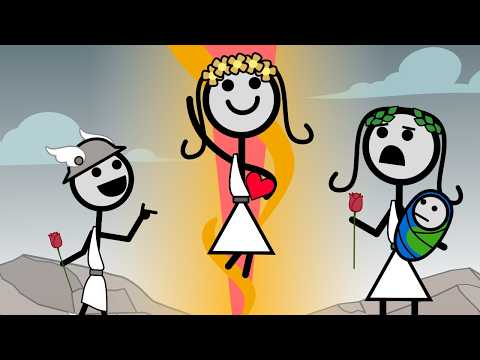
Culturally, the word is also tied to Roman mythology. Mercury was the messenger of the gods, known for his speed and commerce. This mythological connection is why the planet was named after him—it moves faster across the sky than any other planet. It also gives us the adjective 'mercurial,' describing someone whose mood changes quickly and unpredictably, much like the elusive movement of liquid metal.
- Mythological Origin
- The name comes from the Latin 'Mercurius,' derived from 'merx,' meaning merchandise or trade, reflecting the god's role as a patron of merchants.
The statue of mercury stood at the entrance of the marketplace to bless the local traders.
Environmentalists are concerned about the levels of mercury found in large predatory fish like tuna.
During the transit of mercury, the planet appears as a tiny black dot moving across the face of the Sun.
Using the word mercury correctly depends heavily on whether you are discussing astronomy, chemistry, or health. In scientific writing, precision is key. When referring to the planet, it is a proper noun and should always be capitalized. For example, 'Mercury is the smallest planet in our solar system.' In contrast, when discussing the chemical element, it is a common noun. You might say, 'Mercury is a toxic substance that should be handled with extreme care.' Understanding this distinction ensures your writing is professional and accurate.
- Scientific Usage
- In laboratory settings, mercury is often discussed in terms of its density and its ability to form amalgams with other metals like gold and silver.
The laboratory technician carefully cleaned up the spilled mercury using a specialized kit to avoid toxic fumes.
In everyday conversation, mercury is most frequently mentioned in the context of weather or health. Although digital thermometers are now the standard, many people still associate the 'rising mercury' with increasing temperatures. You might hear a weather reporter say, 'The mercury is expected to hit 40 degrees Celsius this afternoon.' This is a metaphorical way of saying the temperature is rising. Additionally, health-conscious individuals often discuss mercury levels in seafood, as certain types of fish are known to contain higher concentrations of this heavy metal.
- Environmental Usage
- Environmental agencies monitor mercury emissions from coal-fired power plants to prevent the contamination of local water supplies.
As the heatwave intensified, the mercury in the outdoor thermometer climbed steadily toward the red zone.
When writing about space exploration, Mercury is often the subject of missions like NASA's MESSENGER or the ESA's BepiColombo. In these contexts, the word is used to describe the physical characteristics of the planet, such as its lack of moons or its eccentric orbit. It is also used in the context of 'mercury transits,' which are rare events where the planet passes directly between the Earth and the Sun, appearing as a small silhouette.
- Exploration Context
- Mission control confirmed that the probe had successfully entered the orbit of Mercury after a seven-year journey through space.
Astronomers used high-powered telescopes to observe the transit of mercury across the solar disk.
Due to the high levels of mercury in the river, local authorities have banned fishing in the area indefinitely.
The ancient alchemists believed that mercury was the key to transforming lead into gold.
The word mercury is most frequently encountered in educational, scientific, and health-related environments. If you are watching a documentary about the solar system on a channel like National Geographic or the BBC, you will hear astronomers discuss Mercury's extreme environment. They might talk about its 'iron-rich core' or its 'tenuous exosphere.' In these settings, the word is spoken with a sense of wonder and scientific inquiry, focusing on the planet's unique position as the Sun's closest neighbor.
- Educational Media
- In science classrooms, teachers use the term to explain the properties of metals and the organization of the periodic table.
The narrator explained that mercury has the most eccentric orbit of all the planets in our solar system.
In the news, mercury often appears in stories about environmental protection and public health. You might hear a news anchor report on 'mercury contamination' in a local lake or the 'Minamata Convention,' an international treaty designed to protect human health and the environment from the adverse effects of mercury. In these contexts, the tone is usually serious and cautionary, highlighting the dangers of mercury poisoning and the importance of industrial regulation. Doctors and nutritionists also use the word when advising pregnant women to limit their intake of certain fish to avoid mercury exposure.
- Health and News
- Health reports often warn that high levels of mercury can damage the nervous system, especially in developing children.
The news report warned residents that mercury levels in the city's air had reached unsafe levels due to the nearby factory.
You will also encounter the word in historical and mythological discussions. Museums featuring Roman artifacts will often have statues or coins depicting the god Mercury, recognizable by his winged sandals and helmet. In literature, especially older texts, you might find the word 'quicksilver' used as a synonym for mercury, or the word 'mercurial' used to describe a character's temperament. Even in modern pop culture, the name 'Mercury' is famous as the stage name of Freddie Mercury, the legendary lead singer of the band Queen, who chose the name for its powerful and dynamic connotations.
- Cultural References
- Freddie Mercury is one of the most famous people to ever use the name, symbolizing his electric and fast-paced stage presence.
The museum guide pointed out the bronze statue of mercury, noting his role as the god of travelers and thieves.
During the lecture, the professor discussed how mercury was used in the gold mining process during the 19th century.
The weather forecast predicted that the mercury would drop significantly after the cold front passed through.
One of the most frequent mistakes English learners make with mercury is failing to capitalize it when referring to the planet. In English, all names of planets (Mercury, Venus, Earth, Mars, etc.) are proper nouns and must begin with a capital letter. Writing 'mercury is the first planet' is grammatically incorrect. Conversely, when you are talking about the silver liquid in a thermometer or the element on the periodic table, it should not be capitalized unless it is the first word in a sentence. Mixing these up can confuse readers about whether you are talking about space or chemistry.
- Capitalization Error
- Incorrect: I saw mercury through my telescope last night. Correct: I saw Mercury through my telescope last night.
Many students forget that Mercury requires a capital letter when it refers to the celestial body.
Another common error involves the countability of the word. When mercury refers to the chemical element, it is an uncountable (mass) noun. This means you cannot make it plural or use 'a' or 'an' directly before it. You should say 'some mercury' or 'a large amount of mercury,' but never 'a mercury' or 'mercuries.' For example, 'The thermometer contains mercury' is correct, while 'The thermometer contains a mercury' is incorrect. This is a common pitfall for speakers of languages where chemical elements might be treated differently.
- Countability Mistake
- Incorrect: There are many mercuries in the lab. Correct: There is a lot of mercury in the lab.
It is a mistake to think that mercury is safe to touch just because it looks like liquid silver.
A more subtle mistake occurs when using the adjective form 'mercurial.' Some learners use it to mean 'fast' because the god Mercury was fast. However, in modern English, 'mercurial' almost exclusively refers to a person's mood or temperament being subject to sudden, unpredictable changes. Using it to describe a fast car or a fast runner would be considered unusual or archaic. For instance, saying 'He is a mercurial runner' might confuse people, whereas 'He has a mercurial personality' is a standard and effective use of the word.
- Adjective Misuse
- Incorrect: The mercurial jet flew across the sky. Correct: The manager's mercurial temper made it difficult for the staff to know what to expect.
Avoid using mercurial as a simple synonym for 'quick' in modern contexts.
The scientist noted that mercury is often found in cinnabar ore.
One common mistake is to assume that mercury is the hottest planet just because it is closest to the Sun.
When you want to avoid repeating the word mercury or need a more specific term, there are several alternatives depending on the context. In a scientific or poetic context, you might use the term 'quicksilver.' This older name for the element mercury perfectly describes its appearance—a silver-colored liquid that moves quickly and elusively. While 'quicksilver' is less common in modern technical papers, it is frequently found in literature and historical texts to evoke a more vivid image of the metal's unique properties.
- Quicksilver vs. Mercury
- Quicksilver is a more descriptive, archaic term, whereas mercury is the standard scientific name.
The poet described the morning dew as drops of quicksilver scattered across the grass.
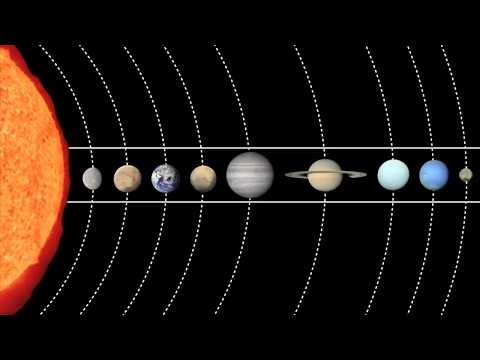
In the context of astronomy, if you are discussing Mercury alongside other planets, you might use collective terms like 'terrestrial planets' or 'inner planets.' Mercury, Venus, Earth, and Mars are all terrestrial planets because they have solid, rocky surfaces. Using these terms can help provide broader context in a scientific discussion. If you are specifically talking about its position, you might refer to it as the 'innermost planet.' This emphasizes its proximity to the Sun without repeatedly using its proper name.
- Astronomical Alternatives
- Terms like 'innermost planet' or 'rocky planet' can be used to vary your vocabulary when describing Mercury.
As the innermost planet, Mercury has a very short year, orbiting the Sun in just 88 days.
When discussing the toxic nature of the element, you might use terms like 'heavy metal' or 'neurotoxin.' Mercury is categorized as a heavy metal, along with lead and cadmium, which are known for their high density and potential for environmental harm. Referring to it as a 'neurotoxin' specifically highlights its damaging effects on the nervous system. These terms are useful in medical or environmental contexts where the focus is on the danger the substance poses to living organisms.
- Technical Synonyms
- In environmental reports, mercury is often grouped with other 'heavy metals' to discuss pollution levels.
The report highlighted the dangers of heavy metal poisoning in industrial zones.
The doctor explained that mercury acts as a potent neurotoxin once it enters the bloodstream.
Among the terrestrial planets, Mercury is the one with the least atmosphere.
How Formal Is It?
रोचक तथ्य
Mercury is the only planet in our solar system named after a god who wasn't a high-ranking Olympian in the Greek equivalent (Hermes was a messenger, not a king like Zeus/Jupiter).
उच्चारण मार्गदर्शिका
- Pronouncing it as 'mer-CURE-y' (stressing the second syllable).
- Dropping the 'u' sound and saying 'mer-kree'.
- Confusing the 'ur' sound with 'ar' (mar-cury).
- Making the 'y' sound too long like 'eye'.
- Swallowing the 'r' completely in American English.
कठिनाई स्तर
Easy to recognize in context, but scientific texts can be dense.
Requires attention to capitalization and countability rules.
Pronunciation is mostly straightforward but has some tricky vowels.
Easily confused with 'mercy' or 'murky' if not heard clearly.
आगे क्या सीखें
पूर्वापेक्षाएँ
आगे सीखें
उन्नत
ज़रूरी व्याकरण
Capitalization of Celestial Bodies
We live on Earth, but Mercury is much closer to the Sun.
Mass Nouns (Uncountable)
There is too much mercury in this water sample.
Adjectives from Nouns
His mercurial (adj) behavior is linked to the god Mercury (noun).
Compound Noun Formation
The mercury-vapor lamp flickered in the dark.
Prepositional Phrases for Location
Mercury is located between the Sun and Venus.
स्तर के अनुसार उदाहरण
Mercury is a small planet.
Mercury est une petite planète.
Use a capital 'M' for the planet.
Is Mercury hot?
Est-ce que Mercury est chaude ?
This is a simple question.
Mercury is near the Sun.
Mercury est près du Soleil.
Preposition 'near' shows location.
I see Mercury in the book.
Je vois Mercury dans le livre.
Direct object 'Mercury'.
Mercury is gray.
Mercury est grise.
Adjective 'gray' describes the noun.
The Sun is bigger than Mercury.
Le Soleil est plus grand que Mercury.
Comparative 'bigger than'.
Mercury moves fast.
Mercury se déplace vite.
Adverb 'fast' describes the verb.
Look at Mercury!
Regarde Mercury !
Imperative sentence.
The mercury is rising today.
Le mercure monte aujourd'hui.
Metaphor for temperature.
Mercury is a liquid metal.
Le mercure est un métal liquide.
Compound noun 'liquid metal'.
Don't touch the mercury.
Ne touche pas au mercure.
Negative imperative.
Mercury has many craters.
Mercury a beaucoup de cratères.
Verb 'has' for possession.
The thermometer uses mercury.
Le thermomètre utilise du mercure.
Present simple tense.
Mercury is the first planet.
Mercury est la première planète.
Ordinal number 'first'.
Is there mercury in this fish?
Y a-t-il du mercure dans ce poisson ?
Uncountable noun usage.
Mercury looks like the Moon.
Mercury ressemble à la Lune.
Verb 'looks like' for comparison.
Mercury is the smallest planet in our solar system.
Mercury est la plus petite planète de notre système solaire.
Superlative 'the smallest'.
Exposure to mercury can be very harmful to humans.
L'exposition au mercure peut être très nocive pour les humains.
Gerund 'Exposure' as subject.
The planet Mercury was named after a Roman god.
La planète Mercury a été nommée d'après un dieu romain.
Passive voice 'was named'.
Scientists are studying the surface of Mercury.
Les scientifiques étudient la surface de Mercury.
Present continuous tense.
Mercury is often found in industrial waste.
Le mercure se trouve souvent dans les déchets industriels.
Adverb of frequency 'often'.
The mercury in the barometer helps predict the weather.
Le mercure dans le baromètre aide à prédire le temps.
Defining relative clause implied.
You should avoid eating too much tuna because of mercury.
Vous devriez éviter de manger trop de thon à cause du mercure.
Modal verb 'should' for advice.
Mercury orbits the Sun in only 88 days.
Mercury tourne autour du Soleil en seulement 88 jours.
Preposition 'in' for duration.
The mercury levels in the lake have reached a dangerous peak.
Les niveaux de mercure dans le lac ont atteint un pic dangereux.
Present perfect tense 'have reached'.
Her mercurial nature made it difficult to maintain a steady relationship.
Sa nature mercurienne rendait difficile le maintien d'une relation stable.
Adjective 'mercurial' derived from the noun.
Mercury is the only metal that is liquid at standard room temperature.
Le mercure est le seul métal qui soit liquide à température ambiante standard.
Relative clause 'that is liquid'.
The MESSENGER spacecraft provided detailed images of Mercury's terrain.
La sonde MESSENGER a fourni des images détaillées du terrain de Mercury.
Possessive 'Mercury's'.
Industrial processes often release mercury vapor into the atmosphere.
Les processus industriels rejettent souvent des vapeurs de mercure dans l'atmosphère.
Compound noun 'mercury vapor'.
Mercury poisoning can lead to severe neurological damage.
L'empoisonnement au mercure peut entraîner de graves dommages neurologiques.
Modal 'can' for possibility.
The transit of Mercury is a rare astronomical event.
Le transit de Mercury est un événement astronomique rare.
Noun phrase 'transit of Mercury'.
Alchemists once believed mercury could be turned into gold.
Les alchimistes croyaient autrefois que le mercure pouvait être transformé en or.
Reported speech 'believed... could'.
The Minamata Convention is a global treaty to protect health from mercury.
La Convention de Minamata est un traité mondial visant à protéger la santé contre le mercure.
Infinitive of purpose 'to protect'.
Mercury's high density makes it useful in various scientific instruments.
La haute densité du mercure le rend utile dans divers instruments scientifiques.
Object complement 'useful'.
The poet used 'quicksilver' as a metaphor for the fleeting nature of time.
Le poète a utilisé le 'vif-argent' comme métaphore de la nature éphémère du temps.
Metaphorical usage.
Mercury forms amalgams with nearly all other metals except iron.
Le mercure forme des amalgames avec presque tous les autres métaux, sauf le fer.
Preposition 'except' for exclusion.
The discovery of ice in Mercury's polar craters was a major breakthrough.
La découverte de glace dans les cratères polaires de Mercury a été une percée majeure.
Noun clause as subject.
Bioaccumulation of mercury in predatory fish is a significant environmental concern.
La bioaccumulation du mercure dans les poissons prédateurs est une préoccupation environnementale majeure.
Complex noun phrase.
His mercurial temperament made him a brilliant but unpredictable leader.
Son tempérament mercurien faisait de lui un leader brillant mais imprévisible.
Coordinating conjunction 'but'.
The extraction of gold often involves the hazardous use of mercury.
L'extraction de l'or implique souvent l'utilisation dangereuse du mercure.
Adjective 'hazardous' modifying 'use'.
The idiosyncratic orbit of Mercury provided early evidence for general relativity.
L'orbite idiosyncrasique de Mercury a fourni des preuves précoces de la relativité générale.
Academic adjective 'idiosyncratic'.
Mercury's exosphere is constantly replenished by the solar wind.
L'exosphère de Mercury est constamment reconstituée par le vent solaire.
Passive voice with 'constantly'.
The pervasive nature of mercury pollution necessitates stringent global regulations.
La nature omniprésente de la pollution au mercure nécessite des réglementations mondiales strictes.
Verb 'necessitates' for requirement.
In classical mythology, Mercury's caduceus is a symbol of trade and negotiation.
Dans la mythologie classique, le caducée de Mercury est un symbole de commerce et de négociation.
Possessive with mythological reference.
The toxicity of mercury is exacerbated by its ability to cross the blood-brain barrier.
La toxicité du mercure est exacerbée par sa capacité à franchir la barrière hémato-encéphalique.
Passive voice 'is exacerbated'.
Mercury's core is believed to be partially liquid, despite the planet's small size.
On pense que le noyau de Mercury est partiellement liquide, malgré la petite taille de la planète.
Concessive phrase 'despite'.
The mercurial fluctuations in the stock market left investors feeling unsettled.
Les fluctuations mercuriennes du marché boursier ont laissé les investisseurs inquiets.
Figurative use of 'mercurial'.
Remediation of mercury-contaminated sites is an arduous and costly endeavor.
La décontamination des sites contaminés au mercure est une entreprise ardue et coûteuse.
Gerund 'Remediation' as subject.
सामान्य शब्द संयोजन
सामान्य वाक्यांश
— Used to describe the temperature reaching a certain point.
The mercury is hitting 100 degrees today.
— An astrological term often used to explain bad luck or communication errors.
I lost my keys again; Mercury must be in retrograde.
— Refers to very small, often barely detectable quantities of the element.
The lab found trace amounts of mercury in the soil samples.
— Products that do not contain any mercury.
This store only sells mercury-free batteries.
— Fish species known to contain high levels of mercury, like shark or swordfish.
Pregnant women are advised to avoid high-mercury fish.
— A switch that uses a drop of mercury to complete an electrical circuit.
Old thermostats often used a mercury switch to control the furnace.
— A type of gas-discharge lamp that uses mercury vapor to produce light.
The street was lit by the eerie blue glow of a mercury lamp.
— A natural occurrence of mercury in the Earth's crust.
The miners discovered a rich mercury deposit in the mountains.
— Contamination of the environment by mercury, usually from industrial sources.
Mercury pollution is a global issue that requires international cooperation.
— The amount of mercury present in a substance.
The mercury content of the coal was higher than expected.
अक्सर इससे भ्रम होता है
Venus is the second planet and the hottest, while Mercury is the first and smallest.
Silver is a solid precious metal; mercury is a liquid toxic metal.
Murky means dark or cloudy; it sounds similar but has a completely different meaning.
मुहावरे और अभिव्यक्तियाँ
— The temperature is getting hotter, or a situation is becoming more tense.
As the deadline approached, the mercury was rising in the office.
Informal/Metaphorical— Completely crazy; historically linked to mercury poisoning in hat making.
After working in that stressful environment for years, he went mad as a hatter.
Informal— Moving very quickly or being very difficult to catch or hold.
The young winger moved like quicksilver down the football pitch.
Literary— A reference to great speed or the ability to travel quickly.
He ran as if he had Mercury's wings on his feet.
Literary/Mythological— Having a personality that changes mood very quickly and unpredictably.
The artist was famous for his mercurial temperament and sudden outbursts.
Formal— To be very fast, active, or restless.
The toddler seems to have mercury in his veins; he never sits still.
Informal— Born under the astrological influence of Mercury, supposedly making one clever or communicative.
Being born under the sign of Mercury, she was a natural-born orator.
Astrological— Being very eloquent, persuasive, or quick-witted in speech.
The mercury-tongued lawyer convinced the jury in record time.
Literary— Extremely cold, referring to the night side of the planet or the 'cold' look of the metal.
The winter wind was as cold as Mercury's dark side.
Poetic— The ability to make things move or change quickly, often in business.
Everything he invested in turned to profit; he had Mercury's touch.
Metaphoricalआसानी से भ्रमित होने वाले
Similar spelling and sound.
Mercy is compassion or forgiveness shown toward someone. Mercury is a planet or element. They are unrelated in meaning.
The king showed mercy to the prisoner, while the scientist studied the mercury.
Phonetic similarity.
Murky describes water or air that is dark and dirty. Mercury is a bright, silver metal. One is an adjective, the other a noun.
The lake water was murky, making it hard to see the mercury pollution at the bottom.
It is the adjective form of mercury.
While 'mercury' is the substance or planet, 'mercurial' describes a person's changing mood. You cannot use 'mercury' as an adjective for a person.
He has a mercurial personality, but he is not made of mercury.
Shared etymological root (merx).
A merchant is a person who sells goods. Mercury is the god of those people, but the word now mostly refers to the planet or element.
The merchant sold a thermometer that contained mercury.
Rhyming sound.
Curry is a type of food or a spice blend. Mercury is a toxic metal. Never confuse the two in a kitchen!
I am cooking a spicy curry, which definitely contains no mercury.
वाक्य संरचनाएँ
[Subject] is [Adjective].
Mercury is small.
The [Noun] has [Noun].
The planet Mercury has craters.
[Noun] is the [Superlative] [Noun].
Mercury is the closest planet.
[Noun] is used for [Gerund].
Mercury is used for measuring temperature.
Due to [Noun], [Clause].
Due to its toxicity, mercury is being phased out of industry.
The [Adjective] nature of [Noun] [Verb].
The mercurial nature of the climate necessitates constant monitoring.
Avoid [Gerund] because of [Noun].
Avoid eating shark because of mercury.
[Noun] is known as [Noun].
Mercury is known as quicksilver.
शब्द परिवार
संज्ञा
क्रिया
विशेषण
संबंधित
इसे कैसे इस्तेमाल करें
Common in science, weather, and environmental news.
-
Using 'a mercury' to describe the element.
→
Using 'some mercury' or just 'mercury'.
Mercury is an uncountable noun when referring to the element. You cannot count individual units of it without a container or weight.
-
Writing 'mercury' (lowercase) when referring to the planet.
→
Writing 'Mercury' (uppercase).
All planets in English are proper nouns and must be capitalized to distinguish them from common objects.
-
Saying 'Mercury is the hottest planet.'
→
Saying 'Mercury is the closest planet.'
This is a factual error often made in English science discussions. Venus is hotter due to its atmosphere.
-
Using 'mercurial' to mean 'very fast' in a physical sense.
→
Using 'mercurial' to describe a person's mood.
While the god was fast, the modern adjective 'mercurial' specifically refers to emotional volatility.
-
Confusing 'mercury' with 'mercy'.
→
Using 'mercury' for the planet/metal and 'mercy' for forgiveness.
These words sound similar but have no connection. Context usually makes the difference clear.
सुझाव
Capitalization Rule
Always capitalize Mercury when you are talking about the planet. It is a proper name, just like your name. Use lowercase for the metal.
Learn the Adjective
The word 'mercurial' is a great way to describe someone with a fast-changing personality. It adds variety to your descriptions of people.
Handling Mercury
If you ever see liquid mercury, do not touch it or breathe near it. It is a neurotoxin that can cause long-term health problems.
Planetary Position
Remember the order: Mercury, Venus, Earth, Mars. Mercury is the first one, the closest to the Sun's heat.
The Mad Hatter
The phrase 'mad as a hatter' comes from hat makers who got sick from the mercury they used. This is a fun way to remember the word's history.
Fish Consumption
When eating seafood, remember that smaller fish usually have less mercury than bigger, older fish. This is a practical use of the word.
The 'U' Sound
Don't forget the 'u' in the middle. It's not 'merc-ry,' it's 'mer-cu-ry.' Say it slowly to remember the spelling.
Temperature Talk
If you want to sound more natural, say 'the mercury is rising' instead of just 'it's getting hot.' It sounds very native.
Mercury's Year
A year on Mercury is only 88 Earth days. This is because it is so close to the Sun and has to move fast to stay in orbit.
Roman Roots
Think of the Roman god with wings on his shoes. That speed is why both the planet and the 'moving' metal share his name.
याद करें
स्मृति सहायक
Think of 'MER-cury' as the 'MER-messenger' who is fast (the planet) and slippery (the metal).
दृश्य संबंध
Imagine a silver liquid running down the side of a small, gray planet that is very close to a giant Sun.
Word Web
चैलेंज
Try to write a short paragraph that uses 'Mercury' (the planet), 'mercury' (the element), and 'mercurial' (the adjective) all in one story.
शब्द की उत्पत्ति
The word comes from the Latin 'Mercurius,' which was the name of the Roman god of commerce, travel, and theft. The name itself is likely derived from the Latin word 'merx,' meaning 'merchandise.' In the 14th century, the name was applied to the planet because of its rapid motion across the sky. Around the same time, alchemists began using the name for the liquid metal because of its elusive and mobile nature.
मूल अर्थ: The name of a Roman deity associated with trade and speed.
Indo-European (Latin branch)सांस्कृतिक संदर्भ
Be careful when discussing mercury in environmental contexts, as it is a sensitive topic in regions affected by industrial pollution.
In English-speaking countries, 'the mercury' is a very common way to refer to the temperature in weather forecasts.
असल ज़िंदगी में अभ्यास करें
वास्तविक संदर्भ
Astronomy
- Closest to the Sun
- Smallest planet
- Cratered surface
- Shortest orbit
Weather
- The mercury is rising
- The mercury is falling
- Hitting the mercury
- Outdoor thermometer
Health/Environment
- Mercury poisoning
- Toxic levels
- Mercury in fish
- Environmental contamination
Chemistry
- Liquid metal
- Atomic number 80
- Transition element
- Forms amalgams
Mythology
- Messenger of the gods
- Winged sandals
- God of commerce
- Roman deity
बातचीत की शुरुआत
"Did you know that Mercury is actually shrinking as its core cools down?"
"Do you still have any old mercury thermometers at your house, or are they all digital?"
"Have you ever seen Mercury in the night sky? It's usually very hard to spot."
"Are you worried about the mercury levels in the fish you buy from the supermarket?"
"If you could visit any planet, would you choose Mercury despite its extreme heat?"
डायरी विषय
Describe a time when you felt 'mercurial'—how did your moods change and why?
Imagine you are an explorer landing on Mercury. What does the landscape look like around you?
Write about the importance of protecting our oceans from heavy metals like mercury.
Compare the Roman god Mercury to a modern-day profession. Who is our 'messenger' today?
If you had to explain the two meanings of 'mercury' to a child, how would you do it?
अक्सर पूछे जाने वाले सवाल
10 सवालNo, Venus is actually hotter than Mercury. Even though Mercury is closer to the Sun, it has no atmosphere to trap heat. Venus has a thick atmosphere that creates a greenhouse effect, making it the hottest planet in our solar system.
Mercury is liquid because its electrons are held very tightly to the nucleus, which prevents the atoms from sharing electrons and forming strong bonds with each other. This unique electronic structure keeps it in a liquid state at standard temperatures.
No, it is not safe to touch mercury. While it doesn't absorb through the skin very quickly, it can enter your body through small cuts. More importantly, it turns into a vapor that you can breathe in, which is very toxic to the brain and kidneys.
The planet was named after the Roman messenger god Mercury because it moves very quickly across the sky. It completes an orbit around the Sun in just 88 days, faster than any other planet.
If a mercury thermometer breaks, do not use a vacuum cleaner or a broom. You should open the windows to ventilate the room, wear gloves, and use stiff paper or a dropper to collect the beads. Place them in a sealed container and contact local hazardous waste disposal.
In theory, yes, using a particle accelerator, but it is extremely expensive and produces radioactive gold. Historically, alchemists tried for centuries to do this using chemical methods, but they were never successful.
Large predatory fish that live a long time usually have the most mercury. This includes shark, swordfish, king mackerel, and tilefish. Tuna also has moderate levels, which is why it's recommended to eat it in moderation.
This is an astronomical illusion where Mercury appears to move backward in the sky. In astrology, people believe this period causes communication problems, travel delays, and technology failures, though there is no scientific evidence for this.
Yes, it is still used in 'silver' or amalgam fillings. While the mercury is mixed with other metals to make it stable, many modern dentists prefer to use composite resins (tooth-colored fillings) to avoid any potential risks.
No, Mercury does not have any moons. Along with Venus, it is one of the only two planets in our solar system that does not have any natural satellites.
खुद को परखो 200 सवाल
Describe the physical appearance of liquid mercury.
Well written! Good try! Check the sample answer below.
Explain why Mercury is the fastest planet in our solar system.
Well written! Good try! Check the sample answer below.
Write a short story about a person with a 'mercurial' personality.
Well written! Good try! Check the sample answer below.
Discuss the environmental impact of mercury pollution in the oceans.
Well written! Good try! Check the sample answer below.
Compare the planet Mercury to the Moon.
Well written! Good try! Check the sample answer below.
Why should we be careful with mercury thermometers?
Well written! Good try! Check the sample answer below.
Describe the Roman god Mercury and his duties.
Well written! Good try! Check the sample answer below.
What does the phrase 'the mercury is rising' mean to you?
Well written! Good try! Check the sample answer below.
Explain the process of bioaccumulation using mercury as an example.
Well written! Good try! Check the sample answer below.
Write a dialogue between an astronomer and a chemist about 'mercury'.
Well written! Good try! Check the sample answer below.
How did mercury get the nickname 'quicksilver'?
Well written! Good try! Check the sample answer below.
Summarize the goals of the Minamata Convention.
Well written! Good try! Check the sample answer below.
What are the symptoms of mercury poisoning?
Well written! Good try! Check the sample answer below.
Describe a 'mercury transit' in your own words.
Well written! Good try! Check the sample answer below.
Why is Mercury not the hottest planet despite being closest to the Sun?
Well written! Good try! Check the sample answer below.
Write three sentences using 'Mercury' as a proper noun.
Well written! Good try! Check the sample answer below.
Write three sentences using 'mercury' as a common noun.
Well written! Good try! Check the sample answer below.
Discuss the historical use of mercury in gold mining.
Well written! Good try! Check the sample answer below.
How does the name of the god Mercury fit the planet's characteristics?
Well written! Good try! Check the sample answer below.
What are the alternatives to using mercury in modern industry?
Well written! Good try! Check the sample answer below.
Pronounce 'mercury' and 'mercurial' clearly.
Read this aloud:
तुमने कहा:
Speech recognition is not supported in your browser. Try Chrome or Edge.
Explain the difference between the planet and the element to a partner.
Read this aloud:
तुमने कहा:
Speech recognition is not supported in your browser. Try Chrome or Edge.
Give a 1-minute presentation on why mercury is toxic.
Read this aloud:
तुमने कहा:
Speech recognition is not supported in your browser. Try Chrome or Edge.
Describe a person you know who is 'mercurial'.
Read this aloud:
तुमने कहा:
Speech recognition is not supported in your browser. Try Chrome or Edge.
Discuss the pros and cons of using mercury in scientific instruments.
Read this aloud:
तुमने कहा:
Speech recognition is not supported in your browser. Try Chrome or Edge.
Tell a story about a broken thermometer.
Read this aloud:
तुमने कहा:
Speech recognition is not supported in your browser. Try Chrome or Edge.
Debate whether we should continue to use the name 'Mercury' for both things.
Read this aloud:
तुमने कहा:
Speech recognition is not supported in your browser. Try Chrome or Edge.
Explain the phrase 'the mercury is rising' in a weather context.
Read this aloud:
तुमने कहा:
Speech recognition is not supported in your browser. Try Chrome or Edge.
Describe the Roman god Mercury's appearance.
Read this aloud:
तुमने कहा:
Speech recognition is not supported in your browser. Try Chrome or Edge.
Talk about the last time you saw a planet in the night sky.
Read this aloud:
तुमने कहा:
Speech recognition is not supported in your browser. Try Chrome or Edge.
Summarize the dangers of eating high-mercury fish.
Read this aloud:
तुमने कहा:
Speech recognition is not supported in your browser. Try Chrome or Edge.
Discuss the importance of the Minamata Convention.
Read this aloud:
तुमने कहा:
Speech recognition is not supported in your browser. Try Chrome or Edge.
Explain the concept of a 'mercury transit'.
Read this aloud:
तुमने कहा:
Speech recognition is not supported in your browser. Try Chrome or Edge.
Roleplay a scientist warning a factory owner about mercury leaks.
Read this aloud:
तुमने कहा:
Speech recognition is not supported in your browser. Try Chrome or Edge.
Talk about the history of the word 'quicksilver'.
Read this aloud:
तुमने कहा:
Speech recognition is not supported in your browser. Try Chrome or Edge.
Describe the orbit of Mercury around the Sun.
Read this aloud:
तुमने कहा:
Speech recognition is not supported in your browser. Try Chrome or Edge.
Discuss the 'mad as a hatter' historical context.
Read this aloud:
तुमने कहा:
Speech recognition is not supported in your browser. Try Chrome or Edge.
Explain why Mercury has no atmosphere.
Read this aloud:
तुमने कहा:
Speech recognition is not supported in your browser. Try Chrome or Edge.
Give a short talk on the periodic table position of mercury.
Read this aloud:
तुमने कहा:
Speech recognition is not supported in your browser. Try Chrome or Edge.
Describe your favorite planet and compare it to Mercury.
Read this aloud:
तुमने कहा:
Speech recognition is not supported in your browser. Try Chrome or Edge.
Listen to a weather report: What is the mercury expected to hit?
Listen to a science podcast: Why is Mercury shrinking?
Listen to a doctor's advice: What fish should the patient avoid?
Listen to a history lecture: Who was the god Mercury?
Listen to a news story: Where was the mercury spill located?
Listen to a teacher: What is the atomic number of mercury?
Listen to an astronomer: How long is a year on Mercury?
Listen to a poem: How is 'quicksilver' described?
Listen to a debate: What are the risks of dental amalgams?
Listen to a space mission update: What did BepiColombo find?
Listen to a conversation: Why is the person's mood described as mercurial?
Listen to a warning: What should you do if you touch mercury?
Listen to a documentary clip: How does mercury enter the food chain?
Listen to a quiz: Which planet is closest to the Sun?
Listen to a lecture: What is the 'mercury cycle'?
/ 200 correct
Perfect score!
Summary
Mercury is a versatile term referring to both the innermost planet of our solar system and a unique liquid metal element. It is essential to distinguish between the proper noun (Planet) and the common noun (Element). Example: 'While Mercury is a fascinating planet to study, the mercury found in old thermometers must be handled with extreme caution.'
- Mercury is the smallest planet in the solar system and the closest one to the Sun, known for its cratered surface.
- It is also a chemical element (Hg) that is a silvery-white liquid at room temperature, often used in thermometers.
- The name originates from the Roman messenger god, Mercury, symbolizing speed and commerce due to the planet's fast orbit.
- Mercury is highly toxic to humans and the environment, leading to strict regulations on its industrial use and disposal.
Capitalization Rule
Always capitalize Mercury when you are talking about the planet. It is a proper name, just like your name. Use lowercase for the metal.
Learn the Adjective
The word 'mercurial' is a great way to describe someone with a fast-changing personality. It adds variety to your descriptions of people.
Handling Mercury
If you ever see liquid mercury, do not touch it or breathe near it. It is a neurotoxin that can cause long-term health problems.
Planetary Position
Remember the order: Mercury, Venus, Earth, Mars. Mercury is the first one, the closest to the Sun's heat.
उदाहरण
Mercury is the smallest planet and is mostly made of rock and metal.
संबंधित सामग्री

Science के और शब्द
abbioly
C1Abbioly एक तकनीकी शब्द है जो निर्जीव प्रणालियों में जीवन जैसे पैटर्न की सहज पहचान को संदर्भित करता है। इसका उपयोग अक्सर उन्नत भाषा परीक्षणों में किया जाता है।
abcapal
C1एबकैपल एक विशेष सुरक्षात्मक झिल्ली या सीलेंट है जिसका उपयोग प्रयोगशालाओं में संवेदनशील नमूनों को वायुमंडलीय संदूषण और ऑक्सीकरण से बचाने के लिए किया जाता है।
abheredcy
C1किसी मानक या पथ से धीरे-धीरे हटना जबकि उससे जुड़े रहने का प्रयास करना।
abhydrible
C1यह abhydrible कोटिंग पानी को सोखने से रोकती है।
ablabive
C1सामग्री को हटाने या नष्ट करने से संबंधित, विशेष रूप से पिघलने, वाष्पीकरण या सर्जिकल छांटने के द्वारा।
abphobency
C1एबफोबेंसी (abphobency) किसी सतह का वह गुण है जो पानी या तेल जैसे पदार्थों को दूर धकेलता है।
abphotoion
C1प्रकाश-आयनिक पृथक्करण: केंद्रित प्रकाश ऊर्जा या विकिरण का उपयोग करके आणविक संरचना से एक आयन को हटाना या विस्थापित करना। यह फोटॉन इंटरैक्शन के माध्यम से कणों के सटीक अलगाव का वर्णन करने के लिए एक विशिष्ट वैज्ञानिक शब्द है। शोधकर्ता विश्लेषण के लिए विशिष्ट आणविक आयनों को प्रकाश-आयनिक पृथक्करण करते हैं।
abpulssion
C1सुरक्षा वाल्व का abpulssion (बलपूर्वक बाहर निकलना) अत्यधिक दबाव के कारण हुआ था।
absorption
B2अवशोषण वह प्रक्रिया है जिसके द्वारा एक पदार्थ दूसरे को लेता है, जैसे स्पंज पानी सोखता है, या किसी गतिविधि पर पूरी तरह से ध्यान केंद्रित करने की स्थिति। (अवशोषण वह प्रक्रिया है जिसके द्वारा एक पदार्थ दूसरे को लेता है, जैसे स्पंज पानी सोखता है, या किसी गतिविधि पर पूरी तरह से ध्यान केंद्रित करने की स्थिति।)
abvincfy
C1एक जटिल प्रणाली से एक विशिष्ट घटक या चर को व्यवस्थित रूप से अलग करना ताकि उसका स्वतंत्र रूप से अध्ययन किया जा सके।

