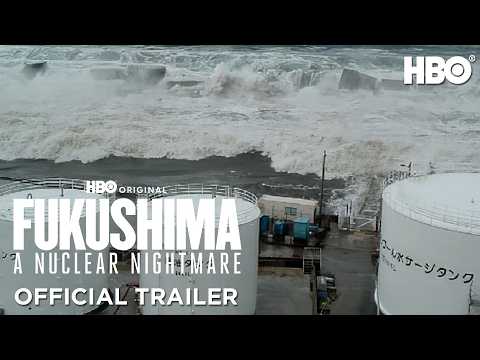
fukushima in 30 Seconds
- A major prefecture in northeastern Japan known for its diverse geography and agriculture.
- The site of the 2011 nuclear disaster caused by a massive earthquake and tsunami.
- A region with a rich cultural heritage, including samurai history and traditional crafts.
- A modern symbol of resilience, reconstruction, and the transition to renewable energy.
The word Fukushima refers to a significant prefecture located in the Tohoku region of Japan, on the island of Honshu. Geographically, it is the third-largest prefecture in the country, boasting a diverse landscape that includes coastal plains, mountainous interior regions, and fertile agricultural valleys. The name itself, written in kanji as 福島, translates literally to 'Lucky Island,' a name that historically reflected the region's abundance and natural beauty. In modern global discourse, however, the name is most frequently invoked in the context of the Fukushima Daiichi nuclear disaster, which occurred on March 11, 2011. This event was triggered by the Great East Japan Earthquake and the subsequent massive tsunami, leading to a level 7 nuclear meltdown. Consequently, when people use the word today, they are often referring to environmental safety, nuclear energy debates, or the resilience of the Japanese people in the face of triple disasters.
- Geographical Context
- Fukushima is divided into three main regions: Hamadori (the coast), Nakadori (the central area), and Aizu (the mountainous west). Each has a distinct climate and culture.
Many travelers are now returning to Fukushima to enjoy its famous peaches and historic samurai sites in Aizu-Wakamatsu.
Beyond the tragedy, the word represents a massive effort in reconstruction and decontamination. In Japan, it is used daily to discuss local government, agriculture, and tourism. For example, 'Fukushima produce' is a term used to describe the fruits and vegetables from the region, which undergo some of the most rigorous radiation testing in the world to ensure consumer safety. Internationally, the word is a staple in scientific journals, political science courses, and environmental activism. It serves as a case study for disaster management and the long-term effects of radiation on ecosystems. When using the word, it is important to distinguish between the prefecture as a whole, the city of Fukushima (the capital), and the specific nuclear power plant located on the coast.
- Economic Significance
- Historically, the region was a powerhouse for silk production and remains a vital hub for renewable energy research and traditional sake brewing.
The recovery of the Fukushima fishing industry has been a slow but steady process involving strict safety protocols.
In a cultural sense, Fukushima is associated with the 'Okiagari-koboshi,' a traditional self-righting doll that symbolizes resilience—the ability to get back up after falling. This metaphor is frequently applied to the prefecture's ongoing recovery efforts. Educators use the word to teach students about plate tectonics, the Pacific Ring of Fire, and the ethical implications of various energy sources. In literature and film, Fukushima often appears as a backdrop for stories of loss, memory, and the enduring bond between people and their land. It is a word that carries heavy historical weight but also represents a future focused on innovation and safety.
Researchers from around the world visit Fukushima to study the long-term ecological changes in the exclusion zones.
- Cultural Heritage
- The Aizu region of Fukushima is famous for its samurai history, specifically the story of the Byakkotai (White Tiger Force) during the Boshin War.
The Fukushima accent, known as Fukushima-ben, is part of the broader Tohoku dialect group, characterized by its unique intonation.
During the 2020 Tokyo Olympics, several baseball and softball matches were held in Fukushima to showcase the region's recovery.
Using the word Fukushima correctly requires an understanding of its multi-faceted nature. It can function as a proper noun referring to a city, a prefecture, or a specific event. When discussing geography, it is often paired with 'prefecture' to avoid ambiguity. For example, 'I am traveling to Fukushima Prefecture next week.' This clarifies that you are visiting the region, not necessarily the specific city or the site of the power plant. In news reporting, the word is often used as a metonym for the nuclear disaster itself, similar to how 'Chernobyl' is used. However, linguistically, it is more accurate to say 'the Fukushima disaster' or 'the Fukushima Daiichi accident' when referring to the 2011 events.
- Syntactic Function
- Fukushima acts as a proper noun. It can also act as an attributive noun (a noun acting like an adjective), as in 'Fukushima residents' or 'Fukushima produce.'
The Fukushima government has implemented a comprehensive health monitoring program for all citizens.
In academic writing, the word is frequently used in the possessive form or as part of a compound phrase. Phrases like 'Fukushima's agricultural sector' or 'the Fukushima-derived isotopes' are common in scientific literature. When discussing the people of the region, the term 'Fukushima locals' or 'residents of Fukushima' is preferred. It is also important to note that 'Fukushima' can be used in a comparative sense in environmental science. For instance, 'The radiation levels in this area are significantly lower than those found in the immediate vicinity of Fukushima in 2011.' This uses the location as a benchmark for measurement and impact.
- Prepositional Usage
- Use 'in Fukushima' for locations, 'from Fukushima' for origins, and 'to Fukushima' for destinations. Example: 'The wind blew the particles away from Fukushima.'
Scientists are monitoring the water quality near Fukushima to track the movement of treated water.
In casual conversation, the word might come up when discussing food or travel. A speaker might say, 'I bought some Fukushima peaches at the market today.' Here, the word serves as a geographical indicator of quality and origin. In a more somber context, one might say, 'The world learned a lot from the events at Fukushima.' This usage refers to the collective knowledge gained regarding nuclear safety. In all cases, the context dictates whether the speaker is referring to the vibrant, living prefecture or the historical tragedy that occurred within its borders.
The high-speed Shinkansen train makes a stop at Fukushima Station, connecting it to Tokyo in under two hours.
- Formal Reporting
- In official documents, you will see 'Fukushima Daiichi NPS' (Nuclear Power Station) to specify the facility involved in the accident.
Volunteers in Fukushima have worked tirelessly to rebuild the local community centers.
The governor of Fukushima recently announced a new initiative for green energy development.
The word Fukushima is heard across a wide array of media and professional environments. In the news, it is a frequent topic during discussions about energy policy, climate change, and disaster preparedness. You will hear it on major networks like the BBC, CNN, and NHK World, especially around the anniversary of the March 11 disaster. News anchors might say, 'Today marks the anniversary of the Fukushima nuclear accident,' or 'The Japanese government has begun releasing treated water from the Fukushima site.' These reports often focus on the technical, political, and environmental aspects of the region's recovery.
- Scientific and Academic Settings
- In universities and research institutes, 'Fukushima' is a key term in nuclear physics, marine biology, and sociology departments. Professors discuss the 'Fukushima effect' on global nuclear policy.
The lecture today will cover the hydrological impact of the Fukushima incident on the Pacific Ocean.
In the travel and tourism industry, the word is used to promote the natural beauty and cultural heritage of northern Japan. Travel vlogs and documentaries often feature Fukushima's scenic spots, such as Lake Inawashiro, the cherry blossoms of Hanamiyama Park, and the historic streets of Ouchi-juku. In these contexts, the tone is positive and inviting, focusing on the 'hidden gems' of the prefecture. You might hear a travel guide say, 'Fukushima is home to some of the best ski resorts in Japan,' or 'Don't miss the traditional festivals in Fukushima during the summer months.' This usage aims to rebrand the area beyond its association with the 2011 disaster.
- Documentaries and Film
- Films like 'Fukushima 50' or documentaries like 'Pandora's Promise' use the word to explore the human stories behind the nuclear crisis.
The documentary provides a detailed look at the lives of those who stayed in Fukushima to manage the power plant.
In the culinary world, 'Fukushima' is synonymous with high-quality agricultural products. At high-end restaurants or food festivals, you might hear chefs praise 'Fukushima beef' or 'Fukushima sake.' Because of the rigorous testing mentioned earlier, these products are often marketed as some of the safest and most carefully monitored in the world. Food critics might write, 'The sake from Fukushima has a clean, crisp finish that pairs perfectly with local seafood.' This professional usage highlights the region's economic recovery and its commitment to quality. Finally, in international diplomacy, the word appears in discussions regarding food export bans and international safety standards.
The European Union recently lifted its import restrictions on food products from Fukushima.
- Pop Culture
- In anime and manga, Fukushima's landscapes are often used as inspiration for settings, though the name itself might be changed to avoid direct reference to the disaster.
The local mascot of Fukushima, Kibitan, is often seen at promotional events across Japan.
Many people in Fukushima are working to turn the region into a global hub for robotics and medical research.
One of the most frequent mistakes people make when using the word Fukushima is overgeneralization. Many assume that the entire prefecture is a 'danger zone' or is uninhabitable due to radiation. In reality, Fukushima is a vast prefecture, and the vast majority of its land area was never significantly affected by radiation or has been successfully decontaminated. Using the word to imply that the whole region is a wasteland is not only factually incorrect but also deeply offensive to the nearly two million people who live and work there. When discussing the disaster, it is crucial to specify the 'exclusion zone' or the 'vicinity of the Daiichi plant' rather than applying the name to the entire prefecture.
- Confusion of Locations
- Mistaking Fukushima City (the inland capital) for the Fukushima Daiichi Nuclear Power Plant (located on the coast). They are about 60 kilometers apart.
It is a mistake to say 'the Fukushima is dangerous' when you actually mean the specific restricted areas near the plant.
Another common error is the mispronunciation of the word. In English, people often stress the third syllable (foo-koo-SHEE-mah), but in Japanese, the syllables have relatively equal stress, with a slight emphasis on the first syllable (FU-ku-shi-ma). While this is a minor linguistic point, correct pronunciation shows respect for the local culture. Additionally, learners often forget that 'Fukushima' is a proper noun and should always be capitalized. Using it as a common noun (e.g., 'another fukushima happened') is grammatically incorrect and semantically confusing; instead, one should say 'another disaster like the one in Fukushima.'
- Semantic Narrowing
- Only associating the word with 'nuclear' or 'disaster.' This ignores the thousands of years of history, art, and agriculture that define the region.
The Fukushima peaches are world-renowned, yet some people mistakenly avoid them due to unfounded fears.
Furthermore, people often confuse the cause of the disaster. While 'Fukushima' is often linked to 'nuclear accident,' it was actually the earthquake and tsunami that caused the power failure leading to the meltdown. Failing to acknowledge the natural disaster component can lead to a misunderstanding of the event's complexity. In writing, avoid using 'Fukushima' as a synonym for 'radioactivity.' For example, 'The Fukushima in the water' is incorrect; one should say 'The radiation levels in the water near Fukushima.' Keeping these distinctions clear ensures that your communication is both accurate and respectful to the people of the region.
Many people think Fukushima is still a ghost town, but most of the prefecture is thriving and open for business.
- Spelling Errors
- Common misspellings include 'Fukishima' or 'Fukushimah.' Always double-check the 'u' and 'i' placement.
The Fukushima Daiichi plant is currently undergoing a decades-long decommissioning process.
It is incorrect to assume that all Fukushima residents were evacuated; many lived in areas that were never affected.
While Fukushima is a unique proper noun, there are several words and phrases that can be used depending on the context of your discussion. If you are speaking about the broader region of northern Japan, the word Tohoku is the most appropriate alternative. Tohoku encompasses six prefectures, including Fukushima, and is often used in cultural and geographical contexts. For example, 'Tohoku cuisine' includes many dishes found in Fukushima. If you are specifically referring to the 2011 disaster, you might use the term 3/11 (pronounced 'three-eleven'), which is the standard way people in Japan refer to the triple disaster of the earthquake, tsunami, and nuclear accident.
- Tohoku vs. Fukushima
- Tohoku is the entire northern region of Honshu. Fukushima is just one of the prefectures within that region. Use 'Tohoku' for broader regional trends.
The Tohoku region is known for its rugged coastline and snowy winters.
In the context of nuclear accidents, Chernobyl is the most common comparison. While they are different events in different countries, they are the only two Level 7 accidents on the International Nuclear Event Scale. When discussing the site of the power plant specifically, you might hear the term Daiichi. In Japanese, 'Daiichi' means 'Number One.' People often refer to the 'Fukushima Daiichi' plant to distinguish it from the 'Fukushima Daini' (Number Two) plant, which was also affected but did not suffer a meltdown. Using 'Daiichi' specifically shows a higher level of technical knowledge about the event.
- Aizu, Nakadori, and Hamadori
- These are the three sub-regions of Fukushima. Using these specific names shows deep local knowledge of the prefecture's geography.
The Aizu region of Fukushima is famous for its lacquerware and samurai traditions.
For those interested in the agricultural side, Fukushima produce can be replaced with more specific terms like Aizu rice or Date peaches. These terms highlight the specific areas within the prefecture known for certain crops. In a political or social context, the term disaster-affected areas (hisaichi in Japanese) is often used to refer to Fukushima along with its neighbors, Miyagi and Iwate, which were also devastated by the 2011 tsunami. This term is useful when discussing government aid, reconstruction projects, and social recovery efforts that span across the entire northeastern coast of Japan.
Government officials visited the disaster-affected areas to evaluate the progress of the new sea wall.
- Metonymy
- Sometimes 'Fukushima' is used to mean 'the nuclear issue.' An alternative could be 'nuclear safety concerns' or 'atomic energy challenges.'
The Fukushima Daiichi decommissioning project is expected to take at least forty years.
The 3/11 memorial in the city provides a space for reflection and education about the events of 2011.
How Formal Is It?
Fun Fact
Despite having 'island' in its name, Fukushima is not an island itself; it is a prefecture on the large island of Honshu. The 'island' part likely referred to a small hill or area surrounded by water in ancient times.
Pronunciation Guide
- Pronouncing it as 'Fukushima' with a hard 'k' and 'sh' sound like 'shush'.
- Stressing the wrong syllable (e.g., fu-KUSH-ima).
- Confusing the 'u' and 'i' sounds (e.g., 'Fukishima').
- Pronouncing the 'f' too strongly (in Japanese, it is a softer sound).
- Adding an extra 'h' at the end.
Difficulty Rating
Easy to recognize in texts about Japan or news.
Spelling can be tricky for beginners (u vs i).
English speakers often misplace the stress.
Clearly pronounced in most media.
What to Learn Next
Prerequisites
Learn Next
Advanced
Grammar to Know
Proper Noun Capitalization
Always write 'Fukushima', never 'fukushima'.
Zero Article with Regions
We say 'in Fukushima', not 'in the Fukushima'.
Attributive Nouns
Using 'Fukushima' to describe another noun: 'Fukushima peaches'.
Possessive Proper Nouns
Fukushima's history is very interesting.
Prepositions of Place
The train arrives at Fukushima Station.
Examples by Level
I want to visit Fukushima.
Je veux visiter Fukushima.
Fukushima is a proper noun.
Fukushima is in Japan.
Fukushima est au Japon.
Use 'in' for locations.
The peaches from Fukushima are sweet.
Les pêches de Fukushima sont sucrées.
'From' shows origin.
Fukushima has many mountains.
Fukushima a beaucoup de montagnes.
Third-person singular 'has'.
Is Fukushima far from Tokyo?
Est-ce que Fukushima est loin de Tokyo ?
Question form of 'to be'.
I like the food in Fukushima.
J'aime la nourriture à Fukushima.
Preposition 'in' for a region.
Fukushima is very big.
Fukushima est très grand.
Adjective 'big' modifying the noun.
We saw a castle in Fukushima.
Nous avons vu un château à Fukushima.
Past tense 'saw'.
Fukushima is famous for its beautiful cherry blossoms.
Fukushima est célèbre pour ses beaux cerisiers en fleurs.
'Famous for' is a common collocation.
Many people travel to Fukushima by Shinkansen.
Beaucoup de gens voyagent à Fukushima en Shinkansen.
'By' indicates the mode of transport.
The name Fukushima means 'Lucky Island' in Japanese.
Le nom Fukushima signifie 'Île de la chance' en japonais.
Present simple for facts.
Farmers in Fukushima grow a lot of rice.
Les agriculteurs de Fukushima cultivent beaucoup de riz.
Plural subject with 'grow'.
There was a big earthquake in Fukushima in 2011.
Il y a eu un grand tremblement de terre à Fukushima en 2011.
'There was' for past existence.
Fukushima is divided into three different regions.
Fukushima est divisé en trois régions différentes.
Passive voice 'is divided'.
You can see snow in Fukushima during the winter.
On peut voir de la neige à Fukushima pendant l'hiver.
Modal verb 'can' for possibility.
The people of Fukushima are very kind and welcoming.
Les habitants de Fukushima sont très gentils et accueillants.
Adjectives describing people.
Fukushima has made significant progress in its recovery efforts.
Fukushima a fait des progrès significatifs dans ses efforts de rétablissement.
Present perfect for recent progress.
The disaster at the Fukushima Daiichi plant changed global energy policies.
La catastrophe de la centrale de Fukushima Daiichi a changé les politiques énergétiques mondiales.
Past simple for a historical change.
Tourists are encouraged to visit Fukushima to support the local economy.
Les touristes sont encouragés à visiter Fukushima pour soutenir l'économie locale.
Passive voice 'are encouraged'.
The Aizu region of Fukushima is known for its rich samurai history.
La région d'Aizu à Fukushima est connue pour sa riche histoire de samouraïs.
Appositive phrase 'of Fukushima'.
Strict testing ensures that all food from Fukushima is safe for consumption.
Des tests stricts garantissent que tous les aliments de Fukushima sont sans danger pour la consommation.
Noun clause starting with 'that'.
Fukushima's sake has won many awards in national competitions.
Le saké de Fukushima a remporté de nombreux prix lors de concours nationaux.
Possessive form 'Fukushima's'.
The government is working on decontaminating the soil in Fukushima.
Le gouvernement travaille à la décontamination du sol à Fukushima.
Present continuous for ongoing action.
Fukushima is home to several famous hot spring resorts.
Fukushima abrite plusieurs stations thermales célèbres.
Idiomatic expression 'is home to'.
The Fukushima disaster serves as a stark reminder of the risks associated with nuclear power.
La catastrophe de Fukushima sert de rappel brutal des risques associés à l'énergie nucléaire.
Metaphorical use of 'serves as'.
Despite the challenges, Fukushima has emerged as a leader in renewable energy research.
Malgré les défis, Fukushima s'est imposé comme un leader dans la recherche sur les énergies renouvelables.
Concessive clause starting with 'Despite'.
The psychological impact on the residents of Fukushima was profound and long-lasting.
L'impact psychologique sur les résidents de Fukushima a été profond et durable.
Adjectives 'profound' and 'long-lasting'.
Efforts to revitalize Fukushima include promoting 'hope tourism' to educate visitors.
Les efforts pour revitaliser Fukushima incluent la promotion du 'tourisme de l'espoir' pour éduquer les visiteurs.
Gerund 'promoting' as part of the subject.
The ecological consequences of the radiation leak in Fukushima are still being studied.
Les conséquences écologiques de la fuite de radiation à Fukushima sont toujours à l'étude.
Passive continuous 'are still being studied'.
Fukushima's diverse topography allows for a wide range of agricultural activities.
La topographie diversifiée de Fukushima permet une large gamme d'activités agricoles.
Verb 'allows for' meaning to make possible.
The resilience of the Fukushima community has been praised by international observers.
La résilience de la communauté de Fukushima a été saluée par les observateurs internationaux.
Present perfect passive.
Many former residents of Fukushima have finally been able to return to their homes.
De nombreux anciens résidents de Fukushima ont enfin pu retourner chez eux.
Present perfect with 'been able to'.
The socio-economic landscape of Fukushima has been irrevocably altered by the events of 2011.
Le paysage socio-économique de Fukushima a été irrévocablement modifié par les événements de 2011.
Adverb 'irrevocably' modifying the verb.
Fukushima's transition toward a hydrogen-based economy is a cornerstone of its revitalization strategy.
La transition de Fukushima vers une économie basée sur l'hydrogène est une pierre angulaire de sa stratégie de revitalisation.
Metaphorical use of 'cornerstone'.
The discourse surrounding Fukushima often oscillates between tragedy and triumphant recovery.
Le discours entourant Fukushima oscille souvent entre tragédie et rétablissement triomphal.
Verb 'oscillates' for shifting perspectives.
Decommissioning the Fukushima Daiichi reactors remains a formidable engineering challenge.
Le démantèlement des réacteurs de Fukushima Daiichi reste un défi d'ingénierie redoutable.
Gerund phrase as the subject.
The stigma associated with Fukushima produce has necessitated innovative marketing and rigorous transparency.
La stigmatisation associée aux produits de Fukushima a nécessité un marketing innovant et une transparence rigoureuse.
Present perfect 'has necessitated'.
Fukushima's Aizu region served as a final stronghold for the Shogunate during the Boshin War.
La région d'Aizu à Fukushima a servi de dernier bastion pour le Shogunat pendant la guerre de Boshin.
Historical terminology 'stronghold' and 'Shogunate'.
The intricate interplay between natural disaster and technological failure is epitomized by Fukushima.
L'interaction complexe entre catastrophe naturelle et défaillance technologique est illustrée par Fukushima.
Passive voice 'is epitomized by'.
Scholars analyze the Fukushima incident to better understand the complexities of risk communication in the digital age.
Les chercheurs analysent l'incident de Fukushima pour mieux comprendre les complexités de la communication des risques à l'ère numérique.
Infinitive of purpose 'to better understand'.
The cataclysmic events in Fukushima catalyzed a global re-evaluation of nuclear safety protocols.
Les événements cataclysmiques de Fukushima ont catalysé une réévaluation mondiale des protocoles de sûreté nucléaire.
Verb 'catalyzed' for starting a major change.
Fukushima's recovery is not merely a logistical endeavor but a profound exercise in collective memory and identity.
Le rétablissement de Fukushima n'est pas seulement une entreprise logistique mais un exercice profond de mémoire collective et d'identité.
Correlative conjunction 'not merely... but...'
The radiological footprint of Fukushima continues to be a subject of longitudinal environmental studies.
L'empreinte radiologique de Fukushima continue de faire l'objet d'études environnementales longitudinales.
Technical term 'longitudinal studies'.
The revitalization of Fukushima is contingent upon overcoming deep-seated public perceptions and economic hurdles.
La revitalisation de Fukushima dépend de la victoire sur les perceptions publiques profondément ancrées et les obstacles économiques.
Adjective 'contingent upon'.
Fukushima serves as a poignant microcosm of the broader challenges facing post-industrial rural Japan.
Fukushima sert de microcosme poignant des défis plus larges auxquels est confronté le Japon rural post-industriel.
Noun 'microcosm' for a representative small system.
The narrative of Fukushima is being rewritten by a new generation of entrepreneurs and artists.
Le récit de Fukushima est en train d'être réécrit par une nouvelle génération d'entrepreneurs et d'artistes.
Present continuous passive.
The existential threat posed by the Fukushima meltdown prompted a paradigm shift in Japanese energy sovereignty.
La menace existentielle posée par la fusion de Fukushima a provoqué un changement de paradigme dans la souveraineté énergétique japonaise.
Complex noun phrase 'existential threat posed by'.
In the wake of the Fukushima disaster, the concept of 'resilience' has been scrutinized and redefined within the social sciences.
À la suite de la catastrophe de Fukushima, le concept de « résilience » a été scruté et redéfini au sein des sciences sociales.
Prepositional phrase 'In the wake of'.
Common Collocations
Common Phrases
— A slogan used after the 2011 disaster to show support.
Many people posted 'Pray for Fukushima' on social media.
— A term used by locals to show confidence in their products and recovery.
The farmers sell their fruit under the banner of Fukushima Pride.
— Used to indicate the origin of a person or product.
This beautiful pottery is from Fukushima.
— A common call to action for tourism.
The new campaign encourages people to visit Fukushima.
— Refers to the workers who stayed at the nuclear plant during the crisis.
The Fukushima 50 are considered heroes by many.
— The global impact of the disaster on nuclear energy policy.
Germany's decision to exit nuclear power is part of the Fukushima effect.
— The local dialect of the Fukushima region.
It can be hard to understand Fukushima-ben if you only know standard Japanese.
— A project to turn the area into a hub for new technology.
The Fukushima Innovation Coast initiative attracts many tech startups.
— The official term for the rebuilding process.
The Fukushima Revitalization plan is updated every year.
— A common topic regarding the current state of the prefecture.
Experts often discuss the safety in Fukushima for returning residents.
Often Confused With
Both are Japanese cities associated with nuclear events, but Hiroshima was an atomic bombing in 1945, while Fukushima was a power plant accident in 2011.
A different city in Hiroshima Prefecture with a similar-sounding name.
A major city in southern Japan (Kyushu), often confused by beginners due to the 'Fuku' prefix.
Idioms & Expressions
— A traditional doll that always stands up; a metaphor for Fukushima's resilience.
The people of this town are like okiagari-koboshi.
Cultural— The literal meaning of the name, often used to contrast with the 2011 tragedy.
They hope to make it a 'Lucky Island' once again.
Literary— The perceived toughness and patience of people from northern Japan.
The recovery was fueled by the Tohoku Spirit.
Informal— Refers to the historical bravery and loyalty of the region's warriors.
He fought with the determination of a Samurai of Aizu.
Historical— Refers to the Byakkotai, symbolizing youthful sacrifice and loyalty.
The story of the White Tiger Force is central to Fukushima's identity.
Historical— A metaphor for the lingering reputation of the disaster.
The region is finally stepping out from the nuclear shadow.
Journalistic— A metaphor for the region rising from the ashes of disaster.
Fukushima is the phoenix of the north.
Poetic— Refers to the high quality and numerous awards of the region's sake.
Fukushima is known for its golden sake.
Culinary— The long-term lessons and changes resulting from the disaster.
The 3/11 legacy continues to shape safety standards.
Academic— Fukushima's central role in the northern region.
Fukushima is truly the heart of Tohoku.
PromotionalEasily Confused
Often used interchangeably with Fukushima.
Daiichi refers specifically to the 'Number One' nuclear plant, while Fukushima is the whole region.
The accident happened at Fukushima Daiichi.
Similar name to Daiichi.
Daini means 'Number Two' and refers to the second nuclear plant nearby.
Fukushima Daini was also shut down.
Both refer to northern Japan.
Tohoku is the large region; Fukushima is one prefecture inside it.
Fukushima is the southernmost prefecture in Tohoku.
People think it's a separate prefecture.
Aizu is a historical region within Fukushima Prefecture.
Aizu-Wakamatsu is a city in Fukushima.
Often confused with the capital.
Koriyama is the largest commercial city, but Fukushima City is the capital.
The train stops at Koriyama before reaching Fukushima.
Sentence Patterns
I like [Place].
I like Fukushima.
[Place] is famous for [Noun].
Fukushima is famous for peaches.
[Place] is located in [Region].
Fukushima is located in the Tohoku region.
Despite [Noun], [Place] has [Verb].
Despite the disaster, Fukushima has recovered.
The [Noun] of [Place] is characterized by [Noun].
The history of Fukushima is characterized by samurai loyalty.
[Place] serves as a [Noun] for [Noun].
Fukushima serves as a microcosm for rural revitalization.
Many people [Verb] to [Place].
Many people travel to Fukushima.
The [Noun] in [Place] is [Adjective].
The radiation level in Fukushima is low.
Word Family
Nouns
Adjectives
Related
How to Use It
High in news and geography; moderate in daily conversation.
-
Thinking the whole prefecture is radioactive.
→
Only a small area near the plant is affected.
Fukushima is the third largest prefecture; most of it was never contaminated.
-
Spelling it 'Fukishima'.
→
Fukushima.
The second vowel is a 'u', not an 'i'.
-
Confusing Fukushima with Hiroshima.
→
Fukushima (2011 accident) vs Hiroshima (1945 bomb).
They are different historical events in different locations.
-
Saying 'the Fukushima' to mean the disaster.
→
The Fukushima disaster / accident.
Fukushima is the name of the place, not the event itself.
-
Assuming it's a ghost town.
→
Fukushima is a thriving region with 1.8 million people.
Most cities in the prefecture are busy and full of life.
Tips
Visit Aizu-Wakamatsu
If you want to see the historical side of Fukushima, the Aizu region is a must-visit for its castle and samurai history.
Try the Peaches
Fukushima peaches are considered some of the best in Japan. They are usually in season during the summer months.
Buy an Okiagari-koboshi
These small dolls are great souvenirs and represent the resilient spirit of the local people.
Learn a few words in Fukushima-ben
Locals appreciate it when visitors try to use a bit of the local dialect, like saying 'Gozensho' for 'Hello/Welcome'.
Check Official Data
If you are worried about radiation, check the official real-time monitoring websites provided by the Japanese government.
Explore Mount Bandai
This volcano offers great hiking in the summer and excellent skiing in the winter.
Visit Tsuruga Castle
This beautiful white castle in Aizu-Wakamatsu is a symbol of the region's samurai past.
Be Respectful
When discussing the 2011 disaster, be sensitive to the fact that many people lost their homes and loved ones.
Use the JR Pass
The Shinkansen makes it very easy to visit Fukushima as a day trip or a stop on the way to northern Tohoku.
Buy Local Sake
Fukushima sake consistently wins the most gold medals in Japan's national sake awards.
Memorize It
Mnemonic
Think of a 'Fuku' (fluke/luck) on a 'Shima' (island). It's the 'Lucky Island' that is recovering from a 'fluke' accident.
Visual Association
Imagine a bright pink peach (Fukushima's symbol) sitting on a map of northern Japan.
Word Web
Challenge
Try to use 'Fukushima' in three different contexts: geography, history, and food.
Word Origin
The name comes from two Japanese kanji characters: 'fuku' (福) meaning 'good fortune' or 'luck' and 'shima' (島) meaning 'island.'
Original meaning: Lucky Island or Island of Good Fortune.
JaponicCultural Context
Be careful when discussing the disaster; focus on the recovery and the people rather than just the accident.
Most English speakers primarily associate the word with the 2011 nuclear accident.
Practice in Real Life
Real-World Contexts
Geography
- Third largest prefecture
- Tohoku region
- Honshu island
- Coastal area
History
- Boshin War
- Aizu samurai
- Meiji Restoration
- Ancient traditions
Disaster Recovery
- Decontamination efforts
- Reconstruction projects
- Evacuation orders
- Nuclear safety
Tourism
- Cherry blossom spots
- Hot spring resorts
- Historic castles
- Skiing in Bandai
Agriculture
- Award-winning sake
- Sweet peaches
- Radiation testing
- Local produce
Conversation Starters
"Have you ever visited the Tohoku region or Fukushima?"
"What do you know about the history of the samurai in Fukushima?"
"Did you know that Fukushima is one of the top sake producers in Japan?"
"How has the perception of Fukushima changed in your country since 2011?"
"Would you like to try the famous peaches from Fukushima?"
Journal Prompts
Reflect on the concept of resilience using Fukushima's recovery as an example.
If you visited Fukushima, which region (Aizu, Nakadori, or Hamadori) would you explore first and why?
Discuss the ethical implications of nuclear energy through the lens of the Fukushima disaster.
How can a place rebrand itself after a major tragedy, like Fukushima has done with tourism?
Write about the importance of food safety testing in the context of Fukushima's agriculture.
Frequently Asked Questions
10 questionsYes, the vast majority of Fukushima is perfectly safe to visit. Only a small area near the nuclear plant remains restricted. Radiation levels in most parts of the prefecture are similar to those in other major world cities.
Fukushima is famous for its delicious peaches, high-quality sake, and the historic samurai culture of the Aizu region. It is also known for its beautiful mountains and hot springs.
The name 'Fukushima' comes from the Japanese characters for 'good fortune' (fuku) and 'island' (shima), meaning 'Lucky Island.'
Fukushima City is about 240 kilometers (150 miles) north of Tokyo. It takes about 90 minutes to reach by the Shinkansen bullet train.
Yes. Food from Fukushima undergoes the most rigorous radiation testing in the world. It is only sold if it meets very strict safety standards, which are often tougher than international requirements.
A massive 9.0 magnitude earthquake triggered a tsunami, which hit the Fukushima Daiichi nuclear power plant, causing a power failure and a subsequent nuclear meltdown.
It is both. Fukushima Prefecture is the large region, and Fukushima City is the capital city within that prefecture.
The 'Fukushima 50' refers to the group of employees who stayed at the nuclear plant during the 2011 disaster to manage the reactors and prevent a larger catastrophe.
The climate varies: the coast is mild, the central area has hot summers and cold winters, and the western mountains receive heavy snow in the winter.
Yes, the Soma Nomaoi is a famous festival featuring samurai horse racing, and the Waraji Matsuri is a large festival in Fukushima City featuring a giant straw sandal.
Test Yourself 180 questions
Describe the geography of Fukushima in three sentences.
Well written! Good try! Check the sample answer below.
Explain the meaning of the name 'Fukushima'.
Well written! Good try! Check the sample answer below.
Write a short paragraph about the 2011 disaster in Fukushima.
Well written! Good try! Check the sample answer below.
What are some famous products from Fukushima? List at least three.
Well written! Good try! Check the sample answer below.
Discuss the concept of 'resilience' in relation to Fukushima.
Well written! Good try! Check the sample answer below.
Write a travel itinerary for a two-day trip to Fukushima.
Well written! Good try! Check the sample answer below.
Compare the three regions of Fukushima: Aizu, Nakadori, and Hamadori.
Well written! Good try! Check the sample answer below.
How has Fukushima changed since 2011? Write 50-100 words.
Well written! Good try! Check the sample answer below.
Explain why food safety testing is important for Fukushima.
Well written! Good try! Check the sample answer below.
Write a letter to a friend encouraging them to visit Fukushima.
Well written! Good try! Check the sample answer below.
Describe the historical significance of the Aizu region.
Well written! Good try! Check the sample answer below.
What is 'hope tourism' and how does it apply to Fukushima?
Well written! Good try! Check the sample answer below.
Discuss the impact of the Fukushima disaster on global energy policy.
Well written! Good try! Check the sample answer below.
Write a short story about a farmer in Fukushima.
Well written! Good try! Check the sample answer below.
Describe a traditional festival held in Fukushima.
Well written! Good try! Check the sample answer below.
What are the challenges of decommissioning the nuclear plant?
Well written! Good try! Check the sample answer below.
How does the 'Okiagari-koboshi' doll represent the people of Fukushima?
Well written! Good try! Check the sample answer below.
Write about the natural beauty of Fukushima's mountains and lakes.
Well written! Good try! Check the sample answer below.
Explain the difference between Fukushima City and the nuclear plant.
Well written! Good try! Check the sample answer below.
Discuss the role of renewable energy in Fukushima's future.
Well written! Good try! Check the sample answer below.
Pronounce 'Fukushima' correctly in a sentence.
Read this aloud:
You said:
Speech recognition is not supported in your browser. Try Chrome or Edge.
Give a 1-minute talk about why someone should visit Fukushima.
Read this aloud:
You said:
Speech recognition is not supported in your browser. Try Chrome or Edge.
Discuss the pros and cons of nuclear energy, mentioning Fukushima.
Read this aloud:
You said:
Speech recognition is not supported in your browser. Try Chrome or Edge.
Describe your favorite fruit and compare it to Fukushima peaches.
Read this aloud:
You said:
Speech recognition is not supported in your browser. Try Chrome or Edge.
Role-play a conversation between a tourist and a local guide in Fukushima.
Read this aloud:
You said:
Speech recognition is not supported in your browser. Try Chrome or Edge.
Explain the 2011 disaster to a friend who doesn't know about it.
Read this aloud:
You said:
Speech recognition is not supported in your browser. Try Chrome or Edge.
Debate the safety of food from Fukushima with a partner.
Read this aloud:
You said:
Speech recognition is not supported in your browser. Try Chrome or Edge.
Tell a story about a brave samurai from the Aizu region.
Read this aloud:
You said:
Speech recognition is not supported in your browser. Try Chrome or Edge.
Discuss the importance of the Shinkansen for Fukushima's economy.
Read this aloud:
You said:
Speech recognition is not supported in your browser. Try Chrome or Edge.
Give a presentation on the 'Fukushima Innovation Coast' project.
Read this aloud:
You said:
Speech recognition is not supported in your browser. Try Chrome or Edge.
Describe the scenery of Fukushima's mountains in winter.
Read this aloud:
You said:
Speech recognition is not supported in your browser. Try Chrome or Edge.
Talk about the meaning of the 'Okiagari-koboshi' doll.
Read this aloud:
You said:
Speech recognition is not supported in your browser. Try Chrome or Edge.
Discuss the cultural impact of the 3/11 disaster on Japan.
Read this aloud:
You said:
Speech recognition is not supported in your browser. Try Chrome or Edge.
Explain how to get from Tokyo to Fukushima by train.
Read this aloud:
You said:
Speech recognition is not supported in your browser. Try Chrome or Edge.
Share your thoughts on 'hope tourism' and its ethical side.
Read this aloud:
You said:
Speech recognition is not supported in your browser. Try Chrome or Edge.
Describe the different regions of Fukushima and their characteristics.
Read this aloud:
You said:
Speech recognition is not supported in your browser. Try Chrome or Edge.
Talk about the awards Fukushima sake has won.
Read this aloud:
You said:
Speech recognition is not supported in your browser. Try Chrome or Edge.
Discuss the challenges of living in a disaster-affected area.
Read this aloud:
You said:
Speech recognition is not supported in your browser. Try Chrome or Edge.
Role-play an interview with a farmer from Fukushima.
Read this aloud:
You said:
Speech recognition is not supported in your browser. Try Chrome or Edge.
Summarize the history of the Boshin War in Aizu.
Read this aloud:
You said:
Speech recognition is not supported in your browser. Try Chrome or Edge.
Listen to a weather report for Fukushima and identify the temperature.
Listen to a news clip about the 3/11 anniversary and note the date mentioned.
Listen to a travel guide describing Tsuruga Castle and identify its color.
Listen to a podcast about nuclear safety and identify the 'Fukushima effect'.
Listen to a local resident speaking in Fukushima-ben and try to catch three words.
Listen to a commercial for Fukushima peaches and identify the season they are sold.
Listen to a lecture on the Boshin War and identify the year it started.
Listen to a documentary clip about the 'Fukushima 50' and describe their role.
Listen to an announcement at Fukushima Station and identify the train platform.
Listen to a scientist explaining radiation testing and identify the safety limit.
Listen to a story about the Okiagari-koboshi and identify what it represents.
Listen to a report on renewable energy in Fukushima and identify the two main sources.
Listen to a chef talking about Fukushima sake and identify the food it pairs with.
Listen to a child describing their school in Fukushima and identify their favorite subject.
Listen to a debate on nuclear power and identify the speaker's main concern.
/ 180 correct
Perfect score!
Summary
Fukushima is a Japanese prefecture that represents both a significant historical tragedy and an inspiring story of recovery. While often associated with the 2011 nuclear accident, it remains a vibrant region famous for its produce and samurai culture.
- A major prefecture in northeastern Japan known for its diverse geography and agriculture.
- The site of the 2011 nuclear disaster caused by a massive earthquake and tsunami.
- A region with a rich cultural heritage, including samurai history and traditional crafts.
- A modern symbol of resilience, reconstruction, and the transition to renewable energy.
Visit Aizu-Wakamatsu
If you want to see the historical side of Fukushima, the Aizu region is a must-visit for its castle and samurai history.
Try the Peaches
Fukushima peaches are considered some of the best in Japan. They are usually in season during the summer months.
Buy an Okiagari-koboshi
These small dolls are great souvenirs and represent the resilient spirit of the local people.
Learn a few words in Fukushima-ben
Locals appreciate it when visitors try to use a bit of the local dialect, like saying 'Gozensho' for 'Hello/Welcome'.