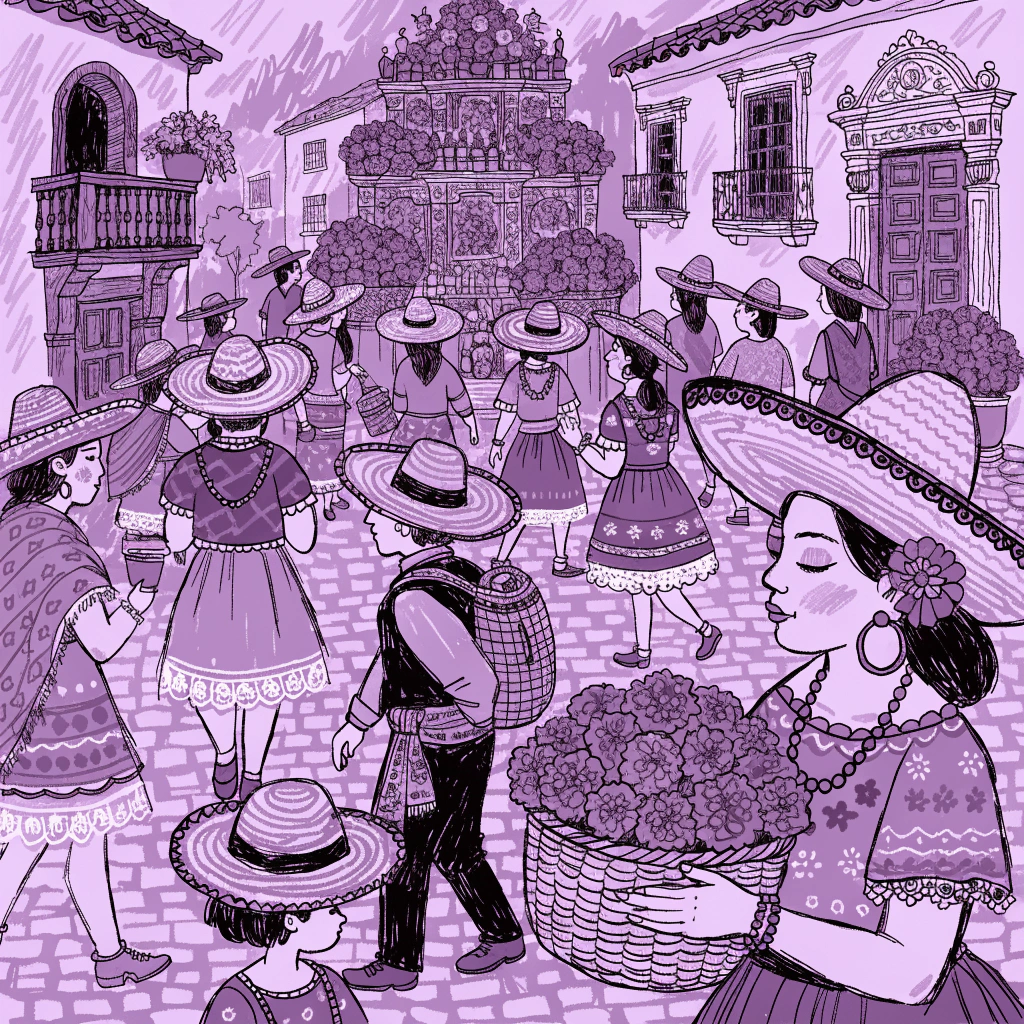
Día de Muertos: Ein Fest in Mexiko
Día de Muertos ist ein wichtiges Fest in Mexiko. Es ist ein Tag, an dem Familien zusammenkommen. Sie erinnern sich an ihre Lieben, die gestorben sind. Das Fest ist nicht traurig. Es ist ein fröhlicher Tag. Man schmückt Altäre mit vielen Blumen und leckerem Essen. Es gibt auch bunte Zuckerschädel. Diese sind sehr schön. Familien essen zusammen und erzählen Geschichten. Sie lachen viel. So feiern sie das Leben und ihre Toten. Es ist eine alte, schöne Tradition in Mexiko.
Grammatik-Spotlight
Muster: Präsens von 'sein'
"Es ist ein wichtiges Fest in Mexiko."
Das Verb 'sein' ist sehr wichtig. Man benutzt es oft, um zu sagen, was etwas ist. Für 'es' und 'man' sagen wir 'ist'.
Muster: Plural von Nomen
"Sie erinnern sich an ihre Lieben."
Viele Nomen haben eine Pluralform, wenn es mehr als eins ist. 'Lieber' (eine Person) wird zu 'Lieben' (mehrere Personen).
Teste dein Verständnis
10 Fragen · A1 Anfänger · 1 kostenlose Vorschau
Teste, was du aus diesem Artikel gelernt hast. Beantworte alle Fragen und sammle XP!
Was ist Día de Muertos?
Möchtest du das Quiz beenden?
9 weitere Fragen warten auf dich. Registriere dich kostenlos, um das vollständige Quiz freizuschalten und XP zu sammeln!
Kostenlos registrierenHast du schon ein Konto? Anmelden
Gut gemacht!
Weiter üben!
Bereits abgeschlossen — keine zusätzlichen XP
Registriere dich, um XP zu verdienenFragenübersicht
Was ist Día de Muertos?
Deine Antwort:
Richtige Antwort: Ein fröhliches Fest
Día de Muertos ist ein trauriges Fest.
Deine Antwort:
Richtige Antwort: Falsch
Was bedeutet 'schmücken'?
Deine Antwort:
Richtige Antwort: Etwas schön machen
Familien ______ sich an ihre Lieben.
Deine Antwort:
Richtige Antwort: erinnern
A Joyful Celebration: Día de Muertos in Mexico
Día de Muertos is a very special tradition in Mexico. People celebrate it on November 1st and second every year. It is not like Halloween because it is a happy time. Families want to remember their relatives who died.
In their homes, people make beautiful altars. They put photos of their grandfathers and grandmothers on these altars. They also use orange flowers called marigolds. These flowers are more beautiful than others because they show the way for the spirits. Families also put favorite foods like 'Pan de Muerto' on the table.
Last year, many people went to the cemeteries. They cleaned the graves and sat with their families. They talked about funny stories and listened to music. This celebration is important because it connects the past with the present. It is a joyful day for everyone in Mexico.
Grammatik-Spotlight
Muster: Past Simple
"Last year, many people went to the cemeteries."
We use the past simple to talk about finished actions in the past. To form it, we use the second form of the verb (go becomes went).
Muster: Comparatives
"These flowers are more beautiful than others because they show the way for the spirits."
We use 'more' + long adjective + 'than' to compare two things. It shows that one thing has more of a quality than another.
Teste dein Verständnis
11 Fragen · A2 Grundkenntnisse · 1 kostenlose Vorschau
Teste, was du aus diesem Artikel gelernt hast. Beantworte alle Fragen und sammle XP!
Why is Día de Muertos different from Halloween?
Möchtest du das Quiz beenden?
10 weitere Fragen warten auf dich. Registriere dich kostenlos, um das vollständige Quiz freizuschalten und XP zu sammeln!
Kostenlos registrierenHast du schon ein Konto? Anmelden
Gut gemacht!
Weiter üben!
Bereits abgeschlossen — keine zusätzlichen XP
Registriere dich, um XP zu verdienenFragenübersicht
Why is Día de Muertos different from Halloween?
Deine Antwort:
Richtige Antwort: It is a happy time to remember family
Families put photos of their relatives on altars.
Deine Antwort:
Richtige Antwort: Richtig
What does 'cemetery' mean?
Deine Antwort:
Richtige Antwort: A place where people are buried
People celebrate it on November 1st and _____.
Deine Antwort:
Richtige Antwort: second
What is 'Pan de Muerto'?
Deine Antwort:
Richtige Antwort: A type of food
Día de Muertos: Ein farbenfrohes Fest des Lebens in Mexiko
Der Día de Muertos, der Tag der Toten, ist eine der bekanntesten und vielleicht am meisten missverstandenen Traditionen Mexikos. Viele denken, es sei ein trauriges oder unheimliches Ereignis, ähnlich wie Halloween. Doch das ist es ganz und gar nicht! Es ist vielmehr ein farbenfrohes und fröhliches Fest, bei dem das Leben gefeiert wird. Familien kommen zusammen, um ihre verstorbenen Angehörigen zu ehren und sich an sie zu erinnern.
Diese besondere Feier hat ihre Wurzeln in alten indigenen Glaubensvorstellungen der Azteken, die sich mit katholischen Traditionen wie Allerheiligen und Allerseelen vermischt haben. Die zentrale Idee ist, dass der Tod kein Ende, sondern ein Teil des Lebenszyklus ist. Man glaubt, dass die Seelen der Verstorbenen einmal im Jahr für kurze Zeit in die Welt der Lebenden zurückkehren, um ihre Familien zu besuchen.
Um die Rückkehr der Seelen zu begrüßen, werden in den Häusern und auf den Friedhöfen bunte Altäre, sogenannte „Ofrendas“, aufgebaut. Diese werden mit Fotos der Lieben, ihren Lieblingsspeisen und -getränken, Kerzen, Zucker-Totenschädeln (Calaveras) und leuchtend orangen Ringelblumen (Cempasúchil) geschmückt. Der Duft der Blumen soll den Seelen den Weg weisen. Auch bunte Skelette und Figuren, die oft fröhlich tanzen oder Musik machen, sind überall zu sehen. Es ist eine Zeit, in der die Grenzen zwischen Leben und Tod verschwimmen und die Gemeinschaft gestärkt wird.
Obwohl der Anlass der Tod ist, ist die Atmosphäre voller Freude, Musik und Lachen. Man erzählt sich Geschichten über die Verstorbenen und teilt Erinnerungen. Der Día de Muertos ist ein tiefgründiger Ausdruck der mexikanischen Kultur und zeigt, wie man den Tod als natürlichen Teil des Daseins akzeptiert und das Andenken an die Liebsten lebendig hält. Er erinnert uns daran, dass unsere Verbindung zu denen, die gegangen sind, niemals wirklich endet.
Grammatik-Spotlight
Muster: Passiv (Präsens)
"Es ist vielmehr ein farbenfrohes und fröhliches Fest, bei dem das Leben gefeiert wird."
Das Passiv wird verwendet, um zu betonen, WAS getan wird, und nicht, WER es tut. Es wird mit einer Form von „werden“ und dem Partizip II des Verbs gebildet, zum Beispiel: „Das Leben wird gefeiert.“
Muster: Relativsätze mit 'der/die/das'
"Diese besondere Feier hat ihre Wurzeln in alten indigenen Glaubensvorstellungen der Azteken, die sich mit katholischen Traditionen wie Allerheiligen und Allerseelen vermischt haben."
Relativsätze geben zusätzliche Informationen über ein Nomen im Hauptsatz. Sie beginnen oft mit einem Relativpronomen wie „der“, „die“ oder „das“, das sich in Genus und Numerus nach dem Bezugswort richtet und den Nebensatz einleitet.
Teste dein Verständnis
11 Fragen · B1 Mittelstufe · 1 kostenlose Vorschau
Teste, was du aus diesem Artikel gelernt hast. Beantworte alle Fragen und sammle XP!
Was ist das Hauptmerkmal des Día de Muertos?
Möchtest du das Quiz beenden?
10 weitere Fragen warten auf dich. Registriere dich kostenlos, um das vollständige Quiz freizuschalten und XP zu sammeln!
Kostenlos registrierenHast du schon ein Konto? Anmelden
Gut gemacht!
Weiter üben!
Bereits abgeschlossen — keine zusätzlichen XP
Registriere dich, um XP zu verdienenFragenübersicht
Was ist das Hauptmerkmal des Día de Muertos?
Deine Antwort:
Richtige Antwort: Es ist ein farbenfrohes Fest, um das Leben zu feiern und die Verstorbenen zu ehren.
Die Atmosphäre während des Día de Muertos ist hauptsächlich traurig und düster.
Deine Antwort:
Richtige Antwort: Falsch
Was bedeutet das Wort 'ehren' in diesem Kontext?
Deine Antwort:
Richtige Antwort: Respekt und Anerkennung zeigen
Man glaubt, dass die Seelen der Verstorbenen einmal im Jahr für kurze Zeit in die Welt der Lebenden ______.
Deine Antwort:
Richtige Antwort: zurückkehren
Womit werden die Ofrendas (Altäre) NICHT typischerweise geschmückt?
Deine Antwort:
Richtige Antwort: Moderne Technologie wie Smartphones
Día de Muertos: Ein farbenprächtiges Fest des Lebens und Gedenkens in Mexiko
Der Día de Muertos, oder Tag der Toten, ist zweifellos eine der faszinierendsten und gleichzeitig am häufigsten missverstandenen Traditionen Mexikos. Weit entfernt von einem düsteren oder makabren Ereignis, wie es mancherorts mit Halloween assoziiert und oft fälschlicherweise als solches interpretiert wird, handelt es sich hierbei um eine ausgelassene Feier des Lebens und eine tiefgründige Art und Weise, verstorbener Angehöriger zu gedenken und sie zu ehren. Dieses einzigartige Brauchtum, dessen Ursprünge Jahrtausende zurückreichen und sich in vorhispanischen Zivilisationen wie den Azteken, Mayas und Tolteken finden lassen, ist eine beeindruckende Synthese aus indigenen Glaubensvorstellungen und den katholischen Traditionen von Allerheiligen und Allerseelen, die mit der spanischen Eroberung Einzug hielten.
Die Kernphilosophie des Día de Muertos besagt, dass der Tod nicht das Ende, sondern lediglich eine weitere Phase im ewigen Kreislauf des Lebens darstellt. Für die Mexikaner ist der Tod kein Abschied für immer, sondern vielmehr eine Übergangsphase, in der die Seelen der Verstorbenen einmal im Jahr zu ihren Familien zurückkehren, um gemeinsam zu feiern und die irdische Welt erneut zu besuchen. Diese tief verwurzelte Überzeugung prägt die gesamte Festlichkeit und verleiht ihr ihren unverwechselbaren Charakter, der sich in jedem Detail der Vorbereitung und des Festes selbst widerspiegelt. Es ist ein Fest, das die Vergänglichkeit des menschlichen Daseins anerkennt, gleichzeitig aber die ewige Verbundenheit zwischen den Lebenden und den Toten betont.
Die Vorbereitungen für den Día de Muertos sind aufwendig und beginnen oft schon Wochen vor den eigentlichen Festtagen am 1. und 2. November. Im Mittelpunkt der Feierlichkeiten stehen die sogenannten „Ofrendas“ – kunstvoll geschmückte Altäre, die in den Häusern errichtet werden. Diese Altäre dienen als Willkommensgruß für die heimkehrenden Seelen und sind reichlich mit Opfergaben bestückt. Dazu gehören Lieblingsspeisen und -getränke der Verstorbenen, Süßigkeiten in Form von Totenköpfen ("Calaveras de Azúcar"), Kerzen, Weihrauch, Fotos der Ahnen und vor allem die leuchtend orangefarbenen Studentenblumen (Cempasúchil), deren intensiver Duft den Seelen den Weg weisen soll. Jede Opfergabe hat eine symbolische Bedeutung und trägt dazu bei, eine Brücke zwischen Diesseits und Jenseits zu schlagen, indem sie die Erinnerung wachhält und die Verbindung stärkt. Die kunstvolle Gestaltung der Ofrendas ist Ausdruck einer tiefen Hingabe und Liebe zu den Verstorbenen.
An den Festtagen selbst versammeln sich die Familien oft auf den Friedhöfen, um die Gräber ihrer Liebsten zu reinigen und ebenfalls kunstvoll zu dekorieren. Es ist keine traurige Angelegenheit, sondern vielmehr ein lebhaftes Beisammensein mit Musik, Geschichten und dem Austausch von Erinnerungen. Man glaubt, dass die Verstorbenen für kurze Zeit körperlich anwesend sind und die Freude ihrer Familien teilen. Diese gemeinsame Zeit stärkt die familiären Bande und gewährleistet, dass die Erinnerung an die Dahingeschiedenen lebendig bleibt und von Generation zu Generation weitergegeben wird. Der Día de Muertos ist somit nicht nur ein Akt des Gedenkens, sondern auch eine zutiefst menschliche Manifestation der Hoffnung, der Verbundenheit über den Tod hinaus und der unerschütterlichen Lebensfreude.
Im Gegensatz zu vielen westlichen Kulturen, in denen der Tod oft tabuisiert und gefürchtet wird, pflegen die Mexikaner eine einzigartige und respektvolle Beziehung zum Ableben. Der Día de Muertos lehrt, den Tod als integralen Bestandteil des Lebens zu akzeptieren und ihn nicht zu verdrängen. Er ist ein Ausdruck tiefen Respekts vor den Vorfahren und eine Feier der Kontinuität des Lebens. Dieses farbenprächtige Spektakel wurde 2008 von der UNESCO als Meisterwerk des mündlichen und immateriellen Erbes der Menschheit anerkannt, was seine kulturelle Bedeutung und seinen universellen Wert unterstreicht.
Grammatik-Spotlight
Muster: Passiv (Vorgangspassiv)
"Dieses farbenprächtige Spektakel wurde 2008 von der UNESCO als Meisterwerk des mündlichen und immateriellen Erbes der Menschheit anerkannt."
Das Vorgangspassiv wird verwendet, um eine Handlung oder einen Vorgang zu beschreiben, bei dem der Handelnde (Agens) weniger wichtig ist als die Handlung selbst oder das, was mit dem Subjekt geschieht. Es wird mit einer Form von „werden“ und dem Partizip II des Verbs gebildet. Hier liegt der Fokus darauf, dass das Spektakel anerkannt wurde, nicht unbedingt wer es getan hat.
Muster: Relativsätze mit Genitiv (dessen/deren)
"Dieses einzigartige Brauchtum, dessen Ursprünge Jahrtausende zurückreichen, ist eine beeindruckende Synthese..."
Relativsätze mit „dessen“ (maskulin/neutral singular) oder „deren“ (feminin singular/plural) leiten einen Nebensatz ein, der ein Nomen im Hauptsatz näher beschreibt. Sie zeigen einen Besitz oder eine Zugehörigkeit an, ähnlich dem englischen „whose“. Der Genitiv-Relativpronomen richtet sich im Kasus nach dem Bezugswort im Hauptsatz und in Numerus und Genus nach dem Nomen, das es im Relativsatz ersetzt (hier: „Ursprünge“ gehören zum „Brauchtum“).
Muster: Nominalisierung (Substantivierung von Verben/Adjektiven)
"Es ist keine traurige Angelegenheit, sondern vielmehr ein lebhaftes Beisammensein mit Musik, Geschichten und dem Austausch von Erinnerungen."
Nominalisierung bedeutet, dass ein Verb oder Adjektiv als Nomen verwendet wird. Dies geschieht oft mit dem Artikel und der Endung „-ung“, „-heit“, „-keit“ oder einfach durch die Großschreibung des Infinitivs (z.B. „das Essen“). In diesem Beispiel wird „austauschen“ zu „dem Austausch“, was den Satz formeller und prägnanter macht. Die Nominalisierung ist ein typisches Merkmal des B2-Niveaus und der Schriftsprache.
Teste dein Verständnis
11 Fragen · B2 Obere Mittelstufe · 1 kostenlose Vorschau
Teste, was du aus diesem Artikel gelernt hast. Beantworte alle Fragen und sammle XP!
Was ist der Hauptzweck des Día de Muertos?
Möchtest du das Quiz beenden?
10 weitere Fragen warten auf dich. Registriere dich kostenlos, um das vollständige Quiz freizuschalten und XP zu sammeln!
Kostenlos registrierenHast du schon ein Konto? Anmelden
Gut gemacht!
Weiter üben!
Bereits abgeschlossen — keine zusätzlichen XP
Registriere dich, um XP zu verdienenFragenübersicht
Was ist der Hauptzweck des Día de Muertos?
Deine Antwort:
Richtige Antwort: Verstorbener Angehöriger zu gedenken und das Leben zu feiern.
Der Día de Muertos ist ein düsteres und trauriges Ereignis, bei dem man um die Toten trauert.
Deine Antwort:
Richtige Antwort: Falsch
Was bedeutet 'Brauchtum' im Kontext des Artikels?
Deine Antwort:
Richtige Antwort: Eine über längere Zeit entstandene und in einer Gemeinschaft gepflegte Sitte oder Gewohnheit.
Die Kernphilosophie des Día de Muertos besagt, dass der Tod eine weitere Phase im ewigen _____ des Lebens darstellt.
Deine Antwort:
Richtige Antwort: Kreislauf
Welches Element ist KEIN typischer Bestandteil einer „Ofrenda“?
Deine Antwort:
Richtige Antwort: Smartphones und elektronische Geräte.
Beyond the Veil: The Philosophical Underpinnings of Día de Muertos
Seldom does a cultural phenomenon so poignantly bridge the chasm between the corporeal and the ethereal as does Mexico’s Día de Muertos. Often misconstrued by the uninitiated as a macabre facsimile of Halloween, this vibrant tradition is, in actuality, a sophisticated tapestry of indigenous cosmology and colonial religious influence. At its heart, the celebration is an ontological statement: death is not an absolute terminus, but rather a transitional phase in a perennial cycle of existence. For the duration of the first and second of November, the boundary between the world of the living and the realm of the spirits is believed to grow porous, facilitating a spiritual homecoming.
The historical genesis of the holiday lies in the syncretism of pre-Hispanic Aztec rituals and Catholic liturgical practices. While the Spanish conquistadors sought to impose their European worldview, the resulting amalgamation allowed indigenous beliefs to persist under the guise of All Saints’ Day. This fusion is most visible in the construction of the ofrenda. It is the ofrenda that serves as the focal point of the commemoration, a meticulously curated altar designed to guide souls back to the earthly plane. These altars are adorned with cempasúchil flowers, whose vibrant orange hue and pungent scent are thought to lead the deceased home. The inclusion of the deceased’s favorite foods and personal mementos represents a rejection of the finality of loss, emphasizing instead the enduring nature of familial bonds.
Critically, the aesthetics of the holiday serve to domesticate the concept of death. Through the use of sugar skulls and satirical calaveras, the terrifying specter of mortality is rendered familiar, even whimsical. This cultural pedagogy encourages a nuanced acceptance of the ephemeral nature of life. By laughing with death, the Mexican people strip it of its power to cause despair. Not only does the holiday honor those who have passed, but it also provides a collective space for the living to confront their own transience. The invocation of the ancestors becomes a communal act of memory, ensuring that no individual is truly forgotten as long as their story is retold.
In recent years, the globalization of Día de Muertos has led to concerns regarding its commercialization and the potential dilution of its spiritual essence. However, the preservation of its core values remains a testament to the resilience of Mexican identity. What the uninitiated often fail to grasp is that this is not a mourning of death, but a celebration of the continuity of life. The meticulous preparation of these altars and the festive atmosphere in the cemeteries underscore a profound cultural truth: that our ancestors remain with us, insofar as we choose to remember them.
Grammatik-Spotlight
Muster: Negative Inversion
"Seldom does a cultural phenomenon so poignantly bridge the chasm between the corporeal and the ethereal as does Mexico’s Día de Muertos."
When using negative or restrictive adverbs like 'seldom' at the start of a sentence for emphasis, the auxiliary verb comes before the subject. This is a hallmark of formal, high-level English writing.
Muster: Cleft Sentences
"It is the ofrenda that serves as the focal point of the commemoration..."
Cleft sentences use the structure 'It is/was + [noun phrase] + that/who...' to focus on specific information. This emphasizes that the ofrenda, and not something else, is the central element.
Muster: Nominalization
"The meticulous preparation of these altars and the festive atmosphere in the cemeteries underscore a profound cultural truth..."
Nominalization involves turning verbs (prepare) into nouns (preparation). This allows for more complex, abstract ideas to be the subject of a sentence, which is common in academic and C1-level texts.
Teste dein Verständnis
12 Fragen · C1 Fortgeschritten · 1 kostenlose Vorschau
Teste, was du aus diesem Artikel gelernt hast. Beantworte alle Fragen und sammle XP!
What is the primary philosophical view of death according to the article?
Möchtest du das Quiz beenden?
11 weitere Fragen warten auf dich. Registriere dich kostenlos, um das vollständige Quiz freizuschalten und XP zu sammeln!
Kostenlos registrierenHast du schon ein Konto? Anmelden
Gut gemacht!
Weiter üben!
Bereits abgeschlossen — keine zusätzlichen XP
Registriere dich, um XP zu verdienenFragenübersicht
What is the primary philosophical view of death according to the article?
Deine Antwort:
Richtige Antwort: A transitional phase within a continuous cycle.
The author suggests that Halloween and Día de Muertos are essentially the same tradition.
Deine Antwort:
Richtige Antwort: Falsch
What does the word 'syncretism' refer to in the text?
Deine Antwort:
Richtige Antwort: The blending of different religious and cultural practices.
The boundary between worlds is believed to become _____ during the holiday, allowing spirits to return.
Deine Antwort:
Richtige Antwort: porous
What role do sugar skulls and 'calaveras' play in the celebration?
Deine Antwort:
Richtige Antwort: They help to familiarize and lighten the concept of mortality.
The cempasúchil flowers are included because their scent and color are thought to guide souls.
Deine Antwort:
Richtige Antwort: Richtig
Der Día de Muertos: Eine philosophische Betrachtung mexikanischer Jenseitsvorstellungen
Der Día de Muertos, oder Tag der Toten, manifestiert sich als eine der ikonischsten und zugleich am häufigsten missverstandenen kulturellen Ausdrucksformen Mexikos. Weit entfernt von der düsteren oder makabren Konnotation, die mit westlichen Festen wie Halloween assoziiert wird, präsentiert sich dieses zweitägige Ereignis als eine überaus lebendige und farbenfrohe Affirmation des Lebens, die tief in der kollektiven Erinnerung und der Ehrung verstorbener Angehöriger verwurzelt ist. Es handelt sich hierbei nicht um eine bloße Trauerveranstaltung, sondern vielmehr um eine zelebrierte Wiedervereinigung, eine transzendente Brücke zwischen Diesseits und Jenseits, die es den Seelen der Verstorbenen gestatten soll, für kurze Zeit in den Kreis ihrer Familien zurückzukehren.
Die philosophischen und theologischen Fundamente des Día de Muertos sind in einer faszinierenden Synthese indigener präkolumbianischer Glaubenssysteme, insbesondere der aztekischen Kosmologie, und den katholischen Traditionen Allerheiligen und Allerseelen zu finden. Man könnte argumentieren, dass die indigene Perspektive, welche den Tod nicht als finales Ende, sondern als integralen Bestandteil eines zyklischen Daseins begreift, die katholische Auffassung von der Unsterblichkeit der Seele auf eine Weise rekontextualisiert hat, die einzigartig für die mexikanische Kultur ist. Der Tod wird hier nicht gefürchtet, sondern vielmehr als eine weitere Stufe im ewigen Kreislauf des Werdens und Vergehens verstanden, eine unvermeidliche Transformation, die mit Respekt und sogar einer gewissen Heiterkeit zu begegnen ist.
Zentrale Elemente dieser Feierlichkeiten sind die aufwendig gestalteten „Ofrendas“ oder Altäre, die in den Haushalten und auf Friedhöfen errichtet werden. Diese Altäre sind weitaus mehr als bloße Gedenkstätten; sie fungieren als Einladung und Wegweiser für die Geister der Verstorbenen. Sie sind reich geschmückt mit den Lieblingsspeisen und -getränken der Verstorbenen, persönlichen Gegenständen, Kerzen, Räucherwerk und den leuchtend orangen Cempasúchil-Blüten (Studentenblumen), deren intensiver Duft und Farbe den Seelen den Weg weisen sollen. Das Pan de Muerto, ein spezielles süßes Brot, und die Calaveras, kunstvoll verzierte Zuckerschädel, die oft mit den Namen der Verstorbenen versehen sind, sind weitere unverzichtbare Bestandteile, die die Ambivalenz zwischen Trauer und Lebensfreude auf eindringliche Weise symbolisieren.
Die tiefere Bedeutung des Día de Muertos liegt in der Stärkung familiärer Bande und der Bewahrung des kulturellen Gedächtnisses. Indem die Lebenden die Verstorbenen aktiv in ihre gegenwärtige Existenz einbeziehen – sei es durch das Erzählen von Anekdoten, das Singen ihrer Lieblingslieder oder das Zubereiten ihrer bevorzugten Gerichte –, wird eine Kontinuität über den physischen Tod hinaus geschaffen. Es ist eine kollektive Praxis der Erinnerung, die nicht nur den individuellen Schmerz lindert, sondern auch das Gefühl der Zugehörigkeit und Identität innerhalb der Gemeinschaft festigt. Man könnte sogar konstatieren, dass diese Rituale eine therapeutische Funktion innehaben, indem sie den Umgang mit Verlust in einen Kontext der Feier und des Wiedersehens einbetten.
In den letzten Jahrzehnten hat der Día de Muertos international zunehmende Beachtung gefunden, was einerseits zu einer globalen Wertschätzung dieser einzigartigen Tradition geführt hat, andererseits aber auch die Gefahr einer Kommerzialisierung und oberflächlichen Aneignung birgt. Es ist von essentieller Bedeutung, die intrinsische Tiefe und den spirituellen Gehalt dieser Bräuche zu bewahren, damit sie nicht zu einer bloßen ästhetischen Kuriosität degenerieren. Die Essenz des Festes – die heitere Konfrontation mit der Sterblichkeit und die liebevolle Erinnerung an jene, die vor uns gegangen sind – sollte stets im Vordergrund stehen. Es bleibt zu hoffen, dass diese tiefgründige Philosophie, die den Tod nicht als Ende, sondern als Transformation und als Anlass zur Feier des Lebens begreift, auch in einer zunehmend globalisierten Welt ihre Authentizität zu wahren vermag und weiterhin als lebendiges Zeugnis einer reichen kulturellen Identität dient.
Grammatik-Spotlight
Muster: Nominalisierung von Verben und Adjektiven
"Die philosophischen und theologischen Fundamente des Día de Muertos sind in einer faszinierenden Synthese indigener präkolumbianischer Glaubenssysteme, insbesondere der aztekischen Kosmologie, und den katholischen Traditionen Allerheiligen und Allerseelen zu finden."
Nominalisierungen wandeln Verben oder Adjektive in Substantive um und dienen der Verdichtung von Informationen sowie der Erhöhung des Abstraktionsgrades im Text. Sie sind typisch für einen akademischen oder formellen Stil und ermöglichen komplexere Satzstrukturen durch die Verwendung von Präpositional- oder Genitivattributen statt ganzer Nebensätze.
Muster: Konjunktiv I für indirekte Rede und Distanzierung
"Man könnte sogar konstatieren, dass diese Rituale eine therapeutische Funktion innehaben, indem sie den Umgang mit Verlust in einen Kontext der Feier und des Wiedersehens einbetten."
Der Konjunktiv I wird hier verwendet, um eine Aussage als indirekte Rede oder als eine mögliche Annahme darzustellen, ohne sie als eigene, absolute Wahrheit zu proklamieren. Er signalisiert eine gewisse Distanz zum Gesagten und ist in wissenschaftlichen Texten üblich, um Behauptungen als Hypothesen oder Schlussfolgerungen zu kennzeichnen, die diskutabel sein könnten.
Muster: Erweiterter Infinitiv mit „zu“ zur Ausdrucksverdichtung
"Der Tod wird hier nicht gefürchtet, sondern vielmehr als eine weitere Stufe im ewigen Kreislauf des Werdens und Vergehens verstanden, eine unvermeidliche Transformation, die mit Respekt und sogar einer gewissen Heiterkeit zu begegnen ist."
Diese Konstruktion ermöglicht es, komplexe Sachverhalte prägnant auszudrücken, oft im Sinne einer Notwendigkeit, Möglichkeit oder Absicht. Sie verdichtet den Inhalt eines Nebensatzes zu einer Infinitivgruppe und ist ein Kennzeichen eines elaborierten Sprachstils, besonders wenn sie – wie hier – als Attribut zu einem Substantiv verwendet wird und ein Passiv ausdrückt ('die begegnet werden muss').
Teste dein Verständnis
12 Fragen · C2 Meisterschaft · 1 kostenlose Vorschau
Teste, was du aus diesem Artikel gelernt hast. Beantworte alle Fragen und sammle XP!
Welche der folgenden Aussagen beschreibt den Día de Muertos am besten laut Artikel?
Möchtest du das Quiz beenden?
11 weitere Fragen warten auf dich. Registriere dich kostenlos, um das vollständige Quiz freizuschalten und XP zu sammeln!
Kostenlos registrierenHast du schon ein Konto? Anmelden
Gut gemacht!
Weiter üben!
Bereits abgeschlossen — keine zusätzlichen XP
Registriere dich, um XP zu verdienenFragenübersicht
Welche der folgenden Aussagen beschreibt den Día de Muertos am besten laut Artikel?
Deine Antwort:
Richtige Antwort: Es ist eine feierliche Wiedervereinigung und eine Affirmation des Lebens.
Der Artikel besagt, dass der Tod im Día de Muertos als finales Ende des Daseins verstanden wird.
Deine Antwort:
Richtige Antwort: Falsch
Was bedeutet das Wort 'transzendente' im Kontext des Artikels?
Deine Antwort:
Richtige Antwort: Etwas, das über die normale Realität hinausgeht.
Die __________ dienen als Einladung und Wegweiser für die Geister der Verstorbenen.
Deine Antwort:
Richtige Antwort: Ofrendas
Welche Gefahr wird im Artikel bezüglich der internationalen Beachtung des Día de Muertos genannt?
Deine Antwort:
Richtige Antwort: Die Kommerzialisierung und oberflächliche Aneignung.
Cempasúchil-Blüten werden wegen ihres Duftes und ihrer Farbe verwendet, um Seelen den Weg zu weisen.
Deine Antwort:
Richtige Antwort: Richtig

