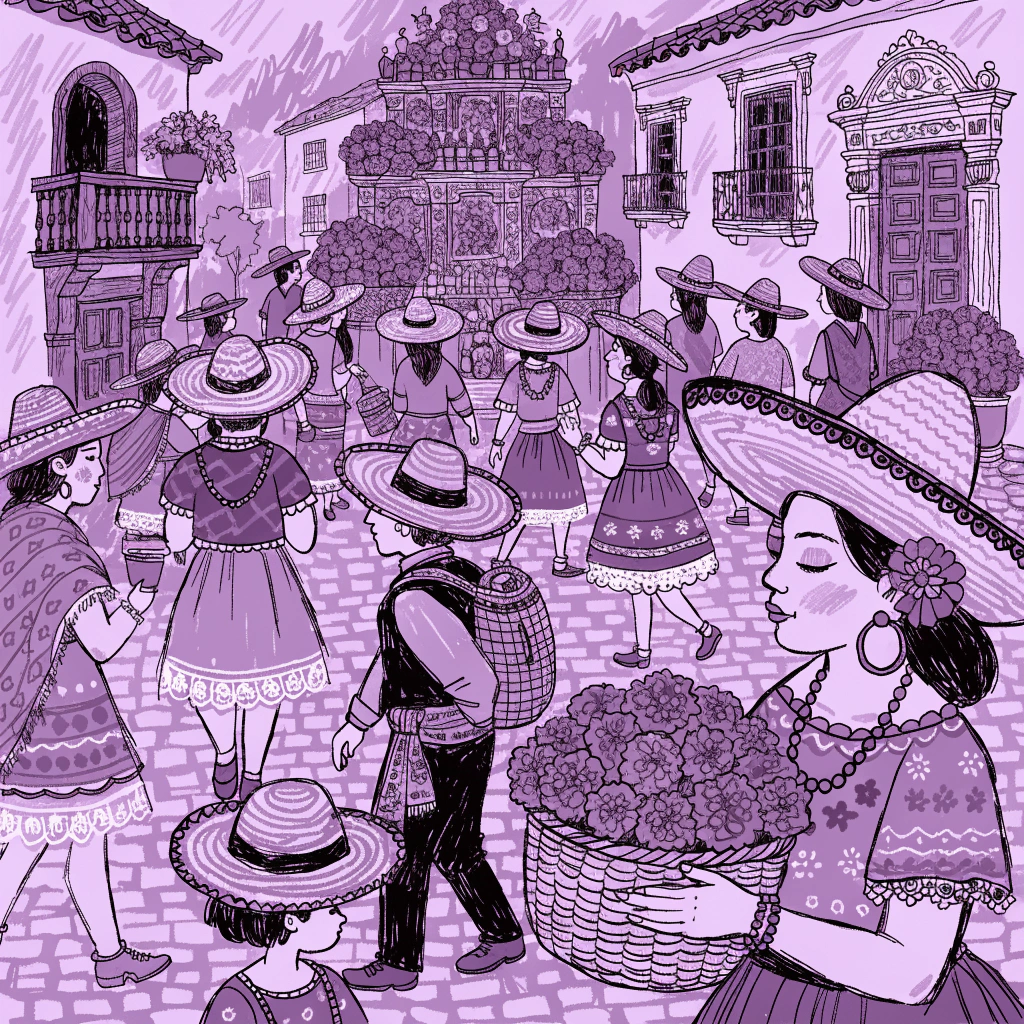
The Day of the Dead in Mexico
Mexico has a very special tradition. It is the Day of the Dead. People celebrate this on November 1st and 2nd. It is not a sad time. It is a happy celebration of life.
Families remember their grandmothers and grandfathers. They make beautiful altars in their homes. They put orange flowers and old photos on the altars. They also cook delicious food.
Children eat sugar skulls. People wear colorful costumes and paint their faces. They sing songs and dance together. It is a beautiful way to remember family.
نکته دستوری
الگو: Present Simple (to be)
"It is a happy celebration of life."
We use 'is' for singular subjects like 'it'. It describes a fact or a state in the present.
الگو: Present Simple (plural verbs)
"Families remember their grandmothers."
For plural subjects like 'families' or 'they', we use the base verb. We do not add 's' at the end.
درک خود را بسنجید
10 سوال · A1 مبتدی · 1 پیشنمایش رایگان
آنچه از این مقاله آموختید را بسنجید. به همه سؤالات پاسخ دهید و XP کسب کنید!
When is the Day of the Dead?
آیا میخواهید آزمون را تمام کنید؟
9 سؤال دیگر منتظر شماست. ثبتنام رایگان کنید تا آزمون کامل را باز کنید و XP کسب کنید!
ثبتنام رایگانقبلاً ثبتنام کردی؟ ورود
جزئیات سؤالات
When is the Day of the Dead?
پاسخ شما:
پاسخ درست: On November 1st and 2nd
The Day of the Dead is a sad time.
پاسخ شما:
پاسخ درست: نادرست
What is an 'altar'?
پاسخ شما:
پاسخ درست: A special table for photos
Families make beautiful _____ in their homes.
پاسخ شما:
پاسخ درست: altars
روز مردگان: جشنی از زندگی در مکزیک
مکزیک یک کشور بزرگ و زیبا در آمریکای شمالی است. این کشور یک جشن بسیار خاص دارد که "روز مردگان" نامیده میشود. شاید بعضی از مردم فکر کنند که این روز غمگین است، اما این فکر درست نیست. روز مردگان در واقع یک جشن شاد و رنگارنگ است. خانوادههای مکزیکی در این روز عزیزان خود را که از دنیا رفتهاند، به یاد میآورند و به آنها احترام میگذارند. این جشن ریشههای بسیار قدیمی دارد. مردم بومی مکزیک، مثل آزتکها، از زمانهای دور به این باورها اعتقاد داشتند. بعداً، وقتی مردم اسپانیا به مکزیک آمدند، سنتهای کاتولیک خود را هم آوردند. بنابراین، امروز روز مردگان ترکیبی از باورهای بومی و سنتهای مسیحی است. فلسفه اصلی این جشن این است که مرگ پایان زندگی نیست. مرگ فقط یک مرحله دیگر در چرخه زندگی است. در این دو روز خاص، خانوادهها باور دارند که روح عزیزانشان برای دیدن آنها به خانه بازمیگردد. آنها برای این مهمانان ویژه غذاهای خوشمزه، نوشیدنی و گلهای زیبا آماده میکنند. آنها عکسهای عزیزانشان را روی یک میز مخصوص میگذارند. این جشن فرصتی است برای یادآوری خاطرات خوب و جشن گرفتن زندگی، نه فقط غمگین بودن. این یک بخش مهم و دوستداشتنی از فرهنگ مکزیک است.
نکته دستوری
الگو: ماضی ساده (Simple Past Tense)
"مردم بومی مکزیک، مثل آزتکها، از زمانهای دور به این باورها اعتقاد داشتند."
ماضی ساده برای صحبت کردن درباره کارهایی استفاده میشود که در گذشته شروع شده و در گذشته تمام شدهاند. برای ساختن آن، معمولاً به مصدر فعل پسوند اضافه میکنیم، مثلاً 'رفتن' میشود 'رفت'.
الگو: جمله واره موصولی با 'که' (Relative Clause with 'ke')
"خانوادههای مکزیکی در این روز عزیزان خود را که از دنیا رفتهاند، به یاد میآورند."
ما از 'که' برای وصل کردن دو جمله و دادن اطلاعات بیشتر درباره یک اسم استفاده میکنیم. 'که' شبیه 'who' یا 'which' در انگلیسی است و معمولاً بعد از اسمی میآید که درباره آن توضیح میدهیم.
درک خود را بسنجید
11 سوال · A2 مقدماتی · 1 پیشنمایش رایگان
آنچه از این مقاله آموختید را بسنجید. به همه سؤالات پاسخ دهید و XP کسب کنید!
روز مردگان در مکزیک چگونه جشنی است؟
آیا میخواهید آزمون را تمام کنید؟
10 سؤال دیگر منتظر شماست. ثبتنام رایگان کنید تا آزمون کامل را باز کنید و XP کسب کنید!
ثبتنام رایگانقبلاً ثبتنام کردی؟ ورود
جزئیات سؤالات
روز مردگان در مکزیک چگونه جشنی است؟
پاسخ شما:
پاسخ درست: یک جشن شاد و رنگارنگ
مردم مکزیک باور دارند که مرگ پایان زندگی است.
پاسخ شما:
پاسخ درست: نادرست
معنی کلمه "جشن" چیست؟
پاسخ شما:
پاسخ درست: مراسم شاد
خانوادهها برای این مهمانان ویژه _____ خوشمزه، نوشیدنی و گلهای زیبا آماده میکنند.
پاسخ شما:
پاسخ درست: غذاهای
چه کسانی ابتدا به این باورها اعتقاد داشتند؟
پاسخ شما:
پاسخ درست: مردم بومی مکزیک (آزتکها)
Día de Muertos: A Celebration of Life
Día de Muertos, known in English as the Day of the Dead, is a unique Mexican holiday that has become famous all over the world. While some people think it is a Mexican version of Halloween, it is actually a very different celebration. Instead of being scared of death, Mexican families use these two days to remember their ancestors with joy and love. The celebration takes place on November 1st and 2nd. It is believed that the spirits of children visit first, and then the spirits of adults follow the next day.
The tradition has existed for thousands of years, starting with the indigenous Aztec people long before the Spanish arrived. Today, it is a mix of ancient beliefs and Catholic traditions. The main idea is that the souls of the dead return to Earth to visit their families for a short time. During the festival, beautiful altars called ofrendas are built in homes. These altars are decorated with bright orange flowers, candles, and photographs. Families also prepare the favorite foods of their loved ones. A special bread, which is called pan de muerto, is often baked for the occasion.
In many towns, people go to the cemetery to clean the graves and spend the night talking to their relatives who have passed away. One of the most recognizable symbols is the sugar skull. These colorful items are not meant to be scary; they symbolize the sweetness of life. In recent years, the holiday has been recognized by UNESCO as an important part of human culture. It is a beautiful reminder that as long as we remember someone, they are never truly gone.
نکته دستوری
الگو: Passive Voice
"These altars are decorated with bright orange flowers, candles, and photographs."
The passive voice is used when the action is more important than who is doing it. It is formed with the verb 'to be' and the past participle.
الگو: Relative Clauses
"A special bread, which is called pan de muerto, is often baked for the occasion."
Relative clauses provide extra information about a noun. 'Which' is used for things, and 'who' is used for people.
درک خود را بسنجید
11 سوال · B1 متوسط · 1 پیشنمایش رایگان
آنچه از این مقاله آموختید را بسنجید. به همه سؤالات پاسخ دهید و XP کسب کنید!
What is the primary purpose of Día de Muertos?
آیا میخواهید آزمون را تمام کنید؟
10 سؤال دیگر منتظر شماست. ثبتنام رایگان کنید تا آزمون کامل را باز کنید و XP کسب کنید!
ثبتنام رایگانقبلاً ثبتنام کردی؟ ورود
جزئیات سؤالات
What is the primary purpose of Día de Muertos?
پاسخ شما:
پاسخ درست: To remember and honor deceased family members
Día de Muertos is simply the Mexican version of Halloween.
پاسخ شما:
پاسخ درست: نادرست
What does 'ancestors' mean?
پاسخ شما:
پاسخ درست: Family members from the past
The holiday takes place in the country of _____.
پاسخ شما:
پاسخ درست: Mexico
What are 'ofrendas'?
پاسخ شما:
پاسخ درست: Altars built in homes
Beyond the Veil: Understanding the Cultural Significance of Mexico’s Día de Muertos
While many outsiders might perceive Día de Muertos, or Day of the Dead, as a Mexican version of Halloween, this comparison is a common misconception. In reality, the holiday is a sophisticated synthesis of indigenous Aztec beliefs and European Catholic traditions. Far from being a somber or macabre event, it is a vibrant celebration of life that serves to commemorate deceased loved ones. The core philosophy suggests that death is not a finality but rather an inevitable stage in a natural cycle. For two days, it is believed that the boundary between the living and the dead becomes permeable, allowing spirits to return to the earthly realm.
The centerpiece of the celebration is the 'ofrenda', or altar, which is meticulously constructed in family homes. These altars are not intended for worship; instead, they are designed to welcome the spirits back with their favorite things. They are typically adorned with bright orange marigolds, whose scent is thought to guide the souls home. Families also place photographs of their ancestors alongside various offerings, such as 'pan de muerto' (a traditional sweet bread) and sugar skulls. These items represent the ephemeral nature of life, reminding the living to cherish their present moments while honoring those who came before them.
From a sociological perspective, the festival functions as a mechanism for communal healing and historical continuity. By integrating the memory of the dead into the festivities of the living, Mexican society maintains a profound connection with its heritage. This cultural practice was recognized by UNESCO as an Intangible Cultural Heritage of Humanity, highlighting its importance in fostering social cohesion. Although the aesthetic of the holiday involves skeletons and skulls, these symbols are often depicted in humorous or everyday situations, emphasizing that death should be faced with courage and even a sense of irony rather than fear.
Ultimately, Día de Muertos offers a unique lens through which we can analyze how different cultures process grief and memory. It encourages a perspective where the deceased are never truly gone as long as they are remembered. In an increasingly globalized world, the holiday continues to evolve, yet its fundamental purpose remains unchanged: to bridge the gap between generations and celebrate the enduring bonds of family and community.
نکته دستوری
الگو: Passive Voice
"These altars are not intended for worship; instead, they are designed to welcome the spirits back."
The passive voice is used here to focus on the objects (the altars) rather than the people creating them. It is formed using the verb 'to be' plus the past participle.
الگو: Relative Clauses
"These altars are not intended for worship; instead, they are designed to welcome the spirits back with their favorite things."
Relative clauses provide additional information about a noun. In this article, they are used to add detail and complexity to descriptions of traditions.
الگو: Present Simple for Universal Truths
"The core philosophy suggests that death is not a finality but rather an inevitable stage in a natural cycle."
The present simple is used to describe beliefs, philosophies, and facts that are considered permanently true within a cultural context.
درک خود را بسنجید
11 سوال · B2 بالاتر از متوسط · 1 پیشنمایش رایگان
آنچه از این مقاله آموختید را بسنجید. به همه سؤالات پاسخ دهید و XP کسب کنید!
What is the main purpose of the 'ofrenda' in Mexican homes?
آیا میخواهید آزمون را تمام کنید؟
10 سؤال دیگر منتظر شماست. ثبتنام رایگان کنید تا آزمون کامل را باز کنید و XP کسب کنید!
ثبتنام رایگانقبلاً ثبتنام کردی؟ ورود
جزئیات سؤالات
What is the main purpose of the 'ofrenda' in Mexican homes?
پاسخ شما:
پاسخ درست: To welcome the spirits of loved ones back to the earthly realm
Día de Muertos is considered a somber and sad occasion by those who celebrate it.
پاسخ شما:
پاسخ درست: نادرست
What does the word 'ephemeral' mean in the context of the article?
پاسخ شما:
پاسخ درست: Lasting for a very short time
The orange marigolds are used because their _____ is believed to guide souls home.
پاسخ شما:
پاسخ درست: scent
Which organization recognized Día de Muertos as an Intangible Cultural Heritage of Humanity?
پاسخ شما:
پاسخ درست: UNESCO
Beyond the Veil: The Philosophical Underpinnings of Día de Muertos
Seldom does a cultural phenomenon so poignantly bridge the chasm between the corporeal and the ethereal as does Mexico’s Día de Muertos. Often misconstrued by the uninitiated as a macabre facsimile of Halloween, this vibrant tradition is, in actuality, a sophisticated tapestry of indigenous cosmology and colonial religious influence. At its heart, the celebration is an ontological statement: death is not an absolute terminus, but rather a transitional phase in a perennial cycle of existence. For the duration of the first and second of November, the boundary between the world of the living and the realm of the spirits is believed to grow porous, facilitating a spiritual homecoming.
The historical genesis of the holiday lies in the syncretism of pre-Hispanic Aztec rituals and Catholic liturgical practices. While the Spanish conquistadors sought to impose their European worldview, the resulting amalgamation allowed indigenous beliefs to persist under the guise of All Saints’ Day. This fusion is most visible in the construction of the ofrenda. It is the ofrenda that serves as the focal point of the commemoration, a meticulously curated altar designed to guide souls back to the earthly plane. These altars are adorned with cempasúchil flowers, whose vibrant orange hue and pungent scent are thought to lead the deceased home. The inclusion of the deceased’s favorite foods and personal mementos represents a rejection of the finality of loss, emphasizing instead the enduring nature of familial bonds.
Critically, the aesthetics of the holiday serve to domesticate the concept of death. Through the use of sugar skulls and satirical calaveras, the terrifying specter of mortality is rendered familiar, even whimsical. This cultural pedagogy encourages a nuanced acceptance of the ephemeral nature of life. By laughing with death, the Mexican people strip it of its power to cause despair. Not only does the holiday honor those who have passed, but it also provides a collective space for the living to confront their own transience. The invocation of the ancestors becomes a communal act of memory, ensuring that no individual is truly forgotten as long as their story is retold.
In recent years, the globalization of Día de Muertos has led to concerns regarding its commercialization and the potential dilution of its spiritual essence. However, the preservation of its core values remains a testament to the resilience of Mexican identity. What the uninitiated often fail to grasp is that this is not a mourning of death, but a celebration of the continuity of life. The meticulous preparation of these altars and the festive atmosphere in the cemeteries underscore a profound cultural truth: that our ancestors remain with us, insofar as we choose to remember them.
نکته دستوری
الگو: Negative Inversion
"Seldom does a cultural phenomenon so poignantly bridge the chasm between the corporeal and the ethereal as does Mexico’s Día de Muertos."
When using negative or restrictive adverbs like 'seldom' at the start of a sentence for emphasis, the auxiliary verb comes before the subject. This is a hallmark of formal, high-level English writing.
الگو: Cleft Sentences
"It is the ofrenda that serves as the focal point of the commemoration..."
Cleft sentences use the structure 'It is/was + [noun phrase] + that/who...' to focus on specific information. This emphasizes that the ofrenda, and not something else, is the central element.
الگو: Nominalization
"The meticulous preparation of these altars and the festive atmosphere in the cemeteries underscore a profound cultural truth..."
Nominalization involves turning verbs (prepare) into nouns (preparation). This allows for more complex, abstract ideas to be the subject of a sentence, which is common in academic and C1-level texts.
درک خود را بسنجید
12 سوال · C1 پیشرفته · 1 پیشنمایش رایگان
آنچه از این مقاله آموختید را بسنجید. به همه سؤالات پاسخ دهید و XP کسب کنید!
What is the primary philosophical view of death according to the article?
آیا میخواهید آزمون را تمام کنید؟
11 سؤال دیگر منتظر شماست. ثبتنام رایگان کنید تا آزمون کامل را باز کنید و XP کسب کنید!
ثبتنام رایگانقبلاً ثبتنام کردی؟ ورود
جزئیات سؤالات
What is the primary philosophical view of death according to the article?
پاسخ شما:
پاسخ درست: A transitional phase within a continuous cycle.
The author suggests that Halloween and Día de Muertos are essentially the same tradition.
پاسخ شما:
پاسخ درست: نادرست
What does the word 'syncretism' refer to in the text?
پاسخ شما:
پاسخ درست: The blending of different religious and cultural practices.
The boundary between worlds is believed to become _____ during the holiday, allowing spirits to return.
پاسخ شما:
پاسخ درست: porous
What role do sugar skulls and 'calaveras' play in the celebration?
پاسخ شما:
پاسخ درست: They help to familiarize and lighten the concept of mortality.
The cempasúchil flowers are included because their scent and color are thought to guide souls.
پاسخ شما:
پاسخ درست: درست
The Ontological Resonance of Día de Muertos: A Study in Mexican Syncretism
To the uninitiated observer, the visual lexicon of Mexico’s Día de Muertos—vibrant marigolds, ornate sugar skulls, and skeletal figurines—might erroneously suggest a preoccupation with the macabre or a morbid fascination with the afterlife. However, such a reductive interpretation fails to grasp the profound philosophical underpinnings of this quintessential Mexican tradition. Far from a somber lamentation of loss, the celebration represents a sophisticated aestheticization of mortality, rooted in a visceral understanding of the cyclical nature of existence. It is ostensibly a celebration where the boundaries between the terrestrial and the ethereal become porous, allowing for a temporary reconciliation with those who have transitioned beyond the mortal coil.
The genesis of this tradition lies in a complex syncretism, where indigenous Mesoamerican beliefs were inextricably woven into the fabric of Spanish Catholicism. Should one examine the historical trajectory of the festival, it becomes evident that the Aztec concept of Mictlān—the underworld—provided a fertile conceptual ground for the subsequent integration of All Saints’ and All Souls’ Days. This cultural amalgamation resulted in a unique ontological framework where death is not viewed as a definitive terminus, but rather as a liminal state. Were one to disregard the indigenous underpinnings of the festival, the contemporary iteration would appear as a mere shadow of its former spiritual complexity. It is imperative that the observer distinguish between the commercialized veneer often exported globally and the profound ancestral reverence maintained within local communities.
Central to the praxis of Día de Muertos is the ofrenda, or altar. These structures are not mere repositories of artifacts; they are semiotic landscapes designed to propitiate the returning spirits. Each element, from the pan de muerto to the cempasúchil petals, serves as a mnemonic device, bridging the chasm between memory and bereavement. The ephemeral nature of these altars mirrors the evanescence of human life itself, emphasizing that while the physical form may perish, the essence of the individual remains preserved through collective remembrance. Seldom does a cultural phenomenon manage to synthesize such disparate theological frameworks with such seamless elegance, creating a space where grief is transmuted into a communal celebration of heritage.
Furthermore, the figure of La Calavera Catrina, popularized by José Guadalupe Posada, serves as a poignant rhetorical device. By depicting death in the finery of the high bourgeoisie, Posada leveled a satirical critique against the social stratification of his time, reminding his audience that mortality is the ultimate equalizer. In this sense, the festival transcends mere religious observance; it becomes a sociopolitical commentary on the human condition. The persistence of these traditions in the face of modern secularization underscores the idiosyncratic resilience of Mexican identity. Ultimately, Día de Muertos invites us to confront our own transience not with trepidation, but with a celebratory acceptance of the inevitable, ensuring that the legacy of the departed continues to resonate within the lived experience of the present.
نکته دستوری
الگو: Inverted Conditional (Second/Third)
"Were one to disregard the indigenous underpinnings of the festival, the contemporary iteration would appear as a mere shadow of its former spiritual complexity."
The word 'were' is used at the beginning of the clause to replace 'if' in a formal, hypothetical condition. This structure is common in academic writing to express a counterfactual or highly unlikely scenario.
الگو: Subjunctive Mood after Adjectival Expressions
"It is imperative that the observer distinguish between the commercialized veneer and the profound ancestral reverence."
When using adjectives of urgency or importance like 'imperative', 'essential', or 'crucial', the following 'that' clause uses the base form of the verb (distinguish) regardless of the subject.
الگو: Negative Inversion for Emphasis
"Seldom does a cultural phenomenon manage to synthesize such disparate theological frameworks with such seamless elegance."
When a sentence starts with a negative or restrictive adverb like 'seldom' or 'rarely', the subject and the auxiliary verb are inverted. This creates a more dramatic and formal rhetorical effect.
درک خود را بسنجید
12 سوال · C2 تسلط · 1 پیشنمایش رایگان
آنچه از این مقاله آموختید را بسنجید. به همه سؤالات پاسخ دهید و XP کسب کنید!
According to the text, what is a common misconception about the visual elements of Día de Muertos?
آیا میخواهید آزمون را تمام کنید؟
11 سؤال دیگر منتظر شماست. ثبتنام رایگان کنید تا آزمون کامل را باز کنید و XP کسب کنید!
ثبتنام رایگانقبلاً ثبتنام کردی؟ ورود
جزئیات سؤالات
According to the text, what is a common misconception about the visual elements of Día de Muertos?
پاسخ شما:
پاسخ درست: That they indicate a morbid obsession with death.
The author suggests that the festival serves as both a religious observance and a satirical social commentary.
پاسخ شما:
پاسخ درست: درست
Which word describes something that is 'fleeting' or 'rapidly vanishing'?
پاسخ شما:
پاسخ درست: Evanescence
The author argues that the indigenous and Catholic elements are _____ woven together.
پاسخ شما:
پاسخ درست: inextricably
What role does the 'ofrenda' play in the tradition according to the article?
پاسخ شما:
پاسخ درست: A semiotic landscape intended to appease returning spirits.
The text claims that death is viewed as a definitive end within the Mexican ontological framework.
پاسخ شما:
پاسخ درست: نادرست

