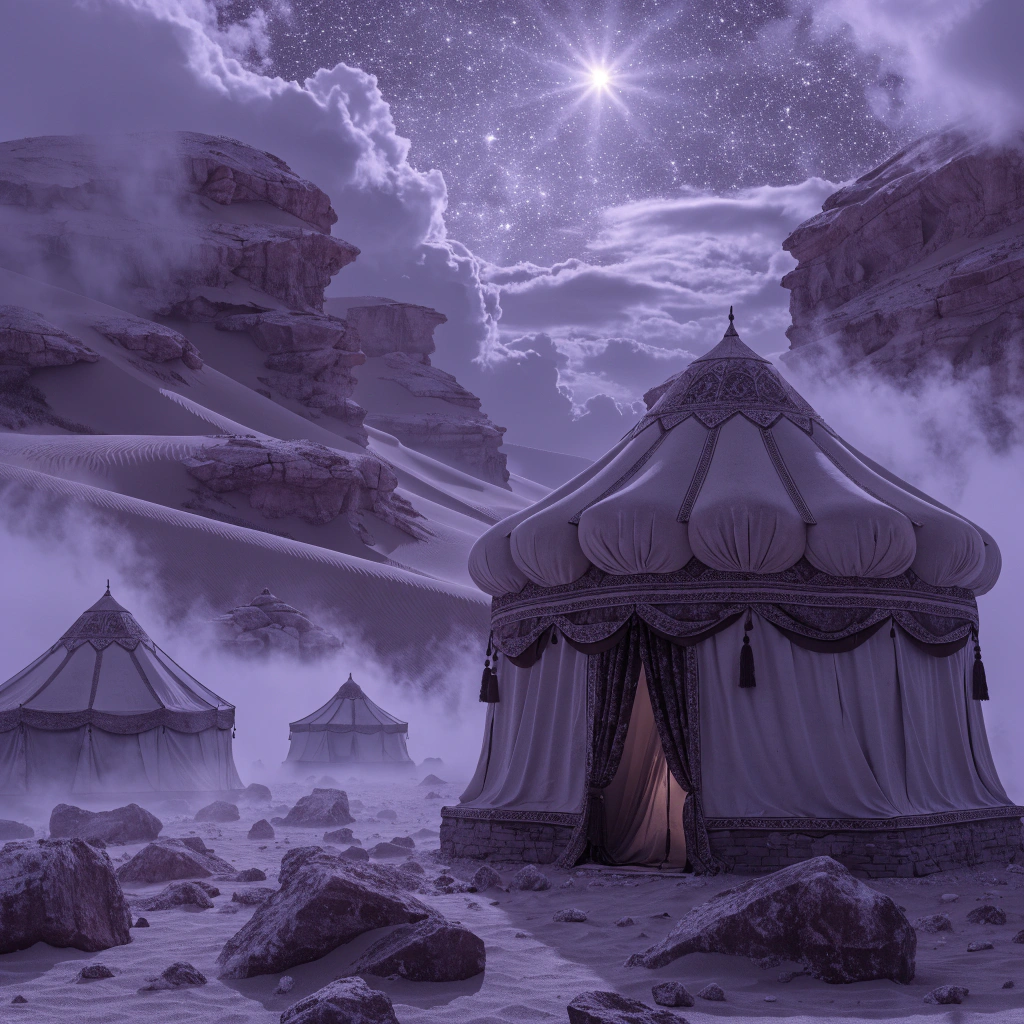
The Golden Sands of Erg Chebbi
Erg Chebbi is a beautiful place in Morocco. It is in the Sahara Desert. There are many sand dunes here. The dunes are very big and tall. Some dunes are 150 meters high. The sand is orange and gold.
The village of Merzouga is near the dunes. Many people visit this place. They ride camels and see the sun. At night, the sky is dark and the stars are bright. It is very quiet and peaceful. Morocco is a great country for a holiday.
Grammar Spotlight
Pattern: Present Simple of 'To Be'
"Erg Chebbi is a beautiful place in Morocco."
We use 'is' with singular subjects to describe things. In this sentence, it describes the location and quality of Erg Chebbi.
Pattern: There is / There are
"There are many sand dunes here."
We use 'there are' to say that multiple things exist. We use 'there is' for one thing and 'there are' for two or more things.
Test Your Understanding
10 questions · A1 Beginner · 1 free preview
Test what you learned from this article. Answer all questions to earn XP!
Where is Erg Chebbi?
Want to finish the quiz?
9 more questions are waiting for you. Sign up free to unlock the full quiz and earn XP!
Sign Up FreeAlready have an account? Sign In
Question Breakdown
Where is Erg Chebbi?
Your answer:
Correct answer: Morocco
The sand dunes are blue.
Your answer:
Correct answer: False
What is a village?
Your answer:
Correct answer: A small town
Some dunes are 150 meters _____.
Your answer:
Correct answer: high
The Golden Dunes of Erg Chebbi
Erg Chebbi is a very famous place in Morocco. It is in the Sahara Desert, near a small village called Merzouga. These sand dunes are very tall. Some dunes are 150 meters high! This area is the gateway to the deep Sahara. The sand is a beautiful golden-orange color.
The landscape changes every day because the wind moves the sand. In the morning, the dunes look yellow, but in the evening, they look dark red. It is a magical place to visit.
Many tourists go there to see the sunset. They ride camels into the desert and sleep in traditional tents. At night, the sky is clearer than in the city. You can see many stars because there are no lights. Erg Chebbi is more spectacular than other deserts because the dunes are so big and colorful.
Grammar Spotlight
Pattern: Comparatives
"At night, the sky is clearer than in the city."
We use the comparative form (adjective + -er + than) to compare two things. For short adjectives like 'clear', we add '-er' to the end.
Pattern: Conjunction: because
"The landscape changes every day because the wind moves the sand."
We use 'because' to connect a result with a reason. It explains why something happens.
Test Your Understanding
11 questions · A2 Elementary · 1 free preview
Test what you learned from this article. Answer all questions to earn XP!
Where is Erg Chebbi located?
Want to finish the quiz?
10 more questions are waiting for you. Sign up free to unlock the full quiz and earn XP!
Sign Up FreeAlready have an account? Sign In
Question Breakdown
Where is Erg Chebbi located?
Your answer:
Correct answer: In the Sahara Desert in Morocco
Some sand dunes in Erg Chebbi are 150 meters high.
Your answer:
Correct answer: True
What does 'sunset' mean?
Your answer:
Correct answer: The time in the evening when the sun goes down
The sand is a beautiful golden-orange _____.
Your answer:
Correct answer: color
Why does the landscape change every day?
Your answer:
Correct answer: Because the wind moves the sand
The Golden Dunes of Erg Chebbi
Erg Chebbi is one of the most incredible natural wonders in Morocco. Located in the southeast, near the village of Merzouga, these massive sand dunes have been shaped by the wind over thousands of years. They are famous for their unique golden-orange color, which changes constantly as the sun moves across the sky.
For many years, travelers have visited this part of the Sahara Desert to experience the silence and beauty of the landscape. Some of the dunes reach a height of 150 meters, which makes them some of the tallest in North Africa. Most visitors choose to ride camels to reach the deep desert camps where they spend the night. This journey, which usually takes about ninety minutes, allows people to watch the sunset from the top of a giant dune.
The environment is not just a simple pile of sand; it is a living landscape that has been protected by the local people for generations. The Berbers, who have lived in the desert for centuries, share their culture and traditions with those who visit. They have built traditional tents that provide a comfortable place to sleep under the bright stars. Recently, more luxury facilities have been developed to satisfy the needs of modern travelers.
Visitors are often amazed by the absolute silence they find in the deep desert. Although the area has become more popular recently, the vast space means you can still find a peaceful spot away from the crowds. Whether you are waking up early to see the sunrise or listening to traditional drum music around a campfire, Erg Chebbi offers a magical experience that is rarely forgotten by those who make the trip.
Grammar Spotlight
Pattern: Passive Voice (Present Perfect)
"These massive sand dunes have been shaped by the wind over thousands of years."
This pattern is used to focus on the object (the dunes) rather than the cause (the wind). It is formed using 'have/has' + 'been' + the past participle of the verb.
Pattern: Relative Clauses
"The Berbers, who have lived in the desert for centuries, share their culture and traditions with those who visit."
Relative clauses give extra information about a noun. We use 'who' for people and 'which' for things to connect two ideas into one complex sentence.
Test Your Understanding
11 questions · B1 Intermediate · 1 free preview
Test what you learned from this article. Answer all questions to earn XP!
How high can some of the dunes at Erg Chebbi reach?
Want to finish the quiz?
10 more questions are waiting for you. Sign up free to unlock the full quiz and earn XP!
Sign Up FreeAlready have an account? Sign In
Question Breakdown
How high can some of the dunes at Erg Chebbi reach?
Your answer:
Correct answer: 150 meters
The color of the sand dunes stays exactly the same all day long.
Your answer:
Correct answer: False
What does the word 'vast' mean?
Your answer:
Correct answer: Extremely large
The _____ to the desert camp usually takes about ninety minutes.
Your answer:
Correct answer: journey
What activity is mentioned for visitors to do at night?
Your answer:
Correct answer: Listen to drum music
The Majesty of Erg Chebbi: A Journey into the Heart of the Moroccan Sahara
Situated in southeastern Morocco near the village of Merzouga, Erg Chebbi represents one of the most iconic landscapes in the Sahara Desert. While many travelers assume the desert is a monotonous expanse of sand, Erg Chebbi proves otherwise with its towering dunes that reach heights of up to 150 meters. These colossal formations, known as 'ergs,' are essentially large seas of wind-blown sand that are constantly shifting, creating a dynamic environment that mesmerizes those who venture there.
The aesthetic appeal of Erg Chebbi is largely attributed to its unique color palette. Depending on the time of day, the sand undergoes a dramatic transformation, transitioning from a pale gold in the morning to a deep, fiery orange as the sun sets. This phenomenon is caused by the mineral composition of the sand and the angle of the sunlight. Consequently, photographers and nature enthusiasts flock to the region to capture the dunes' ethereal beauty, which has remained relatively untouched despite the increasing popularity of the area.
Beyond its geological significance, Erg Chebbi serves as a gateway to understanding the cultural heritage of the Sahrawi and Berber people. Historically, these nomadic tribes navigated the vast desert, relying on their profound knowledge of the stars and terrain to survive. Today, while many have transitioned to a more settled lifestyle in Merzouga, their traditions continue to influence the local tourism industry. Visitors are often invited to spend a night in traditional desert camps, where they can experience the silence of the Sahara—a silence so profound that it is said to be almost audible.
However, the surge in tourism presents both opportunities and challenges. On one hand, it has provided a significant economic boost to the local community, creating jobs and improving infrastructure. On the other hand, the environmental impact of increased human activity cannot be ignored. Sustainable tourism practices are being implemented to ensure that the delicate ecosystem of the dunes is preserved for future generations. If the balance between development and conservation is maintained, Erg Chebbi will continue to be a symbol of Morocco’s natural grandeur for centuries to come.
Grammar Spotlight
Pattern: Passive Voice (Present Continuous)
"Sustainable tourism practices are being implemented to ensure that the delicate ecosystem of the dunes is preserved for future generations."
This structure (am/is/are + being + past participle) is used to focus on the action happening now rather than the person performing it. It emphasizes the ongoing effort in the region.
Pattern: Relative Clauses with 'which'
"Consequently, photographers and nature enthusiasts flock to the region to capture the dunes' ethereal beauty, which has remained relatively untouched despite the increasing popularity of the area."
A non-defining relative clause is used here to provide extra information about the 'ethereal beauty'. It is separated by a comma and uses 'which'.
Pattern: First Conditional
"If the balance between development and conservation is maintained, Erg Chebbi will continue to be a symbol of Morocco’s natural grandeur for centuries to come."
The first conditional (If + present simple, will + infinitive) is used to describe a probable future result based on a specific condition.
Test Your Understanding
11 questions · B2 Upper Intermediate · 1 free preview
Test what you learned from this article. Answer all questions to earn XP!
What is the primary reason for the changing colors of the sand dunes?
Want to finish the quiz?
10 more questions are waiting for you. Sign up free to unlock the full quiz and earn XP!
Sign Up FreeAlready have an account? Sign In
Question Breakdown
What is the primary reason for the changing colors of the sand dunes?
Your answer:
Correct answer: The mineral composition and the angle of sunlight
The dunes of Erg Chebbi are static and do not change their position.
Your answer:
Correct answer: False
What does 'nomadic' mean in the context of the article?
Your answer:
Correct answer: Moving frequently from place to place
The dunes of Erg Chebbi can reach _____ of up to 150 meters.
Your answer:
Correct answer: heights
Which village is mentioned as the gateway to Erg Chebbi?
Your answer:
Correct answer: Merzouga
The Ephemeral Grandeur of Erg Chebbi: A Study in Saharan Flux
Never before has the fragility of the desert ecosystem been so apparent as it is in the undulating peaks of Erg Chebbi. Located in the southeastern reaches of Morocco, near the frontier village of Merzouga, this vast sea of sand represents the quintessential Saharan landscape. Rising up to 150 meters, these towering dunes are not merely static piles of silica; rather, they are a living entity, constantly reshaped by the caprice of the wind. What defines Erg Chebbi is the ethereal quality of its light, which shifts from a pale ochre at dawn to a deep, fiery orange as the sun retreats behind the horizon.
It is the relentless interplay between wind and gravity that sculpts these massive formations, ensuring that no two visits to the erg are ever identical. However, the aesthetic appeal of the region belies a more complex reality regarding its ecological and social preservation. The burgeoning tourism industry, while providing a necessary economic lifeline to the local Berber communities, has introduced a precarious tension between development and conservation. The rapid expansion of the hospitality sector—manifested in the proliferation of luxury desert camps—threatens the very isolation that travelers seek. Arduous as the journey across the dunes may be, the reward is a profound silence, a rare commodity in our hyper-connected world.
The juxtaposition of the harsh, arid environment with the vibrant cultural heritage of the 'Blue Men' of the Sahara offers a nuanced perspective on human resilience. Historically, these nomadic tribes navigated by the stars, their survival dependent on an intimate knowledge of the desert’s hidden wells. Today, the vestiges of this nomadic lifestyle are increasingly curated for the tourist gaze, raising questions about the authenticity of the cultural exchange. Is the commodification of Saharan life an inevitable consequence of globalization, or can a sustainable equilibrium be found?
Furthermore, the encroaching desertification exacerbated by climate change poses an existential threat to the surrounding oases. The nominalisation of environmental discourse often obscures the immediate reality for those living on the edge of the erg: the loss of arable land and the depletion of ancient aquifers. Despite these challenges, the allure of Erg Chebbi remains undiminished. It stands as a sublime reminder of nature’s indifference to human endeavor, a place where the scale of the landscape humbles the ego and invites deep introspection. To witness the sunrise from the crest of a dune is to experience a moment of absolute clarity, where the complexities of modern life dissolve into the simplicity of sand and sky.
Grammar Spotlight
Pattern: Negative Inversion
"Never before has the fragility of the desert ecosystem been so apparent as it is in the undulating peaks of Erg Chebbi."
Inversion is used after negative or restrictive adverbs to create emphasis. The auxiliary verb 'has' moves before the subject 'the fragility'.
Pattern: Cleft Sentence
"It is the relentless interplay between wind and gravity that sculpts these massive formations."
Cleft sentences use 'It is/was... that' to focus on a specific part of the sentence (the interplay), making the information more prominent.
Pattern: Nominalisation
"The rapid expansion of the hospitality sector—manifested in the proliferation of luxury desert camps—threatens the very isolation that travelers seek."
Nouns like 'expansion' and 'proliferation' are used instead of verbs ('expand', 'proliferate') to create a more formal, academic tone typical of C1 writing.
Test Your Understanding
12 questions · C1 Advanced · 1 free preview
Test what you learned from this article. Answer all questions to earn XP!
According to the article, what is the primary cause of the dunes' changing shapes?
Want to finish the quiz?
11 more questions are waiting for you. Sign up free to unlock the full quiz and earn XP!
Sign Up FreeAlready have an account? Sign In
Question Breakdown
According to the article, what is the primary cause of the dunes' changing shapes?
Your answer:
Correct answer: The interaction between wind and gravity
The author suggests that the growth of tourism in Merzouga is entirely beneficial for the region.
Your answer:
Correct answer: False
Which word is a synonym for 'ephemeral' as used in the text?
Your answer:
Correct answer: Fleeting
The author notes that the journey across the dunes is _____, yet the resulting silence is highly rewarding.
Your answer:
Correct answer: arduous
What concern does the author raise about the Berber nomadic lifestyle?
Your answer:
Correct answer: It is being simplified and packaged for tourists.
The text claims that climate change is causing the desert to expand toward oases.
Your answer:
Correct answer: True
The Ephemeral Architecture of Erg Chebbi: A Geomorphological and Existential Inquiry
To traverse the southeastern reaches of Morocco is to confront the sublime manifestation of the Sahara, specifically the undulating expanse of Erg Chebbi. Spanning an area of approximately 22 kilometers, this aeolian masterpiece serves as a profound testament to the kinetic potential of wind and time. Rising to heights of 150 meters, these towering dunes are not merely geological formations; they are dynamic, shifting structures that defy the permanence typically associated with terrestrial landscapes. Lest one should perceive the Sahara as a static monolith, the erg serves as a poignant reminder of constant flux. The dunes, characterized by their striking golden-orange hue, undergo a chromatic metamorphosis as the sun charts its diurnal course across the firmament.
From a geomorphological perspective, Erg Chebbi is a palimpsest of environmental history. The sedimentation of these sands is the result of millennia of wind-blown deposits, where the interstices between grains hold the silent narrative of ancient climates. It might be argued that the erg represents a liminal space, existing between the known world of the Merzouga settlement and the unfathomable depths of the desert interior. Seldom does the observer encounter a landscape so fundamentally indifferent to human temporalities. The sheer scale of the dunes evokes a sense of the ineffable, challenging the observer to reconcile their own evanescence with the vast, rhythmic cycles of the desert.
Were the dunes to remain stationary, they would forfeit their status as living entities. Instead, they are in a state of perpetual reconfiguration, their ridges sharpened by the 'chergui' wind and softened by the stillness of twilight. This lack of fixity invites a phenomenological investigation into how we perceive space. The anthropogenic impact on the peripheries of the erg, while increasing due to tourism, remains a secondary concern to the overwhelming sovereignty of the desert itself. The juxtaposition of the rugged hamada—the stony desert—and the soft, yielding curves of the erg creates a visual dialectic that is as much intellectual as it is aesthetic. In exploring Erg Chebbi, one does not merely observe a landscape; one participates in a scholarly meditation on the nature of change, the limits of language, and the enduring power of the natural world to inspire awe.
Grammar Spotlight
Pattern: Subjunctive with 'Lest'
"Lest one should perceive the Sahara as a static monolith, the erg serves as a poignant reminder of constant flux."
The word 'lest' is used to express fear of something happening or to prevent a possibility. It is followed by a clause in the subjunctive mood, often using 'should' or the base form of the verb.
Pattern: Negative Inversion
"Seldom does the observer encounter a landscape so fundamentally indifferent to human temporalities."
When a sentence starts with a negative or restrictive adverb like 'seldom', the auxiliary verb is placed before the subject. This structure is used for emphasis and is typical of formal, academic writing.
Pattern: Inverted Conditional (Second Conditional)
"Were the dunes to remain stationary, they would forfeit their status as living entities."
This is a formal alternative to 'If the dunes were to remain...'. By inverting 'were' and the subject, the sentence becomes more literary and hypothetical, common in scholarly prose.
Test Your Understanding
12 questions · C2 Mastery · 1 free preview
Test what you learned from this article. Answer all questions to earn XP!
What is the primary geomorphological characteristic of Erg Chebbi according to the text?
Want to finish the quiz?
11 more questions are waiting for you. Sign up free to unlock the full quiz and earn XP!
Sign Up FreeAlready have an account? Sign In
Question Breakdown
What is the primary geomorphological characteristic of Erg Chebbi according to the text?
Your answer:
Correct answer: It is a dynamic, wind-shaped landscape in constant flux.
The article suggests that the desert's physical changes are entirely predictable and fixed.
Your answer:
Correct answer: False
Which word describes something that is too extreme to be expressed in words?
Your answer:
Correct answer: Ineffable
The dunes are described as a _____ of environmental history, containing traces of ancient climates.
Your answer:
Correct answer: palimpsest
What does the author imply by the phrase 'indifferent to human temporalities'?
Your answer:
Correct answer: The desert exists on a time scale far beyond human history.
The 'chergui' wind is responsible for sharpening the ridges of the dunes.
Your answer:
Correct answer: True
