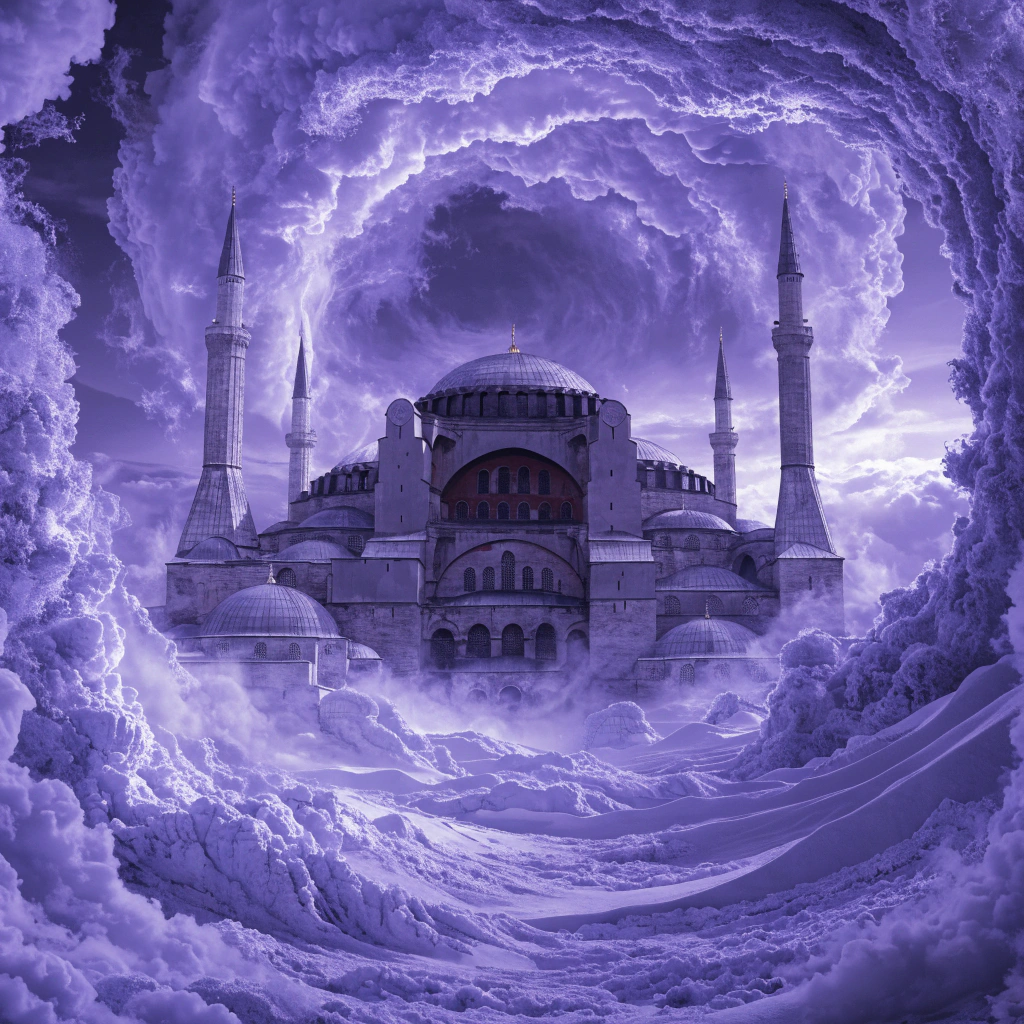
The Beautiful Hagia Sophia
Hagia Sophia is a very old building in Istanbul, Turkey. It is famous and beautiful. Many people visit it every year. In the past, it was a church. Later, it was a mosque. Today, it is a mosque again. It has a very big dome. The dome is high and round. There are four tall towers around the building. They are called minarets. Inside, there are beautiful colors and gold. It is a very special place. You can see history there. It is a great place for photos.
Grammar Spotlight
Pattern: Present Simple (to be)
"Hagia Sophia is a very old building in Istanbul, Turkey."
We use 'is' with singular subjects to state facts. It describes what something is or where it is.
Pattern: There are (Plural)
"There are four tall towers around the building."
We use 'there are' to say that more than one thing exists. We add an 's' to the noun (towers).
Test Your Understanding
10 questions · A1 Beginner · 1 free preview
Test what you learned from this article. Answer all questions to earn XP!
Where is Hagia Sophia?
Want to finish the quiz?
9 more questions are waiting for you. Sign up free to unlock the full quiz and earn XP!
Sign Up FreeAlready have an account? Sign In
Question Breakdown
Where is Hagia Sophia?
Your answer:
Correct answer: Istanbul
Hagia Sophia is a new building.
Your answer:
Correct answer: False
What does 'big' mean?
Your answer:
Correct answer: Large in size
It has a very big _____.
Your answer:
Correct answer: dome
The Beautiful Hagia Sophia
Hagia Sophia is a very famous building in Istanbul, Turkey. It is very old and has a long history. Emperor Justinian I built it a long time ago. Workers finished the construction in the year 537 AD. For almost a thousand years, it was the largest church in the whole world.
People love the Hagia Sophia because it is beautiful. It has a very big dome on top. At first, people thought a dome this big was impossible to build. However, the architects were very clever. They used special shapes to hold the heavy roof. Inside, there are many gold decorations and old pictures.
Today, Hagia Sophia is a very popular place for tourists. It is more famous than many other buildings in the city. Visitors come from many countries to see the history. It is a symbol of Istanbul and a bridge between the past and the present.
Grammar Spotlight
Pattern: Past Simple
"Emperor Justinian I built it a long time ago."
We use the Past Simple to talk about finished actions in the past. For irregular verbs like 'build', the past form is 'built'.
Pattern: Comparatives
"It is more famous than many other buildings in the city."
We use 'more' + adjective + 'than' to compare two things when the adjective is long (two or more syllables).
Test Your Understanding
11 questions · A2 Elementary · 1 free preview
Test what you learned from this article. Answer all questions to earn XP!
When did workers finish building the Hagia Sophia?
Want to finish the quiz?
10 more questions are waiting for you. Sign up free to unlock the full quiz and earn XP!
Sign Up FreeAlready have an account? Sign In
Question Breakdown
When did workers finish building the Hagia Sophia?
Your answer:
Correct answer: 537 AD
Hagia Sophia was once the largest church in the world.
Your answer:
Correct answer: True
What does 'clever' mean?
Your answer:
Correct answer: Very smart
Hagia Sophia is a famous building in ____.
Your answer:
Correct answer: Istanbul
What is the most famous feature on top of the building?
Your answer:
Correct answer: A dome
Hagia Sophia: A Journey Through Time
Hagia Sophia is a famous building in Istanbul, Turkey, which has a very long and interesting history. It was built by the Byzantine Emperor Justinian I and was finished in 537 AD. For almost a thousand years, it was the largest cathedral in the world. People from all over the world have visited this site because of its amazing design and significant history.
The most famous part of the building is its huge dome. Many people thought it was impossible to build such a large roof at that time. However, the architects used special triangular shapes to support the weight. The inside of the building is decorated with beautiful gold mosaics and large circles of Islamic calligraphy. These decorations show the different religions that have used this space over the centuries.
Throughout history, the building has changed its purpose many times. It has been used as a Christian church, a mosque, and even a museum. In 2020, it was opened again as a mosque for religious services. Because it is so important to world history, it has been protected by UNESCO as a World Heritage site. Experts have worked hard to keep the building safe for future generations.
Today, tourists still travel to Istanbul to see this masterpiece. When you stand under the dome, you can feel the history of two great empires. It is a place where different cultures meet, and it remains one of the most visited landmarks in Turkey. If you visit Istanbul, you should not miss the chance to see this incredible structure.
Grammar Spotlight
Pattern: Passive Voice
"It was built by the Byzantine Emperor Justinian I and was finished in 537 AD."
The passive voice is used here because the action (building) is more important than the person who did it. It is formed using 'was/were' + the past participle of the verb.
Pattern: Relative Clauses
"Hagia Sophia is a famous building in Istanbul, Turkey, which has a very long and interesting history."
A relative clause starts with 'which' to give more information about the noun before it (the building). This helps connect two ideas into one sentence.
Test Your Understanding
11 questions · B1 Intermediate · 1 free preview
Test what you learned from this article. Answer all questions to earn XP!
Who ordered the construction of the Hagia Sophia?
Want to finish the quiz?
10 more questions are waiting for you. Sign up free to unlock the full quiz and earn XP!
Sign Up FreeAlready have an account? Sign In
Question Breakdown
Who ordered the construction of the Hagia Sophia?
Your answer:
Correct answer: Emperor Justinian I
Hagia Sophia was the largest cathedral in the world for nearly 1,000 years.
Your answer:
Correct answer: True
What does the word 'landmark' mean?
Your answer:
Correct answer: A recognizable building or place
The most famous part of the building is its huge _____.
Your answer:
Correct answer: dome
What kind of decorations are mentioned inside the building?
Your answer:
Correct answer: Gold mosaics and calligraphy
Hagia Sophia: A Living Chronicle of Architectural and Cultural Evolution
Standing as a testament to Byzantine ingenuity, the Hagia Sophia remains one of the most iconic structures in human history. Commissioned by Emperor Justinian I in the sixth century, it was intended to surpass all previous architectural feats. For nearly a millennium, it held the title of the world’s largest cathedral, serving as the spiritual heart of Eastern Christendom. Its most revolutionary feature, the massive central dome, appeared to float miraculously above the nave, a feat achieved through the innovative use of pendentives. These triangular segments allowed the weight of the circular dome to be distributed onto a square base, a technique that was considered an engineering marvel at the time.
However, the building’s significance extends far beyond its physical dimensions. Throughout the centuries, it has undergone numerous transformations, reflecting the shifting political and religious landscape of the region. Following the Ottoman conquest of Constantinople in 1453, Sultan Mehmed II ordered its conversion into a mosque, which led to the addition of minarets and the covering of Christian mosaics. This synthesis of styles created a unique aesthetic that influenced subsequent Ottoman architecture across the empire. The blending of Islamic calligraphy with Christian iconography remains one of its most striking characteristics.
In the 20th century, under the leadership of Mustafa Kemal Atatürk, the Hagia Sophia was designated as a museum, symbolizing a move towards secularism. This era allowed for the restoration of many original mosaics, providing scholars with invaluable insights into Byzantine art. Nevertheless, the recent decision to revert the site into a functioning mosque has sparked global debate regarding the preservation of its diverse heritage. Despite these controversies, the structure continues to draw millions of visitors, all of whom are captivated by its enduring grandeur.
Ultimately, the Hagia Sophia is not merely a monument; it is a living chronicle of civilizational change. Its ability to adapt while maintaining its structural integrity serves as a powerful metaphor for the resilience of cultural identity. As it continues to evolve, the challenge remains to balance its religious function with its status as a UNESCO World Heritage site, ensuring that its legacy is preserved for future generations.
Grammar Spotlight
Pattern: Present Perfect for Life Experiences/Ongoing Change
"Throughout the centuries, it has undergone numerous transformations."
The present perfect (has + past participle) is used here to describe changes that started in the past and continue to have relevance or effect in the present.
Pattern: Passive Voice (Past Simple)
"the Hagia Sophia was designated as a museum"
The passive voice is used to focus on the object (the building) rather than the subject who performed the action, which is common in formal and historical writing.
Pattern: Relative Clauses with 'Whom'
"all of whom are captivated by its enduring grandeur."
The relative pronoun 'whom' is used after a preposition or quantifier (like 'all of') to refer to people in a formal register.
Test Your Understanding
11 questions · B2 Upper Intermediate · 1 free preview
Test what you learned from this article. Answer all questions to earn XP!
What was the primary architectural innovation that allowed for the massive dome?
Want to finish the quiz?
10 more questions are waiting for you. Sign up free to unlock the full quiz and earn XP!
Sign Up FreeAlready have an account? Sign In
Question Breakdown
What was the primary architectural innovation that allowed for the massive dome?
Your answer:
Correct answer: The implementation of pendentives
Hagia Sophia served as a museum before it was ever used as a mosque.
Your answer:
Correct answer: False
What does 'synthesis' mean in the context of the article?
Your answer:
Correct answer: A combination of different artistic or cultural elements
The building was _____ by Emperor Justinian I in the sixth century.
Your answer:
Correct answer: commissioned
What does the author suggest the building serves as a metaphor for?
Your answer:
Correct answer: The resilience of cultural identity
The Hagia Sophia: A Palimpsest of Imperial Grandeur and Spiritual Metamorphosis
Towering over the Bosphorus, the Hagia Sophia stands as a definitive paragon of Byzantine architectural prowess and a silent witness to the tumultuous tides of history. Commissioned by Emperor Justinian I in the 6th century, its construction was an undertaking of unprecedented scale, intended to assert the divine authority of the Eastern Roman Empire. What Justinian sought was more than a mere place of worship; he desired a structural marvel that would eclipse all predecessors in both scale and spiritual resonance. Not only did the project demand immense financial resources, but it also required a radical departure from the architectural conventions of the era.
The primary challenge facing the architects, Isidore of Miletus and Anthemius of Tralles, was the suspension of a colossal dome over a rectangular space. To achieve this, they employed pendentives—curved triangular segments that transition the weight of the dome to four massive pillars. The implementation of pendentives allowed for an ethereal aesthetic, creating the illusion that the dome is suspended from heaven by a golden chain rather than supported by terrestrial masonry. Such was the ingenuity of this design that it remained the largest cathedral in the world for nearly a millennium. The procurement of rare marbles and porphyry from the furthest reaches of the empire—Egypt, Greece, and North Africa—further emphasized the global reach and economic dominance of Justinian’s reign.
However, the Hagia Sophia is not merely a feat of engineering; it is a cultural palimpsest. Following the Ottoman conquest of Constantinople in 1453, Sultan Mehmed II ordered its conversion into a mosque. This transition introduced a fascinating juxtaposition of disparate religious symbols. Seldom has a single edifice encapsulated such profound religious metamorphosis, as Islamic minarets were erected and intricate mosaics were plastered over, only to be partially uncovered centuries later. The resulting aesthetic is one of unique syncretism, where monumental Arabic calligraphy exists in precarious harmony with remnants of Christian iconography. The interior is a symphony of light and color, achieved through the strategic placement of forty windows at the base of the dome, which serves to dematerialize the heavy structure and reinforce a sense of the sublime.
In the 20th century, under the secular reforms of Mustafa Kemal Atatürk, the building was designated a museum, symbolizing a bridge between East and West, and between a religious past and a secular future. Yet, the narrative of the Hagia Sophia continues to evolve, as evidenced by its recent reversion to a functioning mosque in 2020. This decision sparked global debate, highlighting the building’s role as a potent symbol of national identity and religious heritage. Ultimately, the Hagia Sophia remains a sublime testament to human audacity. Whether viewed through the lens of architectural innovation or political history, its enduring grandeur continues to captivate the global imagination. It serves as a reminder that buildings are not static entities but living chronicles of the civilizations that cherish them.
Grammar Spotlight
Pattern: Negative Inversion
"Seldom has a single edifice encapsulated such profound religious metamorphosis..."
When a sentence starts with a negative or restrictive adverbial like 'seldom', the auxiliary verb comes before the subject. This is used in formal writing to add emphasis and variety.
Pattern: Cleft Sentences
"What Justinian sought was more than a mere place of worship..."
A pseudo-cleft sentence uses a 'what-clause' as the subject to focus on specific information. It highlights that the object of his desire was the primary motivation for the project.
Pattern: Nominalization
"The implementation of pendentives allowed for an ethereal aesthetic..."
Nominalization involves turning verbs (implement) into nouns (implementation). This creates a more objective, academic tone by focusing on the action as a concept rather than the person performing it.
Test Your Understanding
12 questions · C1 Advanced · 1 free preview
Test what you learned from this article. Answer all questions to earn XP!
What was the primary architectural innovation that allowed the dome to be supported?
Want to finish the quiz?
11 more questions are waiting for you. Sign up free to unlock the full quiz and earn XP!
Sign Up FreeAlready have an account? Sign In
Question Breakdown
What was the primary architectural innovation that allowed the dome to be supported?
Your answer:
Correct answer: Pendentives
The Hagia Sophia was converted into a museum during the Ottoman Empire.
Your answer:
Correct answer: False
Which word describes something that has layers of history where traces of the past are still visible?
Your answer:
Correct answer: Palimpsest
The building's interior creates a sense of the _____ through its use of light and scale.
Your answer:
Correct answer: sublime
Who were the architects responsible for the Hagia Sophia's design?
Your answer:
Correct answer: Isidore of Miletus and Anthemius of Tralles
The building was the largest cathedral in the world for approximately 1,000 years.
Your answer:
Correct answer: True
The Hagia Sophia: A Palimpsest of Imperial Ambition and Architectural Audacity
Rarely has a single edifice encapsulated the turbulent evolution of Western and Eastern civilizations as poignantly as the Hagia Sophia. Standing as the crowning achievement of the Byzantine Empire, it remains an enduring testament to the intersection of divine aspiration and human ingenuity. It is a historical palimpsest, where layers of Christian orthodoxy and Islamic devotion are inextricably woven into the very mortar of its walls, defying any simplistic categorization of its identity. Commissioned by Emperor Justinian I in the sixth century, the structure was intended to be a physical manifestation of imperial hubris and spiritual favor, a monument that would transcend the limitations of contemporary engineering.
Had the architects, Isidore of Miletus and Anthemius of Tralles, not possessed an almost preternatural understanding of geometry, the massive dome—long considered an architectural impossibility—would have surely collapsed under its own weight. To solve the riddle of placing a circular dome atop a rectangular base, they utilized the pendentive, a triangular segment of a sphere that allows for the weight to be distributed to four massive piers. This innovation was not merely a structural necessity; it served an aesthetic and theological purpose. It is essential that the viewer perceive the dome not as a static roof, but as an ethereal canopy that seems suspended from heaven by a golden chain. The luminescence filtered through the forty windows at the dome's base creates a sense of weightlessness, suggesting that the divine presence might indeed reside within these hallowed precincts.
Throughout the centuries, the Hagia Sophia has weathered the vicissitudes of iconoclasm, seismic upheaval, and radical political shifts. When Constantinople fell to the Ottomans in 1453, Mehmed the Conqueror did not seek to dismantle this marvel but rather to repurpose it, adding minarets and covering mosaics to align it with Islamic practice. This transition marked a period of religious syncretism, where the building’s Christian past was preserved beneath layers of plaster and calligraphy, waiting to be rediscovered. One might argue that the building is less a site of conflict and more a canvas for the shared heritage of humanity.
In the modern era, the status of the Hagia Sophia has remained a subject of intense geopolitical debate. Its conversion into a museum in 1934 by Mustafa Kemal Atatürk symbolized a shift toward secularism and universalism, positioning the site as a shared cultural treasure. However, its recent reversion to a mosque has reignited discussions regarding the preservation of its pluralistic history. Lest we forget the ephemeral nature of empires, the Hagia Sophia stands as a reminder that while political regimes are transient, the pursuit of the sublime is eternal. It is imperative that the structure be viewed not merely as a relic of a bygone era, but as a living organism that continues to breathe the history of two worlds. The sacrosanct nature of the space, whether viewed through the lens of theology or art history, demands a nuanced appreciation for its complexity. To study the Hagia Sophia is to study the very paradigm of cultural evolution, where every stone tells a story of triumph, tragedy, and the relentless quest for the infinite.
Grammar Spotlight
Pattern: Negative Inversion
"Rarely has a single edifice encapsulated the turbulent evolution of Western and Eastern civilizations as poignantly as the Hagia Sophia."
When a sentence starts with a restrictive adverb like 'rarely', the auxiliary verb is placed before the subject. This is used in formal writing to emphasize the rarity or intensity of the statement.
Pattern: Third Conditional (Inverted)
"Had the architects, Isidore of Miletus and Anthemius of Tralles, not possessed an almost preternatural understanding of geometry, the massive dome... would have surely collapsed."
This structure replaces 'If the architects had not possessed...' by omitting 'if' and placing 'had' at the beginning. It expresses a hypothetical situation in the past and its imaginary result.
Pattern: Subjunctive Mood
"It is essential that the viewer perceive the dome not as a static roof, but as an ethereal canopy."
The subjunctive 'perceive' (rather than 'perceives') is used after adjectives expressing necessity or importance, such as 'essential', 'imperative', or 'crucial'.
Test Your Understanding
12 questions · C2 Mastery · 1 free preview
Test what you learned from this article. Answer all questions to earn XP!
According to the article, what was the primary architectural challenge in building the Hagia Sophia?
Want to finish the quiz?
11 more questions are waiting for you. Sign up free to unlock the full quiz and earn XP!
Sign Up FreeAlready have an account? Sign In
Question Breakdown
According to the article, what was the primary architectural challenge in building the Hagia Sophia?
Your answer:
Correct answer: Supporting a circular dome on a rectangular base
The architects Isidore of Miletus and Anthemius of Tralles were primarily known as poets.
Your answer:
Correct answer: False
What does the term 'palimpsest' imply about the Hagia Sophia?
Your answer:
Correct answer: It contains multiple historical layers visible within one entity.
The transition of the building from a church to a mosque is described as a period of religious _____.
Your answer:
Correct answer: syncretism
What effect does the luminescence from the forty windows at the base of the dome create?
Your answer:
Correct answer: A feeling of weightlessness and divine presence
The conversion of the building into a museum in 1934 was intended to symbolize a move toward secularism.
Your answer:
Correct answer: True
