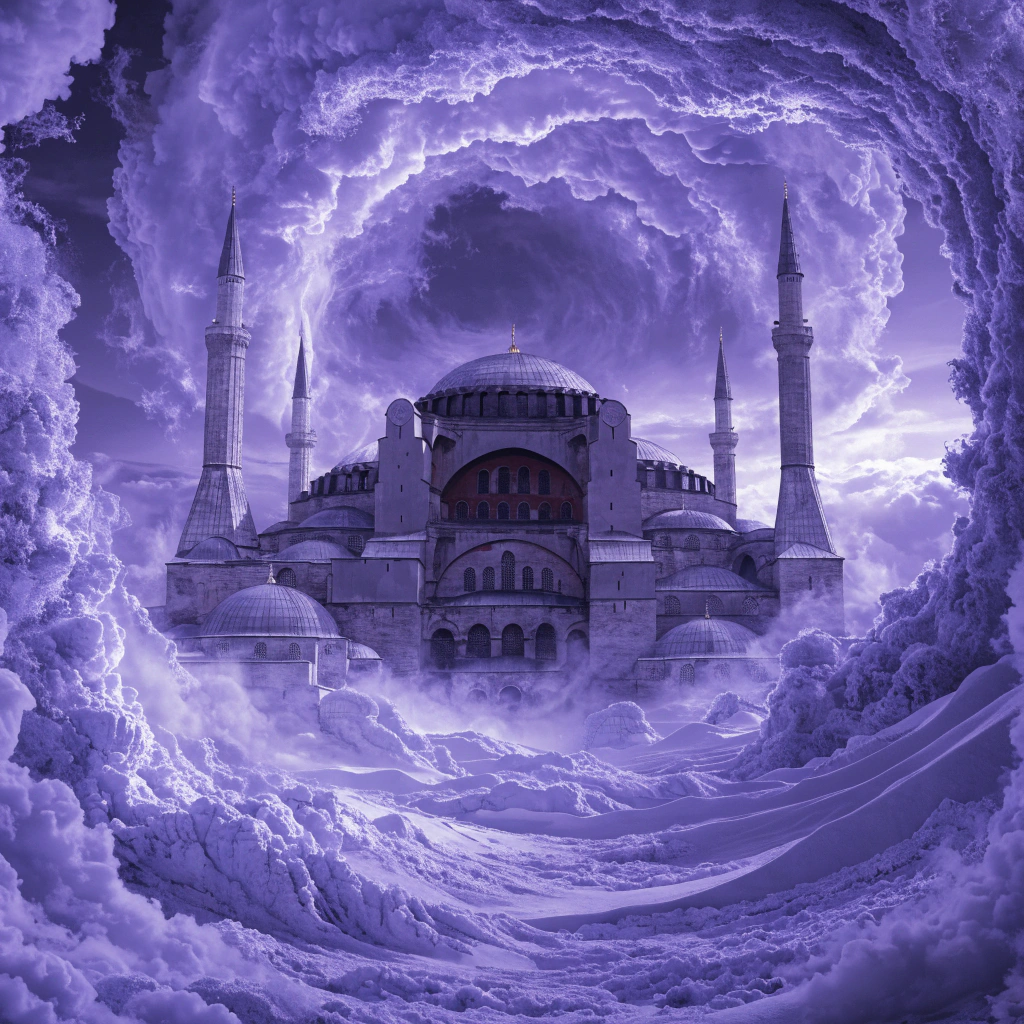
トルコの アヤソフィア
アヤソフィアは トルコに あります。 これは とても ふるい 建物です。 昔、アヤソフィアは 大きい 教会でした。それから、モスクになりました。 今は 博物館です。たくさんの 人が ここへ 来ます。 アヤソフィアは とても 大きい ドームが あります。この ドームは 素晴らしいです。 世界で とても ゆうめいな 場所です。トルコの 歴史を 見る ことができます。 とても きれいな 建物です。ぜひ 行って みてください。
文法スポットライト
パターン: 名詞 です / 名詞 ではありません
"これは とても ふるい 建物です。"
「です」は、何かが何であるかを言うときに使います。肯定文(はい)のときに使います。「ではありません」は、何かが何ではないかを言うときに使います。否定文(いいえ)のときに使います。
パターン: 名詞 が あります / います
"アヤソフィアは とても 大きい ドームが あります。"
「が あります」は、物があることを表します。例えば、本や机などです。「が います」は、人や動物がいることを表します。例えば、先生や犬などです。
理解度をチェック
10 問 · A1 初級 · 無料プレビュー 1回
この記事で学んだことをテストしよう。全問正解してXPを獲得!
アヤソフィアは どこに ありますか。
問題の内訳
アヤソフィアは どこに ありますか。
あなたの回答:
正解: トルコ
アヤソフィアは 新しい 建物です。
あなたの回答:
正解: 間違い
「博物館」の 意味は どれですか。
あなたの回答:
正解: 古いものや大切なものを展示している場所
アヤソフィアは 今、______ です。
あなたの回答:
正解: 博物館
トルコのアヤソフィア:古い歴史を持つ美しい建物
トルコに「アヤソフィア」というとても有名な建物があります。この建物はイスタンブールという町にあります。
アヤソフィアはとても古い歴史を持っています。537年に、大きな教会として建てられました。それは約1000年間、世界で一番大きな教会でした。そのドームはとても大きくて、当時の建築技術では作るのが難しいと言われていました。
その後、アヤソフィアはモスクになりました。そして、今は特別な博物館として、世界中の人々に愛されています。多くの観光客がその美しいドームや壁を見に来ます。
この建物は、トルコの長い歴史と文化を私たちに教えてくれます。アヤソフィアは、過去と今をつなぐ、本当に素晴らしい場所です。
文法スポットライト
パターン: 〜として
"大きな教会として建てられました。"
この「〜として」は、物の役割や性質を示すときに使います。「AとしてB」は、「AがBの役割をする」という意味になります。例えば、「先生として働きます」は「先生の役割で働きます」という意味です。
パターン: 〜と言われていました
"作るのが難しいと言われていました。"
この表現は、他の人が言ったことや、一般的に知られていることを伝えるときに使います。過去の情報を話すときに便利です。例えば、「彼は優しい人だと言われていました」は「人々は彼が優しい人だと言っていました」という意味です。
理解度をチェック
11 問 · A2 初級 · 無料プレビュー 1回
この記事で学んだことをテストしよう。全問正解してXPを獲得!
アヤソフィアはどこの国にありますか?
問題の内訳
アヤソフィアはどこの国にありますか?
あなたの回答:
正解: トルコ
アヤソフィアは最初から博物館でした。
あなたの回答:
正解: 間違い
「教会」とは何ですか?
あなたの回答:
正解: キリスト教の人がお祈りをする場所
アヤソフィアは537年に大きな______として建てられました。
あなたの回答:
正解: 教会
アヤソフィアの何が「とても大きい」と言われていましたか?
あなたの回答:
正解: ドーム
Hagia Sophia: A Journey Through Time
Hagia Sophia is a famous building in Istanbul, Turkey, which has a very long and interesting history. It was built by the Byzantine Emperor Justinian I and was finished in 537 AD. For almost a thousand years, it was the largest cathedral in the world. People from all over the world have visited this site because of its amazing design and significant history.
The most famous part of the building is its huge dome. Many people thought it was impossible to build such a large roof at that time. However, the architects used special triangular shapes to support the weight. The inside of the building is decorated with beautiful gold mosaics and large circles of Islamic calligraphy. These decorations show the different religions that have used this space over the centuries.
Throughout history, the building has changed its purpose many times. It has been used as a Christian church, a mosque, and even a museum. In 2020, it was opened again as a mosque for religious services. Because it is so important to world history, it has been protected by UNESCO as a World Heritage site. Experts have worked hard to keep the building safe for future generations.
Today, tourists still travel to Istanbul to see this masterpiece. When you stand under the dome, you can feel the history of two great empires. It is a place where different cultures meet, and it remains one of the most visited landmarks in Turkey. If you visit Istanbul, you should not miss the chance to see this incredible structure.
文法スポットライト
パターン: Passive Voice
"It was built by the Byzantine Emperor Justinian I and was finished in 537 AD."
The passive voice is used here because the action (building) is more important than the person who did it. It is formed using 'was/were' + the past participle of the verb.
パターン: Relative Clauses
"Hagia Sophia is a famous building in Istanbul, Turkey, which has a very long and interesting history."
A relative clause starts with 'which' to give more information about the noun before it (the building). This helps connect two ideas into one sentence.
理解度をチェック
11 問 · B1 中級 · 無料プレビュー 1回
この記事で学んだことをテストしよう。全問正解してXPを獲得!
Who ordered the construction of the Hagia Sophia?
問題の内訳
Who ordered the construction of the Hagia Sophia?
あなたの回答:
正解: Emperor Justinian I
Hagia Sophia was the largest cathedral in the world for nearly 1,000 years.
あなたの回答:
正解: 正しい
What does the word 'landmark' mean?
あなたの回答:
正解: A recognizable building or place
The most famous part of the building is its huge _____.
あなたの回答:
正解: dome
What kind of decorations are mentioned inside the building?
あなたの回答:
正解: Gold mosaics and calligraphy
アヤソフィア:東西文化が交錯する不朽の建築遺産
トルコのイスタンブールにそびえ立つアヤソフィアは、ビザンツ帝国が残した最も重要な建築遺産の一つと言えるでしょう。その壮麗な姿は、幾世紀にもわたり多くの人々を魅了し、東西の文化が交錯する歴史の証人となってきました。
アヤソフィアの歴史は、東ローマ帝国のユスティニアヌス1世の命により、西暦537年に聖堂として完成したことに始まります。当時、これは世界最大の大聖堂であり、約千年間その地位を保ちました。その建設は、当時の建築技術の限界に挑戦するものであり、特に巨大なドームの存在は、まさに奇跡と称されるほどの偉業でした。このドームは、その質量と規模から見て、建設不可能と考えられていたにもかかわらず、見事に築き上げられたのです。
この驚異的なドームを支えるために、建築家ミレトスのイシドロスとトラレスのアンテミオスは、革新的な建築技術である「ペンデンティブ(方丈)」を用いました。これは、正方形の基部から円形のドームへ移行するための三角形の曲面構造で、重いドームの荷重を効率的に壁に分散させる役割を果たします。彼らの独創的な発想と卓越した技術力によって、アヤソフィアの巨大なドームは安定性を保ち、今日までその威厳を保ち続けています。
その後、1453年にオスマン帝国がコンスタンティノープルを征服すると、アヤソフィアはモスクへと改修されました。ミナレット(尖塔)が追加され、内部のキリスト教のモザイク画は漆喰で覆われましたが、その基本的な構造は保たれました。20世紀には、トルコ共和国の世俗主義政策の下で博物館となり、キリスト教とイスラム教、両文化の遺産として公開されました。近年、再びモスクとして使用されることになりましたが、その複雑な歴史的変遷は、アヤソフィアが単なる宗教施設ではなく、人類の共有遺産であることを示しています。
アヤソフィアは、その圧倒的な存在感と、異なる文明が織りなす歴史を物語る場所として、私たちに多くの示唆を与えています。その建築美と歴史的意義は、これからも世代を超えて語り継がれることでしょう。訪れる人々は皆、その壮大な空間に足を踏み入れるたび、過去と現在、そして未来への繋がりを感じ取ることができるはずです。
文法スポットライト
パターン: 〜に始まり(〜に始まる)
"アヤソフィアの歴史は、東ローマ帝国のユスティニアヌス1世の命により、西暦537年に聖堂として完成したことに始まります。"
「〜に始まり」は、ある出来事や状況が、特定の時点や事柄から始まったことを示す表現です。文脈に応じて「〜に始まる」と名詞を修飾する形でも使われます。歴史や経緯を説明する際によく用いられます。
パターン: 〜にもかかわらず
"このドームは、その質量と規模から見て、建設不可能と考えられていたにもかかわらず、見事に築き上げられたのです。"
「〜にもかかわらず」は、ある事実や状況があるにもかかわらず、それとは反対の結果や状況が生じたことを示す接続表現です。予想や期待に反する事態を述べる際に使われます。文末は「〜た」「〜だ」などの普通形が来ます。
パターン: 〜として
"アヤソフィアは、その圧倒的な存在感と、異なる文明が織りなす歴史を物語る場所として、私たちに多くの示唆を与えています。"
「〜として」は、あるものや人が、特定の役割、資格、立場、または状態であることを示す助詞です。ここでは「〜という役割で」という意味で使われています。名詞や名詞句の後に続きます。
理解度をチェック
11 問 · B2 中上級 · 無料プレビュー 1回
この記事で学んだことをテストしよう。全問正解してXPを獲得!
アヤソフィアが完成したのは西暦何年ですか?
問題の内訳
アヤソフィアが完成したのは西暦何年ですか?
あなたの回答:
正解: 537年
アヤソフィアは、建設当初からモスクとして使われていました。
あなたの回答:
正解: 間違い
「ペンデンティブ」とは何ですか?
あなたの回答:
正解: 正方形の基部から円形のドームへ移行するための三角形の曲面構造
アヤソフィアの建設を命じたのは、東ローマ帝国のユスティニアヌス_____です。
あなたの回答:
正解: 1世
1453年にオスマン帝国がコンスタンティノープルを征服すると、アヤソフィアは_____へと改修されました。
あなたの回答:
正解: モスク
The Hagia Sophia: A Palimpsest of Imperial Grandeur and Spiritual Metamorphosis
Towering over the Bosphorus, the Hagia Sophia stands as a definitive paragon of Byzantine architectural prowess and a silent witness to the tumultuous tides of history. Commissioned by Emperor Justinian I in the 6th century, its construction was an undertaking of unprecedented scale, intended to assert the divine authority of the Eastern Roman Empire. What Justinian sought was more than a mere place of worship; he desired a structural marvel that would eclipse all predecessors in both scale and spiritual resonance. Not only did the project demand immense financial resources, but it also required a radical departure from the architectural conventions of the era.
The primary challenge facing the architects, Isidore of Miletus and Anthemius of Tralles, was the suspension of a colossal dome over a rectangular space. To achieve this, they employed pendentives—curved triangular segments that transition the weight of the dome to four massive pillars. The implementation of pendentives allowed for an ethereal aesthetic, creating the illusion that the dome is suspended from heaven by a golden chain rather than supported by terrestrial masonry. Such was the ingenuity of this design that it remained the largest cathedral in the world for nearly a millennium. The procurement of rare marbles and porphyry from the furthest reaches of the empire—Egypt, Greece, and North Africa—further emphasized the global reach and economic dominance of Justinian’s reign.
However, the Hagia Sophia is not merely a feat of engineering; it is a cultural palimpsest. Following the Ottoman conquest of Constantinople in 1453, Sultan Mehmed II ordered its conversion into a mosque. This transition introduced a fascinating juxtaposition of disparate religious symbols. Seldom has a single edifice encapsulated such profound religious metamorphosis, as Islamic minarets were erected and intricate mosaics were plastered over, only to be partially uncovered centuries later. The resulting aesthetic is one of unique syncretism, where monumental Arabic calligraphy exists in precarious harmony with remnants of Christian iconography. The interior is a symphony of light and color, achieved through the strategic placement of forty windows at the base of the dome, which serves to dematerialize the heavy structure and reinforce a sense of the sublime.
In the 20th century, under the secular reforms of Mustafa Kemal Atatürk, the building was designated a museum, symbolizing a bridge between East and West, and between a religious past and a secular future. Yet, the narrative of the Hagia Sophia continues to evolve, as evidenced by its recent reversion to a functioning mosque in 2020. This decision sparked global debate, highlighting the building’s role as a potent symbol of national identity and religious heritage. Ultimately, the Hagia Sophia remains a sublime testament to human audacity. Whether viewed through the lens of architectural innovation or political history, its enduring grandeur continues to captivate the global imagination. It serves as a reminder that buildings are not static entities but living chronicles of the civilizations that cherish them.
文法スポットライト
パターン: Negative Inversion
"Seldom has a single edifice encapsulated such profound religious metamorphosis..."
When a sentence starts with a negative or restrictive adverbial like 'seldom', the auxiliary verb comes before the subject. This is used in formal writing to add emphasis and variety.
パターン: Cleft Sentences
"What Justinian sought was more than a mere place of worship..."
A pseudo-cleft sentence uses a 'what-clause' as the subject to focus on specific information. It highlights that the object of his desire was the primary motivation for the project.
パターン: Nominalization
"The implementation of pendentives allowed for an ethereal aesthetic..."
Nominalization involves turning verbs (implement) into nouns (implementation). This creates a more objective, academic tone by focusing on the action as a concept rather than the person performing it.
理解度をチェック
12 問 · C1 上級 · 無料プレビュー 1回
この記事で学んだことをテストしよう。全問正解してXPを獲得!
What was the primary architectural innovation that allowed the dome to be supported?
問題の内訳
What was the primary architectural innovation that allowed the dome to be supported?
あなたの回答:
正解: Pendentives
The Hagia Sophia was converted into a museum during the Ottoman Empire.
あなたの回答:
正解: 間違い
Which word describes something that has layers of history where traces of the past are still visible?
あなたの回答:
正解: Palimpsest
The building's interior creates a sense of the _____ through its use of light and scale.
あなたの回答:
正解: sublime
Who were the architects responsible for the Hagia Sophia's design?
あなたの回答:
正解: Isidore of Miletus and Anthemius of Tralles
The building was the largest cathedral in the world for approximately 1,000 years.
あなたの回答:
正解: 正しい
The Hagia Sophia: A Palimpsest of Imperial Ambition and Architectural Audacity
Rarely has a single edifice encapsulated the turbulent evolution of Western and Eastern civilizations as poignantly as the Hagia Sophia. Standing as the crowning achievement of the Byzantine Empire, it remains an enduring testament to the intersection of divine aspiration and human ingenuity. It is a historical palimpsest, where layers of Christian orthodoxy and Islamic devotion are inextricably woven into the very mortar of its walls, defying any simplistic categorization of its identity. Commissioned by Emperor Justinian I in the sixth century, the structure was intended to be a physical manifestation of imperial hubris and spiritual favor, a monument that would transcend the limitations of contemporary engineering.
Had the architects, Isidore of Miletus and Anthemius of Tralles, not possessed an almost preternatural understanding of geometry, the massive dome—long considered an architectural impossibility—would have surely collapsed under its own weight. To solve the riddle of placing a circular dome atop a rectangular base, they utilized the pendentive, a triangular segment of a sphere that allows for the weight to be distributed to four massive piers. This innovation was not merely a structural necessity; it served an aesthetic and theological purpose. It is essential that the viewer perceive the dome not as a static roof, but as an ethereal canopy that seems suspended from heaven by a golden chain. The luminescence filtered through the forty windows at the dome's base creates a sense of weightlessness, suggesting that the divine presence might indeed reside within these hallowed precincts.
Throughout the centuries, the Hagia Sophia has weathered the vicissitudes of iconoclasm, seismic upheaval, and radical political shifts. When Constantinople fell to the Ottomans in 1453, Mehmed the Conqueror did not seek to dismantle this marvel but rather to repurpose it, adding minarets and covering mosaics to align it with Islamic practice. This transition marked a period of religious syncretism, where the building’s Christian past was preserved beneath layers of plaster and calligraphy, waiting to be rediscovered. One might argue that the building is less a site of conflict and more a canvas for the shared heritage of humanity.
In the modern era, the status of the Hagia Sophia has remained a subject of intense geopolitical debate. Its conversion into a museum in 1934 by Mustafa Kemal Atatürk symbolized a shift toward secularism and universalism, positioning the site as a shared cultural treasure. However, its recent reversion to a mosque has reignited discussions regarding the preservation of its pluralistic history. Lest we forget the ephemeral nature of empires, the Hagia Sophia stands as a reminder that while political regimes are transient, the pursuit of the sublime is eternal. It is imperative that the structure be viewed not merely as a relic of a bygone era, but as a living organism that continues to breathe the history of two worlds. The sacrosanct nature of the space, whether viewed through the lens of theology or art history, demands a nuanced appreciation for its complexity. To study the Hagia Sophia is to study the very paradigm of cultural evolution, where every stone tells a story of triumph, tragedy, and the relentless quest for the infinite.
文法スポットライト
パターン: Negative Inversion
"Rarely has a single edifice encapsulated the turbulent evolution of Western and Eastern civilizations as poignantly as the Hagia Sophia."
When a sentence starts with a restrictive adverb like 'rarely', the auxiliary verb is placed before the subject. This is used in formal writing to emphasize the rarity or intensity of the statement.
パターン: Third Conditional (Inverted)
"Had the architects, Isidore of Miletus and Anthemius of Tralles, not possessed an almost preternatural understanding of geometry, the massive dome... would have surely collapsed."
This structure replaces 'If the architects had not possessed...' by omitting 'if' and placing 'had' at the beginning. It expresses a hypothetical situation in the past and its imaginary result.
パターン: Subjunctive Mood
"It is essential that the viewer perceive the dome not as a static roof, but as an ethereal canopy."
The subjunctive 'perceive' (rather than 'perceives') is used after adjectives expressing necessity or importance, such as 'essential', 'imperative', or 'crucial'.
理解度をチェック
12 問 · C2 マスター · 無料プレビュー 1回
この記事で学んだことをテストしよう。全問正解してXPを獲得!
According to the article, what was the primary architectural challenge in building the Hagia Sophia?
問題の内訳
According to the article, what was the primary architectural challenge in building the Hagia Sophia?
あなたの回答:
正解: Supporting a circular dome on a rectangular base
The architects Isidore of Miletus and Anthemius of Tralles were primarily known as poets.
あなたの回答:
正解: 間違い
What does the term 'palimpsest' imply about the Hagia Sophia?
あなたの回答:
正解: It contains multiple historical layers visible within one entity.
The transition of the building from a church to a mosque is described as a period of religious _____.
あなたの回答:
正解: syncretism
What effect does the luminescence from the forty windows at the base of the dome create?
あなたの回答:
正解: A feeling of weightlessness and divine presence
The conversion of the building into a museum in 1934 was intended to symbolize a move toward secularism.
あなたの回答:
正解: 正しい
アヤソフィア:トルコ の 有名な 建物
これは アヤソフィア です。 トルコ に あります。 とても 古い 建物 です。とても 大きい です。 きれい です。多くの 人が 行きます。 ここは 有名 です。世界 の 建物 です。 みんな 見ます。アヤソフィア が 好き です。
文法スポットライト
パターン: 名詞 です (Noun desu)
"これは アヤソフィア です。"
「です」は、何かを説明するときに使う、とても大切な言葉です。文の終わりに置いて、丁寧な言い方になります。「これはペンです」のように使います。
理解度をチェック
9 問 · A0 プレビギナー · 無料プレビュー 1回
この記事で学んだことをテストしよう。全問正解してXPを獲得!
問題の内訳
アヤソフィア は 何 ですか?
あなたの回答:
正解: 建物
アヤソフィア は 小さい 建物 です。
あなたの回答:
正解: 間違い
アヤソフィア は _____ に あります。
あなたの回答:
正解: トルコ

