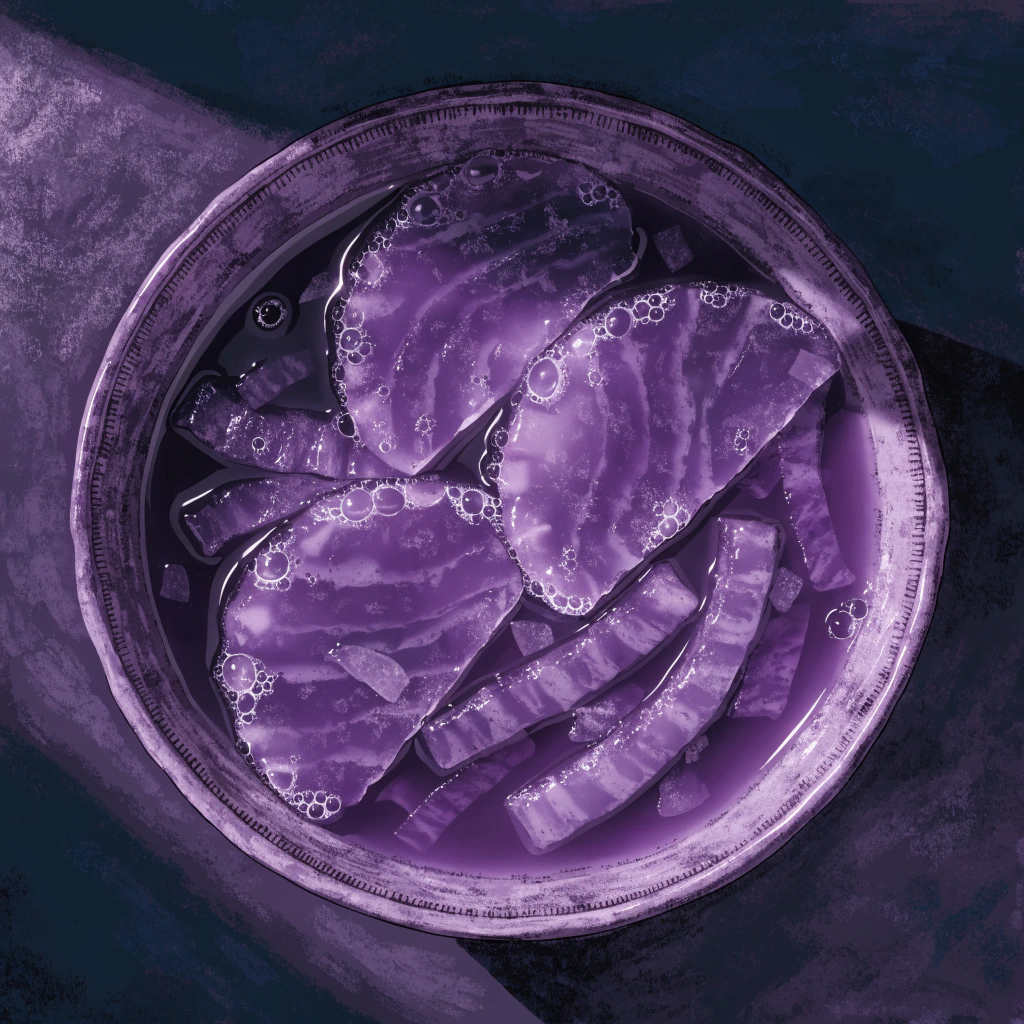
A Special Soup for the New Year
Tteokguk is a popular soup from South Korea. People eat this soup on the Lunar New Year. It is a special tradition. The soup has white rice cakes. The rice cakes are thin and round. They look like small coins.
The white color means a clean start. The round shapes mean money and wealth. People say you are one year older after you eat the soup. Families sit together and enjoy the warm meal. It is a happy time for everyone in Korea.
Grammatik-Spotlight
Muster: Present Simple 'To Be'
"Tteokguk is a popular soup from South Korea."
We use 'is' for one thing and 'are' for many things. It helps us describe facts or general truths.
Muster: Plural Nouns
"The rice cakes are thin and round."
We add an 's' to the end of a word to talk about more than one thing. For example, one cake becomes many cakes.
Teste dein Verständnis
10 Fragen · A1 Anfänger · 1 kostenlose Vorschau
Teste, was du aus diesem Artikel gelernt hast. Beantworte alle Fragen und sammle XP!
Where is the soup from?
Möchtest du das Quiz beenden?
9 weitere Fragen warten auf dich. Registriere dich kostenlos, um das vollständige Quiz freizuschalten und XP zu sammeln!
Kostenlos registrierenHast du schon ein Konto? Anmelden
Gut gemacht!
Weiter üben!
Bereits abgeschlossen — keine zusätzlichen XP
Registriere dich, um XP zu verdienenFragenübersicht
Where is the soup from?
Deine Antwort:
Richtige Antwort: South Korea
People eat the soup on the New Year.
Deine Antwort:
Richtige Antwort: Richtig
What does 'money' mean?
Deine Antwort:
Richtige Antwort: Coins or notes used to buy things
Families sit _____ and enjoy the meal.
Deine Antwort:
Richtige Antwort: together
A Special Soup for the New Year
Seollal is the Korean Lunar New Year. It is the most important holiday in South Korea. On this day, families meet and eat a special meal together. The most famous dish is a soup called Tteokguk.
Tteokguk is a simple but delicious soup. It has white, sliced rice cakes in a clear broth. The rice cakes are very important. Before the cook slices them, they are long and thin. This represents a long and healthy life. When the cook slices them, they look like small coins. Because they look like money, people hope for wealth in the new year.
In South Korea, Tteokguk is more than just food. People say that you become one year older only after you finish your bowl of soup. Many children eat their soup quickly because they want to grow up faster! Tteokguk is a healthy tradition, and it is a wonderful way to celebrate with family.
Grammatik-Spotlight
Muster: Comparatives
"Many children eat their soup quickly because they want to grow up faster!"
We add '-er' to short adjectives like 'fast' to compare two states. It shows that one thing has more of a quality than another.
Muster: Reason with 'Because'
"Because they look like money, people hope for wealth in the new year."
We use 'because' to explain the reason for something. When it starts a sentence, we use a comma after the first clause.
Teste dein Verständnis
11 Fragen · A2 Grundkenntnisse · 1 kostenlose Vorschau
Teste, was du aus diesem Artikel gelernt hast. Beantworte alle Fragen und sammle XP!
What is the name of the Korean New Year?
Möchtest du das Quiz beenden?
10 weitere Fragen warten auf dich. Registriere dich kostenlos, um das vollständige Quiz freizuschalten und XP zu sammeln!
Kostenlos registrierenHast du schon ein Konto? Anmelden
Gut gemacht!
Weiter üben!
Bereits abgeschlossen — keine zusätzlichen XP
Registriere dich, um XP zu verdienenFragenübersicht
What is the name of the Korean New Year?
Deine Antwort:
Richtige Antwort: Seollal
The sliced rice cakes in the soup look like small coins.
Deine Antwort:
Richtige Antwort: Richtig
What does 'wealth' mean?
Deine Antwort:
Richtige Antwort: Having a lot of money
Tteokguk is a _____ but delicious soup.
Deine Antwort:
Richtige Antwort: simple
Why do children eat the soup quickly?
Deine Antwort:
Richtige Antwort: They want to grow up faster
Tteokguk: The Traditional Soup of the Korean New Year
In South Korea, the Lunar New Year, known as Seollal, is one of the most important holidays. Families gather to share special meals, but the most famous dish is a soup called Tteokguk. This steaming bowl of soup, which is made with thinly sliced rice cakes in a clear broth, has been enjoyed by Koreans for centuries. It is the quintessential meal for the start of a new year.
The main ingredient is 'garaetteok', a long, white rice cake. Before it is sliced, the long shape represents a wish for longevity and a healthy life. When the rice cakes are cut into small, oval shapes, they look like old coins. This is why people believe that eating Tteokguk will bring prosperity and wealth in the coming year. The white color of the cake also symbolizes a clean start for the mind and body.
Interestingly, Tteokguk is also linked to a person’s age. In Korean culture, it is often said that you haven't truly grown a year older until you have finished your bowl of New Year’s soup. This tradition has been passed down through many generations, and it remains a vital part of the celebration today. Even children look forward to eating it so they can finally say they are older.
The dish is usually garnished with thin strips of egg, seaweed, and meat. Although the recipe might seem simple, the flavors are deep and comforting. Many people who have moved away from Korea still cook this dish to feel connected to their heritage. It is a meal that combines history, family, and hope for a better future.
Grammatik-Spotlight
Muster: Passive Voice
"This tradition has been passed down through many generations."
The passive voice is used when the action is more important than the person doing it. It is formed using a form of 'be' + the past participle.
Muster: Relative Clauses
"This steaming bowl of soup, which is made with thinly sliced rice cakes in a clear broth, has been enjoyed by Koreans."
Relative clauses starting with 'which' or 'who' provide extra information about a noun. They help combine two sentences into one complex sentence.
Teste dein Verständnis
11 Fragen · B1 Mittelstufe · 1 kostenlose Vorschau
Teste, was du aus diesem Artikel gelernt hast. Beantworte alle Fragen und sammle XP!
What do the oval shapes of the rice cakes represent?
Möchtest du das Quiz beenden?
10 weitere Fragen warten auf dich. Registriere dich kostenlos, um das vollständige Quiz freizuschalten und XP zu sammeln!
Kostenlos registrierenHast du schon ein Konto? Anmelden
Gut gemacht!
Weiter üben!
Bereits abgeschlossen — keine zusätzlichen XP
Registriere dich, um XP zu verdienenFragenübersicht
What do the oval shapes of the rice cakes represent?
Deine Antwort:
Richtige Antwort: Coins and wealth
Koreans believe you only get older after eating a bowl of Tteokguk.
Deine Antwort:
Richtige Antwort: Richtig
What does 'prosperity' mean?
Deine Antwort:
Richtige Antwort: Being successful and wealthy
The dish is usually _____ with thin strips of egg and seaweed.
Deine Antwort:
Richtige Antwort: garnished
What is the name of the long, white rice cake before it is sliced?
Deine Antwort:
Richtige Antwort: Garaetteok
The Culinary Symbolism of Tteokguk: A Korean New Year Tradition
Tteokguk is often regarded as the quintessential dish of Seollal, the Korean Lunar New Year. While the soup may appear deceptively simple, consisting of thinly sliced rice cakes in a clear broth, its consumption is a ritual steeped in profound symbolism. For Koreans, partaking in a bowl of tteokguk is not merely a culinary experience but a necessary transition into the coming year.
The primary ingredient, a long, cylindrical rice cake known as garaetteok, which represents longevity, is central to the dish's meaning. By maintaining its elongated shape during the initial preparation, the rice cake embodies the wish for a long and healthy life. However, when the cake is subsequently sliced into thin, oval shapes, its appearance changes to resemble traditional coins. This metaphorical transformation signifies a collective hope for prosperity and wealth in the months ahead.
Furthermore, the act of eating tteokguk carries a unique social significance. In Korean culture, it is commonly said that one does not truly become a year older until they have finished their bowl of New Year’s soup. This tradition reinforces the idea of the dish as a marker of time and maturity. While regional variations exist—some families may prefer a beef-based broth while others utilize dried anchovies or seaweed—the core essence of the meal remains unchanged across the peninsula.
From a sociological perspective, the consumption of tteokguk functions as a 'social glue' that binds the community together. The meticulous preparation required for the broth—often simmered for hours to achieve a clear yet flavorful profile—and the careful slicing of the rice cakes reflect the respect and intentionality that Koreans bring to the start of the lunar calendar. If one were to ignore these traditional practices, the sense of cultural continuity might be diminished. In modern society, where fast food and international cuisines are increasingly prevalent, the preservation of tteokguk highlights the importance of cultural heritage. It serves as a bridge between generations, allowing families to reconnect with their ancestral roots through shared practice. Ultimately, tteokguk is more than just a seasonal delicacy; it is an enduring symbol of hope, health, and historical continuity.
Grammatik-Spotlight
Muster: Passive Voice
"Tteokguk is often regarded as the quintessential dish of Seollal."
The passive voice is used here to focus on the dish itself rather than the people who regard it. It is formed using the verb 'to be' plus the past participle.
Muster: Relative Clauses
"The primary ingredient, a long, cylindrical rice cake known as garaetteok, which represents longevity, is central to the dish's meaning."
The relative pronoun 'which' introduces extra information about the rice cake. This helps provide detail without starting a new sentence.
Muster: Second Conditional
"If one were to ignore these traditional practices, the sense of cultural continuity might be diminished."
This structure is used to talk about a hypothetical or unlikely situation. It uses 'if' + past subjunctive ('were to') and 'might' + base verb.
Teste dein Verständnis
11 Fragen · B2 Obere Mittelstufe · 1 kostenlose Vorschau
Teste, was du aus diesem Artikel gelernt hast. Beantworte alle Fragen und sammle XP!
What does the long shape of the rice cake (garaetteok) represent?
Möchtest du das Quiz beenden?
10 weitere Fragen warten auf dich. Registriere dich kostenlos, um das vollständige Quiz freizuschalten und XP zu sammeln!
Kostenlos registrierenHast du schon ein Konto? Anmelden
Gut gemacht!
Weiter üben!
Bereits abgeschlossen — keine zusätzlichen XP
Registriere dich, um XP zu verdienenFragenübersicht
What does the long shape of the rice cake (garaetteok) represent?
Deine Antwort:
Richtige Antwort: Longevity and a long life
Koreans traditionally believe they only age after finishing their bowl of tteokguk.
Deine Antwort:
Richtige Antwort: Richtig
What does 'prosperity' mean in the context of the article?
Deine Antwort:
Richtige Antwort: Financial success and wealth
The sliced rice cakes are meant to resemble traditional _____, symbolizing wealth.
Deine Antwort:
Richtige Antwort: coins
How is the preparation of the broth described in the text?
Deine Antwort:
Richtige Antwort: Meticulous and simmered for hours
Culinary Metaphysics: The Symbolic Architecture of Tteokguk
Seldom does a culinary tradition encapsulate the collective aspirations of a nation as poignantly as the consumption of tteokguk during the Korean Lunar New Year, or Seollal. While the uninitiated might perceive it as a mere bowl of rice cake soup, for the Korean people, it represents a metaphysical bridge between the ancestral past and the unfolding future. The dish’s components are not chosen for flavor alone; rather, they are steeped in a semiotic language that communicates wishes for longevity, wealth, and spiritual purification. At the heart of tteokguk lies the garaetteok, a long, cylindrical rice cake. The meticulous preparation of the garaetteok serves as a testament to the endurance of heritage. Its elongated form is a direct visual metaphor for longevity, reflecting a communal desire for a life extended and unmarred by misfortune. When the garaetteok is subsequently sliced into thin, oval discs, the symbolism shifts toward the material. These white, translucent shapes are intended to mimic the appearance of ancient coins, thereby embedding a prayer for prosperity into every spoonful.
It is through this ritualistic consumption that a fascinating cultural phenomenon occurs: the attainment of age. In South Korea, one is traditionally said to turn a year older not on their birthday, but upon the completion of their New Year’s bowl of tteokguk. This concept, often summarized by the phrase 'How many bowls of tteokguk have you eaten?', adds a layer of social weight to the meal. The act of eating the soup is therefore not just a nutritional necessity but a chronological milestone. Furthermore, the clear broth—traditionally made from beef or anchovies—signifies a clean slate. The white color of the rice cakes symbolizes a purity of spirit and the commencement of a fresh cycle. In a contemporary demographic landscape where modernization often erodes traditional practices, tteokguk remains remarkably resilient. It provides a sense of continuity that transcends the rapid urban shifts of Seoul or Busan.
The preparation of the broth itself is an exercise in patience and precision. Whether derived from the slow simmering of beef bones or the delicate infusion of dried anchovies and kelp, the resulting liquid must achieve a specific clarity. This transparency is not merely an aesthetic preference; it mirrors the transparency and integrity expected of individuals in the coming year. The garnishes—typically strips of pan-fried egg, roasted seaweed, and seasoned meat—are meticulously arranged, representing the harmony and balance that are foundational to East Asian philosophy. Furthermore, the communal nature of the Seollal feast reinforces social cohesion. Families gather from across the peninsula, traversing significant distances to partake in this shared ritual. The consumption of tteokguk acts as a social lubricant, facilitating the transmission of oral histories and familial values from elders to the youth. In this context, the soup becomes a vessel for intergenerational dialogue, bridging the gap between those who remember a pre-industrial Korea and the digital natives of the present day. Thus, tteokguk is less a simple meal and more a profound exercise in cultural endurance, ensuring that the aspirations of ancestors continue to nourish the generations of the future.
Grammatik-Spotlight
Muster: Negative Inversion
"Seldom does a culinary tradition encapsulate the collective aspirations of a nation as poignantly as the consumption of tteokguk."
When a sentence starts with a negative or restrictive adverb like 'seldom', the auxiliary verb comes before the subject. This is used in formal writing to add emphasis and dramatic effect.
Muster: Cleft Sentences
"It is through this ritualistic consumption that a fascinating cultural phenomenon occurs: the attainment of age."
A cleft sentence is used to focus on a specific part of the information. By starting with 'It is...', the writer emphasizes the 'ritualistic consumption' as the specific cause of the phenomenon.
Muster: Nominalisation
"The meticulous preparation of the garaetteok serves as a testament to the endurance of heritage."
Nominalisation involves turning verbs (prepare, endure) into nouns (preparation, endurance). This makes the text more formal, concise, and abstract, which is a hallmark of C1-level academic and journalistic writing.
Teste dein Verständnis
12 Fragen · C1 Fortgeschritten · 1 kostenlose Vorschau
Teste, was du aus diesem Artikel gelernt hast. Beantworte alle Fragen und sammle XP!
What does the long, cylindrical shape of the garaetteok represent?
Möchtest du das Quiz beenden?
11 weitere Fragen warten auf dich. Registriere dich kostenlos, um das vollständige Quiz freizuschalten und XP zu sammeln!
Kostenlos registrierenHast du schon ein Konto? Anmelden
Gut gemacht!
Weiter üben!
Bereits abgeschlossen — keine zusätzlichen XP
Registriere dich, um XP zu verdienenFragenübersicht
What does the long, cylindrical shape of the garaetteok represent?
Deine Antwort:
Richtige Antwort: Longevity and a long life
In Korean tradition, a person is considered a year older only on their solar calendar birthday.
Deine Antwort:
Richtige Antwort: Falsch
Which word describes the semitransparent quality of the sliced rice cakes?
Deine Antwort:
Richtige Antwort: Translucent
The white color of the rice cakes is intended to symbolize a _____ of spirit.
Deine Antwort:
Richtige Antwort: purity
According to the article, what does the clarity of the broth represent?
Deine Antwort:
Richtige Antwort: Integrity and transparency
The article suggests that tteokguk helps bridge the gap between different generations.
Deine Antwort:
Richtige Antwort: Richtig
The Gastronomic Semiotics of Tteokguk: Temporal Continuity and Prosperity in the Korean Lunar Cycle
Within the intricate tapestry of Korean cultural heritage, few culinary artifacts possess the profound semiotic weight of Tteokguk. This ostensibly modest dish—a clear, savory broth containing thinly sliced, disc-shaped rice cakes—functions as the quintessential centerpiece of Seollal, the Korean Lunar New Year. To the uninitiated observer, Tteokguk might appear as a mere seasonal staple; however, for the Korean diaspora and those on the peninsula alike, the dish is a complex vessel for ontological transition and ancestral veneration. Were one to examine the meticulous preparation of the 'garaetteok', the long, cylindrical rice cake from which the dish originates, one would find a narrative of longevity woven into the very dough. The unbroken length of the cake symbolizes a wish for a sustained, healthy life, stretching toward an infinite horizon.
Notwithstanding its visual simplicity, the act of slicing these cylinders into thin, oval shapes is a deliberate exercise in symbolic manifestation. These slices, resembling the 'yeopjeon' or traditional brass coins, represent a collective aspiration for prosperity and burgeoning wealth in the nascent year. It is through this ritualistic consumption that the ephemeral transition from one year to the next is solidified. Indeed, so intrinsic is Tteokguk to the passage of time that a common idiomatic inquiry regarding a person's age is 'How many bowls of Tteokguk have you consumed?' This linguistic quirk underscores the belief that the meal itself is the catalyst for aging; one does not merely mark the passage of time, but rather 'eats' the new year, thereby achieving a new level of social stratification and maturity.
Furthermore, the clear broth—traditionally made from beef, pheasant, or dried anchovies—serves as an auspicious tabula rasa, symbolizing a clean, purified start to the lunar cycle. The white color of the rice cakes further reinforces this notion of purity and the shedding of the previous year's misfortunes. Should the broth be clouded or the cakes disintegrated, the aesthetic and symbolic integrity of the dish would be compromised, reflecting a lack of care in welcoming the new season. This meticulous attention to detail is reflective of a broader Confucian emphasis on filial piety and the correct performance of rites.
In contemporary South Korea, despite the burgeoning influence of globalized culinary trends, Tteokguk remains an immovable pillar of national identity. While regional variations exist—some incorporating mandu (dumplings) or utilizing different stocks—the core philosophical underpinning remains steadfast. The myriad ingredients, from the julienned egg garnish to the crumbled seaweed, are not merely aesthetic choices but are layered with historical significance. The dish operates as a bridge between the ancestral past and the speculative future, providing a sense of temporal continuity in an increasingly fragmented modern world.
Ultimately, Tteokguk is more than a culinary delight; it is a scholarly text in its own right, demanding an analytical gaze to fully appreciate its depth. It encapsulates the Korean ethos of shared prosperity and the cyclical nature of existence. As families gather to partake in this steaming bowl of tradition, they are not just consuming nourishment, but are actively participating in a thousand-year-old dialogue about what it means to endure, to thrive, and to belong to a lineage that transcends the individual. The dish remains a testament to the power of food to act as a repository for a nation's soul.
Grammatik-Spotlight
Muster: Second Conditional with Inversion
"Were one to examine the meticulous preparation of the 'garaetteok', one would find a narrative of longevity."
This formal structure replaces 'If one were to examine' with an inversion of the subject and the verb 'were'. It is used in C2 level writing to express hypothetical scenarios with a more scholarly tone.
Muster: Negative Inversion for Emphasis
"Not only does the dish mark the passage of time, but it also acts as a repository for a nation's soul."
When a sentence starts with a negative or restrictive phrase like 'not only', the subject and auxiliary verb are inverted. This is used to add rhetorical weight and emphasis to the cumulative points being made.
Muster: Subjunctive Mood for Hypothetical Situations
"Should the broth be clouded or the cakes disintegrated, the aesthetic and symbolic integrity of the dish would be compromised."
The use of 'should' at the beginning of the clause functions as a formal alternative to 'if', indicating a conditional or hypothetical state. It is common in analytical prose to discuss potential outcomes or requirements.
Teste dein Verständnis
12 Fragen · C2 Meisterschaft · 1 kostenlose Vorschau
Teste, was du aus diesem Artikel gelernt hast. Beantworte alle Fragen und sammle XP!
What does the 'garaetteok' primarily represent before it is sliced?
Möchtest du das Quiz beenden?
11 weitere Fragen warten auf dich. Registriere dich kostenlos, um das vollständige Quiz freizuschalten und XP zu sammeln!
Kostenlos registrierenHast du schon ein Konto? Anmelden
Gut gemacht!
Weiter üben!
Bereits abgeschlossen — keine zusätzlichen XP
Registriere dich, um XP zu verdienenFragenübersicht
What does the 'garaetteok' primarily represent before it is sliced?
Deine Antwort:
Richtige Antwort: Longevity and a long life
The article suggests that Tteokguk is no longer relevant in modern, globalized South Korea.
Deine Antwort:
Richtige Antwort: Falsch
What does 'ephemeral' mean in the context of the text?
Deine Antwort:
Richtige Antwort: Lasting for a very short time
The white color of the rice cakes reinforces the notion of _____ and the shedding of misfortunes.
Deine Antwort:
Richtige Antwort: purity
How does the text describe the linguistic connection between Tteokguk and age?
Deine Antwort:
Richtige Antwort: The number of bowls consumed is a metaphor for one's age.
The clear broth is described as an 'auspicious tabula rasa,' signifying a clean start.
Deine Antwort:
Richtige Antwort: Richtig

