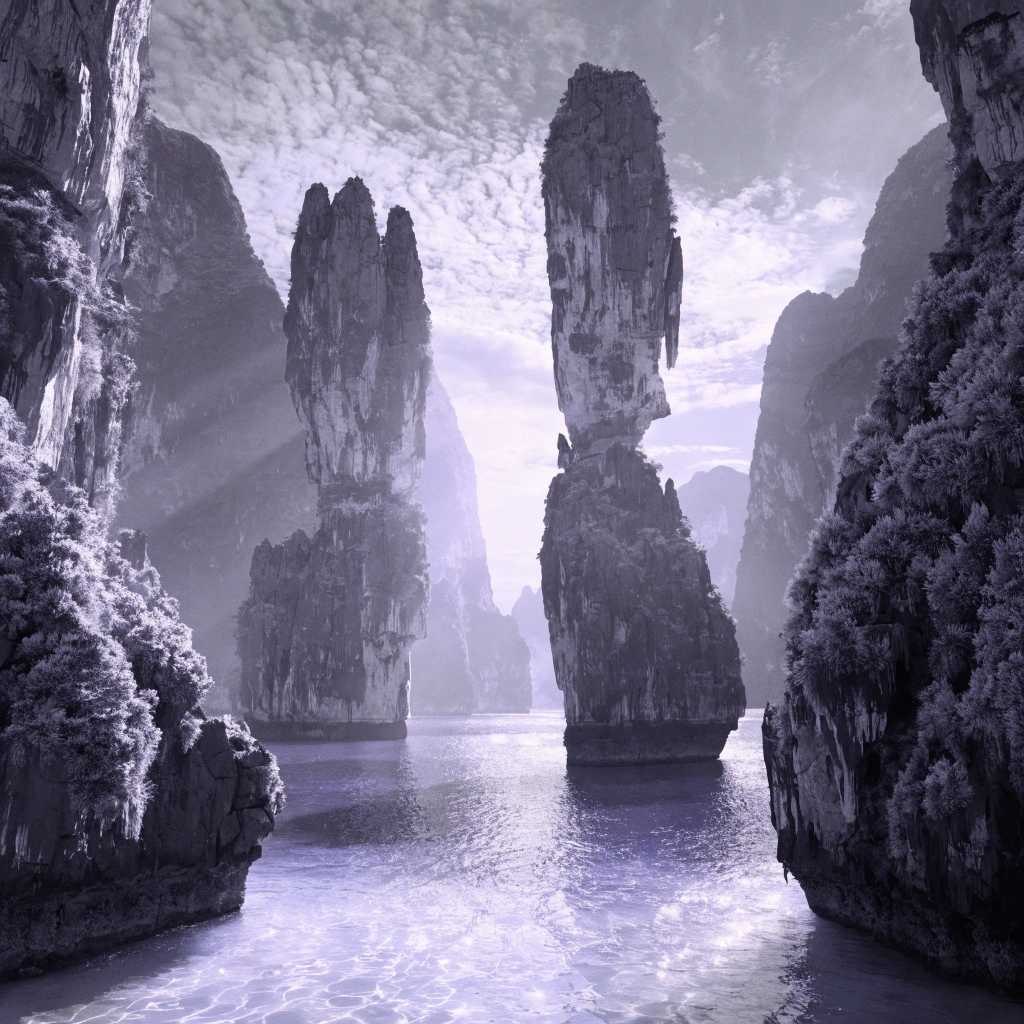
A Beautiful Place in Thailand
Phang Nga Bay is a beautiful place in Thailand. It is near the island of Phuket. The water is green and very clean. There are many big rocks in the sea. These rocks are tall and grey. People go there by boat. You can see many small islands. Some islands have caves. You can swim in the water or sit on the sand. Many tourists visit this park every year. It is a famous place for photos. It is very quiet and peaceful.
Grammatik-Spotlight
Muster: Present Simple (to be)
"Phang Nga Bay is a beautiful place in Thailand."
We use 'is' with singular subjects to describe facts. It tells us what something is or where it is.
Muster: Plural Nouns
"There are many big rocks in the sea."
We add 's' to nouns to show there is more than one. We use 'are' with plural nouns like 'rocks'.
Teste dein Verständnis
10 Fragen · A1 Anfänger · 1 kostenlose Vorschau
Teste, was du aus diesem Artikel gelernt hast. Beantworte alle Fragen und sammle XP!
Where is Phang Nga Bay?
Möchtest du das Quiz beenden?
9 weitere Fragen warten auf dich. Registriere dich kostenlos, um das vollständige Quiz freizuschalten und XP zu sammeln!
Kostenlos registrierenHast du schon ein Konto? Anmelden
Gut gemacht!
Weiter üben!
Bereits abgeschlossen — keine zusätzlichen XP
Registriere dich, um XP zu verdienenFragenübersicht
Where is Phang Nga Bay?
Deine Antwort:
Richtige Antwort: Thailand
The water in the bay is blue.
Deine Antwort:
Richtige Antwort: Falsch
What does 'boat' mean?
Deine Antwort:
Richtige Antwort: Something to travel on water
Some _____ have caves.
Deine Antwort:
Richtige Antwort: islands
The Magic of Phang Nga Bay
Phang Nga Bay is a beautiful place in the south of Thailand. It is located between Phuket and the mainland. The bay is famous for its bright green water and hundreds of tall limestone rocks. These rocks rise high out of the sea and look like giant towers.
Many people visit the bay by boat every day. They like to see the small islands and explore hidden caves. One island is very popular because it was in a famous James Bond movie. Now, everyone calls it James Bond Island. It is much busier than the other islands, but it is still very pretty.
Most of the bay is part of a national park. This helps to protect the nature and the animals. It is a peaceful place because there are no big buildings or noisy roads. Visitors can swim in the warm water or go kayaking near the rocks. It is definitely one of the most beautiful places in Southeast Asia.
Grammatik-Spotlight
Muster: Comparatives
"It is much busier than the other islands, but it is still very pretty."
Use the suffix '-er' plus 'than' to compare two things. For short adjectives like 'busy', change the 'y' to 'i' before adding '-er'.
Muster: Past Simple of 'Be'
"One island is very popular because it was in a famous James Bond movie."
Use 'was' for the past simple of 'am' and 'is'. It describes a state or situation that happened in the past.
Teste dein Verständnis
11 Fragen · A2 Grundkenntnisse · 1 kostenlose Vorschau
Teste, was du aus diesem Artikel gelernt hast. Beantworte alle Fragen und sammle XP!
Where is Phang Nga Bay located?
Möchtest du das Quiz beenden?
10 weitere Fragen warten auf dich. Registriere dich kostenlos, um das vollständige Quiz freizuschalten und XP zu sammeln!
Kostenlos registrierenHast du schon ein Konto? Anmelden
Gut gemacht!
Weiter üben!
Bereits abgeschlossen — keine zusätzlichen XP
Registriere dich, um XP zu verdienenFragenübersicht
Where is Phang Nga Bay located?
Deine Antwort:
Richtige Antwort: In the south of Thailand
The water in the bay is bright blue.
Deine Antwort:
Richtige Antwort: Falsch
What is an 'island'?
Deine Antwort:
Richtige Antwort: Land surrounded by water
Visitors can _____ in the warm water.
Deine Antwort:
Richtige Antwort: swim
Why is one island called James Bond Island?
Deine Antwort:
Richtige Antwort: Because it was in a famous movie
Discovering the Emerald Waters of Phang Nga Bay
Phang Nga Bay has become one of the most famous tourist destinations in Southeast Asia. Located between Phuket and the Thai mainland, this beautiful area is known for its emerald-green water and huge limestone rocks that rise vertically from the sea. Most of the bay has been protected as a national park since 1981, which helps to preserve its natural beauty and diverse wildlife.
One of the most popular spots is Khao Phing Kan, which is often called "James Bond Island." It was used as a location for a famous movie in 1974, and since then, thousands of visitors have traveled there to take photos of the iconic rock. The island is a great example of how nature can create amazing shapes over millions of years through erosion.
Another interesting place is Koh Panyee, a unique village that was built on stilts over the water. The people who live there have created a complete community with a school, shops, and even a floating football pitch. Visitors can enjoy fresh seafood while they watch the local fishermen at work. It is a fascinating example of how humans adapt to their environment.
For those who love adventure, kayaking is a wonderful way to explore the hidden caves and lagoons. These quiet spots are only accessible when the tide is low. Many tourists have described the experience as peaceful and magical because the limestone cliffs create a quiet atmosphere away from the busy cities. Phang Nga Bay is a place where history, culture, and nature meet, making it a must-see location for anyone visiting Thailand.
Grammatik-Spotlight
Muster: Present Perfect
"Phang Nga Bay has become one of the most famous tourist destinations in Southeast Asia."
The present perfect (have/has + past participle) is used here to describe a state that started in the past and continues to the present or has relevance now.
Muster: Passive Voice
"Another interesting place is Koh Panyee, a unique village that was built on stilts over the water."
The passive voice (be + past participle) is used when the action is more important than who did it. In this case, the focus is on the village being built.
Teste dein Verständnis
11 Fragen · B1 Mittelstufe · 1 kostenlose Vorschau
Teste, was du aus diesem Artikel gelernt hast. Beantworte alle Fragen und sammle XP!
Where is Phang Nga Bay located?
Möchtest du das Quiz beenden?
10 weitere Fragen warten auf dich. Registriere dich kostenlos, um das vollständige Quiz freizuschalten und XP zu sammeln!
Kostenlos registrierenHast du schon ein Konto? Anmelden
Gut gemacht!
Weiter üben!
Bereits abgeschlossen — keine zusätzlichen XP
Registriere dich, um XP zu verdienenFragenübersicht
Where is Phang Nga Bay located?
Deine Antwort:
Richtige Antwort: Between Phuket and the Thai mainland
The bay has been a protected national park since 1981.
Deine Antwort:
Richtige Antwort: Richtig
What does the word 'preserve' mean?
Deine Antwort:
Richtige Antwort: To keep something in its original state
The village of Koh Panyee was built on _____ over the water.
Deine Antwort:
Richtige Antwort: stilts
Why is kayaking popular in the bay?
Deine Antwort:
Richtige Antwort: To explore hidden caves and lagoons
Die Bucht von Phang Nga: Ein Naturwunder Thailands
Die Bucht von Phang Nga, gelegen zwischen der Insel Phuket und den Festlandprovinzen Phang Nga und Krabi im Süden Thailands, zählt zweifellos zu den beeindruckendsten Naturwundern Südostasiens. Dieses einzigartige Meeresgebiet ist vor allem durch seine smaragdgrünen Gewässer und die Hunderte von majestätischen Kalksteinfelsen gekennzeichnet, die sich steil und dramatisch aus der Andamanensee erheben. Auf einer Fläche von über 400 Quadratkilometern erstreckt sich die Bucht, wobei der Großteil als Ao Phang Nga Nationalpark unter strengem Schutz steht. Die Anerkennung als Nationalpark unterstreicht die globale Bedeutung dieser Region für den Naturschutz und die Bewahrung einer einzigartigen Landschaft.
Die geologische Entstehung dieser atemberaubenden Landschaft ist das Ergebnis von Jahrmillionen andauernder Erosion. Durch die ständige Einwirkung von Wind und Wasser auf die weicheren Teile des Kalkgesteins entstanden im Laufe der Zeit diese spektakulären Karstformationen. Viele dieser Felsen sind von Höhlen und versteckten Lagunen durchzogen, die nur bei Ebbe oder mit kleinen Kajaks zugänglich sind und ein Gefühl von Abenteuer vermitteln. Die bekannteste dieser Inseln ist zweifellos Ko Tapu, oft als „James-Bond-Felsen“ bezeichnet, seit sie in dem Film „Der Mann mit dem goldenen Colt“ als Kulisse diente und dadurch weltweite Bekanntheit erlangte.
Der Ao Phang Nga Nationalpark wurde eingerichtet, um die außergewöhnliche biologische Vielfalt der Region zu bewahren. Er beherbergt nicht nur einzigartige Gesteinsformationen, sondern auch ausgedehnte Mangrovenwälder, die eine entscheidende Rolle im Ökosystem spielen. Diese Mangroven sind Brutstätten und Kinderstuben für zahlreiche Fischarten, Krabben und andere Meeresbewohner. Darüber hinaus sind hier auch seltene Vogelarten zu finden, die die unberührte Natur als ihren Lebensraum gewählt haben, darunter verschiedene Reiher- und Seeadlerarten. Die intakten Ökosysteme tragen maßgeblich zur Gesundheit der gesamten Küstenregion bei.
Für Besucher bietet die Bucht von Phang Nga eine Fülle von Aktivitäten. Kajaktouren durch die Höhlen und um die Inseln sind besonders beliebt, da sie es ermöglichen, die verborgenen Wunder der Bucht aus nächster Nähe zu erleben. Auch Bootsausflüge zu den verschiedenen Inseln, Schnorcheln und das Erkunden der lokalen Fischerdörfer stehen hoch im Kurs. Bei der Planung solcher Unternehmungen sollte jedoch stets auf verantwortungsvollen Tourismus geachtet werden. Es ist von größter Bedeutung, dass der Tourismus nachhaltig gestaltet wird, um dieses fragile Ökosystem für zukünftige Generationen zu erhalten. Die Bucht von Phang Nga bleibt ein eindrucksvolles Zeugnis der Kraft der Natur und ein unvergessliches Reiseziel, dessen Schutz oberste Priorität haben muss.
Grammatik-Spotlight
Muster: Vorgangspassiv
"Der Ao Phang Nga Nationalpark wurde eingerichtet, um die außergewöhnliche biologische Vielfalt der Region zu bewahren."
Das Vorgangspassiv beschreibt einen Vorgang oder eine Handlung, bei der das Subjekt nicht selbst handelt, sondern von etwas anderem betroffen ist. Es wird mit einer Form von „werden“ und dem Partizip II des Hauptverbs gebildet.
Muster: Relativsätze
"...die Hunderte von majestätischen Kalksteinfelsen gekennzeichnet, die sich steil und dramatisch aus der Andamanensee erheben."
Relativsätze geben zusätzliche Informationen zu einem Nomen oder Pronomen im Hauptsatz. Sie werden mit einem Relativpronomen (z.B. „der, die, das“) eingeleitet und der konjugierte Verbteil steht am Satzende.
Muster: Infinitivsatz mit „um...zu“
"Der Ao Phang Nga Nationalpark wurde eingerichtet, um die außergewöhnliche biologische Vielfalt der Region zu bewahren."
Dieser Infinitivsatz drückt einen Zweck oder eine Absicht aus. Er wird verwendet, wenn das Subjekt des Hauptsatzes und des Infinitivsatzes identisch ist, und besteht aus „um“ + „zu“ + Infinitiv.
Teste dein Verständnis
11 Fragen · B2 Obere Mittelstufe · 1 kostenlose Vorschau
Teste, was du aus diesem Artikel gelernt hast. Beantworte alle Fragen und sammle XP!
Wo liegt die Bucht von Phang Nga?
Möchtest du das Quiz beenden?
10 weitere Fragen warten auf dich. Registriere dich kostenlos, um das vollständige Quiz freizuschalten und XP zu sammeln!
Kostenlos registrierenHast du schon ein Konto? Anmelden
Gut gemacht!
Weiter üben!
Bereits abgeschlossen — keine zusätzlichen XP
Registriere dich, um XP zu verdienenFragenübersicht
Wo liegt die Bucht von Phang Nga?
Deine Antwort:
Richtige Antwort: Im Süden Thailands, zwischen Phuket und den Provinzen Phang Nga und Krabi.
Die Bucht von Phang Nga ist bekannt für ihre roten Sandstrände.
Deine Antwort:
Richtige Antwort: Falsch
Was bedeutet 'bewahren'?
Deine Antwort:
Richtige Antwort: Etwas in seinem ursprünglichen Zustand erhalten oder schützen.
Die Bucht wurde durch Jahrmillionen andauernder ______ geformt.
Deine Antwort:
Richtige Antwort: Erosion
Welchen Zweck hat der Ao Phang Nga Nationalpark?
Deine Antwort:
Richtige Antwort: Er wurde eingerichtet, um die biologische Vielfalt der Region zu bewahren.
Die Phang Nga Bucht: Ein smaragdgrünes Wunder der Natur in Südostasien
Die Phang Nga Bucht, gelegen an der Westküste Thailands, stellt zweifellos eines der ikonischsten Naturwunder Südostasiens dar. Es ist die atemberaubende Kulisse aus smaragdgrünen Gewässern und Hunderten von steil aufragenden Kalksteinfelsen, die der Bucht ihre unverwechselbare Identität verleiht. Über 400 Quadratkilometer erstreckt sich dieses geologische Meisterwerk zwischen der Insel Phuket und den Festlandprovinzen Phang Nga und Krabi, wobei der Großteil des Gebiets als Ao Phang Nga Nationalpark unter strengem Schutz steht.
Die Entstehung dieser dramatischen Karstformationen ist das Ergebnis jahrmillionenlanger Erosion. Ursprünglich bildeten sich mächtige Kalksteinschichten unter dem Meeresspiegel, welche im Laufe geologischer Zeiträume durch tektonische Prozesse angehoben wurden. Anschließend sorgten Wind, Regen und insbesondere das Meerwasser für die allmähliche Herausbildung der charakteristischen vertikalen Klippen, Höhlen und Grotten, die heute die Landschaft prägen. Diese Erosionsprozesse, die bis heute andauern, schaffen eine dynamische und sich ständig wandelnde Umgebung, deren Komplexität fasziniert.
Was die Phang Nga Bucht so einzigartig macht, ist nicht allein ihre geologische Beschaffenheit. Vielmehr ist es das Zusammenspiel aus diesen majestätischen Felsinseln, den dichten Mangrovenwäldern, die die Ufer säumen, und der reichen Biodiversität, die hier beheimatet ist. Zahlreiche Tierarten, darunter seltene Vögel, Reptilien und marine Lebewesen, finden in diesem geschützten Ökosystem einen sicheren Lebensraum. Die Mangrovenwälder fungieren dabei als natürliche Kinderstube für viele Fischarten und schützen die Küstenlinie vor Erosion, was ihre ökologische Bedeutung untermauert.
Für den Besucher bietet die Bucht eine Fülle an Erlebnismöglichkeiten. Von Kanufahrten durch versteckte Lagunen und Höhlen, deren Zugänge nur bei Ebbe passierbar sind, bis hin zu Bootsausflügen zu berühmten Orten wie der „James-Bond-Insel“ (Ko Tapu), wo Szenen des Films „Der Mann mit dem goldenen Colt“ gedreht wurden, ist alles dabei. Gleichwohl ist es von größter Wichtigkeit, dass der Tourismus hier nachhaltig gestaltet wird, um die empfindlichen Ökosysteme zu bewahren. Das Bewusstsein für den Schutz dieser einzigartigen Naturlandschaft muss stets im Vordergrund stehen, will man ihre Schönheit auch für künftige Generationen erhalten.
Es ist nicht übertrieben zu behaupten, dass die Phang Nga Bucht eine Destination ist, die man einmal im Leben gesehen haben muss. Die schiere Größe und Erhabenheit der Natur, wie sie sich hier manifestiert, lässt den Betrachter ehrfürchtig staunen. Diese Region ist weit mehr als nur eine Ansammlung schöner Inseln; sie ist ein lebendiges Lehrbuch der Erdgeschichte und ein Mahnmal für die Notwendigkeit des Umweltschutzes. Die Herausforderung besteht nun darin, die Balance zwischen Zugänglichkeit für Touristen und dem Schutz der Flora und Fauna zu finden.
Grammatik-Spotlight
Muster: Nominalisierung
"Die Entstehung dieser dramatischen Karstformationen ist das Ergebnis jahrmillionenlanger Erosion."
Nominalisierung bezeichnet die Umwandlung von Verben oder Adjektiven in Substantive. Dies erhöht die formale und abstrakte Ausdrucksweise und ist typisch für einen gehobenen Schreibstil, indem Prozesse oder Zustände als Dinge behandelt werden.
Muster: Nebensatz mit „will man“ (Konditionalsatz)
"Das Bewusstsein für den Schutz dieser einzigartigen Naturlandschaft muss stets im Vordergrund stehen, will man ihre Schönheit auch für künftige Generationen erhalten."
Diese Inversion eines Konditionalsatzes ohne Konjunktion ("Wenn man will...") ist ein stilistisches Mittel, um eine Bedingung prägnant und formell auszudrücken. Das finite Verb steht hier am Anfang des Nebensatzes, was einen gehobenen Ton signalisiert.
Muster: Cleft Sentence (Es ist ... das/die/der ...)
"Es ist die atemberaubende Kulisse aus smaragdgrünen Gewässern und Hunderten von steil aufragenden Kalksteinfelsen, die der Bucht ihre unverwechselbare Identität verleiht."
Cleft Sentences werden verwendet, um einen bestimmten Teil des Satzes zu betonen. Die Struktur „Es ist X, das/die/der Y“ rückt X in den Fokus und hebt dessen Bedeutung hervor, was die Aussage nachdrücklicher macht.
Teste dein Verständnis
12 Fragen · C1 Fortgeschritten · 1 kostenlose Vorschau
Teste, was du aus diesem Artikel gelernt hast. Beantworte alle Fragen und sammle XP!
Welche Art von Gestein prägt hauptsächlich die Landschaft der Phang Nga Bucht?
Möchtest du das Quiz beenden?
11 weitere Fragen warten auf dich. Registriere dich kostenlos, um das vollständige Quiz freizuschalten und XP zu sammeln!
Kostenlos registrierenHast du schon ein Konto? Anmelden
Gut gemacht!
Weiter üben!
Bereits abgeschlossen — keine zusätzlichen XP
Registriere dich, um XP zu verdienenFragenübersicht
Welche Art von Gestein prägt hauptsächlich die Landschaft der Phang Nga Bucht?
Deine Antwort:
Richtige Antwort: Kalkstein
Der Großteil der Phang Nga Bucht ist nicht als Nationalpark geschützt.
Deine Antwort:
Richtige Antwort: Falsch
Was bedeutet 'allmählich'?
Deine Antwort:
Richtige Antwort: Langsam und schrittweise
Welche Funktion erfüllen die Mangrovenwälder in der Phang Nga Bucht?
Deine Antwort:
Richtige Antwort: Sie sind natürliche Kinderstuben für Fischarten und schützen die Küste vor Erosion.
Die 'James-Bond-Insel' ist unter dem Namen Ko _____ bekannt.
Deine Antwort:
Richtige Antwort: Tapu
Welches Wort beschreibt am besten 'Ehrfurcht'?
Deine Antwort:
Richtige Antwort: Tiefen Respekt und Staunen
The Karst Topography of Phang Nga: An Analytical Perspective on Geological Sublime and Ecological Fragility
The geological narrative of Phang Nga Bay, situated within the Andaman Sea’s verdant embrace, is one of profound antiquity and relentless erosive forces. To behold the bay is to witness a labyrinthine seascape where hundreds of limestone monoliths rise with a precipitous grace from emerald-hued waters. This karst topography, predominantly composed of Permian-era limestone, serves as a testament to the intricate interplay between tectonic shifts and the chemical dissolution of calcium carbonate over millions of years. Should one venture into the heart of this maritime sanctuary, the sheer magnitude of these geological vestiges becomes overwhelmingly apparent, evoking a sense of the sublime that transcends mere aesthetic appreciation. The bay is not merely a static monument to the past; it is a dynamic, albeit fragile, ecosystem where the terrestrial and the aquatic are inextricably linked.
Historically, the bay remained a secluded enclave, its subterranean grottoes and hidden lagoons—locally known as 'hongs'—accessible only through precarious tidal windows. These hongs, often containing unique microclimates and endemic flora, represent a biological sequestration that has allowed certain species to thrive in isolation. However, the mid-20th century marked a paradigm shift in the bay’s public profile. The cinematic immortalization of Khao Phing Kan in the 1974 James Bond film, 'The Man with the Golden Gun', propelled the region into the global consciousness. While this notoriety catalyzed a lucrative tourism industry, it also introduced a suite of anthropogenic stressors that now threaten the very integrity of the environment. The influx of motorized vessels and the resultant acoustic pollution, coupled with the accumulation of non-biodegradable refuse, necessitates a rigorous re-evaluation of current conservation protocols.
Moreover, the bay’s ecological sovereignty is further compromised by the broader specter of climate change. Rising sea levels and the acidification of the oceans pose an existential threat to the coral reefs and mangrove forests that act as the bay’s natural bulwarks. It is imperative that the administrative bodies governing Ao Phang Nga National Park be granted the resources to implement more stringent regulatory frameworks. Were the authorities to fail in mitigating these pressures, the bay might succumb to the irrevocable degradation of its biodiversity. This is not merely a localized concern; the loss of such a significant carbon sink and biological repository would have repercussions that reverberate across the regional maritime landscape.
Analytical scrutiny of the bay also reveals a complex socio-economic dimension. The Moken people, often referred to as sea gypsies, have navigated these waters for generations, possessing an indomitable spirit and a wealth of traditional ecological knowledge. Their presence underscores the fact that Phang Nga is not a wilderness devoid of human history, but a cultural landscape where sustainable practices were once the norm. Modernity, however, has often marginalized these indigenous voices in favor of mass-market exploitation. To ensure the long-term viability of the bay, a synthesis of traditional wisdom and contemporary scientific research is essential. Only through such a multidisciplinary approach can we hope to preserve the ephemeral beauty of Phang Nga for posterity. Notwithstanding the current challenges, there remains a burgeoning movement toward eco-tourism that prioritizes environmental stewardship over short-term fiscal gain. Whether this shift will be sufficient to counteract decades of intensive use remains a subject of scholarly debate, yet the bay’s enduring majesty continues to inspire a sense of collective responsibility.
Grammatik-Spotlight
Muster: Inverted Conditional (Should)
"Should one venture into the heart of this maritime sanctuary, the sheer magnitude of these geological vestiges becomes overwhelmingly apparent."
This is a formal alternative to 'If one should venture.' It uses inversion to create a more academic and sophisticated tone, common in C2 level prose.
Muster: Present Subjunctive for Urgency
"It is imperative that the administrative bodies governing Ao Phang Nga National Park be granted the resources..."
The base form 'be' is used following the adjective 'imperative' to express necessity or urgency. This structure omits 'should' for a more formal, direct style.
Muster: Mixed Conditional (Hypothetical Past/Present)
"Were the authorities to fail in mitigating these pressures, the bay might succumb to the irrevocable degradation of its biodiversity."
This uses 'Were... to' to express a purely hypothetical future scenario. It emphasizes the gravity of the potential failure and its subsequent result.
Teste dein Verständnis
12 Fragen · C2 Meisterschaft · 1 kostenlose Vorschau
Teste, was du aus diesem Artikel gelernt hast. Beantworte alle Fragen und sammle XP!
What is the primary geological composition of the bay's monoliths?
Möchtest du das Quiz beenden?
11 weitere Fragen warten auf dich. Registriere dich kostenlos, um das vollständige Quiz freizuschalten und XP zu sammeln!
Kostenlos registrierenHast du schon ein Konto? Anmelden
Gut gemacht!
Weiter üben!
Bereits abgeschlossen — keine zusätzlichen XP
Registriere dich, um XP zu verdienenFragenübersicht
What is the primary geological composition of the bay's monoliths?
Deine Antwort:
Richtige Antwort: Permian-era limestone
The 'hongs' are essentially open-air plains accessible at any time of the day.
Deine Antwort:
Richtige Antwort: Falsch
Which term best describes environmental stressors caused by human activity?
Deine Antwort:
Richtige Antwort: Anthropogenic
The bay's ecological _____ is threatened by the broader specter of climate change.
Deine Antwort:
Richtige Antwort: sovereignty
According to the text, what catalyzed the region's entry into global consciousness?
Deine Antwort:
Richtige Antwort: A 1974 James Bond film
The author suggests that traditional Moken knowledge is irrelevant to modern conservation.
Deine Antwort:
Richtige Antwort: Falsch

