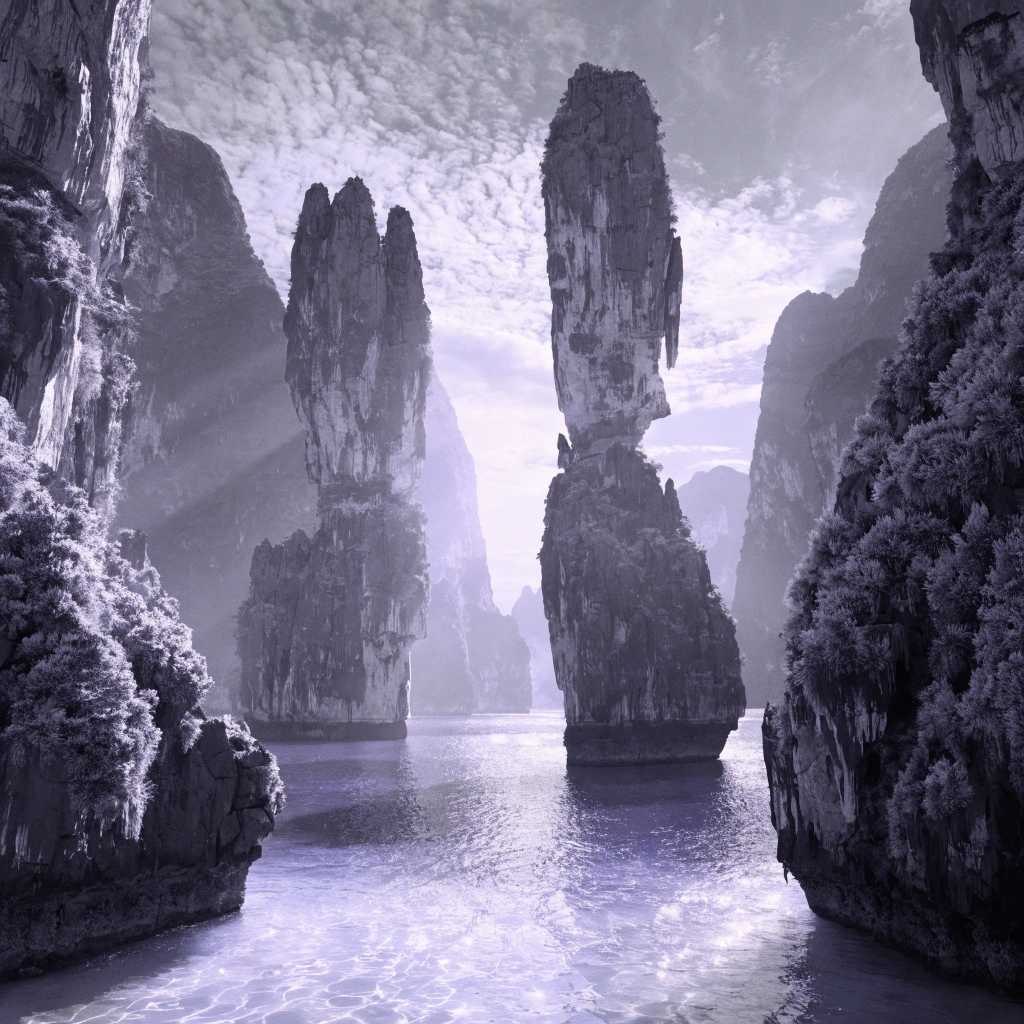
A Beautiful Place in Thailand
Phang Nga Bay is a beautiful place in Thailand. It is near the island of Phuket. The water is green and very clean. There are many big rocks in the sea. These rocks are tall and grey. People go there by boat. You can see many small islands. Some islands have caves. You can swim in the water or sit on the sand. Many tourists visit this park every year. It is a famous place for photos. It is very quiet and peaceful.
Gramática em destaque
Padrão: Present Simple (to be)
"Phang Nga Bay is a beautiful place in Thailand."
We use 'is' with singular subjects to describe facts. It tells us what something is or where it is.
Padrão: Plural Nouns
"There are many big rocks in the sea."
We add 's' to nouns to show there is more than one. We use 'are' with plural nouns like 'rocks'.
Teste sua compreensão
10 perguntas · A1 Iniciante · 1 pré-visualização grátis
Teste o que aprendeu neste artigo. Responda todas as perguntas para ganhar XP!
Where is Phang Nga Bay?
Quer finalizar o quiz?
9 perguntas a mais estão esperando por você. Cadastre-se grátis para desbloquear o quiz completo e ganhar XP!
Cadastrar grátisJá tem conta? Entrar
Detalhamento das perguntas
Where is Phang Nga Bay?
Sua resposta:
Resposta correta: Thailand
The water in the bay is blue.
Sua resposta:
Resposta correta: Falso
What does 'boat' mean?
Sua resposta:
Resposta correta: Something to travel on water
Some _____ have caves.
Sua resposta:
Resposta correta: islands
The Magic of Phang Nga Bay
Phang Nga Bay is a beautiful place in the south of Thailand. It is located between Phuket and the mainland. The bay is famous for its bright green water and hundreds of tall limestone rocks. These rocks rise high out of the sea and look like giant towers.
Many people visit the bay by boat every day. They like to see the small islands and explore hidden caves. One island is very popular because it was in a famous James Bond movie. Now, everyone calls it James Bond Island. It is much busier than the other islands, but it is still very pretty.
Most of the bay is part of a national park. This helps to protect the nature and the animals. It is a peaceful place because there are no big buildings or noisy roads. Visitors can swim in the warm water or go kayaking near the rocks. It is definitely one of the most beautiful places in Southeast Asia.
Gramática em destaque
Padrão: Comparatives
"It is much busier than the other islands, but it is still very pretty."
Use the suffix '-er' plus 'than' to compare two things. For short adjectives like 'busy', change the 'y' to 'i' before adding '-er'.
Padrão: Past Simple of 'Be'
"One island is very popular because it was in a famous James Bond movie."
Use 'was' for the past simple of 'am' and 'is'. It describes a state or situation that happened in the past.
Teste sua compreensão
11 perguntas · A2 Elementar · 1 pré-visualização grátis
Teste o que aprendeu neste artigo. Responda todas as perguntas para ganhar XP!
Where is Phang Nga Bay located?
Quer finalizar o quiz?
10 perguntas a mais estão esperando por você. Cadastre-se grátis para desbloquear o quiz completo e ganhar XP!
Cadastrar grátisJá tem conta? Entrar
Detalhamento das perguntas
Where is Phang Nga Bay located?
Sua resposta:
Resposta correta: In the south of Thailand
The water in the bay is bright blue.
Sua resposta:
Resposta correta: Falso
What is an 'island'?
Sua resposta:
Resposta correta: Land surrounded by water
Visitors can _____ in the warm water.
Sua resposta:
Resposta correta: swim
Why is one island called James Bond Island?
Sua resposta:
Resposta correta: Because it was in a famous movie
Discovering the Emerald Waters of Phang Nga Bay
Phang Nga Bay has become one of the most famous tourist destinations in Southeast Asia. Located between Phuket and the Thai mainland, this beautiful area is known for its emerald-green water and huge limestone rocks that rise vertically from the sea. Most of the bay has been protected as a national park since 1981, which helps to preserve its natural beauty and diverse wildlife.
One of the most popular spots is Khao Phing Kan, which is often called "James Bond Island." It was used as a location for a famous movie in 1974, and since then, thousands of visitors have traveled there to take photos of the iconic rock. The island is a great example of how nature can create amazing shapes over millions of years through erosion.
Another interesting place is Koh Panyee, a unique village that was built on stilts over the water. The people who live there have created a complete community with a school, shops, and even a floating football pitch. Visitors can enjoy fresh seafood while they watch the local fishermen at work. It is a fascinating example of how humans adapt to their environment.
For those who love adventure, kayaking is a wonderful way to explore the hidden caves and lagoons. These quiet spots are only accessible when the tide is low. Many tourists have described the experience as peaceful and magical because the limestone cliffs create a quiet atmosphere away from the busy cities. Phang Nga Bay is a place where history, culture, and nature meet, making it a must-see location for anyone visiting Thailand.
Gramática em destaque
Padrão: Present Perfect
"Phang Nga Bay has become one of the most famous tourist destinations in Southeast Asia."
The present perfect (have/has + past participle) is used here to describe a state that started in the past and continues to the present or has relevance now.
Padrão: Passive Voice
"Another interesting place is Koh Panyee, a unique village that was built on stilts over the water."
The passive voice (be + past participle) is used when the action is more important than who did it. In this case, the focus is on the village being built.
Teste sua compreensão
11 perguntas · B1 Intermediário · 1 pré-visualização grátis
Teste o que aprendeu neste artigo. Responda todas as perguntas para ganhar XP!
Where is Phang Nga Bay located?
Quer finalizar o quiz?
10 perguntas a mais estão esperando por você. Cadastre-se grátis para desbloquear o quiz completo e ganhar XP!
Cadastrar grátisJá tem conta? Entrar
Detalhamento das perguntas
Where is Phang Nga Bay located?
Sua resposta:
Resposta correta: Between Phuket and the Thai mainland
The bay has been a protected national park since 1981.
Sua resposta:
Resposta correta: Verdadeiro
What does the word 'preserve' mean?
Sua resposta:
Resposta correta: To keep something in its original state
The village of Koh Panyee was built on _____ over the water.
Sua resposta:
Resposta correta: stilts
Why is kayaking popular in the bay?
Sua resposta:
Resposta correta: To explore hidden caves and lagoons
Phang Nga Bay: A Masterpiece of Nature and Culture
Situated between the island of Phuket and the mainland of southern Thailand, Phang Nga Bay stands as one of the most remarkable geological wonders in Southeast Asia. This expansive area, which spans over 400 square kilometers, is primarily recognized for its emerald-green waters and the hundreds of sheer limestone karsts that rise vertically from the sea. These distinctive formations are the result of a complex geological phenomenon that occurred over several millennia. Consequently, the majority of the bay is now strictly protected within the Ao Phang Nga National Park to ensure the preservation of its unique environment.
The geological history of the bay is fascinating, as the limestone cliffs were sculpted by natural forces such as wind, rain, and tidal erosion. This process has created a series of hidden lagoons known as 'hongs,' which are essentially collapsed cave systems located within the heart of the islands. These secluded spots are often only accessible by kayak during specific tide levels, offering a captivating experience for those seeking tranquility away from the more crowded tourist hubs. Furthermore, the bay’s biodiversity is significant, providing a habitat for diverse marine life and various bird species that thrive within the mangrove forests lining the shores.
Beyond its natural beauty, Phang Nga Bay possesses a rich cultural and cinematic history. The most famous landmark is arguably Koh Tapu, widely known as 'James Bond Island' after it was featured in the 1974 film 'The Man with the Golden Gun.' While this cinematic fame has brought a massive influx of tourists, it has also raised concerns regarding the environmental impact on the region. Conversely, the stilted village of Koh Panyee offers a glimpse into a different way of life. Built entirely over the water by Indonesian fishermen hundreds of years ago, this community demonstrates a remarkable adaptation to the maritime environment.
In conclusion, the future of Phang Nga Bay depends on a delicate balance between tourism and conservation. While the economic benefits of international visitors are undeniable, the ecosystem remains vulnerable to pollution and physical damage. Therefore, sustainable management strategies must be implemented to protect this natural heritage for future generations. Visitors are encouraged to engage in eco-friendly practices, ensuring that the bay remains a pristine destination where nature and culture continue to coexist in harmony.
Gramática em destaque
Padrão: Non-defining Relative Clauses
"This expansive area, which spans over 400 square kilometers, is primarily recognized for its emerald-green waters."
Used to provide extra information about a noun that is already clearly identified. It is separated from the main clause by commas and uses 'which' or 'who'.
Padrão: Passive Voice with Modal Verbs
"Therefore, sustainable management strategies must be implemented to protect this natural heritage."
Formed using 'must/should/can + be + past participle'. It focuses on the action that is necessary rather than the person performing it, common in formal writing.
Padrão: Present Perfect for Historical Background
"These distinctive formations are the result of a complex geological phenomenon that occurred over several millennia."
While 'occurred' is past simple, the article uses structures like 'has created' and 'has brought' to connect past events to the present situation or state of the bay.
Teste sua compreensão
11 perguntas · B2 Intermediário superior · 1 pré-visualização grátis
Teste o que aprendeu neste artigo. Responda todas as perguntas para ganhar XP!
What is the primary reason the bay is protected as a National Park?
Quer finalizar o quiz?
10 perguntas a mais estão esperando por você. Cadastre-se grátis para desbloquear o quiz completo e ganhar XP!
Cadastrar grátisJá tem conta? Entrar
Detalhamento das perguntas
What is the primary reason the bay is protected as a National Park?
Sua resposta:
Resposta correta: To ensure the preservation of its unique environment
The 'hongs' are accessible at any time regardless of the tide.
Sua resposta:
Resposta correta: Falso
Which word describes the arrival of a large number of people?
Sua resposta:
Resposta correta: Influx
The limestone cliffs were sculpted by natural forces such as wind, rain, and tidal _____.
Sua resposta:
Resposta correta: erosion
What does the village of Koh Panyee represent?
Sua resposta:
Resposta correta: Human adaptation to a maritime environment
The Ethereal Splendour of Phang Nga: A Confluence of Geological Majesty and Ecological Fragility
Seldom does one encounter a landscape so profoundly evocative as Phang Nga Bay. Nestled within the Andaman Sea, this geological masterpiece spans over 400 square kilometres of emerald-hued waters, punctuated by hundreds of sheer limestone monoliths. These karsts, rising vertically from the depths, are the result of millions of years of chemical erosion and tectonic shifts. Yet, beyond its aesthetic allure lies a complex narrative of ecological vulnerability and the taxing demands of global tourism.
The formation of these limestone structures—a process known as karstification—represents a remarkable geological timeline. What was once a vast coral reef system in the Permian period has been sculpted by the relentless forces of nature into the labyrinthine network of sea caves and 'hongs' (inner lagoons) we observe today. It is this very seclusion that has allowed unique ecosystems to flourish. Within these limestone sanctuaries, one finds a plethora of avian species and marine life that remain largely shielded from the external world. However, the preservation of such biodiversity is increasingly under threat.
It is the sheer scale of human encroachment that necessitates a critical re-evaluation of current conservation efforts. While the Ao Phang Nga National Park was established to safeguard this environment, the commodification of the bay as a 'must-see' destination has led to significant environmental degradation. The influx of motorised vessels contributes to noise pollution and the disruption of marine habitats, while the accumulation of plastic waste threatens the pristine nature of the mangroves. One might argue that the economic dividends reaped from tourism are indispensable for the local economy; however, such benefits are ephemeral if the underlying natural asset is irreparably damaged.
Furthermore, the discourse surrounding sustainable development in Phang Nga Bay often overlooks the nuanced relationship between local communities and the environment. Indigenous groups have coexisted with these waters for generations, yet their traditional livelihoods are often sidelined in favour of large-scale commercial operations. A more holistic approach would integrate local wisdom with modern conservation science, ensuring that the bay remains a living heritage rather than merely a backdrop for photography.
In conclusion, Phang Nga Bay stands at a crossroads. The majesty of its karsts serves as a poignant reminder of the Earth’s ancient history, but its future hinges on our collective ability to balance admiration with restraint. Only through a concerted effort to mitigate human impact can we hope to preserve this emerald sanctuary for posterity. The challenge lies not in the cessation of tourism, but in the radical transformation of how we engage with such fragile wonders.
Gramática em destaque
Padrão: Negative Inversion
"Seldom does one encounter a landscape so profoundly evocative as Phang Nga Bay."
Inversion is used here by placing a negative adverbial at the start of the sentence for rhetorical effect. This requires the auxiliary 'does' to come before the subject 'one'.
Padrão: Cleft Sentence
"It is the sheer scale of human encroachment that necessitates a critical re-evaluation of current conservation efforts."
A cleft sentence focuses on a specific part of the information. Using 'It is... that' emphasizes that 'encroachment' is the primary cause, rather than other factors.
Padrão: Nominalisation
"The formation of these limestone structures—a process known as karstification—represents a remarkable geological timeline."
Nominalisation turns verbs (form) into nouns (formation). This is a hallmark of C1 writing, as it makes the text sound more formal, objective, and dense.
Teste sua compreensão
12 perguntas · C1 Avançado · 1 pré-visualização grátis
Teste o que aprendeu neste artigo. Responda todas as perguntas para ganhar XP!
What is the primary threat to the bay's ecosystem according to the text?
Quer finalizar o quiz?
11 perguntas a mais estão esperando por você. Cadastre-se grátis para desbloquear o quiz completo e ganhar XP!
Cadastrar grátisJá tem conta? Entrar
Detalhamento das perguntas
What is the primary threat to the bay's ecosystem according to the text?
Sua resposta:
Resposta correta: Human encroachment and tourism
The limestone karsts were originally part of a coral reef system.
Sua resposta:
Resposta correta: Verdadeiro
What does 'ephemeral' mean in the context of the article?
Sua resposta:
Resposta correta: Lasting for a very short time
The challenge lies not in the _____ of tourism, but in its transformation.
Sua resposta:
Resposta correta: cessation
How does the author view the relationship between tourism and the local economy?
Sua resposta:
Resposta correta: Economic dividends are essential but potentially short-lived.
The author suggests that local indigenous knowledge is currently the main focus of conservation efforts.
Sua resposta:
Resposta correta: Falso
The Karst Topography of Phang Nga: An Analytical Perspective on Geological Sublime and Ecological Fragility
The geological narrative of Phang Nga Bay, situated within the Andaman Sea’s verdant embrace, is one of profound antiquity and relentless erosive forces. To behold the bay is to witness a labyrinthine seascape where hundreds of limestone monoliths rise with a precipitous grace from emerald-hued waters. This karst topography, predominantly composed of Permian-era limestone, serves as a testament to the intricate interplay between tectonic shifts and the chemical dissolution of calcium carbonate over millions of years. Should one venture into the heart of this maritime sanctuary, the sheer magnitude of these geological vestiges becomes overwhelmingly apparent, evoking a sense of the sublime that transcends mere aesthetic appreciation. The bay is not merely a static monument to the past; it is a dynamic, albeit fragile, ecosystem where the terrestrial and the aquatic are inextricably linked.
Historically, the bay remained a secluded enclave, its subterranean grottoes and hidden lagoons—locally known as 'hongs'—accessible only through precarious tidal windows. These hongs, often containing unique microclimates and endemic flora, represent a biological sequestration that has allowed certain species to thrive in isolation. However, the mid-20th century marked a paradigm shift in the bay’s public profile. The cinematic immortalization of Khao Phing Kan in the 1974 James Bond film, 'The Man with the Golden Gun', propelled the region into the global consciousness. While this notoriety catalyzed a lucrative tourism industry, it also introduced a suite of anthropogenic stressors that now threaten the very integrity of the environment. The influx of motorized vessels and the resultant acoustic pollution, coupled with the accumulation of non-biodegradable refuse, necessitates a rigorous re-evaluation of current conservation protocols.
Moreover, the bay’s ecological sovereignty is further compromised by the broader specter of climate change. Rising sea levels and the acidification of the oceans pose an existential threat to the coral reefs and mangrove forests that act as the bay’s natural bulwarks. It is imperative that the administrative bodies governing Ao Phang Nga National Park be granted the resources to implement more stringent regulatory frameworks. Were the authorities to fail in mitigating these pressures, the bay might succumb to the irrevocable degradation of its biodiversity. This is not merely a localized concern; the loss of such a significant carbon sink and biological repository would have repercussions that reverberate across the regional maritime landscape.
Analytical scrutiny of the bay also reveals a complex socio-economic dimension. The Moken people, often referred to as sea gypsies, have navigated these waters for generations, possessing an indomitable spirit and a wealth of traditional ecological knowledge. Their presence underscores the fact that Phang Nga is not a wilderness devoid of human history, but a cultural landscape where sustainable practices were once the norm. Modernity, however, has often marginalized these indigenous voices in favor of mass-market exploitation. To ensure the long-term viability of the bay, a synthesis of traditional wisdom and contemporary scientific research is essential. Only through such a multidisciplinary approach can we hope to preserve the ephemeral beauty of Phang Nga for posterity. Notwithstanding the current challenges, there remains a burgeoning movement toward eco-tourism that prioritizes environmental stewardship over short-term fiscal gain. Whether this shift will be sufficient to counteract decades of intensive use remains a subject of scholarly debate, yet the bay’s enduring majesty continues to inspire a sense of collective responsibility.
Gramática em destaque
Padrão: Inverted Conditional (Should)
"Should one venture into the heart of this maritime sanctuary, the sheer magnitude of these geological vestiges becomes overwhelmingly apparent."
This is a formal alternative to 'If one should venture.' It uses inversion to create a more academic and sophisticated tone, common in C2 level prose.
Padrão: Present Subjunctive for Urgency
"It is imperative that the administrative bodies governing Ao Phang Nga National Park be granted the resources..."
The base form 'be' is used following the adjective 'imperative' to express necessity or urgency. This structure omits 'should' for a more formal, direct style.
Padrão: Mixed Conditional (Hypothetical Past/Present)
"Were the authorities to fail in mitigating these pressures, the bay might succumb to the irrevocable degradation of its biodiversity."
This uses 'Were... to' to express a purely hypothetical future scenario. It emphasizes the gravity of the potential failure and its subsequent result.
Teste sua compreensão
12 perguntas · C2 Domínio · 1 pré-visualização grátis
Teste o que aprendeu neste artigo. Responda todas as perguntas para ganhar XP!
What is the primary geological composition of the bay's monoliths?
Quer finalizar o quiz?
11 perguntas a mais estão esperando por você. Cadastre-se grátis para desbloquear o quiz completo e ganhar XP!
Cadastrar grátisJá tem conta? Entrar
Detalhamento das perguntas
What is the primary geological composition of the bay's monoliths?
Sua resposta:
Resposta correta: Permian-era limestone
The 'hongs' are essentially open-air plains accessible at any time of the day.
Sua resposta:
Resposta correta: Falso
Which term best describes environmental stressors caused by human activity?
Sua resposta:
Resposta correta: Anthropogenic
The bay's ecological _____ is threatened by the broader specter of climate change.
Sua resposta:
Resposta correta: sovereignty
According to the text, what catalyzed the region's entry into global consciousness?
Sua resposta:
Resposta correta: A 1974 James Bond film
The author suggests that traditional Moken knowledge is irrelevant to modern conservation.
Sua resposta:
Resposta correta: Falso

