









breast in 30 Sekunden
- Front of the chest.
- Milk-producing gland.
- White meat of poultry.
- Seat of emotions (literary).
The word 'breast' is a versatile noun in the English language, carrying multiple primary meanings depending on the context in which it is used. At its most fundamental anatomical level, it refers to the upper front part of the human body, specifically the chest area extending from the neck to the abdomen. In a more specific and commonly used anatomical sense, it denotes either of the two mammary glands situated on the chest of a human female, which develop during puberty and are biologically designed to produce and secrete milk for nourishing infants. This biological function is a cornerstone of mammalian reproduction and has profound cultural, medical, and social significance. Furthermore, the term is not exclusively applied to humans; it is widely used in zoological and culinary contexts to describe the corresponding frontal portion of an animal's body. In the culinary world, it most frequently refers to the thick, fleshy, white meat found on the chest of poultry, such as chickens, turkeys, and ducks, which is highly prized for its lean nutritional profile and versatility in cooking.
- Anatomical Definition
- The front portion of the human torso, or the specific milk-producing glandular structures found on the chest of female mammals.
The mother held her newborn baby gently against her breast to feed him.
Beyond its literal anatomical and culinary definitions, the word 'breast' carries significant metaphorical and literary weight. Historically and poetically, the breast has been considered the seat of human emotion, the repository of one's deepest feelings, secrets, conscience, and affections. When literature speaks of a 'troubled breast' or 'holding something close to one's breast,' it is invoking this metaphorical space of inner emotional life rather than the physical body part. This dual nature—the physical and the emotional—makes it a deeply resonant word in English literature and poetry.
- Culinary Definition
- The meat from the front of a bird, typically white meat, which is a staple in many diets worldwide due to its high protein content.
For dinner, I prepared a marinated chicken breast with roasted vegetables.
In medical terminology, the word is central to discussions of health, particularly concerning breast cancer, which is one of the most common cancers affecting women globally. This necessitates a clinical and respectful understanding of the word, as it frequently appears in contexts related to screenings, mammograms, and oncology. The societal discourse around this word has evolved significantly, moving from a topic sometimes considered taboo to one of vital public health awareness and advocacy.
- Metaphorical Definition
- The source of emotion, conscience, or hidden thoughts within a person's mind or soul.
Hope springs eternal in the human breast, a famous quote by Alexander Pope.
He wore a red rose pinned to the breast of his jacket.
The swimmer specialized in the breaststroke, winning a gold medal.
Understanding the multifaceted nature of this word is crucial for achieving fluency in English. It bridges the gap between the mundane reality of grocery shopping and the elevated language of classic poetry. Whether you are reading a medical journal, following a recipe, analyzing a Shakespearean sonnet, or simply buying a new suit with a specific pocket style, this word will appear with nuanced but distinct meanings that rely heavily on the surrounding context to be fully understood.
Using the word 'breast' correctly requires an understanding of its various contexts: anatomical, culinary, metaphorical, and compound forms. When used anatomically to refer to the human body, it is typically a countable noun. For example, a doctor might examine 'both breasts' during a routine check-up. In the context of infant care, the phrase 'breast-feeding' or 'feeding at the breast' is standard terminology. It is important to maintain a clinical or respectful tone when discussing the anatomical sense, as it pertains to personal health and bodily autonomy. In medical contexts, it is frequently used as an adjective modifier, such as in 'breast cancer,' 'breast tissue,' or 'breast examination.' These usages are ubiquitous in healthcare settings and public health campaigns.
- Culinary Usage
- In cooking, it refers to the meat from poultry. It can be singular or plural depending on the quantity of meat pieces.
Please buy three boneless, skinless chicken breasts from the butcher.
In culinary contexts, the usage is straightforward and highly common in everyday language. You will often see it paired with adjectives describing its preparation: 'roasted turkey breast,' 'pan-seared duck breast,' or 'stuffed chicken breast.' Here, it is treated as a standard ingredient. When ordering at a restaurant, one might specify a preference for 'breast meat' over 'dark meat' (legs and thighs). This distinction is a fundamental part of English culinary vocabulary.
- Idiomatic and Metaphorical Usage
- Used to describe the seat of emotions or the act of confessing.
He decided to make a clean breast of his mistakes and apologize to the team.
Metaphorical usage is more common in written English, literature, and formal speech than in casual conversation. Phrases like 'beating one's breast' indicate a dramatic display of sorrow or guilt. To 'keep your cards close to your breast' (though 'chest' is also used) means to be secretive about your plans. Additionally, the word forms several common compound nouns. A 'breaststroke' is a specific swimming style where the swimmer is on their chest and the torso does not rotate. A 'breastplate' is a piece of armor covering the chest. A 'breast pocket' is a pocket on the front of a shirt or jacket. Understanding these compounds expands your vocabulary significantly. When using these terms, ensure the pronunciation remains consistent, with the vowel sound rhyming with 'test' or 'best,' not 'beast.'
- Compound Nouns
- Words formed by combining 'breast' with another word to create a new specific meaning.
He reached into his breast pocket to retrieve his reading glasses.
The knight wore a shining silver breastplate into battle.
She is currently undergoing breast cancer treatment at the local oncology center.
The environments and contexts where you will encounter the word 'breast' are incredibly diverse, reflecting its multiple meanings. One of the most common places you will hear it is in the culinary world. Whether you are watching a cooking show on television, reading a recipe blog online, or shopping at a local grocery store or butcher shop, references to 'chicken breast,' 'turkey breast,' or 'duck breast' are ubiquitous. In restaurants, waiters might ask if you prefer 'breast or thigh' when ordering poultry dishes. This everyday usage makes it an essential vocabulary word for anyone navigating English-speaking food cultures.
- Healthcare and Medicine
- A critical context involving medical examinations, public health awareness, and maternal care.
October is designated as National Breast Cancer Awareness Month.
Another highly prevalent environment is the healthcare and medical sector. In doctors' offices, clinics, and hospitals, the term is used clinically and professionally. You will hear it in discussions about mammograms, breast exams, and oncology. Public health campaigns frequently use the word, especially during awareness months, to promote early detection of diseases. Additionally, in maternity wards and pediatric clinics, the topic of 'breastfeeding' is a standard part of postnatal care discussions between healthcare providers and new mothers. In these settings, the word is treated with clinical seriousness and respect.
- Sports and Recreation
- Specifically in swimming, referring to a popular and competitive swimming stroke.
The coach instructed the team to practice their breaststroke technique for the next thirty minutes.
You will also encounter the word in sports, specifically swimming. The 'breaststroke' is one of the four main competitive swimming strokes, so you will hear this term frequently at swimming pools, during the Olympics, or in swimming lessons. In the realm of fashion and tailoring, the term 'breast pocket' is standard terminology used by tailors, designers, and clothing retailers to describe the pocket on the front of a suit jacket or dress shirt. Finally, in literature, poetry, and dramatic arts, the metaphorical use of the word to describe the seat of emotions is a classic trope. You might read about a character with a 'heavy breast' or someone who 'beats their breast' in despair in classic novels or plays.
- Literature and Arts
- Used poetically to represent the heart, soul, or inner emotional state of a character.
A sudden feeling of profound sadness swelled within his breast.
The tailor measured him carefully, noting the placement for the breast pocket on the bespoke suit.
She held the precious locket tightly against her breast, a reminder of her lost love.
One of the most frequent mistakes English learners make with the word 'breast' is related to its pronunciation. Because of the 'ea' spelling, many learners incorrectly assume it is pronounced with a long 'e' sound, making it sound like 'beast' or 'priest' (/briːst/). However, the correct pronunciation uses a short 'e' sound, rhyming with words like 'test,' 'best,' and 'rest' (/brest/). This mispronunciation can lead to confusion, especially in culinary contexts where asking for a 'chicken beast' might elicit a confused smile from a waiter or butcher. Mastering this short vowel sound is crucial for clear communication.
- Pronunciation Error
- Pronouncing the 'ea' as a long 'e' (/i:/) instead of the correct short 'e' (/e/).
Correct: I ordered a chicken breast (/brest/). Incorrect: I ordered a chicken briest (/bri:st/).
Another common area of confusion lies in distinguishing between 'breast' and 'chest.' While they refer to the same general area of the body, their usage differs. 'Chest' is the more general, neutral term for the entire upper front part of the torso for both men and women (e.g., 'He has a broad chest,' 'I have a pain in my chest'). 'Breast' is more specific. Anatomically, it usually refers to the female mammary glands, though men also have breast tissue. Using 'breast' instead of 'chest' when referring to a man's torso in a general, non-medical way (e.g., 'He pounded his breast in victory' instead of 'He pounded his chest') can sound overly poetic, archaic, or slightly unnatural in modern conversational English, unless using a specific idiom.
- Chest vs. Breast
- Using 'breast' when 'chest' is the more natural, general term for the upper torso.
Natural: He crossed his arms over his chest. Unnatural: He crossed his arms over his breast.
Learners also sometimes struggle with the pluralization in culinary contexts. When referring to the meat in general, it can be uncountable ('I prefer breast to thigh'), but when referring to individual pieces, it must be pluralized ('I bought three chicken breasts'). Forgetting the 's' when referring to multiple pieces is a minor but noticeable grammatical error. Furthermore, in idiomatic expressions, the word cannot be substituted. For example, the idiom is 'make a clean breast of it,' not 'make a clean chest of it.' Memorizing these fixed phrases exactly as they are is necessary to avoid sounding awkward to native speakers.
- Idiomatic Rigidity
- Attempting to swap 'breast' with synonyms in fixed idioms.
Correct: Make a clean breast of it. Incorrect: Make a clean chest of it.
She bought two turkey breasts for the holiday dinner.
The recipe calls for one large, boneless chicken breast per person.
Several words in English share similar meanings or occupy the same semantic field as 'breast,' but each carries distinct nuances, connotations, and appropriate contexts for use. The most common synonym is 'chest.' As previously mentioned, 'chest' is the broader, more general term for the upper front of the torso. It is the preferred word when discussing general anatomy, physical fitness ('chest exercises'), or respiratory issues ('chest cold'). While a breast is located on the chest, the two words are not always perfectly interchangeable. Another related term is 'bust.' 'Bust' specifically refers to a woman's chest, particularly in the context of clothing measurements or artistic sculpture (a sculpture of the head, shoulders, and upper chest). You will hear 'bust size' in tailoring, but rarely 'breast size' in that specific professional context.
- Chest
- The general front part of the body from the neck to the stomach. Used for both men and women in everyday language.
He felt a tightness in his chest and decided to see a doctor.
A more archaic or literary synonym is 'bosom.' 'Bosom' can refer to the chest, particularly a woman's, but it is heavily laden with emotional and poetic connotations. It implies warmth, intimacy, and protection. You might read about a child being 'clutched to her bosom' or a friend being a 'bosom buddy' (a very close friend). It is rarely used in modern, casual conversation or medical contexts. In scientific and medical contexts, you might encounter the word 'thorax.' The thorax is the anatomical term for the entire chest cavity, including the rib cage, heart, and lungs. It is a highly technical term used almost exclusively by medical professionals, biologists, and anatomists.
- Bosom
- A literary or old-fashioned word for the chest, emphasizing emotional closeness, comfort, and intimacy.
She welcomed the weary traveler into the bosom of her family.
When discussing muscles, the term 'pectorals' or 'pecs' is used. These are the large muscles of the chest. This is the terminology you will hear in a gym or fitness center. For example, a bodybuilder might focus on 'building their pecs.' In culinary terms, there isn't a direct synonym for 'breast' meat, as it refers to a specific cut. However, it is often contrasted with 'dark meat' (thighs and legs) or 'wings.' Understanding these subtle distinctions between chest, bust, bosom, thorax, and pectorals allows for much more precise and contextually appropriate communication in English, ensuring you strike the right tone whether you are in a clinic, a clothing store, a gym, or reading a classic novel.
- Pectorals (Pecs)
- The muscles located on the chest, commonly used in fitness and bodybuilding contexts.
He did fifty push-ups to strengthen his pectoral muscles.
The museum displayed a beautiful marble bust of the Roman emperor.
The insect's legs are attached to its thorax.
How Formal Is It?
Schwierigkeitsgrad
Wichtige Grammatik
Countable vs. Uncountable nouns (meat vs. anatomy)
Compound noun formation
Definite article usage with sports (the breaststroke)
Idiomatic prepositional phrases
Noun adjuncts (breast cancer)
Beispiele nach Niveau
I like to eat chicken breast.
food, white meat
Used as a countable noun for food.
The recipe needs one turkey breast.
food ingredient
Singular noun.
Do you want chicken breast or leg?
choice of meat
Used without an article when referring to the type of meat.
She cooked a large chicken breast for dinner.
meal preparation
Adjective 'large' modifies the noun.
Chicken breast is very healthy.
nutrition
Used as an uncountable concept here.
Please buy two chicken breasts at the store.
shopping
Plural form 'breasts'.
He cut the chicken breast into small pieces.
cooking action
Object of the verb 'cut'.
The chicken breast is in the fridge.
location
Subject of the sentence.
He keeps his pen in his breast pocket.
clothing part
Compound noun 'breast pocket'.
She swims the breaststroke very fast.
swimming style
Compound noun 'breaststroke'.
The bird has red feathers on its breast.
animal anatomy
Preposition 'on' indicates location.
I prefer breast meat because it has less fat.
food preference
Noun adjunct modifying 'meat'.
He put the ticket in his left breast pocket.
specific location
Adjective 'left' specifies which pocket.
Can you teach me how to do the breaststroke?
learning a sport
Definite article 'the' used with the sport.
The duck breast was served with a sweet sauce.
restaurant meal
Subject of a passive verb 'was served'.
She bought a jacket with two breast pockets.
clothing description
Plural compound noun.
October is Breast Cancer Awareness Month.
health campaign
Part of a proper noun phrase.
The mother is breastfeeding her newborn baby.
infant care
Used as a verb 'breastfeeding'.
Women should have regular breast examinations.
medical checkup
Noun adjunct modifying 'examinations'.
He felt a sharp pain in his breast and called a doctor.
medical symptom
Refers to the general chest area in a medical context.
The recipe calls for boneless, skinless chicken breasts.
specific ingredient
Multiple adjectives modifying the plural noun.
She won the 100-meter breaststroke competition.
sports event
Noun adjunct modifying 'competition'.
The hospital has a special clinic for breast health.
medical facility
Noun adjunct modifying 'health'.
Breast milk provides essential nutrients for infants.
biology
Compound noun 'breast milk'.
He decided to make a clean breast of his crimes to the police.
idiom: to confess
Fixed idiomatic phrase.
She held the secret close to her breast for many years.
metaphor: keeping a secret
Metaphorical use representing the mind/heart.
The armor included a heavy steel breastplate.
historical armor
Compound noun 'breastplate'.
A feeling of immense pride swelled in his breast.
literary emotion
Poetic/literary use for the seat of emotions.
The committee was formed to address the rising rates of breast cancer.
formal medical discussion
Formal context usage.
He beat his breast in a dramatic display of sorrow.
idiom: showing grief
Idiomatic expression of grief.
The tailor carefully measured the drop from the shoulder to the breast.
tailoring measurement
Specific professional jargon.
She is a strong advocate for normalizing breastfeeding in public.
social issue
Gerund used as a noun.
The protagonist's troubled breast harbored a multitude of unspoken regrets.
literary analysis
Highly literary and metaphorical usage.
The oncologist discussed the pathology report regarding the excised breast tissue.
advanced medical
Clinical and precise medical terminology.
He was accused of keeping his financial dealings too close to his breast.
business metaphor
Variation of a common idiom applied to business.
The ancient statue depicted a goddess with multiple breasts, symbolizing fertility.
art history
Historical and symbolic context.
To make a clean breast of the matter required more courage than he possessed.
complex sentence structure
Idiom used as the subject of an infinitive phrase.
The avian researcher noted the distinct plumage on the male's breast during mating season.
scientific observation
Formal scientific register.
Her poetry often explores the dual nature of the breast as both a source of life and a site of vulnerability.
literary critique
Abstract, analytical usage.
The bespoke suit featured a meticulously hand-stitched welt breast pocket.
sartorial detail
Highly specific descriptive vocabulary.
The political scandal forced the senator to make a clean breast of his involvement, lest the press uncover further indiscretions.
political journalism
Complex syntax with formal vocabulary ('lest', 'indiscretions').
In Romantic literature, the breast is frequently invoked not merely as anatomy, but as the very crucible of human passion.
academic literature
Academic register with metaphorical abstraction ('crucible').
The surgeon performed a prophylactic bilateral mastectomy to remove all susceptible breast tissue.
highly technical medical
Dense medical jargon.
He harbored a viper in his breast, trusting a friend who would ultimately betray him.
archaic idiom
Rare, classical idiom meaning to nurture a betrayer.
The rhythmic cadence of the breaststroke provided a meditative counterpoint to her chaotic thoughts.
creative writing
Evocative, descriptive prose.
The legislation aimed to protect the rights of lactating mothers to express breast milk in the workplace.
legal/policy
Formal legal and policy register.
The soprano's voice swelled, seemingly originating from deep within her breast, filling the grand auditorium.
music critique
Descriptive language related to vocal performance.
The knight's breastplate, though dented and scarred, had spared him from a mortal blow.
historical fiction
Narrative prose with compound noun.
Häufige Kollokationen
Häufige Phrasen
Wird oft verwechselt mit
Redewendungen & Ausdrücke
Leicht verwechselbar
Satzmuster
So verwendest du es
While 'breast' and 'chest' are anatomically similar, 'chest' is preferred for general, non-medical, non-gender-specific references to the upper torso.
- Pronouncing it as /bri:st/ (rhyming with beast).
- Saying 'I have a pain in my breast' when referring to general chest pain.
- Writing 'breast stroke' as two words.
- Saying 'make a clean chest of it'.
- Asking for 'two chicken breast' at the store.
Tipps
Rhyme Time
Always remember that 'breast' rhymes with 'best'. This will stop you from saying 'beast'.
Pluralizing Meat
When buying meat, remember to add the 's' if you want more than one: 'Two chicken breasts, please.'
Chest vs. Breast
Default to using 'chest' when talking about the general upper body. Save 'breast' for food, medicine, or idioms.
Clean Breast
Use 'make a clean breast of it' when you want to sound advanced while talking about confessing a secret.
EA Spelling
The 'ea' spelling can be tricky. Group it in your mind with words like 'bread' and 'head' which share the same sound.
One Word for Swimming
Remember that the swimming style 'breaststroke' is written as one solid word.
Medical Respect
In medical contexts, use the word clinically and respectfully, as it often relates to serious health topics.
Pocket Placement
If you are buying a suit, ask about the 'breast pocket' to sound like you know tailoring terminology.
Literary Meaning
When reading old books, if a character touches their breast, they are usually showing strong emotion, not checking their anatomy.
Restaurant Listening
Listen for 'breast or thigh' when ordering chicken at a fast-food restaurant or diner.
Einprägen
Eselsbrücke
Think of 'best rest'. The best rest is when you lie on your breast (chest).
Wortherkunft
Old English
Kultureller Kontext
October is globally recognized as Breast Cancer Awareness Month.
Chicken breast is a staple of Western fitness diets.
Victorians supposedly used 'white meat' to avoid saying 'breast'.
Im Alltag üben
Kontexte aus dem Alltag
Gesprächseinstiege
"Do you prefer cooking with chicken breast or thighs?"
"Have you ever tried swimming the breaststroke?"
"What do you think about the breast cancer awareness campaigns?"
"Do you keep anything important in your breast pocket?"
"Why do you think poets use 'breast' to mean 'heart'?"
Tagebuch-Impulse
Write a recipe that uses chicken breast.
Describe a time you had to 'make a clean breast of it'.
Write a short poem using the word 'breast' metaphorically.
Discuss the importance of breast cancer awareness.
Describe the technique for swimming the breaststroke.
Häufig gestellte Fragen
10 FragenIt is pronounced 'brest' with a short 'e' sound. It rhymes with words like test, best, and rest. Do not pronounce it with a long 'e' like in the word 'beast'.
Chest is the general term for the upper front part of the body for everyone. Breast specifically refers to the mammary glands, or the white meat of a bird. In everyday language, say 'my chest hurts', not 'my breast hurts', unless it's a specific medical issue.
Yes, anatomically men have breast tissue, and medical terms like male breast cancer exist. However, in casual conversation, it's much more common to refer to a man's 'chest' or 'pecs'.
It can be both. If you are talking about the meat in general, it's uncountable ('I prefer breast to thigh'). If you are talking about individual pieces, it is countable ('I bought three chicken breasts').
It is an idiom that means to confess everything truthfully. If you did something wrong and you tell the whole truth to clear your conscience, you are making a clean breast of it.
A breast pocket is the small pocket located on the front of a shirt, suit jacket, or coat, over the chest area. It is often used to hold a pen or a pocket square.
When referring to the swimming style, it is written as one single compound word: breaststroke.
In literature and poetry, the breast is historically considered the seat of human emotions, the soul, and conscience. So, poets use it metaphorically to describe feelings rather than anatomy.
Yes, it is a standard English word. It is perfectly polite in culinary (chicken breast) and medical (breast exam) contexts. However, making inappropriate jokes or comments about human anatomy is impolite.
Breast milk is the milk produced by a human mother to feed her infant. The act of feeding the baby this way is called breastfeeding.
Teste dich selbst 200 Fragen
Write a sentence ordering chicken breast at a restaurant.
Well written! Good try! Check the sample answer below.
Describe what a breast pocket is used for.
Well written! Good try! Check the sample answer below.
Write a sentence explaining what breastfeeding is.
Well written! Good try! Check the sample answer below.
Use the idiom 'make a clean breast of it' in a sentence.
Well written! Good try! Check the sample answer below.
Write a poetic sentence using 'breast' to mean the heart or soul.
Well written! Good try! Check the sample answer below.
Explain the difference between 'chest' and 'breast' in a medical context.
Well written! Good try! Check the sample answer below.
Write a short recipe instruction involving turkey breast.
Well written! Good try! Check the sample answer below.
Describe the breaststroke swimming technique in one sentence.
Well written! Good try! Check the sample answer below.
Write a sentence about Breast Cancer Awareness Month.
Well written! Good try! Check the sample answer below.
Use the word 'breastplate' in a historical fiction sentence.
Well written! Good try! Check the sample answer below.
Write a sentence using 'breast' as an uncountable noun for food.
Well written! Good try! Check the sample answer below.
Write a sentence using 'breasts' as a plural countable noun for food.
Well written! Good try! Check the sample answer below.
Describe a bird using the word 'breast'.
Well written! Good try! Check the sample answer below.
Write a formal sentence about a breast examination.
Well written! Good try! Check the sample answer below.
Use the phrase 'beat his breast' in a dramatic sentence.
Well written! Good try! Check the sample answer below.
Write a sentence about a tailor measuring for a breast pocket.
Well written! Good try! Check the sample answer below.
Explain what 'nursing a viper in one's breast' means in your own words.
Well written! Good try! Check the sample answer below.
Write a sentence contrasting breast meat and dark meat.
Well written! Good try! Check the sample answer below.
Use 'breastbone' in a sentence about anatomy.
Well written! Good try! Check the sample answer below.
Write a sentence about a mother holding a child to her breast.
Well written! Good try! Check the sample answer below.
Read this aloud:
Du hast gesagt:
Speech recognition is not supported in your browser. Try Chrome or Edge.
Read this aloud:
Du hast gesagt:
Speech recognition is not supported in your browser. Try Chrome or Edge.
Read this aloud:
Du hast gesagt:
Speech recognition is not supported in your browser. Try Chrome or Edge.
Read this aloud:
Du hast gesagt:
Speech recognition is not supported in your browser. Try Chrome or Edge.
Read this aloud:
Du hast gesagt:
Speech recognition is not supported in your browser. Try Chrome or Edge.
Read this aloud:
Du hast gesagt:
Speech recognition is not supported in your browser. Try Chrome or Edge.
Read this aloud:
Du hast gesagt:
Speech recognition is not supported in your browser. Try Chrome or Edge.
Read this aloud:
Du hast gesagt:
Speech recognition is not supported in your browser. Try Chrome or Edge.
Read this aloud:
Du hast gesagt:
Speech recognition is not supported in your browser. Try Chrome or Edge.
Read this aloud:
Du hast gesagt:
Speech recognition is not supported in your browser. Try Chrome or Edge.
Read this aloud:
Du hast gesagt:
Speech recognition is not supported in your browser. Try Chrome or Edge.
Read this aloud:
Du hast gesagt:
Speech recognition is not supported in your browser. Try Chrome or Edge.
Read this aloud:
Du hast gesagt:
Speech recognition is not supported in your browser. Try Chrome or Edge.
Read this aloud:
Du hast gesagt:
Speech recognition is not supported in your browser. Try Chrome or Edge.
Read this aloud:
Du hast gesagt:
Speech recognition is not supported in your browser. Try Chrome or Edge.
Read this aloud:
Du hast gesagt:
Speech recognition is not supported in your browser. Try Chrome or Edge.
Read this aloud:
Du hast gesagt:
Speech recognition is not supported in your browser. Try Chrome or Edge.
Read this aloud:
Du hast gesagt:
Speech recognition is not supported in your browser. Try Chrome or Edge.
Read this aloud:
Du hast gesagt:
Speech recognition is not supported in your browser. Try Chrome or Edge.
Read this aloud:
Du hast gesagt:
Speech recognition is not supported in your browser. Try Chrome or Edge.
What did the person order?
Where does he keep his glasses?
What is scheduled for next week?
What did he finally do?
In which event did she win gold?
How many turkey breasts are needed?
What is highly recommended?
What did the museum display?
How did he react to the news?
What feature does the bird have?
What is October dedicated to?
Where did he keep his feelings?
Why does the speaker prefer breast meat?
What did the tailor ask about?
Where was the pain located?
/ 200 correct
Perfect score!
Summary
The word 'breast' refers to the chest area, female mammary glands, or poultry meat, and is often used metaphorically for emotions. Example: 'She ate a chicken breast.'
- Front of the chest.
- Milk-producing gland.
- White meat of poultry.
- Seat of emotions (literary).
Rhyme Time
Always remember that 'breast' rhymes with 'best'. This will stop you from saying 'beast'.
Pluralizing Meat
When buying meat, remember to add the 's' if you want more than one: 'Two chicken breasts, please.'
Chest vs. Breast
Default to using 'chest' when talking about the general upper body. Save 'breast' for food, medicine, or idioms.
Clean Breast
Use 'make a clean breast of it' when you want to sound advanced while talking about confessing a secret.
Beispiel
The mother held the sleeping infant gently against her breast.
Verwandte Inhalte
In Videos ansehen
 8:54
8:54
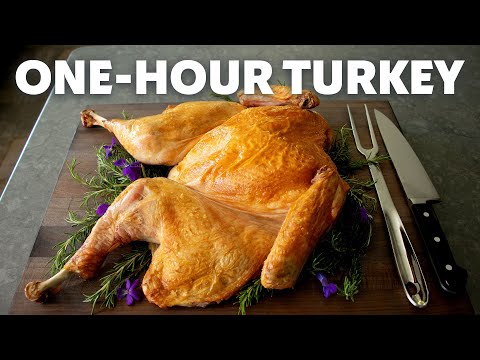
One-Hour Turkey! | How to Roast a Perfect Turkey in 1 Hour | Food Wishes
"The mother held the sleeping infant gently against her breast."
 17:43
17:43
Olivia Munn on Husband John Mulaney’s Relationship with Her Mom & Making the Worst Smelling Stew
"The mother held the sleeping infant gently against her breast."
Dieses Wort in anderen Sprachen
Verwandte Redewendungen
Mehr Body Wörter
tongue
B1Die Zunge ist ein Muskel im Mund, den wir zum Schmecken benutzen.
eyelid
B1Das Augenlid ist die bewegliche Hautfalte, die das Auge schützt.
bone
B2Ein Knochen ist ein hartes, stabiles Teil, das das Skelett eines Wirbeltiers bildet.
backs
B1Das Wort 'backs' bezieht sich auf die Rücken mehrerer Personen oder die Rückseiten von Gegenständen.
bones
B1Knochen sind die harten Teile, die das Skelett eines Lebewesens bilden.
clitoris
C1Die Klitoris ist ein hochempfindliches, erektiles Organ der weiblichen Genitalien, das primär der sexuellen Lust dient.
sleeping
A1Der Zustand des natürlichen, wiederkehrenden Ruhens von Körper und Geist.
tendon
C1Eine Sehne ist ein festes Bindegewebe, das Muskeln mit Knochen verbindet.
urine
B1Urin ist ein flüssiges Abfallprodukt, das von den Nieren aus dem Blut gefiltert wird.
arm
C1Der Wachmann war schwer bewaffnet.

