darth en 30 segundos
- A darth is a noun representing a powerful, malevolent force or entity.
- It is often used metaphorically to describe cold, calculated, and destructive influences.
- The word carries a heavy, menacing tone and implies a lack of empathy.
- It originates from pop culture but has migrated into general descriptive English.
The term darth, while famously originating as a title within a specific cinematic universe, has evolved in contemporary linguistic usage to function as a noun representing a personified dark force or an overwhelmingly malevolent entity. When people use this word in a broader context, they are often referring to a presence that is not just 'bad' but intentionally destructive, cold, and imposing. It suggests a level of power that is intimidating and a moral alignment that is fundamentally opposed to light or goodness. In the modern lexicon, calling someone or something a 'darth' implies a calculated, almost mechanical cruelty. It is used when a speaker wants to evoke the image of a shadow that consumes everything in its path, whether that be a person’s reputation, a company’s culture, or a political movement's integrity.
- The Archetypal Villain
- In literary and cultural analysis, a darth represents the 'Shadow' archetype—the part of the psyche or society that we fear and suppress, yet which possesses immense, albeit corrupted, strength.
The usage of 'darth' often appears in discussions about authoritarianism or corporate ruthlessness. For instance, a CEO who systematically dismantles a beloved company for profit might be described as the 'darth' of the industry. This usage transcends simple name-calling; it characterizes the individual as a force of nature that is both inevitable and terrifying. The word carries a weight of 'inevitability'—as if the malevolence is a destiny or a fundamental state of being rather than a temporary choice. It is this sense of permanent, structural evil that distinguishes it from mere 'villainy' or 'wickedness.'
The shadow in the corner of the room felt like a living darth, watching our every move with silent malice.
Furthermore, the word is used metaphorically to describe internal struggles. A person battling deep, destructive impulses might refer to those impulses as their inner 'darth.' This externalization helps in identifying the malevolence as something that can be named and, perhaps, eventually confronted. It is a word of gravity; you wouldn't use it for a minor inconvenience or a petty thief. It is reserved for the 'big bads' of life—the systemic injustices, the soul-crushing bosses, and the existential dread that feels like a physical weight.
- Metaphorical Weight
- When applied to non-human entities, like a 'darth of a storm,' it suggests the weather has a conscious, vengeful intent to destroy.
The new legislation was seen as a darth to civil liberties, casting a long shadow over the nation's future.
In academic circles, particularly in media studies, the term is analyzed for its phonetic qualities. The hard 'd' and the breathy 'th' create a sound that is both percussive and vanishing, mimicking the way a dark force might strike and then recede into the shadows. This linguistic texture contributes to its popularity as a descriptor for things that are elusive yet impactful. It is a word that demands attention and respect, even if that respect is born of fear. Whether used in a joke about a grumpy neighbor or a serious critique of a tyrant, the word 'darth' instantly communicates a specific brand of cold, calculated power.
In the silent halls of the abandoned asylum, the air itself seemed to congeal into a darth of pure terror.
- Structural Malevolence
- The term is frequently used in political commentary to describe 'darth-like' figures who rule through intimidation rather than consensus.
He walked with the heavy, rhythmic gait of a darth, each step echoing like a death knell.
The algorithm became a darth in the digital landscape, systematically erasing dissenting voices.
Using the word darth correctly requires an understanding of its noun-based structure and its heavy emotional connotations. It is typically used as a common noun to describe a person, an atmosphere, or a conceptual force. Because it is a strong word, it works best in sentences that aim for a dramatic or highly descriptive tone. You can use it to replace words like 'monster,' 'tyrant,' or 'menace' when you want to add a layer of cold, calculated evil to the description. It is often preceded by an article ('a' or 'the') or a possessive pronoun ('his,' 'her,' 'their').
- Describing Atmosphere
- The word can describe a feeling in a room. 'A darth of silence fell over the crowd' suggests a silence that is not peaceful, but threatening.
When applying 'darth' to a person, it usually functions as a metaphor for their personality or their role in a specific situation. For example, 'She was the darth of the department' implies she was the source of fear and negativity. It can also be used in the plural—'the darths of history'—to refer to a collection of malevolent figures. In more creative writing, you might use it to describe inanimate objects that seem to possess a sinister will. A black, monolithic building might be called a 'darth on the skyline,' suggesting it is an unwelcome and imposing presence.
The winter frost acted as a darth upon the garden, killing every tender sprout with icy precision.
Grammatically, 'darth' can also be part of a compound noun or used adjectivally in informal contexts (though its primary role is a noun). For instance, 'darth-like behavior' is a common way to describe someone acting with menacing authority. In sentences, it often pairs well with verbs of movement or presence, such as 'loomed,' 'stalked,' 'emerged,' or 'reigned.' These verbs reinforce the idea of a physical or spiritual weight that the word carries. Avoid using it for lighthearted or trivial matters, as the word's inherent gravity will make the sentence feel mismatched or unintentionally comedic.
- Comparative Usage
- Comparing a person to a 'darth' is a powerful way to highlight their lack of empathy and their focus on absolute control.
His ambition had turned into a darth, consuming his ethics and his friendships alike.
In dialogue, 'darth' can be used to deliver a sharp, biting insult. 'You're acting like a total darth' is a way of telling someone they are being unnecessarily cruel or controlling. In more formal writing, it can be used to discuss the 'darth of nihilism' or the 'darth of corruption,' treating these abstract concepts as tangible, menacing entities. The key is to maintain the sense of 'dark power.' If the subject lacks power or influence, 'darth' is likely the wrong word; 'villain' or 'jerk' might be more appropriate. A 'darth' must always be formidable.
The old factory, a rusted darth of industry, stood as a monument to the town's decay.
- Syntactic Patterns
- Common patterns include 'the darth of [Abstract Noun]' or '[Proper Noun] is a darth in [Field/Domain].'
To the small fish in the pond, the pike was a terrifying darth, a predator of unmatched ruthlessness.
The silence in the courtroom was a darth that suffocated the hope of the innocent.
While the word darth is deeply embedded in pop culture, its 'real-world' usage has branched out into several distinct areas. You will most frequently hear it in informal conversations among people who grew up with modern cinema, where it serves as a shorthand for anyone acting like a 'dark lord.' However, its reach extends far beyond fan conventions. In the world of tech and business, 'darth' is often used to describe companies or leaders who use their immense power to crush competition or exploit users. You might hear a tech journalist refer to a monopolistic corporation as the 'darth of the valley,' signaling its transition from an innovative startup to a menacing hegemon.
- Political Discourse
- Political commentators use 'darth' to characterize politicians who seem to operate from a place of cold calculation and hidden agendas.
In literature and film criticism, the word is used to describe a specific type of antagonist. Critics might discuss a character's 'darth-like' qualities, referring to their lack of mercy, their imposing physical presence, and their association with a 'dark side' of human nature. This usage helps categorize villains who are more than just 'bad guys'—they are symbols of systemic or cosmic evil. You'll also find the word in gaming communities, where players might describe a particularly difficult or intimidating boss as a 'total darth,' acknowledging the character's overwhelming power and menacing design.
The lead singer’s stage presence was that of a darth, commanding the audience with a dark, hypnotic energy.
Social media is another hotbed for the word. Memes often use 'darth' to hyperbolize a person's grumpy or intimidating behavior. For example, a photo of a cat looking particularly angry might be captioned 'The Darth of the Living Room.' This playful usage relies on the word's heavy connotations to create a humorous contrast. In more serious online discussions, 'darth' is used to label internet trolls or toxic influencers who spread negativity and 'darkness' within digital communities. It serves as a powerful label for those who seem to take pleasure in destruction and conflict.
- Artistic Descriptions
- Artists might describe a piece of work as having a 'darth'—a central point of darkness or intensity that defines the entire composition.
The storm cloud was a darth on the horizon, promising a night of unrelenting fury.
In the realm of sports, a particularly dominant and intimidating athlete might be nicknamed 'the darth' by fans and opponents alike. This acknowledges their skill while also highlighting the fear they instill in their competitors. The word captures the 'villain' role that some athletes embrace to fuel their performance. Finally, you might hear it in casual slang among younger generations, where it can mean anything from 'very cool in a dark way' to 'completely terrifying.' Its versatility stems from its strong phonetic impact and its clear, culturally-reinforced meaning.
The abandoned mansion was a darth in the middle of the suburban neighborhood, a place of whispered legends.
- Environmental Usage
- Ecologists might metaphorically refer to an invasive species that destroys an ecosystem as a 'darth' to the local biodiversity.
The shadow of the mountain was a darth that kept the valley in perpetual twilight.
His grief was a darth, a heavy, light-consuming presence that he carried everywhere.
Because darth is so closely tied to a specific fictional universe, the most common mistake is using it only as a proper noun or a name. While it certainly functions that way in fiction, its use as a common noun to describe a 'malevolent force' is a distinct linguistic application. Many learners fail to realize that it can be used metaphorically. Another frequent error is using 'darth' to describe something that is merely annoying or slightly unpleasant. If your coffee is cold, it's not a 'darth.' If your boss is slightly grumpy, they aren't necessarily a 'darth.' The word requires a level of genuine menace, power, and destructive potential. Using it for trivialities dilutes its impact and makes the speaker sound hyperbolic.
- Over-Capitalization
- Avoid capitalizing 'darth' when using it as a general noun (e.g., 'he is a darth'). Capitalization is only for the specific fictional titles.
Confusing 'darth' with 'dark' is another subtle mistake. While they are related, 'dark' is an adjective describing a lack of light, whereas 'darth' is a noun representing an entity or force of darkness. You can have a 'dark room,' but you wouldn't say 'the room is a darth' unless you mean the room itself feels like a living, evil entity. Similarly, don't confuse it with 'death.' While a 'darth' might cause death, the word itself focuses on the malevolent presence and the power dynamic, not just the end of life. It’s about the *quality* of the evil, not just the result.
Incorrect: The Darth of the situation was clear. Correct: The darth of the situation was clear.
Linguistically, some people try to use 'darth' as a verb (e.g., 'he darthed the meeting'). This is non-standard and usually sounds awkward. It is much better to use it as a noun with a strong verb, like 'he acted as a darth during the meeting.' Additionally, be careful with the register. In a highly formal academic paper or a legal document, 'darth' might be seen as too informal or slang-adjacent because of its pop-culture roots. In these cases, words like 'malevolence,' 'antagonist,' or 'oppressor' are safer choices. However, in creative writing, journalism, and casual conversation, 'darth' is a vivid and effective choice.
- Misunderstanding the Power Dynamic
- A 'darth' is always powerful. Calling a weak or helpless villain a 'darth' is a misuse of the term's inherent meaning of 'dominance.'
Incorrect: The small mosquito was a darth in my ear. Correct: The mosquito was a nuisance in my ear.
Finally, avoid using 'darth' in contexts where it might be culturally insensitive or misunderstood. While it's a common term in many parts of the world, someone unfamiliar with Western pop culture might find it confusing or think you are mispronouncing another word. Always consider your audience. If you are speaking to someone who doesn't know the cultural reference, the word loses all its metaphorical power and just sounds like a strange, made-up noun. In such cases, sticking to more traditional vocabulary is advisable to ensure clear communication.
The shadow was so thick it felt like a darth—not just a lack of light, but a presence of evil.
- Confusion with 'Dearth'
- Do not confuse 'darth' with 'dearth' (meaning a lack of something). They sound similar but have opposite meanings in terms of 'presence.'
The corporate raider was a darth who left a dearth of jobs in his wake.
The villain's monologue revealed him to be a true darth, motivated by a cold, logical hatred.
When you want to describe a malevolent force but feel that darth might be too informal or pop-culture heavy, there are several excellent alternatives. The choice depends on the specific 'flavor' of evil you wish to convey. If you want to emphasize the person's power and cruelty, 'tyrant' or 'despot' are strong choices. These words carry a historical and political weight that 'darth' lacks. If you are focusing on the spiritual or supernatural aspect of the darkness, 'wraith,' 'specter,' or 'fiend' might be more appropriate. These words suggest something that is not entirely human and possesses a haunting, malevolent quality.
- Darth vs. Nemesis
- A 'nemesis' is a long-term rival or an agent of downfall, whereas a 'darth' is a general force of malevolence. A darth can be your nemesis, but not all nemeses are darths.
For a more abstract or metaphorical usage, 'shadow' or 'blight' can work well. A 'shadow over the land' conveys a similar sense of looming dread as a 'darth over the land,' but it is more poetic and less tied to a specific fictional archetype. 'Blight' is particularly useful when describing something that destroys or corrupts everything it touches, like a 'blight on society.' If you want to describe a person who is cold and calculating, 'machiavellian' is a sophisticated adjective, though it doesn't quite capture the 'dark lord' energy that 'darth' provides. 'Antagonist' is the neutral, literary term, but it lacks the emotional punch and the implication of inherent evil.
While he was a darth in his public life, in private he was merely a pathetic bully.
In the context of modern business or technology, 'behemoth' or 'juggernaut' are often used to describe large, unstoppable forces. While these words don't necessarily imply evil, they do capture the 'overwhelming power' aspect of a darth. If the power is specifically used for harm, 'oppressor' or 'scourge' are better fits. 'Scourge' is a particularly powerful word, suggesting a person or thing that causes great suffering or destruction, often as a form of punishment. It has a biblical, epic quality that matches the gravity of 'darth' while remaining firmly within traditional vocabulary.
- Darth vs. Malice
- 'Malice' is the feeling or intent of ill-will, while 'darth' is the entity or force that embodies that malice.
The dictator was more than a tyrant; he was a darth who sought to extinguish the very spirit of his people.
When describing an atmosphere, 'gloom,' 'pall,' or 'miasma' are excellent alternatives. A 'pall of smoke' or a 'miasma of corruption' creates a vivid sensory image of a dark, suffocating presence. These words are often more descriptive than 'darth' because they suggest a specific physical state (smoke, fog, bad air). However, 'darth' remains unique in its ability to personify that atmosphere, making the darkness feel intentional and sentient. Choosing between these words requires balancing the need for traditional clarity with the desire for a modern, evocative metaphor.
The forest was home to a darth of ancient origin, a spirit that tolerated no intruders.
- Nuance Comparison
- 'Villain' is a role; 'Darth' is a nature. A villain might change their ways, but a darth is defined by their darkness.
The internet became a darth to privacy, a vast network that remembered every mistake.
He was the darth of the chess club, a player so ruthless he left his opponents in tears.
How Formal Is It?
Dato curioso
While many think 'Darth' means 'father' in Dutch (like 'vader'), 'Darth' itself has no meaning in Dutch; the connection was a happy coincidence for the plot twist in the films. The word has now been added to several informal dictionaries as a descriptor for a villain.
Guía de pronunciación
- Pronouncing the 'th' as a 't' (dart).
- Pronouncing the 'th' as a 'd' (dard).
- Making the 'a' too short (like 'bath' in some UK accents).
- Adding an extra syllable at the end.
- Confusing it with the pronunciation of 'dearth' (which has an 'er' sound).
Nivel de dificultad
Easy to recognize but requires context to understand metaphorical usage.
Requires careful handling to avoid sounding too informal or dramatic.
Common in casual speech; pronunciation of 'th' can be tricky for some.
Very distinct sound, usually easy to pick out in conversation.
Qué aprender después
Requisitos previos
Aprende después
Avanzado
Gramática que debes saber
Metaphorical Nouns
Using 'darth' to describe a person's character (e.g., 'He is a darth').
Articles with Titles
Using 'the' when 'darth' refers to a specific, known entity.
Adjective-Noun Pairing
Pairing 'darth' with strong adjectives like 'looming' or 'ruthless'.
Compound Adjectives
Using 'darth-like' to modify other nouns.
Possessive Metaphors
The 'darth of [Something]' to describe a negative quality.
Ejemplos por nivel
The darth is very scary.
The evil person is very scary.
Use 'the' before 'darth' here.
He is a darth in the movie.
He is a bad guy in the movie.
Common noun usage.
Don't be a darth!
Don't be mean!
Imperative sentence.
The darth has a red sword.
The villain has a red sword.
Subject-verb agreement.
I am afraid of the darth.
I am scared of the evil force.
Preposition 'of' follows 'afraid'.
The darth lives in a dark castle.
The villain lives in a dark castle.
Present simple tense.
Is he a darth?
Is he an evil person?
Question form.
The darth is tall and black.
The villain is tall and wears black.
Adjective usage.
The new boss is a total darth.
The new boss is very mean and scary.
Using 'total' as an intensifier.
The darth of the story wants to rule the world.
The main villain wants to control everything.
Genitive 'of' phrase.
He spoke with the voice of a darth.
He spoke in a deep, scary voice.
Metaphorical usage.
There is a darth in every legend.
Every old story has a powerful evil character.
Existential 'there is'.
She dressed like a darth for the party.
She wore a dark, scary costume.
Simile using 'like'.
The darth's power was growing.
The evil force's power was increasing.
Possessive 's.
We must stop the darth.
We need to stop the evil entity.
Modal verb 'must'.
The darth loomed over the city.
The evil presence was hanging over the city.
Past tense of 'loom'.
The corporate darth began buying all the small shops.
The evil company started taking over small businesses.
Compound noun 'corporate darth'.
A darth of negativity spread through the office.
A powerful force of bad feelings spread in the office.
Using 'darth' for an abstract feeling.
He realized his greed had turned him into a darth.
He saw that his desire for money made him evil.
Past perfect tense.
The storm was a darth that destroyed the crops.
The storm was a malevolent force that ruined the farm.
Metaphor for nature.
She saw the darth in his eyes before he spoke.
She saw the cold evil in his expression.
Prepositional phrase 'in his eyes'.
The darth of corruption is hard to fight.
The powerful force of dishonesty is difficult to stop.
Abstract noun pairing.
He played the role of the darth perfectly.
He acted as the villain very well.
Adverb 'perfectly' modifying 'played'.
The darth of the deep ocean is a giant squid.
The scary, powerful force of the deep sea is a squid.
Metaphorical application to animals.
The dictator acted as a darth, silencing all who disagreed.
The ruler was a malevolent force who stopped dissent.
Present participle 'silencing'.
A darth of silence followed the shocking announcement.
A heavy, threatening silence came after the news.
Describing atmosphere.
The software became a darth, controlling every aspect of their lives.
The program turned into a menacing force of control.
Personification of technology.
He was the darth of the courtroom, intimidating every witness.
He was the menacing presence who scared the witnesses.
Noun phrase with 'intimidating'.
The darth of his past continued to haunt his dreams.
The dark, evil force from his history troubled his sleep.
Metaphor for trauma.
They viewed the invading army as a darth of destruction.
They saw the soldiers as a malevolent force of ruin.
Prepositional phrase 'of destruction'.
The darth of the forest was an ancient, vengeful spirit.
The malevolent entity in the woods was an old ghost.
Adjective 'vengeful'.
His cold logic made him a darth in the eyes of his peers.
His lack of emotion made him seem evil to others.
Idiom 'in the eyes of'.
The darth of nihilism began to erode the foundations of the community.
The destructive force of believing in nothing hurt the town.
Sophisticated abstract usage.
She described the addiction as a darth that had stolen her soul.
She said the habit was a malevolent force that ruined her.
Relative clause 'that had stolen'.
The architect designed the building to be a darth on the skyline.
The designer made the building look like a menacing presence.
Infinitive of purpose 'to be'.
The darth of the regime was felt in every whispered conversation.
The malevolent presence of the government was everywhere.
Passive voice 'was felt'.
He was a darth of industry, caring only for profit and power.
He was a malevolent force in business, ignoring ethics.
Appositive phrase.
The darth of the storm was its unrelenting, mechanical fury.
The evil part of the storm was its cold, constant anger.
Adjective 'unrelenting'.
In the novel, the darth is a symbol of the protagonist's own shadow.
In the book, the villain represents the hero's dark side.
Literary analysis context.
The darth of the algorithm lies in its total lack of empathy.
The evil part of the computer code is that it doesn't care.
Subject-verb agreement 'lies'.
The darth of the panopticon ensures total compliance through perceived surveillance.
The malevolent force of the prison system forces everyone to obey.
Advanced vocabulary 'panopticon'.
He manifested as a darth of pure will, unburdened by morality or mercy.
He became a malevolent force of desire, without any ethics.
Participial phrase 'unburdened by'.
The darth of the abyss is not a person, but the absence of all meaning.
The evil force of the void is just the lack of purpose.
Negative construction 'not... but'.
She analyzed the darth of the bureaucracy, where human lives are mere data points.
She studied the malevolent force of the government system.
Relative clause 'where human lives...'.
The darth of the winter was a cold so absolute it seemed intentional.
The malevolent force of the season was a purposeful cold.
Result clause 'so... that'.
His legacy was a darth that cast a shadow over the next three generations.
What he left behind was a malevolent force that hurt his family.
Metaphorical legacy.
The darth of the ideology was its demand for the total annihilation of the other.
The evil part of the belief was its need to destroy enemies.
Noun phrase 'total annihilation'.
In the final act, the darth is revealed to be the very system they tried to save.
At the end, the evil force is the government they protected.
Passive infinitive 'to be revealed'.
Colocaciones comunes
Frases Comunes
— Behaving in a controlling, mean, or intimidating way.
Stop acting like a darth and listen to our ideas.
— A powerful, negative presence that everyone is aware of.
His anger was the darth in the room that no one wanted to address.
— A very powerful and negative version of something.
That was a darth of a headache.
— To accept or lean into one's dark or ruthless side.
In business, sometimes you have to embrace the darth to succeed.
— To overcome a major negative force or person.
The community worked together to defeat the darth of poverty.
— The negative influence or fear caused by a powerful entity.
The town lived in the darth's shadow for decades.
— A very serious and malevolent danger.
The virus was a darth-level threat to the global economy.
— A malevolence that is not immediately obvious.
His polite smile masked a hidden darth.
— A redundant but emphatic way to describe someone very evil.
He was a true darth of the dark side.
— The process of losing one's empathy and becoming malevolent.
The movie shows his slow journey of becoming a darth.
Se confunde a menudo con
Sounds similar but means a 'lack' of something, whereas 'darth' is a 'presence' of evil.
'Dark' is an adjective; 'darth' is a noun representing an entity.
Related in theme, but 'darth' focuses on the malevolent power, not the biological end.
Modismos y expresiones
— To engage with a dangerous or evil force for personal gain.
By taking that bribe, he began to dance with the darth.
informal— A play on 'the devil is in the details,' suggesting a hidden malevolence in small things.
The contract looked good, but the darth was in the details.
informal— A person who is being particularly mean or difficult today.
Who is the darth of the day in the office?
slang— A state of fear or oppression.
The country lived under the shadow of the darth.
literary— A powerful and inescapable control.
The city was in the darth's grip of fear.
neutral— A play on 'speak of the devil,' used when an intimidating person appears.
Speak of the darth, here comes the boss.
informal— A deal that seems good but has a terrible hidden cost.
The quick loan turned out to be a darth's bargain.
neutral— A destructive influence that ruins things.
Everything he managed suffered from the darth's touch.
literary— To provoke a powerful and dangerous person.
Don't complain about the schedule; you don't want to wake the darth.
informalFácil de confundir
Both describe cruel rulers.
A tyrant is a political role; a darth is a more general, often metaphorical, malevolent force.
The tyrant ruled the country, but the darth ruled the shadows.
Both are 'bad guys'.
Villain is a broad term; darth implies a specific type of cold, powerful, and imposing evil.
He was a petty villain, not a true darth.
Both are scary and evil.
Monster often implies something wild or beast-like; darth implies calculation and authority.
The monster attacked the village, but the darth planned its downfall.
Both relate to darkness.
Shadow is an absence of light; darth is a personified presence of darkness.
The shadow was long, but the darth within it was longer.
Both are antagonists.
Nemesis is a specific rival; darth is a general force of malevolence.
The darth was a nemesis to everyone who loved freedom.
Patrones de oraciones
The [Noun] is a darth.
The man is a darth.
He is a [Adjective] darth.
He is a scary darth.
A darth of [Abstract Noun] [Verb].
A darth of silence fell.
The [Noun] acted as a darth in [Place].
The boss acted as a darth in the office.
The darth of [System] [Verb] the [Noun].
The darth of the algorithm controls the news.
[Noun] manifested as a darth of [Concept].
His anger manifested as a darth of pure will.
Don't let your [Noun] become a darth.
Don't let your ambition become a darth.
It was a darth-like [Noun].
It was a darth-like building.
Familia de palabras
Sustantivos
Verbos
Adjetivos
Relacionado
Cómo usarlo
Medium (High in pop-culture contexts)
-
Using 'darth' for small annoyances.
→
Using it for powerful, malevolent forces.
A 'darth' must be intimidating and powerful. A broken pencil is not a darth.
-
Capitalizing 'darth' in general sentences.
→
Lowercase 'darth'.
Unless it's a specific name, it's a common noun.
-
Confusing 'darth' with 'dearth'.
→
Using 'darth' for evil and 'dearth' for lack.
They sound similar but have completely different meanings.
-
Using 'darth' as a verb.
→
Using it as a noun.
'He darthed the room' is incorrect. 'He was a darth in the room' is correct.
-
Thinking 'darth' only refers to Star Wars.
→
Using it as a general metaphor.
The word has evolved to describe any dark, malevolent entity.
Consejos
Metaphorical Power
Use 'darth' when you want to describe a person who isn't just mean, but who seems to have a 'dark side' they use to control others.
Phonetic Impact
The word 'darth' sounds heavy. Use it in sentences where you want to create a sense of weight or seriousness.
Creative Writing
In stories, use 'darth' to personify abstract fears, making them feel like a physical enemy.
Humor
Calling a grumpy friend a 'darth' is a common way to use pop culture to lighten a mood.
Noun vs Title
Remember: 'He is a darth' (noun) vs 'He is Darth Vader' (title/name).
Context Clues
If you hear 'darth' in a serious news report, look for metaphors about power and corruption.
Pronunciation
Practice the 'th' sound. If you say 'dart,' people will think of the game or a quick movement.
Avoid Overuse
Because it's a strong word, using it too much can make your writing feel like a comic book. Use it for the 'big' villains.
Global Reach
Most English speakers under 60 will know this word, making it a great 'bridge' word for communication.
Archetypes
Think of a 'darth' as the opposite of a 'hero.' It helps you organize characters in your mind.
Memorízalo
Mnemotecnia
Think of a 'Dark' 'Earth'—a world without light. 'Darth' is the one who makes the world dark and scary.
Asociación visual
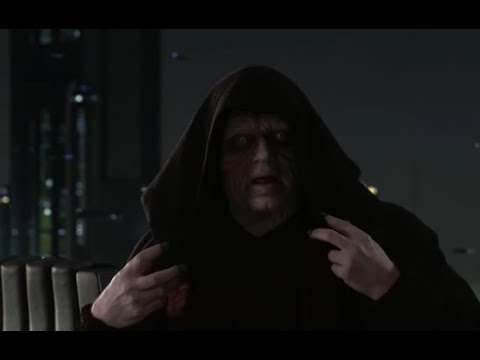
Imagine a tall figure in a black cape standing in a doorway, blocking all the light. That imposing shadow is a darth.
Word Web
Desafío
Try to describe a 'darth' in your own life—maybe a difficult challenge or a negative habit—using the word three times in a paragraph.
Origen de la palabra
The word was coined by George Lucas for the 'Star Wars' franchise in the 1970s. It is widely believed to be a combination of 'Dark' and 'Death' or 'Dark Lord of the Sith.' Over time, it transitioned from a fictional title to a general noun in English to describe any menacing, dark figure.
Significado original: A title given to a leader of the Sith, representing mastery of the Dark Side of the Force.
Modern English (Neologism).Contexto cultural
Generally safe to use, but avoid using it to describe real people in professional settings as it can be seen as a very strong and personal insult.
Very common in the US, UK, and Australia as a pop-culture reference and metaphorical noun.
Practica en la vida real
Contextos reales
Business
- corporate darth
- ruthless tactics
- monopolistic power
- crushing competition
Literature
- shadow archetype
- malevolent entity
- imposing presence
- antagonistic force
Weather
- darth of a storm
- looming clouds
- unrelenting fury
- dark horizon
Personal Growth
- inner darth
- dark impulses
- overcoming negativity
- finding the light
Politics
- darth of corruption
- authoritarian rule
- silencing dissent
- menacing authority
Inicios de conversación
"Who do you think is the biggest 'darth' in history, and why?"
"Have you ever had a boss who acted like a total darth?"
"Do you think technology is becoming a darth in our modern lives?"
"What are some 'darth-like' qualities that make a villain truly scary?"
"How do you deal with your own 'inner darth' when you feel grumpy?"
Temas para diario
Describe a time when you felt like a 'darth' was looming over your life. How did you handle it?
Write a short story about a 'corporate darth' who eventually learns the value of empathy.
Reflect on the 'darths' of modern society. What are the most destructive forces we face today?
If you had to design a 'darth' for a new movie, what would their powers and appearance be?
Discuss the idea that everyone has a 'darth' inside them. How can we keep that side in check?
Preguntas frecuentes
10 preguntasIt is increasingly recognized in informal and pop-culture dictionaries as a noun for a malevolent force, though it originated in fiction.
Only if the environment is casual and everyone understands the reference. In formal meetings, use 'competitor' or 'adversary'.
No. Capitalize it only when it's part of a specific name (e.g., Darth Vader). As a general noun, it's lowercase.
The plural is 'darths,' as in 'the darths of the corporate world'.
Generally no, though in slang it can mean 'cool' in a dark, powerful way.
They are homophones in some accents. 'Dearth' means a lack of something; 'darth' means a dark force.
Yes, the term is gender-neutral when used as a noun for a malevolent force.
It was created by George Lucas for the Star Wars movies in 1977.
It is primarily a noun, but can be used adjectivally in compounds like 'darth-like'.
Yes, it's a common metaphorical use to describe a powerful, destructive weather event.
Ponte a prueba 190 preguntas
Describe a fictional 'darth' in three sentences. Focus on their appearance and behavior.
Well written! Good try! Check the sample answer below.
Write a sentence using 'darth' as a metaphor for a difficult challenge you faced.
Well written! Good try! Check the sample answer below.
Explain why a ruthless CEO might be called a 'corporate darth'.
Well written! Good try! Check the sample answer below.
Compare a 'darth' to a 'tyrant' in a short paragraph.
Well written! Good try! Check the sample answer below.
Write a dialogue between two friends where one is 'acting like a darth'.
Well written! Good try! Check the sample answer below.
Describe the 'darth of a storm' using vivid adjectives.
Well written! Good try! Check the sample answer below.
How can someone overcome their 'inner darth'? Write a short advice column entry.
Well written! Good try! Check the sample answer below.
Discuss the impact of 'darth' as a cultural signifier in modern media.
Well written! Good try! Check the sample answer below.
Write a poem where a 'darth' is the central theme.
Well written! Good try! Check the sample answer below.
Describe a building that looks like a 'darth' on the skyline.
Well written! Good try! Check the sample answer below.
What does 'the darth of nihilism' mean to you? Write a short reflection.
Well written! Good try! Check the sample answer below.
Create a character profile for a 'darth' in a fantasy novel.
Well written! Good try! Check the sample answer below.
Write a news headline using the word 'darth' metaphorically.
Well written! Good try! Check the sample answer below.
Explain the difference between 'darth' and 'dearth' in your own words.
Well written! Good try! Check the sample answer below.
Describe a 'darth of silence' in a crowded room.
Well written! Good try! Check the sample answer below.
Write a sentence using 'darth-like' as an adjective.
Well written! Good try! Check the sample answer below.
How does the word 'darth' make you feel? Describe its phonetic impact.
Well written! Good try! Check the sample answer below.
Write a short story about a 'darth' who decides to become a hero.
Well written! Good try! Check the sample answer below.
Discuss the 'darth of the algorithm' in the context of social media.
Well written! Good try! Check the sample answer below.
Use 'darth' in a sentence about a difficult exam.
Well written! Good try! Check the sample answer below.
Pronounce the word 'darth' clearly. Focus on the 'th' sound.
Read this aloud:
Dijiste:
Speech recognition is not supported in your browser. Try Chrome or Edge.
Describe a 'darth' from a movie you have seen.
Read this aloud:
Dijiste:
Speech recognition is not supported in your browser. Try Chrome or Edge.
Explain the metaphor 'corporate darth' to a partner.
Read this aloud:
Dijiste:
Speech recognition is not supported in your browser. Try Chrome or Edge.
Discuss how someone might deal with their 'inner darth'.
Read this aloud:
Dijiste:
Speech recognition is not supported in your browser. Try Chrome or Edge.
Talk about a 'darth-like' presence in your city (a building, a person, etc.).
Read this aloud:
Dijiste:
Speech recognition is not supported in your browser. Try Chrome or Edge.
Debate whether technology is a 'darth' or a 'savior' in modern society.
Read this aloud:
Dijiste:
Speech recognition is not supported in your browser. Try Chrome or Edge.
Describe a 'darth of silence' you have experienced.
Read this aloud:
Dijiste:
Speech recognition is not supported in your browser. Try Chrome or Edge.
Use 'darth' in a sentence to describe a very difficult challenge.
Read this aloud:
Dijiste:
Speech recognition is not supported in your browser. Try Chrome or Edge.
Explain the phonetic impact of the word 'darth' to a classmate.
Read this aloud:
Dijiste:
Speech recognition is not supported in your browser. Try Chrome or Edge.
Tell a short story about a 'darth' who learned to be kind.
Read this aloud:
Dijiste:
Speech recognition is not supported in your browser. Try Chrome or Edge.
Discuss the 'darth of the algorithm' and its effect on news.
Read this aloud:
Dijiste:
Speech recognition is not supported in your browser. Try Chrome or Edge.
Nicknaming someone 'darth'—is it always an insult? Discuss.
Read this aloud:
Dijiste:
Speech recognition is not supported in your browser. Try Chrome or Edge.
Describe the 'darth of a storm' you once saw.
Read this aloud:
Dijiste:
Speech recognition is not supported in your browser. Try Chrome or Edge.
How does 'darth' differ from 'tyrant'? Explain orally.
Read this aloud:
Dijiste:
Speech recognition is not supported in your browser. Try Chrome or Edge.
Use 'darth' in a humorous way to describe a grumpy pet.
Read this aloud:
Dijiste:
Speech recognition is not supported in your browser. Try Chrome or Edge.
Discuss the 'darth of the abyss' as a philosophical concept.
Read this aloud:
Dijiste:
Speech recognition is not supported in your browser. Try Chrome or Edge.
What makes a character a 'darth' rather than just a 'villain'?
Read this aloud:
Dijiste:
Speech recognition is not supported in your browser. Try Chrome or Edge.
Describe a 'darth of corruption' in a fictional setting.
Read this aloud:
Dijiste:
Speech recognition is not supported in your browser. Try Chrome or Edge.
How has the word 'darth' changed over time? Give your opinion.
Read this aloud:
Dijiste:
Speech recognition is not supported in your browser. Try Chrome or Edge.
Say 'darth' three times in a short paragraph about a dark forest.
Read this aloud:
Dijiste:
Speech recognition is not supported in your browser. Try Chrome or Edge.
Listen for the word 'darth' in a movie trailer. What kind of character is it describing?
Listen to a podcast about business. How do they use the term 'corporate darth'?
Listen to a weather report. Does the reporter use 'darth' metaphorically?
Listen to a conversation between friends. Is 'darth' used as a joke or a serious insult?
Listen to a lecture on archetypes. How is 'darth' connected to the 'Shadow'?
Listen for the 'th' sound in 'darth'. Is it voiceless or voiced?
Listen to a book review. Does the reviewer call the antagonist a 'darth'?
Listen to a political speech. Is 'darth' used to describe an opponent?
Listen to a discussion on AI. How is 'digital darth' defined?
Listen for the word 'dearth' vs 'darth'. Can you tell the difference?
Listen to a story about a dark castle. How many times is 'darth' mentioned?
Listen to a description of a storm. Is 'darth' used to describe the wind or the clouds?
Listen to a psychological analysis. What does 'inner darth' mean in the context?
Listen to a joke about a 'darth' cat. What is the punchline?
Listen to a philosophical debate. How is 'darth of the abyss' used?
The Darth of the situation was clear.
Don't capitalize 'darth' as a common noun.
He darthed the meeting with his anger.
'Darth' is a noun, not a verb.
There was a darth of food in the village.
'Dearth' means lack; 'darth' means a dark force.
The darth is very kindly.
A 'darth' is malevolent, not kind.
He is a darth-like of person.
'Darth-like' is an adjective and doesn't need 'of'.
/ 190 correct
Perfect score!
Summary
The word 'darth' is a powerful tool for describing personified evil or systemic malevolence. It suggests a force that is not just bad, but intentionally and powerfully destructive. Example: 'The CEO was seen as a corporate darth, dismantling the company's legacy for personal gain.'
- A darth is a noun representing a powerful, malevolent force or entity.
- It is often used metaphorically to describe cold, calculated, and destructive influences.
- The word carries a heavy, menacing tone and implies a lack of empathy.
- It originates from pop culture but has migrated into general descriptive English.
Metaphorical Power
Use 'darth' when you want to describe a person who isn't just mean, but who seems to have a 'dark side' they use to control others.
Phonetic Impact
The word 'darth' sounds heavy. Use it in sentences where you want to create a sense of weight or seriousness.
Creative Writing
In stories, use 'darth' to personify abstract fears, making them feel like a physical enemy.
Humor
Calling a grumpy friend a 'darth' is a common way to use pop culture to lighten a mood.