myanmar en 30 segundos
- Myanmar is a large country in Southeast Asia, formerly known as Burma, sharing borders with five nations including Thailand and China.
- The country is officially named the Republic of the Union of Myanmar and has Naypyidaw as its capital city since 2005.
- It is a culturally diverse nation with over 135 ethnic groups and a majority population that practices Theravada Buddhism.
- Myanmar is famous for its 'Golden Land' nickname, reflecting the abundance of gold-covered pagodas and its rich natural resources.
The term myanmar refers to a sovereign state located in the western portion of mainland Southeast Asia. Geographically, it is the largest country in mainland Southeast Asia and the tenth-largest in Asia by area. When people use this word, they are typically referring to the nation-state in a formal, geographical, or political context. The name was officially adopted by the ruling military government in 1989, replacing the previous English name, Burma. This change was intended to be more inclusive of the country's diverse ethnic groups, as 'Burma' was seen as relating primarily to the majority Bamar ethnic group. However, the use of the name remains a point of international discussion, with some organizations and governments still using 'Burma' to signal non-recognition of the military government that instituted the change.
- Geopolitical Context
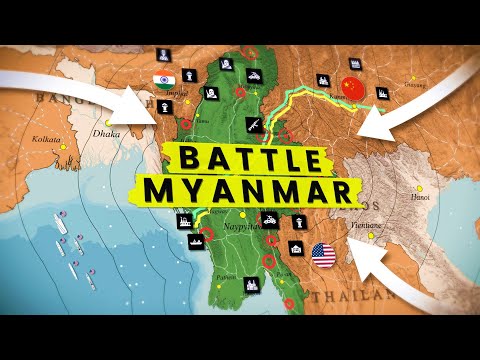
- Myanmar is bordered by Bangladesh and India to its northwest, China to its northeast, Laos and Thailand to its east and southeast, and the Andaman Sea and the Bay of Bengal to its south and southwest. Its strategic location makes it a bridge between South Asia and Southeast Asia.
- Formal Usage
- In international diplomacy, the United Nations and the Association of Southeast Asian Nations (ASEAN) use 'Myanmar' as the official designation. It is used in trade agreements, official state visits, and global mapping services.
The traveler spent three weeks exploring the ancient temples of Bagan in myanmar.
Beyond its political identity, the word evokes images of a rich cultural heritage. Myanmar is often called the 'Golden Land' due to the thousands of gold-covered pagodas that dot its landscape. The most famous of these is the Shwedagon Pagoda in Yangon, which is a central symbol of the nation's spiritual life. People use the word when discussing Theravada Buddhism, which is practiced by the majority of the population and deeply influences daily life, social norms, and the calendar of festivals. In a linguistic sense, the word is a proper noun and functions as the subject or object in a sentence, never taking a plural form or an article like 'the' unless part of the full official title: The Republic of the Union of Myanmar.
Exporting teak and jade are significant parts of the economy in myanmar.
- Cultural Identity
- The word represents a mosaic of over 135 distinct ethnic groups, each with its own language and traditions. Using the name acknowledges this complex internal diversity.
The Irrawaddy River flows through the heart of myanmar, serving as a vital transport artery.
Many scholars study the unique script used in myanmar, which is derived from ancient Brahmi characters.
The cuisine of myanmar is famous for its savory salads and fish-based soups.
Using the word myanmar correctly involves understanding its role as a proper noun. It designates a specific place and therefore must always be capitalized. In English grammar, country names typically do not require the definite article 'the' unless the name contains a word like 'Republic,' 'Kingdom,' or 'States.' Therefore, you would say 'I am going to Myanmar,' not 'I am going to the Myanmar.' However, you would say 'I am visiting the Republic of the Union of Myanmar.' This distinction is important for learners aiming for B1 proficiency and above, as it demonstrates a grasp of specific grammatical nuances regarding geographical entities.
- Subject Position
- Myanmar borders five other nations in Southeast Asia. Here, the word acts as the subject performing the action of bordering.
- Object Position
- The international community is closely monitoring the situation in myanmar. In this case, it is the object of the preposition 'in'.
Tourism in myanmar has seen significant fluctuations over the last decade.
When discussing people or things from Myanmar, the adjective 'Burmese' is still very commonly used, though 'Myanmarese' is an alternative, albeit less frequent, term. For example, 'Burmese food' or 'Burmese history.' In formal writing, it is often better to use the possessive form 'Myanmar's' or the prepositional phrase 'of Myanmar.' For instance, 'The government of Myanmar announced a new policy.' This maintains a high level of formality and precision. It is also important to note that the word is often paired with verbs related to geography, politics, and travel, such as 'located,' 'governed,' 'visited,' or 'developed.'
The diverse landscapes of myanmar range from snow-capped mountains to tropical beaches.
- Possessive Usage
- Myanmar's economy relies heavily on agriculture and natural resources. This shows ownership or relationship.
If you travel to myanmar, you must visit the floating gardens of Inle Lake.
Historical records show that myanmar has been a center of trade for centuries.
The political transition in myanmar has faced numerous challenges.
In the modern world, the word myanmar is most frequently encountered in news broadcasts and journalistic reports. Due to its complex political history and ongoing social issues, it is a regular subject for international news agencies like the BBC, CNN, and Al Jazeera. You will hear it in segments discussing regional security in Southeast Asia, human rights reports, and economic developments. Journalists use it to ground their stories in a specific geographic reality, often providing context about the country's borders or its relationship with neighboring powers like China and India. For a learner, listening to these reports is an excellent way to hear the word pronounced in various accents, from British to American to Australian.
- News Media
- 'Protests have broken out in several cities across myanmar today.' This is a typical sentence structure found in daily news updates.
- Travel Documentaries
- 'The hidden beauty of myanmar is finally being revealed to the world.' Travel shows often focus on the country's stunning landscapes and religious architecture.
The documentary highlighted the traditional weaving techniques used by women in rural myanmar.
You will also hear the word in academic settings, particularly in departments of Asian Studies, Political Science, and Anthropology. Professors and researchers use 'Myanmar' when discussing the country's transition from colonial rule to independence, its ethnic conflicts, and its unique form of Buddhism. In these contexts, the word is used with a high degree of precision and is often accompanied by discussions of the 'Burma vs. Myanmar' naming debate. Students are expected to use the term 'Myanmar' in their essays and presentations to reflect current academic standards and official recognition by international bodies.
During the lecture, the professor explained the strategic importance of myanmar in the Indo-Pacific region.
- Business and Trade
- 'Our company is looking to expand its supply chain into myanmar.' Business professionals use the word when discussing emerging markets and resource extraction.
The UN envoy is scheduled to arrive in myanmar next week for high-level talks.
Many NGOs are working to provide humanitarian aid to displaced people within myanmar.
The film festival featured several independent movies from myanmar that explored social themes.
One of the most frequent mistakes learners make with the word myanmar is related to its pronunciation. Because of the spelling, some people try to pronounce it as 'My-an-mar' with a long 'y' sound like 'my.' However, the correct pronunciation is closer to 'mee-an-mar' or 'm-yahn-mar.' Mispronouncing the name of a country can sometimes be seen as a lack of cultural awareness, so it is beneficial for students to practice the correct phonetic sounds. Another common error is the addition of the definite article 'the' before the name. As mentioned previously, English does not use 'the' for most country names. Saying 'The Myanmar is a beautiful place' is grammatically incorrect; the correct form is 'Myanmar is a beautiful place.'
- Article Misuse
- Incorrect: 'I want to visit the myanmar.' Correct: 'I want to visit myanmar.'
- Adjective Confusion
- Learners often struggle with the adjective form. While 'Myanmarese' exists, 'Burmese' is the standard adjective for the language, people, and culture. Avoid saying 'I am learning the Myanmar language.'
It is a mistake to think that myanmar only has one ethnic group; it is actually incredibly diverse.
Spelling is another area where mistakes occur. The double 'n' is sometimes forgotten, or the 'a' and 'y' are swapped. Ensuring the correct spelling—M-Y-A-N-M-A-R—is essential for formal writing. Furthermore, some learners confuse the country's capital. While Yangon (formerly Rangoon) is the most famous and largest city, the official capital is Naypyidaw. Using 'Yangon' as the capital in a formal report would be a factual error. Lastly, there is the political sensitivity of the name itself. While not a grammatical mistake, using 'Burma' in a context where 'Myanmar' is expected (or vice versa) can carry unintended political connotations. It is always wise to follow the lead of the organization or publication you are writing for.
A common error is referring to Yangon as the capital of myanmar in current documents.
- Capitalization Error
- Incorrect: 'The country of myanmar is in Asia.' (lowercase 'm'). Correct: 'The country of myanmar is in Asia.'
Don't confuse the currency of myanmar, the Kyat, with the currencies of its neighbors.
Using the term 'Burmese' as a noun for the country itself is a mistake; use myanmar.
It is incorrect to say myanmar is a landlocked country; it has a long coastline.
The most obvious alternative to the word myanmar is 'Burma.' While they refer to the same geographical entity, their usage carries different nuances. 'Burma' is the historical name used during the British colonial period and until 1989. It is still used by some governments (like the US and UK in certain formal contexts) and by democracy activists who do not recognize the legitimacy of the military government that changed the name. In literature, history books, and older films, 'Burma' is the term you will encounter. Understanding the relationship between these two words is crucial for any student of English or international relations.
- Burma vs. Myanmar
- 'Burma' is often perceived as more informal or politically charged, while 'Myanmar' is the official, internationally recognized name used by the UN.
- The Golden Land
- This is a poetic nickname for myanmar, often used in travel writing and literature to describe its spiritual and physical beauty.
George Orwell's famous essay 'Shooting an Elephant' is set in what was then known as Burma, now myanmar.
Other similar words include regional descriptors like 'Southeast Asia' or 'Indochina' (though Myanmar is technically part of the former but not the latter in the strict French colonial sense). When discussing the people, 'Burmese' is the primary adjective and noun. For example, 'The Burmese people are known for their hospitality.' In some academic circles, you might see 'Myanmarese,' but it is much less common. If you are looking for synonyms in a poetic or descriptive sense, you might use 'The Land of Pagodas.' However, in almost all practical, modern contexts, 'Myanmar' is the unique and necessary term to identify this specific country.
The transition from Burma to myanmar remains a topic of debate in linguistic circles.
- The Republic of the Union of Myanmar
- This is the full, formal name of the country, used in legal and diplomatic documents.
While Thailand is a neighbor, the culture of myanmar has distinct Indian and Tibetan influences.
The Irrawaddy Delta is one of the most fertile regions in myanmar.
The name myanmar is derived from the local name 'Myanma', which has been used for centuries.
How Formal Is It?
Dato curioso
The name change in 1989 also included changing the names of many cities; for example, Rangoon became Yangon and Maymyo became Pyin Oo Lwin. This was part of a larger effort to remove colonial-era linguistic influences.
Guía de pronunciación
- Pronouncing the first syllable like the word 'my' (/maɪ/). It should be /mjæn/ or /mjɑːn/.
- Adding an extra syllable, like 'My-an-a-mar'.
- Stress on the wrong syllable, like 'MY-an-mar'.
- Confusing the pronunciation with 'Burma'.
- Failing to pronounce the 'n' in the middle clearly.
Nivel de dificultad
The word itself is easy to read, but texts about Myanmar can be complex due to political vocabulary.
Spelling 'Myanmar' correctly requires attention to the 'y' and the double 'a'.
Pronunciation can be tricky for beginners who may mispronounce the first syllable.
Usually easy to recognize in news reports, though accents may vary.
Qué aprender después
Requisitos previos
Aprende después
Avanzado
Gramática que debes saber
Proper Nouns
Myanmar is always capitalized.
Zero Article with Countries
We say 'in Myanmar', not 'in the Myanmar'.
Possessive Adjectives
Use 'Myanmar's' to show something belongs to the country.
Adjective Formation
Use 'Burmese' as the primary adjective for the people and language.
Prepositional Phrases
Use 'of Myanmar' for formal descriptions, like 'The Government of Myanmar'.
Ejemplos por nivel
Myanmar is a country.
Myanmar est un pays.
Simple subject-verb-complement structure.
I want to go to Myanmar.
Je veux aller au Myanmar.
Using 'to' with a country name.
Myanmar is in Asia.
Le Myanmar est en Asie.
Preposition 'in' used for location.
The flag of Myanmar is colorful.
Le drapeau du Myanmar est coloré.
Possessive 'of' used with a country name.
Myanmar is near Thailand.
Le Myanmar est proche de la Thaïlande.
Using 'near' to show proximity.
Is Myanmar big?
Le Myanmar est-il grand ?
Basic question form with 'is'.
I like Myanmar food.
J'aime la nourriture du Myanmar.
Using the country name as a noun adjunct.
Myanmar has many temples.
Le Myanmar a beaucoup de temples.
Using 'has' for possession/features.
Myanmar is a very beautiful place to visit.
Le Myanmar est un endroit très beau à visiter.
Adjective + noun + infinitive phrase.
Many people in Myanmar wear traditional clothes.
Beaucoup de gens au Myanmar portent des vêtements traditionnels.
Quantifier 'many' and prepositional phrase.
The capital of Myanmar is Naypyidaw.
La capitale du Myanmar est Naypyidaw.
Identifying the capital city.
It is hot in Myanmar during the summer.
Il fait chaud au Myanmar pendant l'été.
Impersonal 'it' for weather.
Have you ever been to Myanmar?
Êtes-vous déjà allé au Myanmar ?
Present perfect for life experience.
Myanmar is famous for its gold pagodas.
Le Myanmar est célèbre pour ses pagodes dorées.
Adjective phrase 'famous for'.
I am learning about Myanmar in school.
J'apprends sur le Myanmar à l'école.
Present continuous tense.
Myanmar has a long coastline on the sea.
Le Myanmar a une longue côte sur la mer.
Descriptive sentence with 'has'.
Myanmar was formerly known as Burma before 1989.
Le Myanmar était autrefois connu sous le nom de Birmanie avant 1989.
Passive voice with 'formerly known as'.
The culture of Myanmar is influenced by Buddhism.
La culture du Myanmar est influencée par le bouddhisme.
Passive voice 'is influenced by'.
Myanmar's economy relies on agriculture and natural resources.
L'économie du Myanmar repose sur l'agriculture et les ressources naturelles.
Possessive 's' and phrasal verb 'relies on'.
Traveling around Myanmar can be an adventurous experience.
Voyager à travers le Myanmar peut être une expérience aventureuse.
Gerund as subject.
Myanmar is home to many different ethnic groups.
Le Myanmar abrite de nombreux groupes ethniques différents.
Idiomatic expression 'is home to'.
The Irrawaddy River is the most important waterway in Myanmar.
Le fleuve Irrawaddy est la voie navigable la plus importante du Myanmar.
Superlative adjective 'the most important'.
Many tourists visit Myanmar to see the ancient city of Bagan.
De nombreux touristes visitent le Myanmar pour voir l'ancienne cité de Bagan.
Infinitive of purpose 'to see'.
Myanmar has faced many political changes in recent years.
Le Myanmar a connu de nombreux changements politiques ces dernières années.
Present perfect with 'recent years'.
The international community continues to monitor the situation in Myanmar.
La communauté internationale continue de surveiller la situation au Myanmar.
Infinitive after 'continue'.
Myanmar's strategic location between India and China is significant.
La position stratégique du Myanmar entre l'Inde et la Chine est importante.
Complex subject with possessive.
Despite its challenges, Myanmar has a wealth of natural beauty.
Malgré ses défis, le Myanmar possède une grande beauté naturelle.
Concession clause starting with 'Despite'.
The transition to democracy in Myanmar has been a complex process.
La transition vers la démocratie au Myanmar a été un processus complexe.
Present perfect with 'has been'.
Myanmar is a member of ASEAN, the regional organization.
Le Myanmar est membre de l'ASEAN, l'organisation régionale.
Appositive phrase 'the regional organization'.
Investors are looking at Myanmar as a potential emerging market.
Les investisseurs considèrent le Myanmar comme un marché émergent potentiel.
Present continuous and 'as' for role.
The diverse ethnic landscape of Myanmar presents unique governance challenges.
Le paysage ethnique diversifié du Myanmar présente des défis de gouvernance uniques.
Subject-verb agreement with a complex subject.
Sanctions were imposed on Myanmar by several Western nations.
Des sanctions ont été imposées au Myanmar par plusieurs nations occidentales.
Passive voice 'were imposed on'.
The constitutional crisis in Myanmar has profound implications for regional stability.
La crise constitutionnelle au Myanmar a des implications profondes pour la stabilité régionale.
Use of 'profound' and 'implications'.
Scholars debate the historical continuity of the state in Myanmar.
Les chercheurs débattent de la continuité historique de l'État au Myanmar.
Academic verb 'debate' and abstract noun 'continuity'.
Myanmar's pluralistic society is reflected in its myriad of languages.
La société pluraliste du Myanmar se reflète dans sa myriade de langues.
Adjective 'pluralistic' and noun 'myriad'.
The geopolitical maneuvers surrounding Myanmar often involve major global powers.
Les manœuvres géopolitiques entourant le Myanmar impliquent souvent les grandes puissances mondiales.
Gerund phrase as subject and 'maneuvers'.
Humanitarian efforts in Myanmar are often hampered by logistical difficulties.
Les efforts humanitaires au Myanmar sont souvent entravés par des difficultés logistiques.
Passive voice 'are hampered by'.
The intricate tapestry of Myanmar's history is woven with colonial and pre-colonial threads.
La tapisserie complexe de l'histoire du Myanmar est tissée de fils coloniaux et précoloniaux.
Metaphorical language and compound adjectives.
Myanmar's unique path to modernization differs from its neighbors.
Le chemin unique du Myanmar vers la modernisation diffère de celui de ses voisins.
Verb 'differs from' and possessive pronoun 'its'.
The discourse on human rights in Myanmar remains a central theme in international law.
Le discours sur les droits de l'homme au Myanmar reste un thème central du droit international.
Abstract noun 'discourse' and 'remains'.
The ontological debate regarding the naming of Myanmar reflects deeper fissures in national identity.
Le débat ontologique concernant le nom du Myanmar reflète des fissures plus profondes dans l'identité nationale.
Highly academic vocabulary: 'ontological', 'fissures'.
Myanmar's socio-political landscape is characterized by a delicate equilibrium of ethnic interests.
Le paysage socio-politique du Myanmar est caractérisé par un équilibre délicat des intérêts ethniques.
Compound adjective and 'equilibrium'.
The historiography of Myanmar has undergone significant revisionism in the post-colonial era.
L'historiographie du Myanmar a subi un révisionnisme important à l'époque postcoloniale.
Specialized term 'historiography' and 'revisionism'.
Navigating the labyrinthine bureaucracy in Myanmar requires local expertise and patience.
Naviguer dans la bureaucratie labyrinthique du Myanmar nécessite une expertise locale et de la patience.
Metaphorical adjective 'labyrinthine'.
The resilience of Myanmar's civil society is evident in its persistent advocacy for reform.
La résilience de la société civile du Myanmar est évidente dans son plaidoyer persistant pour la réforme.
Abstract nouns 'resilience' and 'advocacy'.
Myanmar's integration into the global economy is contingent upon a myriad of domestic factors.
L'intégration du Myanmar dans l'économie mondiale dépend d'une myriade de facteurs nationaux.
Adjective 'contingent upon'.
The aesthetic allure of Myanmar's ancient ruins continues to captivate archaeologists worldwide.
L'attrait esthétique des ruines antiques du Myanmar continue de captiver les archéologues du monde entier.
Noun phrase 'aesthetic allure'.
A nuanced understanding of Myanmar necessitates an appreciation of its diverse linguistic heritage.
Une compréhension nuancée du Myanmar nécessite une appréciation de son patrimoine linguistique diversifié.
Verb 'necessitates' and 'nuanced'.
Colocaciones comunes
Frases Comunes
— The official and full name of the country used in formal documents.
The ambassador presented his credentials to the Republic of the Union of Myanmar.
— In all parts of the country.
Protests were reported across Myanmar following the announcement.
— Within the borders of the country.
Information from inside Myanmar is often difficult to verify.
— The armed forces of the country, often a central topic in news.
Myanmar's military has a significant influence on the country's politics.
— The ruling body of the nation.
The government of Myanmar issued a statement regarding the new law.
— The primary landmass of the country, excluding islands.
Most of the population lives on mainland Myanmar.
— The mountainous region in the north of the country.
Northern Myanmar is known for its cool climate and jade mines.
— The coastal and delta regions in the south.
Southern Myanmar receives heavy rainfall during the monsoon.
— The central, most important, or most traditional part of the country.
Mandalay is often considered the cultural heart of Myanmar.
— A journey or vacation to the country.
A trip to Myanmar is a dream for many history buffs.
Se confunde a menudo con
They refer to the same country, but 'Myanmar' is the current official name.
A neighboring country often confused due to similar cultural features like pagodas.
A major city in Myanmar, sometimes mistaken for the country itself in poetic contexts.
Modismos y expresiones
— A poetic way to describe Myanmar, referring to its pagodas and wealth.
Welcome to the Golden Land, where every hilltop has a temple.
Literary— Refers to Myanmar's historical status as a major rice exporter.
In the past, Myanmar was truly the rice bowl of Asia.
Economic— Describes Myanmar as one of the last countries in the region to modernize and open up.
Many investors see Myanmar as the last frontier of Asia.
Business— A descriptive phrase for the landscape of Myanmar.
Bagan is a land of a thousand pagodas, each with its own story.
Travel— Refers to Myanmar's strategic position connecting South and Southeast Asia.
Myanmar serves as a vital gateway to Southeast Asia for its neighbors.
Geopolitical— Describes the diverse ethnic makeup of the country.
Myanmar is a mosaic of ethnicities, with over 135 recognized groups.
Sociological— A poetic way to refer to the people living along the main river.
The Irrawaddy's children have relied on the river for generations.
Literary— Sometimes used to describe Myanmar's untapped economic potential.
Economists believe Myanmar is a sleeping giant in the region.
Economic— Highlights the country's role as a meeting point for different cultures.
Myanmar has always been at the crossroads of Asia, blending Indian and Chinese influences.
Historical— Refers to the ongoing political and social changes in the country.
Myanmar remains a nation in transition, facing many hurdles.
PoliticalFácil de confundir
Both names refer to the same country.
Myanmar is the official name since 1989; Burma is the historical and colonial name.
He studied the history of Burma but visited modern Myanmar.
It sounds like the country name but is an adjective or noun for people/language.
Myanmar is the country; Burmese is the language or person.
The Burmese people live in Myanmar.
It is an alternative adjective for the country.
Burmese is much more common and standard in English.
Some official documents use Myanmarese, but most people say Burmese.
It is the capital, but many think Yangon is the capital.
Naypyidaw is the administrative capital; Yangon is the largest city.
The government moved from Yangon to Naypyidaw in 2005.
It refers to the majority ethnic group.
Myanmar includes all ethnic groups; Bamar is just one (though the largest) group.
The Bamar people are the largest ethnic group in Myanmar.
Patrones de oraciones
[Subject] is [Place].
Myanmar is a country.
I want to visit [Place].
I want to visit Myanmar.
[Place] is located in [Region].
Myanmar is located in Southeast Asia.
[Place] was formerly known as [Name].
Myanmar was formerly known as Burma.
The situation in [Place] is [Adjective].
The situation in Myanmar is complex.
[Place]'s economy relies on [Noun].
Myanmar's economy relies on agriculture.
The [Noun] of [Place] has profound implications for [Noun].
The political transition of Myanmar has profound implications for regional stability.
A nuanced understanding of [Place] necessitates [Noun].
A nuanced understanding of Myanmar necessitates an appreciation of its ethnic diversity.
Familia de palabras
Sustantivos
Verbos
Adjetivos
Relacionado
Cómo usarlo
Common in news, geography, and travel contexts.
-
The Myanmar is a beautiful country.
→
Myanmar is a beautiful country.
In English, we do not use the definite article 'the' before the names of most countries, including Myanmar.
-
I am learning the Myanmar language.
→
I am learning the Burmese language.
While the country is Myanmar, the standard adjective for the language and ethnicity is 'Burmese'.
-
Yangon is the capital of Myanmar.
→
Naypyidaw is the capital of Myanmar.
This is a factual error. The capital was moved from Yangon to Naypyidaw in 2005.
-
I visited myanmar last year.
→
I visited Myanmar last year.
Country names are proper nouns and must always be capitalized.
-
Myanmar is a landlocked country in Asia.
→
Myanmar is a coastal country in Asia.
Myanmar has a long coastline along the Bay of Bengal and the Andaman Sea; it is not landlocked.
Consejos
Capitalization
Always capitalize 'Myanmar' as it is a proper noun representing a specific country. This is a basic but essential rule for all levels of English writing.
The First Syllable
Avoid saying 'My' like the possessive pronoun. Instead, try to blend the 'm' and 'y' sounds into a quick 'myan' or 'mee-an' sound. This sounds more natural and accurate.
Adjective Choice
Use 'Burmese' for the language and people. While 'Myanmarese' is technically correct, it is rarely used in natural English conversation or writing. 'Burmese' remains the standard adjective.
Naming Sensitivity
Be aware of the context when choosing between 'Burma' and 'Myanmar'. In most modern, professional, and international settings, 'Myanmar' is the appropriate and expected term to use.
Border Knowledge
Knowing that Myanmar borders five countries can help you remember its strategic importance. It connects the two most populous nations in the world, India and China, with Southeast Asia.
Formal Writing
In very formal documents, use the full name 'The Republic of the Union of Myanmar' at least once, usually in the introduction, before switching to the shorter 'Myanmar' for the rest of the text.
News Context
When you hear 'Myanmar' in the news, pay attention to the surrounding vocabulary. You will often hear words like 'Naypyidaw', 'Yangon', 'military', and 'ASEAN', which provide useful context.
The Double 'A'
A common spelling mistake is to write 'Myanmer' or 'Myanmarr'. Remember that it ends with 'mar', just like the word 'market' or 'marathon'. This will help you keep the spelling consistent.
No 'The'
Do not use 'the' before 'Myanmar'. Just as you wouldn't say 'the France' or 'the Japan', simply say 'Myanmar'. This is a common mistake for learners whose native languages use articles for countries.
Memory Hook
Think of 'Myanmar' as 'Many Ancient Near Mountainous Areas Reachable'. This long phrase helps you remember the letters and the diverse geography of the country.
Memorízalo
Mnemotecnia
Remember 'My-An-Mar': 'My' (like me), 'An' (like the article), 'Mar' (like Mars without the 's'). My ancient market is in Myanmar.
Asociación visual
Visualize a golden pagoda (like Shwedagon) with the word 'MYANMAR' written in gold letters across the base. The 'M's can look like the peaks of the pagodas.
Word Web
Desafío
Try to use the word 'Myanmar' in three different sentences today: one about its location, one about its culture, and one about its history.
Origen de la palabra
The name 'Myanmar' is derived from the local short-form name 'Myanma', which is the literary and formal name for the country in the Burmese language. It has been used internally for centuries, appearing in inscriptions as early as the 12th century. The 1989 name change was a shift from the colloquial 'Bama' (which became 'Burma') to the more formal 'Myanma'.
Significado original: The exact etymology of 'Myanma' is debated, but it is often linked to the word 'Mranma', which was the name of the main ethnic group. Some scholars suggest it means 'the fast' or 'the strong'.
Sino-Tibetan (Burmese language).Contexto cultural
Be aware that using 'Burma' instead of 'Myanmar' can be seen as a political statement. In formal or neutral contexts, 'Myanmar' is preferred.
In the English-speaking world, Myanmar is often associated with the figure of Aung San Suu Kyi and the struggle for democracy. It is also viewed as an exotic and beautiful travel destination.
Practica en la vida real
Contextos reales
Travel and Tourism
- Visit Myanmar
- Travel around Myanmar
- Tourist attractions in Myanmar
- Best time to go to Myanmar
International News
- The situation in Myanmar
- Events in Myanmar
- Developments in Myanmar
- Reports from Myanmar
Geography and Environment
- Located in Myanmar
- Rivers in Myanmar
- Mountains of Myanmar
- Climate of Myanmar
Business and Economy
- Market in Myanmar
- Trade with Myanmar
- Economy of Myanmar
- Investment in Myanmar
History and Culture
- History of Myanmar
- Traditions of Myanmar
- Art from Myanmar
- Ethnic groups in Myanmar
Inicios de conversación
"Have you ever considered traveling to Myanmar to see the temples?"
"What do you know about the history of Myanmar and its name change?"
"I heard the food in Myanmar is a unique mix of different Asian styles. Have you tried it?"
"Myanmar has such a diverse range of ethnic groups; it must be a fascinating place to study."
"Did you see the latest news report about the situation in Myanmar?"
Temas para diario
Write about what you would like to see if you spent a week traveling through Myanmar.
Discuss the importance of the Irrawaddy River to the people and economy of Myanmar.
Reflect on how the name change from Burma to Myanmar affects the country's international image.
Describe the cultural significance of Buddhism in Myanmar based on what you have learned.
Imagine you are a journalist reporting from Myanmar; what stories would you want to tell?
Preguntas frecuentes
10 preguntasBoth names refer to the same country. 'Myanmar' is the official name recognized by the United Nations and most international bodies since 1989. 'Burma' is the historical name and is still used by some governments and in informal contexts. In modern English, 'Myanmar' is the standard term for the current state.
Myanmar is located in Southeast Asia. It shares borders with five countries: Thailand, Laos, China, India, and Bangladesh. It also has a long coastline along the Bay of Bengal and the Andaman Sea, making it a bridge between South and Southeast Asia.
The capital of Myanmar is Naypyidaw. It was purpose-built and officially became the capital in 2005, replacing the former capital, Yangon (also known as Rangoon). While Naypyidaw is the administrative center, Yangon remains the largest city and the main commercial hub.
The official language is Burmese. However, Myanmar is home to over 100 different ethnic groups, many of whom speak their own distinct languages and dialects, such as Shan, Karen, and Kachin. English is also widely spoken in urban areas and used in business.
Myanmar is famous for its stunning Buddhist architecture, particularly the Shwedagon Pagoda in Yangon and the thousands of ancient temples in Bagan. It is also known for its diverse ethnic cultures, beautiful natural landscapes like Inle Lake, and its production of jade and teak.
The currency of Myanmar is the Kyat (pronounced 'chat'). It is used for all daily transactions within the country. While some major hotels might accept US dollars, it is essential for travelers to have Kyat for local markets and smaller shops.
Yes, Myanmar joined the Association of Southeast Asian Nations (ASEAN) in 1997. It plays an active, though sometimes controversial, role in the regional organization, which focuses on economic growth, social progress, and regional stability among its ten member states.
The majority of the population in Myanmar practices Theravada Buddhism. It deeply influences the country's culture, daily life, and social values. There are also significant minorities of Christians, Muslims, and Hindus, as well as practitioners of traditional animist beliefs.
A longyi is the traditional dress of Myanmar. It is a cylindrical piece of cloth worn around the waist, similar to a sarong. It is worn by both men and women and is a common sight in both rural and urban areas, reflecting the country's cultural continuity.
The best time to visit Myanmar is during the cool, dry season from November to February. During this time, the weather is pleasant and suitable for sightseeing. The hot season (March to May) can be very intense, and the monsoon season (June to October) brings heavy rain.
Ponte a prueba 190 preguntas
Describe the geographic location of Myanmar and name its neighboring countries.
Well written! Good try! Check the sample answer below.
Explain the significance of the name change from Burma to Myanmar.
Well written! Good try! Check the sample answer below.
Write a short paragraph about the cultural importance of Buddhism in Myanmar.
Well written! Good try! Check the sample answer below.
Compare the cities of Yangon and Naypyidaw.
Well written! Good try! Check the sample answer below.
Discuss the economic importance of natural resources in Myanmar.
Well written! Good try! Check the sample answer below.
What are some of the challenges facing Myanmar's tourism industry today?
Well written! Good try! Check the sample answer below.
Describe the traditional dress and a major festival in Myanmar.
Well written! Good try! Check the sample answer below.
How does the Irrawaddy River impact life in Myanmar?
Well written! Good try! Check the sample answer below.
Explain the ethnic diversity of Myanmar.
Well written! Good try! Check the sample answer below.
Write a formal letter to a travel agency inquiring about a trip to Myanmar.
Well written! Good try! Check the sample answer below.
Analyze the strategic importance of Myanmar in the Indo-Pacific region.
Well written! Good try! Check the sample answer below.
Describe the ancient city of Bagan and why it is a UNESCO World Heritage site.
Well written! Good try! Check the sample answer below.
What role does the 'Golden Land' nickname play in Myanmar's national identity?
Well written! Good try! Check the sample answer below.
Discuss the impact of British colonial rule on modern Myanmar.
Well written! Good try! Check the sample answer below.
Write a short essay on the future of Myanmar's economy.
Well written! Good try! Check the sample answer below.
Describe the unique features of Inle Lake.
Well written! Good try! Check the sample answer below.
Explain the importance of the Kyat in Myanmar's daily life.
Well written! Good try! Check the sample answer below.
How do the various ethnic languages coexist with Burmese in Myanmar?
Well written! Good try! Check the sample answer below.
Describe the traditional food of Myanmar.
Well written! Good try! Check the sample answer below.
Discuss the role of ASEAN in Myanmar's political development.
Well written! Good try! Check the sample answer below.
Pronounce the word 'Myanmar' correctly, focusing on the second syllable stress.
Read this aloud:
Dijiste:
Speech recognition is not supported in your browser. Try Chrome or Edge.
Describe Myanmar's location to a partner.
Read this aloud:
Dijiste:
Speech recognition is not supported in your browser. Try Chrome or Edge.
Talk about a famous landmark in Myanmar for one minute.
Read this aloud:
Dijiste:
Speech recognition is not supported in your browser. Try Chrome or Edge.
Explain the difference between 'Burma' and 'Myanmar' in your own words.
Read this aloud:
Dijiste:
Speech recognition is not supported in your browser. Try Chrome or Edge.
Discuss the importance of Buddhism in Myanmar's culture.
Read this aloud:
Dijiste:
Speech recognition is not supported in your browser. Try Chrome or Edge.
If you visited Myanmar, what would you want to see and why?
Read this aloud:
Dijiste:
Speech recognition is not supported in your browser. Try Chrome or Edge.
Summarize the recent history of Myanmar in three sentences.
Read this aloud:
Dijiste:
Speech recognition is not supported in your browser. Try Chrome or Edge.
How does Myanmar's geography affect its economy?
Read this aloud:
Dijiste:
Speech recognition is not supported in your browser. Try Chrome or Edge.
Describe the traditional dress of Myanmar.
Read this aloud:
Dijiste:
Speech recognition is not supported in your browser. Try Chrome or Edge.
What are some common challenges for travelers in Myanmar?
Read this aloud:
Dijiste:
Speech recognition is not supported in your browser. Try Chrome or Edge.
Talk about the ethnic diversity of Myanmar.
Read this aloud:
Dijiste:
Speech recognition is not supported in your browser. Try Chrome or Edge.
Why is the Irrawaddy River called the 'lifeblood' of Myanmar?
Read this aloud:
Dijiste:
Speech recognition is not supported in your browser. Try Chrome or Edge.
Describe a traditional festival in Myanmar.
Read this aloud:
Dijiste:
Speech recognition is not supported in your browser. Try Chrome or Edge.
What is the strategic importance of Myanmar to China and India?
Read this aloud:
Dijiste:
Speech recognition is not supported in your browser. Try Chrome or Edge.
How has Myanmar's international image changed over the last decade?
Read this aloud:
Dijiste:
Speech recognition is not supported in your browser. Try Chrome or Edge.
Describe the food of Myanmar to someone who has never tried it.
Read this aloud:
Dijiste:
Speech recognition is not supported in your browser. Try Chrome or Edge.
What role does the military play in Myanmar's history?
Read this aloud:
Dijiste:
Speech recognition is not supported in your browser. Try Chrome or Edge.
Discuss the impact of UNESCO status on Bagan.
Read this aloud:
Dijiste:
Speech recognition is not supported in your browser. Try Chrome or Edge.
Explain the significance of the Shwedagon Pagoda.
Read this aloud:
Dijiste:
Speech recognition is not supported in your browser. Try Chrome or Edge.
How does Myanmar compare to its neighbor, Thailand?
Read this aloud:
Dijiste:
Speech recognition is not supported in your browser. Try Chrome or Edge.
Listen for the name of the capital in this sentence: 'The government moved its headquarters to Naypyidaw in 2005.'
Listen for the year of the name change: 'Burma was officially renamed Myanmar in 1989.'
Identify the river mentioned: 'Boats travel daily along the Irrawaddy to reach the city of Mandalay.'
Listen for the neighboring country: 'Myanmar shares its longest border with Thailand.'
What is the national dish mentioned? 'Many people in Myanmar start their day with a bowl of Mohinga.'
Listen for the number of ethnic groups: 'There are one hundred and thirty-five recognized ethnic groups in Myanmar.'
Identify the city: 'Yangon is the largest city in Myanmar and home to the Shwedagon Pagoda.'
Listen for the currency: 'The price was five thousand Kyat.'
What is the traditional dress? 'He was wearing a traditional longyi for the ceremony.'
Identify the lake: 'Inle Lake is famous for its unique leg-rowing fishermen.'
Listen for the organization: 'Myanmar is a member of the Association of Southeast Asian Nations, or ASEAN.'
What is the nickname? 'Welcome to the Golden Land, a country of peace and pagodas.'
Listen for the resource: 'Myanmar is one of the world's leading producers of jade.'
Identify the religion: 'Theravada Buddhism is the primary religion practiced in Myanmar.'
Listen for the date of independence: 'Myanmar became independent from Britain in nineteen forty-eight.'
/ 190 correct
Perfect score!
Summary
Myanmar is a pivotal Southeast Asian nation with a complex history and rich cultural tapestry. Understanding its name change from Burma and its geographic importance is essential for discussing regional politics and travel. Example: 'Myanmar offers a unique blend of ancient traditions and modern challenges.'
- Myanmar is a large country in Southeast Asia, formerly known as Burma, sharing borders with five nations including Thailand and China.
- The country is officially named the Republic of the Union of Myanmar and has Naypyidaw as its capital city since 2005.
- It is a culturally diverse nation with over 135 ethnic groups and a majority population that practices Theravada Buddhism.
- Myanmar is famous for its 'Golden Land' nickname, reflecting the abundance of gold-covered pagodas and its rich natural resources.
Capitalization
Always capitalize 'Myanmar' as it is a proper noun representing a specific country. This is a basic but essential rule for all levels of English writing.
The First Syllable
Avoid saying 'My' like the possessive pronoun. Instead, try to blend the 'm' and 'y' sounds into a quick 'myan' or 'mee-an' sound. This sounds more natural and accurate.
Adjective Choice
Use 'Burmese' for the language and people. While 'Myanmarese' is technically correct, it is rarely used in natural English conversation or writing. 'Burmese' remains the standard adjective.
Naming Sensitivity
Be aware of the context when choosing between 'Burma' and 'Myanmar'. In most modern, professional, and international settings, 'Myanmar' is the appropriate and expected term to use.