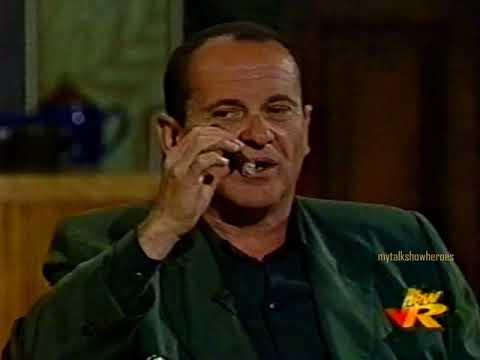
scorsese en 30 segundos
- Martin Scorsese is a world-renowned American filmmaker famous for his gritty, realistic style and deep exploration of themes like guilt, redemption, and crime.
- His name is frequently used as an eponym (Scorsesian) to describe movies with fast editing, mobile camera work, and complex, morally ambiguous characters.
- A key figure in the New Hollywood movement, Scorsese has directed classics like 'Taxi Driver' and 'Goodfellas,' shaping modern cinema over five decades.
- Beyond directing, he is a major advocate for film preservation and history, making his name synonymous with high-quality, artistic, and prestigious filmmaking.
The term Scorsese primarily refers to Martin Scorsese, one of the most influential and significant filmmakers in the history of cinema. However, in a broader vocabulary context, particularly within film studies and cultural criticism, the name has transcended its status as a mere proper noun to become a descriptive eponym. When people use the word 'Scorsese' in conversation, they are often invoking a specific set of stylistic choices, thematic preoccupations, and a particular 'gritty' atmosphere associated with his body of work. This includes his mastery of the 'New York' aesthetic, his deep exploration of Italian-American identity, and his recurring themes of Catholic guilt, redemption, and the dark side of the American Dream. Using the name as a reference point allows speakers to quickly communicate a complex set of visual and narrative ideas without needing to explain them in detail. For instance, describing a scene as 'very Scorsese' implies it might feature rapid-fire dialogue, a mobile camera, a classic rock soundtrack, and characters who are morally ambiguous or deeply flawed.
- Cinematic Style
- Scorsese is synonymous with technical virtuosity, particularly his use of long tracking shots, freeze frames, and aggressive editing techniques that mirror the internal state of his characters.
The director’s latest crime drama felt like classic Scorsese, blending brutal violence with a deep sense of spiritual longing.
Beyond the technical, the name evokes a specific historical era of filmmaking—the 'New Hollywood' movement of the 1970s. During this time, Scorsese helped redefine the crime genre, moving away from the romanticized versions of the Mafia seen in earlier films and toward a more visceral, realistic, and often disturbing portrayal of street-level crime. This 'street-level' realism is a key component of what people mean when they use his name as an adjective. It suggests a lack of artifice, a focus on the raw energy of urban life, and an unflinching look at human frailty. When a critic says a new filmmaker is 'the next Scorsese,' they are not just talking about talent; they are talking about a specific kind of artistic integrity and a commitment to exploring the darker corners of the human psyche through the lens of a camera.
- Thematic Depth
- The name often implies an exploration of the conflict between one's religious upbringing and the violent realities of secular life, a hallmark of his most personal films.
You can see the influence of Scorsese in the way the filmmaker uses music to heighten the emotional tension of the scene.
Furthermore, the word is used in discussions about film preservation and history. Scorsese is a vocal advocate for the restoration of old films, and his name is frequently linked to the World Cinema Project and The Film Foundation. Thus, in academic or professional contexts, mentioning Scorsese might also refer to his role as a guardian of cinematic heritage. This adds a layer of 'reverence' to the name. It isn't just about the movies he made, but about his deep love and knowledge of the medium itself. When students of film study Scorsese, they aren't just looking at one man's career; they are looking at a living encyclopedia of film history. This comprehensive knowledge is reflected in his work, which often contains homages to the great directors who came before him, from Hitchcock to Powell and Pressburger.
- Cultural Iconography
- The name has become a shorthand for 'high-quality, serious cinema' that refuses to cater to mainstream blockbusters or simplified narratives.
To many, Scorsese represents the last of the true auteurs in a world increasingly dominated by franchise-driven studio films.
In summary, 'Scorsese' is a word that carries significant weight. It is a name that commands respect and evokes a very specific visual and emotional landscape. Whether used to describe a director's style, a character's moral struggle, or a film's historical importance, it serves as a powerful tool for anyone wishing to discuss the art of cinema with depth and nuance. It is a bridge between the classic era of Hollywood and the modern age, representing a continuous thread of artistic excellence that has spanned over five decades. Understanding the 'Scorsese' brand is essential for anyone looking to achieve a B1 level of English or higher in the context of cultural and artistic discourse.
The cinematography in that opening sequence was pure Scorsese, with its sweeping camera movements and vibrant colors.
Even if you haven't seen his films, you likely recognize the Scorsese influence in countless modern crime shows and movies.
Using the name Scorsese in a sentence requires an understanding of its dual role as a proper noun and a cultural descriptor. Most commonly, it is used as the subject or object of a sentence when referring to the man himself. For example, 'Scorsese directed some of the most famous movies of the 20th century.' Here, it functions like any other name. However, the word often appears in the possessive form, 'Scorsese's,' to denote his specific style, films, or opinions. For instance, 'Scorsese's use of music is legendary.' This usage is frequent in film reviews and academic essays where his specific contributions are being analyzed. When you want to sound more like a film expert, you might use the name to set a standard of comparison: 'This new director is being hailed as the next Scorsese.' This implies the new director shares his intensity, skill, and thematic focus.
- Direct Reference
- Using the name to refer to the person or his body of work directly. Example: 'I'm reading a biography of Scorsese.'
Many young actors dream of working with Scorsese because of his reputation for bringing out the best in his cast.
Another sophisticated way to use the word is in the adjectival form 'Scorsesian.' While the prompt focuses on 'Scorsese,' knowing the adjective helps you understand the context in which the name is used. You might hear someone say, 'The film has a Scorsesian energy,' which means it feels like one of his movies. If you stick to the name itself, you can use it in a comparative structure: 'The movie was very Scorsese-esque.' This is a common way to describe something that mimics his style. In casual conversation, you might even use it as a standalone descriptor: 'That scene was so Scorsese!' This is a more informal, shorthand way of saying the scene had the hallmarks of his directing style, such as a sudden burst of violence or a complex, moving camera shot. It's important to ensure the context is clear, as 'Scorsese' is a specific reference that assumes the listener has some knowledge of cinema.
- Comparative Usage
- Comparing a new work or style to his established aesthetic. Example: 'The lighting in this scene is very Scorsese-esque.'
The critic noted that the film's gritty portrayal of the city was clearly inspired by Scorsese's early work.
In more technical discussions, 'Scorsese' might be used to refer to a specific technique he popularized. For example, 'The director used a Scorsese-style tracking shot to introduce the characters.' This tells the reader exactly what kind of shot to expect—one that is long, fluid, and complex. You can also use the name to discuss film philosophy. 'Scorsese believes that cinema is about what is in the frame and what is out.' Here, the name represents a specific school of thought regarding the art of filmmaking. Using the name in this way shows a high level of cultural literacy. It demonstrates that you understand not just the person, but the ideas and techniques that he represents. This is particularly useful in university-level film courses or when writing for film publications.
- Technical Reference
- Referring to a specific cinematic technique associated with him. Example: 'That long take was a classic Scorsese move.'
If you want to understand the history of American film, you have to study Scorsese.
Finally, the name is often used in the context of awards and industry recognition. 'Scorsese has been nominated for numerous Academy Awards.' This usage is straightforward but essential for discussing the business and history of Hollywood. You might also see it used in a possessive sense regarding his collaborators: 'Scorsese's long-time editor, Thelma Schoonmaker, is a genius in her own right.' This highlights his role as a leader of a creative team. In all these cases, the name 'Scorsese' acts as a focal point for a wide range of meanings, from personal biography to technical mastery and cultural influence. Mastering these different ways of using the name will significantly enhance your ability to discuss film and culture in English.
The documentary explored how Scorsese changed the way we look at crime on screen.
The film's ending had a very Scorsese feel, leaving the audience to ponder the character's fate.
The word Scorsese is a staple of film-related discourse across various media. You will hear it most frequently in film reviews, whether on YouTube, in podcasts, or in written publications like 'The New Yorker' or 'Variety.' Critics often use his name as a benchmark for quality or a specific style. For example, a reviewer might say, 'This film lacks the narrative drive of a Scorsese picture.' In this context, the name is used to set an expectation of high-level storytelling and technical skill. You will also hear it in interviews with other directors and actors. Many contemporary filmmakers cite Scorsese as a primary influence, so his name often comes up when they discuss their own creative process or the history of the medium. Hearing a director say, 'I was trying to capture that Scorsese energy,' is a common occurrence in behind-the-scenes documentaries and press junkets.
- Film Criticism
- Used as a standard of excellence or a stylistic reference point in reviews and essays.
I was listening to a podcast where they compared the new Marvel movie to a Scorsese film, and the debate was quite heated.
In academic settings, particularly in film schools and humanities departments, 'Scorsese' is a subject of intense study. Professors will use the name when discussing the 'Auteur Theory,' which suggests that a director is the primary 'author' of a film. You'll hear it in lectures about the history of the crime genre, the evolution of cinematography, or the representation of urban life in American cinema. Students are often tasked with analyzing 'Scorsese's visual language,' which involves looking at his specific use of color, camera movement, and editing. In these environments, the name is treated with a level of scholarly rigor, and its mention usually signals a deep dive into the technical and thematic complexities of his work. If you are a student of film, you will hear this name almost daily.
- Academic Discourse
- Discussed in the context of film theory, history, and technical analysis in universities.
In our film history class, we spent an entire week analyzing the works of Scorsese and his impact on the New Hollywood era.
Casual conversations among film buffs and 'cinephiles' are another place where you'll frequently encounter the word. In this context, it's often used as a signifier of taste. Someone might say, 'I'm more of a Scorsese fan than a Spielberg fan,' to indicate they prefer gritty, character-driven dramas over more sentimental or blockbuster-oriented films. It's also common in 'top ten' lists or debates about the greatest directors of all time. The name is so well-known that it has even entered the realm of pop culture memes and social media jokes, often centered around his distinctive appearance (his thick eyebrows) or his famous comments about superhero movies. This shows that the name has a life beyond the film industry and is part of the general cultural lexicon.
- Pop Culture
- Mentioned in memes, social media debates, and casual conversations about personal movie preferences.
My friends and I had a long debate about which Scorsese movie is the best: 'Goodfellas' or 'Taxi Driver'.
Finally, you'll hear the name in the news, especially when he releases a new film or makes a public statement about the state of the industry. Because he is a respected elder statesman of cinema, his opinions carry a lot of weight. When he writes an essay for 'Harper's Magazine' or gives a speech at a film festival, it often makes headlines. In these cases, 'Scorsese' represents a moral and artistic authority. Whether he's talking about the importance of film preservation or the 'devaluation' of cinema in the streaming age, his name is used to lend gravity to the discussion. For an English learner, recognizing the name in these various contexts is a great way to engage with high-level cultural news and commentary.
The news report highlighted Scorsese's efforts to preserve classic films from around the world.
I saw a headline today about Scorsese's latest project, and it sounds like another masterpiece.
One of the most frequent mistakes people make with the word Scorsese is its spelling. The combination of 's', 'c', and 'e' can be confusing for both native and non-native speakers. It is often misspelled as 'Scorsesi,' 'Scorcese,' or 'Scorsesee.' The correct spelling is S-C-O-R-S-E-S-E. Another common error is mispronunciation. Many people struggle with the ending, sometimes pronouncing it as 'Scor-sez' or 'Scor-see-zee' with an incorrect emphasis. The standard American pronunciation is /skɔːrˈseɪzi/, where the 'e' at the end is clearly voiced as an 'ee' sound. Getting the pronunciation right is important, especially in professional or academic settings where you want to demonstrate your knowledge of the subject. Practicing the rhythm of the name—four syllables with the stress on the second—can help you sound more natural.
- Spelling Error
- Commonly misspelled as 'Scorcese' (adding an extra 'c') or 'Scorsesi' (changing the final 'e' to 'i').
I always have to double-check the spelling of Scorsese before I submit my film reviews.
Thematically, a common mistake is to pigeonhole Scorsese as only a 'mob movie' director. While he is famous for 'Goodfellas,' 'Casino,' and 'The Departed,' his filmography is incredibly diverse, including historical epics like 'Silence,' psychological thrillers like 'Shutter Island,' and even a children's film, 'Hugo.' Referring to a movie as 'Scorsese-like' just because it has gangsters is a bit of a simplification. A more accurate use of the term would involve recognizing his specific technical style—the editing, the camera work, and the focus on internal character conflict—regardless of the genre. If you use his name to describe a film, make sure you're referring to these deeper stylistic elements rather than just the presence of crime. This shows a more sophisticated understanding of his work and the vocabulary surrounding it.
- Thematic Misconception
- Assuming 'Scorsese' only refers to crime or Mafia movies, ignoring his diverse range of work.
It's a mistake to think Scorsese only makes movies about gangsters; his historical films are equally impressive.
Another mistake is confusing him with other directors of his generation, such as Francis Ford Coppola or Brian De Palma. While they all belong to the same 'New Hollywood' movement and often explored similar themes of crime and masculinity, each has a very distinct visual style. Coppola is often more operatic and grand, while Scorsese is more kinetic and restless. Using the name 'Scorsese' to describe a scene that is actually more 'Coppola-esque' can lead to confusion in serious film discussions. To avoid this, it's helpful to watch a few key films from each director to get a feel for their unique 'fingerprints.' This will help you use the names as precise vocabulary tools rather than interchangeable labels for 'old crime movies.'
- Director Confusion
- Interchanging 'Scorsese' with other directors like Coppola, despite their very different visual styles.
I used to confuse Scorsese with Coppola, but now I can clearly see the difference in their directing styles.
Finally, be careful with the possessive form. Because the name ends in 'e,' some people are unsure where to put the apostrophe. The correct form is 'Scorsese's.' For example, 'Scorsese's latest film is a masterpiece.' Some might try to write 'Scorseses' or 'Scorsese'', but these are incorrect. In English, for a singular proper noun ending in 'e,' you simply add 's. Keeping this grammatical rule in mind will ensure your writing remains professional and accurate. By avoiding these common spelling, pronunciation, thematic, and grammatical mistakes, you will be able to use the word 'Scorsese' with the confidence and precision of a true film enthusiast.
The professor corrected my essay because I had forgotten the 's' in Scorsese's name.
Once you learn the correct spelling of Scorsese, you'll never forget it.
When discussing the work or style of Scorsese, it's helpful to have a repertoire of similar words and alternatives to avoid repetition and to provide more specific meaning. One of the most common alternatives is the adjective 'Scorsesian.' This word directly refers to the style and themes associated with his films. Using 'Scorsesian' instead of 'like Scorsese' can make your speech or writing sound more academic and precise. Another useful term is 'auteur.' While this can apply to many directors, Scorsese is often cited as the quintessential auteur—a filmmaker whose personal vision and style are so distinct that they are recognizable across all their work. Calling him an 'auteur' places him in a specific category of high-art filmmaking.
- Scorsesian
- The formal adjectival form used to describe something that possesses the qualities of Scorsese's films.
- Auteur
- A director who has a unique, recognizable style and complete creative control over their films.
The film's Scorsesian themes of guilt and betrayal were handled with great sensitivity.
If you are looking for words to describe the *feeling* of a Scorsese film without using his name, you might use 'gritty,' 'visceral,' or 'kinetic.' 'Gritty' refers to the realistic, often harsh portrayal of urban life. 'Visceral' describes something that feels raw and intense, appealing to the emotions rather than just the intellect. 'Kinetic' is perfect for describing his fast-paced editing and moving camera work. These adjectives capture the essence of his style. Additionally, you might use the term 'Neo-Noir' to describe some of his crime films, as they often share the dark, cynical, and morally complex atmosphere of classic Film Noir but with a modern twist. Using these descriptive words can help you explain *why* something feels like a Scorsese film.
- Gritty
- Showing all the details of a situation, even the unpleasant ones; realistic and unvarnished.
- Kinetic
- Relating to or resulting from motion; in film, this refers to a fast-moving and energetic style.
The director used a kinetic editing style that kept the audience on the edge of their seats.
In terms of alternatives for the man himself, you might refer to him as 'the master' or 'the legendary filmmaker' in a more reverent context. In the industry, he is sometimes called 'Marty' by his close friends and long-time collaborators, though this should be used with caution as it can sound overly familiar if you don't actually know him. In a more formal essay, you might refer to him as 'the director of Taxi Driver' or 'the Academy Award winner.' These alternatives help to identify him while also highlighting his achievements or specific works. By varying your vocabulary, you can keep your audience engaged and demonstrate a broader range of English proficiency. Whether you're using the formal 'Scorsesian' or the descriptive 'gritty,' having these alternatives at your disposal is invaluable.
- Neo-Noir
- A modern film that uses the themes and visual style of classic film noir, often associated with Scorsese's crime dramas.
Many critics consider 'Taxi Driver' to be a definitive example of modern Neo-Noir cinema.
Finally, when discussing his influence, you might use the phrase 'the Scorsese of [something].' For example, 'He is the Scorsese of music videos.' This is a common idiomatic way to say that someone is the most talented and influential person in their specific field, using Scorsese as the ultimate benchmark for excellence. This shows how the name has become a synonym for 'the best' or 'the most influential.' Understanding these nuances allows you to use the word 'Scorsese' not just as a name, but as a powerful metaphorical tool in your English vocabulary. It's about recognizing the cultural weight the name carries and using it effectively to communicate complex ideas about talent, style, and influence.
By the end of the decade, he had become the Scorsese of the independent film scene.
The documentary provided a fascinating look at the auteur's creative process over the years.
How Formal Is It?
Dato curioso
Martin Scorsese originally planned to become a priest before deciding to pursue filmmaking, which explains the deep religious themes in his work.
Guía de pronunciación
- Pronouncing it as 'Scor-sez' (three syllables).
- Pronouncing it as 'Scor-see-zee' (incorrect vowel sound in the second syllable).
- Putting the stress on the first syllable.
- Misspelling it as 'Scorcese' and then pronouncing the 'c' as an 's'.
- Failing to voice the final 'e'.
Nivel de dificultad
The name is easy to recognize but the context often involves complex film terminology.
The spelling is notoriously difficult even for advanced learners.
The pronunciation requires attention to the final voiced vowel.
The name is very distinct and usually easy to hear in conversation.
Qué aprender después
Requisitos previos
Aprende después
Avanzado
Gramática que debes saber
Possessive of Proper Nouns ending in 'e'
Scorsese's films are legendary.
Eponyms as Adjectives
The scene had a very Scorsese feel.
Proper Nouns as Standards of Comparison
He is the Scorsese of his generation.
Capitalization of Proper Nouns
We are studying Scorsese this week.
Adjectival Suffixes (-ian)
The Scorsesian themes were evident.
Ejemplos por nivel
Martin Scorsese is a famous movie director.
Martin Scorsese est un célèbre réalisateur de films.
Proper noun used as the subject.
I like the movies made by Scorsese.
J'aime les films réalisés par Scorsese.
Proper noun used as the object of a prepositional phrase.
Scorsese lives in New York City.
Scorsese vit à New York.
Present simple tense with a proper noun.
He is a very good director, like Scorsese.
C'est un très bon réalisateur, comme Scorsese.
Comparison using 'like'.
Did you see the new Scorsese film?
As-tu vu le nouveau film de Scorsese ?
Possessive used as an adjective (Scorsese film).
Scorsese has won an Oscar.
Scorsese a gagné un Oscar.
Present perfect tense.
Many actors want to work with Scorsese.
Beaucoup d'acteurs veulent travailler avec Scorsese.
Infinitive phrase following 'want to'.
Scorsese makes movies about the city.
Scorsese fait des films sur la ville.
Simple sentence structure.
Scorsese is known for his realistic crime movies.
Scorsese est connu pour ses films de crime réalistes.
Passive voice 'is known for'.
He often works with the same actors, such as De Niro and Scorsese.
Il travaille souvent avec les mêmes acteurs, comme De Niro et Scorsese.
Use of 'such as' for examples.
The style of the movie was very similar to Scorsese.
Le style du film était très similaire à celui de Scorsese.
Comparison 'similar to'.
Scorsese's career started a long time ago.
La carrière de Scorsese a commencé il y a longtemps.
Possessive 's.
I watched a documentary about Scorsese last night.
J'ai regardé un documentaire sur Scorsese hier soir.
Past simple tense.
Scorsese is a very important person in Hollywood.
Scorsese est une personne très importante à Hollywood.
Adjective 'important' modifying 'person'.
You can learn a lot about film from Scorsese.
On peut apprendre beaucoup sur le cinéma grâce à Scorsese.
Modal verb 'can'.
Scorsese's movies are often set in New York.
Les films de Scorsese se déroulent souvent à New York.
Passive construction 'are set in'.
The director used a Scorsese-style tracking shot in the opening scene.
Le réalisateur a utilisé un plan-séquence à la Scorsese dans la scène d'ouverture.
Compound adjective 'Scorsese-style'.
Scorsese is a central figure in the New Hollywood movement.
Scorsese est une figure centrale du mouvement New Hollywood.
Noun phrase 'central figure'.
Many critics compare his work to that of Scorsese.
De nombreux critiques comparent son travail à celui de Scorsese.
Comparison 'compare... to that of'.
Scorsese's influence can be seen in many modern crime dramas.
L'influence de Scorsese est visible dans de nombreux drames criminels modernes.
Passive modal 'can be seen'.
He has a deep passion for film history, much like Scorsese.
Il a une profonde passion pour l'histoire du cinéma, tout comme Scorsese.
Adverbial phrase 'much like'.
The film explores themes of guilt and redemption, which are common in Scorsese's work.
Le film explore les thèmes de la culpabilité et de la rédemption, qui sont courants dans l'œuvre de Scorsese.
Relative clause 'which are common in'.
Scorsese's collaboration with Robert De Niro produced several classics.
La collaboration de Scorsese avec Robert De Niro a produit plusieurs classiques.
Noun 'collaboration' as the subject.
I'm interested in the way Scorsese uses music to tell a story.
Je m'intéresse à la façon dont Scorsese utilise la musique pour raconter une histoire.
Noun clause 'the way Scorsese uses music'.
The film's kinetic energy and rapid editing are hallmarks of a Scorsese production.
L'énergie cinétique et le montage rapide du film sont les marques de fabrique d'une production de Scorsese.
Noun 'hallmarks' used to describe characteristics.
Scorsese is often cited as a prime example of an auteur.
Scorsese est souvent cité comme un exemple parfait d'auteur.
Passive voice 'is often cited as'.
The documentary highlights Scorsese's tireless efforts in film preservation.
Le documentaire souligne les efforts inlassables de Scorsese en faveur de la préservation des films.
Gerund phrase 'film preservation'.
The protagonist's moral struggle feels very Scorsesian in its intensity.
La lutte morale du protagoniste semble très scorsesienne dans son intensité.
Adjective 'Scorsesian' derived from the proper noun.
Scorsese's visual language is characterized by complex camera movements.
Le langage visuel de Scorsese se caractérise par des mouvements de caméra complexes.
Passive voice 'is characterized by'.
The director's use of slow motion was clearly inspired by Scorsese.
L'utilisation du ralenti par le réalisateur a été clairement inspirée par Scorsese.
Past participle 'inspired by'.
Scorsese has consistently explored the intersection of faith and violence.
Scorsese a constamment exploré l'intersection de la foi et de la violence.
Present perfect with adverb 'consistently'.
The film received critical acclaim, with many comparing it to Scorsese's early work.
Le film a été acclamé par la critique, beaucoup le comparant aux premières œuvres de Scorsese.
Participial phrase 'with many comparing it to'.
Scorsese's filmography serves as a rigorous interrogation of the American Dream.
La filmographie de Scorsese sert d'interrogation rigoureuse du rêve américain.
Metaphorical use of 'interrogation'.
The director's aesthetic is deeply rooted in the traditions of Scorsese and Coppola.
L'esthétique du réalisateur est profondément ancrée dans les traditions de Scorsese et Coppola.
Adjectival phrase 'deeply rooted in'.
Scorsese's mastery of the 'tracking shot' has become legendary in film schools.
La maîtrise du 'plan-séquence' par Scorsese est devenue légendaire dans les écoles de cinéma.
Possessive noun phrase as the subject.
The film's thematic depth is reminiscent of Scorsese's most personal projects.
La profondeur thématique du film rappelle les projets les plus personnels de Scorsese.
Adjective 'reminiscent of'.
Scorsese's influence on the crime genre is both profound and pervasive.
L'influence de Scorsese sur le genre policier est à la fois profonde et omniprésente.
Correlative conjunctions 'both... and'.
The critic analyzed the Scorsesian elements within the modern blockbuster.
Le critique a analysé les éléments scorsesiens au sein du blockbuster moderne.
Adjective 'Scorsesian' used formally.
Scorsese's advocacy for film restoration has saved countless masterpieces.
Le plaidoyer de Scorsese en faveur de la restauration des films a sauvé d'innombrables chefs-d'œuvre.
Noun 'advocacy' followed by a prepositional phrase.
The film's ending avoids easy resolution, a common trait in Scorsese's narratives.
La fin du film évite toute résolution facile, un trait commun aux récits de Scorsese.
Appositive phrase 'a common trait in'.
Scorsese's work epitomizes the tension between spiritual aspiration and worldly corruption.
L'œuvre de Scorsese incarne la tension entre l'aspiration spirituelle et la corruption terrestre.
Verb 'epitomizes' used for high-level description.
The Scorsesian protagonist is often a man grappling with an inescapable past.
Le protagoniste scorsesien est souvent un homme aux prises avec un passé inéluctable.
Participial phrase 'grappling with'.
Scorsese's visual signature is an intricate blend of technical precision and raw emotion.
La signature visuelle de Scorsese est un mélange complexe de précision technique et d'émotion brute.
Noun phrase 'visual signature'.
The film's rhythmic editing mirrors the fragmented consciousness typical of Scorsese's style.
Le montage rythmique du film reflète la conscience fragmentée typique du style de Scorsese.
Verb 'mirrors' used metaphorically.
Scorsese has become a vital guardian of cinematic heritage through his various foundations.
Scorsese est devenu un gardien essentiel du patrimoine cinématographique grâce à ses diverses fondations.
Present perfect with the noun 'guardian'.
The director's latest opus is a testament to his enduring creative vitality, reminiscent of early Scorsese.
Le dernier opus du réalisateur est un témoignage de sa vitalité créative durable, qui rappelle le premier Scorsese.
Noun 'testament' followed by 'to'.
Scorsese's interrogation of masculinity often reveals a deep-seated vulnerability.
L'interrogation de Scorsese sur la masculinité révèle souvent une vulnérabilité profonde.
Noun 'interrogation' used in a critical sense.
The film's use of diegetic music is a sophisticated homage to Scorsese's innovative techniques.
L'utilisation de la musique diégétique dans le film est un hommage sophistiqué aux techniques innovantes de Scorsese.
Noun 'homage' followed by 'to'.
Colocaciones comunes
Frases Comunes
— A young filmmaker who shows great promise and a similar style to Martin Scorsese.
Critics are calling the young director the next Scorsese.
— A camera shot that mimics the complex and fluid style of Scorsese.
The opening features a Scorsese-esque shot through the nightclub.
— A shorthand way to say something has the hallmarks of his directing style.
The use of the Rolling Stones song was very Scorsese.
— The specific, gritty, and atmospheric version of New York City depicted in his films.
The movie captures the dark energy of Scorsese's New York.
— In a similar style or thematic territory as Scorsese.
It's a crime drama in the vein of Scorsese.
— An actor who frequently collaborates with him, such as Robert De Niro or Leonardo DiCaprio.
De Niro was often considered Scorsese's muse in the 70s and 80s.
— A specific, masterful quality added to a film that is characteristic of his work.
The editing has that unmistakable Scorsese touch.
— The long-lasting impact and influence he has had on the world of cinema.
Scorsese's legacy will continue to inspire filmmakers for generations.
— An actor or crew member who frequently works on his films.
Joe Pesci is a Scorsese regular who always delivers a great performance.
— The fictional or thematic universe created within his body of work.
Once you enter Scorsese's world, you can't look away.
Se confunde a menudo con
Another famous Italian-American director (Francis Ford Coppola) of the same era, known for 'The Godfather'.
Steven Spielberg, often contrasted with Scorsese for his more optimistic and blockbuster style.
Brian De Palma, another contemporary known for stylish thrillers, often compared to Scorsese.
Modismos y expresiones
— The most talented and influential person in a particular area of expertise.
She is known as the Scorsese of documentary filmmaking.
Informal/Metaphorical— To make something more intense, gritty, or stylistically complex.
The producers decided to give the script the Scorsese treatment to make it more realistic.
Informal/Industry— Something that seems very realistic, intense, or related to urban crime.
The scene at the bar was straight out of a Scorsese movie.
Informal— A very high level of quality or artistic integrity in filmmaking.
This film doesn't quite meet the Scorsese standard.
Neutral/Critical— A humorous reference to his most distinctive physical feature, often used in pop culture.
He's as recognizable as Scorsese's eyebrows.
Slang/Humorous— To create a masterpiece after a long career, or to use a signature technique perfectly.
The veteran director really pulled a Scorsese with his latest hit.
Informal— Approval or validation from a high authority in the film world.
Getting Scorsese's blessing was the highlight of the young director's career.
Neutral— An acting performance that is exceptionally intense and high-quality.
She gave a Scorsese-level performance in that drama.
Neutral— A style of directing that emphasizes realism, kinetic energy, and thematic depth.
He clearly graduated from the Scorsese school of filmmaking.
Informal/Academic— A specific, intense, and urban-focused perspective on life and art.
The writer has that Scorsese's New York state of mind in all his books.
Informal/LiteraryFácil de confundir
It's the adjectival form and people aren't sure when to use it vs. the name.
Use the name for the person; use the adjective for the style.
Scorsese is the director; the lighting is Scorsesian.
It's a technical term often used alongside his name.
Scorsese is a specific person; auteur is a category he belongs to.
Scorsese is a famous auteur.
It's the most common adjective used to describe his work.
Gritty is a general feeling; Scorsese is the specific source of that feeling in film.
The film was gritty, just like a Scorsese movie.
His films often share noir elements.
Noir is a genre; Scorsese is a director who often works within that genre.
He made a great noir film.
It's his job title.
Director is a general job; Scorsese is a specific, legendary example of one.
Every director wants to be like Scorsese.
Patrones de oraciones
I like [Name].
I like Scorsese.
[Name] is a [Adjective] [Noun].
Scorsese is a famous director.
The [Noun] is very [Name]-esque.
The scene is very Scorsese-esque.
[Name]'s use of [Noun] is [Adjective].
Scorsese's use of music is masterful.
The [Adjective] [Noun] is reminiscent of [Name].
The gritty atmosphere is reminiscent of Scorsese.
[Name] epitomizes the [Noun] of [Noun].
Scorsese epitomizes the auteur of the modern era.
He is the [Name] of [Field].
He is the Scorsese of photography.
Inspired by the work of [Name].
The film was clearly inspired by the work of Scorsese.
Familia de palabras
Sustantivos
Adjetivos
Relacionado
Cómo usarlo
Common in film and cultural contexts; rare in everyday non-media conversation.
-
Scorcese
→
Scorsese
People often add an extra 'c' because of the sound, but the correct spelling uses only one 'c' at the beginning.
-
Scorsesi
→
Scorsese
Many Italian names end in 'i', but this one ends in 'e'.
-
Pronouncing it 'Scor-sez'
→
Scor-SAY-zee
The final 'e' must be pronounced as an 'ee' sound.
-
Using 'Scorsese' only for mob movies.
→
Using it for any film with his technical style.
He has made many types of films, so his name refers to his style, not just one genre.
-
Scorseses' films
→
Scorsese's films
The possessive of a singular name ending in 'e' is 's.
Consejos
The 'ESE' Ending
Remember that the name ends in 'ESE', just like the word 'these' or 'cheese'. This will help you avoid the common 'i' mistake.
The Final Vowel
Don't drop the final 'e'. It's a voiced 'ee' sound. Think of the word 'easy' at the end of his name.
Beyond the Mob
When using his name as a descriptor, try to apply it to non-crime movies to show you understand his technical style, not just his genres.
Use 'Scorsesian'
In a formal essay, using 'Scorsesian' instead of 'like Scorsese' will instantly boost your academic tone.
The New York Link
Always associate Scorsese with New York. It's a key part of his identity and his filmic world.
Possessive 's
Even though it ends in 'e', you still add 's for the possessive: Scorsese's. It's a singular proper noun.
The 'Marty' Rule
Only use 'Marty' if you are writing a very informal piece or quoting someone who knows him personally.
Identify the Rhythm
The name has a very specific da-DA-da-da rhythm. Recognizing this will help you pick it out in fast-paced podcasts.
Comparison Shorthand
Use 'the Scorsese of...' to quickly explain that someone is the best in their field. It's a powerful idiom.
Watch One Film
To truly understand the vocabulary, watch 'Goodfellas'. It contains almost all the 'Scorsesian' hallmarks in one movie.
Memorízalo
Mnemotecnia
Score-SAY-Zee: Think of a director who always 'Scores' a 'Say' in how the 'Zee' (sea) of movies is made.
Asociación visual
Imagine a pair of very thick, expressive eyebrows behind a movie camera in the middle of a busy New York street.
Word Web
Desafío
Try to use the word 'Scorsesian' in a sentence describing your favorite intense movie scene.
Origen de la palabra
The name 'Scorsese' is of Italian origin, specifically from Sicily. It is a surname that likely originated as an ethnonym, meaning 'someone from Corsica' (Scorsese/Scorsonese).
Significado original: From Corsica (the island).
Indo-European (Italic/Romance).Contexto cultural
His films often contain graphic violence and strong language, which should be noted when discussing them in sensitive environments.
In the US and UK, Scorsese is considered the 'gold standard' for serious, adult-oriented drama.
Practica en la vida real
Contextos reales
Film Review
- Reminiscent of Scorsese
- Classic Scorsese style
- The Scorsese influence is clear
- A Scorsese-level masterpiece
Academic Essay
- The Scorsesian protagonist
- Scorsese's contribution to the genre
- Analyzed through a Scorsese lens
- The evolution of Scorsese's technique
Casual Conversation
- Are you a Scorsese fan?
- That was so Scorsese!
- Better than the last Scorsese
- He's like the Scorsese of...
News/Media
- Scorsese's latest project
- An interview with Scorsese
- Scorsese speaks out on...
- The new Scorsese trailer
Film School
- Study the Scorsese tracking shot
- Scorsese's use of slow motion
- The editing of Scorsese
- Scorsese and the Auteur Theory
Inicios de conversación
"What is your favorite Scorsese movie and why do you like it?"
"Do you think Scorsese is the greatest director of all time?"
"How would you describe the 'Scorsese style' to someone who hasn't seen his films?"
"What do you think about Scorsese's comments on superhero movies?"
"Which actor do you think works best with Scorsese: De Niro or DiCaprio?"
Temas para diario
Write about a time you saw a movie that felt 'Scorsesian.' What specific elements made it feel that way?
If you could ask Scorsese one question about his filmmaking process, what would it be?
Describe a scene from your own life as if it were directed by Scorsese. Focus on the music and camera movement.
Reflect on the themes of guilt and redemption. How do these themes appear in your favorite stories?
Discuss the importance of film preservation. Why is it important to save old movies like Scorsese does?
Preguntas frecuentes
10 preguntasThe correct spelling is S-C-O-R-S-E-S-E. It is a common mistake to add an extra 'c' or change the ending to 'i'.
He is famous for directing highly acclaimed films like 'Taxi Driver', 'Goodfellas', and 'The Departed', and for his unique visual style.
Yes, people often say 'Scorsese-esque' or use the formal adjective 'Scorsesian' to describe a certain film style.
It is pronounced /skɔːrˈseɪzi/ (skor-SAY-zee). Make sure to pronounce the final 'ee' sound.
Common themes include Catholic guilt, redemption, the Italian-American experience, and the world of organized crime.
He frequently works with actors Robert De Niro and Leonardo DiCaprio, and editor Thelma Schoonmaker.
Yes, he won the Academy Award for Best Director for his 2006 film 'The Departed'.
It refers to the specific cinematic style of Martin Scorsese, characterized by kinetic energy and moral complexity.
Yes, despite being in his 80s, he continues to be very active and releases major films regularly.
He helped lead the New Hollywood movement and is a major advocate for the preservation of classic cinema.
Ponte a prueba 200 preguntas
Describe a movie scene that you think is 'Scorsesian'.
Well written! Good try! Check the sample answer below.
Write a short biography of Martin Scorsese in your own words.
Well written! Good try! Check the sample answer below.
Explain why Scorsese is considered an 'auteur'.
Well written! Good try! Check the sample answer below.
Compare the styles of Scorsese and Spielberg.
Well written! Good try! Check the sample answer below.
Write a review of a Scorsese film you have seen.
Well written! Good try! Check the sample answer below.
Discuss the importance of film preservation.
Well written! Good try! Check the sample answer below.
How does Scorsese use music in his films? Give examples.
Well written! Good try! Check the sample answer below.
What are the recurring themes in Scorsese's work?
Well written! Good try! Check the sample answer below.
Describe the 'New York' aesthetic in Scorsese's films.
Well written! Good try! Check the sample answer below.
Write a dialogue between two people debating their favorite Scorsese movie.
Well written! Good try! Check the sample answer below.
Why is the spelling of 'Scorsese' difficult for many people?
Well written! Good try! Check the sample answer below.
Explain the idiom 'the Scorsese of [Field]'.
Well written! Good try! Check the sample answer below.
Discuss Scorsese's impact on the crime genre.
Well written! Good try! Check the sample answer below.
What is the significance of Catholic guilt in his narratives?
Well written! Good try! Check the sample answer below.
Describe a technical technique Scorsese is famous for.
Well written! Good try! Check the sample answer below.
How has Scorsese's style evolved over the decades?
Well written! Good try! Check the sample answer below.
Write a letter to Scorsese expressing your admiration for his work.
Well written! Good try! Check the sample answer below.
Discuss the role of the editor in a Scorsese production.
Well written! Good try! Check the sample answer below.
What does 'cinema' mean to Scorsese?
Well written! Good try! Check the sample answer below.
Describe the relationship between Scorsese and his frequent actors.
Well written! Good try! Check the sample answer below.
Pronounce 'Scorsese' correctly three times.
Read this aloud:
Dijiste:
Speech recognition is not supported in your browser. Try Chrome or Edge.
Explain who Martin Scorsese is to a friend.
Read this aloud:
Dijiste:
Speech recognition is not supported in your browser. Try Chrome or Edge.
Describe your favorite movie style.
Read this aloud:
Dijiste:
Speech recognition is not supported in your browser. Try Chrome or Edge.
Discuss the pros and cons of violent movies.
Read this aloud:
Dijiste:
Speech recognition is not supported in your browser. Try Chrome or Edge.
Give a short presentation on a famous director.
Read this aloud:
Dijiste:
Speech recognition is not supported in your browser. Try Chrome or Edge.
Debate the importance of film preservation.
Read this aloud:
Dijiste:
Speech recognition is not supported in your browser. Try Chrome or Edge.
Tell a story about a time you were surprised by a movie.
Read this aloud:
Dijiste:
Speech recognition is not supported in your browser. Try Chrome or Edge.
Describe the atmosphere of New York City in films.
Read this aloud:
Dijiste:
Speech recognition is not supported in your browser. Try Chrome or Edge.
Explain the concept of an 'auteur' in your own words.
Read this aloud:
Dijiste:
Speech recognition is not supported in your browser. Try Chrome or Edge.
Talk about the influence of music in cinema.
Read this aloud:
Dijiste:
Speech recognition is not supported in your browser. Try Chrome or Edge.
How would you use the name 'Scorsese' as an adjective?
Read this aloud:
Dijiste:
Speech recognition is not supported in your browser. Try Chrome or Edge.
Discuss the themes of guilt and redemption in stories.
Read this aloud:
Dijiste:
Speech recognition is not supported in your browser. Try Chrome or Edge.
What makes a movie 'classic'?
Read this aloud:
Dijiste:
Speech recognition is not supported in your browser. Try Chrome or Edge.
Talk about your favorite actor-director duo.
Read this aloud:
Dijiste:
Speech recognition is not supported in your browser. Try Chrome or Edge.
Explain the 'theme park' vs 'cinema' debate.
Read this aloud:
Dijiste:
Speech recognition is not supported in your browser. Try Chrome or Edge.
How do you spell Scorsese? Say the letters out loud.
Read this aloud:
Dijiste:
Speech recognition is not supported in your browser. Try Chrome or Edge.
Describe a 'gritty' scene from a movie.
Read this aloud:
Dijiste:
Speech recognition is not supported in your browser. Try Chrome or Edge.
What is a tracking shot? Explain it simply.
Read this aloud:
Dijiste:
Speech recognition is not supported in your browser. Try Chrome or Edge.
Talk about the history of Hollywood.
Read this aloud:
Dijiste:
Speech recognition is not supported in your browser. Try Chrome or Edge.
Why is Scorsese's work still relevant today?
Read this aloud:
Dijiste:
Speech recognition is not supported in your browser. Try Chrome or Edge.
Listen for the name 'Scorsese' in a movie review podcast.
Identify the stress in the word 'Scorsese' when spoken.
Listen to an interview with Scorsese and list his main points.
How many times is 'Scorsese' mentioned in a short film clip?
Listen for the adjective 'Scorsesian' in a film lecture.
Identify the tone of a speaker when they mention Scorsese.
Listen to a description of a film and decide if it's 'Scorsesian'.
Listen for the names of his collaborators in a documentary.
Identify the pronunciation of the final 'e' in different accents.
Listen for the mention of 'New York' alongside his name.
Listen to a critic's top ten list and note where Scorsese ranks.
Listen for the word 'auteur' in a discussion about Scorsese.
Identify the background music used in a Scorsese-related video.
Listen for the mention of 'The Departed' in an awards ceremony.
Listen to a fan talking about their favorite Scorsese film.
/ 200 correct
Perfect score!
Summary
Scorsese is not just a name but a cultural shorthand for cinematic excellence, characterized by a visceral New York aesthetic, technical mastery, and a profound focus on the spiritual and moral struggles of his characters. Example: 'The film's intense atmosphere was pure Scorsese.'
- Martin Scorsese is a world-renowned American filmmaker famous for his gritty, realistic style and deep exploration of themes like guilt, redemption, and crime.
- His name is frequently used as an eponym (Scorsesian) to describe movies with fast editing, mobile camera work, and complex, morally ambiguous characters.
- A key figure in the New Hollywood movement, Scorsese has directed classics like 'Taxi Driver' and 'Goodfellas,' shaping modern cinema over five decades.
- Beyond directing, he is a major advocate for film preservation and history, making his name synonymous with high-quality, artistic, and prestigious filmmaking.
The 'ESE' Ending
Remember that the name ends in 'ESE', just like the word 'these' or 'cheese'. This will help you avoid the common 'i' mistake.
The Final Vowel
Don't drop the final 'e'. It's a voiced 'ee' sound. Think of the word 'easy' at the end of his name.
Beyond the Mob
When using his name as a descriptor, try to apply it to non-crime movies to show you understand his technical style, not just his genres.
Use 'Scorsesian'
In a formal essay, using 'Scorsesian' instead of 'like Scorsese' will instantly boost your academic tone.