twinkle en 30 segundos
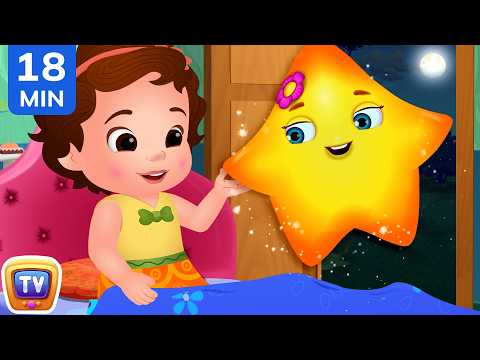
- Twinkle means to shine with a flickering or intermittent light, most commonly used to describe stars in the night sky or small, bright lights.
- It is also used figuratively to describe a person's eyes when they are feeling amused, mischievous, or very happy, suggesting a lively spirit.
- The word can describe light, rapid movements, especially of the feet in dancing, which is where the term 'twinkle-toes' comes from.
- Overall, 'twinkle' is a positive, evocative word that combines the concepts of light, movement, and joyful emotion in a single term.
The word twinkle is a versatile and evocative term in the English language, primarily functioning as both a verb and a noun. At its most literal level, to twinkle describes a specific type of light behavior: a light that appears to shine with a rapidly changing intensity, alternating between bright and faint. This phenomenon is most famously associated with the stars in the night sky. From a scientific perspective, this 'twinkling'—known as stellar scintillation—occurs because the light from distant stars is refracted or bent as it passes through the various layers of Earth's atmosphere. To the human eye, this creates the illusion of a flickering, dancing light. Beyond the astronomical context, 'twinkle' is deeply embedded in our descriptions of human emotion and physical expression. When we say someone has a 'twinkle in their eye,' we are describing a momentary glint of light reflected in the moisture of the eye, which usually signifies a specific set of positive emotions: mischief, amusement, secret joy, or a lively intelligence. It suggests that the person is thinking of something funny or is about to play a friendly trick. This figurative use is perhaps even more common in modern conversation than the literal astronomical use. People use 'twinkle' to add a touch of magic, warmth, or playfulness to their descriptions. It is a word that carries an inherently positive connotation; you would rarely use 'twinkle' to describe something menacing or cold. Instead, it evokes the cozy feeling of holiday lights, the wonder of a clear night sky, or the charm of a charismatic friend. In literature and poetry, 'twinkle' serves as a tool for imagery, helping readers visualize movement and light simultaneously. It is not just about the brightness, but about the rhythm of the light. Unlike a 'glare' which is harsh and steady, or a 'glow' which is soft and constant, a 'twinkle' is dynamic and fleeting. It captures the essence of something that is alive and changing.
- Literal Usage
- Describing the flickering light of stars or distant city lights on a horizon.
As the sun set, the first few stars began to twinkle in the darkening velvet of the sky.
- Figurative Usage
- Describing a person's eyes when they are amused, happy, or feeling mischievous.
Grandfather had a mischievous twinkle in his eyes as he hid the chocolate behind his back.
Furthermore, 'twinkle' can be used to describe the movement of feet, especially in dancing. The phrase 'twinkle-toes' or saying someone's feet 'twinkled' across the floor implies a light, rapid, and graceful movement. This extends the core concept of 'intermittent brightness' to 'intermittent contact' or 'rapid motion,' maintaining the lighthearted and energetic feel of the word. In a broader sense, 'twinkle' can also refer to a very short period of time, as in the idiom 'in the twinkling of an eye,' which means almost instantaneously. This highlights the speed at which a twinkle occurs—it is a flash, a moment, a pulse. Whether you are looking at the cosmos, observing a friend's reaction to a joke, or watching a ballet, 'twinkle' provides a specific, high-resolution way to describe the intersection of light, movement, and emotion. It is a word that bridges the gap between the physical world of optics and the internal world of human feeling, making it an essential part of a descriptive English vocabulary.
The distant harbor lights twinkled like a fallen constellation on the water's edge.
- Movement Context
- Describing light, rapid movements, particularly in dance or sports.
The ballerina's feet twinkled across the stage during the final act.
The diamond ring twinkled in the candlelight, catching everyone's attention.
Using 'twinkle' correctly requires an understanding of its grammatical flexibility and its specific imagery. As a verb, it is most often intransitive, meaning it does not require a direct object. You say 'the stars twinkle,' not 'the stars twinkle the sky.' However, it can be used in various tenses to describe ongoing or past actions. For example, 'The lights were twinkling' (past continuous) emphasizes the duration of the flickering, while 'The star twinkled' (past simple) might describe a single moment of observation. When using 'twinkle' as a noun, it often appears in the phrase 'a twinkle in [someone's] eye.' This is a fixed expression that you should learn as a single unit of meaning. You can also use it to describe the light itself, such as 'the twinkle of the distant city.' In this noun form, it often suggests a sense of distance or smallness; a 'twinkle' is a tiny light, not a massive beam. Another important aspect of using 'twinkle' is its collocation with adverbs. Common adverbs that accompany 'twinkle' include 'brightly,' 'faintly,' 'merrily,' and 'mischievously.' These adverbs help define the mood of the light or the emotion behind the expression. For instance, 'twinkling merrily' suggests a festive or happy atmosphere, often used during the winter holidays. Conversely, 'twinkling faintly' might suggest something far away, mysterious, or fading. In more formal or literary writing, 'twinkle' can be used to describe the reflection of light on water. 'The moonlight twinkled on the ripples of the lake' creates a vivid image of broken, moving light. It is also worth noting that 'twinkle' is rarely used in a negative or frightening context. You wouldn't usually say a monster's eyes 'twinkled' unless you were trying to create a very specific, perhaps ironic, effect. Instead, you might use 'glared' or 'glowed red.' 'Twinkle' is reserved for the lighthearted, the beautiful, and the playfully mysterious. When writing, consider the scale of the light. 'Twinkle' is perfect for small points of light—stars, eyes, sequins on a dress, or small holiday bulbs. For larger sources of light, like the sun or a powerful searchlight, 'twinkle' would feel out of place. By matching the word to the appropriate scale and emotional tone, you can make your descriptions much more precise and evocative.
- Grammar: Intransitive Verb
- The subject performs the action of shining without affecting an object.
The Christmas tree lights twinkle all night long in the window.
- Grammar: Noun Usage
- Referring to the light itself or the emotional glint in an eye.
There was a sudden twinkle in the dark hallway as she turned on her flashlight.
The dew on the grass twinkled in the early morning sun.
- Describing Reflections
- Using the word for light bouncing off small, moving surfaces like water or gems.
The sequins on her gala dress twinkled under the ballroom chandeliers.
The city skyline twinkled like a thousand tiny diamonds against the night.
You will encounter the word 'twinkle' in a surprisingly wide variety of settings, ranging from the most basic nursery rhymes to sophisticated literary works and scientific discussions. Perhaps the most universal exposure to this word comes from the children's song 'Twinkle, Twinkle, Little Star.' This simple rhyme establishes the word's primary meaning for almost every English speaker from a very young age. Because of this, the word often carries a sense of nostalgia, innocence, and wonder. In daily life, you are likely to hear 'twinkle' during the winter holiday season. People frequently talk about 'twinkling lights' on Christmas trees or house decorations. It is a key part of the 'festive' vocabulary. In social settings, you might hear someone describe a person by saying, 'He has such a twinkle in his eye!' This is a high compliment, suggesting the person is charming, witty, and full of life. In the world of literature and film, 'twinkle' is a favorite for authors and screenwriters who want to convey a character's hidden thoughts or playful nature. For example, in the Harry Potter series, Albus Dumbledore is famously described as having eyes that twinkle behind his half-moon spectacles, signaling his wisdom and his sense of humor. In a more technical or journalistic context, you might hear 'twinkle' in astronomy news. While scientists use the term 'scintillation,' they often use 'twinkle' when communicating with the public to make the concept more accessible. You might also hear it in fashion and design, where 'twinkling' fabrics or jewelry are discussed for their ability to catch the light. In sports commentary, particularly in soccer or basketball, a commentator might refer to a player's 'twinkle-toes' if they have exceptionally fast and agile footwork. This usage is slightly more informal but very common. Finally, in the realm of idioms, 'in the twinkling of an eye' is a phrase you might hear in storytelling or even in religious texts (like the Bible) to describe something happening with incredible speed. Understanding these different contexts—from the nursery to the observatory to the sports field—helps you see how 'twinkle' is not just a word about light, but a word about life, speed, and the human spirit.
- Children's Literature
- Found in rhymes and stories to create a sense of magic and wonder.
'Twinkle, twinkle, little star, how I wonder what you are!'
- Character Descriptions
- Used by authors to show a character's playful or intelligent personality.
The old professor's eyes would twinkle whenever a student asked a particularly clever question.
The snow twinkled under the streetlights, making the whole town look like a postcard.
- Idiomatic Expressions
- Used to describe extreme speed or a very short duration.
In the twinkling of an eye, the magician had disappeared from the stage.
The distant lighthouse twinkled through the thick fog, guiding the ships home.
While 'twinkle' is a relatively straightforward word, there are several common mistakes that learners—and even native speakers—sometimes make. The most frequent error is confusing 'twinkle' with similar words like 'sparkle,' 'shine,' or 'glow.' Each of these words describes a different quality of light. 'Twinkle' specifically refers to a flickering, intermittent light. If you use it to describe a steady, unwavering light, like the sun at noon or a high-powered flashlight, it will sound incorrect. You should use 'shine' or 'blaze' for those. Another mistake is using 'twinkle' for light that is too large or intense. A 'twinkle' is almost always small. You wouldn't say a bonfire 'twinkles'; a bonfire 'crackles' or 'flames.' 'Twinkle' is for the tiny points of light on the edges of the fire's reach, perhaps. A third common mistake involves the metaphorical use. People sometimes use 'twinkle in the eye' to describe any kind of eye movement or expression, but it specifically denotes amusement or mischief. If someone is angry, their eyes don't 'twinkle'; they might 'flash' or 'burn.' Using 'twinkle' in a negative context can create confusion unless you are being intentionally ironic. Grammatically, some learners try to use 'twinkle' as a transitive verb with an object, such as 'The star twinkled the night.' This is incorrect; 'twinkle' is intransitive. The star twinkles in the night. Additionally, be careful with the spelling. It is 'twinkle,' not 'twinkel' or 'twinkal.' The '-le' ending is common in English for words that describe repetitive, small actions (like 'sparkle,' 'crackle,' or 'giggle'). Finally, avoid overusing the word. Because it is so strongly associated with 'Twinkle, Twinkle, Little Star,' using it too many times in a serious piece of writing can make the tone feel overly childish or sentimental. Use it sparingly to highlight specific moments of light or charm. By understanding these nuances—the flickering nature of the light, the small scale, the positive emotional tone, and the intransitive grammar—you can avoid these common pitfalls and use 'twinkle' with the precision of a native speaker.
- Confusing with 'Sparkle'
- 'Sparkle' is for light reflecting off surfaces (like diamonds); 'twinkle' is for light sources that flicker (like stars).
Incorrect: The sun twinkled overhead at midday. (Better: The sun shone brightly.)
- Incorrect Emotional Tone
- Using 'twinkle' for negative emotions like anger or fear.
Incorrect: His eyes twinkled with pure rage. (Better: His eyes flashed with rage.)
Correct: The distant stars twinkle because of the atmosphere.
- Scale Mistake
- Using 'twinkle' for very large or powerful light sources.
Incorrect: The massive explosion twinkled in the sky. (Better: The explosion lit up the sky.)
Correct: The sequins twinkled as she moved.
To truly master 'twinkle,' it is helpful to compare it with its synonyms and understand the subtle differences between them. The most common alternative is 'sparkle.' While they are often used interchangeably, 'sparkle' usually refers to light that is reflected off a surface, like a diamond, a sequin, or the surface of the ocean. 'Twinkle' is more often used for light that comes from a source, like a star or a small bulb, and it emphasizes the flickering nature. Another close relative is 'shimmer.' 'Shimmer' describes a soft, wavering light, often seen on a surface like silk or water. It is more continuous and less 'on-and-off' than a twinkle. 'Glimmer' is another excellent alternative, used for a faint or unsteady light, often suggesting something that is just barely visible or far away. 'Glint' is a very short, sharp flash of light, often reflected off metal or glass. If someone's eyes 'glint,' it might suggest a sharper, more intense emotion than a 'twinkle,' perhaps even a bit of danger or greed. 'Flicker' is very similar to 'twinkle' in its physical description—light that goes on and off—but 'flicker' is often used for things that are about to go out, like a candle in a draft or a dying lightbulb. It lacks the positive, magical connotation of 'twinkle.' 'Glisten' is used for light reflecting off a wet surface, like eyes full of tears or a rainy street. Finally, 'glow' describes a steady, soft light that seems to come from within, like a hot coal or a nightlight. By choosing the right word from this spectrum, you can provide your reader with a much clearer picture. Use 'twinkle' for that specific, happy, flickering light of stars and mischievous eyes. Use 'sparkle' for the brilliant reflection of a gem. Use 'shimmer' for the heat haze on a road. Each word has its own unique 'flavor,' and 'twinkle' is the most playful and wonder-filled of the bunch.
- Twinkle vs. Sparkle
- Twinkle is flickering (stars); Sparkle is reflecting (diamonds).
The stars twinkle, but the diamond ring sparkles.
- Twinkle vs. Glimmer
- Twinkle is bright and lively; Glimmer is faint and often distant.
A twinkle is a happy dance of light, while a glimmer is a shy peek of light.
The shimmer of the lake was peaceful, unlike the energetic twinkle of the city lights.
- Twinkle vs. Flicker
- Twinkle is steady in its flickering; Flicker often implies instability or a dying light.
The candle flickered in the wind, but the stars twinkled in the calm night.
The twinkle of the stars and the glow of the moon made for a perfect evening.
How Formal Is It?
Dato curioso
The word has been used to describe stars since at least the 14th century. Its connection to 'winking' explains why we use it for both eyes and stars—both seem to 'blink' at us.
Guía de pronunciación
- Pronouncing it as 'twin-kell' with a strong 'e' sound at the end.
- Forgetting the 'ng' sound and saying 'twin-kle' instead of 'twing-kle'.
- Adding an extra syllable like 'twin-ka-le'.
- Misplacing the stress on the second syllable.
- Confusing the spelling with 'twinkle' and 'twinkel'.
Nivel de dificultad
Easy to recognize in most texts due to common usage.
Requires care to distinguish from 'sparkle' and 'shine'.
Simple pronunciation, though the 'ng' sound is important.
Very distinct sound, easy to pick up in speech.
Qué aprender después
Requisitos previos
Aprende después
Avanzado
Gramática que debes saber
Frequentative Verbs
Twinkle (from wink), sparkle (from spark), crackle (from crack).
Intransitive Verbs
The stars twinkle (no object needed).
Participles as Adjectives
The twinkling lights (twinkling describes lights).
Idiomatic Noun Phrases
A twinkle in her eye (fixed expression).
Similes with 'Like'
Twinkle like a diamond.
Ejemplos por nivel
The stars twinkle in the night sky.
Les étoiles scintillent dans le ciel nocturne.
Simple present tense for a general fact.
I like the twinkling lights on the tree.
J'aime les lumières scintillantes sur l'arbre.
Present participle used as an adjective.
Twinkle, twinkle, little star!
Brille, brille, petite étoile !
Imperative mood used in a song.
The small lights twinkle in the dark.
Les petites lumières scintillent dans le noir.
Subject-verb agreement (plural).
Does the star twinkle?
Est-ce que l'étoile scintille ?
Question form with 'does'.
The city lights twinkle far away.
Les lumières de la ville scintillent au loin.
Adverbial phrase 'far away'.
Look! The stars are twinkling.
Regarde ! Les étoiles scintillent.
Present continuous for an action happening now.
The twinkle in the sky is beautiful.
Le scintillement dans le ciel est beau.
Noun usage of 'twinkle'.
My grandfather has a twinkle in his eye.
Mon grand-père a un pétillement dans l'œil.
Idiomatic noun phrase.
The water twinkled under the sun.
L'eau scintillait sous le soleil.
Past simple tense.
She saw a twinkle of light in the distance.
Elle a vu un scintillement de lumière au loin.
Noun phrase 'a twinkle of light'.
The diamond twinkled when she moved her hand.
Le diamant a scintillé quand elle a bougé sa main.
Complex sentence with 'when'.
His eyes twinkle when he tells a joke.
Ses yeux pétillent quand il raconte une blague.
Present simple for a habit.
The little girl's shoes twinkle as she walks.
Les chaussures de la petite fille scintillent quand elle marche.
Subject-verb agreement (plural).
We watched the stars twinkle for an hour.
Nous avons regardé les étoiles scintiller pendant une heure.
Verb following 'watch' (bare infinitive).
There was a merry twinkle in her expression.
Il y avait un pétillement joyeux dans son expression.
Adjective 'merry' modifying the noun 'twinkle'.
The harbor lights twinkled through the thick fog.
Les lumières du port scintillaient à travers le brouillard épais.
Prepositional phrase 'through the thick fog'.
He had a mischievous twinkle that made me laugh.
Il avait un pétillement malicieux qui m'a fait rire.
Relative clause 'that made me laugh'.
The snow twinkled like millions of tiny diamonds.
La neige scintillait comme des millions de petits diamants.
Simile using 'like'.
In the twinkling of an eye, the cat jumped onto the table.
En un clin d'œil, le chat a sauté sur la table.
Idiomatic phrase for 'very quickly'.
The dancer's feet twinkled across the stage.
Les pieds de la danseuse scintillaient sur la scène.
Metaphorical use for fast movement.
The distant campfire twinkled in the dark valley.
Le feu de camp lointain scintillait dans la vallée sombre.
Descriptive past simple.
Her eyes were twinkling with excitement.
Ses yeux pétillaient d'excitation.
Past continuous with a prepositional phrase.
The stars twinkle more on cold, clear nights.
Les étoiles scintillent davantage lors des nuits froides et claires.
Comparative 'more' with 'on'.
The city skyline twinkled, a silent witness to the night's events.
L'horizon de la ville scintillait, témoin silencieux des événements de la nuit.
Appositive phrase 'a silent witness...'.
A faint twinkle of hope remained in his heart.
Un faible scintillement d'espoir restait dans son cœur.
Abstract noun usage.
The stars began to twinkle as the atmosphere cooled down.
Les étoiles ont commencé à scintiller à mesure que l'atmosphère se refroidissait.
Infinitive 'to twinkle' after 'began'.
She noticed a sharp twinkle in his gaze that suggested he knew the truth.
Elle remarqua un pétillement vif dans son regard qui suggérait qu'il connaissait la vérité.
Complex sentence with multiple clauses.
The dew twinkled on the spider's web like pearls on a string.
La rosée scintillait sur la toile d'araignée comme des perles sur un fil.
Elaborate simile.
The Christmas lights twinkled rhythmically to the music.
Les lumières de Noël scintillaient en rythme avec la musique.
Adverb 'rhythmically' modifying the verb.
Despite his age, his eyes still twinkled with youthful energy.
Malgré son âge, ses yeux pétillaient encore d'une énergie juvénile.
Concessive clause with 'despite'.
The distant lighthouse twinkled, providing a rhythmic guide for the ships.
Le phare lointain scintillait, fournissant un guide rythmique pour les navires.
Participial phrase 'providing a rhythmic guide...'.
The stars' twinkle is actually an atmospheric illusion known as scintillation.
Le scintillement des étoiles est en fait une illusion atmosphérique connue sous le nom de scintillation.
Possessive noun 'stars' twinkle'.
There was a sardonic twinkle in her eye as she delivered the critique.
Il y avait un pétillement sardonique dans son œil alors qu'elle prononçait la critique.
Sophisticated adjective 'sardonic'.
The vast expanse of the galaxy twinkled with billions of ancient suns.
La vaste étendue de la galaxie scintillait de milliards de soleils anciens.
Prepositional phrase 'with billions of...'.
In the twinkling of an eye, the entire political landscape had shifted.
En un clin d'œil, tout le paysage politique avait changé.
Metaphorical use of the idiom.
The sunlight twinkled off the icy peaks of the Himalayas.
La lumière du soleil scintillait sur les sommets glacés de l'Himalaya.
Phrasal verb-like use 'twinkled off'.
His prose was marked by a certain twinkle, a lightheartedness that was rare in the genre.
Sa prose était marquée par un certain pétillement, une légèreté rare dans le genre.
Abstract metaphorical usage.
The sequins on the gown twinkled intermittently as she moved through the crowd.
Les sequins de la robe scintillaient par intermittence alors qu'elle se déplaçait dans la foule.
Adverb 'intermittently' for precision.
The distant stars twinkle, yet the planets shine with a steadier light.
Les étoiles lointaines scintillent, pourtant les planètes brillent d'une lumière plus stable.
Contrast using 'yet'.
The ethereal twinkle of the aurora borealis danced across the arctic sky.
Le scintillement éthéré de l'aurore boréale dansait dans le ciel arctique.
Sophisticated adjective 'ethereal'.
She possessed a subtle twinkle of intellect that only the most observant would notice.
Elle possédait un subtil pétillement d'intelligence que seuls les plus observateurs remarqueraient.
Abstract noun phrase 'twinkle of intellect'.
The poet captured the fleeting twinkle of a dewdrop before it vanished.
Le poète a capturé le scintillement fugace d'une goutte de rosée avant qu'elle ne disparaisse.
Gerund phrase 'before it vanished'.
The city's lights twinkled like a scattered cache of jewels upon the dark velvet of the valley.
Les lumières de la ville scintillaient comme une cache de bijoux éparpillés sur le velours sombre de la vallée.
Extended literary metaphor.
His eyes, though clouded by age, still held that unmistakable twinkle of defiance.
Ses yeux, bien qu'obscurcis par l'âge, gardaient encore ce pétillement de défi indéniable.
Parenthetical phrase 'though clouded by age'.
The data twinkled on the monitor, a chaotic yet beautiful stream of information.
Les données scintillaient sur le moniteur, un flux d'informations chaotique mais beau.
Modern metaphorical application.
The sheer brevity of the twinkle reminded her of the transience of life.
La brièveté même du scintillement lui rappelait le caractère éphémère de la vie.
Philosophical context.
The stars do not merely shine; they twinkle with a cosmic rhythm that defies simple explanation.
Les étoiles ne se contentent pas de briller ; elles scintillent avec un rythme cosmique qui défie toute explication simple.
Emphatic construction 'do not merely... they...'.
Colocaciones comunes
Frases Comunes
— A sign of amusement, mischief, or secret happiness. It suggests a lively and playful spirit.
I knew he was joking because of the twinkle in his eye.
— Extremely quickly; in an instant. It emphasizes the speed of an event.
The accident happened in the twinkling of an eye.
— The opening line of a famous nursery rhyme. It is used to teach children about the night sky.
The mother sang 'Twinkle, twinkle, little star' to her baby.
— A nickname for someone who is light on their feet or a good dancer. It can be affectionate or slightly teasing.
Come on, twinkle-toes, let's see you dance!
— A very small or faint sign that things might get better. It is a metaphorical use of the word.
There was a twinkle of hope in her voice despite the bad news.
— Small lights that blink or flicker, usually used for decoration. Very common during holidays.
The streets were filled with twinkling lights during December.
— To possess a certain charm or spark in one's personality or appearance.
Even at eighty, she still had a twinkle about her.
— The collective flickering lights of a city seen from a distance or from above.
We sat on the hill and watched the twinkle of the city below.
— A specific look in the eyes that suggests someone is about to do something playful or naughty.
With a mischievous twinkle, he hid the keys.
— A common simile used to describe something that is very bright and flickering.
The stars twinkled like diamonds on black velvet.
Se confunde a menudo con
Tinkle refers to a light ringing sound (like a small bell), while twinkle refers to light.
Sparkle is usually reflected light; twinkle is usually flickering light from a source.
Tickle is a physical sensation on the skin; it sounds similar but is completely different.
Modismos y expresiones
— In a very short time; instantly. This phrase has biblical origins and is used for dramatic effect.
The whole world changed in the twinkling of an eye.
literary/formal— A look of amusement or mischief. It can also refer to the time before someone was born.
Back when you were just a twinkle in your father's eye, things were different.
informal/humorous— A person who is very agile or graceful, especially a dancer.
He's a real twinkle-toes on the soccer field.
informal— To stand out or be exceptionally bright or successful in a particular field.
She twinkled like a star during her first stage performance.
neutral— A very faint or early stage of an ambition or idea.
The project was just a twinkle of a dream two years ago.
metaphorical— To gradually disappear or fade away, like a star at dawn.
The last of the campfire's embers twinkled out.
literary— A small amount of honesty or reality in a larger story or lie.
There was a twinkle of truth in his otherwise tall tale.
metaphorical— A subversion of the usual positive meaning, describing eyes that shine with a cruel intent.
The villain's eyes twinkled with malice as he revealed his plan.
literary— Referring to every single point of light or every moment of joy.
She remembered every twinkle of the lights from that night.
poetic— A small sign of positivity or guidance in a difficult situation.
His humor was a twinkle in the dark during those hard times.
metaphoricalFácil de confundir
Both describe bright, moving light.
Sparkle is for reflections (diamonds); twinkle is for flickering sources (stars).
The diamond sparkles, but the star twinkles.
Both describe wavering light.
Shimmer is a soft, continuous wave of light on a surface; twinkle is a sharp on-off flicker.
The silk dress shimmers, but the sequins twinkle.
Both describe faint light.
Glimmer is a very weak, often steady light; twinkle is more energetic and flickering.
A glimmer of light came from the distant house.
Both describe light that goes on and off.
Flicker often implies something is wrong or dying (a candle); twinkle is usually positive and magical.
The old lightbulb flickered, but the stars twinkled.
Both describe a flash of light.
Glint is a single, sharp flash; twinkle is a repetitive flickering.
There was a glint of gold in the sand.
Patrones de oraciones
The [noun] twinkles.
The star twinkles.
[Name] has a twinkle in [his/her] eye.
Tom has a twinkle in his eye.
The [noun] twinkled like [noun].
The snow twinkled like diamonds.
Twinkling through the [noun], the [noun]...
Twinkling through the trees, the lights looked beautiful.
In the twinkling of an eye, [clause].
In the twinkling of an eye, the bird flew away.
The [adjective] twinkle of [noun] [verb]...
The ethereal twinkle of the stars inspired the poet.
[Noun] twinkled with [emotion].
Her eyes twinkled with amusement.
I see a [adjective] twinkle.
I see a bright twinkle.
Familia de palabras
Sustantivos
Verbos
Adjetivos
Relacionado
Cómo usarlo
Common in literature, holiday contexts, and children's media.
-
The sun twinkled in the sky.
→
The sun shone in the sky.
The sun is too large and its light is too steady to 'twinkle.'
-
He twinkled his eyes at me.
→
His eyes twinkled at me.
Twinkle is intransitive; you don't usually 'twinkle' your own eyes as an action.
-
I heard a twinkle in the distance.
→
I saw a twinkle in the distance.
Twinkle is a visual word, not an auditory one. You might mean 'tinkle' (a sound).
-
His eyes twinkled with anger.
→
His eyes flashed with anger.
Twinkle has a positive connotation. For anger, use 'flash' or 'glare.'
-
The diamond twinkled on her finger.
→
The diamond sparkled on her finger.
Diamonds reflect light, so 'sparkle' is the more accurate term.
Consejos
Small Scale
Always use 'twinkle' for small points of light. It doesn't work for large fires or the sun.
Positive Vibes
Keep 'twinkle' for happy or playful contexts. It rarely fits a sad or scary scene.
No Object
Remember that 'twinkle' is intransitive. You don't twinkle something; things just twinkle.
Eye Idiom
Master the phrase 'twinkle in the eye' to sound more like a native speaker when describing people.
The -le Ending
Think of other light/sound words like sparkle and tinkle to remember the -le ending.
Source vs Reflection
Use 'twinkle' for the star and 'sparkle' for the diamond. This is a key distinction.
Adverb Pairing
Add 'brightly' or 'mischievously' to 'twinkle' to make your sentences more descriptive.
Holiday Word
Use 'twinkle' when writing about Christmas or other festive decorations.
The NG Sound
Practice the 'ng' sound in the middle to ensure you don't sound like you're saying 'twin-kle'.
Twinkle of Hope
Use 'twinkle' metaphorically for small, positive things like hope or an idea.
Memorízalo
Mnemotecnia
Think of 'Twin' + 'Kle'. Imagine two (twin) stars dancing together (kle). They blink at each other.
Asociación visual
Picture a dark night sky with one tiny star that keeps turning its light on and off very fast.
Word Web
Desafío
Try to use 'twinkle' in three different ways today: once for a light, once for a person's eyes, and once for a fast movement.
Origen de la palabra
The word 'twinkle' comes from the Old English word 'twinclian', which is a frequentative form of 'twincan' (to wink). The frequentative suffix '-elian' or '-le' indicates a repetitive action. This means the word literally means 'to wink repeatedly.'
Significado original: To wink or blink repeatedly with the eyes.
Germanic (Old English, Middle English).Contexto cultural
The word is entirely positive and safe for all contexts.
The word is almost inseparable from the nursery rhyme, making it one of the first words children learn.
Practica en la vida real
Contextos reales
Astronomy
- stellar twinkle
- atmospheric twinkle
- twinkling of distant suns
- why stars twinkle
Holiday Decorations
- twinkling Christmas lights
- twinkle setting
- fairy lights twinkle
- twinkle effect
Describing People
- twinkle in his eye
- eyes twinkled with laughter
- mischievous twinkle
- kindly twinkle
Dancing
- twinkle-toes
- feet twinkled
- twinkling footwork
- lightly twinkling
Literature/Poetry
- twinkle of a diamond
- twinkling dew
- twinkle of hope
- in the twinkling of an eye
Inicios de conversación
"Have you ever noticed how much more the stars twinkle when it's really cold outside?"
"My grandfather always had this amazing twinkle in his eye when he told stories."
"Do you prefer steady Christmas lights or the ones that twinkle?"
"In your language, is there a specific word for the way stars twinkle?"
"Have you ever seen a diamond twinkle so much it looked fake?"
Temas para diario
Describe a night when the stars were twinkling particularly brightly. What were you doing?
Write about a person you know who has a 'twinkle in their eye.' What makes them special?
If you could capture a twinkle in a jar, what would you do with it?
Think of a time when everything changed 'in the twinkling of an eye.' How did you feel?
Describe the difference between the twinkle of a star and the sparkle of the ocean.
Preguntas frecuentes
10 preguntasStars twinkle because their light passes through Earth's atmosphere, which has different layers of air moving at different speeds. This bends the light, making it look like it's flickering. This is called scintillation.
No, 'twinkle' is for small, flickering lights. The sun is too large and bright; you should use 'shine' or 'blaze' instead.
Usually, no. It is an affectionate or playful way to call someone a good dancer. However, it can be used sarcastically depending on the tone.
It means the person looks happy, amused, or like they are thinking of a joke. It's a very positive description of someone's expression.
It is both! You can say 'The stars twinkle' (verb) or 'I saw a twinkle' (noun).
The plural is 'twinkles.' For example, 'The many twinkles of the city lights were beautiful.'
Twinkle is for light sources that flicker (like stars). Sparkle is for light reflecting off surfaces (like diamonds or water).
Yes, it can be an adjective, as in 'twinkling stars,' or a gerund/participle, as in 'I saw the stars twinkling.'
It comes from an Old English word meaning 'to wink repeatedly.' This is why we use it for both eyes and stars.
It can be used in descriptive or literary formal writing, but in scientific contexts, 'scintillation' is preferred.
Ponte a prueba 200 preguntas
Write a sentence using 'twinkle' to describe the night sky.
Well written! Good try! Check the sample answer below.
Describe a person you know using the phrase 'twinkle in their eye'.
Well written! Good try! Check the sample answer below.
Write a short story (3 sentences) about a star that forgot how to twinkle.
Well written! Good try! Check the sample answer below.
Compare 'twinkle' and 'sparkle' in two sentences.
Well written! Good try! Check the sample answer below.
Use the idiom 'in the twinkling of an eye' in a sentence about a surprise.
Well written! Good try! Check the sample answer below.
Write a poem of four lines using the word 'twinkle'.
Well written! Good try! Check the sample answer below.
Explain why stars twinkle in your own words.
Well written! Good try! Check the sample answer below.
Describe the movement of a dancer using the word 'twinkle'.
Well written! Good try! Check the sample answer below.
Write a dialogue between two people looking at the stars.
Well written! Good try! Check the sample answer below.
Use 'twinkle' as a noun in a sentence about city lights.
Well written! Good try! Check the sample answer below.
Write a sentence about Christmas decorations using 'twinkling'.
Well written! Good try! Check the sample answer below.
Describe a mischievous child using the word 'twinkle'.
Well written! Good try! Check the sample answer below.
Write a sentence using 'twinkle' in a formal/academic style.
Well written! Good try! Check the sample answer below.
Describe the reflection of light on water using 'twinkle'.
Well written! Good try! Check the sample answer below.
Write a sentence about a 'twinkle of hope'.
Well written! Good try! Check the sample answer below.
Use 'twinkle' to describe a piece of jewelry.
Well written! Good try! Check the sample answer below.
Write a sentence about a lighthouse using 'twinkled'.
Well written! Good try! Check the sample answer below.
Describe a snowy scene using 'twinkled'.
Well written! Good try! Check the sample answer below.
Write a sentence about a cat's eyes using 'twinkle'.
Well written! Good try! Check the sample answer below.
Explain the difference between 'twinkle' and 'flicker'.
Well written! Good try! Check the sample answer below.
Say the word 'twinkle' three times. Focus on the 'ng' sound.
Read this aloud:
Dijiste:
Speech recognition is not supported in your browser. Try Chrome or Edge.
Describe a night sky you remember using the word 'twinkle'.
Read this aloud:
Dijiste:
Speech recognition is not supported in your browser. Try Chrome or Edge.
Explain the phrase 'twinkle in his eye' to a friend.
Read this aloud:
Dijiste:
Speech recognition is not supported in your browser. Try Chrome or Edge.
Sing the first line of 'Twinkle, Twinkle, Little Star'.
Read this aloud:
Dijiste:
Speech recognition is not supported in your browser. Try Chrome or Edge.
Discuss why you think 'twinkle' is a positive word.
Read this aloud:
Dijiste:
Speech recognition is not supported in your browser. Try Chrome or Edge.
Use 'twinkle' in a sentence about a dancer.
Read this aloud:
Dijiste:
Speech recognition is not supported in your browser. Try Chrome or Edge.
Describe Christmas lights using 'twinkling'.
Read this aloud:
Dijiste:
Speech recognition is not supported in your browser. Try Chrome or Edge.
Tell a short joke and end it with 'and his eyes twinkled'.
Read this aloud:
Dijiste:
Speech recognition is not supported in your browser. Try Chrome or Edge.
Pronounce 'twinkle' and 'sparkle' and explain the difference.
Read this aloud:
Dijiste:
Speech recognition is not supported in your browser. Try Chrome or Edge.
Use the idiom 'in the twinkling of an eye' in a story.
Read this aloud:
Dijiste:
Speech recognition is not supported in your browser. Try Chrome or Edge.
Describe a diamond using the word 'twinkle' (and then correct yourself to 'sparkle').
Read this aloud:
Dijiste:
Speech recognition is not supported in your browser. Try Chrome or Edge.
Talk about a time you saw city lights from a high place.
Read this aloud:
Dijiste:
Speech recognition is not supported in your browser. Try Chrome or Edge.
Explain the science of stars twinkling (scintillation).
Read this aloud:
Dijiste:
Speech recognition is not supported in your browser. Try Chrome or Edge.
Describe a person's expression using 'twinkle'.
Read this aloud:
Dijiste:
Speech recognition is not supported in your browser. Try Chrome or Edge.
Use 'twinkle' in a sentence about a secret.
Read this aloud:
Dijiste:
Speech recognition is not supported in your browser. Try Chrome or Edge.
Say 'twinkle-toes' and use it in a sentence.
Read this aloud:
Dijiste:
Speech recognition is not supported in your browser. Try Chrome or Edge.
Describe the reflection of the sun on water.
Read this aloud:
Dijiste:
Speech recognition is not supported in your browser. Try Chrome or Edge.
Talk about your favorite holiday decorations.
Read this aloud:
Dijiste:
Speech recognition is not supported in your browser. Try Chrome or Edge.
Use 'twinkle' to describe a magic trick.
Read this aloud:
Dijiste:
Speech recognition is not supported in your browser. Try Chrome or Edge.
Describe a 'twinkle of hope' you have for the future.
Read this aloud:
Dijiste:
Speech recognition is not supported in your browser. Try Chrome or Edge.
Listen to the sentence: 'The stars twinkle.' What is twinkling?
Listen: 'He had a twinkle in his eye.' Is he likely happy or sad?
Listen: 'The lights twinkled brightly.' How did the lights twinkle?
Listen: 'In the twinkling of an eye, it was gone.' How fast was it?
Listen: 'The dancer's feet twinkled.' What is being described?
Listen: 'A faint twinkle of hope.' Is the hope strong or weak?
Listen: 'The harbor lights twinkled.' Where are the lights?
Listen: 'Twinkle, twinkle, little star.' What is the star?
Listen: 'His eyes twinkled with mischief.' What emotion is present?
Listen: 'The snow twinkled.' What is the subject?
Listen: 'The diamond twinkled.' Is this common usage?
Listen: 'The city lights twinkle below.' Where are the lights?
Listen: 'A merry twinkle.' What kind of twinkle?
Listen: 'The stars twinkle more in winter.' When do they twinkle more?
Listen: 'Scintillation causes stars to twinkle.' What is the scientific term?
The sun twinkled brightly at noon.
He twinkled his eyes with anger.
In the twinkling of a eye, it was gone.
The stars twinkles in the sky.
I heard a twinkle from the bell.
The stars are twinkeling.
She has a twinkle in her eyes.
The steady light twinkled all night.
The star twinkled the night sky.
He is a real twinkal-toes.
/ 200 correct
Perfect score!
Summary
The word 'twinkle' captures the essence of flickering light and playful emotion. It is best used for small, dynamic light sources like stars or the glint in a happy person's eye. Example: 'The stars twinkled brightly above the quiet village.'
- Twinkle means to shine with a flickering or intermittent light, most commonly used to describe stars in the night sky or small, bright lights.
- It is also used figuratively to describe a person's eyes when they are feeling amused, mischievous, or very happy, suggesting a lively spirit.
- The word can describe light, rapid movements, especially of the feet in dancing, which is where the term 'twinkle-toes' comes from.
- Overall, 'twinkle' is a positive, evocative word that combines the concepts of light, movement, and joyful emotion in a single term.
Small Scale
Always use 'twinkle' for small points of light. It doesn't work for large fires or the sun.
Positive Vibes
Keep 'twinkle' for happy or playful contexts. It rarely fits a sad or scary scene.
No Object
Remember that 'twinkle' is intransitive. You don't twinkle something; things just twinkle.
Eye Idiom
Master the phrase 'twinkle in the eye' to sound more like a native speaker when describing people.