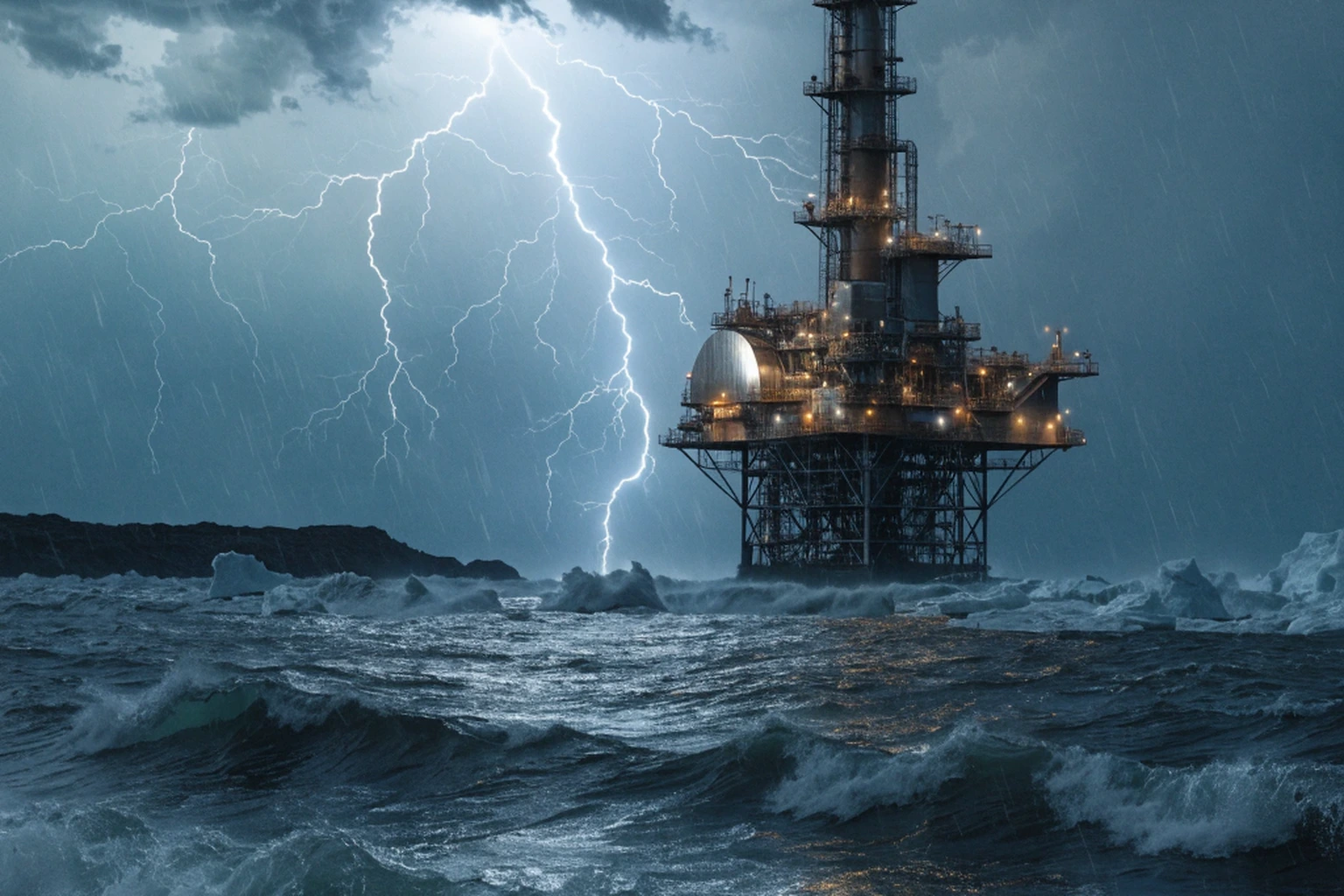
रूस: तेल और गैस की कहानी
रूस एक बहुत बड़ा देश है। इसकी अर्थव्यवस्था में ऊर्जा बहुत ज़रूरी है। रूस दुनिया में बहुत तेल और गैस पैदा करता है। यह तेल और गैस बेचता है। रूस दुनिया का सबसे बड़ा गैस उत्पादक है।
तेल और गैस रूस के लिए बहुत पैसा लाते हैं। रूस की सरकार को इससे बहुत पैसा मिलता है। यह पैसा रूस के विकास में मदद करता है। रूस की शक्ति तेल और गैस पर निर्भर करती है। यह रूस के लिए बहुत महत्वपूर्ण है।
व्याकरण स्पॉटलाइट
पैटर्न: संबंध कारक: का/के/की
"रूस की अर्थव्यवस्था में ऊर्जा बहुत ज़रूरी है।"
यह दिखाता है कि कोई चीज़ किससे संबंधित है। 'का' पुरुष एकवचन के लिए, 'के' पुरुष बहुवचन के लिए और 'की' स्त्री एकवचन या बहुवचन के लिए उपयोग होता है।
पैटर्न: सामान्य वर्तमान काल: -ता है/-ती है/-ते हैं
"रूस दुनिया में बहुत तेल और गैस पैदा करता है।"
यह बताता है कि कोई काम रोज़ होता है या हमेशा होता है। पुरुष एकवचन के लिए 'ता है', स्त्री एकवचन के लिए 'ती है', और बहुवचन के लिए 'ते हैं' लगाते हैं।
अपनी समझ जाँचें
10 सवाल · A1 शुरुआती · 1 मुफ्त प्रीव्यू
इस लेख से आपने जो सीखा उसकी जाँच करें। सभी सवालों के जवाब दें और XP कमाएँ!
रूस क्या बेचता है?
क्या आप क्विज़ समाप्त करना चाहते हैं?
9 और सवाल आपका इंतज़ार कर रहे हैं। पूरा क्विज़ अनलॉक करने और XP कमाने के लिए मुफ्त साइन अप करें!
मुफ़्त साइन अप करोपहले से अकाउंट है? साइन इन करो
बहुत बढ़िया!
अभ्यास जारी रखें!
पहले से पूर्ण — कोई अतिरिक्त XP नहीं
XP कमाने के लिए साइन अप करोसवालों का विवरण
रूस क्या बेचता है?
आपका जवाब:
सही जवाब: तेल और गैस
रूस दुनिया का सबसे बड़ा गैस उत्पादक है।
आपका जवाब:
सही जवाब: सही
'सरकार' का मतलब क्या है?
आपका जवाब:
सही जवाब: शासन
तेल और गैस रूस के लिए बहुत ______ लाते हैं।
आपका जवाब:
सही जवाब: पैसा
रूस का ऊर्जा क्षेत्र: तेल और प्राकृतिक गैस
रूस दुनिया का एक बहुत बड़ा देश है। इसकी अर्थव्यवस्था तेल और प्राकृतिक गैस पर बहुत निर्भर करती है। रूस दुनिया के सबसे बड़े तेल उत्पादकों में से एक है। इसके पास प्राकृतिक गैस का भी सबसे बड़ा भंडार है। यह रूस के लिए बहुत महत्वपूर्ण है।
यह उद्योग रूस की कुल अर्थव्यवस्था का लगभग 20% हिस्सा है। इससे सरकार को बहुत पैसा मिलता है। रूस दुनिया में तेल और गैस बेचने वाला एक बड़ा खिलाड़ी है। यह सिर्फ पैसे की बात नहीं है, बल्कि यह रूस को दुनिया में एक मजबूत देश भी बनाता है। तेल और गैस रूस की पहचान का एक महत्वपूर्ण हिस्सा हैं।
व्याकरण स्पॉटलाइट
पैटर्न: का/के/की (संबंध कारक)
"रूस की अर्थव्यवस्था तेल और प्राकृतिक गैस पर बहुत निर्भर करती है।"
यह 'का/के/की' संबंध कारक है। यह दो संज्ञाओं के बीच संबंध दिखाता है। 'की' का उपयोग स्त्रीलिंग संज्ञा के साथ होता है, 'का' पुल्लिंग एकवचन के साथ और 'के' पुल्लिंग बहुवचन या आदर के लिए। यहाँ 'अर्थव्यवस्था' स्त्रीलिंग है, इसलिए 'की' का प्रयोग हुआ है।
पैटर्न: में से एक है (सबसे अधिक में से एक)
"रूस दुनिया के सबसे बड़े तेल उत्पादकों में से एक है।"
यह पैटर्न बताता है कि कोई चीज़ किसी समूह में सबसे अच्छी या सबसे बड़ी चीज़ों में से एक है। 'सबसे बड़े' का मतलब है 'सबसे बड़ा', और 'में से एक है' का मतलब है 'उनमें से एक है'। यह तुलना करने का एक तरीका है।
अपनी समझ जाँचें
11 सवाल · A2 बिगिनर · 1 मुफ्त प्रीव्यू
इस लेख से आपने जो सीखा उसकी जाँच करें। सभी सवालों के जवाब दें और XP कमाएँ!
रूस की अर्थव्यवस्था मुख्य रूप से किस पर निर्भर करती है?
क्या आप क्विज़ समाप्त करना चाहते हैं?
10 और सवाल आपका इंतज़ार कर रहे हैं। पूरा क्विज़ अनलॉक करने और XP कमाने के लिए मुफ्त साइन अप करें!
मुफ़्त साइन अप करोपहले से अकाउंट है? साइन इन करो
बहुत बढ़िया!
अभ्यास जारी रखें!
पहले से पूर्ण — कोई अतिरिक्त XP नहीं
XP कमाने के लिए साइन अप करोसवालों का विवरण
रूस की अर्थव्यवस्था मुख्य रूप से किस पर निर्भर करती है?
आपका जवाब:
सही जवाब: तेल और प्राकृतिक गैस
रूस के पास प्राकृतिक गैस का सबसे बड़ा भंडार है।
आपका जवाब:
सही जवाब: सही
'उद्योग' का मतलब क्या है?
आपका जवाब:
सही जवाब: एक प्रकार का व्यापार या काम
रूस दुनिया के सबसे बड़े तेल ______ में से एक है।
आपका जवाब:
सही जवाब: उत्पादकों
तेल और गैस रूस को दुनिया में कैसा देश बनाते हैं?
आपका जवाब:
सही जवाब: मजबूत
Russia's Energy Power: Oil and Natural Gas
Russia is a country that is famous for its vast natural wealth. For many years, the energy sector has been the most important part of the national economy. Russia is currently one of the top three oil producers in the world, and it holds the largest natural gas reserves on the planet.
These resources, which are found deep underground, are essential for the country's wealth. In fact, the energy industry accounts for about 20% of Russia’s total economic production. Furthermore, nearly half of the money in the federal budget is collected from the sale of oil and gas. This money is used to pay for public services like schools and hospitals.
The energy sector is not just about money; it also gives Russia a lot of influence in international politics. Huge pipelines have been built to transport natural gas from the cold regions of Siberia to cities in Europe and Asia. Because many countries rely on these exports to heat their homes and power their factories, Russia has become a key player in the global market.
In recent years, the industry has faced some difficulties due to changes in global trade. However, the government continues to invest in new technology to reach even deeper resources. Many Russian citizens are employed by large energy companies, which are often managed by the state. As the world looks for new ways to produce energy, Russia’s oil and gas will likely remain a central topic for a long time.
व्याकरण स्पॉटलाइट
पैटर्न: Passive Voice
"This money is used to pay for public services like schools and hospitals."
We use the passive voice (be + past participle) when the action is more important than who is doing it. In this sentence, the focus is on the money being used, not specifically who spends it.
पैटर्न: Present Perfect
"Russia has become a key player in the global market."
The present perfect (have/has + past participle) connects the past to the present. It shows that Russia started being a key player in the past and still is one today.
अपनी समझ जाँचें
11 सवाल · B1 मध्यम · 1 मुफ्त प्रीव्यू
इस लेख से आपने जो सीखा उसकी जाँच करें। सभी सवालों के जवाब दें और XP कमाएँ!
What percentage of Russia's total economic production comes from the energy industry?
क्या आप क्विज़ समाप्त करना चाहते हैं?
10 और सवाल आपका इंतज़ार कर रहे हैं। पूरा क्विज़ अनलॉक करने और XP कमाने के लिए मुफ्त साइन अप करें!
मुफ़्त साइन अप करोपहले से अकाउंट है? साइन इन करो
बहुत बढ़िया!
अभ्यास जारी रखें!
पहले से पूर्ण — कोई अतिरिक्त XP नहीं
XP कमाने के लिए साइन अप करोसवालों का विवरण
What percentage of Russia's total economic production comes from the energy industry?
आपका जवाब:
सही जवाब: 20%
Russia has the largest natural gas reserves in the world.
आपका जवाब:
सही जवाब: सही
What does 'export' mean?
आपका जवाब:
सही जवाब: To send goods to another country for sale
Nearly half of the money in the federal _____ is collected from oil and gas sales.
आपका जवाब:
सही जवाब: budget
Where does Russia transport natural gas from?
आपका जवाब:
सही जवाब: Siberia
Powering the Giant: The Dynamics of the Russian Energy Sector
Russia’s economic identity is inextricably linked to its vast subterranean wealth, making the energy sector the definitive powerhouse of the national economy. As one of the world's top three oil producers and the holder of the planet's largest natural gas reserves, the industry accounts for roughly 20% of the nation’s Gross Domestic Product (GDP). This dominance is not merely a matter of economic statistics; it is a fundamental pillar of Russia’s geopolitical weight. This subterranean wealth includes not only crude oil but also vast quantities of liquefied natural gas (LNG), which is becoming increasingly important in the global market.
The infrastructure required to extract and transport these resources is truly immense. Thousands of kilometers of pipelines stretch across the Eurasian continent, connecting remote Siberian fields to industrial hubs. Historically, European nations have relied heavily on these exports to fuel their industries and heat their homes. However, recent geopolitical shifts have prompted a strategic reorientation. Consequently, Russia is increasingly looking toward eastern markets, such as China and India, to maintain its export volumes and secure new partnerships. Moreover, the development of the Arctic shelf represents a new frontier for extraction, though it presents significant technological and environmental hurdles.
Despite the undeniable wealth generated by fossil fuels, the sector faces several structural challenges that require careful analysis. Economic experts argue that an over-reliance on energy exports makes the national economy vulnerable to fluctuations in global commodity prices. If prices drop unexpectedly, the federal budget can suffer significantly, leading to reduced public spending. Because of this, there have been ongoing discussions regarding the urgent need for economic diversification. Efforts to invest in high-tech industries and manufacturing are seen as essential steps to ensure long-term financial stability.
Furthermore, the environmental impact of large-scale extraction cannot be ignored in the modern era. The industry must balance economic growth with the global transition toward renewable energy. While natural gas is often marketed as a 'bridge fuel' because it burns cleaner than coal, the long-term sustainability of a carbon-dependent economy is being questioned by international organizations. In conclusion, the energy sector remains the engine of the Russian economy. While it provides substantial financial resources and geopolitical leverage, the transition toward a more diverse and sustainable economic model remains a complex objective for the future.
व्याकरण स्पॉटलाइट
पैटर्न: Present Perfect Simple
"European nations have relied heavily on these exports to fuel their industries."
This tense is used to describe actions that started in the past and continue to have relevance or an effect in the present. It is formed using 'have/has' + past participle.
पैटर्न: First Conditional
"If prices drop unexpectedly, the federal budget can suffer significantly."
This structure is used to talk about possible future events and their likely results. It uses 'if' + present simple, followed by 'can', 'will', or 'may' + base verb.
पैटर्न: Present Continuous Passive
"...the long-term sustainability of a carbon-dependent economy is being questioned by international organizations."
This pattern focuses on an action currently in progress where the subject is the receiver of the action. It is formed using 'am/is/are' + 'being' + past participle.
अपनी समझ जाँचें
11 सवाल · B2 अपर इंटरमीडिएट · 1 मुफ्त प्रीव्यू
इस लेख से आपने जो सीखा उसकी जाँच करें। सभी सवालों के जवाब दें और XP कमाएँ!
What percentage of Russia's GDP is approximately accounted for by the energy sector?
क्या आप क्विज़ समाप्त करना चाहते हैं?
10 और सवाल आपका इंतज़ार कर रहे हैं। पूरा क्विज़ अनलॉक करने और XP कमाने के लिए मुफ्त साइन अप करें!
मुफ़्त साइन अप करोपहले से अकाउंट है? साइन इन करो
बहुत बढ़िया!
अभ्यास जारी रखें!
पहले से पूर्ण — कोई अतिरिक्त XP नहीं
XP कमाने के लिए साइन अप करोसवालों का विवरण
What percentage of Russia's GDP is approximately accounted for by the energy sector?
आपका जवाब:
सही जवाब: 20%
Russia holds the largest natural gas reserves in the world.
आपका जवाब:
सही जवाब: सही
What does 'vulnerable' mean in the context of the article?
आपका जवाब:
सही जवाब: Open to being affected or harmed by something
The industry must _____ economic growth with the global transition toward renewable energy.
आपका जवाब:
सही जवाब: balance
Which regions are mentioned as the new focus for Russian energy exports?
आपका जवाब:
सही जवाब: China and India
The Hydrocarbon Colossus: Russia's Energy Dominance and Dilemma
Russia’s economic identity is inextricably linked to its vast subterranean wealth. Were one to analyze the nation's fiscal structure, the overwhelming dominance of the energy sector would become immediately apparent. Accounting for a substantial portion of the GDP and nearly half of the federal budget, the extraction and export of oil and natural gas are not merely industrial activities; they are the bedrock of national stability. It is this sheer abundance of fossil fuels that has granted Moscow significant leverage on the global stage, transforming geological fortune into geopolitical power. The magnitude of these reserves, spanning from the Urals to the Far East, places the country in a unique position among global powers.
However, such heavy reliance comes at a steep cost. Seldom does an economy so dependent on volatile commodities escape the phenomenon known as the "resource curse." The fluctuation of global oil prices often precipitates immediate domestic economic shifts, creating a cycle of boom and bust that challenges long-term planning. When prices soar, the national coffers swell, allowing for infrastructure development and robust social spending. Conversely, a sharp decline can trigger austerity measures and recession. Consequently, the diversification of the economy has remained a rhetorical priority for decades, though tangible progress has often lagged behind the immediate allure of petrodollars.
What complicates the scenario further is the intricate web of natural gas pipelines extending towards Europe and, increasingly, Asia. Historically, it was the European market that absorbed the lion's share of Russian gas, a relationship forged during the Cold War and maintained through decades of political change. Yet, recent geopolitical tensions have necessitated a strategic pivot. No sooner had relations with the West cooled than Russia accelerated the construction of infrastructure oriented towards the East, specifically China. This shift signifies a profound realignment of global energy flows, emphasizing that energy policy is indistinguishable from foreign policy in the Kremlin's calculus.
Furthermore, the operational challenges facing the sector are mounting. The extraction of resources is becoming increasingly difficult as easily accessible fields are depleted. Future production relies heavily on the Arctic shelf, an environment that is as hostile as it is rich. It is here that the impact of Western sanctions is most acute, as they restrict access to the advanced technology required for deep-water and arctic drilling. Without international cooperation or rapid domestic innovation, the development of these frontier fields remains uncertain.
Looking ahead, the Russian energy sector faces a precarious future. The global transition towards renewable energy poses an existential threat to traditional hydrocarbon hegemony. While natural gas is often touted as a "bridge fuel" to a greener future, the long-term demand for fossil fuels is projected to decline. Thus, the imperative for the industry is adaptation. Whether Russia can maintain its status as an energy superpower while navigating sanctions, market shifts, and the green transition remains the defining question of the century.
व्याकरण स्पॉटलाइट
पैटर्न: Inversion in Conditional Sentences
"Were one to analyze the nation's fiscal structure, the overwhelming dominance of the energy sector would become immediately apparent."
This structure omits 'If' and inverts the subject and auxiliary verb (Were). It is used to create a more formal and hypothetical tone, equivalent to 'If one were to analyze...'.
पैटर्न: Negative Inversion
"Seldom does an economy so dependent on volatile commodities escape the phenomenon known as the 'resource curse.'"
When a sentence starts with a negative or restrictive adverb (like 'Seldom', 'Rarely', 'No sooner'), the subject and auxiliary verb are inverted ('does an economy... escape') for emphasis.
पैटर्न: Cleft Sentences
"It is this sheer abundance of fossil fuels that has granted Moscow significant leverage on the global stage."
This pattern ('It is X that...') focuses attention on a specific element of the sentence (the abundance of fossil fuels) rather than the action, emphasizing the cause of the leverage.
अपनी समझ जाँचें
12 सवाल · C1 उन्नत · 1 मुफ्त प्रीव्यू
इस लेख से आपने जो सीखा उसकी जाँच करें। सभी सवालों के जवाब दें और XP कमाएँ!
What is meant by the 'resource curse' in the context of the article?
क्या आप क्विज़ समाप्त करना चाहते हैं?
11 और सवाल आपका इंतज़ार कर रहे हैं। पूरा क्विज़ अनलॉक करने और XP कमाने के लिए मुफ्त साइन अप करें!
मुफ़्त साइन अप करोपहले से अकाउंट है? साइन इन करो
बहुत बढ़िया!
अभ्यास जारी रखें!
पहले से पूर्ण — कोई अतिरिक्त XP नहीं
XP कमाने के लिए साइन अप करोसवालों का विवरण
What is meant by the 'resource curse' in the context of the article?
आपका जवाब:
सही जवाब: The negative economic consequences of depending heavily on a single volatile commodity.
The article suggests that Russia has successfully and fully diversified its economy away from oil and gas.
आपका जवाब:
सही जवाब: गलत
Which word best matches the definition: 'To cause a bad event to happen suddenly'?
आपका जवाब:
सही जवाब: Precipitate
The shift in energy exports towards China represents a strategic _____ from the traditional European market.
आपका जवाब:
सही जवाब: pivot
According to the text, why is the Arctic shelf crucial for Russia's energy future?
आपका जवाब:
सही जवाब: It is necessary to replace production from depleting traditional fields.
Western sanctions have had little to no impact on Russia's ability to develop deep-water and Arctic drilling projects.
आपका जवाब:
सही जवाब: गलत
The Hydrocarbon Hegemony: Anatomy of the Russian Energy Colossus
To characterize the contemporary economic landscape of the Russian Federation without acknowledging the omnipresent specter of its hydrocarbon reserves would be an exercise in futility. The nation’s identity is inextricably linked to its subterranean wealth, a geological lottery that has bestowed upon it the title of an 'energy superpower.' Yet, this nomenclature carries with it a profound ambivalence. The energy sector, primarily comprising oil and natural gas, serves simultaneously as the engine of Russia’s resurgence and the potential architect of its stagnation. It is a monolithic entity that dictates fiscal policy, shapes geopolitical strategy, and underscores the fragility of a rentier state model.
At the vanguard of this sector is the oil industry, a sprawling network of extraction and refinement that positions Russia alongside Saudi Arabia and the United States in the triumvirate of global producers. The extraction of 'black gold,' largely centralized under state-controlled giants such as Rosneft, accounts for a staggering proportion of federal budget revenues. However, reliance on this commodity exposes the economy to the capricious nature of global markets. Were the price of crude to plummet unexpectedly, as it has in previous decades, the shockwaves would reverberate through the Kremlin’s coffers with immediate and destabilizing effect. This inherent volatility necessitates the accumulation of vast sovereign wealth funds, a fiscal buffer designed to ameliorate the impact of external shocks.
Parallel to oil is the natural gas sector, dominated by the gargantuan entity Gazprom. Possessing the world’s largest proven gas reserves, Russia has historically leveraged this resource not merely as a commercial export but as a potent instrument of foreign policy. The intricate web of pipelines crisscrossing Eurasia serves as a physical manifestation of this leverage. For decades, the flow of gas to Europe was a symbiotic, albeit tense, relationship. However, recent geopolitical fractures have compelled a strategic pivot eastward. It is imperative that the state diversify its consumer base, necessitating the rapid development of infrastructure such as the 'Power of Siberia' pipeline to satiate the burgeoning appetite of the Asian markets. This reorientation highlights the adaptability of the sector, yet it also underscores the risks of trading one dependency for another.
Economically, the dominance of these industries invites the diagnosis of 'Dutch Disease'—a phenomenon where the booming resource sector causes currency appreciation, thereby rendering other export sectors uncompetitive. Critics argue that the ease of extracting resource rents has disincentivized innovation in technology and manufacturing. Had the government pursued a more aggressive policy of diversification earlier, the economy might currently possess greater resilience against sanctions and market fluctuations. Instead, the allure of immediate petrodollars often eclipses the arduous task of structural reform.
Looking to the future, the Russian energy sector stands at a precipice. The global transition toward renewable energy and decarbonization poses an existential threat to the long-term viability of a hydrocarbon-based economy. While Russia possesses immense potential for hydrogen and atomic energy, the inertia of the fossil fuel complex is formidable. Furthermore, technological isolation resulting from international sanctions hampers the exploration of difficult-to-reach reserves, such as those in the Arctic shelf or shale formations. It is essential that policymakers acknowledge these looming paradigms; ignoring the green transition could relegate the nation to economic obsolescence.
Ultimately, the Russian energy sector remains a paradox of strength and vulnerability. It provides the fiscal might to project power globally while simultaneously tethering the nation’s prosperity to factors beyond its control. As the world moves inexorably toward a new energy architecture, the capacity of this colossus to evolve will determine whether it remains a pillar of global stability or becomes a relic of the industrial age.
व्याकरण स्पॉटलाइट
पैटर्न: Inverted Conditional (Were...)
"Were the price of crude to plummet unexpectedly, as it has in previous decades, the shockwaves would reverberate through the Kremlin’s coffers."
This is a formal alternative to 'If the price of crude were to plummet...'. By omitting 'if' and inverting the subject and auxiliary verb ('Were the price'), the writer creates a more academic and hypothetical tone suitable for C2 writing.
पैटर्न: Subjunctive Mood (It is imperative that...)
"It is imperative that the state diversify its consumer base."
The subjunctive is used here after an adjective of necessity ('imperative'). The verb 'diversify' remains in the base form (without 's'), regardless of the subject 'state'. This emphasizes the importance and urgency of the action.
पैटर्न: Mixed Conditional (Had... might...)
"Had the government pursued a more aggressive policy of diversification earlier, the economy might currently possess greater resilience."
This sentence mixes a past condition (Type 3: 'Had the government pursued') with a present result (Type 2: 'might currently possess'). It critiques a past action by highlighting its ongoing consequence in the present.
अपनी समझ जाँचें
12 सवाल · C2 महारत · 1 मुफ्त प्रीव्यू
इस लेख से आपने जो सीखा उसकी जाँच करें। सभी सवालों के जवाब दें और XP कमाएँ!
According to the article, what is the 'Dutch Disease' in the context of the Russian economy?
क्या आप क्विज़ समाप्त करना चाहते हैं?
11 और सवाल आपका इंतज़ार कर रहे हैं। पूरा क्विज़ अनलॉक करने और XP कमाने के लिए मुफ्त साइन अप करें!
मुफ़्त साइन अप करोपहले से अकाउंट है? साइन इन करो
बहुत बढ़िया!
अभ्यास जारी रखें!
पहले से पूर्ण — कोई अतिरिक्त XP नहीं
XP कमाने के लिए साइन अप करोसवालों का विवरण
According to the article, what is the 'Dutch Disease' in the context of the Russian economy?
आपका जवाब:
सही जवाब: The negative impact of a booming resource sector on other export industries due to currency appreciation.
The article suggests that Russia’s pivot to Asian markets completely eliminates the risks associated with energy exports.
आपका जवाब:
सही जवाब: गलत
Which word best matches the definition: 'Liability to change rapidly and unpredictably'?
आपका जवाब:
सही जवाब: Volatility
The article describes the Russian energy sector as a ________ entity that dictates fiscal policy.
आपका जवाब:
सही जवाब: monolithic
What function do sovereign wealth funds serve according to the text?
आपका जवाब:
सही जवाब: To act as a fiscal buffer against external market shocks.
To describe the Russian economy without mentioning hydrocarbons would be an exercise in ________.
आपका जवाब:
सही जवाब: futility

