donkey 30 सेकंड में
- A donkey is a sturdy, long-eared mammal related to the horse, traditionally used for labor and transport in various global cultures and environments.
- Informally, the term 'donkey' can describe a person who is stubborn or foolish, reflecting common cultural stereotypes about the animal's cautious behavior.
- In British English, 'donkey's years' is a popular idiom meaning a very long time, while 'donkey work' refers to tedious, repetitive, and menial tasks.
- The donkey is also a significant cultural and political symbol, notably representing the Democratic Party in the United States and humility in religious contexts.
The word donkey refers primarily to a domesticated member of the horse family, known scientifically as Equus africanus asinus. These animals are characterized by their long ears, sturdy build, and a distinctive braying call. Historically and globally, donkeys have served as essential 'beasts of burden,' a term used to describe animals that carry heavy loads or perform physical labor for humans. Because of their sure-footedness and incredible endurance, they are often found in mountainous regions or arid climates where horses might struggle to survive. In a social context, the term is frequently used to describe someone who is being particularly obstinate or foolish, though this usage is informal and can be offensive depending on the tone. When you hear someone mention a donkey, they might be talking about a literal animal on a farm, a character in a children's story like Eeyore from Winnie the Pooh, or a political symbol, such as the emblem of the Democratic Party in the United States.
- Biological Classification
- Donkeys belong to the family Equidae, which also includes horses and zebras. They were domesticated approximately 5,000 years ago in Africa and the Middle East.
The farmer led the donkey up the narrow mountain path, its back laden with baskets of fresh olives.
Beyond the physical animal, the word carries a heavy weight of cultural metaphor. In many cultures, the donkey is a symbol of humility and service, famously appearing in religious texts. However, in Western idioms, it often represents stubbornness. This reputation for being 'stubborn' actually stems from the donkey's highly developed sense of self-preservation. Unlike a horse, which might bolt when frightened, a donkey will freeze and assess the situation. This refusal to move is often misinterpreted by humans as simple defiance. In modern professional settings, 'donkey work' refers to the tedious, repetitive, and physically demanding parts of a project that no one else wants to do. You might hear a junior architect complain that they are doing all the 'donkey work' while the senior partner gets to do the creative design.
- Common Varieties
- There are several breeds, including the Miniature Mediterranean donkey, the large Poitou donkey from France, and the wild burros found in the American West.
Stop being such a donkey and just listen to the instructions for once!
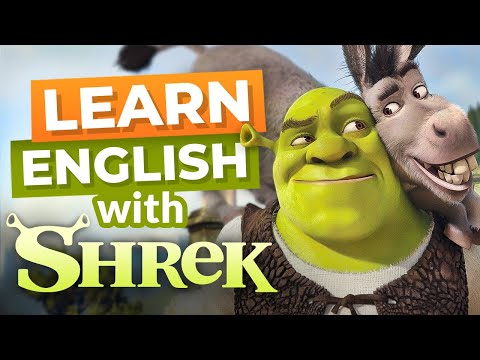
In the world of entertainment and literature, donkeys are often portrayed as wise, long-suffering, or endearingly pessimistic. Shakespeare used the transformation of a character into a donkey (or 'ass') in A Midsummer Night's Dream to create comedy. In modern cinema, the character 'Donkey' from the Shrek franchise subverted the stereotype of the quiet, stubborn animal by being incredibly talkative and energetic. This illustrates how the word can be adapted to various creative needs. Whether you are discussing agriculture, literature, or human behavior, 'donkey' remains a versatile and deeply embedded term in the English language.
- Usage in Sports
- In poker slang, a 'donkey' (or 'donk') is a derogatory term for a player who plays poorly or makes illogical bets, relying on luck rather than skill.
The children enjoyed a donkey ride along the sandy beach during their summer holiday.
We haven't seen them in donkey's years, so it was a pleasant surprise when they visited.
The political cartoonist drew a donkey to represent the opposition party's stance on the new tax law.
Using the word donkey in a sentence requires an understanding of its dual nature as both a biological noun and a metaphorical descriptor. When referring to the animal, it is a countable noun, meaning you can have one donkey or many donkeys. Note the spelling of the plural: simply add an 's' to the end. It is often the subject of verbs related to movement (trot, wander, carry) or sound (bray). For example, 'The donkey brayed at dawn, waking the entire village.' In this context, the word is neutral and descriptive. You can also use it in compound nouns like 'donkey foal' or 'donkey cart' to specify the age of the animal or the equipment it is using.
- Grammatical Role
- 'Donkey' functions as a common noun. It can be modified by adjectives such as 'stubborn,' 'hard-working,' 'gray,' or 'miniature.'
The sanctuary provides a safe home for elderly donkeys that can no longer work.
When moving into metaphorical territory, the sentence structure often involves a comparison or a direct labeling of a person. 'He is such a donkey' uses the noun as a predicate nominative to characterize someone's behavior. In idioms, the word often loses its literal meaning entirely. 'Donkey's years' is a common British expression meaning a very long time. In a sentence like 'I haven't been to the cinema in donkey's years,' the word functions as part of a temporal phrase. Another common idiomatic use is 'donkey work,' which functions as a compound noun representing menial tasks. 'I did all the donkey work for the project, but she took all the credit' illustrates how the word highlights the lack of glamour in a task.
- Verbal Associations
- Donkeys 'bray' (the 'hee-haw' sound), 'kick' (a defensive move), and 'graze' (eating grass).
If you keep acting like a donkey, no one will want to collaborate with you on this team.
In more formal or scientific writing, you might see the word used in the context of evolution or animal husbandry. 'The genetic diversity of the domestic donkey is a subject of ongoing research' uses the word as a specific biological subject. In literature, authors often use the donkey as a foil for more noble animals like horses to highlight themes of class or status. For example, 'While the knight rode a stallion, his squire followed on a humble donkey.' Here, the word helps establish the social hierarchy of the characters. Understanding these various contexts allows you to use 'donkey' accurately across different registers of English.
- Phrasal Verbs and Idioms
- Phrases like 'to talk the hind legs off a donkey' mean to talk incessantly. Example: 'My aunt can talk the hind legs off a donkey once she gets started on her garden.'
The donkey donkey cart was the only way to transport the water barrels to the remote outpost.
She spent the afternoon doing the donkey work of filing and data entry.
The donkey's donkey ears twitched as it listened to the distant sound of thunder.
The word donkey is ubiquitous in various settings, ranging from rural landscapes to high-stakes political commentary. If you are visiting a farm or a petting zoo, you will certainly hear the word used literally. Children often encounter donkeys in picture books and animated films, where the animal is frequently a central character. In the United Kingdom, a very specific and traditional place to hear the word is at the seaside. 'Donkey rides' have been a staple of British beach holidays for over a century, and you will often hear parents asking their children if they want to 'go for a ride on the donkey.' This cultural touchstone has kept the word firmly in the public consciousness as a symbol of simple, old-fashioned fun.
- Political Discourse
- In the United States, the donkey is the unofficial symbol of the Democratic Party. You will hear political analysts and news anchors refer to the 'donkey' when discussing Democratic strategies or election results, often contrasting it with the Republican 'elephant.'
The political cartoonist used a donkey to represent the Democratic candidate's resilience.
In the workplace, particularly in office environments, the word appears in the phrase 'donkey work.' This is common in professional conversations when discussing the allocation of tasks. A manager might say, 'I'll handle the client presentation, but I need you to do the donkey work on the spreadsheets.' This usage is widespread across English-speaking countries and is a quick way to categorize labor-intensive but non-specialized work. Similarly, in British and Australian English, you might hear the word in casual conversation as a mild insult. If someone makes a silly mistake, a friend might jokingly call them a 'donkey.' It is less harsh than 'idiot' but carries a similar meaning of being a bit slow or foolish.
- Literature and Folklore
- From Aesop's Fables to George Orwell's Animal Farm (Benjamin the donkey), the word is a staple of allegorical storytelling.
Benjamin the donkey was the oldest and most cynical animal on the farm.
Finally, the word is often heard in religious contexts, particularly during the Christmas season. The story of Mary and Joseph traveling to Bethlehem on a donkey is a central image in Christian tradition. You will hear the word in carols, see it in nativity plays, and read it in religious texts. This association gives the word a connotation of patience, service, and sacred duty that contrasts sharply with its use as a slang insult. This duality—from the sacred to the silly—makes 'donkey' a fascinating word to observe in natural speech. Whether it's a child at the beach, a politician on TV, or a coworker in the breakroom, the word 'donkey' is never far away.
- Regional Variations
- In Ireland, donkeys are a common sight in the countryside, and the word is often used in local lore and traditional songs.
The sound of a donkey braying in the distance is a classic sound of the Irish countryside.
He's been working there for donkey's years and knows every inch of the factory.
The donkey donkey sanctuary is a popular destination for families on the weekend.
One of the most frequent mistakes learners make with the word donkey is confusing it with other similar animals, specifically the 'mule' and the 'ass.' While 'ass' is technically a synonym for donkey, it is much more commonly used as a vulgar insult in modern English. Using 'ass' when you mean the animal can lead to unintended social awkwardness. A 'mule,' on the other hand, is a different animal entirely—a hybrid. Calling a mule a donkey is a biological error. Another common mistake is the spelling of the plural form. Many learners mistakenly write 'donkies,' following the rule of changing 'y' to 'ies.' However, because there is a vowel (e) before the 'y,' the correct plural is simply 'donkeys.'
- Spelling Error
- Incorrect: Donkies. Correct: Donkeys. Remember the 'ey' ending stays the same when adding 's'.
The student wrote about the three donkeys on the farm, making sure to use the correct plural spelling.
In terms of usage, a common error is misapplying the idiom 'donkey's years.' Some learners might say 'donkey years' without the possessive 's,' which is incorrect. The phrase must be 'donkey's years' (or sometimes 'donkeys' years' plural possessive). Additionally, learners often use the word as an insult in the wrong register. Calling a superior or a stranger a 'donkey' is far too informal and potentially offensive. It is a term best reserved for very close friends in a joking manner or for describing someone's behavior in a third-person narrative. Another nuance is the difference between 'donkey' and 'burro.' While they are the same animal, 'burro' is almost exclusively used in the context of the Southwestern United States or Spanish-speaking countries. Using 'burro' to describe an animal in the English countryside would sound out of place.
- Confusion with 'Ass'
- In American English, 'ass' is almost always an insult or a reference to anatomy. Use 'donkey' to be safe when referring to the animal.
It is a common mistake to call a mule a donkey, but they are actually different species.
Finally, learners sometimes struggle with the collective nouns for donkeys. While 'a group of donkeys' is perfectly acceptable, using 'a herd of donkeys' is more natural than 'a pack of donkeys.' 'Pack' is usually reserved for dogs or wolves. If you want to sound particularly advanced, you can use 'a drove of donkeys.' Misusing these collective nouns won't necessarily make you misunderstood, but using the correct one will make your English sound much more native and sophisticated. By avoiding these common pitfalls—spelling, register, and biological confusion—you can use the word 'donkey' with confidence in any situation.
- Idiomatic Precision
- Don't say 'I did the donkey job.' The correct phrase is 'I did the donkey work.'
He made a donkey of himself by trying to argue with the expert.
The child was corrected when they called the donkey a 'horse' at the zoo.
Don't forget the 's' when talking about multiple donkeys.
When exploring the semantic field of donkey, several related words come to mind, each with its own specific nuance and context. The most direct synonym is 'ass,' which is the older, more formal term for the animal. However, as previously noted, 'ass' has largely been relegated to slang and insults in modern English. If you are reading older literature or religious texts, you will see 'ass' used frequently and respectfully. Another close relative is the 'burro.' This word is borrowed from Spanish and is specifically used to describe small donkeys, especially those found in Mexico and the Southwestern United States. It carries a connotation of the desert and rugged terrain.
- Donkey vs. Mule
- A donkey is a pure species. A mule is a hybrid (male donkey + female horse). Mules are sterile and generally larger than donkeys.
The hiker preferred a burro for the trek through the Grand Canyon because of its size.
If you are looking for alternatives to describe a person's behavior, words like 'obstinate,' 'stubborn,' or 'mulish' are excellent choices. 'Mulish' is particularly interesting because it directly references the donkey's hybrid cousin to describe someone who refuses to change their mind. If you want to describe someone as foolish, 'nitwit,' 'dunderhead,' or 'simpleton' are more descriptive and less animal-focused than 'donkey.' In a professional context, if you want to avoid the informal 'donkey work,' you could use terms like 'menial labor,' 'grunt work,' or 'administrative drudgery.' These terms convey the same sense of tedious work but are more appropriate for a formal report or a business meeting.
- Donkey vs. Hinny
- A hinny is the opposite of a mule: the offspring of a male horse and a female donkey. They are much rarer than mules.
His mulish refusal to compromise led to the collapse of the negotiations.
In the animal kingdom, donkeys are often compared to ponies. While both are smaller than horses, they have different body structures and temperaments. Ponies are just small horses, whereas donkeys are a distinct species with different ear shapes and tail structures. Knowing these distinctions helps you use the right word for the right animal. In summary, while 'donkey' is the most common and versatile term, understanding its synonyms like 'ass' and 'burro,' its hybrids like 'mule,' and its metaphorical alternatives like 'mulish' will greatly enrich your vocabulary and allow for more precise communication.
- Summary of Alternatives
- Animal: Ass, Burro, Jack, Jenny. Person: Stubborn, Foolish, Obstinate. Work: Grunt work, Menial tasks.
The professor used the term Equus asinus during the biology lecture on equines.
The donkey is often more sure-footed than a horse on rocky trails.
She was tired of the grunt work and wanted more creative responsibility.
How Formal Is It?
रोचक तथ्य
Before 'donkey' became the standard word, the animal was almost exclusively called an 'ass'. 'Donkey' was introduced partly to avoid the increasingly vulgar connotations of 'ass'.
उच्चारण मार्गदर्शिका
- Pronouncing it like 'monkey' (mung-key) with a 'u' sound.
- Making the 'ey' sound like 'ay' as in 'they'.
- Putting the stress on the second syllable.
- Confusing the 'o' sound with a long 'o' as in 'don't'.
- Dropping the 'ng' sound and saying 'don-key' with a clear 'n'.
कठिनाई स्तर
The word itself is simple, but idioms can be tricky.
Plural spelling is a common trap for learners.
Pronunciation is usually easy once the 'o' sound is mastered.
The word is very distinct and easy to recognize.
आगे क्या सीखें
पूर्वापेक्षाएँ
आगे सीखें
उन्नत
ज़रूरी व्याकरण
Plural of nouns ending in -ey
Donkey becomes donkeys, just like monkey becomes monkeys.
Similes with 'as...as'
He is as stubborn as a donkey.
Possessive idioms
Donkey's years uses the possessive 's to show duration.
Compound nouns
Donkey work functions as a single concept.
Collective nouns
A 'drove' of donkeys is the specific group term.
स्तर के अनुसार उदाहरण
The donkey is gray.
Le bourricot est gris.
Subject-Verb-Adjective structure.
I see a donkey on the farm.
Je vois un âne à la ferme.
Use of the indefinite article 'a'.
The donkey has long ears.
L'âne a de longues oreilles.
Possessive 'has' for physical traits.
Can I ride the donkey?
Puis-je monter l'âne ?
Interrogative sentence with 'can'.
The donkey eats grass.
L'âne mange de l'herbe.
Present simple for habitual actions.
Look at the small donkey.
Regarde le petit âne.
Imperative 'Look' with an adjective.
The donkey says hee-haw.
L'âne fait hi-han.
Onomatopoeia used as a verb phrase.
There are two donkeys here.
Il y a deux ânes ici.
Plural 'donkeys' after a number.
The donkey is carrying a heavy basket.
L'âne porte un panier lourd.
Present continuous for current action.
Donkeys are very strong animals.
Les ânes sont des animaux très forts.
General statement using plural nouns.
My grandfather has a donkey on his farm.
Mon grand-père a un âne dans sa ferme.
Possessive 'my' and 'his'.
The donkey walked slowly up the hill.
L'âne a marché lentement sur la colline.
Past simple with an adverb 'slowly'.
A baby donkey is called a foal.
Un bébé âne s'appelle un poulain.
Passive voice 'is called'.
The donkey's bray was very loud.
Le braiment de l'âne était très fort.
Possessive 's' for the animal's sound.
We saw many donkeys during our holiday in Greece.
Nous avons vu beaucoup d'ânes pendant nos vacances en Grèce.
Quantifier 'many' with plural noun.
Don't be a donkey; wear your coat!
Ne sois pas bête ; mets ton manteau !
Metaphorical use in an imperative sentence.
The farmer used a donkey to transport the harvest.
Le fermier utilisait un âne pour transporter la récolte.
Infinitive of purpose 'to transport'.
I haven't seen my old school friends in donkey's years.
Je n'ai pas vu mes vieux amis d'école depuis une éternité.
Idiomatic use of 'donkey's years'.
She had to do all the donkey work for the science project.
Elle a dû faire tout le travail ingrat pour le projet de sciences.
Idiomatic use of 'donkey work'.
Donkeys are known for being incredibly sure-footed.
Les ânes sont connus pour avoir le pied très sûr.
Adjective 'sure-footed' describing a trait.
The donkey refused to move, showing its famous stubbornness.
L'âne a refusé de bouger, montrant son célèbre entêtement.
Participial phrase 'showing its...'.
In many cultures, the donkey is a symbol of humility.
Dans de nombreuses cultures, l'âne est un symbole d'humilité.
Prepositional phrase 'In many cultures'.
The donkey's ears are large to help it stay cool in the heat.
Les oreilles de l'âne sont grandes pour l'aider à rester au frais dans la chaleur.
Infinitive of purpose 'to help'.
He felt like a donkey after making such an obvious mistake.
Il s'est senti comme un imbécile après avoir fait une erreur aussi évidente.
Simile using 'like a donkey'.
The donkey's refusal to cross the bridge was a sign of its caution.
Le refus de l'âne de traverser le pont était un signe de sa prudence.
Noun phrase as subject.
The political cartoon featured a donkey wearing a blue hat.
La caricature politique mettait en scène un âne portant un chapeau bleu.
Reduced relative clause 'wearing a blue hat'.
Despite their reputation, donkeys are actually quite intelligent.
Malgré leur réputation, les ânes sont en réalité assez intelligents.
Concessive clause starting with 'Despite'.
The sanctuary specializes in the rescue of mistreated donkeys.
Le sanctuaire est spécialisé dans le sauvetage d'ânes maltraités.
Verb 'specializes in' followed by a noun.
Doing the donkey work now will make the final stages easier.
Faire le travail ingrat maintenant facilitera les étapes finales.
Gerund phrase as subject.
The sound of the donkey braying echoed through the valley.
Le son du braiment de l'âne a résonné dans la vallée.
Subject-verb-prepositional phrase.
He was as stubborn as a donkey when it came to his political beliefs.
Il était têtu comme une mule en ce qui concernait ses convictions politiques.
Simile 'as stubborn as a donkey'.
The donkey's coat was thick and shaggy in the winter months.
Le pelage de l'âne était épais et hirsute pendant les mois d'hiver.
Adjectives 'thick and shaggy'.
The donkey's evolutionary history is distinct from that of the horse.
L'histoire évolutive de l'âne est distincte de celle du cheval.
Comparative structure 'distinct from that of'.
She dismissed his argument as the mere braying of a donkey.
Elle a rejeté son argument comme étant le simple braiment d'un âne.
Metaphorical use of 'braying'.
The donkey remains an indispensable asset in many developing economies.
L'âne reste un atout indispensable dans de nombreuses économies en développement.
Adjective 'indispensable' modifying 'asset'.
The author uses the donkey as a symbol of the proletariat's suffering.
L'auteur utilise l'âne comme symbole de la souffrance du prolétariat.
Symbolic literary analysis.
It has been donkey's years since the village saw such a grand celebration.
Cela fait une éternité que le village n'a pas vu une telle célébration.
Idiom used in a complex tense structure.
The donkey's stoic nature is often mistaken for a lack of emotion.
La nature stoïque de l'âne est souvent confondue avec un manque d'émotion.
Passive voice 'is often mistaken for'.
He spent his career doing the donkey work that paved the way for others.
Il a passé sa carrière à faire le travail de fond qui a ouvert la voie aux autres.
Relative clause 'that paved the way'.
The donkey's unique gait allows it to navigate treacherous terrain.
L'allure unique de l'âne lui permet de naviguer sur des terrains traîtres.
Verb 'allows' with object and infinitive.
The donkey's role in the iconography of the Democratic Party is well-documented.
Le rôle de l'âne dans l'iconographie du Parti démocrate est bien documenté.
Abstract noun 'iconography'.
One must not conflate the donkey's cautious instinct with simple obstinacy.
Il ne faut pas confondre l'instinct prudent de l'âne avec une simple obstination.
Formal 'One must not' and verb 'conflate'.
The donkey's bray is a complex acoustic signal used for long-distance communication.
Le braiment de l'âne est un signal acoustique complexe utilisé pour la communication à longue distance.
Technical scientific description.
The narrative arc of the donkey in the fable serves as a moral cautionary tale.
L'arc narratif de l'âne dans la fable sert de conte moral de mise en garde.
Literary terminology 'narrative arc'.
The sheer volume of donkey work required for the audit was staggering.
Le volume impressionnant de travail ingrat requis pour l'audit était stupéfiant.
Adjective 'staggering' for emphasis.
The donkey's domestication was a pivotal moment in human Neolithic history.
La domestication de l'âne a été un moment charnière dans l'histoire néolithique de l'humanité.
Historical/Archaeological context.
To call him a donkey would be a disservice to the animal's natural intelligence.
L'appeler un âne serait un mauvais service rendu à l'intelligence naturelle de l'animal.
Subjunctive/Conditional 'would be'.
The donkey's presence in the landscape is a testament to its enduring utility.
La présence de l'âne dans le paysage est un témoignage de son utilité durable.
Phrase 'a testament to'.
सामान्य शब्द संयोजन
सामान्य वाक्यांश
— For a very long time. It is a common British expression.
They have lived in that same house for donkey's years.
— The hard, boring, or repetitive part of a job. It usually refers to manual or administrative tasks.
The interns did the donkey work of scanning all the old files.
— To talk for a very long time, often in a way that is boring or exhausting for the listener.
My neighbor is very friendly, but she can talk the hind legs off a donkey.
— A straw mattress. This is an old-fashioned and somewhat rare slang term.
The sailors had to sleep on a donkey's breakfast in the cramped quarters.
— A traditional children's party game where players are blindfolded and try to attach a tail to a picture of a donkey.
We played pin the tail on the donkey at my seventh birthday party.
— A heavy, durable wool coat, often with waterproof patches on the shoulders, traditionally worn by workmen.
The construction workers were all wearing donkey jackets in the cold rain.
— A small auxiliary engine used on ships or in logging for secondary tasks.
The donkey engine was used to power the winch on the deck.
— To act in a foolish or embarrassing way in front of others.
He really made a donkey of himself at the office party last night.
— In some voting systems, a vote where the voter simply ranks candidates in the order they appear on the ballot.
The high number of donkey votes suggested that many people didn't care about the local election.
— A literal translation of 'Pons Asinorum,' referring to a problem that tests the ability of a beginner.
The fifth proposition of Euclid is often called the donkey bridge of geometry.
अक्सर इससे भ्रम होता है
A mule is a hybrid of a donkey and a horse; it is usually larger and sterile.
A pony is just a small horse, whereas a donkey is a different species.
Technically the same animal, but 'ass' is often used as a rude insult.
मुहावरे और अभिव्यक्तियाँ
— An extremely long period of time. It is thought to be a pun on 'donkey's ears,' which are long.
I haven't been back to my hometown in donkey's years.
Informal— To be incredibly talkative, to the point of exhausting the listener.
You'll love meeting Sarah, but be warned: she can talk the hind legs off a donkey.
Informal— The tedious and physically demanding parts of a task that require little skill but much effort.
I don't mind the design phase, but I hate the donkey work of coding the basic structure.
Neutral— Extremely unwilling to change one's mind or follow instructions.
Good luck getting him to move; he's as stubborn as a donkey.
Informal— To make someone look foolish or stupid.
The prank was designed to make a donkey of the new teacher.
Informal— A very poor quality meal or a straw mattress (archaic).
After the long hike, the dry sandwich felt like a donkey's breakfast.
Slang/Archaic— It is better to have something humble and reliable than something grand and dangerous.
I'll keep my old car; better a donkey that carries me than a horse that throws me.
Literary/Proverbial— A person who is wealthy but has no taste or intelligence to use it well.
He has millions but no idea how to live; he's just a donkey laden with gold.
Literary— A short, fast burst of energy that doesn't last long.
The team started with a donkey gallop but tired out by the second half.
Informal— To laugh or speak in a loud, harsh, and unpleasant way.
He started braying like a donkey at his own joke, which wasn't even funny.
Informalआसानी से भ्रमित होने वाले
Both are equines used for work.
A donkey is a species; a mule is a crossbreed. Mules are bigger.
He rode a donkey, but the heavy gear was on the mule.
Both are donkey/horse hybrids.
A mule has a donkey father; a hinny has a horse father.
Hinnies are much rarer than donkeys or mules.
They are the same animal.
Burro is the Spanish word and used for small donkeys in the US Southwest.
The burro carried water through the desert.
Both are male equines.
A stallion is a male horse; a jack is a male donkey.
The stallion was fast, but the donkey was steady.
Similar sounding words.
A monkey is a primate; a donkey is an equine.
The monkey climbed the tree, while the donkey stayed on the ground.
वाक्य संरचनाएँ
The [animal] is [adjective].
The donkey is small.
I saw a [animal] at the [place].
I saw a donkey at the zoo.
I haven't [verb] in donkey's years.
I haven't eaten pizza in donkey's years.
He is as [adjective] as a donkey.
He is as stubborn as a donkey.
Someone has to do the [noun] work.
Someone has to do the donkey work.
The [noun] of the donkey is [adjective].
The endurance of the donkey is legendary.
Dismissing it as [gerund] of a donkey.
Dismissing his speech as the braying of a donkey.
A testament to the donkey's [noun].
A testament to the donkey's enduring utility.
शब्द परिवार
संज्ञा
क्रिया
विशेषण
संबंधित
इसे कैसे इस्तेमाल करें
Common in both literal and idiomatic contexts.
-
I haven't seen him for donkey years.
→
I haven't seen him for donkey's years.
You must use the possessive 's' in this idiom.
-
The farmer has three donkies.
→
The farmer has three donkeys.
Nouns ending in -ey only add -s for the plural.
-
The mule is a small donkey.
→
The mule is a cross between a donkey and a horse.
A mule and a donkey are biologically different.
-
He is doing the donkey job.
→
He is doing the donkey work.
The correct idiomatic phrase uses 'work', not 'job'.
-
The donkey says neigh.
→
The donkey says bray (or hee-haw).
Horses neigh; donkeys bray.
सुझाव
Plural Rule
Always remember that the plural of donkey is 'donkeys'. Don't change the 'y' to 'ies' because there is a vowel before it.
Use Burro for Flavor
If you are writing a story set in Mexico or the American West, use 'burro' to sound more authentic.
Careful with 'Ass'
In the US, avoid using 'ass' for the animal unless you are in a very specific religious or historical context.
Time Expression
Use 'donkey's years' when talking to British friends to sound more natural and fluent.
Complaining Politely
Using 'donkey work' is a great way to describe your busy day without sounding too negative.
Sanctuaries
Donkeys are often rescued. The term 'donkey sanctuary' is very common in the UK and Ireland.
The 'O' Sound
Make sure the 'o' in donkey sounds like the 'o' in 'on', not the 'u' in 'up'.
Collective Nouns
Impress your teacher by using 'a drove of donkeys' instead of just 'a group'.
Shrek Reference
If you forget the word, just think of the character 'Donkey' from the movie Shrek!
Metaphorical Use
Use 'mulish' as an adjective if you want a more sophisticated way to say 'stubborn like a donkey'.
याद करें
स्मृति सहायक
Think of a DONkey doing the DONkey work for DONkey's years. The 'DON' sound is like 'DONE'—the work is never done!
दृश्य संबंध
Imagine a donkey with very long ears (like the letter 'Y' in donkey) carrying a huge clock to remember 'donkey's years'.
Word Web
चैलेंज
Try to use the word 'donkey' and the idiom 'donkey work' in a short paragraph about your last job or school project.
शब्द की उत्पत्ति
The word 'donkey' is relatively recent in English, first appearing in the late 18th century. It is believed to have originated as a slang or nursery term.
मूल अर्थ: It likely comes from 'dun' (a dull grayish-brown color) plus the diminutive suffix '-key'. So, it literally meant 'little dun animal'.
Germanic origin, specifically English development.सांस्कृतिक संदर्भ
Avoid calling people a 'donkey' in professional settings as it implies they are stupid or only good for menial work.
In the UK, it's a common term of endearment or mild teasing. In the US, it's more often literal or political.
असल ज़िंदगी में अभ्यास करें
वास्तविक संदर्भ
On a Farm
- feed the donkey
- clean the stable
- donkey foal
- braying at night
In the Office
- donkey work
- tedious tasks
- grunt work
- administrative burden
At the Beach
- donkey ride
- sandy beach
- holiday fun
- gentle animal
Political Discussion
Casual Conversation
- donkey's years
- stubborn as a donkey
- don't be a donkey
- talk the hind legs off a donkey
बातचीत की शुरुआत
"Have you ever been on a donkey ride at the beach or a farm?"
"Why do you think donkeys have a reputation for being stubborn?"
"In your country, are donkeys still used for carrying heavy loads?"
"Do you know any famous donkeys from movies or books?"
"What is some 'donkey work' you have to do in your current job?"
डायरी विषय
Describe a time when you were 'as stubborn as a donkey'. What happened?
Write about a project where you had to do all the 'donkey work'. How did you feel?
If you had a pet donkey, what would you name it and where would it live?
Compare the life of a modern donkey to one from 1,000 years ago.
Why do you think the donkey is used as a symbol for a political party?
अक्सर पूछे जाने वाले सवाल
10 सवालBiologically, they are the same animal. 'Ass' is the older term, but 'donkey' became more common in the 18th century to avoid the vulgar connotations that 'ass' developed.
What people call stubbornness is actually a donkey's caution. They have a strong sense of self-preservation and will stop if they feel a situation is dangerous.
A female donkey is called a 'jenny' or a 'jennet'.
A male donkey is called a 'jack' or a 'jackass'.
It started as an insult against Andrew Jackson in 1828. He decided to use it on his posters because donkeys are persistent and hard-working.
It means a very long time. It's a pun on the fact that donkeys have very long ears.
Yes, they can crossbreed. A male donkey and a female horse produce a mule. A male horse and a female donkey produce a hinny.
The sound is called a 'bray'. In English, it is often written as 'hee-haw'.
It refers to the boring, repetitive, or physically hard parts of a job that don't require much skill.
It can be. If you call someone a donkey, you are usually saying they are being stupid or stubborn.
खुद को परखो 180 सवाल
Write a sentence using the idiom 'donkey's years'.
Well written! Good try! Check the sample answer below.
Describe a donkey's physical appearance in three sentences.
Well written! Good try! Check the sample answer below.
Explain why donkeys are called 'beasts of burden'.
Read this aloud:
तुमने कहा:
Speech recognition is not supported in your browser. Try Chrome or Edge.
Listen to the sound: [Braying sound]. Which animal makes this sound?
Why is 'donkey work' often used to describe office tasks?
Well written! Good try! Check the sample answer below.
Describe the difference between a donkey and a horse.
Read this aloud:
तुमने कहा:
Speech recognition is not supported in your browser. Try Chrome or Edge.
Write a short dialogue where someone uses the phrase 'donkey's years'.
Well written! Good try! Check the sample answer below.
Do you think donkeys are treated well in the world today?
Read this aloud:
तुमने कहा:
Speech recognition is not supported in your browser. Try Chrome or Edge.
Explain the origin of the word 'donkey'.
Well written! Good try! Check the sample answer below.
Tell a story about a donkey you saw in a movie.
Read this aloud:
तुमने कहा:
Speech recognition is not supported in your browser. Try Chrome or Edge.
Describe a donkey's bray.
Well written! Good try! Check the sample answer below.
Why do you think donkeys are good for carrying things in mountains?
Read this aloud:
तुमने कहा:
Speech recognition is not supported in your browser. Try Chrome or Edge.
Write a sentence about a donkey using the word 'humble'.
Well written! Good try! Check the sample answer below.
What is the most common color for a donkey?
Read this aloud:
तुमने कहा:
Speech recognition is not supported in your browser. Try Chrome or Edge.
Write a paragraph about a donkey sanctuary.
Well written! Good try! Check the sample answer below.
Why do you think people call others 'donkeys' as an insult?
Read this aloud:
तुमने कहा:
Speech recognition is not supported in your browser. Try Chrome or Edge.
How does a donkey protect itself?
Well written! Good try! Check the sample answer below.
Describe a time you saw a donkey in real life.
Read this aloud:
तुमने कहा:
Speech recognition is not supported in your browser. Try Chrome or Edge.
Write a sentence about a donkey's ears.
Well written! Good try! Check the sample answer below.
What would you do if a donkey refused to move?
Read this aloud:
तुमने कहा:
Speech recognition is not supported in your browser. Try Chrome or Edge.
Describe the sound of a donkey.
Well written! Good try! Check the sample answer below.
Why do you think donkeys are popular in children's books?
Read this aloud:
तुमने कहा:
Speech recognition is not supported in your browser. Try Chrome or Edge.
Write a sentence using 'donkey work'.
Well written! Good try! Check the sample answer below.
What is a donkey's favorite food?
Read this aloud:
तुमने कहा:
Speech recognition is not supported in your browser. Try Chrome or Edge.
Compare a donkey to a horse in one paragraph.
Well written! Good try! Check the sample answer below.
Why do you think donkeys are used in the mountains?
Read this aloud:
तुमने कहा:
Speech recognition is not supported in your browser. Try Chrome or Edge.
Write a sentence about a donkey's hooves.
Well written! Good try! Check the sample answer below.
What is the plural of donkey?
Read this aloud:
तुमने कहा:
Speech recognition is not supported in your browser. Try Chrome or Edge.
Write a sentence about a donkey in a field.
Well written! Good try! Check the sample answer below.
How many ears does a donkey have?
Read this aloud:
तुमने कहा:
Speech recognition is not supported in your browser. Try Chrome or Edge.
Write a sentence about a donkey's tail.
Well written! Good try! Check the sample answer below.
What color is a donkey?
Read this aloud:
तुमने कहा:
Speech recognition is not supported in your browser. Try Chrome or Edge.
Write 'The donkey is my friend.'
Well written! Good try! Check the sample answer below.
Is a donkey big or small?
Read this aloud:
तुमने कहा:
Speech recognition is not supported in your browser. Try Chrome or Edge.
/ 180 correct
Perfect score!
Summary
The word 'donkey' primarily identifies a hard-working animal known for its long ears and strength, but it is equally important in English for its idiomatic uses describing time, labor, and human personality traits like stubbornness. Example: 'He's been doing the donkey work for donkey's years.'
- A donkey is a sturdy, long-eared mammal related to the horse, traditionally used for labor and transport in various global cultures and environments.
- Informally, the term 'donkey' can describe a person who is stubborn or foolish, reflecting common cultural stereotypes about the animal's cautious behavior.
- In British English, 'donkey's years' is a popular idiom meaning a very long time, while 'donkey work' refers to tedious, repetitive, and menial tasks.
- The donkey is also a significant cultural and political symbol, notably representing the Democratic Party in the United States and humility in religious contexts.
Plural Rule
Always remember that the plural of donkey is 'donkeys'. Don't change the 'y' to 'ies' because there is a vowel before it.
Use Burro for Flavor
If you are writing a story set in Mexico or the American West, use 'burro' to sound more authentic.
Careful with 'Ass'
In the US, avoid using 'ass' for the animal unless you are in a very specific religious or historical context.
Time Expression
Use 'donkey's years' when talking to British friends to sound more natural and fluent.