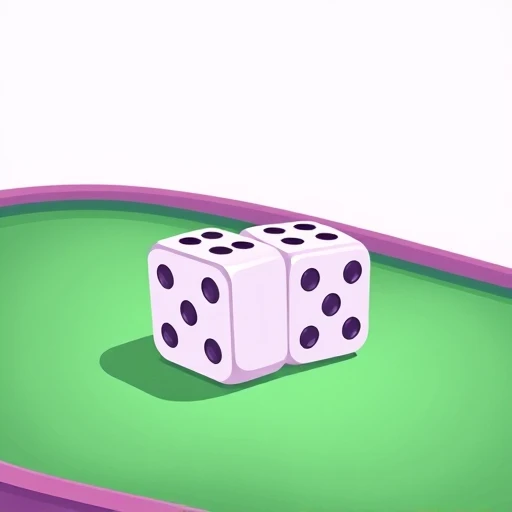
odds 30 सेकंड में
- Odds describes the likelihood of an event, often expressed as a ratio of success to failure.
- It is a plural noun that always requires a plural verb like 'are' or 'were'.
- The phrase 'at odds' is a common way to describe people or ideas that disagree.
- Idioms like 'against all odds' highlight achieving success despite extreme difficulty.
The word odds is a versatile and essential noun in the English language, primarily used to describe the ratio between the probability that an event will happen and the probability that it will not happen. While it has its roots in the mathematical and gambling worlds, its application has expanded significantly into everyday conversation, business, and even interpersonal relationships. When you speak about the odds, you are essentially discussing the chances of success or failure. For instance, if you say the odds are in your favor, you mean that you are more likely to succeed than to fail. Conversely, if the odds are against you, the path to success is difficult and unlikely. This concept of probability is central to how humans navigate uncertainty, making the word a staple in both scientific discourse and casual storytelling.
- Statistical Ratio
- In a technical sense, odds represent a mathematical comparison. If a horse has 3-to-1 odds of winning, it means for every three times it loses, it is expected to win once. This is distinct from probability, which would express this as a twenty-five percent chance.
Despite the overwhelming odds stacked against the small startup, they managed to secure a massive contract with the government.
Beyond mathematics, the word is frequently used to describe a state of disagreement or conflict. When two people or groups are at odds, it means they are in a state of opposition or discord. This usage highlights the 'uneven' or 'unmatched' nature of the relationship, drawing from the word's original meaning of being an odd number. In a professional setting, you might hear that the marketing department and the finance department are at odds over the new budget. This implies a lack of harmony and a struggle to find common ground. This dual nature of the word—representing both numerical probability and social conflict—makes it a powerful tool for expressing complex situations in a single syllable.
- Likelihood of Occurrence
- In general usage, people use 'odds' to mean 'chances.' For example, 'What are the odds of it raining today?' is a common way to ask about the weather forecast without needing a specific mathematical ratio.
The odds of finding a rare diamond in this old mine are incredibly slim, but the prospectors refuse to give up hope.
The word also appears in several popular idioms that enrich the English language. 'Against all odds' is perhaps the most famous, used to describe a situation where someone achieves success despite extreme difficulty or a very low probability of doing so. This phrase is often used in motivational speeches and heroic narratives. Another common phrase is 'odds and ends,' which refers to various small, unimportant items or remnants. While this seems unrelated to probability, it stems from the idea of 'odd' pieces that do not fit into a larger set. Understanding these varied uses allows a learner to grasp the subtle shifts in meaning that occur in different conversational contexts.
- Disagreement and Conflict
- When individuals are 'at odds,' they are experiencing a clash of opinions or interests. This is a very common phrase in political reporting and business negotiations to describe a stalemate.
The two brothers have been at odds ever since they inherited the family estate, unable to agree on whether to sell it or keep it.
If you are looking for a safe investment, the odds suggest that government bonds are a much better choice than volatile cryptocurrencies.
The odds were heavily stacked against the team, but they played with such heart that they won the championship in the final minute.
Using the word odds correctly requires attention to its grammatical status as a plural noun and its specific prepositional collocations. Because it is plural, it always takes a plural verb. For example, you should say, 'The odds are long,' not 'The odds is long.' This is a frequent point of confusion for learners who might view 'the odds' as a single collective concept. When discussing the likelihood of an event, the most common structure is 'the odds of [something happening]' or 'the odds that [a clause].' For instance, 'The odds of winning are low' or 'The odds that it will rain are high.' These structures are interchangeable in most contexts, though the 'of' construction is slightly more common in casual speech.
- Prepositional Usage
- We use 'against' to show difficulty (against the odds) and 'in favor of' to show advantage (the odds are in his favor). We use 'at' to describe disagreement (at odds with someone).
She succeeded against all odds, becoming the first person in her family to graduate from a prestigious university.
Another important aspect of using 'odds' is the choice of adjectives. To describe a high probability, we use adjectives like 'good,' 'favorable,' 'strong,' or 'overwhelming.' To describe a low probability, we use 'slim,' 'slight,' 'poor,' or 'long.' The term 'long odds' is particularly interesting as it comes from the world of horse racing, where a 'long' price meant a low chance of winning but a high payout. Conversely, 'short odds' indicate a high probability of winning. Using these adjectives correctly will make your English sound more natural and sophisticated. For example, saying 'The odds are slim' sounds much more idiomatic than saying 'The odds are small.'
- Common Verb Pairings
- Common verbs used with 'odds' include 'calculate,' 'defy,' 'beat,' 'improve,' and 'face.' You calculate the odds before a gamble, and you beat the odds when you succeed against expectations.
The scientists spent months trying to calculate the odds of an asteroid impacting the Earth within the next century.
In more formal or academic writing, 'odds' can be used to describe statistical results. You might see phrases like 'the odds ratio' or 'the log-odds,' which are specific technical terms. However, even in these contexts, the fundamental meaning remains the same: a comparison of likelihoods. In business reports, you might read about 'the odds of market penetration' or 'the odds of a successful merger.' In these cases, the word adds a sense of calculated risk and professional analysis to the text. It is a word that bridges the gap between the street-smart language of a gambler and the precise language of a data scientist.
- The Question Form
- 'What are the odds?' is a very common rhetorical question used to express surprise when something unexpected happens, like running into a friend in a foreign city.
I was just thinking about you, and then you called! What are the odds of that happening?
The gambler was known for his ability to read people, which helped him beat the odds at the poker table night after night.
By diversifying their portfolio, the investors hoped to improve the odds of achieving a steady return on their capital.
You will encounter the word odds in a wide variety of real-world environments, from the high-pressure atmosphere of a casino to the sterile environment of a doctor's office. In the world of sports, 'odds' is the language of the game. Commentators will discuss the odds of a team winning the championship, and fans will check the betting odds to see who the favorites are. If you are watching a horse race or a football match in the United Kingdom, you will hear terms like 'evens' or 'fractional odds' constantly. This usage is so pervasive that even people who do not gamble are familiar with the terminology. It provides a shorthand for discussing who is expected to win and by how much.
- Medical and Scientific Contexts
- Doctors often use 'odds' to explain the likelihood of a treatment's success or the risk of a particular side effect. They might say, 'The odds of a full recovery are very high if we start the treatment now.'
The surgeon explained that while the procedure was risky, the odds of survival were much better than if they did nothing at all.
In the business and financial sectors, 'odds' is used to quantify risk. Analysts calculate the odds of a market crash, the odds of a new product failing, or the odds of a competitor entering the space. This is not just casual talk; it involves complex models and data analysis. When a CEO says, 'The odds are in our favor for this merger,' they are usually basing that statement on a mountain of research. In this context, 'odds' is a professional term that conveys a sense of calculated confidence. It is also used in insurance, where the entire industry is built on calculating the odds of various accidents and disasters occurring so that they can set their premiums accordingly.
- Daily Conversation and Social Life
- In casual settings, 'odds' is used to express surprise or to discuss minor disagreements. Phrases like 'What are the odds?' or 'We are at odds over dinner' are very common.
The news anchor reported that the odds of the incumbent president winning reelection have narrowed significantly in the last week.
Finally, you will hear 'odds' in the world of entertainment and literature. Movies often feature a protagonist who must 'beat the odds' to save the day. This trope is a fundamental part of storytelling, appealing to our desire to see the underdog succeed. In science fiction, characters might calculate the 'odds of survival' in a dangerous situation, often to provide a sense of tension and drama. Whether it is Han Solo famously saying, 'Never tell me the odds!' or a character in a drama being 'at odds' with their family, the word is a powerful tool for creating conflict and resolution in narratives. Its presence in so many different spheres of life proves how central the concept of chance is to the human experience.
- Legal and Political Disputes
- In legal contexts, parties are often described as being 'at odds' when they cannot reach a settlement. This indicates a fundamental disagreement that may require a judge to resolve.
The two nations have been at odds over the border territory for decades, leading to numerous diplomatic skirmishes.
The odds of a peaceful resolution seem to be improving as both sides have agreed to return to the negotiating table.
In the movie, the hero had to overcome impossible odds to stop the villain and save the city from destruction.
One of the most frequent mistakes learners make with the word odds is treating it as a singular noun. Because it ends in 's,' many people assume it is plural, which is correct, but they often forget to use the plural verb form. You must always use 'are,' 'were,' or 'have' with 'odds.' Saying 'The odds is in our favor' is a common error that can make your English sound unpolished. Even if you are talking about a single probability or a single situation, the word itself remains plural in form and function. This is similar to words like 'scissors' or 'pants,' which are always plural even though they refer to a single object.
- Singular vs. Plural Confusion
- Incorrect: The odds of winning is very low. Correct: The odds of winning are very low. Always match the plural noun with a plural verb.
Many students mistakenly say 'the odds is' because they are thinking of the concept of 'chance,' which is singular.
Another common mistake is confusing 'odds' with the adjective 'odd.' While they share the same root, they have very different meanings and grammatical roles. 'Odd' as an adjective means strange, unusual, or not divisible by two (e.g., 'an odd person' or 'an odd number'). 'Odds' as a noun refers to probability or disagreement. You cannot use 'odds' as an adjective to mean strange. For example, you cannot say 'He is an odds man.' Similarly, you should be careful with the phrase 'at odds.' Some learners mistakenly say 'in odds' or 'with odds.' The correct idiom is always 'at odds with [someone/something].' Using the wrong preposition can change the meaning or make the sentence nonsensical.
- Confusion with 'Odd'
- Do not confuse the noun 'odds' (chances) with the adjective 'odd' (strange). 'The odds are high' vs. 'That is an odd hat.'
It is a common error to use 'odd' when you mean 'odds,' especially in phrases like 'against all odd' instead of 'against all odds.'
A third area of confusion involves the technical difference between 'odds' and 'probability.' While they are used interchangeably in casual speech, they are mathematically different. Probability is the ratio of desired outcomes to total outcomes, while odds are the ratio of desired outcomes to undesired outcomes. For example, if you have a 1 in 4 chance of winning, your probability is 25%, but your odds are 1 to 3. In a formal or scientific context, using 'odds' when you mean 'probability' (or vice versa) can lead to significant errors in data interpretation. However, for most English learners, the most important thing is to master the idiomatic and grammatical use of the word in daily life.
- Incorrect Idiom Usage
- Avoid saying 'by all odds' when you mean 'by all means.' While 'by all odds' is an old-fashioned way to say 'certainly,' it is rarely used today and can confuse listeners.
The student wrote 'The odds was against him,' which the teacher corrected to 'The odds were against him.'
He said he was 'in odds' with his wife, but the correct phrase is 'at odds' with his wife.
Be careful not to say 'the odds of him to win'; the correct structure is 'the odds of him winning' or 'the odds that he will win.'
When you want to express the concept of likelihood or disagreement without using the word odds, there are several excellent alternatives depending on the context. The most common synonym for 'odds' in the sense of probability is 'chances.' 'Chances' is slightly more informal and is very frequently used in daily conversation. For example, 'What are the chances of that?' is almost identical in meaning to 'What are the odds?' Another close synonym is 'likelihood,' which is more formal and often used in academic or professional writing. 'Likelihood' focuses on the state of being likely, whereas 'odds' often implies a more specific comparison or ratio.
- Odds vs. Chances
- 'Odds' often implies a more calculated or mathematical risk, while 'chances' is more general and casual. You might 'take your chances,' but you 'calculate the odds.'
While the odds are a technical measure, the 'chances' of success often depend on hard work and dedication.
In the context of disagreement, 'at odds' can be replaced by phrases like 'in conflict,' 'at loggerheads,' or 'in disagreement.' 'In conflict' is a broad term that can apply to everything from personal arguments to international wars. 'At loggerheads' is a more colorful, idiomatic way to say that two parties are stuck in a dispute and cannot find a way forward. 'In disagreement' is the most straightforward and neutral alternative. Choosing between these depends on the level of intensity you want to convey. 'At odds' is a middle-ground term—stronger than a simple disagreement but less intense than an all-out conflict.
- Odds vs. Probability
- Probability is a value between 0 and 1 (or 0% and 100%). Odds are a ratio of two numbers (e.g., 5 to 1). In conversation, they are often used as synonyms, but they are technically different.
The odds of the project being completed on time are low, given the current 'likelihood' of further delays.
Other words that can sometimes replace 'odds' include 'prospects' and 'possibilities.' 'Prospects' usually refers to future chances of success, especially in a career or business sense (e.g., 'His job prospects are good'). 'Possibilities' is a much broader term that simply means something could happen, without necessarily implying how likely it is. By understanding these nuances, you can expand your vocabulary and choose the exact word that fits your intended meaning. Whether you are describing a risky bet, a difficult challenge, or a heated argument, having a range of synonyms at your disposal will make your communication more effective and nuanced.
- At Odds vs. At Loggerheads
- 'At odds' is very common in American English, while 'at loggerheads' is more frequently heard in British English, though both are understood globally.
The board members were at odds over the new policy, much like two politicians 'at loggerheads' during a debate.
There is a high 'probability' that the experiment will fail, but the odds of a breakthrough still keep the researchers motivated.
If you want to improve your 'prospects' for the future, you must learn to beat the odds by working harder than everyone else.
How Formal Is It?
रोचक तथ्य
The phrase 'at odds' originally referred to a state of being 'uneven' with someone else, like having an unequal number of points in a game. Over time, this physical inequality became a metaphor for mental or social disagreement.
उच्चारण मार्गदर्शिका
- Pronouncing the 's' as a sharp 's' instead of a voiced 'z'.
- Confusing the vowel sound with 'ow' as in 'owns'.
- Omitting the 'd' sound entirely.
- Making the word two syllables like 'od-des'.
- Using a long 'o' sound like in 'roads'.
कठिनाई स्तर
Easy to recognize in text, but idiomatic uses require attention.
Requires correct subject-verb agreement and preposition use.
Common in idioms which are easy to memorize and use.
Easily confused with 'odd' if the final 's' is not heard clearly.
आगे क्या सीखें
पूर्वापेक्षाएँ
आगे सीखें
उन्नत
ज़रूरी व्याकरण
Subject-Verb Agreement with Plural Nouns
The odds are (not is) in our favor.
Prepositional Idioms
Use 'at' with 'odds' to show disagreement: 'at odds with'.
Gerunds after Prepositions
The odds of winning (not to win) are slim.
Adjective Placement
Use 'long' or 'short' before 'odds' to describe probability.
That-Clauses with Nouns
The odds that he will arrive on time are low.
स्तर के अनुसार उदाहरण
The odds are good for our team.
Las probabilidades son buenas para nuestro equipo.
Uses 'are' because 'odds' is plural.
What are the odds of rain today?
¿Cuáles son las probabilidades de lluvia hoy?
Common question structure for likelihood.
The odds of winning are small.
Las probabilidades de ganar son pequeñas.
Adjective 'small' describes the low chance.
He won against the odds.
Él ganó contra todo pronóstico.
Preposition 'against' shows difficulty.
The odds are in your favor.
Las probabilidades están a tu favor.
Phrase 'in your favor' means you have an advantage.
What are the odds!
¡Qué casualidad!
Exclamatory use to show surprise.
The odds are 50-50.
Las probabilidades son de 50 a 50.
Describes an equal chance.
Are the odds high or low?
¿Son las probabilidades altas o bajas?
Simple question about probability level.
She succeeded against all odds.
Ella tuvo éxito contra todo pronóstico.
Fixed idiom 'against all odds'.
The two brothers are at odds.
Los dos hermanos están en desacuerdo.
Idiom 'at odds' means disagreeing.
The odds of finding it are slim.
Las probabilidades de encontrarlo son escasas.
Adjective 'slim' is common for low probability.
We need to calculate the odds first.
Necesitamos calcular las probabilidades primero.
Verb 'calculate' is often paired with 'odds'.
The odds are that he will be late.
Lo más probable es que llegue tarde.
'The odds are that...' is a common sentence starter.
He is at odds with his parents.
Él está en desacuerdo con sus padres.
Requires 'with' to mention the other party.
The odds were stacked against them.
Las probabilidades estaban en su contra.
Passive structure 'stacked against' implies unfair difficulty.
What are the odds of a snowstorm?
¿Qué probabilidades hay de una tormenta de nieve?
Uses 'of' followed by a noun phrase.
The odds of a successful merger are improving.
Las probabilidades de una fusión exitosa están mejorando.
Formal business context.
His behavior is at odds with his claims.
Su comportamiento está en desacuerdo con lo que afirma.
Used to describe a contradiction.
They managed to beat the odds and win.
Lograron vencer las probabilidades y ganar.
Verb 'beat' means to overcome the difficulty.
The odds are heavily in favor of the incumbent.
Las probabilidades están fuertemente a favor del titular.
Adverb 'heavily' modifies the phrase 'in favor of'.
What are the odds of a global recession?
¿Cuáles son las probabilidades de una recesión global?
Economic context.
The odds of error are minimal in this process.
Las probabilidades de error son mínimas en este proceso.
Adjective 'minimal' describes very low risk.
She is at odds with the rest of the committee.
Ella está en desacuerdo con el resto del comité.
Describes being the only person with a different opinion.
The odds of survival were very low.
Las probabilidades de supervivencia eran muy bajas.
Serious/dramatic context.
The odds ratio indicates a strong correlation.
La razón de probabilidades indica una fuerte correlación.
Technical term 'odds ratio'.
The company's actions are at odds with its green image.
Las acciones de la empresa están en desacuerdo con su imagen ecológica.
Used for institutional hypocrisy.
Despite the long odds, the scientist continued his research.
A pesar de las escasas probabilidades, el científico continuó su investigación.
'Long odds' is a specific term for low probability.
The odds of a market correction are increasing daily.
Las probabilidades de una corrección del mercado aumentan diariamente.
Financial jargon.
He found himself at odds with the prevailing wisdom.
Se encontró en desacuerdo con la sabiduría prevaleciente.
Abstract usage for intellectual disagreement.
The odds favor a diplomatic solution over military action.
Las probabilidades favorecen una solución diplomática sobre la acción militar.
Verb 'favor' used with 'odds' as the subject.
What are the odds that the jury will reach a verdict today?
¿Qué probabilidades hay de que el jurado llegue a un veredicto hoy?
Complex 'that' clause structure.
The odds of a breakthrough in the negotiations are slim.
Las probabilidades de un avance en las negociaciones son escasas.
Political context.
The fundamental principles of the two religions are at odds.
Los principios fundamentales de las dos religiones están en desacuerdo.
Used for deep philosophical contradictions.
By all odds, this is the most significant discovery of the decade.
Con toda probabilidad, este es el descubrimiento más significativo de la década.
Formal idiom 'by all odds' meaning 'most likely'.
The odds were heavily stacked against the reform passing.
Las probabilidades estaban fuertemente en contra de que la reforma fuera aprobada.
Gerund 'passing' follows the noun 'reform'.
He was a man at odds with the era in which he lived.
Era un hombre en desacuerdo con la época en la que vivió.
Literary usage for social alienation.
The odds of a catastrophic failure were deemed acceptable.
Las probabilidades de un fallo catastrófico se consideraron aceptables.
Passive voice 'were deemed'.
The statistical odds suggest a significant shift in demographics.
Las probabilidades estadísticas sugieren un cambio significativo en la demografía.
Academic/sociological context.
The two theories are at odds regarding the origin of the universe.
Las dos teorías están en desacuerdo respecto al origen del universo.
Scientific debate context.
She defied the odds to become the world's leading expert.
Ella desafió las probabilidades para convertirse en la experta líder mundial.
Verb 'defied' shows active resistance to low chances.
The ontological status of the particle is at odds with classical physics.
El estatus ontológico de la partícula está en desacuerdo con la física clásica.
Highly technical/philosophical context.
The odds of such a fortuitous alignment of events are astronomical.
Las probabilidades de tal alineación fortuita de eventos son astronómicas.
Hyperbolic adjective 'astronomical'.
His judicial philosophy is often at odds with the legislative intent.
Su filosofía judicial está a menudo en desacuerdo con la intención legislativa.
Legal/political theory context.
The log-odds of the outcome were calculated using a Bayesian approach.
Los log-odds del resultado se calcularon utilizando un enfoque bayesiano.
Advanced statistical terminology.
To lay odds on such a volatile market is a fool's errand.
Apostar en un mercado tan volátil es una tarea inútil.
Idiom 'lay odds' used metaphorically.
The narrative structure is at odds with the chronological sequence of events.
La estructura narrativa está en desacuerdo con la secuencia cronológica de los eventos.
Literary criticism context.
The odds of a systemic collapse are mitigated by these new regulations.
Las probabilidades de un colapso sistémico son mitigadas por estas nuevas regulaciones.
Formal policy/economic context.
He remained at odds with his own conscience until the very end.
Permaneció en desacuerdo con su propia conciencia hasta el final.
Deeply psychological/literary usage.
समानार्थी शब्द
विलोम शब्द
सामान्य शब्द संयोजन
सामान्य वाक्यांश
— An expression of surprise when something unlikely happens. It is often used rhetorically.
I saw my teacher at the concert! What are the odds?
— Achieving something despite very low probability or extreme difficulty. It is a very common motivational phrase.
Against all odds, they finished the project on time.
— In a state of disagreement or conflict with someone or something. It implies a lack of harmony.
His personal beliefs are at odds with his professional duties.
— You have a high probability of success or a significant advantage. It is often used to encourage someone.
With your experience, the odds are in your favor for this job.
— Small, miscellaneous items that are not part of a set. It refers to remnants or scraps.
I have a few odds and ends to finish before I leave.
— To offer a bet with a specific ratio of payout. It is used in gambling contexts.
I wouldn't lay odds on him showing up to the party.
— Most certainly or without a doubt. This is a somewhat formal or old-fashioned expression.
By all odds, she is the best candidate for the position.
— A high probability of an event happening, usually resulting in a small payout in betting.
The champion is at short odds to win again this year.
— A low probability of an event happening, usually resulting in a large payout in betting.
He took a chance on a horse with long odds and won big.
— A situation where the chances are unfairly weighted against someone. It implies a lack of fairness.
The odds were stacked against the small business from the start.
अक्सर इससे भ्रम होता है
An adjective meaning strange or a number not divisible by two. 'Odds' is a noun meaning probability.
A mathematical term. While used as a synonym, odds are a ratio, while probability is a percentage or fraction.
A more formal synonym for odds. It doesn't carry the gambling or 'disagreement' connotations as strongly.
मुहावरे और अभिव्यक्तियाँ
— Despite very great difficulties or a low probability of success. It emphasizes the struggle involved.
She survived the plane crash against all odds.
neutral— In conflict or disagreement. It can refer to people, ideas, or even physical objects.
The witness's story was at odds with the security footage.
neutral— Small things that are left over or are not part of a main group. It is very common in household contexts.
The drawer was full of odds and ends like buttons and rubber bands.
informal— To be very sure that something will happen. It comes from the practice of offering a bet.
I'd lay odds that he'll forget his keys again.
informal— Used to express surprise at a coincidence. It is often said with a tone of amazement.
We both bought the same shirt! What are the odds?
informal— To be in a situation where success is very unlikely because of external factors. It implies an unfair disadvantage.
The odds are stacked against the team because their best player is injured.
neutral— In every way or certainly. It is used to emphasize a superlative statement.
This is, by all odds, the best meal I have ever had.
formal— To offer someone a better chance or a higher payout in a bet. It can also mean to grant an advantage.
I'll give you odds that you can't finish that burger.
informal— To accept a bet or a challenge where the payout is higher than the stake. It implies taking a risk.
He decided to take the odds and invest in the new technology.
informal— A situation where the chances of success and failure are exactly the same. It is also called 'fifty-fifty'.
The two candidates have even odds of winning the election.
neutralआसानी से भ्रमित होने वाले
They look almost identical.
'Odd' is an adjective (strange/number). 'Odds' is a noun (probability/conflict).
That is an odd (strange) hat, but the odds (chances) of him wearing it are high.
Similar sound in some accents.
'Ad' is short for advertisement. 'Odds' is about probability.
I saw an ad for a game where the odds were very good.
It is an adjective derived from the noun.
'Odds' is the noun. 'Odds-on' is an adjective meaning very likely to win.
He is the odds-on favorite to win.
Both are used in betting.
'Odds' is the general term. 'Evens' means the odds are exactly 1 to 1.
The odds are evens for both teams.
They are often synonyms.
'Chance' is more casual and can be singular. 'Odds' is more formal/mathematical and always plural.
There is a chance (singular) of rain, but the odds (plural) are low.
वाक्य संरचनाएँ
The odds are [adjective].
The odds are good.
The odds of [noun] are [adjective].
The odds of rain are high.
To be at odds with [someone].
He is at odds with his sister.
Against all odds, [clause].
Against all odds, she passed the exam.
The odds that [clause] are [adjective].
The odds that the economy will recover are slim.
To lay odds on [noun phrase].
I wouldn't lay odds on his survival.
The odds are stacked against [someone].
The odds are stacked against the new player.
By all odds, [superlative statement].
By all odds, this is the best solution.
शब्द परिवार
संज्ञा
विशेषण
संबंधित
इसे कैसे इस्तेमाल करें
Very high in sports, news, and casual conversation.
-
The odds is high.
→
The odds are high.
Odds is a plural noun and requires a plural verb. This is the most common grammatical error.
-
Against all odd.
→
Against all odds.
The idiom is fixed in the plural form. Using the singular 'odd' makes the phrase incorrect.
-
He is in odds with his boss.
→
He is at odds with his boss.
The correct preposition for the idiom meaning disagreement is 'at,' not 'in.'
-
The odds of him to win.
→
The odds of him winning.
After 'odds of,' you should use a gerund (verb-ing) or a noun, not an infinitive.
-
That is an odds person.
→
That is an odd person.
Do not use the plural noun 'odds' as an adjective to mean strange. Use the adjective 'odd.'
सुझाव
Always Plural
Never forget that 'odds' takes a plural verb. 'The odds are...' is your golden rule for this word.
Slim vs. Small
While 'small odds' is understandable, 'slim odds' or 'slight odds' sounds much more natural to native speakers.
At Odds With
When using 'at odds,' always remember the preposition 'with' if you are mentioning the person or thing being disagreed with.
Voiced Ending
Make sure the 's' at the end of 'odds' sounds like a 'z'. This helps distinguish it from other words.
Surprise!
Use 'What are the odds?' to show surprise. It's a great way to sound more like a native speaker in social situations.
Vary Your Synonyms
In a long piece of writing, switch between 'odds,' 'chances,' and 'likelihood' to keep your text interesting.
Medical Use
If you hear a doctor mention 'odds,' they are giving you a professional estimate of a result. It's a very common term in healthcare.
Long vs. Short
Remember: Long odds = low chance, high payout. Short odds = high chance, low payout.
Softening Conflict
Saying you are 'at odds' with someone is a polite way to say you disagree without sounding too aggressive.
The 'S' Rule
The 'S' in 'odds' stands for 'Statistics' and 'Surprise.' This covers its two main uses!
याद करें
स्मृति सहायक
Think of 'Odd' numbers. If you have an 'Odd' number of people, someone will always be 'at odds' (disagreeing) because they can't split into two equal groups. Also, 'Odds' has an 'S' for 'Success' and 'Score'—it's about the chance of your score!
दृश्य संबंध
Imagine a scale that is tilted to one side. This represents 'odds'—one side is more likely than the other. Or imagine two people standing back-to-back, looking angry; they are 'at odds.'
Word Web
चैलेंज
Try to use 'odds' in three different ways today: once to describe the weather, once to describe a difficult task, and once to describe a disagreement you heard about.
शब्द की उत्पत्ति
The word 'odds' comes from the Middle English word 'odde,' which meant 'extra' or 'uneven.' This was derived from the Old Norse word 'oddi,' which referred to a third number or the point of a triangle. The transition from 'uneven number' to 'probability' happened in the 16th century.
मूल अर्थ: Originally, it referred to an uneven number or a remainder after division by two.
Germanic (Old Norse to Middle English).सांस्कृतिक संदर्भ
Be careful when discussing 'odds' in the context of health or life expectancy, as it can be a sensitive topic for some people.
In the US and UK, 'odds' is the standard way to talk about betting. In Australia, you might also hear 'punting' used in similar contexts.
असल ज़िंदगी में अभ्यास करें
वास्तविक संदर्भ
Sports and Betting
- What are the betting odds?
- The odds favor the home team.
- He is the odds-on favorite.
- I'll take those odds.
Business and Risk
- Calculate the odds of success.
- The odds of a market crash.
- Improve the odds of a profit.
- The odds are stacked against us.
Interpersonal Conflict
- We are at odds over the plan.
- He is at odds with his boss.
- Their views are at odds.
- They remain at odds.
Surprise and Coincidence
- What are the odds of that?
- Against all odds, it happened.
- The odds were so low!
- Can you believe the odds?
Health and Science
- The odds of a full recovery.
- The odds of a side effect.
- Statistical odds suggest...
- The odds ratio is significant.
बातचीत की शुरुआत
"What are the odds of us actually finishing this project by Friday?"
"Have you ever succeeded at something even when the odds were against you?"
"Why do you think some people are always at odds with their coworkers?"
"What are the odds that technology will completely change our jobs in ten years?"
"If you had to lay odds on the next big world event, what would it be?"
डायरी विषय
Describe a time when you beat the odds to achieve a personal goal. What was the most difficult part?
Write about a situation where you were at odds with someone you care about. How did you resolve it?
Do you believe that the odds of success are mostly based on luck or on hard work? Explain your view.
If the odds are stacked against you in a situation, do you usually keep trying or do you give up?
How do you feel when you hear the phrase 'May the odds be ever in your favor'? What does it mean to you?
अक्सर पूछे जाने वाले सवाल
10 सवालIt is always 'the odds are.' Even though 'odds' can refer to a single probability, the word itself is grammatically plural. For example, 'The odds are in your favor' is correct, while 'The odds is in your favor' is incorrect.
To be 'at odds' means to be in a state of disagreement or conflict. For example, if two people have different opinions on a topic, you can say they are 'at odds with each other.' It can also apply to ideas or facts that contradict each other.
Mathematically, probability is the chance of an event happening out of the total possible outcomes (e.g., 1 in 4). Odds are the ratio of the event happening to it not happening (e.g., 1 to 3). In casual English, they are often used as synonyms.
'Long odds' mean that an event is very unlikely to happen. In betting, this usually means you can win a lot of money because the risk is so high. For example, a horse that is not expected to win will have long odds.
No, 'odds' is always plural in the sense of probability or disagreement. The singular form 'odd' is an adjective that means strange or refers to a number like 1, 3, or 5.
It comes from the idea of 'odd' (extra or leftover) pieces and 'ends' (scraps). It refers to a collection of small, miscellaneous items that don't belong to a larger set. You might have a drawer full of odds and ends.
It means achieving something despite very difficult circumstances or a very low chance of success. It is often used to describe heroic or very impressive achievements. For example, 'He finished the marathon against all odds.'
In business, 'odds' is often used to talk about risk and the likelihood of success. You might 'calculate the odds of a new product succeeding' or discuss the 'odds of a market downturn.' It sounds professional and analytical.
An 'odds-on' favorite is a person or team that is so likely to win that the odds are better than even (e.g., you have to bet more than you would win). It basically means the most likely winner.
It can be both. In phrases like 'What are the odds?', it is quite informal. However, in statistical or business reports, it is a formal and precise term. It is a very versatile word.
खुद को परखो 200 सवाल
Write a simple sentence about the odds of rain.
Well written! Good try! Check the sample answer below.
Write a sentence using 'against the odds'.
Well written! Good try! Check the sample answer below.
Write a sentence using 'at odds with'.
Well written! Good try! Check the sample answer below.
Describe a situation where the odds were stacked against you.
Well written! Good try! Check the sample answer below.
Explain why a company's actions might be at odds with its mission statement.
Well written! Good try! Check the sample answer below.
Write a sentence using 'What are the odds!'.
Well written! Good try! Check the sample answer below.
Write a sentence about 'odds and ends'.
Well written! Good try! Check the sample answer below.
Write a sentence about 'beating the odds'.
Well written! Good try! Check the sample answer below.
Write a sentence about 'calculating the odds'.
Well written! Good try! Check the sample answer below.
Discuss the philosophical implications of 'odds' in human life.
Well written! Good try! Check the sample answer below.
The odds are ___ (good/well). Choose one and write the sentence.
Well written! Good try! Check the sample answer below.
Write a sentence about the odds of winning a game.
Well written! Good try! Check the sample answer below.
Write a sentence about a disagreement using 'at odds'.
Well written! Good try! Check the sample answer below.
Write a sentence using 'long odds'.
Well written! Good try! Check the sample answer below.
Write a sentence using 'overwhelming odds'.
Well written! Good try! Check the sample answer below.
The odds ___ (is/are) high. Choose one.
Well written! Good try! Check the sample answer below.
Write a sentence using 'against all odds'.
Well written! Good try! Check the sample answer below.
Write a sentence about 'improving the odds'.
Well written! Good try! Check the sample answer below.
Write a sentence about 'favorable odds'.
Well written! Good try! Check the sample answer below.
Write a sentence using 'lay odds'.
Well written! Good try! Check the sample answer below.
Say: 'The odds are good.'
Read this aloud:
तुमने कहा:
Speech recognition is not supported in your browser. Try Chrome or Edge.
Say: 'Against the odds.'
Read this aloud:
तुमने कहा:
Speech recognition is not supported in your browser. Try Chrome or Edge.
Say: 'I am at odds with my brother.'
Read this aloud:
तुमने कहा:
Speech recognition is not supported in your browser. Try Chrome or Edge.
Say: 'What are the odds of that happening?'
Read this aloud:
तुमने कहा:
Speech recognition is not supported in your browser. Try Chrome or Edge.
Say: 'The odds are stacked against us.'
Read this aloud:
तुमने कहा:
Speech recognition is not supported in your browser. Try Chrome or Edge.
Say: 'What are the odds!'
Read this aloud:
तुमने कहा:
Speech recognition is not supported in your browser. Try Chrome or Edge.
Say: 'The odds are slim.'
Read this aloud:
तुमने कहा:
Speech recognition is not supported in your browser. Try Chrome or Edge.
Say: 'He beat the odds.'
Read this aloud:
तुमने कहा:
Speech recognition is not supported in your browser. Try Chrome or Edge.
Say: 'Calculate the odds.'
Read this aloud:
तुमने कहा:
Speech recognition is not supported in your browser. Try Chrome or Edge.
Say: 'By all odds, she is the winner.'
Read this aloud:
तुमने कहा:
Speech recognition is not supported in your browser. Try Chrome or Edge.
Say: 'The odds are high.'
Read this aloud:
तुमने कहा:
Speech recognition is not supported in your browser. Try Chrome or Edge.
Say: 'Odds and ends.'
Read this aloud:
तुमने कहा:
Speech recognition is not supported in your browser. Try Chrome or Edge.
Say: 'The odds are in your favor.'
Read this aloud:
तुमने कहा:
Speech recognition is not supported in your browser. Try Chrome or Edge.
Say: 'Against all odds, he survived.'
Read this aloud:
तुमने कहा:
Speech recognition is not supported in your browser. Try Chrome or Edge.
Say: 'Overwhelming odds.'
Read this aloud:
तुमने कहा:
Speech recognition is not supported in your browser. Try Chrome or Edge.
Say: 'The odds are low.'
Read this aloud:
तुमने कहा:
Speech recognition is not supported in your browser. Try Chrome or Edge.
Say: 'At odds with the plan.'
Read this aloud:
तुमने कहा:
Speech recognition is not supported in your browser. Try Chrome or Edge.
Say: 'Improve the odds.'
Read this aloud:
तुमने कहा:
Speech recognition is not supported in your browser. Try Chrome or Edge.
Say: 'Favorable odds.'
Read this aloud:
तुमने कहा:
Speech recognition is not supported in your browser. Try Chrome or Edge.
Say: 'Lay odds.'
Read this aloud:
तुमने कहा:
Speech recognition is not supported in your browser. Try Chrome or Edge.
Listen and write: 'The odds are good.'
Listen and write: 'Against the odds.'
Listen and write: 'At odds with.'
Listen and write: 'What are the odds?'
Listen and write: 'Overwhelming odds.'
Listen and write: 'The odds are high.'
Listen and write: 'Odds and ends.'
Listen and write: 'Beat the odds.'
Listen and write: 'Calculate the odds.'
Listen and write: 'Lay odds.'
Listen and write: 'The odds are low.'
Listen and write: 'Slim odds.'
Listen and write: 'Against all odds.'
Listen and write: 'The odds are stacked.'
Listen and write: 'By all odds.'
/ 200 correct
Perfect score!
Summary
The word 'odds' is your primary tool for discussing probability and conflict. Whether you are calculating the 'odds of success' in a business venture or finding yourself 'at odds' with a colleague, this word captures the essence of uncertainty and disagreement in English. Example: 'The odds of winning the lottery are slim, but many people still play.'
- Odds describes the likelihood of an event, often expressed as a ratio of success to failure.
- It is a plural noun that always requires a plural verb like 'are' or 'were'.
- The phrase 'at odds' is a common way to describe people or ideas that disagree.
- Idioms like 'against all odds' highlight achieving success despite extreme difficulty.
Always Plural
Never forget that 'odds' takes a plural verb. 'The odds are...' is your golden rule for this word.
Slim vs. Small
While 'small odds' is understandable, 'slim odds' or 'slight odds' sounds much more natural to native speakers.
At Odds With
When using 'at odds,' always remember the preposition 'with' if you are mentioning the person or thing being disagreed with.
Voiced Ending
Make sure the 's' at the end of 'odds' sounds like a 'z'. This helps distinguish it from other words.