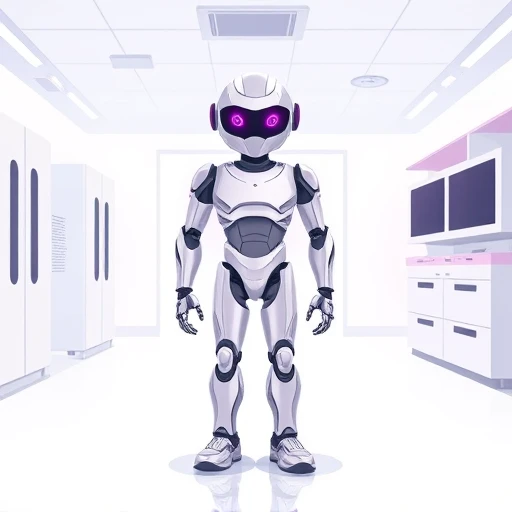
robots 30 सेकंड में
- Robots are programmable machines designed to perform tasks automatically, often with a level of autonomy that allows them to function without constant human intervention.
- They are widely used across various sectors, including manufacturing, healthcare, space exploration, and domestic chores, primarily to improve efficiency, precision, and safety.
- The term originates from the Czech word for 'forced labor' and has evolved from a science fiction concept into a fundamental part of modern industrial technology.
- Key components of a robot include sensors for environmental awareness, a computer processor for decision-making, and mechanical actuators for physical movement and interaction.
The term robots refers to sophisticated machines engineered to execute a sequence of actions automatically. Unlike simple tools, robots possess a degree of autonomy, often guided by computer programs or artificial intelligence. In contemporary society, the word is used to describe everything from massive industrial arms in car factories to small, disc-shaped vacuum cleaners in living rooms. The core essence of a robot lies in its ability to sense its environment, process that information, and perform a physical action. People use this term when discussing the future of work, technological advancement, and the intersection of engineering and computer science. The concept has evolved from the mechanical automatons of the early 20th century to the highly intelligent, data-driven systems of today. When we speak of robots, we are often talking about efficiency, precision, and the replacement of human labor in tasks that are considered 'dirty, dull, or dangerous.' This triad—the 3 Ds—defines the primary motivation for deploying robotic systems across various sectors.
- Industrial Context
- In manufacturing, robots are the backbone of assembly lines, performing repetitive tasks with sub-millimeter precision that no human could maintain over an eight-hour shift.
The factory floor was filled with high-speed robots capable of assembling a smartphone in seconds.
Beyond the factory, robots have entered the domestic and service spheres. We see them in hospitals assisting surgeons, in warehouses moving heavy pallets, and even in space exploring the Martian surface. The versatility of the word 'robots' means it can apply to a physical humanoid figure or a non-humanoid machine like a drone. However, it is crucial to distinguish between a 'robot' and a 'bot.' While 'bot' often refers to software programs (like chatbots), 'robots' almost always implies a physical presence in the real world. The discussion around robots frequently touches on ethics: how will they affect employment? Can they be programmed to make moral decisions? These questions make the term a staple in academic, political, and social discourse. As technology progresses, the line between 'machine' and 'robot' blurs, but the defining characteristic remains the ability to perform complex tasks with minimal human intervention. This autonomy is what makes robots a transformative force in the 21st century.
- Service Sector
- In hospitality, robots are increasingly used to deliver room service or provide information to guests in hotel lobbies.
The linguistic journey of 'robots' is also fascinating. Derived from the Czech word 'robota,' meaning forced labor, the term was first introduced in a 1920 play. This origin colors our perception of robots as entities meant to serve. In modern usage, the word carries both a sense of wonder at human ingenuity and a slight apprehension about the loss of human control. Whether we are talking about 'collaborative robots' (cobots) that work alongside people or 'autonomous robots' that operate in isolation, the term is central to any conversation about the fourth industrial revolution. It is a word that bridges the gap between science fiction and reality, moving from the pages of Isaac Asimov's novels into our everyday lives. Understanding the word 'robots' requires looking at the hardware (the body), the software (the brain), and the sensors (the eyes and ears) that allow these machines to interact with the physical world in ways that were once thought impossible.
Search and rescue robots can enter collapsed buildings where it is too dangerous for humans to go.
- Exploration
- Robots like the Mars Rovers are our eyes and ears on other planets, surviving extreme temperatures and radiation.
Many modern warehouses use robots to sort and move packages efficiently.
Surgical robots allow doctors to perform operations with incredible precision.
Educational robots help children learn the basics of coding and logic.
Using the word robots correctly involves understanding its grammatical role as a countable noun and its typical collocations. In most sentences, 'robots' functions as the subject or object of an action related to technology, labor, or automation. Because it is a plural noun, it requires plural verb forms (e.g., 'robots are,' 'robots work'). When discussing the capabilities of these machines, we often use verbs like 'program,' 'deploy,' 'operate,' or 'automate.' For example, one might say, 'Engineers program robots to handle delicate materials.' This highlights the relationship between the human creator and the mechanical executor. The word can also be used as a modifier in compound nouns, such as 'robotics engineering' or 'robot vacuum,' though 'robotic' is the more common adjective form. When describing the impact of robots, we often use prepositions like 'by' or 'with,' as in 'tasks performed by robots' or 'working with robots.'
- Subject-Verb Agreement
- Always ensure that the verb matches the plural 'robots.' Incorrect: 'The robots does the work.' Correct: 'The robots do the work.'
The latest generation of robots can learn from their mistakes using neural networks.
In more complex sentence structures, 'robots' can be part of a discussion about societal shifts. You might hear phrases like 'the rise of the robots' or 'the displacement of workers by robots.' These phrases use the word to represent a broader technological trend rather than specific individual machines. When writing about robots in a technical sense, it is helpful to specify the type of robot to provide clarity. Are they 'autonomous robots,' 'humanoid robots,' or 'industrial robots'? Each adjective adds a layer of meaning that helps the reader understand the context. For instance, 'Humanoid robots are designed to interact with people,' suggests a different set of challenges than 'Industrial robots are designed for speed.' Furthermore, the word is often used in the passive voice because the focus is on the action being performed rather than the machine itself, such as 'The parts were welded by robots.'
- Descriptive Adjectives
- Common adjectives used with robots include: autonomous, collaborative, mobile, humanoid, and sophisticated.
In creative writing or speculative fiction, 'robots' often take on more agency, acting as characters with their own motivations. In these contexts, you might see 'robots' paired with verbs usually reserved for humans, like 'think,' 'feel,' or 'rebel.' However, in a professional or scientific context, it is better to use more precise language like 'process data' or 'execute commands.' When comparing robots to humans, the word 'robots' often serves as a benchmark for efficiency or lack of emotion. Phrases like 'working like robots' imply a tireless, perhaps unthinking, dedication to a task. This metaphorical use is common in everyday speech to describe people who are very efficient but perhaps lacking in creativity or warmth. Whether used literally or metaphorically, 'robots' is a versatile word that requires attention to the specific type of machine and the level of autonomy being discussed.
Scientists are developing robots that can navigate underwater environments autonomously.
- Compound Phrases
- Common compounds include: robot arm, robot vacuum, robot pilot, and robot assistant.
If robots take over manufacturing, what will happen to the human workforce?
The children were fascinated by the robots that could dance and mimic human movements.
In the future, robots might be our primary caregivers in old age.
You will encounter the word robots in a wide variety of settings, ranging from high-tech laboratories to casual dinner table conversations. In the media, 'robots' is a frequent headline-grabber, often associated with breakthroughs in artificial intelligence or warnings about job displacement. News segments might feature 'delivery robots' rolling down city sidewalks or 'military robots' used for bomb disposal. In these contexts, the word is used to signal progress, innovation, or sometimes ethical concern. If you watch documentaries about space exploration, you will hear about the 'robotic explorers' on Mars or the 'robotic arms' on the International Space Station. Here, the word emphasizes the extension of human reach into environments where we cannot physically survive. The tone is usually one of awe and scientific achievement.
- News & Media
- Headlines often use 'robots' to catch attention, such as 'Will Robots Take Your Job?' or 'New Robots to Assist in Surgery.'
The evening news featured a segment on how robots are helping elderly people stay independent.
In the workplace, particularly in manufacturing, logistics, and IT, 'robots' is a technical term used daily. Managers might discuss 'robot density' (the number of robots per human worker) or 'robot integration' into existing workflows. Engineers talk about 'robot kinematics' or 'robot programming languages.' In these professional environments, the word is devoid of its sci-fi glamour and is treated as a piece of industrial equipment, much like a lathe or a CNC machine. Conversely, in the world of entertainment—movies, video games, and books—'robots' are often central characters. From the friendly droids of Star Wars to the menacing terminators, fictional robots shape our cultural imagination. When people use the word in casual conversation, they are often referencing these fictional archetypes, comparing a new piece of technology to something they saw in a movie.
- Entertainment
- Sci-fi movies have made 'robots' a household word, often exploring themes of consciousness and what it means to be human.
Education is another place where 'robots' is a common term. STEM (Science, Technology, Engineering, and Mathematics) programs often use 'educational robots' like LEGO Mindstorms or VEX Robotics to teach students logic and problem-solving. In this setting, the word is associated with learning, creativity, and hands-on experimentation. You might hear a teacher say, 'Today, we are going to build and program our own robots.' Finally, in the home, the word is becoming more common as consumer robotics grows. People talk about their 'vacuum robots' or 'mowing robots' as if they are household appliances. In this domestic context, the word 'robots' is becoming normalized, losing its futuristic edge and becoming just another tool to make life easier. Whether it's a high-stakes surgical room or a middle-school classroom, the word 'robots' is ubiquitous in the modern world.
The university is offering a new course on the ethics of robots in warfare.
- Domestic Life
- Many families now own small robots that clean floors or entertain pets.
The tech conference focused on how robots and AI are merging.
In many sci-fi stories, robots eventually develop feelings and demand rights.
The hospital uses robots to transport linens and medicine between floors.
One of the most frequent mistakes people make when using the word robots is confusing it with similar but distinct terms like 'androids,' 'cyborgs,' or 'bots.' An android is a specific type of robot that is designed to look and act like a human. While all androids are robots, not all robots are androids. Most industrial robots, for example, look like arms or boxes and have no human-like features. A cyborg, on the other hand, is a living being (usually a human) with mechanical or electronic parts. Confusing a robot with a cyborg is a common error in sci-fi discussions. Furthermore, in the digital age, many people use 'robot' and 'bot' interchangeably. However, a 'bot' is typically a software program that runs automated tasks over the internet (like a search engine bot), whereas a 'robot' usually refers to a physical machine that interacts with the real world.
- Robot vs. Android
- A robot is any programmable machine; an android is a robot that looks human. Don't call a factory arm an android!
It is a mistake to call a chatbot one of the robots because it has no physical body.
Another common mistake is related to the anthropomorphism of robots—attributing human emotions or intentions to them. While it's fine in fiction, in technical or academic writing, saying 'the robot wants to finish the task' is inaccurate. Robots don't 'want' anything; they execute code. Using more precise verbs like 'is programmed to' or 'is designed for' is much better. Grammatically, learners often struggle with the pluralization and the use of articles. Since 'robots' is a countable noun, you must use 'a robot' for singular and 'robots' for plural. A common error is saying 'The technology of robot is improving' instead of 'The technology of robots is improving' or 'Robotic technology is improving.' Additionally, the word 'robotics' (the field of study) is often confused with 'robots' (the machines). You study robotics to build robots.
- Robots vs. Robotics
- 'Robots' are the physical objects. 'Robotics' is the science and engineering field. You don't 'build a robotics'; you 'build a robot'.
Finally, there is the mistake of over-generalization. People often speak about 'robots' as a single, monolithic category, but the difference between a 'nanobot' (a microscopic robot) and a 'heavy-duty industrial robot' is vast. When discussing the impact of robots, it's important to be specific about which sector you are referring to. For example, 'Robots are taking over the world' is a hyperbolic statement that lacks nuance. A better approach is to say, 'Robots are increasingly being used in the logistics sector to improve efficiency.' This specificity helps avoid the 'sci-fi trap' where the word 'robots' is only associated with futuristic takeovers rather than practical, current applications. By avoiding these common pitfalls, you can use the word 'robots' more accurately and effectively in both casual and professional contexts.
Many people incorrectly use the word robots when they actually mean automated software algorithms.
- Cyborg vs. Robot
- A cyborg is part-human, part-machine. A robot is entirely mechanical/electronic. Darth Vader is a cyborg; R2-D2 is a robot.
Don't say 'I want to work in robots'—say 'I want to work in the field of robotics'.
Using the term robots for simple remote-controlled cars is technically incorrect as they lack autonomy.
Avoid saying 'robots think'; instead, use 'the robots process data' for better accuracy.
While robots is the most common term, there are several synonyms and related words that can provide more precision or a different 'flavor' to your writing. Automaton is a more traditional, slightly old-fashioned word for a machine that performs a repetitive task. It often evokes the clockwork mechanisms of the 18th and 19th centuries. Machine is a much broader term; while all robots are machines, not all machines are robots. A washing machine is a machine, but it lacks the sensors and complex programmability to be considered a robot in the modern sense. Android and Droid (a term popularized by Star Wars) specifically refer to robots with human-like characteristics. Using 'droid' is very informal and usually limited to sci-fi fans. Bot is the most common modern alternative, though as mentioned, it often refers to software rather than hardware.
- Automaton vs. Robot
- 'Automaton' sounds more mechanical and old-fashioned. 'Robot' sounds modern and digital.
The museum displayed several 18th-century automatons that could play musical instruments.
In technical fields, you might hear the term autonomous agent or unmanned system. These terms are used to emphasize that the machine operates without a human pilot. For example, a drone used by the military is often called an 'Unmanned Aerial Vehicle' (UAV) rather than a 'flying robot.' Cobot is a relatively new term, short for 'collaborative robot,' used to describe robots designed to work safely alongside humans in a shared workspace. Mechanism is another alternative, though it usually refers to a specific part of a robot rather than the whole thing. If you want to sound more academic, you might use cyber-physical system, which refers to the integration of computation, networking, and physical processes. Choosing the right word depends on your audience and the specific type of technology you are describing.
- Bot vs. Robot
- Use 'bot' for software (like a Twitter bot) and 'robot' for something you can touch.
For a more descriptive approach, you can use phrases like automated machinery or programmable devices. These alternatives are useful when you want to avoid repeating the word 'robots' too many times in a paragraph. In the context of AI, you might see embodied AI, which refers to artificial intelligence that has a physical body (a robot). This term highlights the 'brain' of the machine. On the more imaginative side, mecha is a term from Japanese anime referring to giant, pilotable robots. While not used in scientific contexts, it's a key part of pop culture. Understanding these nuances allows you to navigate conversations about technology with more confidence and variety. Whether you're talking about a simple 'automaton' or a complex 'cyber-physical system,' you now have the vocabulary to describe the world of robots in all its complexity.
The company replaced its manual assembly line with automated machinery to increase production.
- Cobot vs. Industrial Robot
- Cobots are designed to be safe around humans; traditional industrial robots often need to be kept in cages for safety.
The military uses unmanned systems for surveillance in high-risk areas.
Many sci-fi fans prefer the term droid when referring to their favorite mechanical characters.
The transition to cyber-physical systems is a hallmark of Industry 4.0.
How Formal Is It?
""
""
""
""
""
रोचक तथ्य
Before the word 'robot' was coined, these mechanical beings were often called 'automata' or 'mechanical men.' The play 'R.U.R.' was so popular that the word was adopted into English and many other languages almost immediately.
उच्चारण मार्गदर्शिका
- Pronouncing the 'o' in the second syllable like 'boat' (it should be shorter).
- Stress on the second syllable (ro-BOTS is incorrect).
- Confusing the pronunciation with 'rowboats'.
- Omitting the 's' in the plural form.
- Pronouncing the 't' too softly in American English.
कठिनाई स्तर
The word itself is easy, but technical texts about robotics can be very difficult.
Simple to spell and use in basic sentences.
Pronunciation of the two 'o' sounds can be tricky for some learners.
Distinctive sound makes it easy to recognize in speech.
आगे क्या सीखें
पूर्वापेक्षाएँ
आगे सीखें
उन्नत
ज़रूरी व्याकरण
Passive Voice
Robots are used (by companies) to increase efficiency.
Purpose Clauses
We build robots to explore deep oceans.
Conditionals
If robots become smarter, they might solve climate change.
Relative Clauses
The robots that work in this factory are very expensive.
Compound Nouns
The robot arm is broken.
स्तर के अनुसार उदाहरण
I have a small robot toy.
J'ai un petit jouet robot.
Simple subject-verb-object structure.
The robot is red and blue.
Le robot est rouge et bleu.
Using 'is' with a singular noun.
Robots can walk.
Les robots peuvent marcher.
Plural noun with 'can'.
Do you like robots?
Aimes-tu les robots ?
Question form with 'do'.
This robot cleans the floor.
Ce robot nettoie le sol.
Present simple for a regular action.
The robot has two arms.
Le robot a deux bras.
Using 'has' for possession.
Robots are not people.
Les robots ne sont pas des personnes.
Negative statement with 'are not'.
Look at that big robot!
Regarde ce grand robot !
Imperative sentence.
Robots work in many factories today.
Les robots travaillent dans de nombreuses usines aujourd'hui.
Present simple for general truths.
My uncle builds robots for a hobby.
Mon oncle construit des robots comme passe-temps.
Third person singular 'builds'.
These robots are very helpful in hospitals.
Ces robots sont très utiles dans les hôpitaux.
Plural 'these' with 'robots'.
Can robots speak many languages?
Les robots peuvent-ils parler plusieurs langues ?
Modal verb 'can' in a question.
The robot stopped because the battery was low.
Le robot s'est arrêté parce que la batterie était faible.
Past simple 'stopped' and 'was'.
I want to buy a robot vacuum.
Je veux acheter un aspirateur robot.
Infinitive 'to buy' after 'want'.
Robots are faster than humans at some tasks.
Les robots sont plus rapides que les humains pour certaines tâches.
Comparative 'faster than'.
The robot moved the heavy box easily.
Le robot a déplacé la boîte lourde facilement.
Adverb 'easily' modifying the verb 'moved'.
Engineers program robots to perform complex tasks.
Les ingénieurs programment les robots pour effectuer des tâches complexes.
Verb 'program' used with 'to + infinitive'.
If we use robots, we can save a lot of time.
Si nous utilisons des robots, nous pouvons gagner beaucoup de temps.
First conditional structure.
Robots are often used in dangerous environments.
Les robots sont souvent utilisés dans des environnements dangereux.
Passive voice 'are used'.
The rise of robots has changed the manufacturing industry.
L'essor des robots a changé l'industrie manufacturière.
Present perfect 'has changed'.
Some people worry that robots will take their jobs.
Certaines personnes craignent que les robots ne prennent leurs emplois.
That-clause after the verb 'worry'.
Robots are equipped with sensors to detect obstacles.
Les robots sont équipés de capteurs pour détecter les obstacles.
Phrase 'equipped with'.
It is difficult to design robots that look like humans.
Il est difficile de concevoir des robots qui ressemblent à des humains.
Relative clause 'that look like humans'.
Robots don't need to take breaks or sleep.
Les robots n'ont pas besoin de faire de pauses ou de dormir.
Negative 'don't need to'.
The integration of robots into the workforce is a controversial topic.
L'intégration des robots dans la population active est un sujet controversé.
Noun 'integration' followed by 'of'.
Collaborative robots, or cobots, are designed to assist human workers.
Les robots collaboratifs, ou cobots, sont conçus pour aider les travailleurs humains.
Appositive phrase 'or cobots'.
Despite their high cost, robots offer a significant return on investment.
Malgré leur coût élevé, les robots offrent un retour sur investissement significatif.
Concession clause starting with 'Despite'.
Robots are becoming increasingly autonomous thanks to AI.
Les robots deviennent de plus en plus autonomes grâce à l'IA.
Adverb 'increasingly' modifying the adjective 'autonomous'.
The precision of robots is essential for modern surgical procedures.
La précision des robots est essentielle pour les procédures chirurgicales modernes.
Abstract noun 'precision' as the subject.
We must consider the ethical implications of deploying military robots.
Nous devons considérer les implications éthiques du déploiement de robots militaires.
Gerund 'deploying' as the object of a preposition.
Robots have the potential to revolutionize the way we live.
Les robots ont le potentiel de révolutionner notre façon de vivre.
Noun 'potential' followed by 'to + infinitive'.
By the time we arrive, the robots will have finished the assembly.
Au moment où nous arriverons, les robots auront terminé l'assemblage.
Future perfect 'will have finished'.
The proliferation of autonomous robots necessitates a robust legal framework.
La prolifération des robots autonomes nécessite un cadre juridique solide.
Advanced vocabulary like 'proliferation' and 'necessitates'.
Robots equipped with machine learning can adapt to unpredictable environments.
Les robots équipés d'apprentissage automatique peuvent s'adapter à des environnements imprévisibles.
Participle phrase 'equipped with machine learning'.
The 'uncanny valley' describes the unease felt when robots appear too human.
La 'vallée de l'étrange' décrit le malaise ressenti lorsque les robots paraissent trop humains.
Term in quotes used as a technical concept.
Robots are no longer confined to factories; they are permeating every sector.
Les robots ne sont plus confinés aux usines ; ils imprègnent tous les secteurs.
Semicolon used to link two related independent clauses.
The socio-economic impact of robots is a primary concern for policymakers.
L'impact socio-économique des robots est une préoccupation majeure pour les décideurs politiques.
Compound adjective 'socio-economic'.
Soft robots, made from flexible materials, can mimic biological organisms.
Les robots mous, fabriqués à partir de matériaux flexibles, peuvent imiter les organismes biologiques.
Non-defining relative clause set off by commas.
The development of robots is limited only by our current computational power.
Le développement des robots n'est limité que par notre puissance de calcul actuelle.
Passive construction with 'is limited only by'.
Researchers are exploring how robots can provide emotional support to the elderly.
Les chercheurs explorent comment les robots peuvent apporter un soutien émotionnel aux personnes âgées.
Indirect question 'how robots can...'.
The advent of robots marks a paradigm shift in human-machine interaction.
L'avènement des robots marque un changement de paradigme dans l'interaction homme-machine.
High-level terms like 'advent' and 'paradigm shift'.
We must scrutinize the algorithmic transparency of autonomous robots.
Nous devons examiner de près la transparence algorithmique des robots autonomes.
Precise verb 'scrutinize'.
The ontological status of robots remains a subject of intense philosophical debate.
Le statut ontologique des robots reste un sujet de débat philosophique intense.
Philosophical terminology 'ontological status'.
Robots are integral to the realization of the 'smart factory' concept.
Les robots font partie intégrante de la réalisation du concept d'usine intelligente.
Adjective 'integral' followed by 'to'.
The haptic capabilities of modern robots allow for unprecedented tactile feedback.
Les capacités haptiques des robots modernes permettent un retour tactile sans précédent.
Technical term 'haptic capabilities'.
Robots are often perceived as harbingers of a post-scarcity economy.
Les robots sont souvent perçus comme les précurseurs d'une économie de post-pénurie.
Metaphorical use of 'harbingers'.
The convergence of robotics and biotechnology may lead to bio-hybrid robots.
La convergence de la robotique et de la biotechnologie pourrait mener à des robots bio-hybrides.
Modal 'may' expressing scientific possibility.
To what extent can robots be held morally accountable for their autonomous actions?
Dans quelle mesure les robots peuvent-ils être tenus pour moralement responsables de leurs actions autonomes ?
Complex interrogative structure 'To what extent...'.
सामान्य शब्द संयोजन
सामान्य वाक्यांश
work like a robot
the robot revolution
robot-assisted surgery
killer robots
robot density
domestic robots
social robots
robot pilot
swarm robots
robot uprising
अक्सर इससे भ्रम होता है
An android is a robot that looks like a human. A robot can look like anything.
A cyborg is a human with mechanical parts. A robot is 100% machine.
A bot is usually software (like a chatbot). A robot usually has a physical body.
मुहावरे और अभिव्यक्तियाँ
"mechanical as a robot"
Lacking feeling, creativity, or spontaneity.
Her performance was as mechanical as a robot.
informal"robot-like precision"
Extremely accurate and consistent, as if done by a machine.
The gymnast performed her routine with robot-like precision.
neutral"to be a robot"
To act without thinking or feeling; to be overly controlled.
Stop being such a robot and tell me what you really think!
informal"programmed like a robot"
To be trained to respond in a specific, unthinking way.
The soldiers were programmed like robots to follow orders.
informal"the ghost in the machine"
A philosophical concept often applied to robots, referring to the mind or soul within a mechanical body.
Is there a ghost in the machine, or is the robot just following code?
academic"man vs. machine"
A classic conflict between human nature and technological advancement.
The chess match was a classic case of man vs. machine.
neutral"nuts and bolts"
The basic practical details of something, often used when discussing building robots.
Let's get down to the nuts and bolts of the robotic design.
informal"automatic pilot"
Doing something without thinking because you have done it many times before.
I was on automatic pilot during the long drive home.
informal"well-oiled machine"
Something that functions very smoothly and efficiently.
The kitchen staff worked together like a well-oiled machine.
neutral"pushing buttons"
To provoke a reaction from someone, often used metaphorically in human-robot interaction.
He knows exactly which buttons to push to get a reaction.
informalआसानी से भ्रमित होने वाले
Both relate to robots.
Robotics is the field of study; robots are the machines themselves.
She studies robotics to learn how to build robots.
Both involve machines doing work.
Automation is the process; robots are one tool used to achieve it.
The factory's automation was achieved using twenty robots.
Both are autonomous machines.
A drone is specifically a flying or moving vehicle; a robot is a broader term.
That flying robot is called a drone.
Both involve 'smart' technology.
AI is the software/intelligence; a robot is the physical hardware.
The robot uses AI to decide where to go.
Both are mechanical.
A mechanism is a simple part of a machine; a robot is a complex, programmable system.
The robot's arm has a complex lifting mechanism.
वाक्य संरचनाएँ
I like [robots].
I like robots.
[Robots] can [verb].
Robots can clean.
[Robots] are used for [verb-ing].
Robots are used for painting cars.
The [noun] of [robots] is [adjective].
The precision of robots is amazing.
Despite [noun], [robots] are [verb-ing].
Despite the cost, robots are becoming common.
The [abstract noun] of [robots] necessitates [noun].
The autonomy of robots necessitates new laws.
People think that [robots] will [verb].
People think that robots will help us.
It is [adjective] to [verb] [robots].
It is efficient to use robots.
शब्द परिवार
संज्ञा
क्रिया
विशेषण
संबंधित
इसे कैसे इस्तेमाल करें
Very high in technology, business, and science fiction contexts.
-
The robots is very fast.
→
The robots are very fast.
Robots is a plural noun and requires a plural verb.
-
I want to study robots.
→
I want to study robotics.
You study the field (robotics), not the individual machines (robots).
-
The robot thinked about the problem.
→
The robot processed the data.
Robots don't 'think' in the human sense, and 'thinked' is not a word (the past of think is thought).
-
He is a robot person.
→
He is an android.
A robot that looks like a person is called an android.
-
The robot vacuumed the floor by itself.
→
The robot vacuumed the floor autonomously.
While 'by itself' is okay, 'autonomously' is more precise for robots.
सुझाव
Be Specific
Instead of just saying 'robots,' try to specify what kind, like 'industrial robots' or 'domestic robots.' This makes your writing much clearer and more professional.
Plural Agreement
Remember that 'robots' is plural. Always use 'are' or 'do' with it. 'The robots are working' is correct; 'The robots is working' is not.
Robot vs. Robotics
Use 'robotics' when talking about the science or the industry, and 'robots' when talking about the actual machines. You study robotics to build robots.
The Second 'O'
In the word 'robots,' the second 'o' is short. Don't stretch it out like 'ro-boats.' It should sound more like the 'o' in 'dots'.
Active Verbs
Use strong verbs with robots, such as 'automate,' 'navigate,' 'calculate,' and 'execute.' This emphasizes their functional capabilities.
Context Matters
Be aware that different cultures view robots differently. In some places, they are seen as helpful friends; in others, they are viewed with more skepticism.
Common Pairs
Learn common pairs like 'robot arm' or 'robot vacuum.' These are set phrases that native speakers use all the time.
No 'e' at the end
A common spelling mistake is adding an 'e' at the end (robote). It's just R-O-B-O-T. The plural is R-O-B-O-T-S.
Avoid Clichés
Try to avoid clichés like 'robots taking over the world' unless you are writing science fiction. In business writing, focus on 'efficiency' and 'automation'.
Listen for 'Bot'
In casual tech talk, people often just say 'bot.' If they are talking about a physical object, they mean a robot.
याद करें
स्मृति सहायक
Remember 'ROB' (like a person's name) and 'OTS' (like 'lots'). 'Rob' does 'lots' of work. ROB-OTS.
दृश्य संबंध
Imagine a mechanical arm (a robot) holding a sign that says 'I WORK FOR YOU.' This links the machine to its purpose of labor.
Word Web
चैलेंज
Try to find three different types of robots in your daily life (e.g., a vacuum, a drone, a toy) and describe what they do.
शब्द की उत्पत्ति
The word 'robot' was introduced by the Czech writer Karel Čapek in his 1920 play 'R.U.R.' (Rossum's Universal Robots). It was actually coined by his brother, Josef Čapek.
मूल अर्थ: It comes from the Czech word 'robota,' which means 'forced labor' or 'drudgery,' typically performed by serfs.
Slavic (Czech).सांस्कृतिक संदर्भ
Be careful when comparing people to robots, as it can be dehumanizing and offensive.
In the UK and US, 'robot' is often used metaphorically to describe someone who is boring or lacks emotion.
असल ज़िंदगी में अभ्यास करें
वास्तविक संदर्भ
Manufacturing
- assembly line robots
- robotic welding
- automated production
- precision engineering
Household
- robot vacuum
- smart home devices
- automated lawnmower
- domestic assistant
Medicine
- surgical robots
- robotic prosthetics
- rehabilitation robots
- telemedicine
Space Exploration
- robotic rover
- unmanned probe
- robotic arm
- autonomous lander
Education
- robotics club
- coding for robots
- educational kits
- STEM learning
बातचीत की शुरुआत
"Do you think robots will ever be able to feel emotions like humans do?"
"Would you trust a robot to perform surgery on you or a family member?"
"How do you think robots will change the way we work in the next twenty years?"
"If you could have a robot do one chore for you, what would it be?"
"Are you worried about robots taking away jobs from people in your country?"
डायरी विषय
Imagine you wake up in a world where robots do all the work. Describe your typical day.
Write about the ethical pros and cons of using robots in the military.
Do you believe that robots should have legal rights if they become highly intelligent?
Describe a robot you would like to invent. What problem would it solve?
Reflect on how your life has already been changed by robotic technology.
अक्सर पूछे जाने वाले सवाल
10 सवालA robot is a specific type of machine that is programmable and can perform tasks with some degree of autonomy. While a simple machine like a hammer or a toaster does one thing when you use it, a robot can sense its environment and change its actions based on its programming.
In general, robots are designed to be safe. Industrial robots are often kept in cages to prevent accidents. Modern 'cobots' have sensors to stop if they touch a human. The danger usually comes from technical failures or improper use, not from the robots themselves 'turning' on people.
Robots are likely to change the job market by automating repetitive and dangerous tasks. While some jobs may disappear, new jobs in robot maintenance, programming, and design will be created. History shows that technology usually shifts the nature of work rather than eliminating it entirely.
Robots don't 'think' in the way humans do. They process data using algorithms and artificial intelligence. They follow complex 'if-then' rules to make decisions. While they can appear smart, they do not have consciousness, feelings, or personal opinions.
The first modern industrial robot was the 'Unimate,' created by George Devol in the 1950s and installed at General Motors in 1961. However, humans have been building mechanical 'automatons' for centuries, dating back to ancient Greece and China.
Robots 'see' using sensors like cameras, LiDAR (light detection and ranging), and ultrasonic sensors. These tools allow the robot to measure distances, recognize shapes, and create a map of its surroundings, which its computer processor then interprets.
They are a set of rules created by sci-fi author Isaac Asimov: 1. A robot may not injure a human. 2. A robot must obey orders unless they conflict with the First Law. 3. A robot must protect its own existence unless it conflicts with the first two laws.
Yes, through a process called machine learning. By analyzing large amounts of data, robots can improve their performance over time. For example, a robot can learn to recognize different objects or find the most efficient path through a warehouse.
A humanoid robot is a robot with a body shape built to resemble the human body. This usually includes a head, a torso, two arms, and two legs. They are often designed for research or to interact with people in human environments.
Yes, self-driving cars are considered a type of mobile robot. They use sensors to perceive the road, a computer to make driving decisions, and actuators (the steering and pedals) to move the vehicle autonomously.
खुद को परखो 180 सवाल
Describe three ways robots help people in their daily lives.
Well written! Good try! Check the sample answer below.
Write a short paragraph about the advantages of using robots in factories.
Well written! Good try! Check the sample answer below.
Do you think robots will ever be as smart as humans? Why or why not?
Well written! Good try! Check the sample answer below.
Imagine you have a personal robot. What would you name it and what would it do?
Well written! Good try! Check the sample answer below.
Discuss the ethical concerns of using autonomous robots in the military.
Well written! Good try! Check the sample answer below.
How has robotic technology changed the field of medicine?
Well written! Good try! Check the sample answer below.
Compare and contrast a robot and a human worker.
Well written! Good try! Check the sample answer below.
Explain the origin of the word 'robot'.
Well written! Good try! Check the sample answer below.
What is the 'uncanny valley' and why is it important in robotics?
Well written! Good try! Check the sample answer below.
Write a story about a robot that develops its own personality.
Well written! Good try! Check the sample answer below.
Should robots be used to care for the elderly? Give your opinion.
Well written! Good try! Check the sample answer below.
Describe how a robot 'sees' the world.
Well written! Good try! Check the sample answer below.
What are the '3 Ds' of robotics and why are they important?
Well written! Good try! Check the sample answer below.
Write an advertisement for a new household robot.
Well written! Good try! Check the sample answer below.
How do robots help in space exploration?
Well written! Good try! Check the sample answer below.
Discuss the potential impact of robots on the global economy.
Well written! Good try! Check the sample answer below.
What is the difference between a robot and a bot?
Well written! Good try! Check the sample answer below.
Describe the components of a basic robot.
Well written! Good try! Check the sample answer below.
Write a letter to a company explaining why they should use robots.
Well written! Good try! Check the sample answer below.
Reflect on a movie you saw that featured robots. Was it realistic?
Well written! Good try! Check the sample answer below.
Describe a robot you have seen in a movie or real life.
Read this aloud:
तुमने कहा:
Speech recognition is not supported in your browser. Try Chrome or Edge.
Explain why robots are important for modern factories.
Read this aloud:
तुमने कहा:
Speech recognition is not supported in your browser. Try Chrome or Edge.
Give a short presentation on the pros and cons of robots.
Read this aloud:
तुमने कहा:
Speech recognition is not supported in your browser. Try Chrome or Edge.
Discuss how robots might help you in your future career.
Read this aloud:
तुमने कहा:
Speech recognition is not supported in your browser. Try Chrome or Edge.
Debate the topic: 'Should robots replace human soldiers?'
Read this aloud:
तुमने कहा:
Speech recognition is not supported in your browser. Try Chrome or Edge.
Describe how you would program a robot to make a sandwich.
Read this aloud:
तुमने कहा:
Speech recognition is not supported in your browser. Try Chrome or Edge.
Talk about the first time you ever saw a robot.
Read this aloud:
तुमने कहा:
Speech recognition is not supported in your browser. Try Chrome or Edge.
Explain the concept of the 'uncanny valley' to a friend.
Read this aloud:
तुमने कहा:
Speech recognition is not supported in your browser. Try Chrome or Edge.
Discuss the impact of robots on the job market in your country.
Read this aloud:
तुमने कहा:
Speech recognition is not supported in your browser. Try Chrome or Edge.
How would you feel if your doctor was a robot?
Read this aloud:
तुमने कहा:
Speech recognition is not supported in your browser. Try Chrome or Edge.
Describe the difference between a robot and an android.
Read this aloud:
तुमने कहा:
Speech recognition is not supported in your browser. Try Chrome or Edge.
What is your favorite fictional robot and why?
Read this aloud:
तुमने कहा:
Speech recognition is not supported in your browser. Try Chrome or Edge.
Talk about the role of robots in space exploration.
Read this aloud:
तुमने कहा:
Speech recognition is not supported in your browser. Try Chrome or Edge.
How can robots help protect the environment?
Read this aloud:
तुमने कहा:
Speech recognition is not supported in your browser. Try Chrome or Edge.
Explain the Three Laws of Robotics in your own words.
Read this aloud:
तुमने कहा:
Speech recognition is not supported in your browser. Try Chrome or Edge.
Do you think robots will ever have rights? Why?
Read this aloud:
तुमने कहा:
Speech recognition is not supported in your browser. Try Chrome or Edge.
Describe a robot that could help you with your hobbies.
Read this aloud:
तुमने कहा:
Speech recognition is not supported in your browser. Try Chrome or Edge.
What are the technical challenges of building a humanoid robot?
Read this aloud:
तुमने कहा:
Speech recognition is not supported in your browser. Try Chrome or Edge.
Discuss the future of human-robot interaction.
Read this aloud:
तुमने कहा:
Speech recognition is not supported in your browser. Try Chrome or Edge.
How do robots use sensors to navigate?
Read this aloud:
तुमने कहा:
Speech recognition is not supported in your browser. Try Chrome or Edge.
Listen to a description of a robot and draw what you hear.
Identify the key components of a robot mentioned in a short audio clip.
Listen to a debate about robots and summarize the main arguments.
Listen for technical terms like 'actuator' and 'sensor' in a lecture.
Listen to a news report about a new robot and answer comprehension questions.
Listen to the pronunciation of 'robots' and repeat it correctly.
Identify the tone of a speaker talking about the 'robot revolution'.
Listen to a story about a robot and put the events in order.
Listen to a description of the 'uncanny valley' and explain it.
Listen to an interview with a roboticist and take notes.
Listen for the difference between 'robot' and 'rowboat' in sentences.
Listen to a podcast about the ethics of AI and robotics.
Listen to instructions on how to assemble a toy robot.
Listen to a child talking about their favorite robot toy.
Listen to a technical talk on 'soft robotics'.
/ 180 correct
Perfect score!
Summary
The word 'robots' describes autonomous or semi-autonomous machines that bridge the gap between software and the physical world. For example, 'Industrial robots have revolutionized the automotive industry by performing high-precision welding tasks faster and more accurately than human workers.'
- Robots are programmable machines designed to perform tasks automatically, often with a level of autonomy that allows them to function without constant human intervention.
- They are widely used across various sectors, including manufacturing, healthcare, space exploration, and domestic chores, primarily to improve efficiency, precision, and safety.
- The term originates from the Czech word for 'forced labor' and has evolved from a science fiction concept into a fundamental part of modern industrial technology.
- Key components of a robot include sensors for environmental awareness, a computer processor for decision-making, and mechanical actuators for physical movement and interaction.
Be Specific
Instead of just saying 'robots,' try to specify what kind, like 'industrial robots' or 'domestic robots.' This makes your writing much clearer and more professional.
Plural Agreement
Remember that 'robots' is plural. Always use 'are' or 'do' with it. 'The robots are working' is correct; 'The robots is working' is not.
Robot vs. Robotics
Use 'robotics' when talking about the science or the industry, and 'robots' when talking about the actual machines. You study robotics to build robots.
The Second 'O'
In the word 'robots,' the second 'o' is short. Don't stretch it out like 'ro-boats.' It should sound more like the 'o' in 'dots'.