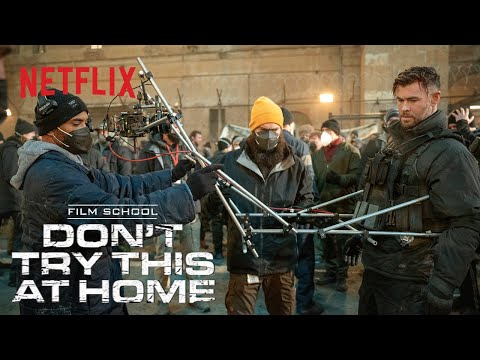
stunt 30 सेकंड में
- A stunt is a daring physical act, often performed by professionals in movies to create excitement and realism without harming the main actors.
- The term also describes a 'publicity stunt,' which is a planned event designed specifically to grab media headlines and public interest.
- In everyday language, 'pulling a stunt' often refers to a foolish or reckless action done to impress others or to be tricky.
- Grammatically, it is a countable noun that is frequently paired with verbs like 'perform,' 'execute,' and the more informal 'pull.'
The word stunt is a versatile noun that primarily exists in two distinct spheres of human activity: the world of physical performance and the world of strategic attention-seeking. In its most literal sense, a stunt is a daring, often dangerous, and highly skilled physical feat. When you watch a high-octane action movie and see a character jumping between two moving trucks or free-falling from a skyscraper, you are witnessing a stunt. These actions are meticulously planned, rehearsed, and usually performed by 'stunt doubles'—professionals who specialize in taking these risks so that the lead actors remain safe. The essence of this type of stunt is the combination of physical prowess, technical coordination, and the thrill of perceived danger. It is not merely an accident; it is a calculated display of bravery and skill designed to entertain an audience.
- Professional Feat
- A highly technical and dangerous action performed for film, television, or live entertainment, requiring specialized training and safety equipment.
Beyond the realm of cinema and circus acts, the word stunt takes on a more figurative, often slightly negative, meaning. In this context, a 'publicity stunt' is an action or event specifically designed to attract the attention of the public or the media. Unlike the physical stunt, which aims to entertain through skill, the publicity stunt aims to manipulate interest or create a 'buzz' around a person, product, or cause. For example, a company might organize a massive, unusual event in the middle of a city—like filling a fountain with orange juice—just to get people talking about their new beverage. While these can be creative and effective, they are often viewed with a degree of skepticism. People might describe such an act as 'just a stunt,' implying that it lacks substance or genuine value and is merely a trick to gain fame or sales.
The skydiver performed a breathtaking stunt by landing on a moving motorcycle.
The term is also used informally to describe any foolish or reckless action performed to impress others, particularly by young people or those seeking social validation. If someone drives their car too fast in a parking lot to show off to their friends, a witness might say, 'Don't pull a stupid stunt like that again.' In this usage, the word carries a heavy tone of disapproval, suggesting that the action was unnecessary, dangerous, and motivated by ego rather than skill or professional necessity. Understanding the nuance between a 'professional stunt' and a 'childish stunt' is key to using the word correctly in social contexts.
- Publicity Stunt
- A planned event designed to attract the public's attention to an event, product, or person, often criticized for being superficial.
Critics dismissed the politician's visit to the factory as a mere campaign stunt.
Historically, the concept of the stunt grew alongside the rise of mass media. In the early 20th century, 'stunt reporters' like Nellie Bly would engage in extraordinary activities—such as traveling around the world in 72 days—to generate headlines for their newspapers. This paved the way for the modern understanding of the word as both a physical exploit and a media strategy. Today, we see stunts in everything from Red Bull's extreme sports sponsorships to viral TikTok challenges. Whether it is a professional athlete pushing the limits of human capability or a brand trying to go viral, the 'stunt' remains a powerful tool for capturing the most valuable resource in the modern world: human attention.
The movie's most famous stunt involved a car jumping over a bridge.
- Reckless Act
- An impulsive or dangerous action done without proper planning, usually to impress others or express defiance.
He lost his license after pulling a dangerous stunt on the highway.
The marketing team is brainstorming a new stunt for the product launch.
Using the word stunt effectively requires an understanding of its typical collocations and the emotional weight it carries in different settings. Because it is a countable noun, it is almost always preceded by an article (a, the) or a possessive pronoun (his, her, their). One of the most common verbs used with 'stunt' is 'to pull.' When you 'pull a stunt,' you are performing an action that is usually unexpected, tricky, or attention-grabbing. This phrase is frequently used in a negative sense. For example, 'Don't you dare pull that stunt with me!' suggests that the speaker believes the other person is trying to deceive them or act in a manipulative way.
- Common Verb: Pull
- To execute or perform a stunt, often one that is mischievous or calculated. Example: 'The students pulled a prank stunt on their teacher.'
In the context of professional entertainment, the word is often paired with adjectives that describe the level of difficulty or danger. You will frequently hear phrases like 'death-defying stunt,' 'spectacular stunt,' or 'elaborate stunt.' These adjectives help the listener visualize the scale of the action. For instance, 'The movie is famous for its death-defying stunts performed without CGI.' Here, the word 'stunt' is being used with respect, highlighting the bravery and skill of the performers. Conversely, in a political or corporate setting, you might hear 'cheap stunt' or 'desperate stunt,' which indicates that the speaker finds the action transparent, low-quality, or pathetic.
Tom Cruise is known for performing his own stunts in the Mission Impossible films.
Another important grammatical pattern is the use of 'stunt' as a modifier for other nouns. This creates compound nouns like 'stunt pilot,' 'stunt double,' 'stunt coordinator,' and 'stunt driver.' In these cases, 'stunt' describes the profession or the specific role of the person. A 'stunt double' is a person who looks like the lead actor and performs the dangerous parts of the role. A 'stunt coordinator' is the person in charge of designing and ensuring the safety of all the stunts on a film set. Using these compound nouns correctly shows a high level of English proficiency and specific vocabulary knowledge.
- Common Verb: Perform
- To carry out a physical stunt, usually in a professional or athletic capacity. Example: 'She performed a perfect stunt on the balance beam.'
The company's latest publicity stunt involved a giant inflatable duck in the harbor.
Finally, consider the prepositional phrases that often follow 'stunt.' You might see 'a stunt for [something]' or 'a stunt to [do something].' For example, 'The protest was seen as a stunt for media attention,' or 'It was a stunt to boost his falling poll numbers.' These structures help explain the *purpose* behind the action. In more formal writing, you might use 'stunt' to describe a strategic maneuver: 'The hostile takeover was preceded by a series of financial stunts designed to lower the stock price.' This demonstrates how the word can move from the physical world into the abstract world of business and strategy.
He was criticized for his latest stunt of jumping off the roof into the pool.
- Adjective: Elaborate
- Something that is very detailed, complicated, and carefully planned. Example: 'The heist involved an elaborate stunt to bypass the security cameras.'
The circus performers are rehearsing a new acrobatic stunt for the opening night.
The magician's final stunt left the entire audience in shocked silence.
In the modern world, you are most likely to encounter the word stunt in media coverage, entertainment news, and social media discussions. Television commentators and news anchors frequently use the term when discussing political maneuvers. For instance, during an election cycle, if a candidate does something highly unusual—like driving a tank or appearing on a popular comedy show—journalists will often debate whether it was a 'sincere gesture' or a 'calculated political stunt.' In this context, the word is used to question the authenticity of a public figure's actions. It implies that the action was done for the cameras rather than out of genuine conviction.
- News & Media
- Used to describe events that seem designed for headlines. Example: 'The billionaire's space flight was called a PR stunt by some critics.'
In the film industry, 'stunt' is a technical term used daily. If you watch 'Behind the Scenes' features or 'Making Of' documentaries, you will hear directors, actors, and crew members talking about 'stunt work,' 'stunt rigging,' and 'stunt safety.' They might say things like, 'We had to reset the stunt because the car didn't flip correctly.' Here, the word is entirely neutral and professional. It refers to a specific department of filmmaking. You might also see 'Stunt Performer' or 'Stunt Coordinator' in the credits at the end of a movie. For fans of action cinema, discussing the 'best stunts' in a franchise like James Bond or John Wick is a common pastime.
The director praised the stunt team for their incredible work on the explosion scene.
Social media has given the word a new life. On platforms like YouTube and TikTok, 'stunts' are a primary form of content. Creators often perform 'viral stunts'—which could range from extreme sports to elaborate pranks—to gain followers and views. You will see titles like 'I Survived 24 Hours in a Block of Ice - EPIC STUNT!' In this digital landscape, the word is synonymous with 'spectacle.' However, it also appears in the comments section as a form of criticism. If a YouTuber is caught faking a video, viewers might comment, 'This is just a fake stunt for clout.' This reflects the ongoing tension between the word's meaning as a 'skillful act' and its meaning as a 'deceptive trick.'
- Social Media
- Refers to high-energy, often dangerous videos made to gain views. Example: 'The YouTuber was arrested for a dangerous stunt on a skyscraper.'
Her latest Instagram post was dismissed as a desperate stunt to stay relevant.
Finally, you might hear the word in sports commentary, particularly in 'extreme' sports like X-Games, skateboarding, or BMX. Athletes are often judged on the difficulty and execution of their 'stunts' (though 'tricks' is also common here). In American football, a 'stunt' is a specific defensive maneuver where linemen switch positions during a play to confuse the offensive line. This is a very niche, technical use of the word, but it highlights how the concept of a 'stunt'—as something designed to surprise or bypass an opponent—exists even in organized sports. Whether in the boardroom, the film set, or the stadium, 'stunt' is a word that describes the intersection of action and perception.
The skateboarder landed a massive stunt over the stairs, winning the gold medal.
- Sports Strategy
- A tactical maneuver designed to deceive the opposing team. Example: 'The defense used a line stunt to sack the quarterback.'
The pilot's aerobatic stunt at the airshow was the highlight of the day.
The protest group's stunt of blocking the bridge made the evening news.
One of the most frequent mistakes learners make with the word stunt is confusing its noun form with its verb form. As a verb, 'to stunt' means to prevent something from growing or developing properly (e.g., 'Smoking can stunt your growth'). As a noun, it refers to the daring act or publicity trick we've been discussing. It is rare to use the noun 'stunt' to mean 'a lack of growth.' If you say, 'He has a stunt,' people will be very confused; they will think he has a secret trick or a movie performance ready, not that he is short. Always ensure that when you use 'stunt' as a noun, you are referring to an action or an event.
- Noun vs. Verb
- Noun: An action/trick. Verb: To stop growth. Don't mix them up in sentences like 'The plant had a stunt.'
Another common error involves the misuse of the word 'stunt' when 'trick' or 'prank' might be more appropriate. While they are related, they are not always interchangeable. A 'stunt' usually implies a higher level of scale, danger, or public visibility. A 'trick' can be a small magic act or a simple deception. A 'prank' is specifically a mischievous joke played on someone. If you hide someone's keys, that is a 'prank,' not a 'stunt.' If you jump your car over their house to surprise them, that is a 'stunt.' Using 'stunt' for small, private jokes can sound exaggerated or unnatural to native speakers.
Incorrect: He did a stunt by hiding my pen. (Use 'prank' or 'trick' instead).
Learners also struggle with the connotation of 'publicity stunt.' Some mistakenly use it as a compliment, thinking it means 'good marketing.' However, in English, calling something a 'publicity stunt' is almost always a criticism. It suggests that the action is fake, shallow, or manipulative. If you want to praise a company's clever marketing, it is better to say 'creative campaign' or 'brilliant marketing move.' If you say, 'I loved your publicity stunt,' the person might think you are insulting their work by calling it a cheap trick. Understanding this negative bias is crucial for professional communication.
- Countability
- Always treat 'stunt' as something you can count. Use 'a', 'the', or plural 's'.
Incorrect: The movie had a lot of stunt. Correct: The movie had a lot of stunts.
Finally, there is a tendency to over-rely on the verb 'do' with stunt. While 'do a stunt' is grammatically correct and very common, using more specific verbs like 'perform,' 'execute,' or 'pull' can make your English sound more sophisticated. 'Perform a stunt' sounds professional and technical. 'Pull a stunt' sounds informal and often implies mischief. 'Execute a stunt' sounds precise and planned. By choosing the right verb, you provide more context about the nature of the stunt itself. Avoid using 'make a stunt,' which is a common literal translation from other languages but is not used in English.
Incorrect: They made a stunt for the opening ceremony. Correct: They performed a stunt.
- Collocation Error
- Avoid 'make a stunt'. Use 'perform', 'pull', or 'execute'.
The actor refused to pull any more stunts after the accident.
The fans were disappointed when they realized the 'live' stunt was actually pre-recorded.
To truly master the word stunt, it is helpful to compare it with its synonyms and understand the subtle differences in meaning. The most common alternatives are 'feat,' 'exploit,' 'trick,' and 'gimmick.' Each of these words carries a different 'flavor' and is used in different situations. A 'feat' is a positive word that emphasizes the great skill or strength required to do something. You might call a marathon runner's performance a 'feat of endurance.' Unlike a stunt, a feat doesn't have to be 'for show'; it is simply an impressive achievement. An 'exploit' is similar but often has a more adventurous or heroic tone, frequently used in historical or literary contexts (e.g., 'the exploits of Robin Hood').
- Stunt vs. Feat
- A stunt is for an audience and often involves danger. A feat is a great achievement of skill or strength, with or without an audience.
When we look at the 'attention-seeking' side of stunts, the words 'gimmick' and 'ploy' are the closest relatives. A 'gimmick' is a trick or device intended to attract attention, publicity, or trade. It is almost always used negatively. For example, 'The flashing lights on the box are just a gimmick to get kids to buy the cereal.' A gimmick is usually a *thing* or a small feature, whereas a stunt is an *action* or an event. A 'ploy' is a cunning plan or action designed to turn a situation to one's own advantage. It is more about strategy and less about the spectacle. If a company lowers its prices just before a competitor launches a product, that is a 'ploy,' not a 'stunt.'
The new phone's folding screen was dismissed by some as a mere gimmick.
In the world of performance, 'trick' and 'maneuver' are often used. A 'trick' is a common word for a skillful act, like a magic trick or a skateboard trick. It is generally smaller in scale than a stunt. You might do a 'trick' with a coin, but you do a 'stunt' with a motorcycle. A 'maneuver' is a movement or series of moves requiring skill and care, often used in driving, flying, or military contexts. 'The pilot performed a difficult maneuver to avoid the clouds.' A maneuver is focused on the technical movement itself, while a stunt is focused on the impact that movement has on the observer.
- Stunt vs. Trick
- A stunt is large-scale and often risky. A trick is a small, clever act of skill or deception.
Landing on the moon was a magnificent feat of engineering and human courage.
Finally, in informal slang, you might hear the word 'cap' or 'clout-chase' used in similar contexts among younger generations. To 'chase clout' is to do things specifically for social media fame, which is essentially the modern definition of a 'publicity stunt.' However, 'stunt' remains the more formal and widely understood term across all age groups and professional fields. Whether you are talking about the history of Hollywood or the latest political scandal, knowing these alternatives allows you to describe the action with much greater precision and emotional accuracy.
The general's tactical maneuver caught the enemy completely by surprise.
- Stunt vs. Gimmick
- A stunt is an event or action. A gimmick is often a physical feature or a small trick used to sell something.
It wasn't a real emergency; it was just a clever ploy to get us out of the meeting.
The magician performed a clever trick with a deck of cards.
How Formal Is It?
रोचक तथ्य
Before it meant a 'dangerous feat,' a 'stunt' was simply any performance or act in an athletic competition. It only gained its 'publicity' meaning in the early 1900s.
उच्चारण मार्गदर्शिका
- Pronouncing it like 'stand' (stænd).
- Making the 'u' sound too long like 'stoon' (stuːnt).
- Dropping the final 't' sound.
- Confusing the vowel with 'stint' (stɪnt).
- Over-emphasizing the 's' sound.
कठिनाई स्तर
Common in news and entertainment articles.
Requires understanding of collocations like 'pull' and 'publicity'.
Easy to pronounce but requires context to use correctly.
Usually clear in context, especially in movies.
आगे क्या सीखें
पूर्वापेक्षाएँ
आगे सीखें
उन्नत
ज़रूरी व्याकरण
Countable Nouns
You can say 'one stunt' or 'two stunts', but not 'much stunt'.
Compound Nouns
'Stunt' often combines with other nouns like 'stunt man' or 'stunt pilot'.
Verbal Collocations
The verb 'pull' is idiomatic with 'stunt' (to pull a stunt).
Adjective Placement
Adjectives go before the noun: 'a dangerous stunt'.
Gerunds after 'involved'
The stunt involved *jumping* (gerund) over a fence.
स्तर के अनुसार उदाहरण
The man did a cool stunt on his bike.
L'homme a fait une acrobatie cool sur son vélo.
Use 'a' before 'stunt' because it is a singular noun.
I like the stunts in this movie.
J'aime les cascades dans ce film.
Plural form 'stunts'.
The cat did a funny stunt.
Le chat a fait un tour amusant.
Simple Subject + Verb + Object structure.
That was a dangerous stunt!
C'était une acrobatie dangereuse !
Adjective 'dangerous' modifies 'stunt'.
He is a stunt man.
C'est un cascadeur.
'Stunt' acts as a modifier for 'man'.
Can you do a stunt?
Peux-tu faire une acrobatie ?
Question form with 'can'.
The stunt was very fast.
L'acrobatie était très rapide.
Using 'the' to refer to a specific stunt.
Look at his stunt!
Regarde son acrobatie !
Imperative sentence.
The movie used a stunt double for the fire scene.
Le film a utilisé une doublure pour la scène du feu.
'Stunt double' is a common compound noun.
It was just a stunt to get more followers.
C'était juste un coup pour avoir plus d'abonnés.
Use of 'just a stunt' to show it's not serious.
The pilot performed a great stunt at the show.
Le pilote a réalisé une superbe acrobatie au spectacle.
Verb 'performed' is better than 'did' at this level.
She is famous for her amazing stunts.
Elle est célèbre pour ses acrobaties incroyables.
Possessive 'her' with plural 'stunts'.
Don't try this stunt at home.
N'essayez pas cette acrobatie à la maison.
Negative imperative.
The circus has many new stunts this year.
Le cirque a beaucoup de nouvelles acrobaties cette année.
Using 'many' with a countable noun.
He hurt his leg during a movie stunt.
Il s'est blessé à la jambe lors d'une cascade de film.
Preposition 'during' shows when it happened.
The publicity stunt worked very well.
Le coup de publicité a très bien fonctionné.
'Publicity stunt' as a fixed phrase.
The company pulled a publicity stunt by giving away free cars.
L'entreprise a fait un coup de pub en offrant des voitures gratuites.
The verb 'pull' is often used for stunts.
The stunt coordinator made sure everyone was safe.
Le coordinateur des cascades s'est assuré que tout le monde était en sécurité.
'Stunt coordinator' is a professional title.
I think his apology was just a political stunt.
Je pense que ses excuses n'étaient qu'une manœuvre politique.
Using 'stunt' to express doubt about sincerity.
The skateboarder failed his most difficult stunt.
Le skateur a raté son acrobatie la plus difficile.
Superlative 'most difficult' modifying 'stunt'.
They are planning an elaborate stunt for the festival.
Ils préparent une acrobatie élaborée pour le festival.
Adjective 'elaborate' implies complexity.
The actor insisted on doing all his own stunts.
L'acteur a insisté pour faire toutes ses propres cascades.
Verb 'insisted on' followed by gerund 'doing'.
It was a dangerous stunt that could have gone wrong.
C'était une acrobatie dangereuse qui aurait pu mal tourner.
Relative clause 'that could have gone wrong'.
The protest was dismissed as a media stunt.
La manifestation a été rejetée comme un coup médiatique.
Passive voice 'was dismissed'.
The billionaire's trip to space was criticized as a vanity stunt.
Le voyage du milliardaire dans l'espace a été critiqué comme un coup de vanité.
'Vanity stunt' implies it was done for ego.
The film's opening sequence features a breathtaking aerial stunt.
La séquence d'ouverture du film présente une cascade aérienne époustouflante.
Adjective 'breathtaking' adds descriptive power.
Critics labeled the tax cut a desperate election stunt.
Les critiques ont qualifié la baisse d'impôts de manœuvre électorale désespérée.
Verb 'labeled' followed by Object + Complement.
The magician's latest stunt involved escaping from a locked tank.
La dernière acrobatie du magicien consistait à s'échapper d'un réservoir verrouillé.
Verb 'involved' followed by gerund 'escaping'.
She pulled a stunt to get out of the meeting early.
Elle a fait un coup pour quitter la réunion plus tôt.
Informal use of 'pull a stunt' for a trick.
The stunt went viral within hours of being posted.
L'acrobatie est devenue virale quelques heures après avoir été publiée.
Phrasal verb 'went viral'.
The defense used a line stunt to confuse the offensive players.
La défense a utilisé une manœuvre de ligne pour confondre les joueurs offensifs.
Technical sports usage.
The director was known for his reliance on practical stunts over CGI.
Le réalisateur était connu pour sa dépendance aux cascades réelles plutôt qu'aux images de synthèse.
Noun 'reliance' followed by 'on'.
The geopolitical maneuver was dismissed by the UN as a provocative stunt.
La manœuvre géopolitique a été rejetée par l'ONU comme un coup provocateur.
Formal academic/political register.
The artist's decision to shred his painting was a brilliant marketing stunt.
La décision de l'artiste de déchiqueter son tableau était un coup marketing brillant.
Using 'stunt' to analyze a complex cultural event.
He has a reputation for pulling reckless stunts that endanger his team.
Il a la réputation de faire des coups imprudents qui mettent son équipe en danger.
Relative clause 'that endanger his team'.
The documentary explores the evolution of the Hollywood stunt industry.
Le documentaire explore l'évolution de l'industrie de la cascade à Hollywood.
'Stunt industry' as a collective noun phrase.
The company's rebrand was seen as a cynical stunt to hide its poor record.
Le changement d'image de l'entreprise a été vu comme un coup cynique pour cacher son mauvais bilan.
Adjective 'cynical' adds critical nuance.
The pilot's precision during the stunt was a testament to years of training.
La précision du pilote pendant l'acrobatie témoignait d'années d'entraînement.
Noun phrase 'a testament to'.
The activist's hunger strike was labeled a publicity stunt by the government.
La grève de la faim de l'activiste a été qualifiée de coup de publicité par le gouvernement.
Passive construction for official labeling.
The narrative relies on a series of increasingly improbable stunts.
Le récit repose sur une série de cascades de plus en plus improbables.
Adverb 'increasingly' modifying 'improbable'.
The candidate's populist rhetoric was punctuated by a series of theatrical stunts.
La rhétorique populiste du candidat était ponctuée d'une série de coups de théâtre.
Advanced vocabulary like 'punctuated' and 'theatrical'.
Critics argued that the legislation was a mere performative stunt with no legal teeth.
Les critiques ont soutenu que la législation n'était qu'un coup de com' sans portée juridique.
Idiom 'no legal teeth' combined with 'performative stunt'.
The sheer audacity of the stunt left the spectators in a state of cognitive dissonance.
L'audace pure de l'acrobatie a laissé les spectateurs dans un état de dissonance cognitive.
High-level psychological terminology.
The director’s penchant for practical stunts imbues the film with a visceral realism.
Le penchant du réalisateur pour les cascades réelles imprègne le film d'un réalisme viscéral.
Verbs like 'imbues' and adjectives like 'visceral'.
The hostile takeover was facilitated by a complex financial stunt involving shell companies.
L'OPA hostile a été facilitée par une manœuvre financière complexe impliquant des sociétés écrans.
Technical business application of the term.
The boundary between a legitimate protest and a publicity stunt is often a matter of perspective.
La frontière entre une manifestation légitime et un coup de pub est souvent une question de perspective.
Philosophical/Analytical sentence structure.
His career was built on a foundation of high-stakes stunts and calculated controversy.
Sa carrière a été bâtie sur un socle de cascades à haut risque et de controverses calculées.
Metaphorical 'foundation'.
The elaborate stunt served as a microcosm for the film's larger themes of deception.
L'acrobatie élaborée a servi de microcosme aux thèmes plus larges de la tromperie du film.
Literary analysis using 'microcosm'.
सामान्य शब्द संयोजन
सामान्य वाक्यांश
— Used to dismiss an action as unimportant or fake.
Ignore him; it's just a stunt for attention.
— Used to criticize a specific, often recurring, bad behavior.
I can't believe you'd pull a stunt like that at work.
— Refers to the most impressive or final act in a series.
The jump was the ultimate stunt of his career.
— Describes a movie or show with many action scenes.
The new blockbuster is very stunt-heavy.
— Done specifically to be filmed or photographed.
Their handshake was just a stunt for the cameras.
— An action that is easy to do and lacks real value.
Calling the press was a cheap stunt.
— The professional activity of performing stunts.
He has been doing stunt work for twenty years.
— An action done because someone is in a difficult situation.
The price cut was a desperate stunt to save the company.
— A public relations action to improve an image.
The charity donation was seen as a PR stunt.
अक्सर इससे भ्रम होता है
A 'stint' is a period of time spent doing something (e.g., a stint in the army).
The verb 'to stunt' means to stop growth, which is different from the noun 'a stunt'.
A 'shunt' is a technical term for moving something to a different path (often in medicine or trains).
मुहावरे और अभिव्यक्तियाँ
— To do something silly, dangerous, or deceptive to get attention or an advantage.
He pulled a stunt by pretending to be sick to skip the test.
Informal— Doing something purely for social media fame or influence.
She's just doing that stunt for clout on TikTok.
Slang— Leaving a place or situation suddenly and without explanation.
He pulled a disappearing stunt halfway through the party.
Informal— A rule stating that no showing off or dangerous behavior is permitted.
This is a serious meeting, so no stunts allowed.
Neutral— An action specifically designed to be reported by news outlets.
The protest was a carefully timed media stunt.
Journalistic— To show off or display one's superiority or wealth to others.
He bought a new car just to stunt on his neighbors.
Slang/AAVE— Something that happens only once and isn't part of a larger plan.
The free concert was a one-off stunt for the anniversary.
Neutral— A very common and well-known trick or maneuver.
Pretending to lose your wallet is the oldest stunt in the book.
Informal— A very risky or delicate situation where a small mistake causes failure.
The trade negotiations were a diplomatic high-wire stunt.
Metaphorical— While usually a verb, this phrase is the most common use of the word in biological contexts.
Lack of sunlight will cause a stunt in growth.
Scientific (Rare as noun)आसानी से भ्रमित होने वाले
Both involve skill or deception.
A trick is smaller and less dangerous; a stunt is larger and more public.
The magician did a card trick, but the pilot did a stunt.
Both can be annoying or attention-seeking.
A prank is a joke played on a person; a stunt is a performance for an audience.
Hiding his shoes was a prank, but jumping off the roof was a stunt.
Both are used in marketing.
A gimmick is a feature of a product; a stunt is an event or action.
The glowing logo is a gimmick, but the free concert was a stunt.
Both are impressive actions.
A feat is an achievement of skill; a stunt is specifically for show or involves risk.
Climbing Everest is a feat; jumping between buildings is a stunt.
Both involve technical movement.
A maneuver is a tactical move; a stunt is a spectacular performance.
The parking maneuver was difficult, but the car flip was a stunt.
वाक्य संरचनाएँ
The [noun] did a [adjective] stunt.
The boy did a big stunt.
It was a stunt to [verb].
It was a stunt to get attention.
He pulled a stunt by [gerund].
He pulled a stunt by pretending to cry.
The [noun] was dismissed as a [adjective] stunt.
The protest was dismissed as a political stunt.
A series of [adjective] stunts [verb].
A series of elaborate stunts defined the film.
The [noun] serves as a [noun] for the [noun] stunt.
The event serves as a microcosm for the publicity stunt.
Known for [possessive] [adjective] stunts.
Known for his dangerous stunts.
Despite the [adjective] stunt, the [noun] failed.
Despite the marketing stunt, the product failed.
शब्द परिवार
संज्ञा
क्रिया
विशेषण
संबंधित
इसे कैसे इस्तेमाल करें
Common in media, entertainment, and informal speech.
-
Using 'make a stunt'.
→
Perform a stunt / Pull a stunt.
In English, we don't 'make' stunts; we perform or execute them. 'Make' is a literal translation from other languages that doesn't work here.
-
Confusing 'stunt' with 'stint'.
→
He did a stunt (action) / He did a stint (period of time).
A 'stint' is a duration of work; a 'stunt' is a specific action. They sound similar but have completely different meanings.
-
Using 'stunt' as an uncountable noun.
→
The movie had many stunts.
'Stunt' is countable. You cannot use it like 'water' or 'information'.
-
Calling a small prank a 'stunt'.
→
He played a prank on me.
A 'stunt' implies something larger or more public. Using it for a small joke sounds like you are exaggerating.
-
Using 'publicity stunt' as a compliment.
→
That was a great marketing campaign.
Calling something a 'publicity stunt' usually implies it is fake or shallow. Use 'campaign' if you want to be positive.
सुझाव
Use 'Pull' for Mischief
When someone does something tricky or annoying to get their way, use the phrase 'pull a stunt.' It perfectly captures the sense of a calculated, slightly dishonest move.
Compound Your Knowledge
Learn 'stunt' along with 'double,' 'man,' and 'coordinator.' These are essential terms if you are interested in the film or media industry.
Check the Tone
Before using 'stunt' in a professional setting, decide if you want to be positive or negative. 'Impressive stunt' is a compliment; 'PR stunt' is usually a criticism.
Count Your Stunts
Remember that 'stunt' is countable. Never say 'There was much stunt in the movie.' Always use 'many stunts' or 'a lot of stunts.'
Movie Magic
In Hollywood, stunts are a point of pride. Mentioning that an actor 'does their own stunts' is a way of saying they are brave and dedicated.
Spot the Stunt
When you see a brand doing something very strange on social media, ask yourself: 'Is this a publicity stunt?' It's a great way to practice the word in real life.
Short and Sharp
The word 'stunt' ends with a strong 't.' Make sure you pronounce it clearly so it doesn't sound like 'stun' (which means to shock).
Vary Your Verbs
Instead of always using 'did a stunt,' try 'executed a stunt,' 'performed a stunt,' or 'staged a stunt' to make your writing more interesting.
News Keywords
In news broadcasts, 'stunt' is a keyword for skepticism. When you hear it, the reporter is likely questioning the truth behind an event.
Modern Stunting
Be aware that in modern music and social media, 'stunting' can mean showing off wealth. This is a very different, informal use of the word.
याद करें
स्मृति सहायक
Think of a 'STUNT' as a 'STrong UNusual Trick'. The first letters help you remember the nature of the act.
दृश्य संबंध
Imagine a car flying through the air over a row of buses. That is the classic image of a movie stunt.
Word Web
चैलेंज
Write three sentences: one about a movie, one about a politician, and one about a friend, all using the word 'stunt'.
शब्द की उत्पत्ति
The word 'stunt' originated in the late 19th century, specifically around 1878. It is believed to have come from American college slang.
मूल अर्थ: It originally meant a 'task' or a 'turn' at something, possibly derived from the word 'stint' (a fixed amount of work).
Germanic (via Middle English 'stinten').सांस्कृतिक संदर्भ
Be careful using 'stunt' to describe a serious protest, as it can be seen as dismissive of the cause.
Commonly used in both Hollywood (positive) and Westminster/Washington (negative) contexts.
असल ज़िंदगी में अभ्यास करें
वास्तविक संदर्भ
Filmmaking
- stunt double
- practical stunt
- stunt safety
- stunt sequence
Marketing
- publicity stunt
- PR stunt
- viral stunt
- marketing ploy
Politics
- political stunt
- election stunt
- campaign stunt
- stunt for votes
Sports
- extreme stunt
- skateboarding stunt
- defensive stunt
- acrobatic stunt
Personal Behavior
- pull a stunt
- stupid stunt
- reckless stunt
- childish stunt
बातचीत की शुरुआत
"What is the most impressive movie stunt you have ever seen?"
"Do you think publicity stunts are an effective way for companies to advertise?"
"Have you ever seen a politician pull a stunt that you thought was ridiculous?"
"Would you ever want to be a stunt double for a famous actor?"
"Do you think social media 'stunts' are becoming too dangerous nowadays?"
डायरी विषय
Describe a time you saw someone pull a stunt to get attention. How did people react?
If you were a marketing manager, what kind of publicity stunt would you design for a new smartphone?
Write about the difference between a 'feat of skill' and a 'cheap stunt.' Give examples.
Do you think actors should do their own stunts? Why or why not?
Reflect on a viral stunt you saw online. Was it worth the risk for the person involved?
अक्सर पूछे जाने वाले सवाल
10 सवालNo. In the film industry, a stunt is a highly respected professional skill. However, in politics or marketing, it is often used as a criticism to mean something is fake or for show.
A stunt double is a professional who performs dangerous scenes in place of the main actor to keep the actor safe. They usually look similar to the actor.
No, that sounds unnatural. You should say 'I performed a stunt' or 'I pulled a stunt.' 'Make' is not a common collocation for this word.
It is an event or action designed specifically to get attention from the media and the public, like a celebrity doing something shocking to get in the news.
Yes, it is. You can have one stunt, two stunts, or many stunts. You must use articles like 'a' or 'the' with it.
A stunt is usually bigger, more dangerous, and more public. A trick is often smaller, like a magic trick or a simple clever move.
Yes, but the verb 'to stunt' usually means to stop something from growing (e.g., 'stunted growth'). It is rarely used as a verb to mean 'performing a stunt' except in slang.
This is the person on a movie set who plans the stunts and makes sure they are safe for the performers.
Yes, in extreme sports like BMX or skateboarding, and also in American football as a specific defensive maneuver.
The verb 'pull' in this context means to carry out or execute something tricky or unexpected. It's an idiomatic expression.
खुद को परखो 200 सवाल
Write a sentence about a movie stunt using the word 'dangerous'.
Well written! Good try! Check the sample answer below.
Describe a publicity stunt a company might use to sell a new car.
Well written! Good try! Check the sample answer below.
Write a short dialogue between two friends where one is angry about a 'stunt' the other pulled.
Well written! Good try! Check the sample answer below.
Explain why some people are critical of political stunts during an election.
Well written! Good try! Check the sample answer below.
Compare a 'stunt' to a 'feat' in a short paragraph.
Well written! Good try! Check the sample answer below.
Write a movie review focusing on the quality of the stunts.
Well written! Good try! Check the sample answer below.
Imagine you are a stunt coordinator. Write a safety warning for a new stunt.
Well written! Good try! Check the sample answer below.
Write a sentence using 'stunt' as a modifier (e.g., stunt pilot).
Well written! Good try! Check the sample answer below.
Describe a viral stunt you saw on social media.
Well written! Good try! Check the sample answer below.
Write a formal sentence about a 'financial stunt' in business.
Well written! Good try! Check the sample answer below.
Use the phrase 'pull a stunt' in a sentence about a student.
Well written! Good try! Check the sample answer below.
Write a sentence about a circus stunt.
Well written! Good try! Check the sample answer below.
Explain the role of a stunt double in your own words.
Well written! Good try! Check the sample answer below.
Write a sentence using 'death-defying stunt'.
Well written! Good try! Check the sample answer below.
Describe a 'stunt' that went wrong.
Well written! Good try! Check the sample answer below.
Write a sentence about a 'publicity stunt' that failed.
Well written! Good try! Check the sample answer below.
Use 'stunt' in a sentence about an extreme sport.
Well written! Good try! Check the sample answer below.
Write a sentence using 'elaborate stunt'.
Well written! Good try! Check the sample answer below.
Write a sentence about a 'stunt' for the cameras.
Well written! Good try! Check the sample answer below.
Write a sentence using the plural 'stunts'.
Well written! Good try! Check the sample answer below.
Describe a movie stunt you remember well.
Read this aloud:
तुमने कहा:
Speech recognition is not supported in your browser. Try Chrome or Edge.
Do you think celebrities pull stunts for attention? Give an example.
Read this aloud:
तुमने कहा:
Speech recognition is not supported in your browser. Try Chrome or Edge.
Explain the difference between a stunt and a prank.
Read this aloud:
तुमने कहा:
Speech recognition is not supported in your browser. Try Chrome or Edge.
Talk about the risks of being a stunt performer.
Read this aloud:
तुमने कहा:
Speech recognition is not supported in your browser. Try Chrome or Edge.
Discuss whether publicity stunts are good or bad for a brand.
Read this aloud:
तुमने कहा:
Speech recognition is not supported in your browser. Try Chrome or Edge.
Tell a story about someone pulling a stunt to get out of trouble.
Read this aloud:
तुमने कहा:
Speech recognition is not supported in your browser. Try Chrome or Edge.
How do you feel about viral stunts on social media?
Read this aloud:
तुमने कहा:
Speech recognition is not supported in your browser. Try Chrome or Edge.
Describe a 'stunt' a politician might do.
Read this aloud:
तुमने कहा:
Speech recognition is not supported in your browser. Try Chrome or Edge.
Would you ever do a bungee jump? Is that a stunt?
Read this aloud:
तुमने कहा:
Speech recognition is not supported in your browser. Try Chrome or Edge.
What makes a stunt 'death-defying'?
Read this aloud:
तुमने कहा:
Speech recognition is not supported in your browser. Try Chrome or Edge.
Explain the job of a stunt coordinator to a friend.
Read this aloud:
तुमने कहा:
Speech recognition is not supported in your browser. Try Chrome or Edge.
Talk about a time you saw a 'stunt' that failed.
Read this aloud:
तुमने कहा:
Speech recognition is not supported in your browser. Try Chrome or Edge.
Do you think actors should do their own stunts? Why?
Read this aloud:
तुमने कहा:
Speech recognition is not supported in your browser. Try Chrome or Edge.
Describe a circus stunt you have seen.
Read this aloud:
तुमने कहा:
Speech recognition is not supported in your browser. Try Chrome or Edge.
What is the 'oldest stunt in the book' in your opinion?
Read this aloud:
तुमने कहा:
Speech recognition is not supported in your browser. Try Chrome or Edge.
How can a company make a publicity stunt go viral?
Read this aloud:
तुमने कहा:
Speech recognition is not supported in your browser. Try Chrome or Edge.
Discuss the use of stunts in extreme sports.
Read this aloud:
तुमने कहा:
Speech recognition is not supported in your browser. Try Chrome or Edge.
Tell me about a 'stunt' someone pulled at your school or work.
Read this aloud:
तुमने कहा:
Speech recognition is not supported in your browser. Try Chrome or Edge.
Is a magic trick a stunt? Why or why not?
Read this aloud:
तुमने कहा:
Speech recognition is not supported in your browser. Try Chrome or Edge.
What are the most common stunts in action movies?
Read this aloud:
तुमने कहा:
Speech recognition is not supported in your browser. Try Chrome or Edge.
Listen for the word 'stunt' in a movie trailer. What was happening?
Listen to a news report about a protest. Did they call it a 'stunt'?
Listen to an interview with an actor. Do they mention their stunts?
Listen for 'publicity stunt' in a marketing podcast.
Listen to a sports commentator. Did they use 'stunt' for a play?
Listen to a friend telling a story. Did they say 'pull a stunt'?
Listen for the 'u' sound in 'stunt'. Is it long or short?
Listen to a documentary about Hollywood history. How is 'stunt' used?
Listen for 'stunt double' in the credits of a movie.
Listen to a political debate. Who is accusing whom of a 'stunt'?
Listen to a circus announcement. What stunts are they promising?
Listen for the difference between 'stunt' and 'stint' in a sentence.
Listen to a YouTuber's intro. Do they use the word 'stunt'?
Listen for 'stunt coordinator' in a 'making of' video.
Listen to a warning about a dangerous act. Do they say 'stunt'?
/ 200 correct
Perfect score!
Summary
The word 'stunt' bridges the gap between professional skill and calculated deception; it can be a respected 'death-defying feat' in a blockbuster movie or a criticized 'cheap trick' in a political campaign. Example: 'The actor's high-altitude stunt was impressive, but the company's fake giveaway was just a desperate publicity stunt.'
- A stunt is a daring physical act, often performed by professionals in movies to create excitement and realism without harming the main actors.
- The term also describes a 'publicity stunt,' which is a planned event designed specifically to grab media headlines and public interest.
- In everyday language, 'pulling a stunt' often refers to a foolish or reckless action done to impress others or to be tricky.
- Grammatically, it is a countable noun that is frequently paired with verbs like 'perform,' 'execute,' and the more informal 'pull.'
Use 'Pull' for Mischief
When someone does something tricky or annoying to get their way, use the phrase 'pull a stunt.' It perfectly captures the sense of a calculated, slightly dishonest move.
Compound Your Knowledge
Learn 'stunt' along with 'double,' 'man,' and 'coordinator.' These are essential terms if you are interested in the film or media industry.
Check the Tone
Before using 'stunt' in a professional setting, decide if you want to be positive or negative. 'Impressive stunt' is a compliment; 'PR stunt' is usually a criticism.
Count Your Stunts
Remember that 'stunt' is countable. Never say 'There was much stunt in the movie.' Always use 'many stunts' or 'a lot of stunts.'