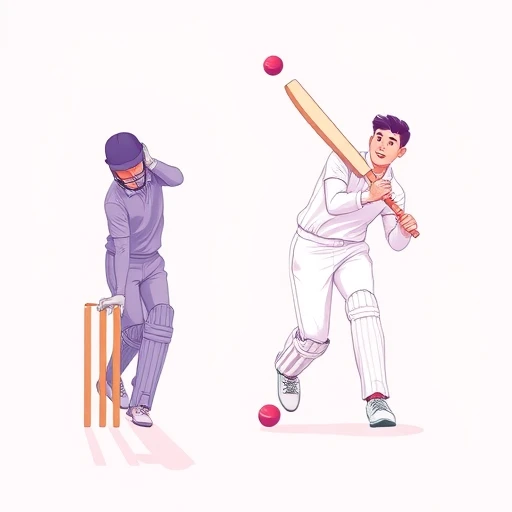
yorker in 30 Seconds
- A yorker is a cricket delivery landing at the batsman's feet.
- It is highly effective for taking wickets and preventing runs.
- The term can metaphorically mean a sudden, difficult challenge or surprise.
- Mastering the yorker requires extreme precision and speed from the bowler.
The term yorker is a specialized noun primarily used within the sport of cricket. It refers to a very specific type of delivery by a bowler that is intended to land directly at or near the batsman's feet, specifically on the popping crease. Unlike the user's initial definition which suggested it is short-pitched and high-bouncing, a true yorker is the exact opposite: it is a full-pitched delivery. The tactical goal of a yorker is to bypass the batsman's defensive reach, often sliding under the bat to hit the stumps or striking the batsman's toes, which frequently results in an 'Leg Before Wicket' (LBW) dismissal. Because the ball reaches the batsman so quickly and at such a low trajectory, it is incredibly difficult to play effectively, requiring exceptional reflexes and precise timing. In modern cricket, especially in shorter formats like T20 or One Day Internationals (ODIs), the yorker is considered the ultimate weapon during the 'death overs'—the final stages of a match where batsmen are trying to score quickly. A perfectly executed yorker is almost impossible to hit for a six, making it a defensive necessity for fast bowlers.
- Technical Classification
- A full-pitched delivery aimed at the base of the stumps.
- Strategic Intent
- To deceive the batsman by making the ball dip late, targeting the 'blind spot' at their feet.
The fast bowler steamed in and produced a toe-crushing yorker that sent the middle stump cartwheeling out of the ground.
Beyond the cricket pitch, the word 'yorker' is occasionally used metaphorically in British and Commonwealth English to describe a situation or a question that is completely unexpected and difficult to handle. Just as a batsman is 'yorked' by a ball they didn't see coming, a person might be 'yorked' by a sudden bill or a challenging interview question. However, this metaphorical use is significantly less common than the literal sporting definition. In the context of the game, there are variations such as the 'inswinging yorker,' which curves toward the batsman, or the 'sandshoe crusher,' a colloquial term for a yorker that literally hits the batsman's footwear. Mastering this delivery requires years of practice, as even a slight error in length can result in a 'full toss' (a ball that doesn't bounce), which is very easy for a batsman to hit for runs.
Even the world's best batsmen struggle when a bowler can consistently land a yorker at over 90 miles per hour.
The term's etymology is somewhat debated, but it is widely believed to have originated in the 19th century. One popular theory suggests it was named after cricketers from Yorkshire who were famous for using this specific tactic to 'yoke' or deceive their opponents. Another theory posits that 'to pull a Yorker' meant to perform a trick or a deception in local slang. Regardless of its origin, the word has become an essential part of the global cricketing lexicon, recognized from the street games of Mumbai to the historic grounds of Lord's in London. When you hear a commentator shout, 'That's a peach of a yorker!', they are praising the bowler's precision and the sheer difficulty of the delivery.
Lasith Malinga was widely regarded as the king of the yorker due to his unique slinging action.
- Common Collocations
- Toe-crushing yorker, perfect yorker, inswinging yorker, slow-ball yorker.
The captain asked for a yorker to finish the over and prevent the boundary.
He was completely yorked by the sudden change in the project requirements.
Using the word yorker correctly requires an understanding of its grammatical role as a countable noun. In most cases, it is used to describe a specific event during a cricket match. You will often see it paired with verbs like 'bowl,' 'deliver,' 'execute,' or 'land.' For example, 'The bowler decided to bowl a yorker.' When a batsman is defeated by this ball, we use the passive construction 'to be yorked.' This means the ball has passed the bat and hit the stumps or the feet. Understanding the nuance of the delivery helps in using the word descriptively. You might describe a yorker as 'pinpoint,' 'deadly,' or 'accurate' to emphasize the skill involved in the delivery.
- Verb Pairings
- To bowl a yorker; to face a yorker; to dig out a yorker.
The young athlete practiced landing the yorker for hours every single day.
In a more descriptive or journalistic sense, 'yorker' can be modified by adjectives that describe its effect or quality. A 'toe-crushing yorker' is a common cliché in cricket commentary, referring to a ball that hits the batsman's foot. A 'slower-ball yorker' describes a delivery that has the trajectory of a yorker but is bowled at a reduced speed to deceive the batsman's timing. When using the word in a sentence, ensure that the context clearly points toward cricket or a metaphorical surprise. If you say, 'She threw me a yorker with that question,' you are using the word figuratively to mean a difficult, unexpected challenge. This is a great way to add color to your English, especially in countries where cricket is popular.
It takes immense courage to attempt a yorker when the batsman is in such aggressive form.
Furthermore, you can use 'yorker' in the plural form when discussing a bowler's overall strategy. 'His yorkers were consistently hitting the mark during the final over.' This indicates that multiple such deliveries were bowled. In technical discussions, you might hear about the 'length' of a yorker. If a ball is slightly too short, it becomes a 'half-volley'; if it is slightly too long, it becomes a 'full toss.' Therefore, the word 'yorker' implies a very specific, narrow margin of error. Using it correctly shows a high level of sporting and linguistic competence. In writing, it is often used in sports reports to provide a vivid picture of how a wicket was taken.
The commentator noted that the bowler's ability to execute yorkers was the difference between winning and losing.
- Metaphorical Usage
- That unexpected tax bill was a real yorker.
He managed to dig out the yorker just in time to save his wicket.
The crowd erupted when the ball, a perfect yorker, smashed into the base of the off-stump.
The most common place to hear the word yorker is during a cricket broadcast. Whether it is on television, radio, or a podcast, sports commentators use this term frequently to describe the action on the field. You will hear it in various accents, from the clipped tones of an English commentator at Lord's to the enthusiastic descriptions of an Australian or Indian announcer. In these contexts, the word is often accompanied by high energy and excitement, as a yorker is one of the most thrilling deliveries in the game. If you are watching a match and see a ball hit the batsman's feet, listen for the word 'yorker' immediately afterward. It is a staple of the cricketing vocabulary and is understood by fans worldwide.
- Media Contexts
- Live sports commentary, sports news headlines, cricket analysis shows.
'What a yorker!' shouted the commentator as the batsman was bowled for a duck.
You will also hear 'yorker' in casual conversations among cricket fans. If you go to a pub in England, Australia, South Africa, or a local park in Pakistan or India where people are playing, the word will be used frequently. Players will discuss their 'yorker length' or complain about being 'yorked' by a particularly good bowler. In these settings, the word is used with a sense of shared technical knowledge. It is a way for fans and players to connect over the intricacies of the sport. Even if you don't play cricket yourself, understanding this word will help you follow conversations in many parts of the world where cricket is the dominant sport. It is more than just a technical term; it is a cultural marker in many Commonwealth nations.
During the lunch break, the fans debated whether the bowler should have tried more yorkers in the first session.
In literature and journalism, 'yorker' appears in sports columns, biographies of famous cricketers, and even in fiction set in cricket-playing countries. Authors use the term to evoke the atmosphere of a match or to highlight a character's skill or failure. For instance, a novelist might describe a character's life falling apart as being 'yorked by fate.' While this metaphorical use is less frequent, it shows how deeply the sport is embedded in the language. In business or academic settings in the UK or Australia, you might occasionally hear a colleague say, 'That question really yorked me,' meaning they were stumped or surprised by it. This demonstrates the word's versatility beyond the boundary ropes of the cricket field.
The newspaper headline read: 'Bumrah's Deadly Yorkers Seal Victory for India.'
- Global Recognition
- Commonly heard in the UK, Australia, India, Pakistan, West Indies, and South Africa.
He spent his childhood in the streets of Karachi, trying to master the perfect yorker with a tennis ball.
The coach yelled from the sidelines, 'Keep it full! Give him a yorker!'
One of the most frequent mistakes learners make with the word yorker is confusing it with other types of cricket deliveries, most notably the 'bouncer.' As mentioned previously, a bouncer is a short-pitched ball that bounces high toward the batsman's head. A yorker, conversely, is a full-pitched ball that lands at the batsman's feet. Confusing these two can lead to significant misunderstandings in a sporting context. Another common error is using 'yorker' as a verb. While you can say 'he yorked the batsman,' the base word is a noun. You cannot say 'he yorkered the ball.' The correct verb form is 'to bowl a yorker' or 'to york' (someone).
- Confusion with Bouncer
- Mistaking a high-bouncing ball for a low-aimed yorker.
- Incorrect Verb Usage
- Saying 'he yorkered' instead of 'he yorked' or 'he bowled a yorker.'
Incorrect: The bowler bowled a yorker that hit the batsman's helmet. (This would be a bouncer, not a yorker.)
Another mistake involves the 'length' of the delivery. A yorker must land very close to the batsman's feet. If the ball lands a bit further away, it is a 'half-volley'; if it doesn't bounce at all and reaches the batsman in the air, it is a 'full toss.' Learners often use 'yorker' as a general term for any fast, difficult ball, but in cricket, precision is key. Calling a full toss a 'yorker' is a technical error that experienced fans will notice. Additionally, some people might confuse 'yorker' with 'Yorkshireman' (a person from Yorkshire). While the word might be related to the county, they are not interchangeable. You wouldn't call a person a 'yorker' unless you were using very specific, and now mostly obsolete, regional slang.
Correct: He attempted a yorker but it ended up being a dangerous full toss.
Finally, in metaphorical usage, learners sometimes overextend the word. It is best used for sudden, surprising, and difficult challenges, rather than just any problem. If you say, 'I had a yorker of a day,' it might sound a bit strange to a native speaker. It is more natural to say, 'That last question in the exam was a real yorker.' The surprise element is crucial for the metaphor to work. Also, be aware that this metaphor is almost exclusively used in countries that play cricket. If you use it in the United States, most people will have no idea what you are talking about, as cricket is not a mainstream sport there. In the US, the equivalent might be 'a curveball.'
The interviewer's question about his five-year plan was a total yorker.
- Geographic Limitation
- Avoid using the cricket metaphor in the USA; use 'curveball' instead.
He was yorked by the news of the company's merger.
Don't call every fast ball a yorker; only the ones that land at the feet.
While yorker is a very specific term, there are other words in the cricketing world that describe different types of deliveries. Understanding these will help you distinguish when to use 'yorker.' A 'bouncer' is the most common point of comparison, as it is also a fast, aggressive delivery but aimed at the upper body. A 'half-volley' is a ball that bounces just in front of the batsman, making it easy to hit—this is often what happens when a bowler tries to bowl a yorker but misses the length. A 'full toss' is a ball that reaches the batsman without bouncing at all. These terms all describe the 'length' of the delivery, which is the most important factor in bowling.
- Bouncer
- Short-pitched, high-bouncing ball aimed at the head or chest.
- Full Toss
- A ball that reaches the batsman without bouncing on the pitch.
The bowler mixed up his yorkers with occasional bouncers to keep the batsman guessing.
In a metaphorical sense, if you want to describe being surprised or challenged, there are several alternatives to 'yorker.' As mentioned, 'curveball' is the American English equivalent, coming from baseball. You could also use the word 'stumper' or say you were 'stumped' (another cricket term), though 'stumped' usually means you are confused or don't know the answer, whereas 'yorked' implies you were defeated or caught off guard. 'Googly' is another cricket term often used metaphorically; it refers to a ball that spins in the opposite direction than expected. If someone 'throws you a googly,' they are being deceptive. 'Yorker' is more about the suddenness and the difficulty of the 'length' of the problem.
While a yorker is about speed and length, a googly is about deception and spin.
Other synonyms for the metaphorical 'yorker' include 'bombshell,' 'bolt from the blue,' or 'curveball.' A 'bombshell' is a shocking piece of news. A 'bolt from the blue' is something completely unexpected. These are more general terms that don't require knowledge of sports. However, in a cricket-loving culture, using 'yorker' adds a specific flavor to your speech. It suggests a challenge that requires immediate and skillful 'footwork' or handling. If you are writing for a British or Australian audience, these sporting metaphors are very effective. Just ensure you are using the right one for the right kind of surprise.
The sudden resignation of the CEO was a yorker that the board of directors didn't expect.
- Metaphorical Synonyms
- Curveball (US), bombshell, stumper, surprise, shocker.
He was hoping for a half-volley he could hit for six, but he got a yorker instead.
The bowler's variety, from yorkers to slower balls, made him a nightmare for the batsmen.
How Formal Is It?
Fun Fact
In the 18th century, 'to pull a Yorker' was slang for performing a cheating trick. This likely influenced the name of the cricket delivery, which 'tricks' the batsman by landing unexpectedly full.
Pronunciation Guide
- Pronouncing it as 'york-ear'.
- Putting the stress on the second syllable.
- Confusing the 'o' sound with 'u' (yurker).
- Over-emphasizing the 'k' sound.
- In the UK, pronouncing the final 'r' too strongly.
Difficulty Rating
Easy to read in context, but requires specific sporting knowledge.
Requires understanding of verb pairings like 'bowl' or 'land'.
Simple pronunciation, but metaphorical use needs care.
Often spoken quickly by commentators with various accents.
What to Learn Next
Prerequisites
Learn Next
Advanced
Grammar to Know
Passive Voice with 'to be yorked'
The batsman was yorked by the very first ball.
Noun as Adjective (Compound Nouns)
He found the perfect yorker length.
Gerunds as Subjects
Bowling a yorker requires great skill.
Adjective Order
A fast, inswinging yorker.
Prepositional Phrases of Place
The ball landed at the batsman's feet.
Examples by Level
The ball was a yorker.
The ball landed at the feet.
Simple subject + verb + noun.
He bowls a fast yorker.
He throws a fast ball at the feet.
Present simple tense.
I like the yorker.
I like this type of ball.
Direct object.
Is that a yorker?
Is that ball a yorker?
Question form.
The yorker hit the stumps.
The ball hit the three sticks.
Subject of the sentence.
It was a perfect yorker.
The ball was very good.
Adjective + noun.
Watch the yorker!
Look at the ball!
Imperative sentence.
The bowler tried a yorker.
The player tried to throw a yorker.
Past simple tense.
The bowler used a yorker to win the game.
The ball at the feet won the match.
Using 'to' for purpose.
A yorker is very difficult to hit.
It is hard to hit this ball.
Adjective + infinitive.
He practiced his yorker every day.
He trained to throw this ball.
Possessive adjective + noun.
The batsman was surprised by the yorker.
The player did not expect the ball.
Passive voice.
She can bowl a yorker at high speed.
She throws the ball very fast.
Modal verb 'can'.
The yorker landed right on the line.
The ball hit the ground on the mark.
Prepositional phrase.
We saw many yorkers in the match.
There were many such balls in the game.
Plural noun.
The coach told him to bowl a yorker.
The teacher gave an instruction.
Reported speech (indirect command).
The batsman was yorked by a brilliant delivery in the final over.
The player was defeated by a ball at his feet.
Passive voice with 'by' agent.
If you bowl a yorker correctly, it is almost impossible to score runs.
A good yorker stops the opponent from scoring.
First conditional.
That question in the interview was a real yorker for me.
The question was very unexpected and hard.
Metaphorical usage.
He has been working on his yorker to become a better death bowler.
He is improving his skills for the end of the game.
Present perfect continuous.
The commentator praised the bowler's ability to land a yorker at will.
The bowler can throw the ball perfectly whenever he wants.
Reporting verb + object + infinitive.
A toe-crushing yorker is the most feared ball for any batsman.
Players are afraid of balls that hit their feet.
Compound adjective 'toe-crushing'.
Despite the pressure, he managed to deliver a perfect yorker.
He did a good job even though it was stressful.
Contrast with 'despite'.
The yorker is a essential weapon in modern limited-overs cricket.
It is a very important tool in the game.
Noun as a subject with an adjective.
The bowler's mastery of the yorker allowed him to defend a very low total.
His skill with the ball helped his team win.
Noun phrase as subject.
He was completely yorked by the sudden announcement of the company's restructuring.
He was shocked by the news about the company.
Metaphorical passive voice.
Landing a yorker consistently requires an incredible amount of practice and precision.
It takes a lot of work to do it right every time.
Gerund as subject.
The batsman tried to dig out the yorker, but it was too fast for him.
He tried to hit the ball away, but it was too quick.
Coordinating conjunction 'but'.
A slower-ball yorker can be even more effective than a fast one if the batsman is early on the shot.
A slow ball can trick the player's timing.
Comparative structure.
The captain's decision to bring on the fast bowler for a yorker proved to be a masterstroke.
The plan to use a yorker was very clever.
Complex sentence with a relative clause.
While the bouncer intimidates, the yorker actually takes the wicket.
One ball scares, the other ball gets the player out.
Contrast with 'while'.
The crowd roared as the middle stump was knocked back by a pinpoint yorker.
The fans cheered when the ball hit the sticks perfectly.
Passive voice with a descriptive adjective.
The bowler's tactical shift to bowling yorkers exclusively in the final two overs stifled the opposition's scoring rate.
Changing to only yorkers stopped the other team from getting points.
Complex noun phrase with a gerund.
I was utterly yorked by the complexity of the task, having underestimated the technical requirements.
I was overwhelmed by how hard the job was.
Adverb 'utterly' modifying a metaphorical verb.
The legendary bowler was renowned for his ability to execute an inswinging yorker that targeted the base of the leg stump.
He was famous for a ball that curved toward the feet.
Relative clause with 'that'.
In the high-stakes environment of the World Cup final, a single misplaced yorker can change the course of history.
One mistake with the ball can lose the biggest game.
Prepositional phrase for setting the scene.
The batsman's failure to anticipate the yorker resulted in a spectacular dismissal that went viral on social media.
He didn't expect the ball and got out in a famous way.
Noun + prepositional phrase + verb.
Developing a reliable yorker is often the final hurdle for a young fast bowler seeking international recognition.
Learning this ball is the last step to becoming famous.
Gerund phrase as subject.
The commentator's analysis focused on the bowler's release point, which was crucial for landing the perfect yorker.
The way he let go of the ball was the secret to his success.
Non-defining relative clause.
He managed to squeeze the yorker away for a single, showing remarkable composure under immense pressure.
He hit the difficult ball just enough to get one point.
Participial phrase 'showing remarkable composure'.
The bowler's repertoire was headlined by a devastating yorker that seemed to dip preternaturally just before reaching the batsman.
His best ball was a yorker that dropped strangely at the last second.
Complex sentence with 'seemed to' and 'preternaturally'.
To be yorked in such a crucial juncture of the innings was a testament to the bowler's unwavering focus and technical prowess.
Getting out then showed how good the bowler was.
Infinitive phrase as subject.
The sheer audacity of attempting a slower-ball yorker with the game on the line left the spectators in a state of disbelief.
Trying such a risky ball at the end was very brave.
Noun phrase with 'sheer audacity'.
The metaphorical yorker delivered by the auditor's report sent the company's stock price into a precipitous decline.
The surprise in the report made the company's value drop fast.
Metaphorical usage in a financial context.
The intricacies of the yorker, from the grip to the follow-through, are often debated by purists of the game.
The small details of the ball are discussed by experts.
Passive voice with 'are often debated'.
He had anticipated a short-pitched delivery, but the bowler's late adjustment produced a yorker that shattered his stumps.
He expected a high ball but got one at his feet instead.
Contrast with 'but' and 'had anticipated'.
The bowler's ability to disguise the yorker until the very last millisecond is what separates the elite from the merely proficient.
Hiding the ball's type is what makes a player the best.
What-clause as a complement.
The batsman's nimble footwork allowed him to turn what would have been a certain yorker into a manageable low full toss.
His quick feet changed a hard ball into an easier one.
Conditional 'would have been' within a relative clause.
Common Collocations
Common Phrases
— To be out in cricket because of a yorker; metaphorically, to be caught off guard.
He was yorked by the first ball of the match.
— An exceptionally good and beautiful delivery.
That was a peach of a yorker from the young fast bowler.
— The act of a batsman successfully defending a yorker.
Digging out a yorker at 95mph requires great skill.
— When a bowler fails to land the ball at the correct length.
Missing the yorker can result in an easy boundary for the batsman.
— Another way to describe a yorker aimed at the feet.
He is known for his toe-crushing delivery.
— A bowler who is particularly good at bowling yorkers.
The team needs a yorker specialist for the final overs.
— A yorker that lands exactly where intended.
He bowled the perfect yorker to win the game.
— The batsman's effort to not get out from a yorker.
Defending a yorker is the hardest job for a tail-ender.
— Metaphorically, a very difficult or surprising situation.
That tax bill was a real yorker.
Often Confused With
A bouncer is high; a yorker is low. Don't mix them up!
A person from Yorkshire, not a cricket ball.
A ball that doesn't bounce; a yorker must bounce near the feet.
Idioms & Expressions
— An old, rare idiom meaning to play a trick or deceive someone.
He pulled a yorker on his colleagues with the fake news.
Archaic/Regional— Being surprised by an unexpected event.
I was caught by a yorker when the meeting was moved up.
Informal— Suffering a sudden, unavoidable misfortune.
The small town was yorked by fate when the factory closed.
Literary— A very difficult and unexpected question.
The professor threw us a yorker of a question in the final.
Academic/Informal— To present someone with a difficult challenge.
The manager bowled him a yorker by asking for the report a week early.
Informal— Failing to meet a precise requirement.
The project failed because we missed the yorker length on the budget.
Business Metaphor— Something executed with perfect precision.
Her presentation was a pinpoint yorker; no one could find a flaw.
Professional Metaphor— Being eliminated or removed from a situation suddenly.
The competitor was yorked out of the game by the new regulation.
Informal— Someone who is the best at a specific, difficult task.
In our accounting firm, she is the king of yorkers for complex audits.
Informal— A direct and painful challenge.
The criticism was a yorker to the toes for the young artist.
InformalEasily Confused
Both are aggressive fast deliveries.
A bouncer is short-pitched and aims for the head, while a yorker is full-pitched and aims for the feet.
He followed the bouncer with a deadly yorker.
Both are 'full' deliveries.
A full toss does not hit the ground before reaching the batsman; a yorker hits the ground right at the batsman's feet.
The attempted yorker slipped and became a full toss.
Both bounce near the batsman.
A half-volley bounces slightly further away, making it easy to hit; a yorker bounces exactly at the feet.
He hit the half-volley for six but was out to the next yorker.
Both are deceptive cricket terms.
A googly is a spin delivery that turns the 'wrong' way; a yorker is a fast delivery defined by its length.
The spinner bowled a googly, but the pacer bowled a yorker.
Both involve the stumps and getting out.
Being 'stumped' happens when the wicketkeeper hits the stumps while the batsman is out of his crease; being 'yorked' happens when the ball hits the stumps directly.
He was yorked by the pacer and stumped by the spinner.
Sentence Patterns
The [noun] is a [noun].
The ball is a yorker.
He [verb] a [adjective] [noun].
He bowled a fast yorker.
The [noun] was [verb-ed] by a [noun].
The batsman was yorked by a delivery.
If you [verb], it is [adjective].
If you bowl a yorker, it is difficult.
The [noun]'s ability to [verb] [noun] is [adjective].
The bowler's ability to land yorkers is amazing.
To be [verb-ed] in [noun] was a [noun] to [noun].
To be yorked in the final was a blow to his confidence.
That [noun] was a real [noun].
That question was a real yorker.
[Gerund] a [noun] requires [noun].
Landing a yorker requires precision.
Word Family
Nouns
Verbs
Adjectives
Related
How to Use It
Common in cricket-playing countries; rare elsewhere.
-
Calling a high ball a yorker.
→
Calling a high ball a bouncer.
A yorker is always aimed at the feet. If the ball goes near the head, it is a bouncer. This is the most common mistake for people who don't know cricket well.
-
Using 'yorker' as a verb (e.g., 'He yorkered him').
→
Using 'york' as a verb (e.g., 'He yorked him').
The noun is 'yorker,' but the verb form is 'york.' Adding '-ed' to the noun is grammatically incorrect and sounds unnatural to native speakers.
-
Using 'yorker' in the US to mean a surprise.
→
Using 'curveball' in the US to mean a surprise.
Because cricket is not popular in the US, the metaphor will not be understood. 'Curveball' from baseball is the culturally appropriate equivalent in American English.
-
Confusing a yorker with a full toss.
→
A yorker bounces; a full toss does not.
A yorker must hit the ground right at the batsman's feet. If it reaches the batsman without hitting the ground, it is a full toss, which is a different type of delivery.
-
Saying 'a yorker ball'.
→
Saying 'a yorker'.
While 'yorker ball' is technically understandable, 'yorker' is already a noun that implies it is a ball. Adding 'ball' after it is redundant and rarely done by native speakers.
Tips
Use it in Sports Talk
When watching cricket with friends, use 'yorker' to describe any ball that lands at the feet. It shows you know the technical side of the game and helps you fit in with experienced fans.
Surprise Your Friends
Try using 'yorker' metaphorically to describe a surprise. For example, 'That sudden rain was a real yorker!' It's a creative way to use your vocabulary in everyday situations in the UK or Australia.
Remember the Verb
Don't forget that the verb is 'to york,' not 'to yorker.' If you want to say someone was defeated by the ball, say 'He was yorked.' This is a common mistake even for intermediate learners.
Soft 'R'
If you are aiming for a British accent, remember to keep the 'r' at the end of 'yorker' very soft or silent. It should sound more like 'yaw-kuh.' This will make your pronunciation sound much more authentic.
Know Your Audience
Only use 'yorker' with people who know cricket. If you're talking to someone from the US or a non-cricket country, they might think you're talking about someone from New York! Use 'curveball' instead.
Pair with Adjectives
Make your descriptions more vivid by adding adjectives. Use 'toe-crushing,' 'pinpoint,' or 'deadly' before 'yorker.' This is exactly how sports journalists and commentators speak and write.
Watch Highlights
The best way to understand a yorker is to see one. Search for 'best yorkers in cricket' on YouTube. Hearing the commentators use the word while you see the action will lock the meaning in your memory.
Sports Reporting
If you are writing a story about a competition, use 'yorker' as a metaphor for a turning point. 'The team was doing well until the captain was yorked by a scandal.' it adds a nice dramatic touch.
Connect with Fans
Cricket fans are passionate. Asking someone 'Who bowls the best yorker?' is a great way to start a long and interesting conversation in many parts of the world. It's a great social icebreaker.
Be Precise
Remember that a yorker is about length. If the ball is too short, it's not a yorker. Being precise with your technical terms shows a high level of English proficiency and respect for the sport's details.
Memorize It
Mnemonic
Think of a 'Yorker' as a ball that lands right on your 'Y' (the intersection of your feet). It's the 'Y' at your feet!
Visual Association
Imagine a cricket ball turning into a heavy anchor that drops straight down onto a batsman's toes.
Word Web
Challenge
Try to use 'yorker' in a sentence about a difficult question you received today.
Word Origin
The term 'yorker' originated in the 19th century, specifically within the game of cricket. It is widely believed to be named after Yorkshire, a county in England famous for its cricketers. These players were known for using this specific, deceptive delivery to 'yoke' or trick their opponents.
Original meaning: A deceptive delivery or a trick played on an opponent.
Germanic (English)Cultural Context
The term is purely sporting and has no negative cultural or social connotations.
Common in the UK, Australia, and New Zealand, but rare in North America.
Practice in Real Life
Real-World Contexts
Cricket Match
- What a yorker!
- He's bowling yorkers.
- He was yorked.
- Perfect yorker length.
Sports Commentary
- Toe-crushing yorker.
- Pinpoint accuracy.
- Smashed the stumps.
- Dug it out.
Job Interview (Metaphorical)
- That was a yorker.
- You yorked me there.
- Unexpected question.
- Caught off guard.
Cricket Training
- Practice your yorkers.
- Hit the crease.
- Keep it full.
- Focus on the toes.
Casual Sports Chat
- He's the king of yorkers.
- Did you see that yorker?
- He got yorked for a duck.
- Best yorker I've seen.
Conversation Starters
"Who do you think is the best bowler of yorkers in the world right now?"
"Have you ever been yorked while playing a game of cricket?"
"Do you find it difficult to understand cricket terms like 'yorker'?"
"In your country, do people use sports metaphors like 'that was a yorker'?"
"Why is the yorker considered such a difficult ball to bowl and to face?"
Journal Prompts
Describe a time when life 'bowled you a yorker' and how you handled the surprise.
Write about your favorite sport and a specific technical term that is hard for beginners to learn.
If you were a cricket coach, how would you teach a young player to bowl a perfect yorker?
Discuss the importance of precision in sports, using the yorker as an example.
Compare the 'yorker' in cricket to a similar difficult move in another sport you enjoy.
Frequently Asked Questions
10 questionsA yorker is a type of delivery where the ball is bowled so that it lands on the pitch right at or near the batsman's feet. It is intended to be very difficult to hit and often results in the ball hitting the stumps or the batsman's toes. It is considered one of the most effective balls for a fast bowler to bowl, especially at the end of a match.
The term is believed to have originated in the 19th century. One theory is that it was named after cricketers from Yorkshire who were famous for using this delivery. Another theory suggests it comes from the old slang 'to pull a Yorker,' which meant to deceive or play a trick on someone. Over time, it became the standard name for this specific full-pitched delivery.
Usually, a yorker is bowled at high speed to give the batsman as little time as possible to react. However, bowlers can also bowl a 'slower-ball yorker,' which uses the same trajectory but at a lower speed to trick the batsman's timing. Both are effective, but the fast yorker is the most common and feared version of the delivery.
To defend against a yorker, a batsman must have very quick reflexes and 'dig the ball out.' This involves bringing the bat down quickly to the ground to block the ball right as it bounces. If the batsman is too slow, the ball will go under the bat. Good footwork can also help a batsman turn a yorker into a more manageable delivery.
Yes, spin bowlers can bowl yorkers, although it is less common than with fast bowlers. A spinner's yorker relies more on the suddenness of the length rather than raw speed. It can be very effective because batsmen often expect spin bowlers to bowl shorter lengths to allow the ball to turn. A sudden yorker from a spinner can catch them completely off guard.
This is a popular descriptive term for a yorker that is so accurate it hits the batsman's foot (specifically their toes) before it hits the ground or the stumps. It is often painful for the batsman and frequently results in an LBW (Leg Before Wicket) dismissal. It is considered the 'gold standard' of yorker bowling because of its extreme precision.
If a bowler tries to bowl a yorker but misses the length, it usually results in one of two things: a 'full toss' (if it's too long) or a 'half-volley' (if it's too short). Both of these are generally much easier for the batsman to hit for runs. This is why bowling a yorker is considered a high-risk, high-reward strategy for a bowler.
In the United States, 'yorker' is not a common word because cricket is not a major sport there. Most Americans would not understand the term. The closest equivalent in American English, specifically in the context of baseball, would be a 'curveball'—though a curveball is defined by its movement rather than its length. Metaphorically, Americans use 'curveball' for surprises.
The word 'yorker' itself is a noun. However, the verb form is 'to york.' You can say 'The bowler yorked the batsman.' You should not say 'The bowler yorkered the batsman.' It is important to use the correct form to sound natural. 'Yorked' is also used as an adjective to describe the state of the batsman who was defeated by the ball.
In T20 cricket, batsmen are constantly trying to hit every ball for a boundary. A yorker is very difficult to hit for a six because it is so low and close to the batsman. By bowling yorkers in the final overs (the death overs), a bowler can limit the number of runs the batting team scores, which is often the difference between winning and losing the match.
Test Yourself 200 questions
Explain what a yorker is in your own words.
Well written! Good try! Check the sample answer below.
Write a sentence using 'yorker' metaphorically.
Well written! Good try! Check the sample answer below.
Describe the difference between a yorker and a bouncer.
Well written! Good try! Check the sample answer below.
Why is the yorker so important in the final overs of a cricket match?
Well written! Good try! Check the sample answer below.
Write a short dialogue between two cricket fans discussing a yorker.
Well written! Good try! Check the sample answer below.
How would you describe a 'perfect yorker' in a sports report?
Well written! Good try! Check the sample answer below.
What are the risks of trying to bowl a yorker?
Well written! Good try! Check the sample answer below.
Use the word 'yorked' in a sentence about a business situation.
Well written! Good try! Check the sample answer below.
Explain the etymology of the word 'yorker' briefly.
Well written! Good try! Check the sample answer below.
Write a sentence using 'toe-crushing yorker'.
Well written! Good try! Check the sample answer below.
Describe the feeling of a batsman who has just been yorked.
Well written! Good try! Check the sample answer below.
What skills does a bowler need to bowl a good yorker?
Well written! Good try! Check the sample answer below.
Write a sentence using 'inswinging yorker'.
Well written! Good try! Check the sample answer below.
How does a yorker differ from a full toss?
Well written! Good try! Check the sample answer below.
Use 'yorker' in a sentence about a difficult question.
Well written! Good try! Check the sample answer below.
Describe a 'slower-ball yorker'.
Well written! Good try! Check the sample answer below.
Why is the yorker called a 'defensive' ball for a bowler?
Well written! Good try! Check the sample answer below.
Write a sentence about practicing yorkers.
Well written! Good try! Check the sample answer below.
What is a 'sandshoe crusher'?
Well written! Good try! Check the sample answer below.
Summarize the cultural importance of the yorker.
Well written! Good try! Check the sample answer below.
Pronounce the word 'yorker' correctly.
Read this aloud:
You said:
Speech recognition is not supported in your browser. Try Chrome or Edge.
Explain the meaning of 'yorker' to a friend.
Read this aloud:
You said:
Speech recognition is not supported in your browser. Try Chrome or Edge.
Use 'yorked' in a sentence about a surprise.
Read this aloud:
You said:
Speech recognition is not supported in your browser. Try Chrome or Edge.
Describe a yorker you saw in a match (real or imaginary).
Read this aloud:
You said:
Speech recognition is not supported in your browser. Try Chrome or Edge.
Discuss why bowling a yorker is difficult.
Read this aloud:
You said:
Speech recognition is not supported in your browser. Try Chrome or Edge.
What is a 'toe-crusher' and why is it called that?
Read this aloud:
You said:
Speech recognition is not supported in your browser. Try Chrome or Edge.
How would you use 'yorker' in a business meeting?
Read this aloud:
You said:
Speech recognition is not supported in your browser. Try Chrome or Edge.
Compare a yorker to a bouncer.
Read this aloud:
You said:
Speech recognition is not supported in your browser. Try Chrome or Edge.
Talk about a famous bowler known for yorkers.
Read this aloud:
You said:
Speech recognition is not supported in your browser. Try Chrome or Edge.
Explain the term 'death overs'.
Read this aloud:
You said:
Speech recognition is not supported in your browser. Try Chrome or Edge.
What is an 'inswinging yorker'?
Read this aloud:
You said:
Speech recognition is not supported in your browser. Try Chrome or Edge.
How do you 'dig out' a yorker?
Read this aloud:
You said:
Speech recognition is not supported in your browser. Try Chrome or Edge.
Why is the yorker a 'high-risk' ball?
Read this aloud:
You said:
Speech recognition is not supported in your browser. Try Chrome or Edge.
Use 'yorker' in a sentence about an interview.
Read this aloud:
You said:
Speech recognition is not supported in your browser. Try Chrome or Edge.
What is a 'slower-ball yorker'?
Read this aloud:
You said:
Speech recognition is not supported in your browser. Try Chrome or Edge.
Is 'yorker' common in the US? Why or why not?
Read this aloud:
You said:
Speech recognition is not supported in your browser. Try Chrome or Edge.
Describe the perfect yorker length.
Read this aloud:
You said:
Speech recognition is not supported in your browser. Try Chrome or Edge.
How does a yorker take a wicket?
Read this aloud:
You said:
Speech recognition is not supported in your browser. Try Chrome or Edge.
Why do fans love yorkers?
Read this aloud:
You said:
Speech recognition is not supported in your browser. Try Chrome or Edge.
Summarize the etymology of 'yorker'.
Read this aloud:
You said:
Speech recognition is not supported in your browser. Try Chrome or Edge.
Listen for the word 'yorker' in a cricket commentary clip.
Identify the adjective used with 'yorker' in the audio.
What happened after the yorker was bowled in the story?
How did the speaker describe the difficulty of the yorker?
What was the bowler's name in the commentary?
In the metaphorical example, what 'yorked' the person?
What did the coach tell the player to do?
How many yorkers were bowled in the final over?
What sound did the ball make when it hit the stumps?
Why was the batsman surprised by the yorker?
What did the Australian fan call the yorker?
What was the speed of the yorker mentioned?
How did the batsman defend the yorker?
What was the final result of the match?
What did the commentator say about the bowler's precision?
/ 200 correct
Perfect score!
Summary
The yorker is the ultimate weapon for a cricket bowler, aimed perfectly at the batsman's feet to bypass their defense. Example: 'The match ended when the bowler delivered a toe-crushing yorker.'
- A yorker is a cricket delivery landing at the batsman's feet.
- It is highly effective for taking wickets and preventing runs.
- The term can metaphorically mean a sudden, difficult challenge or surprise.
- Mastering the yorker requires extreme precision and speed from the bowler.
Use it in Sports Talk
When watching cricket with friends, use 'yorker' to describe any ball that lands at the feet. It shows you know the technical side of the game and helps you fit in with experienced fans.
Surprise Your Friends
Try using 'yorker' metaphorically to describe a surprise. For example, 'That sudden rain was a real yorker!' It's a creative way to use your vocabulary in everyday situations in the UK or Australia.
Remember the Verb
Don't forget that the verb is 'to york,' not 'to yorker.' If you want to say someone was defeated by the ball, say 'He was yorked.' This is a common mistake even for intermediate learners.
Soft 'R'
If you are aiming for a British accent, remember to keep the 'r' at the end of 'yorker' very soft or silent. It should sound more like 'yaw-kuh.' This will make your pronunciation sound much more authentic.