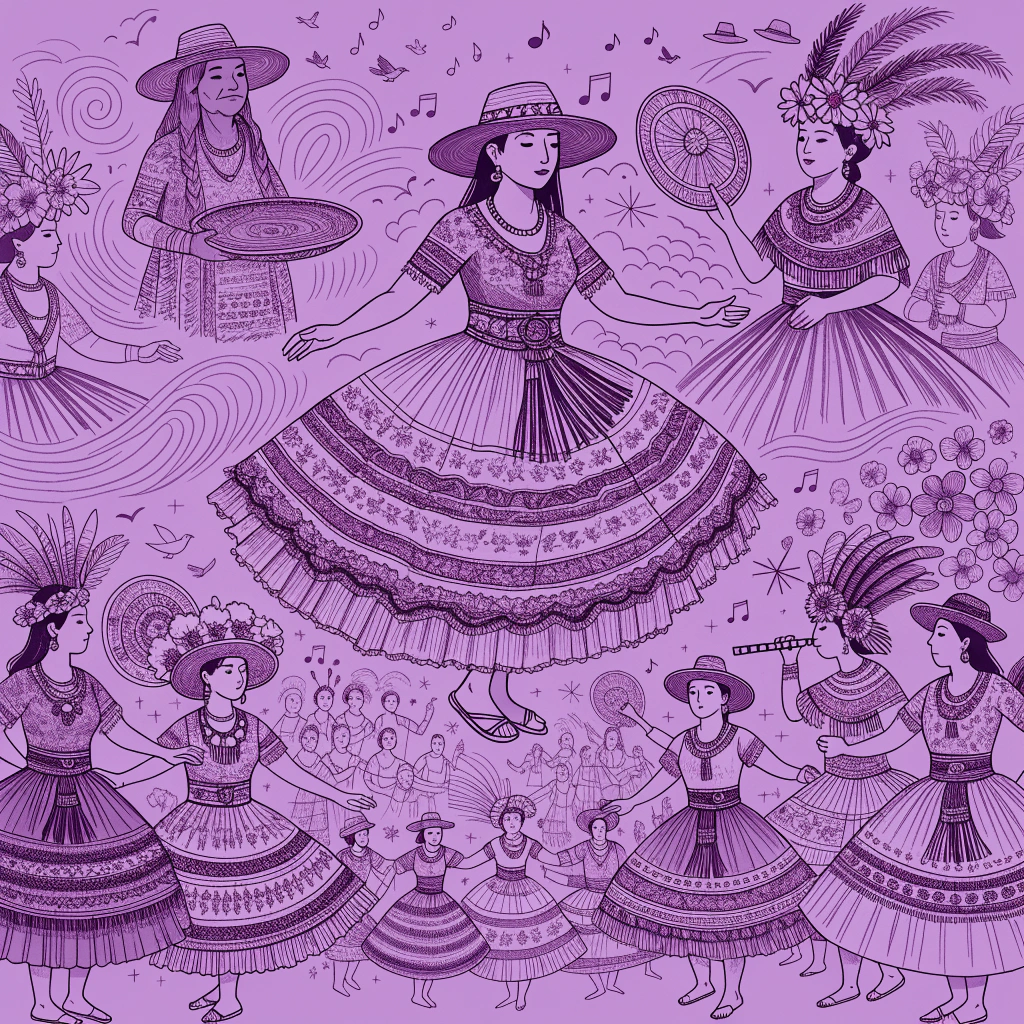
A Big Festival in Mexico
La Guelaguetza is a famous festival in Mexico. It is in the city of Oaxaca. This festival is very old and beautiful.
In the Zapotec language, Guelaguetza means "gift". People share things with their neighbors. They give food and drinks to others. It is a time for community.
The festival is on a hill. People wear colorful clothes. They dance and sing traditional songs. Many tourists visit Oaxaca in July. It is a happy celebration for everyone.
Grammar Spotlight
Pattern: Present Simple 'To Be'
"La Guelaguetza is a famous festival in Mexico."
We use 'is' because the festival is a singular subject. This pattern describes facts or states.
Pattern: Present Simple (Plural Subject)
"They dance and sing traditional songs."
When the subject is 'they', the verb does not have an 's' at the end. It describes a regular activity.
Test Your Understanding
10 questions · A1 Beginner · 1 free preview
Test what you learned from this article. Answer all questions to earn XP!
Where is the festival of La Guelaguetza?
Want to finish the quiz?
9 more questions are waiting for you. Sign up free to unlock the full quiz and earn XP!
Sign Up FreeAlready have an account? Sign In
Question Breakdown
Where is the festival of La Guelaguetza?
Your answer:
Correct answer: In Oaxaca, Mexico
The word Guelaguetza means 'gift'.
Your answer:
Correct answer: True
What does the word 'gift' mean?
Your answer:
Correct answer: Something you give to someone
People wear _____ clothes during the festival.
Your answer:
Correct answer: colorful
La Guelaguetza: A Beautiful Festival in Mexico
La Guelaguetza is a very famous festival in Oaxaca, Mexico. People call it 'Mondays on the Hill' because it happens on two Mondays in July. The word 'Guelaguetza' comes from the Zapotec language. It means 'offering' or 'sharing'. This is a beautiful tradition about helping each other.
During the festival, many groups come from different parts of the state. They wear colorful traditional clothes and dance to happy music. Some costumes are more beautiful than others, but every dance is special. Thousands of people watch the dancers on a big hill. It is one of the most exciting events in Mexico.
In the past, the festival was smaller, but now it is very big. At the end of each dance, the performers throw gifts to the people. They throw fruit, hats, and bread. This is because they want to share their culture. Visitors love this tradition because they feel part of the community. It is a great time to learn about Mexican history.
Grammar Spotlight
Pattern: Comparatives with 'more'
"Some costumes are more beautiful than others."
We use 'more' before long adjectives like 'beautiful' to compare two things. We usually follow the adjective with 'than'.
Pattern: Past Simple of 'be'
"In the past, the festival was smaller."
We use 'was' for the past singular form of the verb 'to be'. It describes a state or condition in a finished time.
Test Your Understanding
11 questions · A2 Elementary · 1 free preview
Test what you learned from this article. Answer all questions to earn XP!
When does the festival happen?
Want to finish the quiz?
10 more questions are waiting for you. Sign up free to unlock the full quiz and earn XP!
Sign Up FreeAlready have an account? Sign In
Question Breakdown
When does the festival happen?
Your answer:
Correct answer: Two Mondays in July
The word 'Guelaguetza' means 'to dance'.
Your answer:
Correct answer: False
What does 'community' mean?
Your answer:
Correct answer: A group of people
The performers throw _____ to the people at the end of the dance.
Your answer:
Correct answer: gifts
Where do the people watch the dancers?
Your answer:
Correct answer: On a big hill
La Guelaguetza: A Celebration of Sharing
Mexico is a country that is famous for its colorful traditions and deep history. One of the most spectacular events is La Guelaguetza, which takes place every July in the city of Oaxaca. This festival has been celebrated for many years, and it is known as the 'Mondays on the Hill' because it happens on the last two Mondays of the month.
The word 'Guelaguetza' comes from the Zapotec language, which was spoken by indigenous groups long ago. It means 'offering' or 'a gift of sharing.' This concept is very important to the local people. In their culture, if you help your neighbor today, they will help you in the future. This reciprocal exchange has helped these communities survive for centuries.
During the festival, groups from seven different regions of the state come together. Traditional dances are performed by men and women wearing beautiful, hand-made costumes. These costumes are decorated with bright colors and complex patterns that represent each town’s unique identity. After the dances, the performers throw gifts into the crowd, such as fruit, bread, and local crafts. This is a physical way to show the spirit of sharing.
In recent years, the festival has become very popular with tourists from all over the world. Although it has changed over time, the heart of the celebration remains the same. It is a time when the diversity of Oaxaca is honored and the traditions of the ancestors are kept alive. If you visit Mexico in July, you should not miss this incredible display of culture and community.
Grammar Spotlight
Pattern: Relative Clauses
"One of the most spectacular events is La Guelaguetza, which takes place every July in the city of Oaxaca."
Relative clauses use 'which' or 'who' to provide extra information about a noun. In this sentence, 'which' adds details about the festival without starting a new sentence.
Pattern: Passive Voice
"Traditional dances are performed by men and women wearing beautiful, hand-made costumes."
The passive voice is formed using 'be' + past participle. It is used here to focus on the action (the dances) rather than the people doing the action.
Test Your Understanding
11 questions · B1 Intermediate · 1 free preview
Test what you learned from this article. Answer all questions to earn XP!
Where does the festival of La Guelaguetza take place?
Want to finish the quiz?
10 more questions are waiting for you. Sign up free to unlock the full quiz and earn XP!
Sign Up FreeAlready have an account? Sign In
Question Breakdown
Where does the festival of La Guelaguetza take place?
Your answer:
Correct answer: Oaxaca
The word 'Guelaguetza' means 'a gift of sharing'.
Your answer:
Correct answer: True
What does 'identity' mean?
Your answer:
Correct answer: The characteristics that make a group different
After the dances, the performers throw _____ into the crowd.
Your answer:
Correct answer: gifts
Why is the festival known as 'Mondays on the Hill'?
Your answer:
Correct answer: Because it happens on the last two Mondays of July
The Spirit of Reciprocity: Exploring the Cultural Significance of La Guelaguetza
Deep within the heart of Oaxaca, Mexico, lies a cultural phenomenon that transcends mere entertainment. La Guelaguetza, also known as the 'Lunes del Cerro' (Mondays on the Hill), stands as one of the most significant indigenous celebrations in the Americas. This festival is celebrated annually during the last two Mondays of July, serving as a vibrant manifestation of the state's rich ethnic diversity. While many tourists are drawn to the colorful costumes and rhythmic music, the event is fundamentally rooted in a philosophy of mutual support and communal sharing.
The term 'Guelaguetza' itself originates from the Zapotec language, which is spoken by one of the region's largest indigenous groups. It translates roughly to 'offering' or 'a reciprocal exchange of gifts.' Historically, this concept was integral to survival in rural communities. When a family faced a major life event, such as a wedding or a funeral, neighbors would contribute food, labor, or supplies. This debt was never recorded on paper, but it was understood that the favor would be returned when the need arose. Consequently, the festival is not just a performance; it is a commemoration of these ancestral bonds that have sustained Oaxacan society for centuries.
The history of the festival is characterized by a fascinating convergence of traditions. Long before the arrival of Spanish colonizers, the indigenous peoples of Oaxaca held rituals to honor Centeotl, the goddess of corn, to ensure a successful harvest. Following the Spanish conquest, these rituals were merged with the Catholic feast of Our Lady of Mount Carmel. Modern scholars have been analyzing how this syncretism allowed indigenous identities to survive under colonial rule. Today, the event showcases delegations from the eight regions of Oaxaca, each presenting their unique dances, music, and elaborate traditional attire.
During the performances, it is customary for dancers to throw products from their respective regions into the crowd, such as pineapples, hats, or textiles. This act serves as a literal representation of the 'offering' that the festival's name implies. However, as the event grows in popularity, some critics argue that the commercialization of La Guelaguetza might overshadow its original purpose. Nevertheless, for the people of Oaxaca, the festival remains a vital tool for the preservation of their heritage, ensuring that the spirit of reciprocity continues to flourish in a rapidly changing world.
Grammar Spotlight
Pattern: Passive Voice
"This festival is celebrated annually during the last two Mondays of July."
The passive voice is used here because the action (the celebration) is more important than who specifically is celebrating it. It is formed using the verb 'to be' plus the past participle.
Pattern: Non-defining Relative Clauses
"The term 'Guelaguetza' itself originates from the Zapotec language, which is spoken by one of the region's largest indigenous groups."
This clause provides extra information about the Zapotec language. It is separated by a comma and uses 'which' as the relative pronoun.
Pattern: Present Perfect Continuous
"Modern scholars have been analyzing how this syncretism allowed indigenous identities to survive."
This tense is used for an activity that started in the past and is still continuing or has a connection to the present. It emphasizes the duration of the analysis.
Test Your Understanding
11 questions · B2 Upper Intermediate · 1 free preview
Test what you learned from this article. Answer all questions to earn XP!
What is the primary philosophical foundation of La Guelaguetza?
Want to finish the quiz?
10 more questions are waiting for you. Sign up free to unlock the full quiz and earn XP!
Sign Up FreeAlready have an account? Sign In
Question Breakdown
What is the primary philosophical foundation of La Guelaguetza?
Your answer:
Correct answer: Mutual support and community sharing
The term 'Guelaguetza' refers to a written contract of debt between neighbors.
Your answer:
Correct answer: False
What does 'integral' mean in the context of the article?
Your answer:
Correct answer: Essential and necessary for completeness
The festival is a _____ of the state's rich ethnic diversity.
Your answer:
Correct answer: manifestation
Which indigenous goddess was originally honored before the Spanish arrival?
Your answer:
Correct answer: The goddess of corn
The Paradox of Reciprocity: Navigating the Cultural Landscape of La Guelaguetza
Rarely does a cultural phenomenon encapsulate the spirit of an entire region as profoundly as La Guelaguetza. Nestled within the verdant valleys of Oaxaca, Mexico, this 'offering' transcends mere spectacle to become a living testament to indigenous resilience and syncretic evolution. Known colloquially as the 'Lunes del Cerro,' the festival is celebrated on the two Mondays following July 16th, transforming the city into a vibrant tapestry of sound, movement, and color. However, to view it simply as a folkloric display would be to overlook the intricate social architecture that underpins its existence.
The etymological roots of 'Guelaguetza' lie in the Zapotec language, denoting a reciprocal exchange of gifts and services. In the traditional Oaxacan context, this is not a transaction but a lifecycle of mutual support. Should a family require assistance for a wedding or a harvest, the community provides it; in return, the family is bound by an unspoken pact of future reciprocity. It is this deeply ingrained sense of communal obligation that sustains the festival's integrity. When the sixteen different ethnolinguistic groups of Oaxaca gather on the Fortín Hill, they are not merely performing; they are participating in a grander synthesis of identity.
Historically, the festival represents a complex amalgamation of pre-Hispanic rites and liturgical observances. Before the Spanish conquest, the indigenous populations held celebrations to honor Centeōtl, the goddess of tender corn, ensuring a bountiful harvest. With the advent of colonial rule, these rituals were subsumed into the Catholic feast of Our Lady of Mount Carmel. This religious layering created a unique cultural hybrid, where ancient vestiges of agrarian worship coexist with Christian iconography. The transformation of the hillside into a theatrical stage in the 1930s further formalized the event, yet it remains anchored in its ancestral ethos.
The performances themselves are a display of technical prowess and ethnic pride. From the rhythmic intensity of the 'Danza de la Pluma' to the graceful elegance of the 'Flor de Piña,' each presentation is a narrative of a specific region’s history and geography. Participants often distribute products from their home regions—fruits, textiles, and handicrafts—reifying the concept of the 'offering.' Yet, the ephemeral nature of these performances belies the years of preparation and the deep-seated cultural significance they hold for the youth who inherit these traditions.
In recent decades, the commercialization of such sacred rites often sparks heated debate regarding the preservation of authenticity. Not only does the festival serve as a cultural beacon, but it also grapples with the pressures of global tourism. The influx of international visitors has led to the commodification of indigenous symbols, raising poignant questions about who truly owns the culture being celebrated. Critics argue that the 'spectacularization' of the event risks diluting its spiritual core, turning a communal rite into a consumer product. Nevertheless, for many Oaxacans, the Guelaguetza remains a vital act of self-assertion in an increasingly homogenized world.
Ultimately, the enduring appeal of La Guelaguetza lies in its ability to adapt without losing its soul. It is a celebration that acknowledges the past while confronting the complexities of the present. As long as the spirit of reciprocity remains at its heart, the festival will continue to be more than a mere tourist attraction; it will remain a profound declaration of Oaxacan identity and a masterclass in the art of communal living.
Grammar Spotlight
Pattern: Negative Inversion
"Rarely does a cultural phenomenon encapsulate the spirit of an entire region as profoundly as La Guelaguetza."
When an adverb with a negative or restrictive meaning (like 'rarely') starts a sentence, the auxiliary verb comes before the subject. This adds emphasis and a formal tone to the statement.
Pattern: Cleft Sentences
"It is this deeply ingrained sense of communal obligation that sustains the festival's integrity."
Cleft sentences use the structure 'It is/was + [emphasized part] + that/who...' to focus on specific information. Here, it highlights the 'sense of communal obligation' as the primary factor.
Pattern: Nominalization
"The commercialization of such sacred rites often sparks heated debate regarding the preservation of authenticity."
Nominalization involves turning verbs or adjectives into nouns (e.g., 'commercialize' to 'commercialization'). It is a hallmark of C1 writing as it allows for more abstract and concise discussion of complex ideas.
Test Your Understanding
12 questions · C1 Advanced · 1 free preview
Test what you learned from this article. Answer all questions to earn XP!
What is the primary ideological foundation of La Guelaguetza according to the article?
Want to finish the quiz?
11 more questions are waiting for you. Sign up free to unlock the full quiz and earn XP!
Sign Up FreeAlready have an account? Sign In
Question Breakdown
What is the primary ideological foundation of La Guelaguetza according to the article?
Your answer:
Correct answer: The concept of mutual support and giving
The festival's roots are exclusively Spanish Catholic in origin.
Your answer:
Correct answer: False
Which word describes something that lasts for a very short time?
Your answer:
Correct answer: Ephemeral
The etymological roots of 'Guelaguetza' denote a _____ exchange of gifts.
Your answer:
Correct answer: reciprocal
What concern do critics have regarding the modern celebration of the festival?
Your answer:
Correct answer: The potential loss of spiritual depth due to tourism
The festival is held on a hillside known as Fortín Hill.
Your answer:
Correct answer: True
The Epistemology of Reciprocity: Deconstructing La Guelaguetza
Should the observer venture into the verdant valleys of Oaxaca during the waning days of July, they would find themselves ensnared in a spectacle that transcends mere choreography. La Guelaguetza, colloquially known as Lunes del Cerro, is not merely a display of folkloric prowess; rather, it represents a profound socio-cultural manifestation of the Zapotec ethos. The term itself, derived from the Zapotec guendalezaa, encapsulates the notion of 'offering' or 'reciprocity'—a conceptual framework that serves as the bedrock of Oaxacan communal life. It is an intricate dance of mutual support that has sustained these indigenous communities through centuries of upheaval.
Historically, the festival’s genesis is a complex tapestry of indigenous rites and colonial overlays. While contemporary iterations are ostensibly linked to the Catholic feast of Our Lady of Mount Carmel, one must acknowledge that such associations are essentially syncretic. Pre-Hispanic celebrations dedicated to Centeótl, the goddess of tender maize, were subsumed by the Catholic liturgical calendar during the colonial era. It is imperative that we recognize this transition not as a total erasure, but as a resilient adaptation. Were it not for the strategic blending of these belief systems, the indigenous identity might have been more severely compromised under the weight of colonial hegemony. This synthesis allowed the indigenous population to preserve their ancestral venerations under the guise of Christian piety.
At the heart of the Guelaguetza lies the tequio—unpaid communal labor—and the reciprocal exchange of gifts. Each of the eight regions of Oaxaca presents its distinctive dances, yet the climax is not the performance itself but the subsequent distribution of local produce and handiwork to the audience. This act of 'giving back' is fundamentally an epistemological challenge to Western notions of individualistic capitalism. In this communal paradigm, wealth is measured not by accumulation, but by the capacity to contribute to the collective welfare. The dancers do not merely perform for an audience; they participate in a ritual of redistribution that reaffirms their social contracts.
However, one cannot ignore the creeping specter of commodification. As the festival has burgeoned into a global tourist attraction, tensions have inevitably arisen between the preservation of authentic ritual and the demands of the 'experience economy.' Critics argue that the institutionalization of the festival by the state government has led to a sanitized, 'Disneyfied' version of indigenous culture, tailored for the consumption of the global north. Nevertheless, for the participants, the Guelaguetza remains a potent vehicle for cultural self-assertion. It is a moment where the marginalized center themselves, reclaiming the narrative of their heritage through the rhythmic cadence of the Jarabe Mije or the haunting melodies of the Sandunga.
In conclusion, La Guelaguetza serves as a poignant reminder of the enduring power of communal bonds. It is a living palimpsest, where layers of history, belief, and resistance are visible to those willing to look beneath the vibrant costumes. Provided that the spirit of reciprocity remains at its heart, the festival will continue to thrive as a testament to the indomitable spirit of the Oaxacan people. It remains a quintessential example of how tradition can be both a sanctuary for the past and a bridge to a sustainable future.
Grammar Spotlight
Pattern: Inverted First Conditional (Should)
"Should the observer venture into the verdant valleys of Oaxaca during the waning days of July, they would find themselves ensnared in a spectacle that transcends mere choreography."
This formal inversion replaces 'If the observer should venture...' or 'If the observer ventures...'. It is used in C2 academic prose to create a more hypothetical and sophisticated tone.
Pattern: Subjunctive with 'It is imperative that'
"It is imperative that we recognize this transition not as a total erasure, but as a resilient adaptation."
The subjunctive mood is used after adjectives of urgency or importance. Here, 'recognize' is in the base form, which is characteristic of formal English requirements.
Pattern: Inverted Second Conditional (Were it not for)
"Were it not for the strategic blending of these belief systems, the indigenous identity might have been more severely compromised under the weight of colonial hegemony."
This structure is a formal alternative to 'If it were not for...'. It emphasizes the critical nature of the condition and is common in scholarly analysis of historical outcomes.
Test Your Understanding
12 questions · C2 Mastery · 1 free preview
Test what you learned from this article. Answer all questions to earn XP!
What is the primary philosophical underpinning of the Guelaguetza according to the text?
Want to finish the quiz?
11 more questions are waiting for you. Sign up free to unlock the full quiz and earn XP!
Sign Up FreeAlready have an account? Sign In
Question Breakdown
What is the primary philosophical underpinning of the Guelaguetza according to the text?
Your answer:
Correct answer: A system of reciprocal exchange and communal support
The article suggests that the festival's colonial history represents a complete destruction of indigenous Zapotec rites.
Your answer:
Correct answer: False
Which word describes something that still shows traces of its previous versions despite being altered?
Your answer:
Correct answer: Palimpsest
The unpaid communal labor central to Oaxacan life is known as _____.
Your answer:
Correct answer: tequio
What does the author identify as a potential threat to the authenticity of the festival?
Your answer:
Correct answer: The commodification of the event for the experience economy
The distribution of gifts at the end of the dances is seen as a challenge to capitalist ideals.
Your answer:
Correct answer: True
