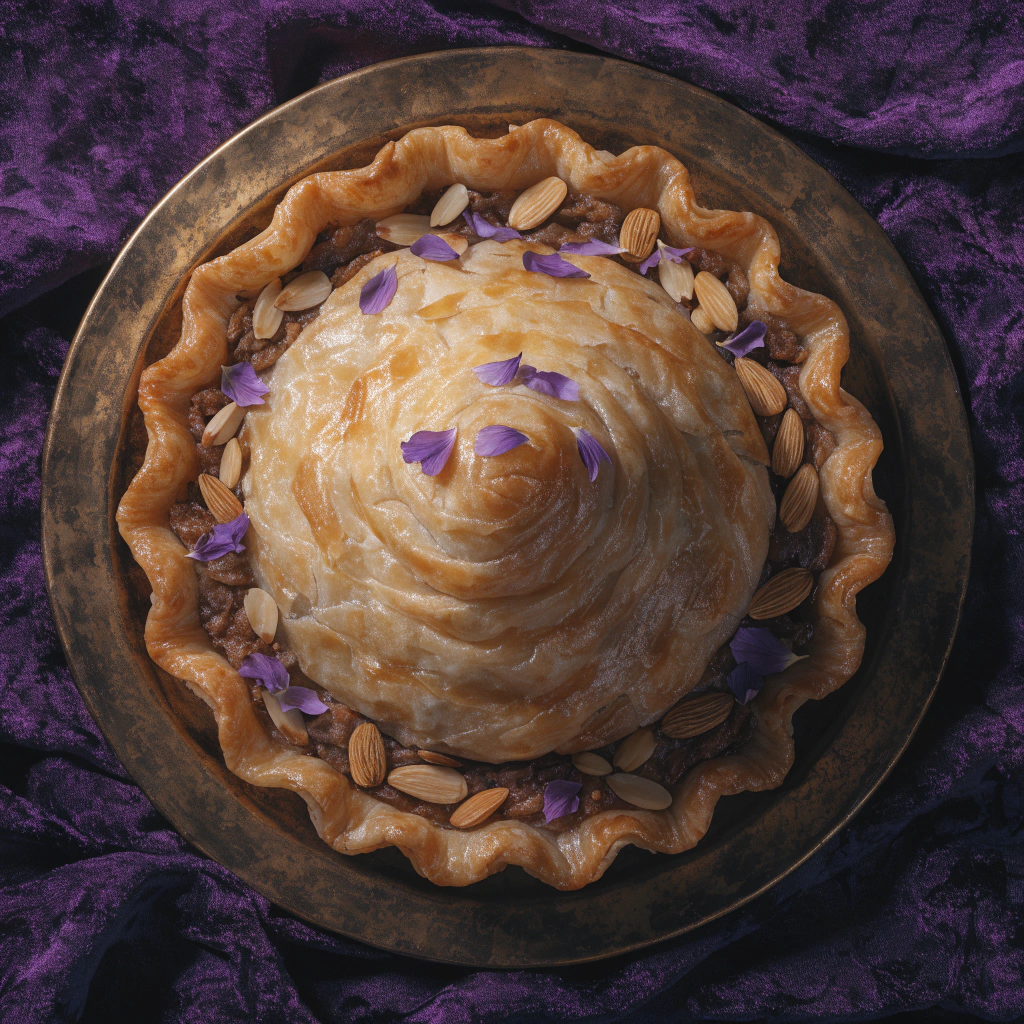
Bastilla: A Famous Moroccan Pie
Bastilla is a special food from Morocco. It is a big pie. People make it with thin pastry. Inside the pie, there is chicken or fish.
This dish is sweet and salty. It has sugar and cinnamon on top. It is very delicious.
Moroccan families eat Bastilla at weddings and parties. It is a tradition in the city of Fez. Many people in Morocco love this meal. It is famous around the world.
Grammar Spotlight
Pattern: Present Simple of 'To Be'
"Bastilla is a special food from Morocco."
We use 'is' with singular subjects like 'Bastilla'. It is used to describe facts or give information about things.
Pattern: Present Simple (Habitual Actions)
"Moroccan families eat Bastilla at weddings and parties."
We use the base form of the verb 'eat' because the subject 'families' is plural. This pattern describes things that happen regularly.
Test Your Understanding
10 questions · A1 Beginner · 1 free preview
Test what you learned from this article. Answer all questions to earn XP!
Where is Bastilla from?
Want to finish the quiz?
9 more questions are waiting for you. Sign up free to unlock the full quiz and earn XP!
Sign Up FreeAlready have an account? Sign In
Question Breakdown
Where is Bastilla from?
Your answer:
Correct answer: Morocco
Bastilla is a type of soup.
Your answer:
Correct answer: False
What does 'sweet' mean?
Your answer:
Correct answer: Tasting like sugar
Bastilla is a big _____.
Your answer:
Correct answer: pie
A Delicious Moroccan Pie: Bastilla
Bastilla is a famous dish from Morocco. It is a special pie that people usually serve at weddings and big parties. It started a long time ago in the city of Fez. Some people believe that refugees from Spain brought the recipe to North Africa.
This dish is very interesting because it is sweet and salty at the same time. Inside the pie, there is often chicken or pigeon meat. Cooks mix the meat with eggs, onions, and almonds. They use a very thin pastry called 'warqa' to cover the food.
After baking, the pie is golden and crispy. On top, people put sugar and cinnamon to make it look beautiful. Bastilla is more difficult to make than other Moroccan dishes, but it is one of the most delicious meals in the world. Families love to eat it together because it is a symbol of celebration.
Grammar Spotlight
Pattern: Past Simple
"It started a long time ago in the city of Fez."
The Past Simple describes finished actions in the past. We add '-ed' to regular verbs like 'started' or use irregular forms like 'brought'.
Pattern: Comparatives
"Bastilla is more difficult to make than other Moroccan dishes."
We use 'more' + adjective + 'than' to compare two things when the adjective is long. It shows how one thing is different from another.
Test Your Understanding
11 questions · A2 Elementary · 1 free preview
Test what you learned from this article. Answer all questions to earn XP!
In which city did Bastilla start?
Want to finish the quiz?
10 more questions are waiting for you. Sign up free to unlock the full quiz and earn XP!
Sign Up FreeAlready have an account? Sign In
Question Breakdown
In which city did Bastilla start?
Your answer:
Correct answer: Fez
Bastilla is only a sweet dish.
Your answer:
Correct answer: False
What does 'crispy' mean?
Your answer:
Correct answer: Hard and dry in a good way
On top, people put sugar and _____ to make it look beautiful.
Your answer:
Correct answer: cinnamon
Why do families love to eat Bastilla together?
Your answer:
Correct answer: Because it is a symbol of celebration
Bastilla: The Golden Crown of Moroccan Cuisine
Morocco is famous for its incredible food, but one dish stands out as the most elegant. This dish is called Bastilla, and it has been a part of Moroccan culture for centuries. It is a golden, crispy pie that combines sweet and salty flavors in a way that surprises many travelers who visit the country.
Historians believe that the recipe was brought to North Africa by refugees who were fleeing Spain many years ago. These people settled in cities like Fez, which became the center of this culinary tradition. Today, Bastilla is often served at weddings or special celebrations because it takes a long time and a lot of skill to prepare.
The pie is made from many thin layers of pastry called 'warqa', which are similar to phyllo dough. These layers are carefully filled with a mixture of slow-cooked meat, eggs, and crunchy fried almonds. Traditionally, pigeon meat was used by royal chefs, but nowadays, chicken is more common. The meat is cooked with aromatic spices like saffron, ginger, and cinnamon, which give the dish a rich and inviting smell.
What makes Bastilla unique is the final decoration. After the pie is baked until it is perfectly crispy, it is covered with a layer of powdered sugar and ground cinnamon. This creates a wonderful contrast with the savory meat inside. If you have ever visited a Moroccan home during a festival, you have probably seen this beautiful dish placed in the center of the table.
Bastilla is not just food; it is a symbol of Moroccan hospitality and history. It represents the skills of the cooks who have passed down the recipe through many generations. Although it is quite difficult to make at home, it is a delicious meal that everyone should try at least once.
Grammar Spotlight
Pattern: Present Perfect
"If you have ever visited a Moroccan home during a festival, you have probably seen this beautiful dish."
The present perfect is used here to talk about life experiences at an unspecified time in the past. It is formed using 'have/has' plus the past participle of the verb.
Pattern: Passive Voice
"Historians believe that the recipe was brought to North Africa by refugees."
The passive voice is used when the focus is on the action or the object rather than the person doing it. It is formed with the verb 'to be' and the past participle.
Test Your Understanding
11 questions · B1 Intermediate · 1 free preview
Test what you learned from this article. Answer all questions to earn XP!
Which city is mentioned as a historical center for Bastilla?
Want to finish the quiz?
10 more questions are waiting for you. Sign up free to unlock the full quiz and earn XP!
Sign Up FreeAlready have an account? Sign In
Question Breakdown
Which city is mentioned as a historical center for Bastilla?
Your answer:
Correct answer: Fez
Pigeon meat is the most common meat used in Bastilla today.
Your answer:
Correct answer: False
What does 'hospitality' mean?
Your answer:
Correct answer: The act of being friendly to guests
The pie is made from many thin layers of _____ called 'warqa'.
Your answer:
Correct answer: pastry
What is used to decorate the top of the Bastilla?
Your answer:
Correct answer: Powdered sugar and cinnamon
Bastilla: The Crown Jewel of Moroccan Gastronomy
Moroccan gastronomy is frequently celebrated for its intricate flavors, but few dishes encapsulate the nation's historical depth as effectively as the Bastilla. Originating from the imperial city of Fez, this savory-sweet pie represents a sophisticated fusion of culinary traditions. Historians generally agree that the dish was introduced to North Africa by Moorish refugees fleeing the Iberian Peninsula during the Reconquista. Consequently, Bastilla serves as a gastronomic bridge between medieval Andalusia and the Maghreb, evolving over several centuries into the masterpiece we recognize today.
The preparation of an authentic Bastilla is an arduous process that demands exceptional precision. At its foundation lies 'warqa', a paper-thin pastry that requires significant skill to produce. These translucent layers are meticulously stacked to encase a rich filling, traditionally consisting of pigeon meat—though chicken is more commonly utilized in contemporary kitchens. This protein is slow-cooked with a fragrant medley of saffron, ginger, and cinnamon, then combined with a delicate omelet layer. What distinguishes Bastilla from other savory pies, however, is the addition of toasted, crushed almonds mixed with sugar and orange blossom water.
Furthermore, the aesthetic presentation of the dish is as vital as its taste. Once baked to a golden crisp, the pie is generously dusted with powdered sugar and decorated with intricate patterns of ground cinnamon. This juxtaposition of flavors—the saltiness of the meat against the sweetness of the topping—illustrates the Moroccan concept of 'sucre-salé'. Such a balance is not merely a culinary preference but an art form that reflects the refinement of the royal courts of Fez.
In Moroccan society, Bastilla is rarely served as a casual meal. Instead, it is reserved for prestigious occasions, such as weddings or high-level diplomatic banquets. Its presence on a table signifies hospitality and respect for the guests, acknowledging the hours of labor required for its assembly. Ultimately, Bastilla is more than just a dish; it is a testament to Morocco’s ability to preserve and elevate its diverse heritage, blending history and flavor into a singular, unforgettable experience.
Grammar Spotlight
Pattern: Passive Voice
"Bastilla is rarely served as a casual meal."
The passive voice is used here to focus on the dish itself rather than the people serving it. It is formed using the verb 'to be' plus the past participle.
Pattern: Concessive Clauses with 'though'
"...traditionally consisting of pigeon meat—though chicken is more commonly utilized in contemporary kitchens."
The word 'though' introduces a contrast or a concession. It shows that while the tradition exists, the current reality is different.
Pattern: Relative Clauses
"...a paper-thin pastry that requires significant skill to produce."
The relative pronoun 'that' introduces a clause that provides essential information about the noun 'pastry'. This helps to define the specific characteristics of the object.
Test Your Understanding
11 questions · B2 Upper Intermediate · 1 free preview
Test what you learned from this article. Answer all questions to earn XP!
Where is Bastilla believed to have originated before reaching Morocco?
Want to finish the quiz?
10 more questions are waiting for you. Sign up free to unlock the full quiz and earn XP!
Sign Up FreeAlready have an account? Sign In
Question Breakdown
Where is Bastilla believed to have originated before reaching Morocco?
Your answer:
Correct answer: The Iberian Peninsula
Bastilla is typically eaten as a quick, everyday snack in Morocco.
Your answer:
Correct answer: False
What does 'arduous' mean in the context of the article?
Your answer:
Correct answer: Extremely difficult and demanding
The preparation of an authentic Bastilla is an _____ process.
Your answer:
Correct answer: arduous
What does the term 'sucre-salé' refer to in the text?
Your answer:
Correct answer: The combination of sweet and savory flavors
The Palimpsest of Fassi Gastronomy: Deconstructing the Moroccan Bastilla
Rarely does a culinary creation demand such meticulous attention to detail as the Moroccan Bastilla. Often regarded as the pinnacle of the Fassi repertoire, this intricate pie is far more than a mere gastronomic indulgence; it is a historical palimpsest, bearing the indelible marks of the Moorish diaspora. It is through the lens of the 15th-century Reconquista that we must view the dish’s evolution, as refugees fleeing the Iberian Peninsula brought with them the sophisticated techniques that would eventually coalesce into the modern Bastilla. This historical displacement of populations did not merely move people; it transplanted an entire aesthetic of refined cooking that remains inextricably linked to the city of Fez.
The dish is defined by its bold embrace of the 'sucre-salé' dialectic—a daring juxtaposition of sweet and savory that challenges the binary categorizations often found in Western culinary traditions. Traditionally crafted with young pigeon, the filling is a complex reduction of onions, ginger, and saffron, bound together by eggs and layered with toasted, crushed almonds seasoned with orange flower water and cinnamon. This rich, savory core is then encased in 'warqa', a pastry leaf so delicate it borders on the ephemeral. The final aesthetic touch involves a dusting of powdered sugar and a lattice of ground cinnamon, creating a visual and sensory experience that is as intellectually stimulating as it is palatable. The aromatic profile of the saffron and ginger provides a warmth that balances the sugar's sweetness, creating a harmony that is uniquely Moroccan.
The laborious nature of Bastilla’s preparation cannot be overstated. The manual stretching of 'warqa' requires a dexterity that is increasingly rare in an era of mass-produced puff pastry. This technical sovereignty over the medium is what distinguishes the imperial kitchens of Fez from more rustic traditions. Nominalization of the process—the stretching, the layering, the reduction—highlights the ritualistic importance of each step. The preservation of these techniques ensures the continuity of Fassi heritage, serving as a culinary anchor for a community that has navigated centuries of cultural flux. To master the Bastilla is to master the history of Morocco itself, as each layer of pastry represents a different era of cultural synthesis.
Critical analysis of Bastilla reveals a dish that acts as a bridge between the medieval Andalusian courts and contemporary Moroccan identity. While some might argue that the inclusion of sugar in a meat-based dish is an acquired taste, for the Moroccan palate, it represents a refined harmony. The displacement of the original Moorish creators did not result in the loss of their culinary identity; rather, it fostered an environment where those traditions could flourish and adapt. In the modern context, the Bastilla remains a staple of high-status celebrations, asserting its dominance as the ultimate expression of Moroccan hospitality and artisanal skill. It stands as a testament to the resilience of culture and the power of food to preserve memory across borders and centuries.
Grammar Spotlight
Pattern: Inversion with negative/restrictive adverbs
"Rarely does a culinary creation demand such meticulous attention to detail as the Moroccan Bastilla."
Inversion is used after restrictive adverbs like 'rarely' to add emphasis. The auxiliary verb 'does' moves before the subject 'culinary creation'.
Pattern: Cleft Sentences
"It is through the lens of the 15th-century Reconquista that we must view the dish’s evolution."
Cleft sentences use 'It is... that' to focus on specific information, in this case, the historical context of the Reconquista.
Pattern: Nominalisation
"The preservation of these techniques ensures the continuity of Fassi heritage."
Nominalisation turns verbs (preserve) into nouns (preservation) to create a more formal, academic tone suitable for C1 level writing.
Test Your Understanding
12 questions · C1 Advanced · 1 free preview
Test what you learned from this article. Answer all questions to earn XP!
What historical event is primarily credited with bringing the precursor of Bastilla to Morocco?
Want to finish the quiz?
11 more questions are waiting for you. Sign up free to unlock the full quiz and earn XP!
Sign Up FreeAlready have an account? Sign In
Question Breakdown
What historical event is primarily credited with bringing the precursor of Bastilla to Morocco?
Your answer:
Correct answer: The Moorish diaspora during the Reconquista
The article suggests that the 'sucre-salé' combination is a common feature in Western culinary traditions.
Your answer:
Correct answer: False
What does the word 'laborious' imply about the preparation of Bastilla?
Your answer:
Correct answer: It requires significant effort and time
The dish is often regarded as the _____ of the Fassi repertoire.
Your answer:
Correct answer: pinnacle
According to the text, what does 'warqa' represent in the context of Fassi heritage?
Your answer:
Correct answer: A symbol of technical sovereignty and ritual
The text argues that the inclusion of sugar in meat dishes is universally accepted as a standard flavor profile.
Your answer:
Correct answer: False
The Gastronomic Palimpsest: Deciphering the Socio-Historical Nuance of the Moroccan Bastilla
The Moroccan Bastilla is far more than a mere centerpiece of a festive banquet; it is a gastronomic palimpsest, a culinary artifact that reveals the complex layers of Maghrebi history and the enduring legacy of Al-Andalus. To approach the Bastilla is to engage with a multi-layered narrative of displacement, adaptation, and cultural synthesis. Were one to examine the crisp, diaphanous layers of warqa—the paper-thin pastry that envelopes the rich filling—one would find an architectural feat that defies the crude classifications of 'pie' or 'pastry.' This dish, ostensibly a staple of the Fassi elite, serves as a vestigial link to the lost gardens of Granada and Cordoba, brought to the imperial cities of Morocco by Moorish refugees fleeing the Reconquista. The essence of the Bastilla lies in its sophisticated juxtaposition of flavors, a phenomenon often referred to as the 'sucre-salé' paradigm. In this culinary dialectic, the savory depth of slow-cooked pigeon or poultry, seasoned with a meticulous blend of saffron, ginger, and cinnamon, is countered by the brittle sweetness of toasted almonds and a dusting of powdered sugar. This confluence of ingredients is not merely a matter of taste but an aesthetic statement, reflecting a high culinary tradition that values complexity and the harmonious resolution of apparent opposites. Seldom does a dish encapsulate the historical trauma and subsequent cultural flowering of a displaced people so succinctly. The preparation of the Bastilla is a notoriously laborious endeavor, requiring a level of technical proficiency that is often passed down through generations of 'dadas'—the traditional female chefs of Moroccan households. Central to this culinary architecture is the warqa. It is imperative that the dough be stretched and cooked over a gentle heat until it achieves a translucency that is almost ethereal. The assembly process is equally demanding, as the layers must be arranged with mathematical precision to ensure structural integrity while maintaining the ephemeral lightness that characterizes the dish. Any deviation from this rigorous methodology would compromise the ontological status of the Bastilla as a masterpiece of Moroccan cuisine. Furthermore, the Bastilla serves as a semiotic marker of social status and communal identity. In the context of Fez, the city most closely associated with its refinement, the dish is an indispensable component of weddings and other significant rites of passage. It represents a form of cultural capital, where the quality of the Bastilla serves as a barometer for the host's adherence to tradition and their command of the 'high' Moroccan style. This is not to say that the dish has remained static; on the contrary, it has undergone various iterations, including the incorporation of seafood in coastal regions, yet the underlying philosophical framework remains remarkably consistent. In conclusion, the Bastilla is a testament to the resilience and creativity of the Moroccan spirit. It is a dish that demands respect, both for the skill required to produce it and for the historical weight it carries. By analyzing the Bastilla, we gain insight into a broader cultural synthesis—a confluence of Berber, Arab, and Andalusian influences that have merged to create a unique and enduring gastronomic identity. To consume a Bastilla is to partake in a ritual that transcends the act of eating; it is an encounter with history, a celebration of aesthetic refinement, and a profound expression of the Moroccan culinary paradigm.
Grammar Spotlight
Pattern: Inverted Conditional
"Were one to examine the crisp, diaphanous layers of warqa, one would find an architectural feat."
This formal structure replaces 'If one were to examine' by inverting the verb and subject. It is used in C2 academic prose to provide a more sophisticated hypothetical tone.
Pattern: Negative Inversion
"Seldom does a dish encapsulate the historical trauma and subsequent cultural flowering of a displaced people so succinctly."
When an adverb with a negative or restrictive meaning (like 'seldom') starts a sentence, the auxiliary verb comes before the subject. This adds rhetorical emphasis.
Pattern: The Subjunctive Mood
"It is imperative that the dough be stretched and cooked over a gentle heat."
The base form of the verb ('be' instead of 'is') is used after adjectives expressing urgency or importance. This is a hallmark of formal, high-level English.
Test Your Understanding
12 questions · C2 Mastery · 1 free preview
Test what you learned from this article. Answer all questions to earn XP!
According to the text, what is the historical origin of the Bastilla?
Want to finish the quiz?
11 more questions are waiting for you. Sign up free to unlock the full quiz and earn XP!
Sign Up FreeAlready have an account? Sign In
Question Breakdown
According to the text, what is the historical origin of the Bastilla?
Your answer:
Correct answer: It was introduced by Moorish refugees fleeing the Spanish Reconquista.
The preparation of Bastilla is described as a simple task that requires little technical skill.
Your answer:
Correct answer: False
What does 'diaphanous' mean in the context of the article?
Your answer:
Correct answer: Light, delicate, and translucent
The text describes the dish as a _____ of Berber, Arab, and Andalusian influences.
Your answer:
Correct answer: confluence
What does the quality of a Bastilla signify in a social context?
Your answer:
Correct answer: The host's cultural capital and adherence to high tradition.
The article suggests that the Bastilla has remained completely static and has never changed its ingredients.
Your answer:
Correct answer: False

