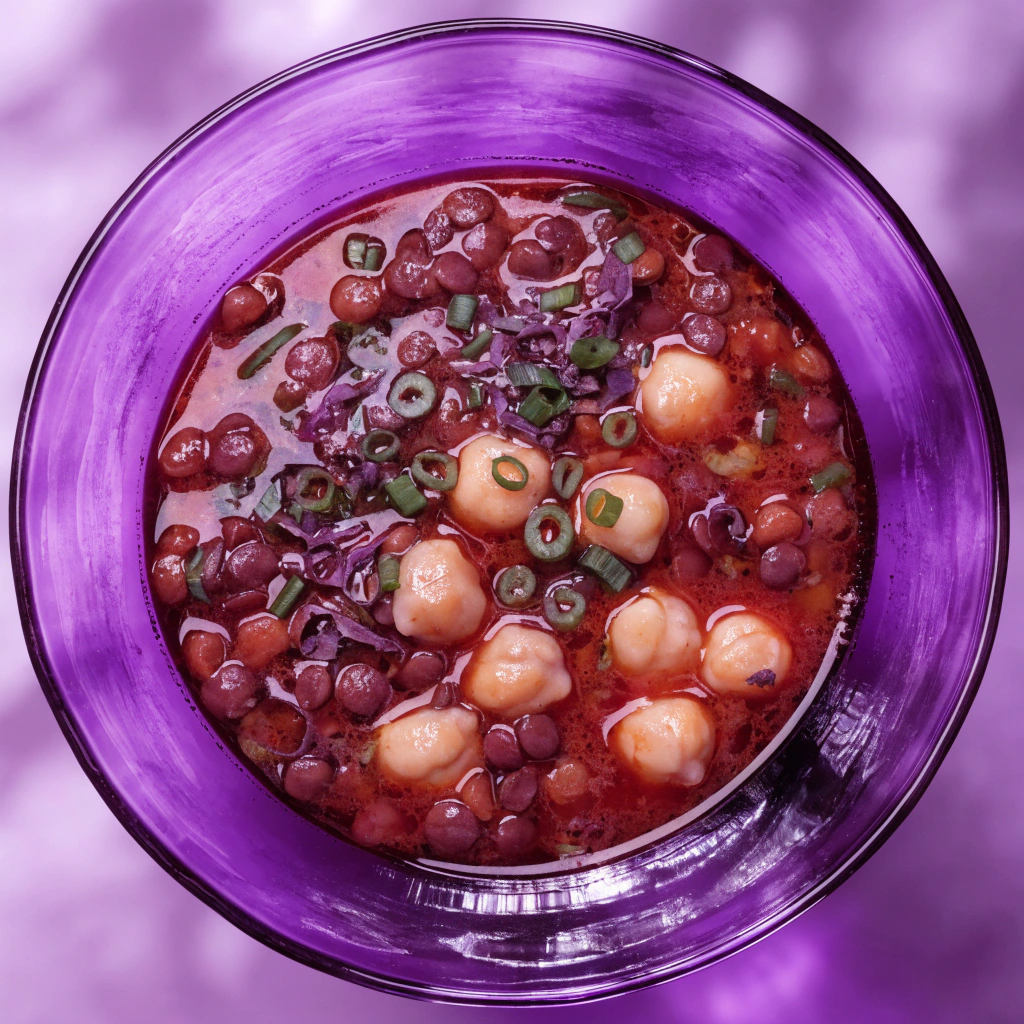
A Special Soup from Morocco
Harira is a very famous soup from Morocco. Many people eat it every day. It is a warm and healthy food for everyone. The soup has many good things inside. It has red tomatoes, lentils, and chickpeas. Some people put small pieces of meat in the soup too. There are fresh herbs like parsley. It is a thick and tasty soup. People in Morocco often eat Harira during Ramadan. They eat the soup with sweet dates. It is delicious and very popular in every home.
Grammatik-Spotlight
Muster: Present Simple (to be)
"Harira is a very famous soup from Morocco."
We use 'is' for one thing (singular). It helps us describe facts or permanent states.
Muster: Present Simple (Action Verbs)
"Many people eat it every day."
We use the base form of the verb for 'many people' (plural). This shows a habit or a regular action.
Teste dein Verständnis
10 Fragen · A1 Anfänger · 1 kostenlose Vorschau
Teste, was du aus diesem Artikel gelernt hast. Beantworte alle Fragen und sammle XP!
What is Harira?
Möchtest du das Quiz beenden?
9 weitere Fragen warten auf dich. Registriere dich kostenlos, um das vollständige Quiz freizuschalten und XP zu sammeln!
Kostenlos registrierenHast du schon ein Konto? Anmelden
Gut gemacht!
Weiter üben!
Bereits abgeschlossen — keine zusätzlichen XP
Registriere dich, um XP zu verdienenFragenübersicht
What is Harira?
Deine Antwort:
Richtige Antwort: A famous soup
Harira is a food from Morocco.
Deine Antwort:
Richtige Antwort: Richtig
What does 'delicious' mean?
Deine Antwort:
Richtige Antwort: Very good taste
Harira is a very _____ soup.
Deine Antwort:
Richtige Antwort: famous
Harira: The Soup of the Moroccan Soul
Harira is the most famous soup in Morocco. Many people call it the "soup of the Moroccan soul." It is a special dish because people from all social classes love it. It is thicker than most soups and has a beautiful red color.
The soup has many healthy ingredients. Cooks use fresh tomatoes, lentils, and chickpeas to make the base. They also add herbs like cilantro and parsley. These herbs give the soup a great smell. Some families add small pieces of beef or lamb, and others add vermicelli pasta to make it even heavier.
In the past, Harira was a simple meal for poor families. Today, it is part of every important celebration. During the month of Ramadan, Moroccans usually eat Harira to break their fast. It is more popular than many other expensive dishes because it is warm and comfortable. When you visit a Moroccan home, you will probably smell this delicious soup in the kitchen.
Grammatik-Spotlight
Muster: Comparatives
"It is thicker than most soups and has a beautiful red color."
We use the adjective + 'er' + 'than' to compare two things. For short words like 'thick', we just add 'er' to show the difference.
Muster: Past Simple of 'To Be'
"In the past, Harira was a simple meal for poor families."
We use 'was' to talk about a state or situation in the past for singular subjects. It shows how things were different before today.
Teste dein Verständnis
11 Fragen · A2 Grundkenntnisse · 1 kostenlose Vorschau
Teste, was du aus diesem Artikel gelernt hast. Beantworte alle Fragen und sammle XP!
Why is Harira called a 'special dish' in the article?
Möchtest du das Quiz beenden?
10 weitere Fragen warten auf dich. Registriere dich kostenlos, um das vollständige Quiz freizuschalten und XP zu sammeln!
Kostenlos registrierenHast du schon ein Konto? Anmelden
Gut gemacht!
Weiter üben!
Bereits abgeschlossen — keine zusätzlichen XP
Registriere dich, um XP zu verdienenFragenübersicht
Why is Harira called a 'special dish' in the article?
Deine Antwort:
Richtige Antwort: Because people from all social classes love it.
Harira is usually a thin, clear soup.
Deine Antwort:
Richtige Antwort: Falsch
What does 'ingredients' mean?
Deine Antwort:
Richtige Antwort: The food items used to make a dish
Harira is the most _____ soup in Morocco.
Deine Antwort:
Richtige Antwort: famous
When do Moroccans usually eat Harira to break their fast?
Deine Antwort:
Richtige Antwort: During the month of Ramadan
Harira: The Heart of Moroccan Cuisine
Morocco is famous for many delicious dishes, but there is one special soup that has been enjoyed by families for centuries. This dish is called Harira. It is often described as the 'soup of the Moroccan soul' because it is a comfort food that everyone loves, regardless of their social class. While some Moroccan meals are very colorful and complex, Harira is a daily companion for many people.
Harira is a thick, velvety soup which is made from a base of tomatoes, lentils, and chickpeas. The soup is flavored with a vibrant bouquet of fresh herbs, such as cilantro and parsley. To make it even more delicious, spices like ginger, turmeric, and pepper are added during the cooking process. Sometimes, small pieces of beef or lamb are included to provide a richer taste. At the end of the cooking process, a handful of vermicelli is usually mixed in to give the soup a unique texture.
This famous dish is traditionally served during the holy month of Ramadan. It is the meal that is used to break the fast at sunset. Because it is full of nutrients and vitamins, it provides the energy that people need after a long day without food. However, Harira has become so popular that it is now eaten throughout the year in local cafes and homes.
In Moroccan culture, Harira is more than just a starter. It represents a sense of community and warmth. Whether it is served in a simple bowl or a beautiful ceramic dish, it brings people together. If you ever visit Morocco, you must try this amazing soup which has captured the hearts of locals and tourists alike.
Grammatik-Spotlight
Muster: Present Perfect Passive
"there is one special soup that has been enjoyed by families for centuries."
This is used to describe an action that started in the past and continues to the present, focusing on the object (the soup). It is formed using 'has/have been' + the past participle.
Muster: Passive Voice (Present Simple)
"This famous dish is traditionally served during the holy month of Ramadan."
The passive voice is used here because the action (serving the dish) is more important than who is serving it. It is formed using 'is/are' + the past participle.
Teste dein Verständnis
11 Fragen · B1 Mittelstufe · 1 kostenlose Vorschau
Teste, was du aus diesem Artikel gelernt hast. Beantworte alle Fragen und sammle XP!
Why is Harira called the 'soup of the Moroccan soul'?
Möchtest du das Quiz beenden?
10 weitere Fragen warten auf dich. Registriere dich kostenlos, um das vollständige Quiz freizuschalten und XP zu sammeln!
Kostenlos registrierenHast du schon ein Konto? Anmelden
Gut gemacht!
Weiter üben!
Bereits abgeschlossen — keine zusätzlichen XP
Registriere dich, um XP zu verdienenFragenübersicht
Why is Harira called the 'soup of the Moroccan soul'?
Deine Antwort:
Richtige Antwort: Because it is a comfort food loved by everyone
Harira is a dish that only wealthy people in Morocco can afford.
Deine Antwort:
Richtige Antwort: Falsch
What does 'vibrant' mean in the context of the article?
Deine Antwort:
Richtige Antwort: Bright, strong, and full of life
Harira is described as a _____ soup made from a base of tomatoes.
Deine Antwort:
Richtige Antwort: thick
When is Harira traditionally used to break the fast?
Deine Antwort:
Richtige Antwort: During the month of Ramadan
Harira: The Velvety Soul of Moroccan Gastronomy
Harira is arguably the most quintessential culinary staple within the Moroccan gastronomic landscape. While other dishes, such as couscous or elaborate tagines, might capture more international attention due to their aesthetic appeal, Harira remains the daily companion of the local population. This hearty soup, characterized by its thick and velvety consistency, serves as a unifying element that transcends social hierarchies, being equally cherished in humble households and opulent residences alike. It is often described not merely as a dish, but as the 'soup of the Moroccan soul,' reflecting a deep-seated cultural identity that has been preserved for generations.
Technically, Harira is a complex legume-based soup, traditionally constructed upon a foundation of tomatoes, lentils, and chickpeas. These ingredients provide significant nutritional density, making the dish a practical choice for sustaining energy throughout the day. To achieve its signature aromatic profile, a vibrant bouquet of fresh herbs—most notably cilantro and parsley—is finely chopped and integrated into the base. This is further enhanced by a sophisticated blend of spices, including ginger, turmeric, and black pepper, which provide a subtle warmth without being overwhelmingly piquant. Small quantities of beef or lamb are frequently incorporated into the broth to enhance its richness, although vegetarian versions remain common. To achieve the desired thickness, a mixture of flour and water, known as 'tedouira,' is stirred in during the final stages of cooking, often alongside a handful of vermicelli or rice.
Furthermore, the significance of Harira is most pronounced during the holy month of Ramadan. The soup, which is traditionally consumed to break the fast during the sunset meal known as Iftar, provides an immediate source of hydration and minerals. Its role in this context is almost ritualistic; the scent of Harira simmering in kitchens across the country is an indispensable part of the spiritual atmosphere. While regional nuances exist—with some families adding eggs or varying the ratio of spices—the core ingredients must remain consistent for the dish to be recognized as authentic Harira.
In conclusion, Harira represents a remarkable intersection of nutrition, tradition, and social cohesion. It is a testament to how a relatively simple combination of legumes and herbs can be elevated into a symbol of national heritage. For any observer wishing to understand the Moroccan spirit, analyzing the role of this soup offers a profound insight into the country's communal values and culinary history.
Grammatik-Spotlight
Muster: Passive Voice
"Small quantities of beef or lamb are frequently incorporated into the broth to enhance its richness."
The passive voice is used here to focus on the action (incorporating meat) rather than the person performing the action, which is common in formal descriptions of processes.
Muster: Non-defining Relative Clauses
"The soup, which is traditionally consumed to break the fast during the holy month of Ramadan, provides an immediate source of energy."
This clause adds extra information about the soup without being essential to the identity of the subject. It is separated by commas.
Muster: Modal Verbs for Logical Necessity
"While regional variations exist, the core ingredients must remain consistent for the dish to be recognized as authentic Harira."
The modal 'must' is used here to express a requirement or a logical necessity for the dish to maintain its authentic status.
Teste dein Verständnis
11 Fragen · B2 Obere Mittelstufe · 1 kostenlose Vorschau
Teste, was du aus diesem Artikel gelernt hast. Beantworte alle Fragen und sammle XP!
Why is Harira described as a 'unifying element' in Morocco?
Möchtest du das Quiz beenden?
10 weitere Fragen warten auf dich. Registriere dich kostenlos, um das vollständige Quiz freizuschalten und XP zu sammeln!
Kostenlos registrierenHast du schon ein Konto? Anmelden
Gut gemacht!
Weiter üben!
Bereits abgeschlossen — keine zusätzlichen XP
Registriere dich, um XP zu verdienenFragenübersicht
Why is Harira described as a 'unifying element' in Morocco?
Deine Antwort:
Richtige Antwort: Because it is enjoyed by people of all social classes.
Harira is primarily valued for its visual appearance compared to other Moroccan dishes.
Deine Antwort:
Richtige Antwort: Falsch
What does 'consistency' refer to in the context of the article?
Deine Antwort:
Richtige Antwort: The thickness or texture of the soup.
The soup's aromatic profile is achieved through a vibrant bouquet of fresh _____.
Deine Antwort:
Richtige Antwort: herbs
What is 'tedouira' used for in the preparation of Harira?
Deine Antwort:
Richtige Antwort: To thicken the soup using flour and water.
Harira: Die Seele Marokkos in einer Schale
Marokko, ein Land reich an Kultur und kulinarischen Genüssen, birgt in seiner Gastronomie wahre Schätze. Doch während einige Gerichte mit ihrer visuellen Pracht bestechen mögen, ist es die Harira, die als der unverzichtbare Seelenwärmer der marokkanischen Bevölkerung gilt. Sie ist weit mehr als nur eine Suppe; vielmehr verkörpert sie die Essenz des täglichen Lebens und die tiefe Verbundenheit mit Traditionen, wobei ihre Bedeutung quer durch alle sozialen Schichten hinweg unangefochten bleibt.
Die Zubereitung der Harira, oft von Generation zu Generation weitergegeben, ist ein Ritual an sich. Ihre Basis bildet ein kräftiger Sud aus Tomaten, Linsen und Kichererbsen, der ihr die charakteristische sämige Konsistenz verleiht. Was sie jedoch wirklich auszeichnet, ist das lebendige Bouquet frischer Kräuter: Koriander und Petersilie, fein gehackt, verströmen einen betörenden Duft und verleihen der Suppe eine unvergleichliche Frische. Ergänzt wird dies durch eine sorgfältige Auswahl an Gewürzen – Ingwer, Kurkuma und schwarzer Pfeffer sind hierbei unerlässlich, verleihen sie doch der Harira ihre wärmende Schärfe und ihre tiefgoldene Farbe.
Nicht selten finden sich in dieser nahrhaften Speise auch kleine Mengen Rind- oder Lammfleisch, die, langsam geschmort, der Suppe eine zusätzliche Tiefe und einen reichen Umami-Geschmack verleihen. Gegen Ende der Kochzeit werden oft Fadennudeln oder Reis hinzugefügt, was nicht nur zur Sättigung beiträgt, sondern auch die Textur der Harira bereichert. Ihre samtige Beschaffenheit, die durch das Hinzufügen von Mehl oder Stärke in einem sogenannten „Tadouira“-Prozess erreicht wird, ist ein Markenzeichen, das sie von vielen anderen Suppen unterscheidet.
Besonders während des Ramadan nimmt die Harira eine herausragende Stellung ein. Nach einem langen Fastentag ist sie die erste Speise, die den Hunger stillt und den Körper sanft auf die weitere Mahlzeit vorbereitet. Ihre nahrhaften Inhaltsstoffe und ihre wärmende Wirkung sind ideal, um neue Energie zu schöpfen. Dies unterstreicht ihre Rolle als Symbol für Gemeinschaft, Trost und die Rückkehr zur Normalität nach Sonnenuntergang.
Doch auch außerhalb des Fastenmonats ist die Harira ein fester Bestandteil des marokkanischen Speiseplans. Sei es als nahrhaftes Frühstück, leichtes Mittagessen oder als Vorspeise am Abend – ihre Vielseitigkeit ist bemerkenswert. Ihre Fähigkeit, Menschen zusammenzubringen und ein Gefühl von Zuhause zu vermitteln, ist unbestreitbar. Sie ist ein kulinarisches Erbe, das mit jedem Löffel eine Geschichte erzählt, eine Geschichte von Tradition, Familie und der unverbrüchlichen Seele Marokkos. Die Harira ist somit nicht nur eine Mahlzeit, sondern ein kulturelles Phänomen, dessen Bedeutung kaum zu überschätzen ist, und dessen Genuss stets ein Erlebnis für die Sinne darstellt.
Grammatik-Spotlight
Muster: Nominalisierung
"Die Zubereitung der Harira, oft von Generation zu Generation weitergegeben, ist ein Ritual an sich."
Nominalisierung bedeutet, Verben oder Adjektive in Nomen umzuwandeln. Im Beispiel wird aus dem Verb "zubereiten" das Nomen "Zubereitung", was den Satz prägnanter und formeller macht. Dies ist ein typisches Merkmal des C1-Niveaus, um komplexere Gedanken auszudrücken.
Muster: Partizipialkonstruktion
"Was sie jedoch wirklich auszeichnet, ist das lebendige Bouquet frischer Kräuter: Koriander und Petersilie, fein gehackt, verströmen einen betörenden Duft..."
Eine Partizipialkonstruktion verwendet Partizipien (Partizip I oder II), um einen Nebensatz zu verkürzen und Informationen komprimiert zu vermitteln. Hier ersetzt "fein gehackt" einen Relativsatz wie "die fein gehackt sind". Es ermöglicht eine elegantere und ökonomischere Ausdrucksweise.
Muster: Genitivattribut
"Ihre Basis bildet ein kräftiger Sud aus Tomaten, Linsen und Kichererbsen, der ihr die charakteristische sämige Konsistenz verleiht."
Das Genitivattribut beschreibt ein Nomen näher, indem es eine Zugehörigkeit oder Eigenschaft angibt. Im Satz "der ihr die charakteristische sämige Konsistenz verleiht" könnte man auch sagen "der ihr die Konsistenz der Sämigkeit verleiht", aber die Genitivkonstruktion ist hier eleganter und typisch für gehobenen Sprachgebrauch.
Teste dein Verständnis
12 Fragen · C1 Fortgeschritten · 1 kostenlose Vorschau
Teste, was du aus diesem Artikel gelernt hast. Beantworte alle Fragen und sammle XP!
Welche Eigenschaft der Harira wird im Text besonders hervorgehoben?
Möchtest du das Quiz beenden?
11 weitere Fragen warten auf dich. Registriere dich kostenlos, um das vollständige Quiz freizuschalten und XP zu sammeln!
Kostenlos registrierenHast du schon ein Konto? Anmelden
Gut gemacht!
Weiter üben!
Bereits abgeschlossen — keine zusätzlichen XP
Registriere dich, um XP zu verdienenFragenübersicht
Welche Eigenschaft der Harira wird im Text besonders hervorgehoben?
Deine Antwort:
Richtige Antwort: Ihre Rolle als Seelenwärmer und kultureller Begleiter.
Die Harira wird nur während des Fastenmonats Ramadan gegessen.
Deine Antwort:
Richtige Antwort: Falsch
Was bedeutet das Wort "verkörpern" im Kontext des Artikels?
Deine Antwort:
Richtige Antwort: Etwas als Beispiel oder Symbol darstellen.
Die Zubereitung der Harira, oft von Generation zu Generation ______, ist ein Ritual an sich.
Deine Antwort:
Richtige Antwort: weitergegeben
Welche Kräuter sind laut Text unerlässlich für den Duft und die Frische der Harira?
Deine Antwort:
Richtige Antwort: Koriander und Petersilie
Die sämige Konsistenz der Harira wird oft durch einen Prozess namens "Tadouira" erreicht.
Deine Antwort:
Richtige Antwort: Richtig
The Alchemical Symbiosis of Harira: A Sociocultural Analysis of Morocco’s Liquid Soul
To the uninitiated, Harira might appear to be merely a hearty legume-based soup, yet such a reductionist view fails to account for its profound ontological status within the Moroccan psyche. It is arguably the quintessential culinary manifestation of a national identity—a liquid tapestry woven from the historical threads of Arab, Berber, and Andalusian influences. While other Moroccan delicacies like the tajine or the couscous platter may command more aesthetic attention on the global stage, Harira operates on a more visceral, subconscious level. It is the daily companion of the scholar and the laborer alike, a gastronomic leveling force that transcends the stratified layers of contemporary society. Should one deconstruct its composition, one would find a meticulous orchestration of ingredients that defies simple categorization. At its core, the soup is a synthesis of tomatoes, lentils, and chickpeas, yet it is the nuanced application of the 'tedouira'—the thickening agent traditionally composed of flour and water—that determines the final texture. This process requires a level of precision that borders on the ritualistic, as the cook must ensure the mixture achieves a velvety consistency without succumbing to lumpiness. The aromatic profile is equally complex; a vibrant bouquet of cilantro and parsley is often introduced toward the end of the simmering process to preserve their volatile oils, while ginger, turmeric, and black pepper provide a warming, piquant undertone. It is imperative that the balance of acidity from the tomatoes be tempered by the earthy richness of the legumes, creating a flavor profile that is both invigorating and soothing. During the holy month of Ramadan, the significance of Harira reaches its zenith. It serves as the primary vessel for breaking the fast, providing immediate sustenance while simultaneously anchoring the individual within a communal experience. The ubiquity of the soup during this period creates a shared sensory landscape across the nation, where the scent of simmering herbs wafts through the labyrinthine alleys of the medinas and the modern boulevards of Casablanca alike. Furthermore, the inclusion of vermicelli or rice, and occasionally small morsels of lamb or beef, adds a layer of structural complexity that elevates the dish from a mere appetizer to a comprehensive meal. Some scholars argue that the soup acts as a cultural bridge, a confluence of agricultural history and religious practice. The ephemeral nature of its preparation—often taking hours of slow simmering only to be consumed in minutes—reflects a broader philosophical acceptance of the transient nature of life. Yet, despite its ubiquity, Harira is far from monolithic. Regional variations abound, with some households insisting on a lighter, more broth-like consistency, while others favor a robust, almost stew-like texture. Regardless of these nuances, the soup remains a constant in an ever-changing world. It is a testament to the enduring power of culinary heritage that, even in an era of rapid globalization and the encroachment of fast-food culture, Harira maintains its sovereign position at the Moroccan table. It is not merely sustenance; it is a profound expression of communal belonging and a liquid chronicle of a nation's resilience and hospitality.
Grammatik-Spotlight
Muster: Inverted Conditional (Should)
"Should one deconstruct its composition, one would find a meticulous orchestration of ingredients that defies simple categorization."
This is a formal alternative to 'If one should deconstruct' or 'If one deconstructed'. The word order is inverted to create a more scholarly and hypothetical tone, typical of C2 academic writing.
Muster: The Subjunctive Mood
"It is imperative that the balance of acidity from the tomatoes be tempered by the earthy richness of the legumes."
The subjunctive 'be tempered' is used after adjectives of necessity (imperative, essential, crucial). It lacks the '-s' or modal verbs usually found in indicative sentences, emphasizing a requirement or desired state.
Muster: Nominalization for Analytical Depth
"The ubiquity of the soup during this period creates a shared sensory landscape across the nation."
Instead of saying 'The soup is everywhere,' the author uses the noun 'ubiquity' as the subject. This shifts the focus from the object itself to the abstract concept, allowing for more complex philosophical analysis.
Teste dein Verständnis
12 Fragen · C2 Meisterschaft · 1 kostenlose Vorschau
Teste, was du aus diesem Artikel gelernt hast. Beantworte alle Fragen und sammle XP!
What does the author suggest by calling Harira a 'gastronomic leveling force'?
Möchtest du das Quiz beenden?
11 weitere Fragen warten auf dich. Registriere dich kostenlos, um das vollständige Quiz freizuschalten und XP zu sammeln!
Kostenlos registrierenHast du schon ein Konto? Anmelden
Gut gemacht!
Weiter üben!
Bereits abgeschlossen — keine zusätzlichen XP
Registriere dich, um XP zu verdienenFragenübersicht
What does the author suggest by calling Harira a 'gastronomic leveling force'?
Deine Antwort:
Richtige Antwort: It is consumed by all social classes, bridging societal gaps.
The author claims that Harira is more aesthetically famous worldwide than the tajine.
Deine Antwort:
Richtige Antwort: Falsch
What does the word 'zenith' refer to in the context of the article?
Deine Antwort:
Richtige Antwort: The highest point of significance.
The thickening agent traditionally made of flour and water is known as the _____.
Deine Antwort:
Richtige Antwort: tedouira
According to the text, why are cilantro and parsley added toward the end of the cooking process?
Deine Antwort:
Richtige Antwort: To preserve their volatile oils and flavor.
The author views the regional variations of Harira as a sign that the dish is losing its cultural identity.
Deine Antwort:
Richtige Antwort: Falsch

